Inspiration
I work as Employment Support Staff with the Mason LIFE Program, helping students with intellectual and developmental disabilities through their workplace internships. Honestly, my own experience is easier than it should be — my coworkers are kind, easy to talk to, and quick to help when something feels off.
Most people don't get that.
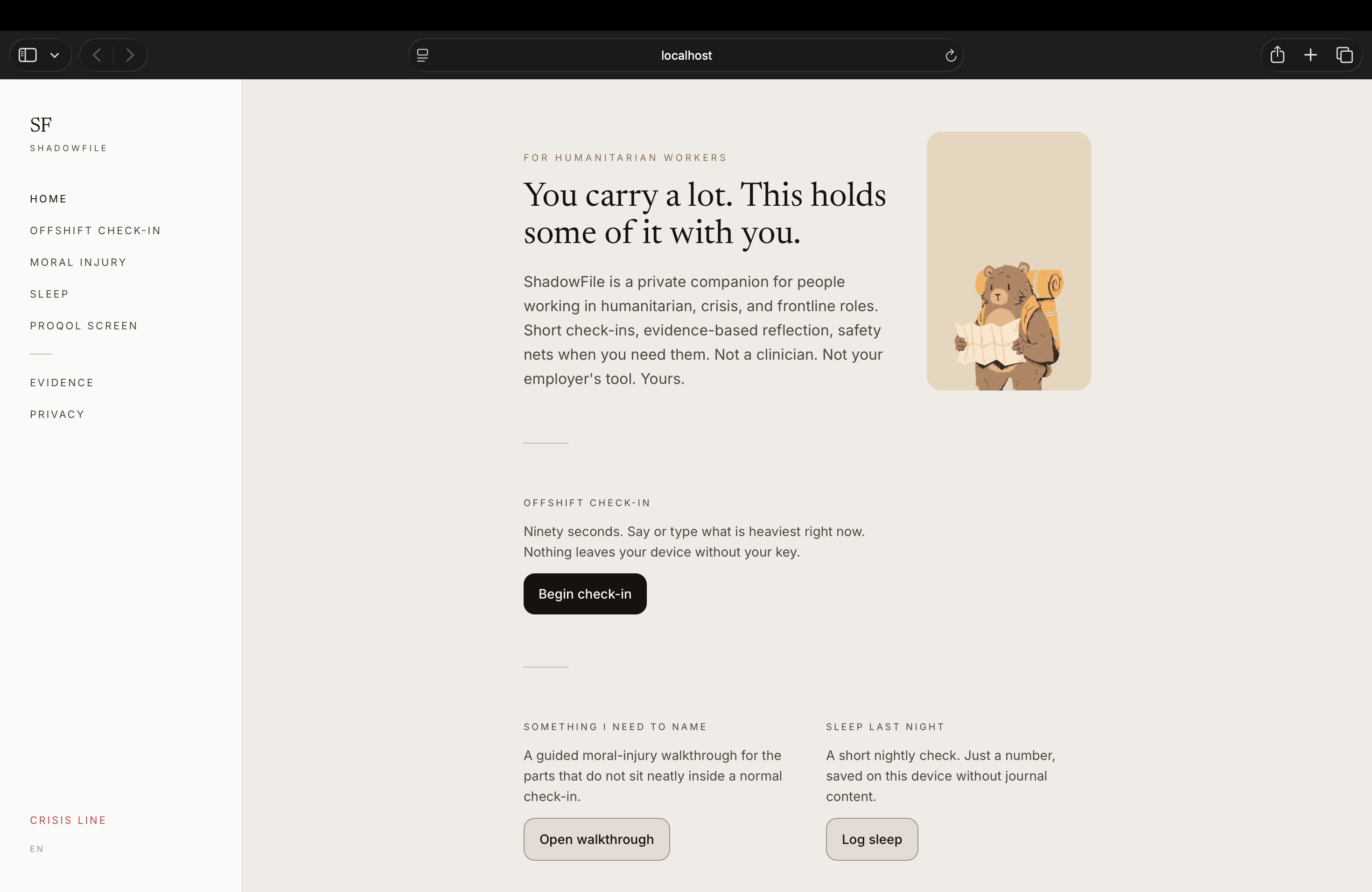
New hires hide their confusion. Interns avoid asking the same question twice. Plenty of people work in places where asking for help costs something — socially, professionally, or worse. They need a private space between "I don't understand what just happened" and "I have to say it out loud to someone." If my version of work is easy and I still hit hard moments, the gap for everyone else is much bigger. ShadowFile is built for that gap — a quiet, private place to slow down, figure out what actually happened, and decide what to do next.
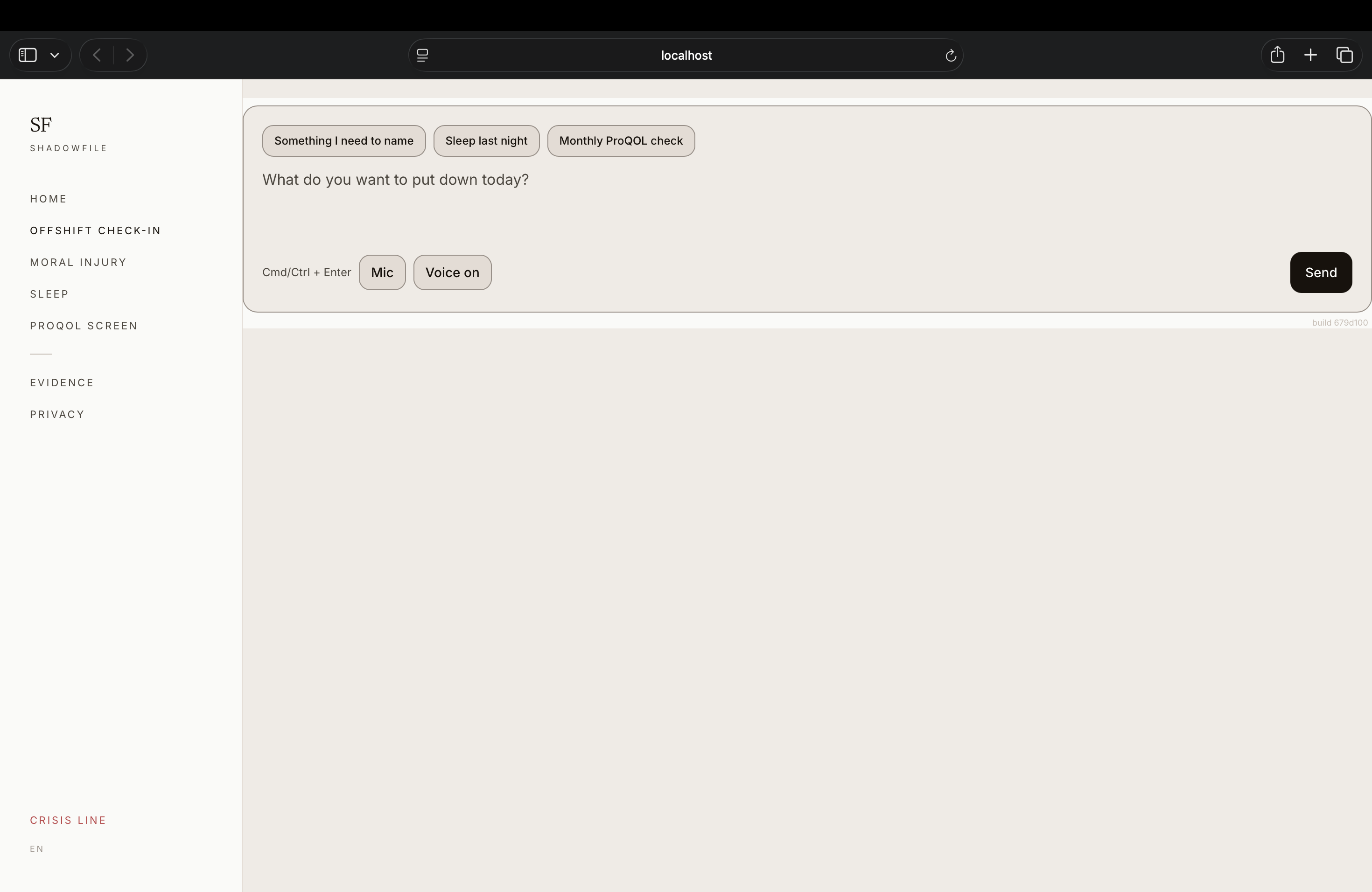
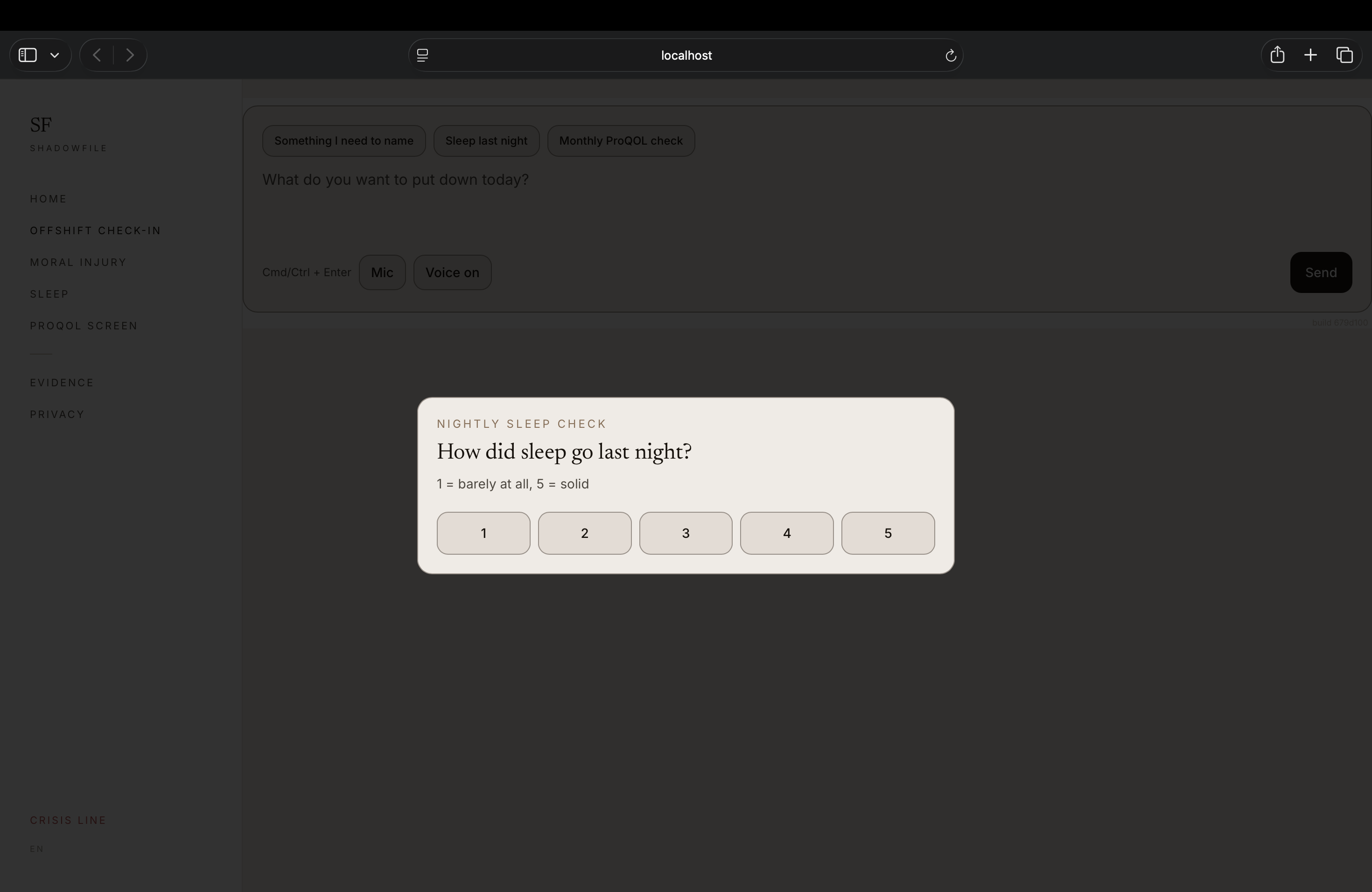
What it does ShadowFile helps people process hard moments at work. Users can do a short off-shift check-in, walk through a moral injury reflection, log a sleep check, take a ProQOL-style screen, or write privately in a Shadow Logbook. It is not a therapist or a crisis line. It is a private support layer that helps people slow down, name what happened, and pick one realistic next step.
How we built it
ShadowFile is built with Vite, React, TypeScript, and Tailwind CSS. Sessions save locally through localStorage, and the AI runs locally through Ollama. One command — bash start.sh — launches the full AI version. No API keys, no accounts, no token limits.
The Vercel link is a public preview of the interface. The full AI experience is designed to run on the user's own machine for privacy and reliability.
Challenges we ran into The hardest part was keeping the app serious without making it feel clinical or scary. We cut anything that pulled focus — gamification, voice output, anything that felt performative — and stayed with quiet, text-based support. Reliability was the second challenge. Free hosted AI providers came with rate limits and demo-day risk, so we made local Ollama the main experience and treated the cloud version as a preview.
Accomplishments we're proud of ShadowFile is not a chatbot wrapper. It has structured flows, session controls, a private logbook, safety-aware language handling, and a local-first setup that works without cloud AI. We are also proud that it solves a real human problem: people often need support before they are ready to talk to someone. ShadowFile gives them a place to stand in that moment.
What we learned Support tools work better with restraint. A good response is not always long, cheerful, or overly therapeutic. Sometimes the right design is quiet, private, and out of the way. Privacy is not a feature. For a product like this, privacy is the reason someone would use it at all.
What's next for ShadowFile Short term: better session organization, optional exports, stronger local model support, and more carefully designed workplace-support flows. Long term: make ShadowFile useful for anyone in a high-pressure environment who needs a private space to understand what happened before deciding what to do next.
Built With
- css
- ollama
- react
- typescript
- vercel

Log in or sign up for Devpost to join the conversation.