
Inspiration
Every day, millions of users click "I Agree" on software terms of service, privacy policies, or cookie banners that legally bind them to data selling, forced arbitration, or hidden subscription traps. At the same time, companies struggle massively to ensure their software updates and user interfaces don't accidentally violate consumer laws before shipping. I wanted to build something that fights back against deceptive design and brings total transparency to digital contracts.
What it does
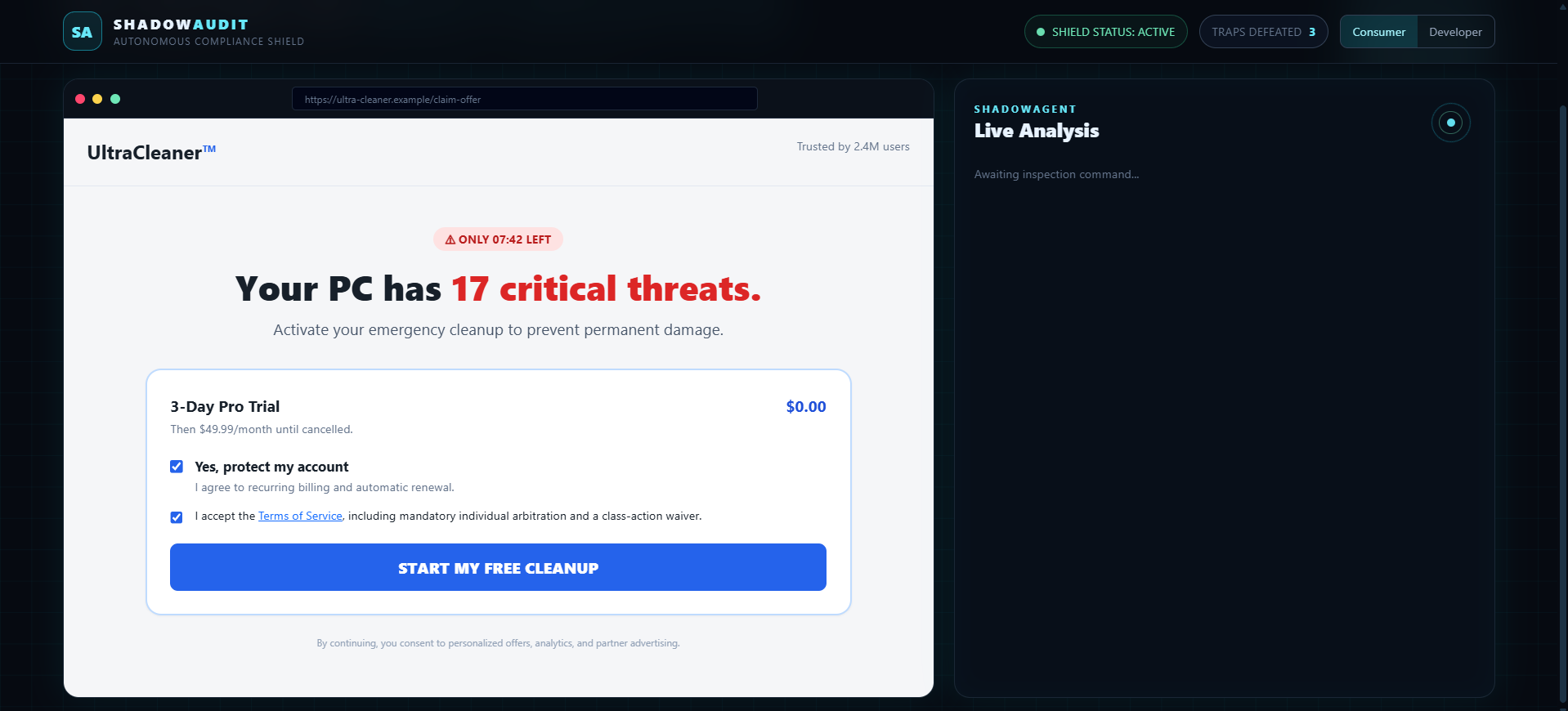
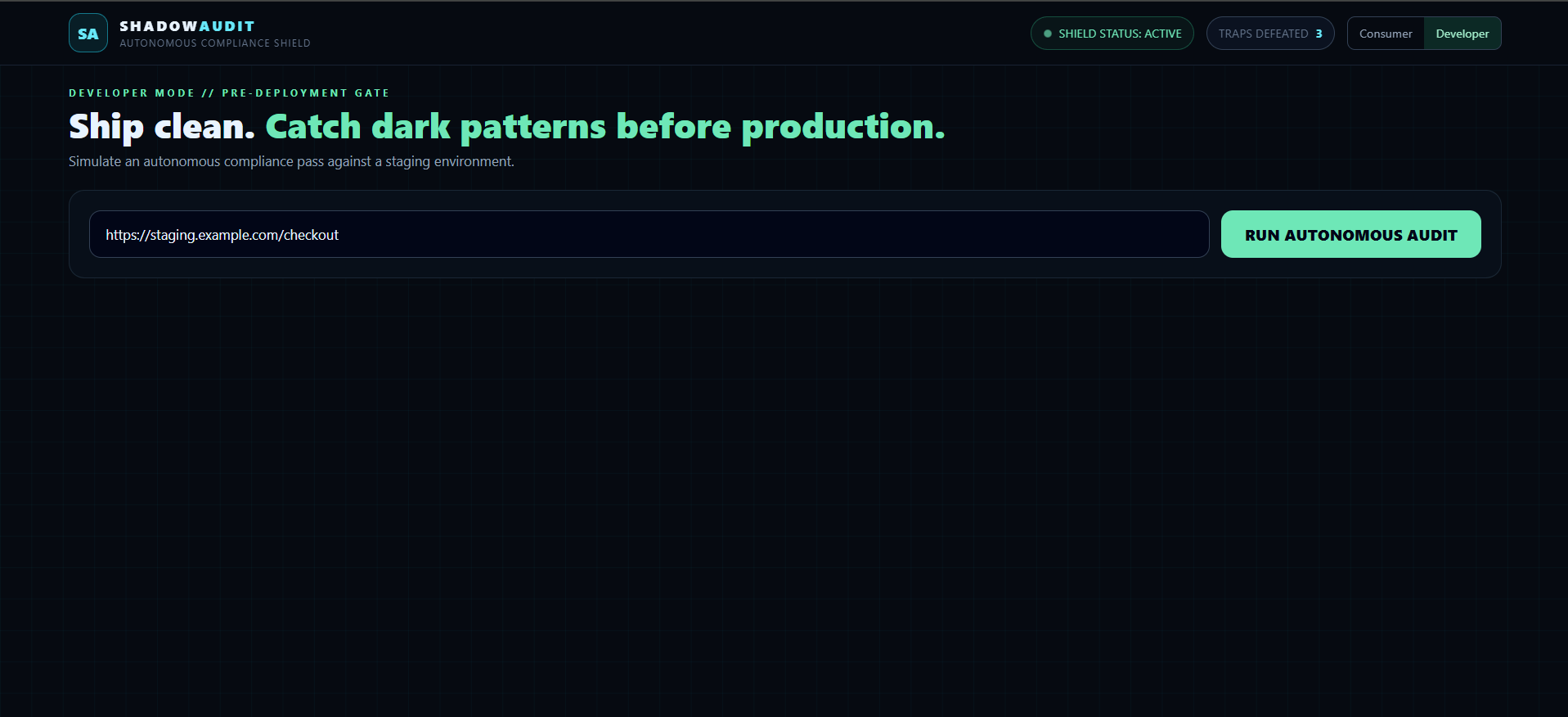
ShadowAudit is an autonomous compliance and dark-pattern shield. For everyday users, it acts as a browser-side assistant that intercepts terms of service and UI elements, highlighting hidden traps and translating complex legal walls into punchy 3-bullet summaries. For developers, it provides a staging audit tool to scan web apps for illegal UI dark patterns and regulatory hazards prior to deployment.
How I built it
I built ShadowAudit using HTML, Tailwind CSS for a sleek and futuristic dark-mode cybersecurity aesthetic, and vanilla JavaScript for the core application logic and interactive state handling. The frontend features a split-screen layout mimicking a live browser container alongside a real-time scanning analysis panel, complete with dynamic status logs and interactive inspection modules.
Challenges I ran into
Designing an intuitive interface that balances complex regulatory metrics (like GDPR and FTC guidelines) with a clean consumer-facing view was a major hurdle. I also had to carefully structure the simulated multi-agent inspection sequence so that the real-time status updates and visual warnings felt snappy, immersive, and convincing during a live demonstration.
Accomplishments that I'm proud of
I'm exceptionally proud of how fast the UI comes together to deliver that "holy crap" demo factor—being able to trigger a live audit scan that instantly flags hidden recurring billing and deceptive checkboxes makes for a powerful presentation. I also managed to cleanly bridge two completely different use cases (consumer protection and developer compliance) into a single, cohesive dashboard.
What I learned
Building ShadowAudit taught me a lot about designing effective multi-agent simulation interfaces and structuring dense legal data into readable, human-friendly insights. I also sharpened my skills in rapid front-end prototyping, UI feedback design, and creating high-impact cybersecurity aesthetics using Tailwind CSS under a tight timeframe.
What's next for ShadowAudit
Next, I plan to move ShadowAudit from a simulated prototype into a fully functional browser extension. This will involve integrating real-time LLM-backed multimodal scrapers to analyze live DOM nodes and actual website contracts on the fly, alongside expanding the developer CI/CD integration features.
Built With
- css
- design
- html
- javascript
- tailwind-css
- ui/ux
- vanilla-js


Log in or sign up for Devpost to join the conversation.