-
-
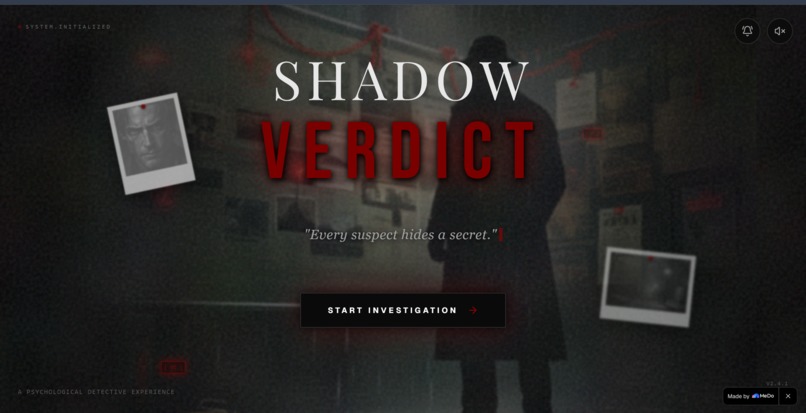
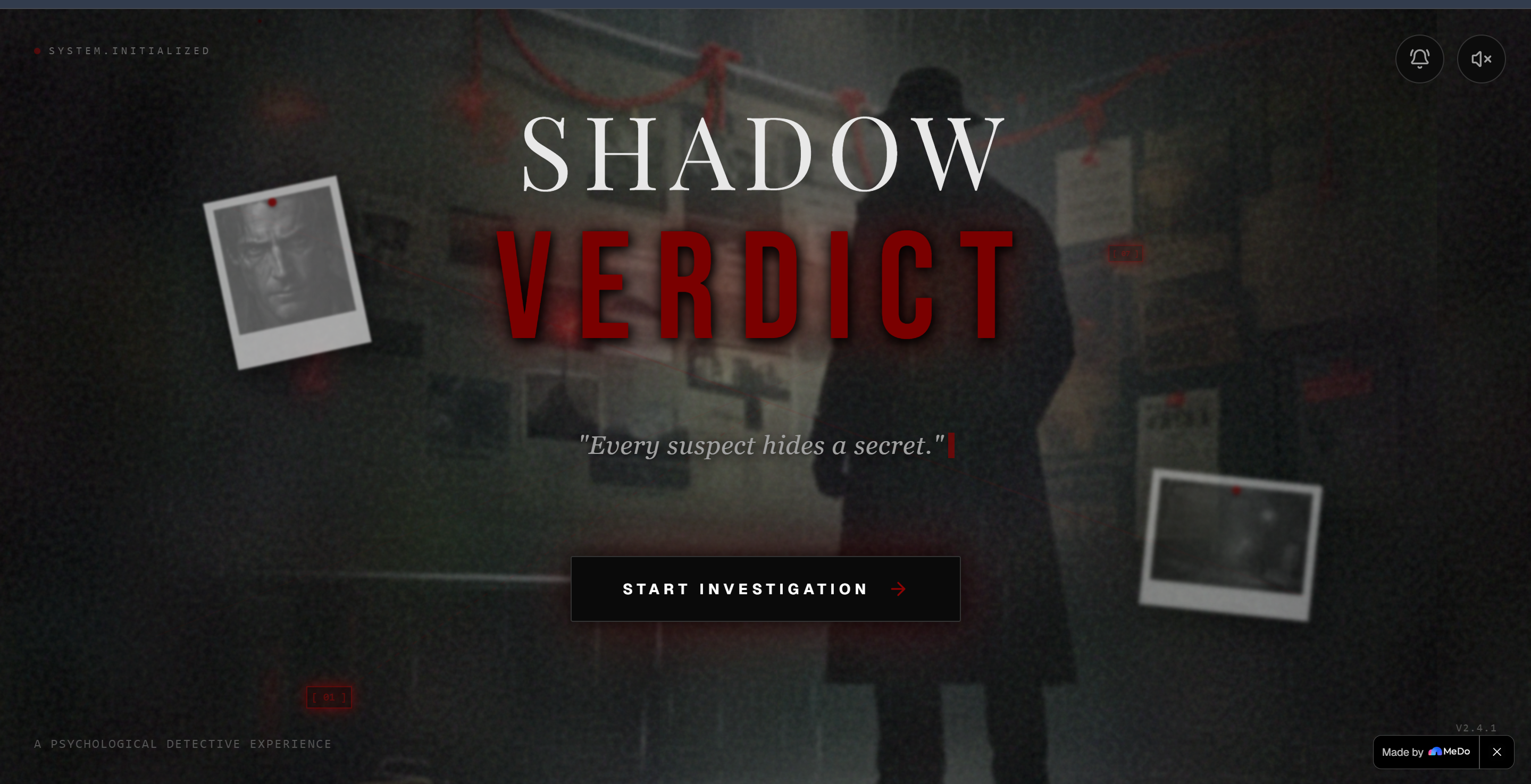
The Loading Screen
-
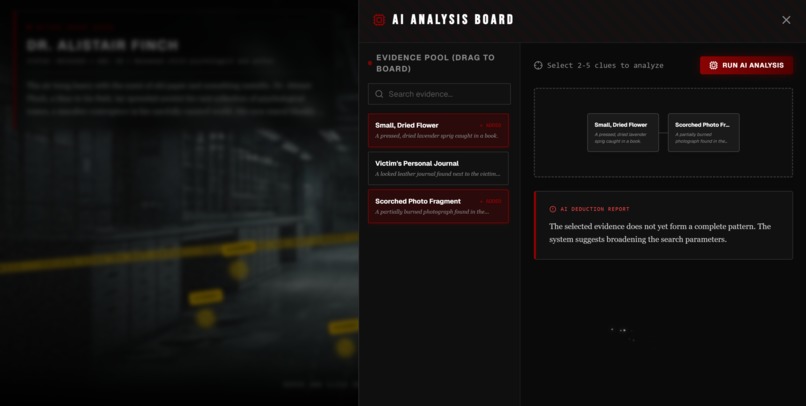
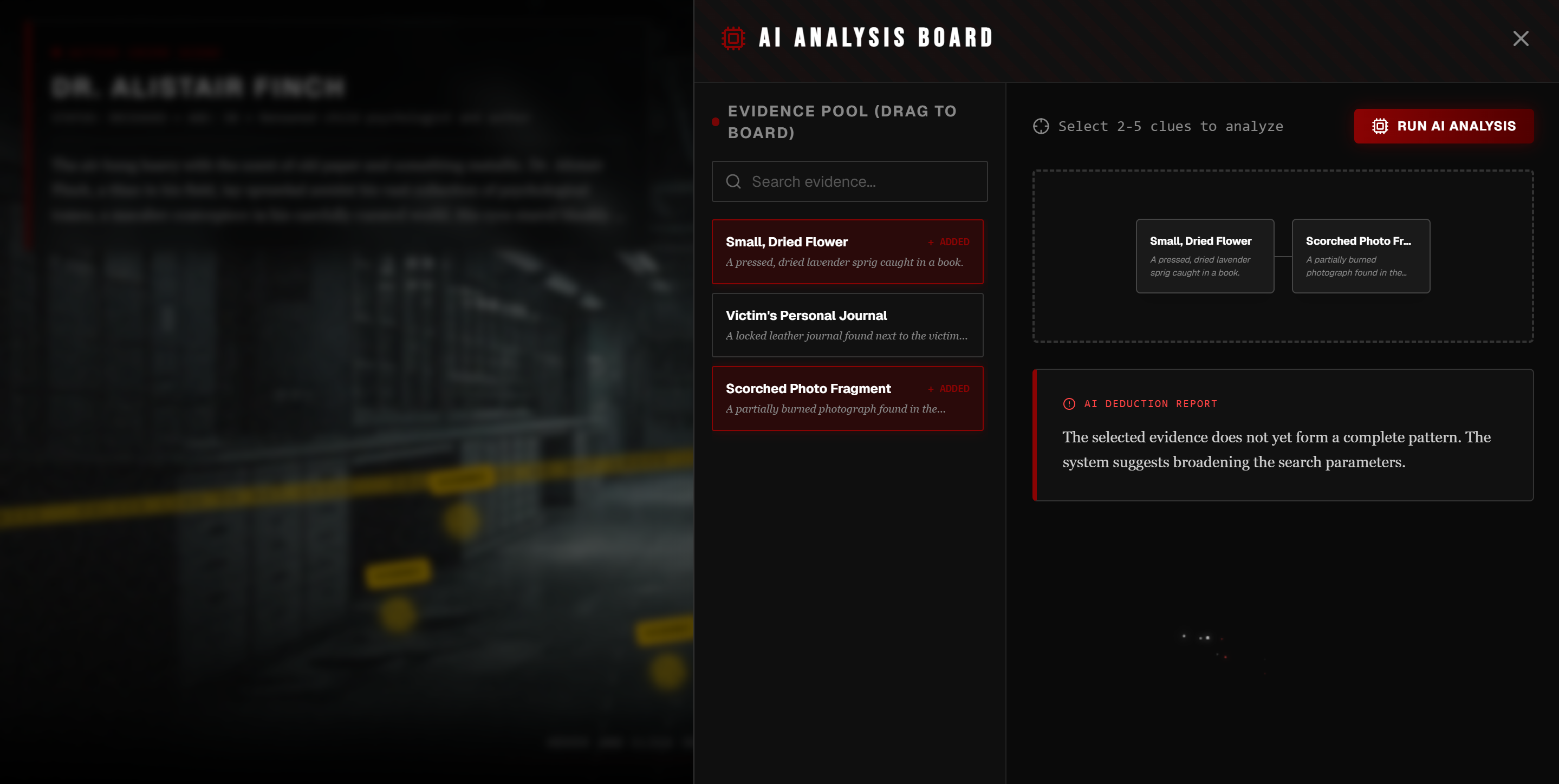
AI Analysis - to find relationships between know evidence
-
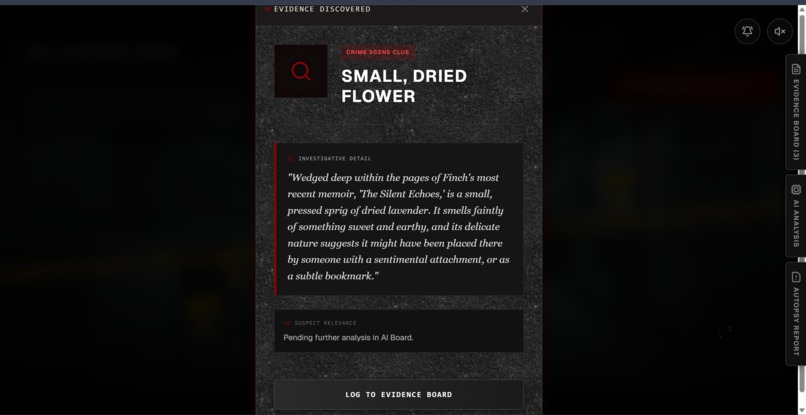
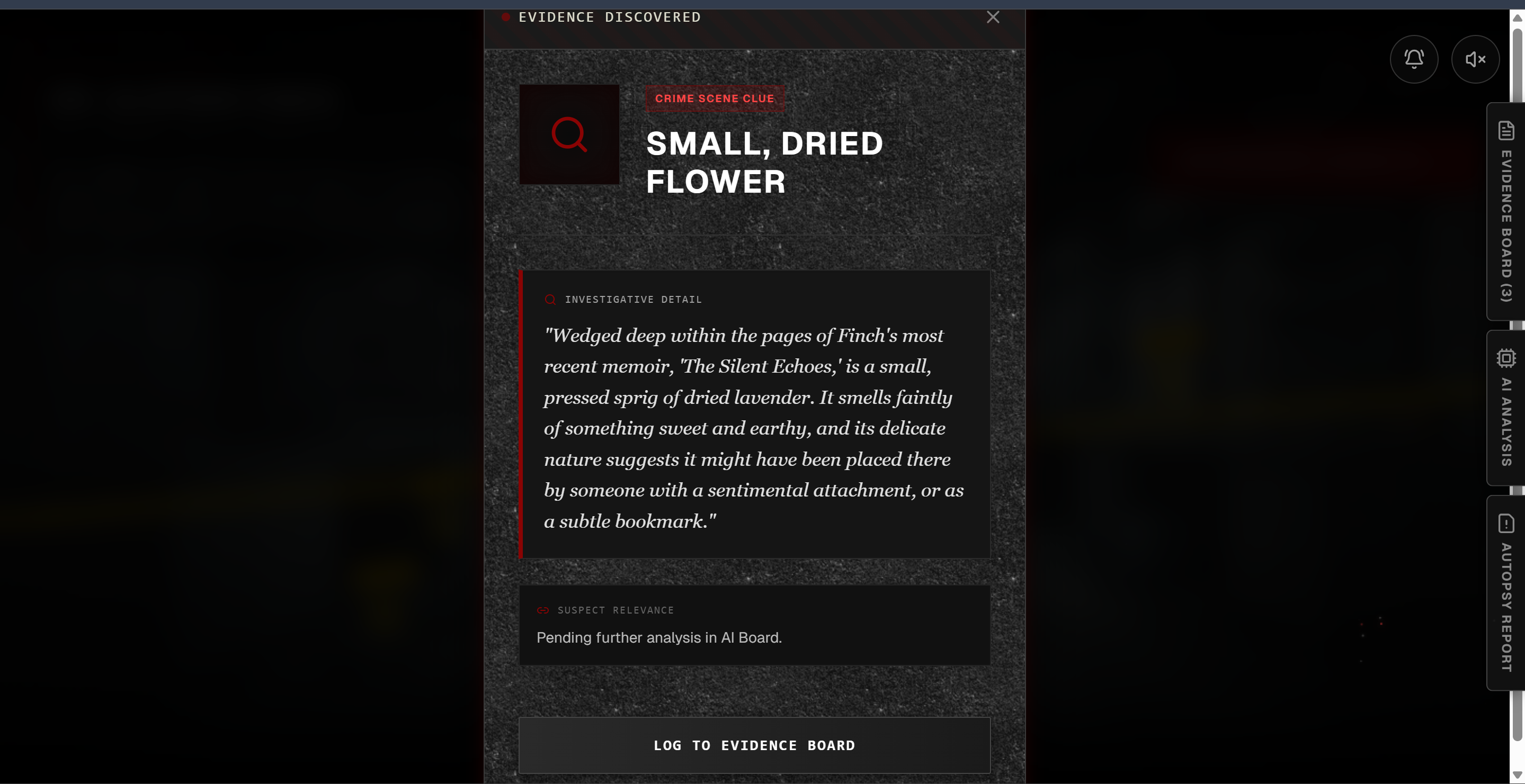
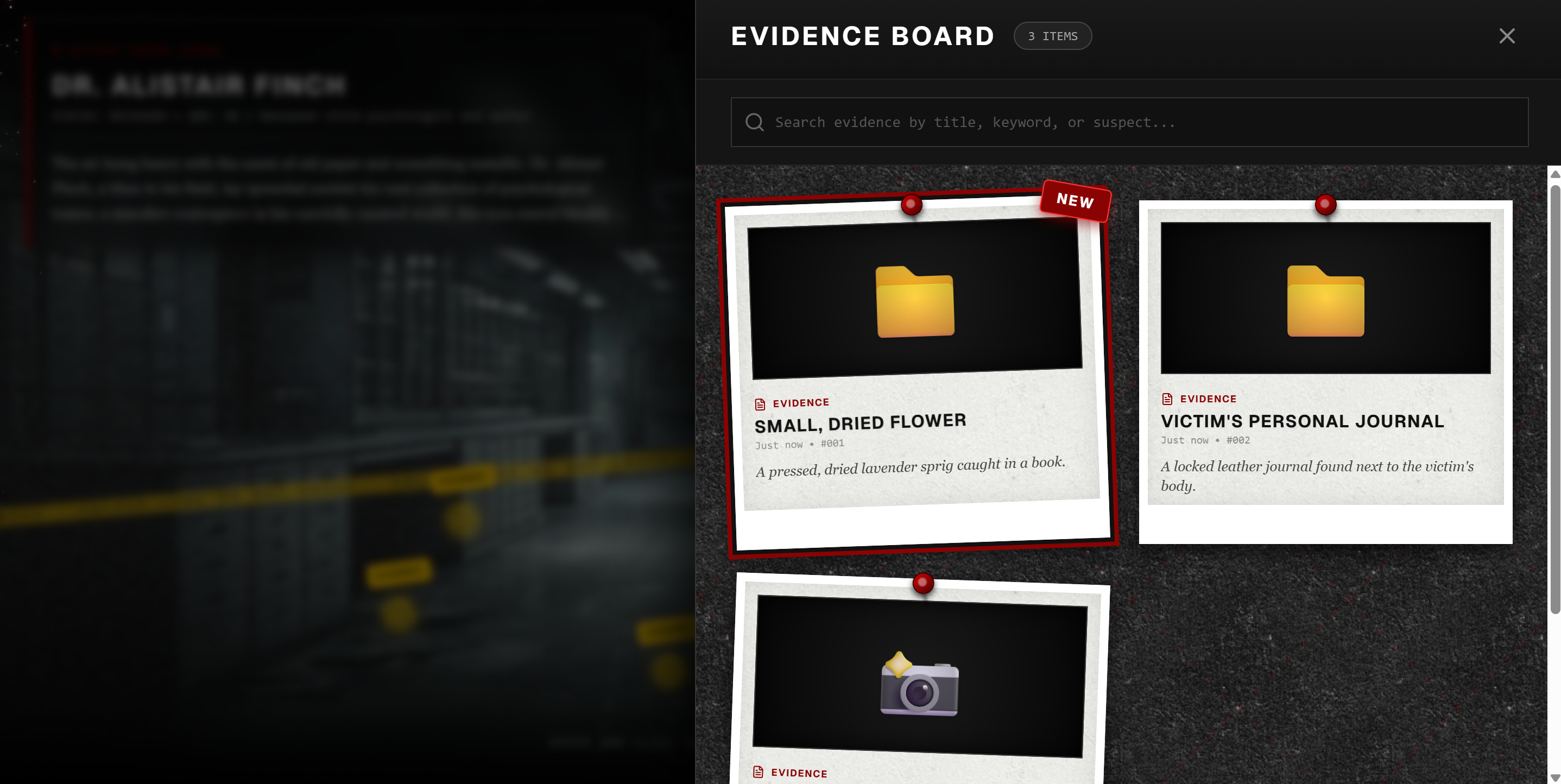
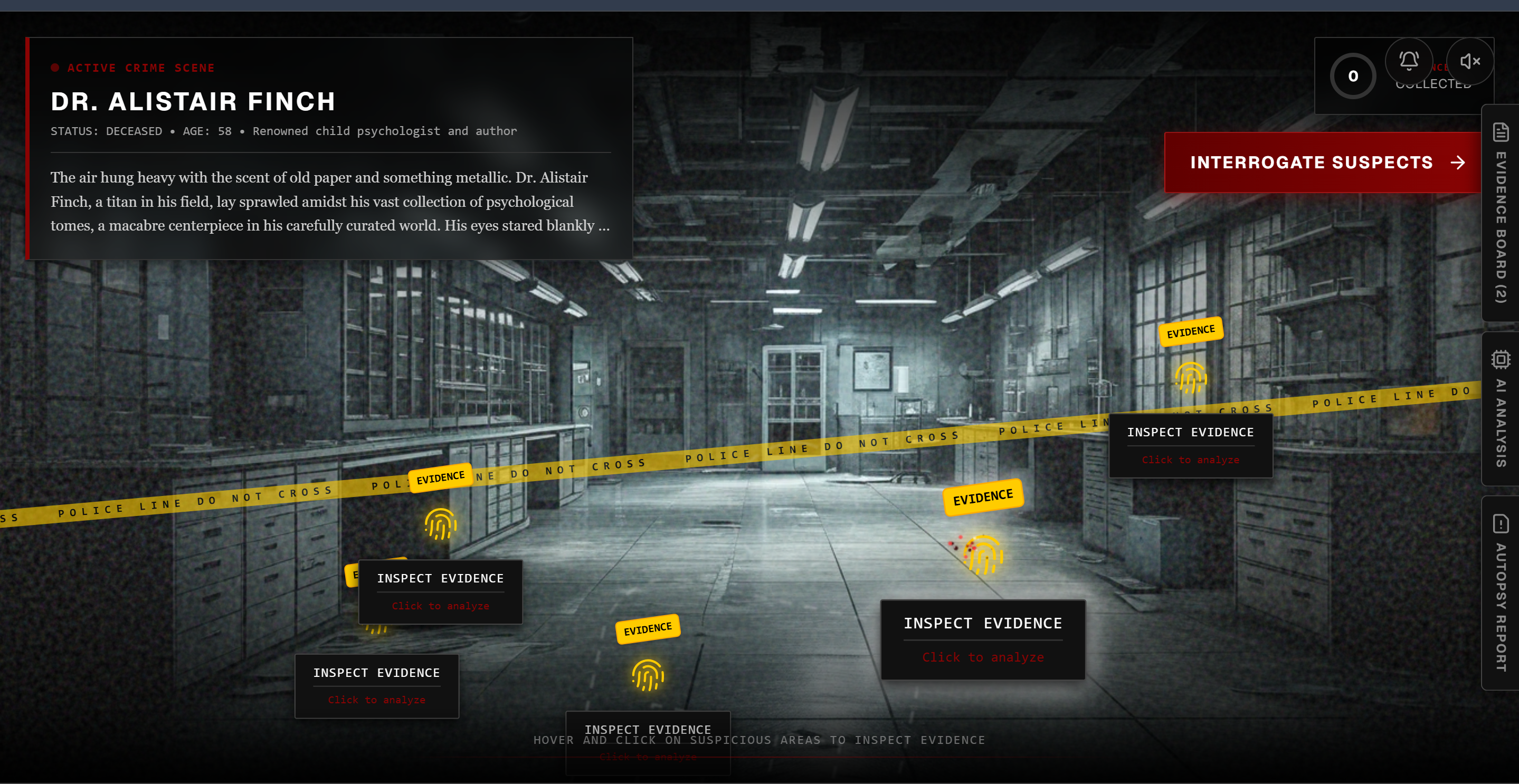
Evidence from the crime scene
-
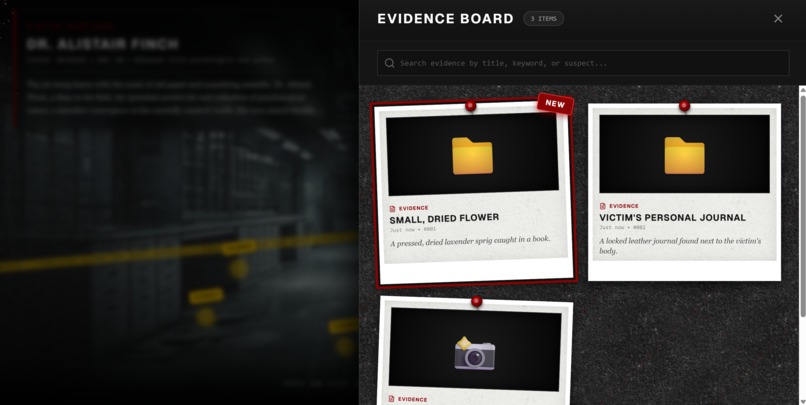
Evidence Board
-
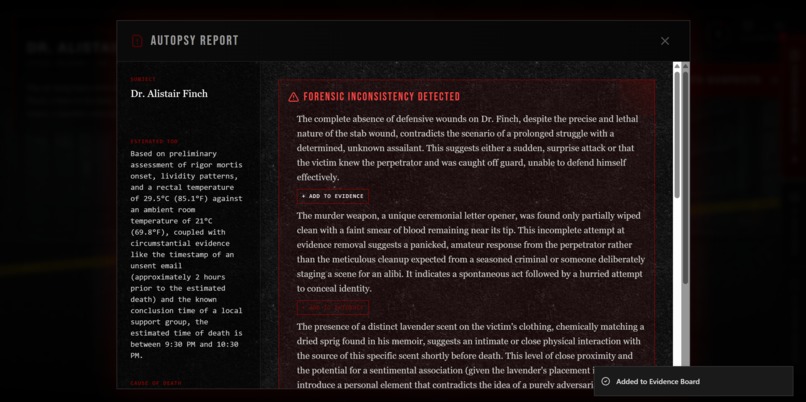
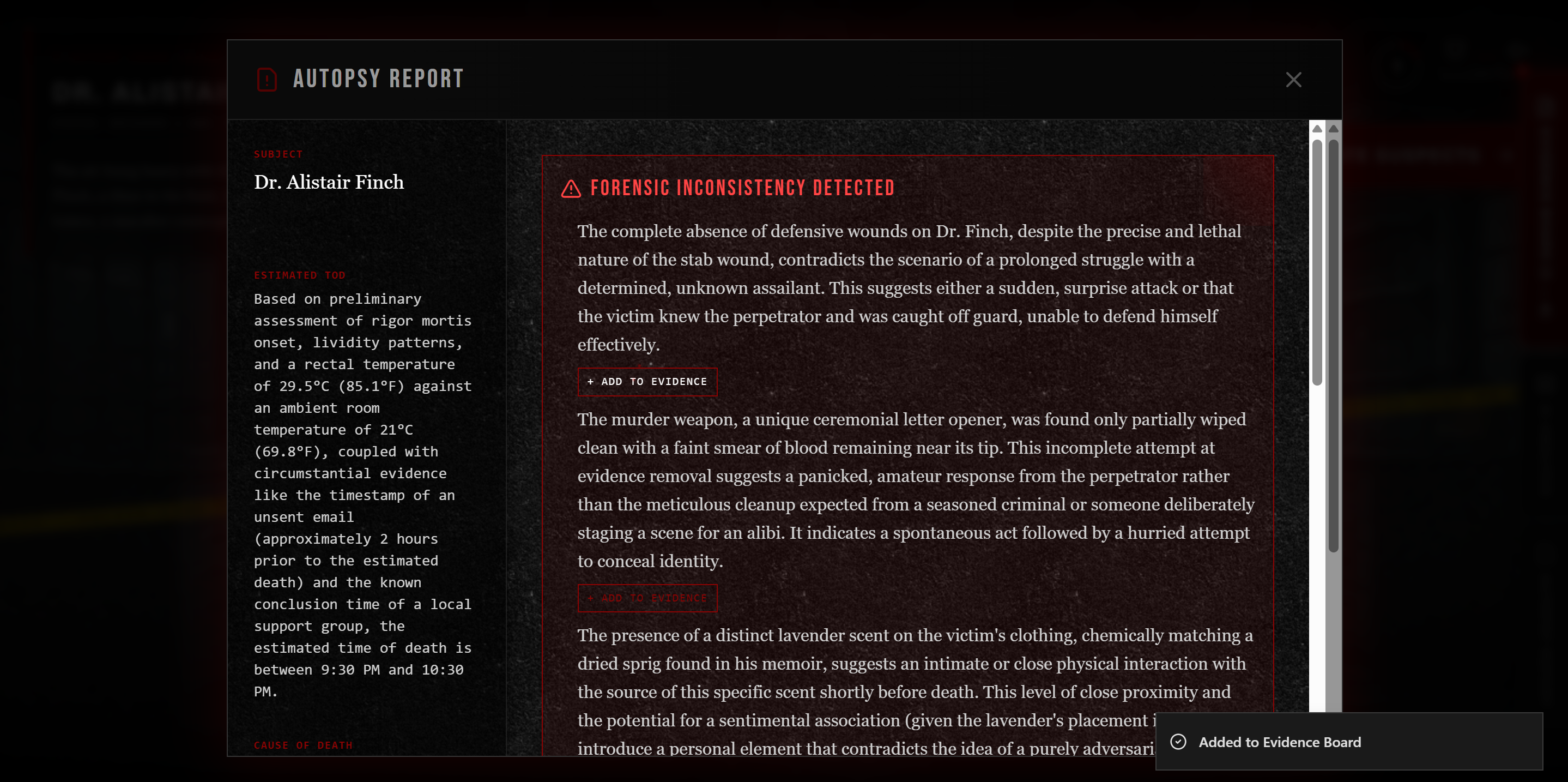
Autopsy Report
-
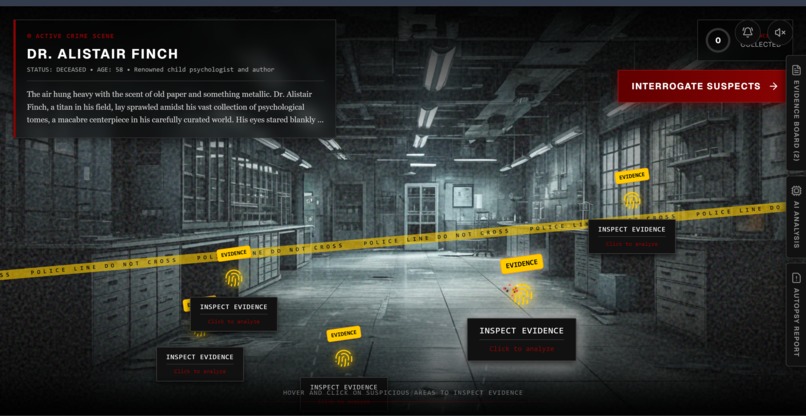
Crime Scene
-
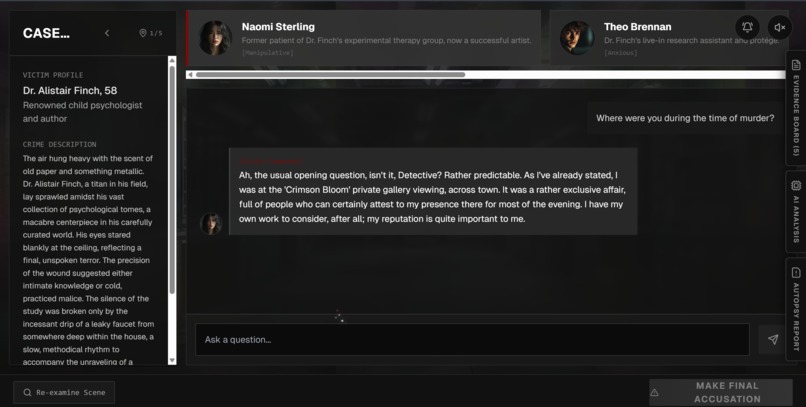
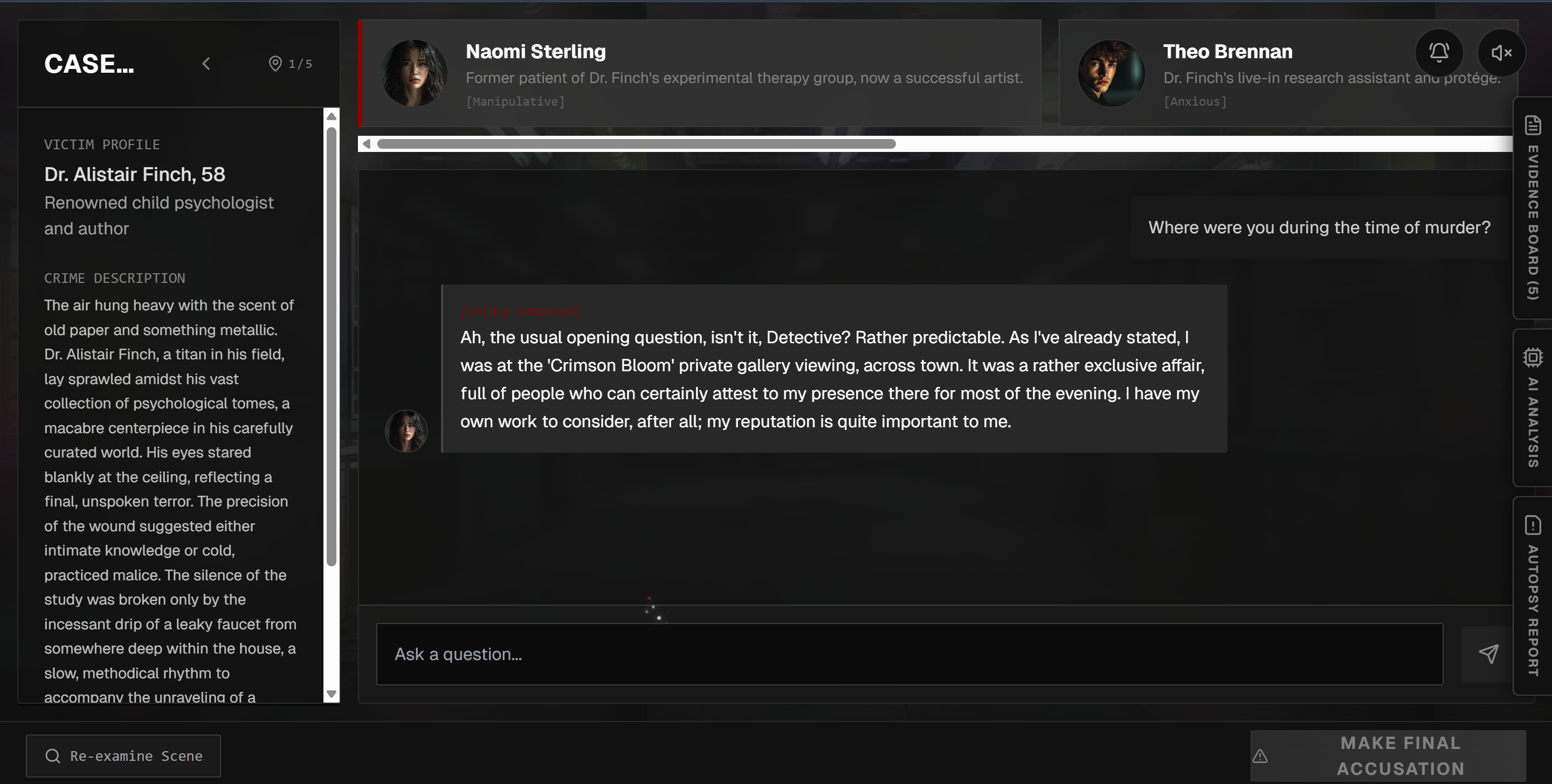
Interrogation Chat
-
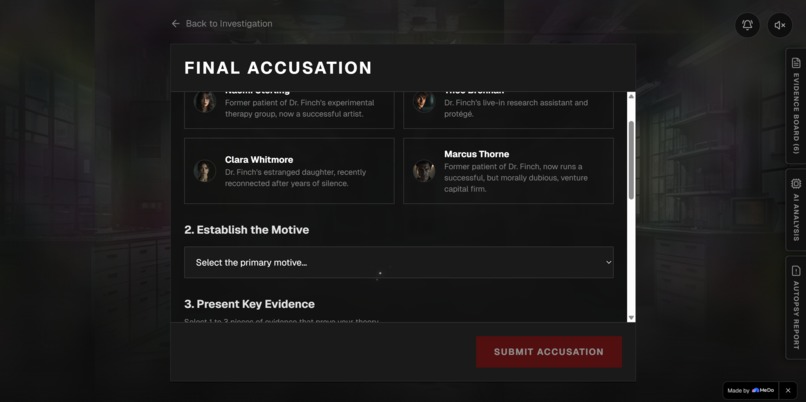
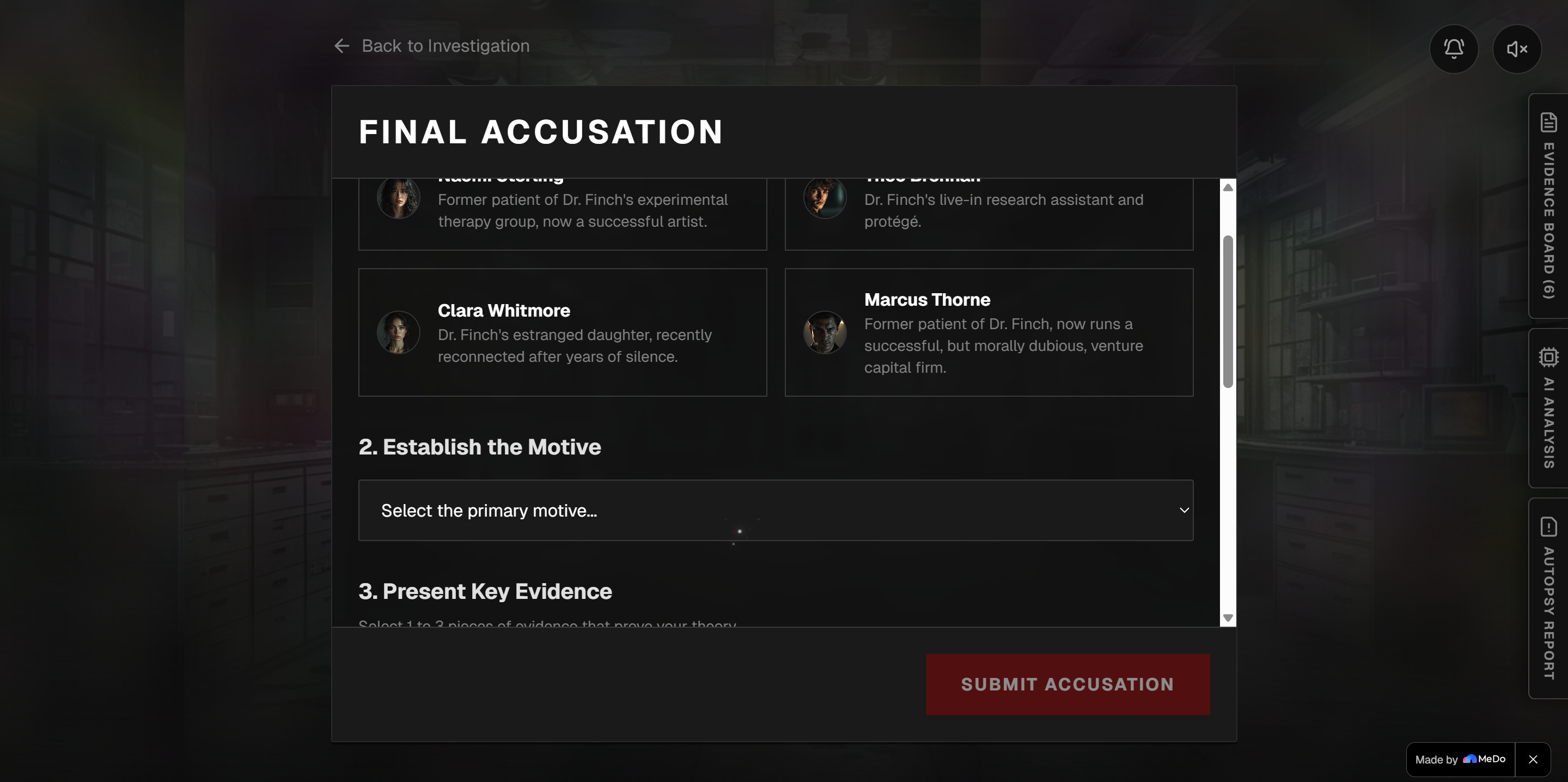
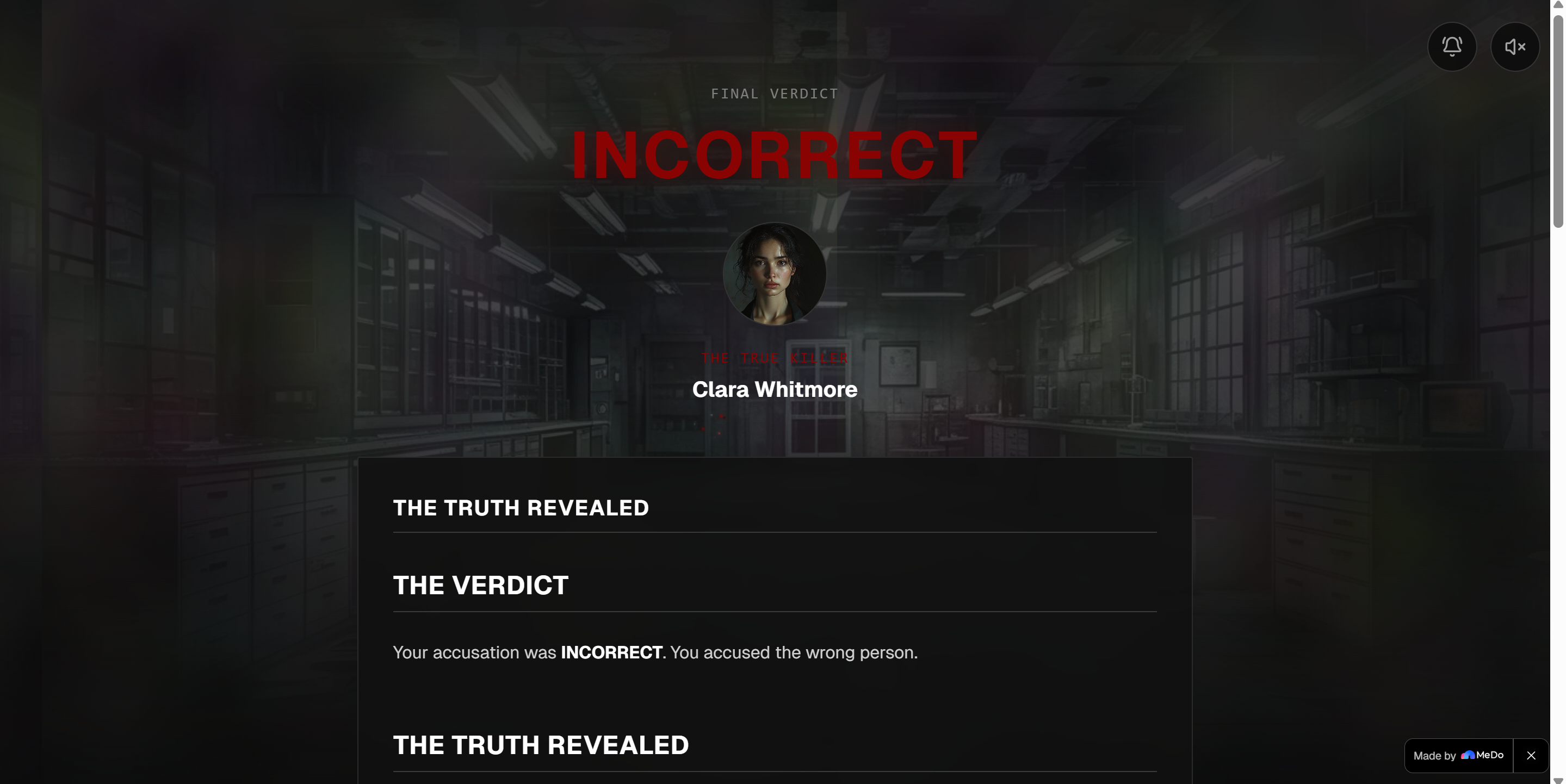
Final Accusaation
-
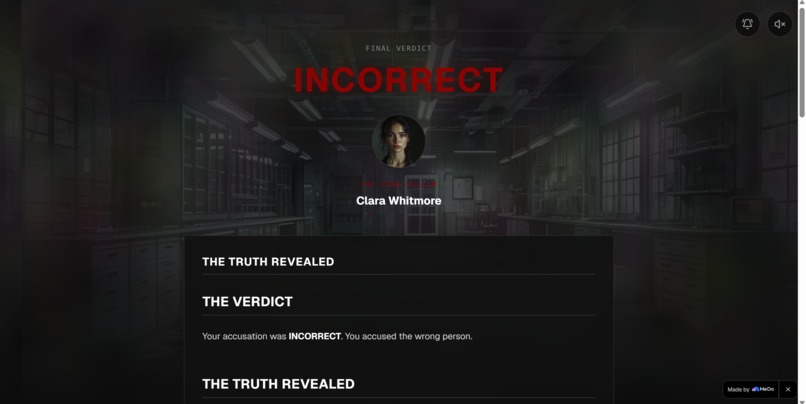
This is an example output
Inspiration
I’ve always been fascinated by psychological thrillers and detective stories where the truth feels uncertain and every character hides something beneath the surface. I wanted to create an experience where players don’t just solve a mystery but truly feel like investigators: questioning suspects, analyzing contradictions, connecting clues, and dealing with manipulation, fear, and deception.
Most detective games follow fixed dialogue trees and predictable investigation systems. I wanted Shadow Verdict: A Detective Game to feel more alive and psychologically immersive, where each suspect behaves differently, evidence evolves dynamically, and players must think critically instead of simply clicking through dialogue.
That idea became the foundation of Shadow Verdict: an AI-powered noir detective experience focused on deduction, atmosphere, and psychological tension.
How I Built It
I built the entire project using MeDo, leveraging AI-assisted full-stack development through natural language prompting and iterative refinement.
The project began as a simple interrogation-based detective concept but gradually evolved into a much more immersive investigative experience featuring:
- AI-driven suspect interrogation system
- Dynamic suspect personalities and emotional behaviors
- Evidence discovery and investigation mechanics
- Crime scene exploration
- Autopsy report system
- AI Analysis Board for clue correlation
- Cinematic noir-inspired UI/UX
- Interactive tutorial system with a detective mascot
- Layered ambient sound design and cinematic transitions
The investigation system was designed to feel interactive and psychologically engaging rather than linear. Players can:
- Explore crime scenes
- Question suspects
- Unlock forensic findings
- Analyze correlations between clues
- Build their own deductions before making a final accusation
I continuously refined the application through multi-turn development iterations, focusing heavily on:
- immersion
- UI polish
- realism
- emotional behavior
- performance optimization
- investigation flow
- readability and user experience
The app was deployed directly using MeDo’s built-in deployment tools.
Challenges I Faced
Building Realistic Interrogations
One of the biggest challenges was making suspects feel believable. I wanted different personalities such as manipulative, anxious, calm, or aggressive suspects to react differently during conversations without becoming repetitive or predictable.
Dynamic Evidence System
Creating a clean evidence system was surprisingly difficult. Evidence needed to:
- unlock naturally
- avoid duplication
- stay readable
- connect logically with the investigation
I also redesigned the evidence experience multiple times to reduce information overload and improve immersion.
Performance & Stability
As more cinematic systems were added (including audio, particles, overlays, transitions, portraits, and tutorials), deployment stability became a major challenge. Several systems worked in preview mode but caused issues in production builds, requiring extensive debugging and optimization.
Immersion & UX Design
A major realization during development was that immersion can break very easily. Small issues, like:
- loading delays
- overwhelming text
- inconsistent portraits
- broken transitions
- repetitive UI
could completely affect the detective atmosphere. A large part of development became focused on polishing the experience rather than simply adding features.
What I Learned
This project taught me that building an engaging product is about much more than functionality.
Some of the biggest lessons I learned were the following:
- Strong UX design is just as important as core features
- Small polish improvements can dramatically improve immersion
- AI systems need fallback logic and error handling
- Psychological engagement matters more than visual complexity
- Iterative refinement is essential for building polished experiences
I also learned how powerful AI-assisted development tools like MeDo can be when combined with creative iteration and strong product thinking.
Most importantly, I learned how to design around player experience: not just what the app does, but how the player feels while using it.
What’s Next
I plan to continue expanding Shadow Verdict by adding:
- more advanced psychological suspect behavior
- branching case outcomes
- richer cinematic visuals
- deeper forensic systems
- additional crime scenarios
- improved AI deduction systems
- enhanced animations and environmental storytelling
The long-term goal is to make the experience feel closer to a real interactive psychological detective thriller rather than a traditional chat-based application.
Final Thought
In Shadow Verdict: A Detective Game, solving the mystery isn’t the hardest part.
The hardest part is deciding who to trust.
Because in the end, every suspect is hiding something.
Built With
- medo


Log in or sign up for Devpost to join the conversation.