-
-
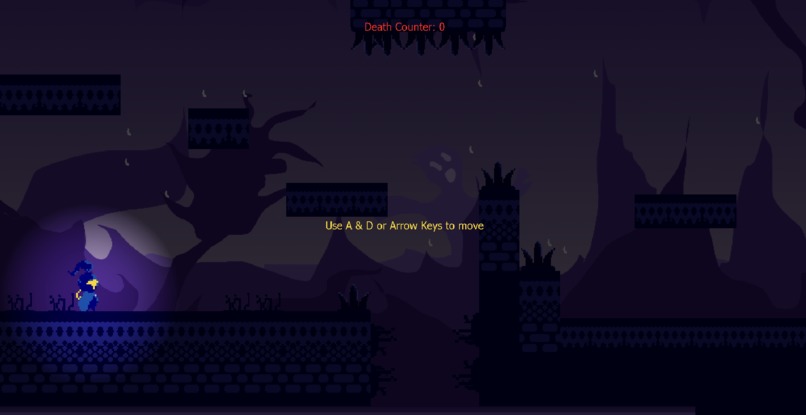
Beginner friendly controls and Interface!
-
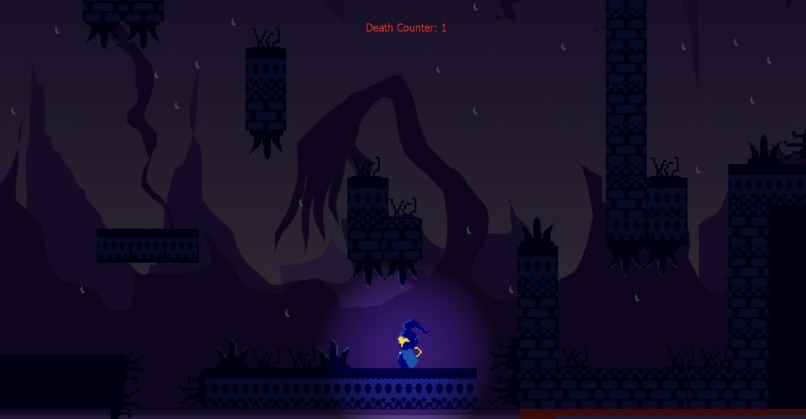
Explore as a knight while avoiding obstacles!
-

Hand-drawn Background Art
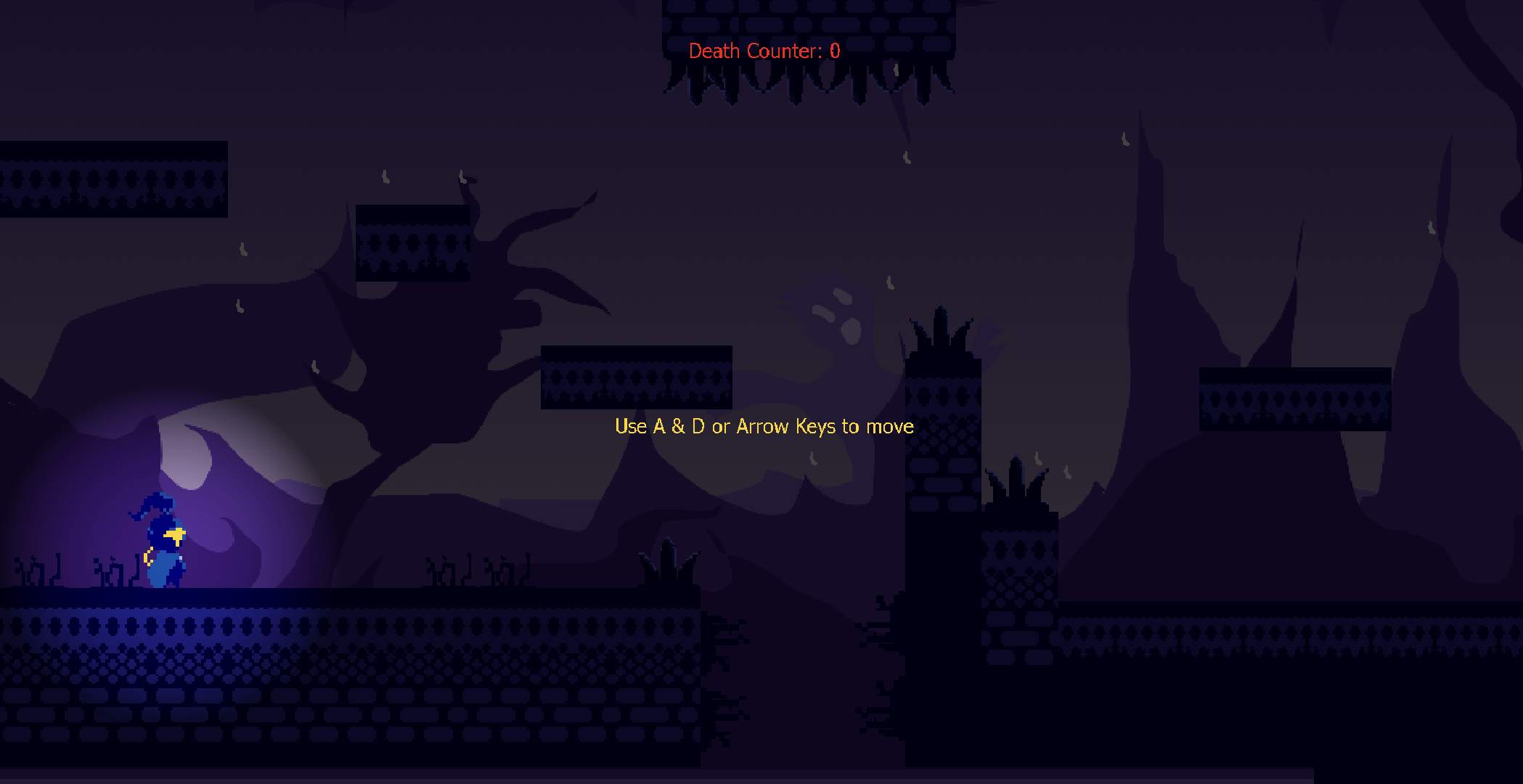
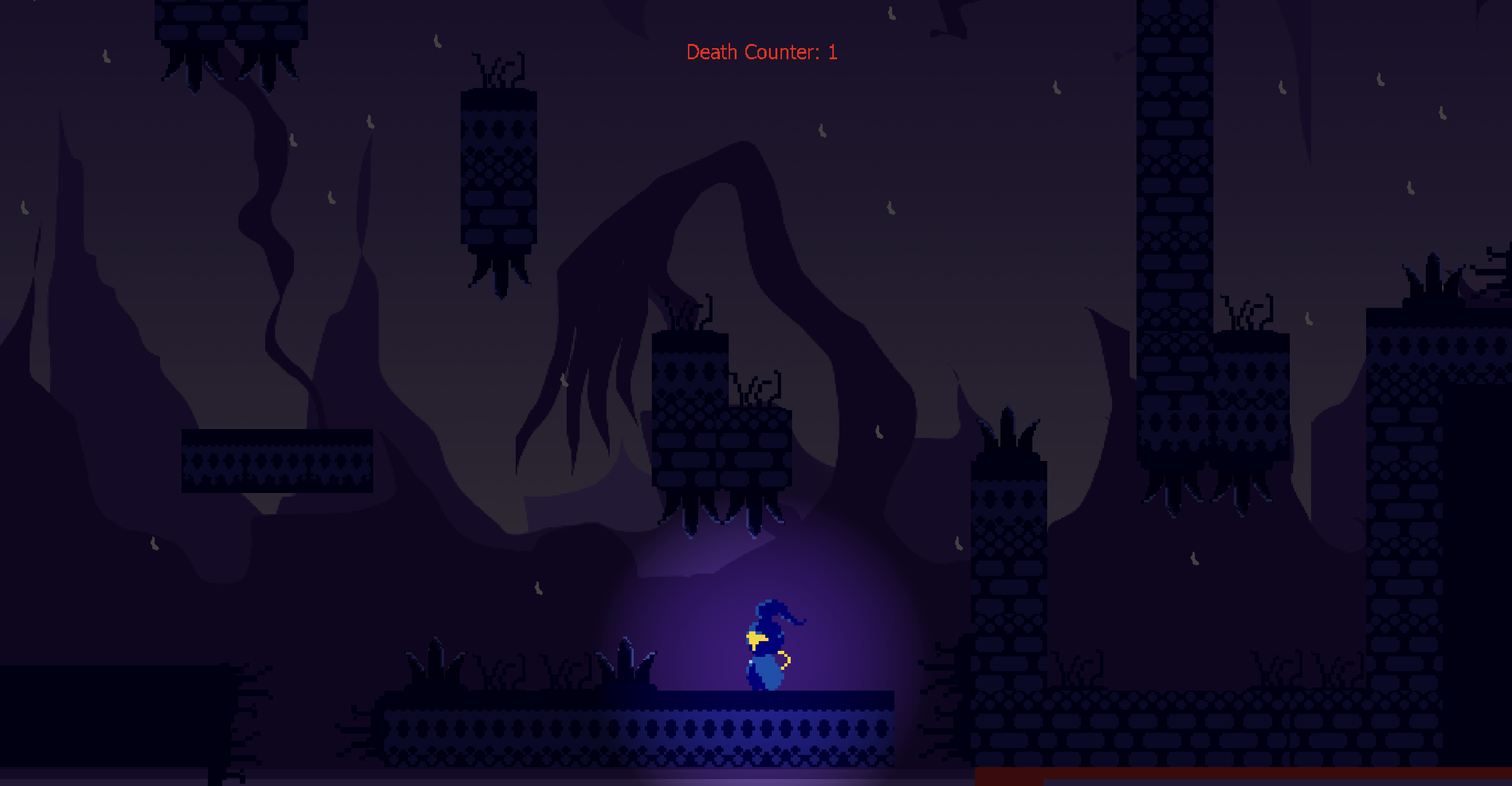

Inspiration: Our project was heavily inspired by the Roblox game "I Wanna Test The Game (Beta Test)." It's a challenging platformer that combines traditional gaming mechanics with unexpected educational elements. We loved how it challenged player expectations by mixing intense platforming with creative obstacles, making the player think twice before their next move. The concept of a "fake door" that trolls players while hiding the real objective resonated with us, as it adds layers of discovery and humor to what could otherwise be a straightforward platformer. With this, we wanted to include the controls of the game as second main focus. As such, players are given different mechanics such as dash, double jump, walk, and run to avoid those tricky obstacles. As you might guess, it sounds like Celeste!
Throughout development, we gained experience in several key areas: -Advanced Game Physics & Collision Detection -Implemented sub-pixel perfect collision systems for smooth wall interactions on different platforms such as normal wall, semi-solid wall, and moving platforms. -Developed fluent movement mechanics including variable-speed dashing and double-jumping as this game -Trial and error of making our own assets such as all the sprite animation, parallax background, and audio for the entire game -Implement of several different interactive traps to trick players. -Developed robust exam state machines with proper answer validation -Mathematical Integration in Gaming -Implemented particle effect of rain for scenery of the game.
How We Built It The project was developed in GameMaker Studio using GML (GameMaker Language): We watched a lot of YouTube tutorials on building perfect collisions and self-testing with dashing and movement gimmicks. We used PixSquare to create our sprite assets and Photoshop to create the parallax background.
Core Architecture Player Controller: Handles all movement, collision, and state management Game Manager: Centralizes inter-object communications and room transitions Environmental Systems: Modular objects for rain, traps, and interactive elements Exam System: Dedicated controller for question presentation and answer validation Advanced Collision Detection: Custom algorithms for slope navigation and platform interactions Dash Mechanics: High-speed movement with selective wall destruction capabilities
Challenges We Faced -Complex Collision Systems: The most significant challenge was implementing reliable collision detection that could handle: Multiple object types (solid walls, invisible walls, semi-solid platforms) and conditional interactions (dash-destroyable vs. permanent walls)
-State Synchronization Across Rooms: Managing player state during room transitions proved tricky
-Educational Content Integration Balancing game mechanics with educational value required careful consideration.
-Preventing audio spam while maintaining responsive feedback: Jump sounds playing continuously during air time Dash audio triggering at precise moments Random idle sounds without overwhelming the player
Each challenge taught us valuable lessons about game development, from low-level collision mathematics to high-level user experience design. The result is a unique platformer that successfully merges entertainment with education, just like our Roblox inspiration.


Log in or sign up for Devpost to join the conversation.