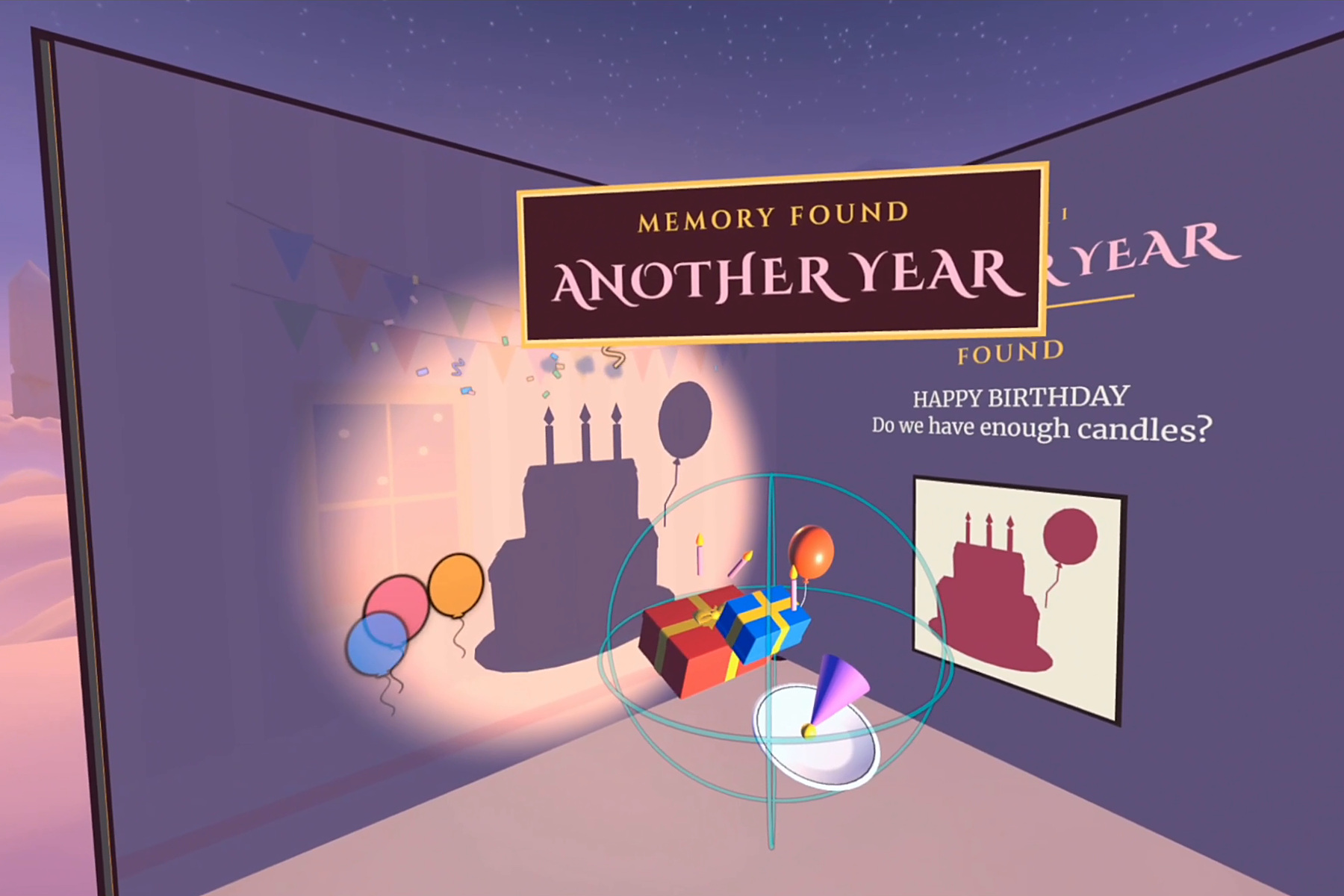
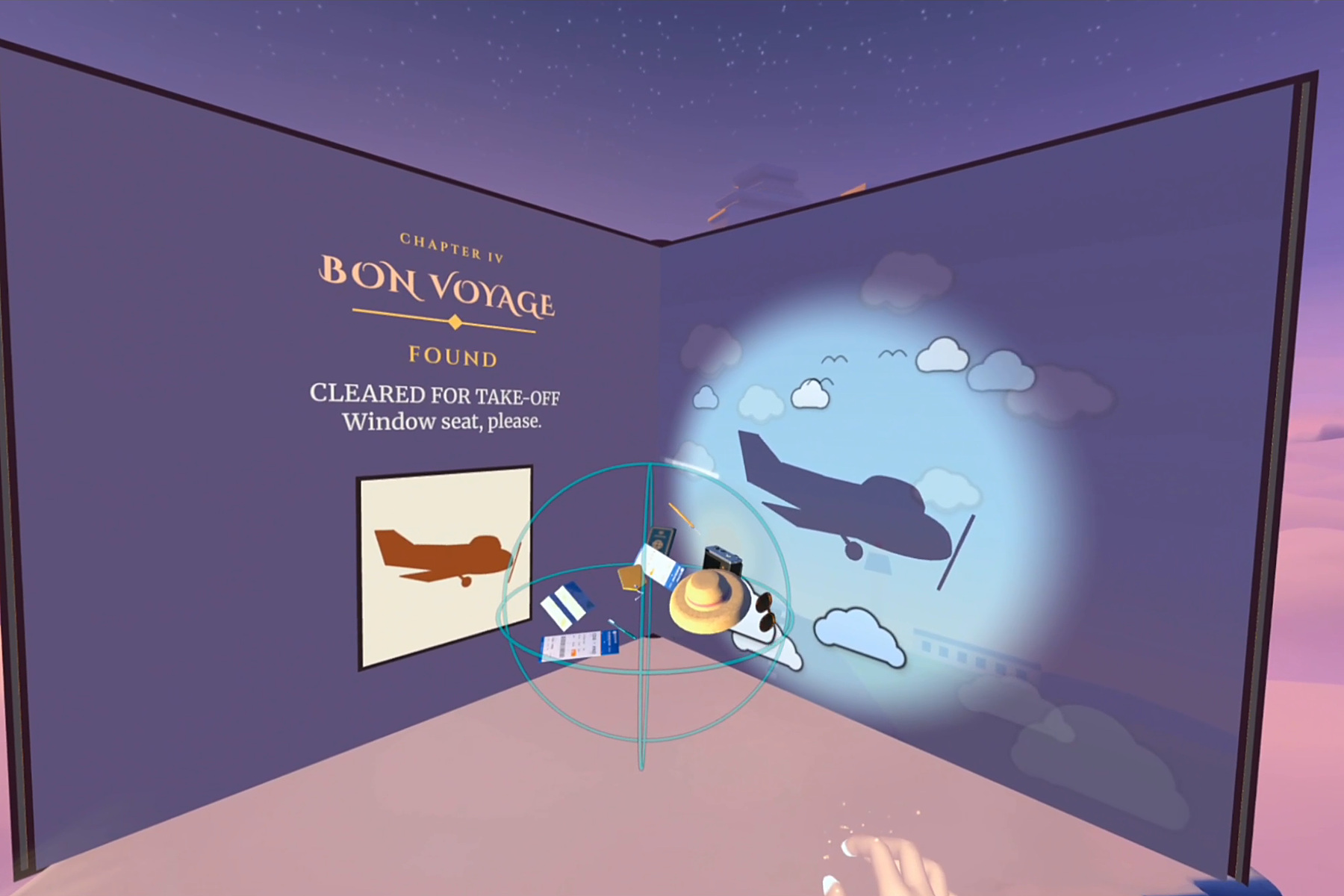
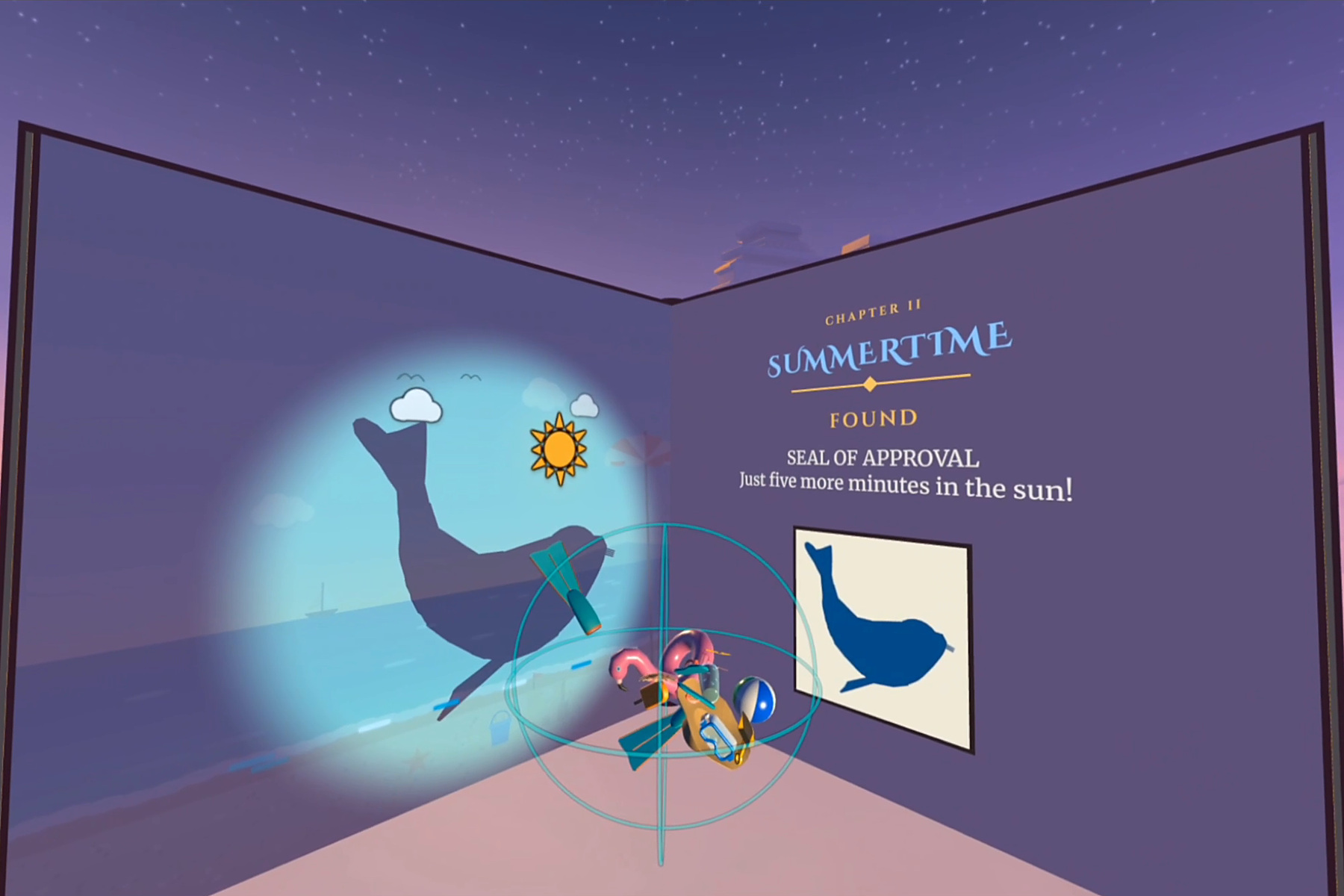
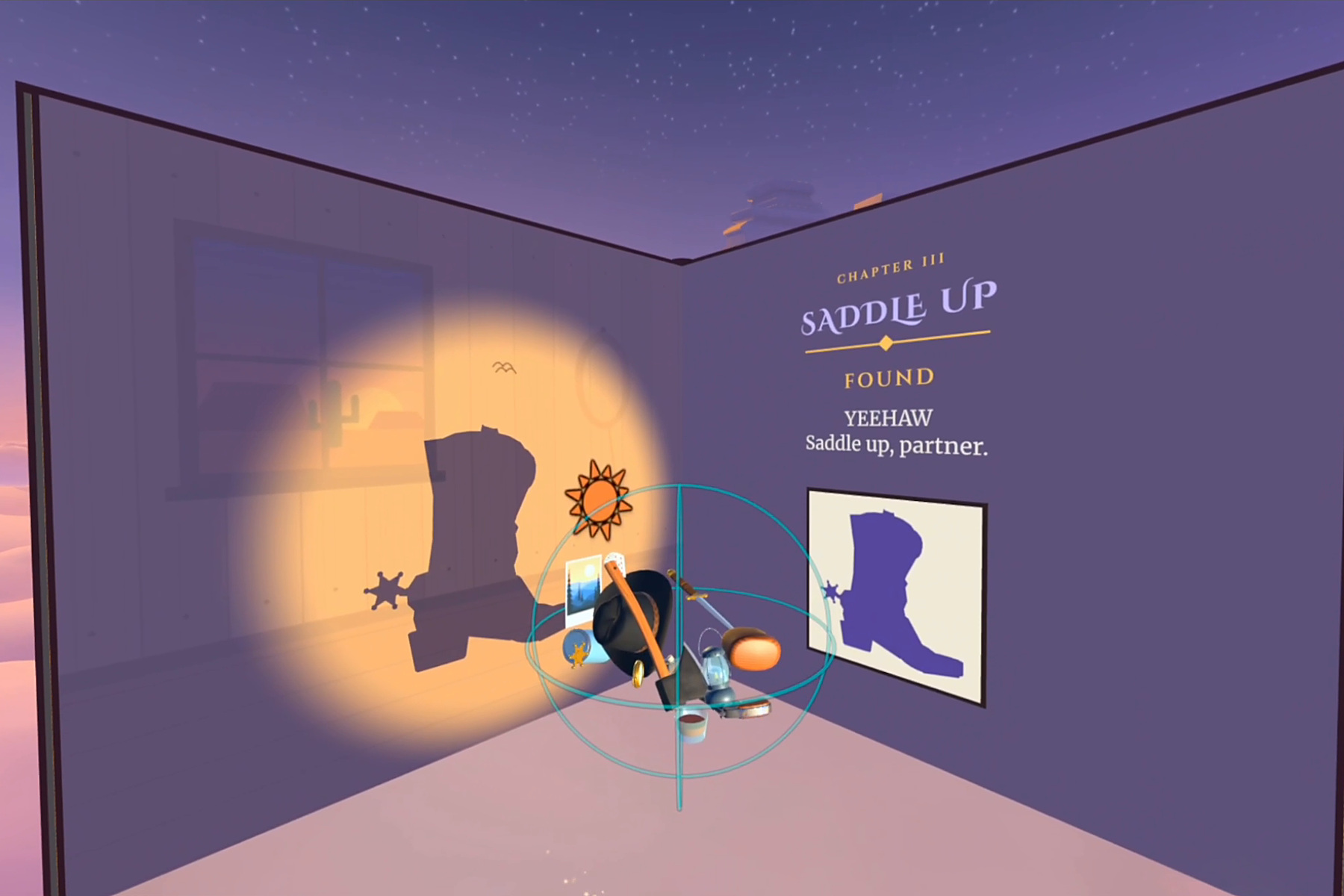
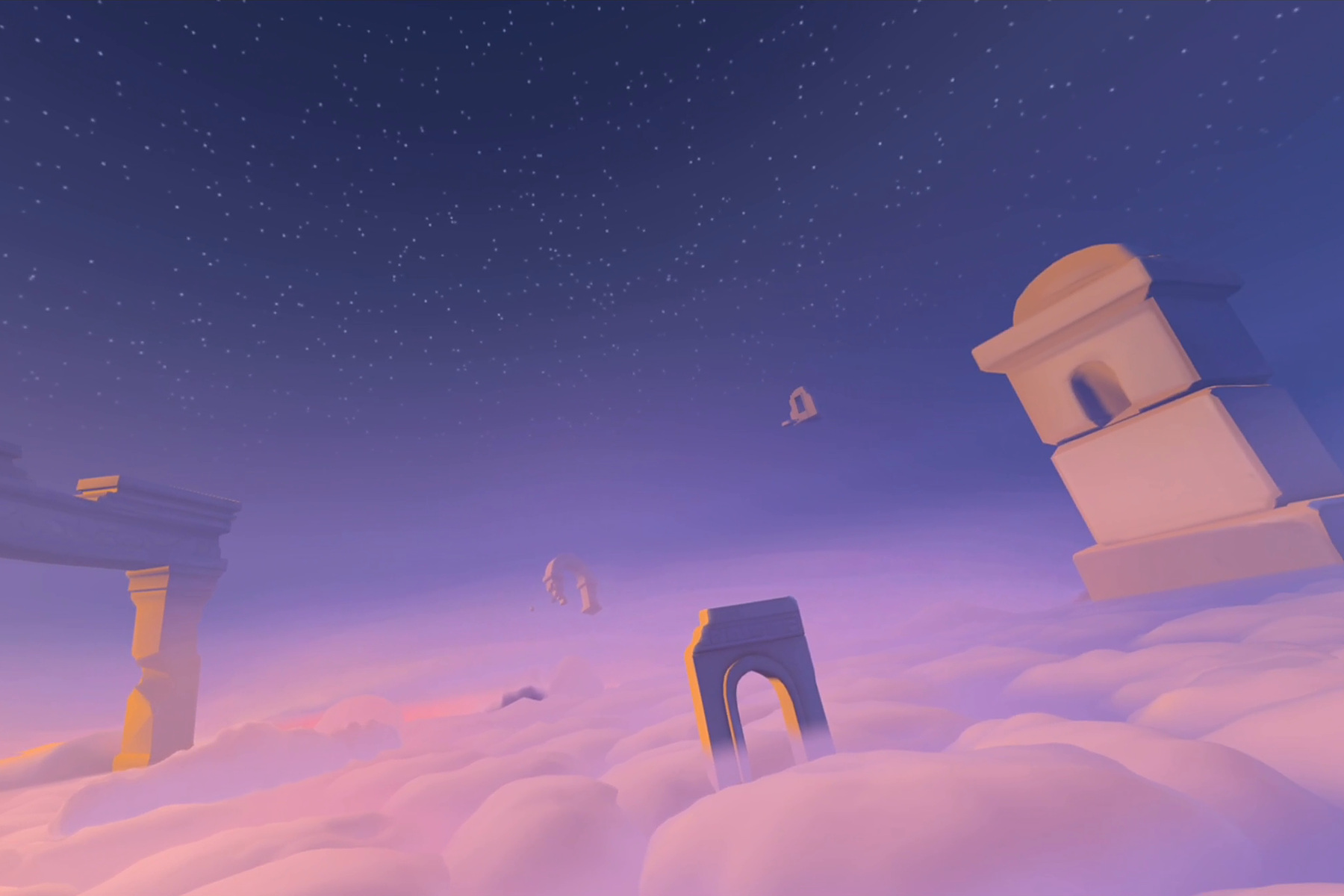
Inspiration
This project draws on the work of Tim Noble & Sue Webster and other artists who turn everyday objects into images through light and shadow. We were fascinated by how unrelated objects can cast a recognizable silhouette with an entirely new meaning.
What if those objects were the things a memory leaves behind, and the only way to remember was to turn them in the light until the shadow comes back?
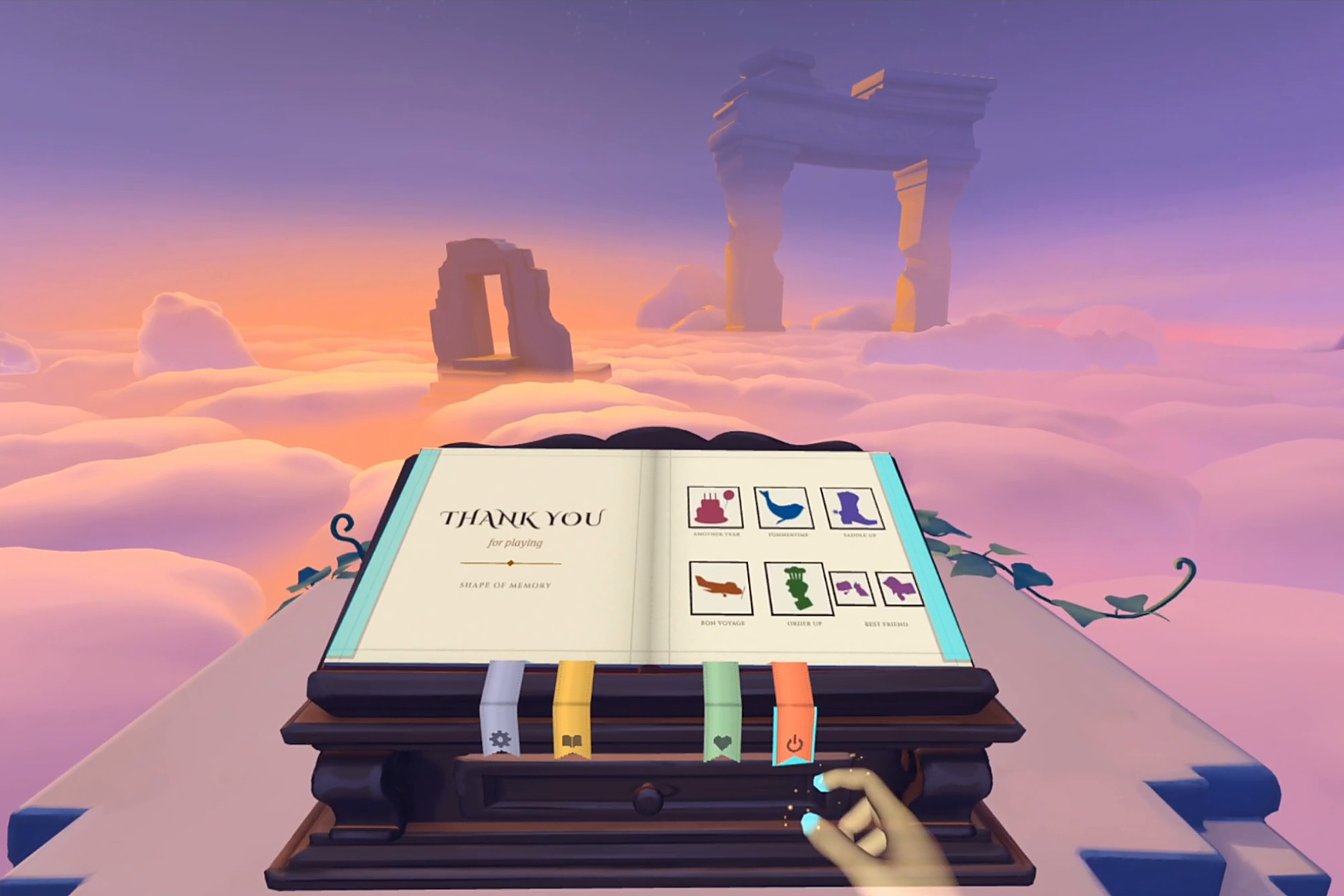
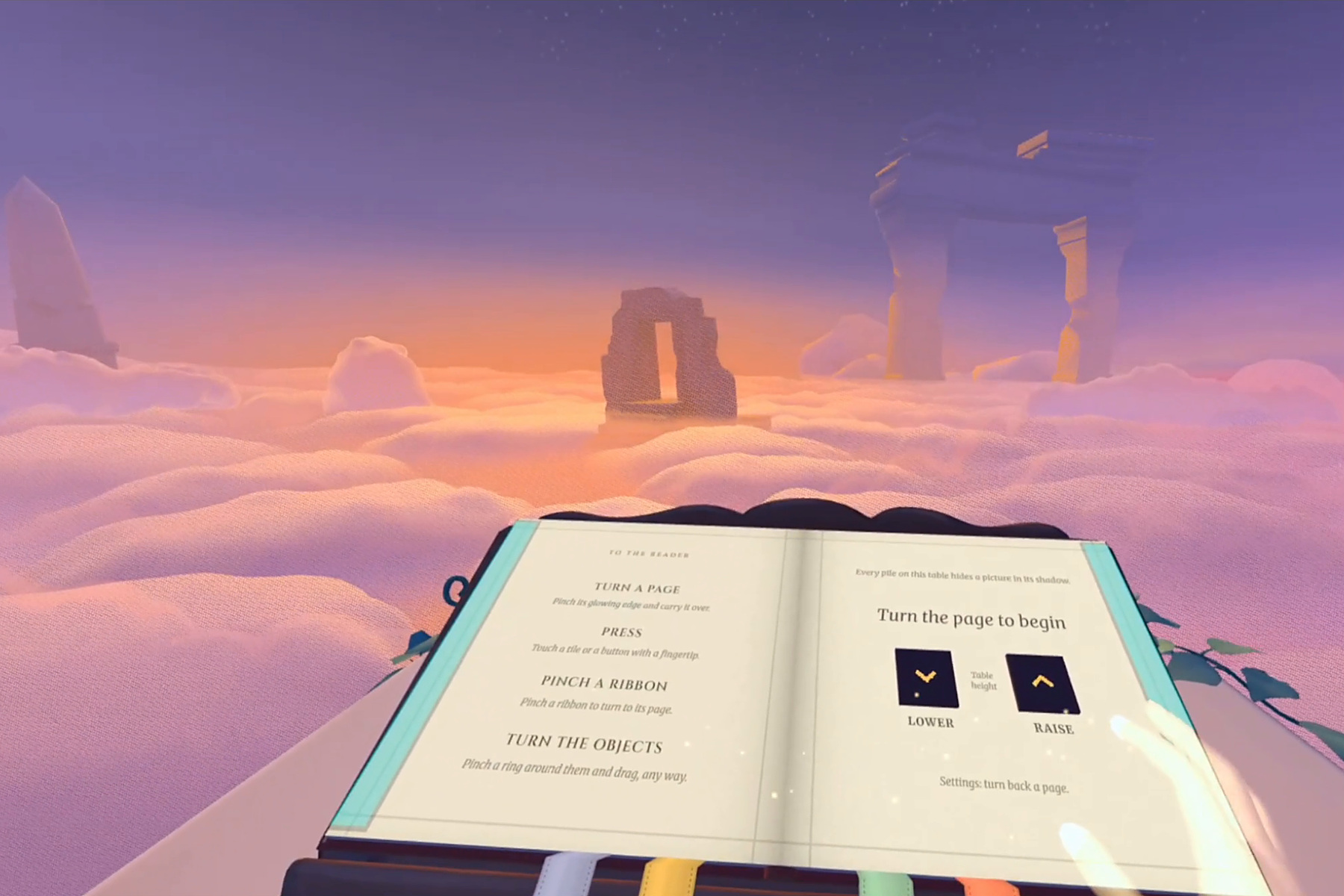
We were also inspired by skeuomorphic interface design, so every interaction in the game borrows the look and feel of everyday objects, and all of it is diegetic: menus are pages you turn, silk ribbons are bookmarks, and buttons are leather tiles that rise out of the table.
What it does
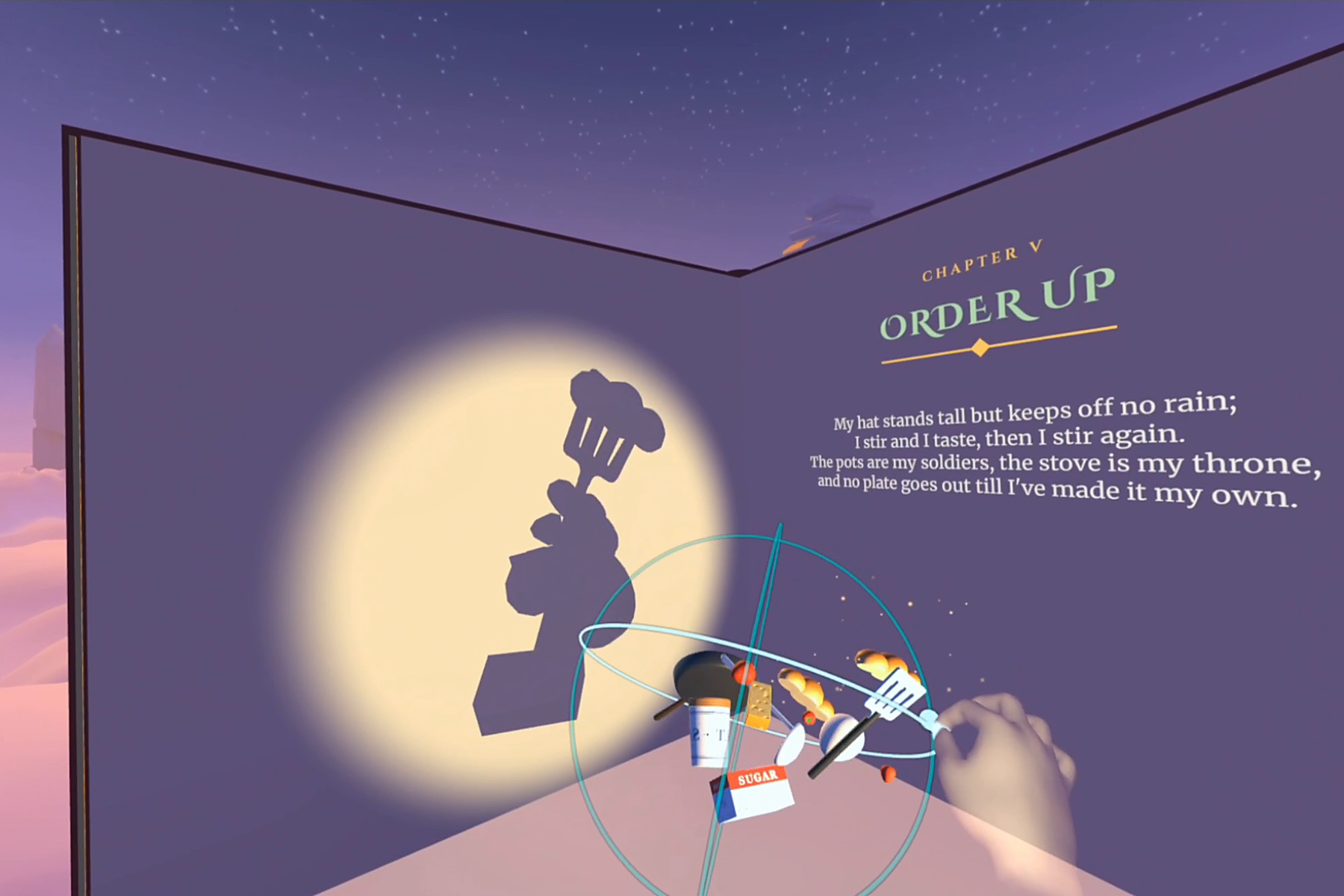
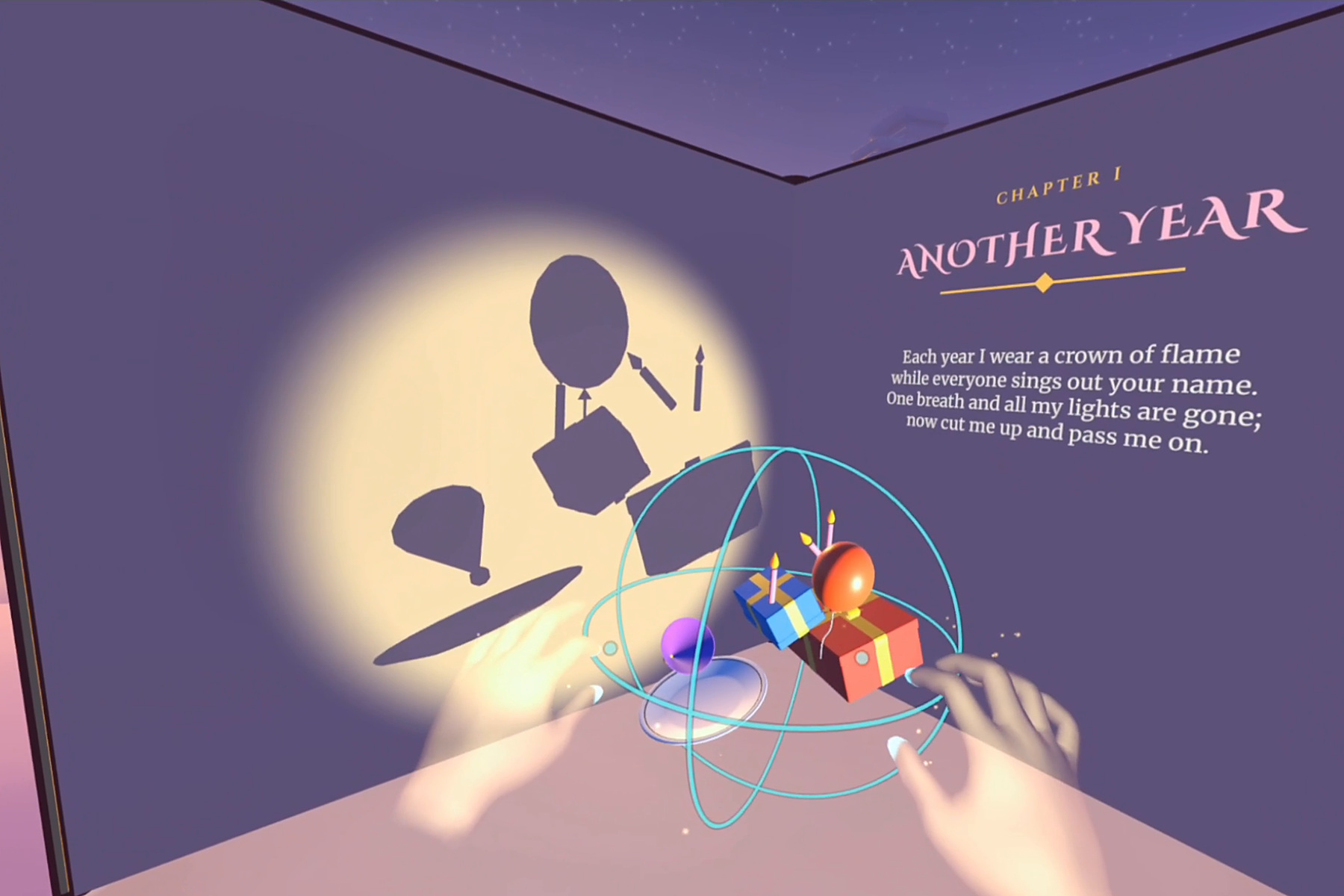
Shape of Memory is a seated, hands-only puzzle book of six memories.
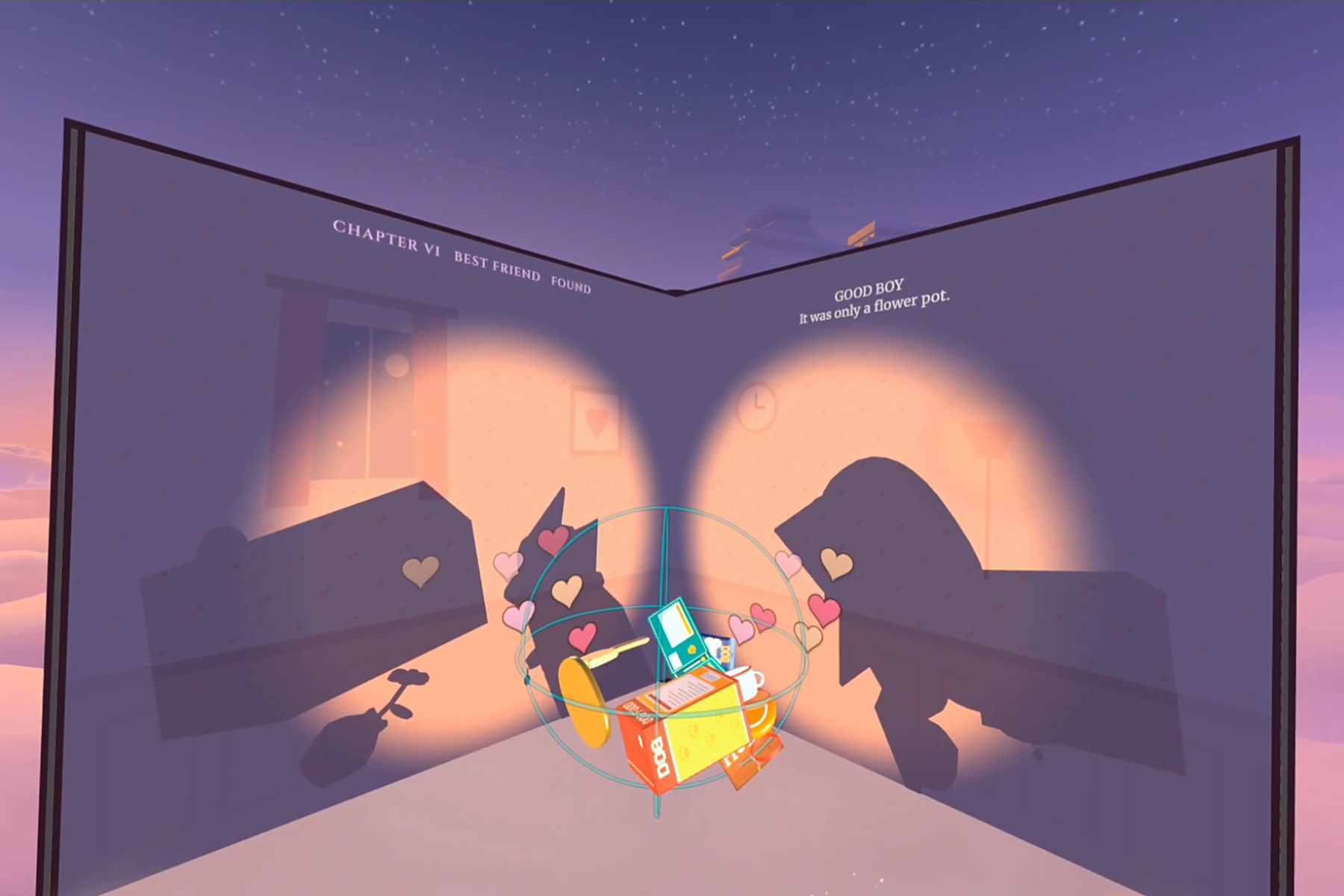
Turn its pages like a real book's to reach each chapter and the memory it holds. Each chapter gathers a pile of everyday objects into a floating orb and casts its shadow onto the pages.
At first, the shadow looks like nothing. Pinch the orb, read the riddle, and slowly roll the pile in the lamplight, until its scattered shadow comes together and the memory blooms back into color, alive with paper cut-outs. Then turn the page: the next memory is waiting.
How we built it
This game is built with Unity 6 (URP), Meta XR SDK v207 and Interaction SDK hand tracking.
We started with a few technical tests and puzzle blockouts to prove the idea. Once it held up, we developed different levels and playtested heavily on the headset, making sure players could interact with the world intuitively and comfortably. Next, we threaded the levels together into one virtual puzzle book, and built our own level editor, the Shadow Gym, to design and test each one. Finally, we optimized and polished everything to keep the experience smooth.
Challenges we ran into
Building this game came with three big challenges:
- Shadow Matching: How does a computer know that a shadow looks like a certain picture? We rasterize the shadow into a 64×64 grid, normalize it by centroid and size, and compare it with the target while allowing a little tilt and mismatch. Players see how close they are through in-game signals, like the picture sharpening and music layers joining in.
- Hand Interaction: We wanted hand interaction to feel authentic, so we kept everything diegetic. Behind the scenes, we added technical fixes and built in some forgiveness so it never feels frustrating.
- Asset Management: Each level needs many pieces, so we built a level template that stores all of its text (flavor text, hint and found line), assets (the objects in the pile), tuning values and preview shadow image. This made building each new level much faster.
Accomplishments that we're proud of
We're proud that we solved most of our challenges both creatively and technically, and made the game accessible to a wide audience.
We took inspiration from contemporary art and turned it into an immersive experience. The memories are ones almost everyone shares, like a birthday or a summer by the sea. There is no timer and no score, so nobody is rushed. You never need a controller or to stand up, and the table height can be adjusted. We wanted it to be easy to pick up, even for people new to VR.
What we learned
We learned a lot about designing for hands. Players trust what looks physical and will interact with it intuitively. We also learned that hand tracking needs forgiveness. The last few degrees of a puzzle are hard to hit with a tracked hand, so if you hold still near the answer, the orb glides into place on its own. Finally, we learned that building a pipeline takes time up front, but it pays off: it made producing and expanding the game much easier.
What's next for Shape of Memory
We have a lot planned for Shape of Memory:
- More Memories: We want to add new chapters, each built around another moment almost everyone shares.
- Art and Sound: We want to give the game a final pass on art and sound, so every memory looks and sounds the way it deserves.
- User-Generated Content: We want to open the Shadow Gym up to players, so they can build chapters from a library of objects, or even import their own, and share them with friends.
- Meta VR Glasses: Since the game is seated and played in short sessions, we think it would suit Meta VR Glasses well, and we plan to add support for them.


