Inspiration
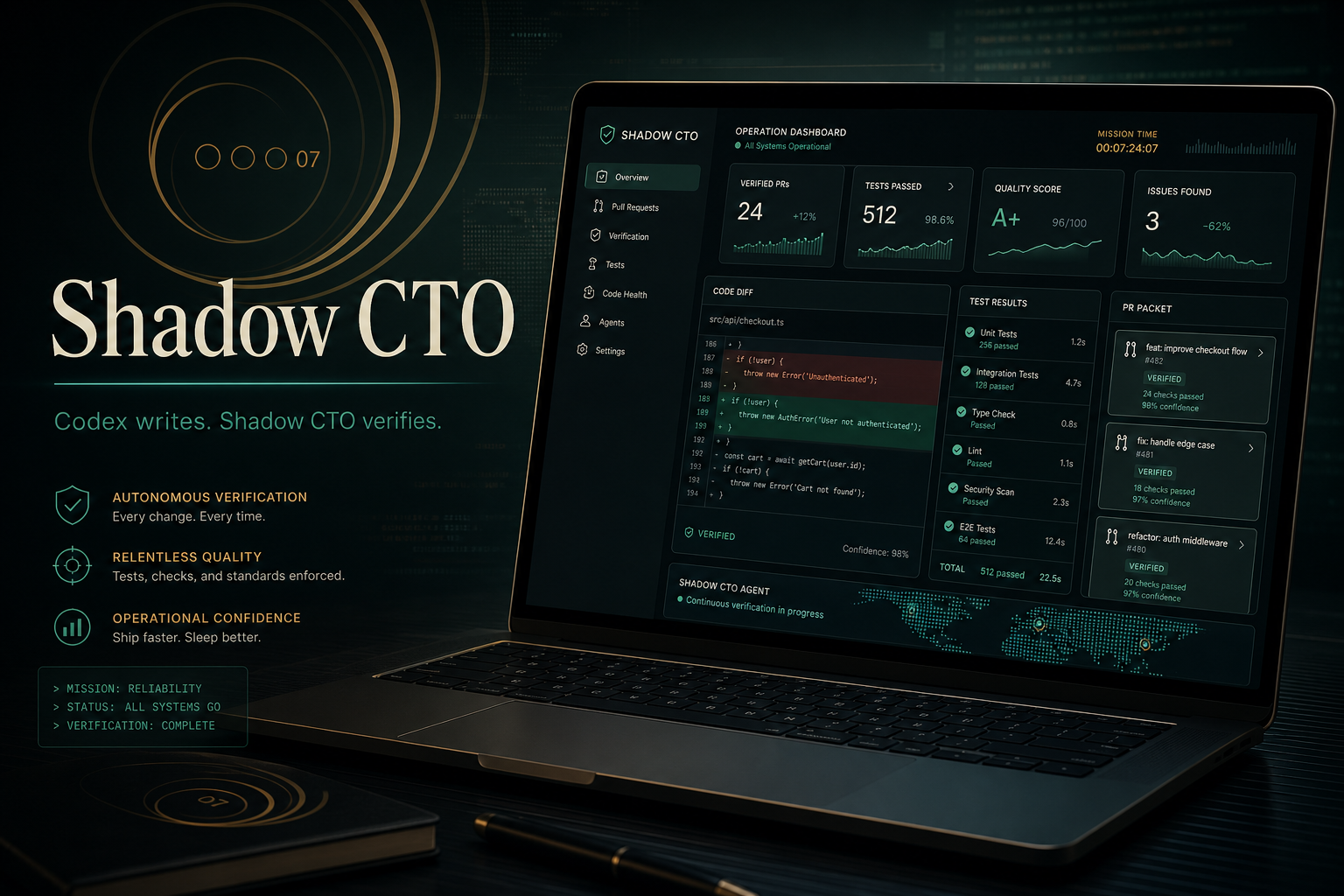
Shadow CTO was inspired by a very real problem I have seen while working with startups as an engineer: small teams move fast, but they rarely have enough senior engineering bandwidth to deeply review every AI-generated change.
AI coding tools like Codex are already powerful at turning prompts into code. But in real software teams, the job does not end when code is written. Someone still has to understand the business request, inspect the repo, decide where the change belongs, verify the diff, run tests, identify risks, and prepare the work so a human can confidently review and merge it.
That missing layer is what inspired Shadow CTO.
I wanted to build something that feels less like “AI generated some code” and more like “an experienced engineering operator managed the change from request to review.” The goal is not to replace engineers. The goal is to make AI-generated code trustworthy enough for real teams to use.
For startups, this matters a lot. A founder might say, “Add billing seat limits,” or “Fix onboarding,” or “Prepare this repo for launch.” Codex can help implement the change, but the founder still needs proof: what changed, why it changed, whether tests passed, what risks remain, and whether the work is ready for a pull request.
Shadow CTO is my attempt to build that trust layer around Codex.
The core idea is simple: Codex writes the change, Shadow CTO proves whether it is ready to ship.
Built With
- cli
- codex
- css
- git
- github
- html
- javascript
- json
- node.js
- openai
- pages
- react
- typescript
- vite


Log in or sign up for Devpost to join the conversation.