-
-
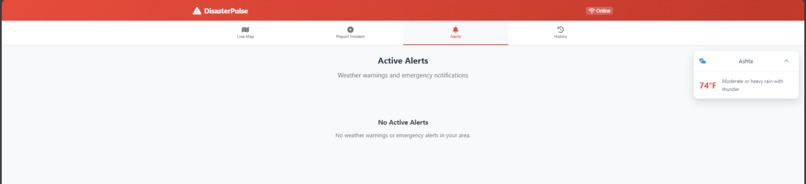
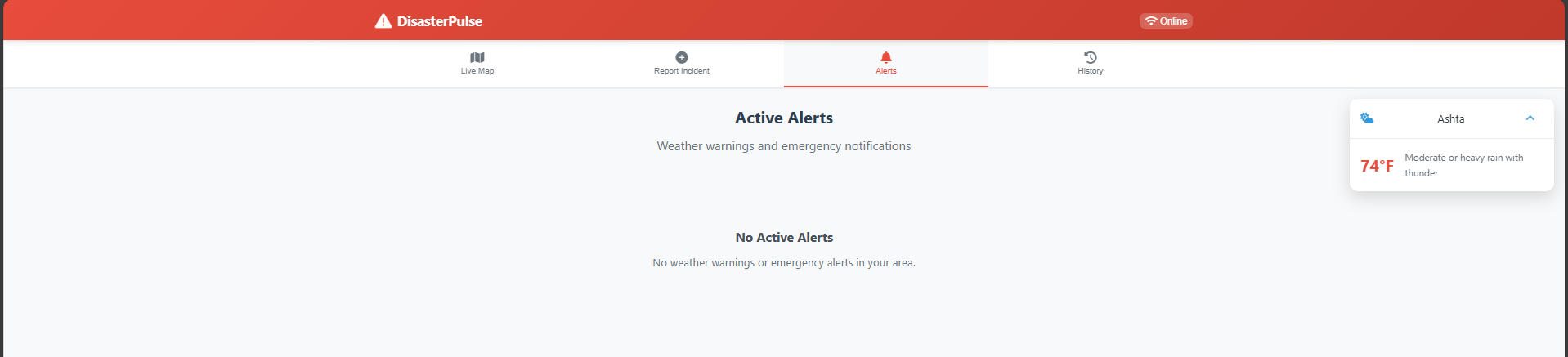
Alerts page - shows the alerts generated by Government and verified Alerts
-
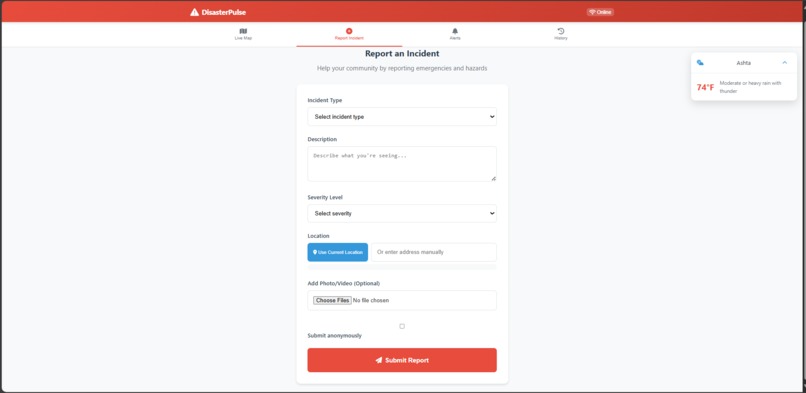
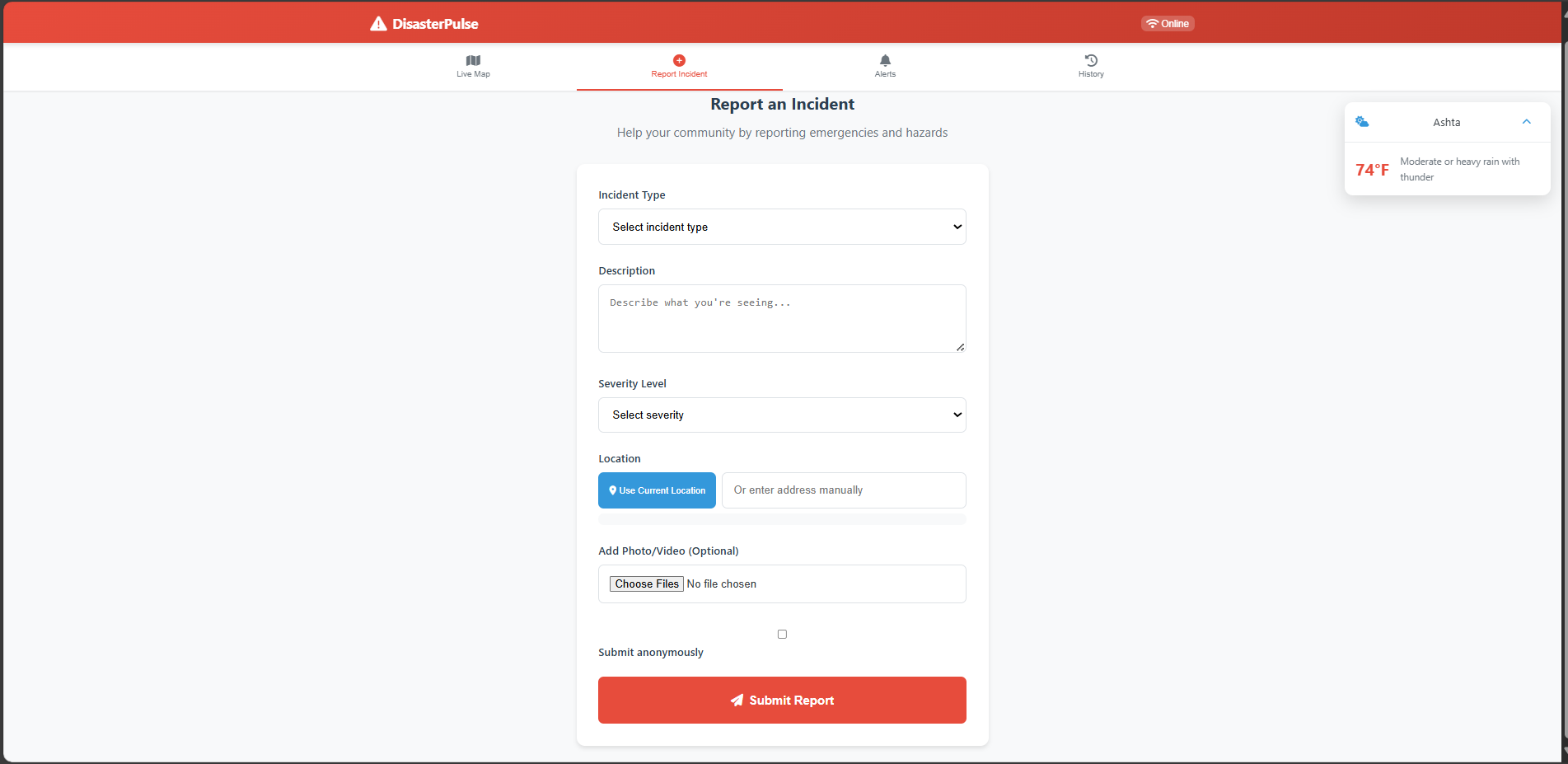
A page to create a Alert - visible to locals and users
-
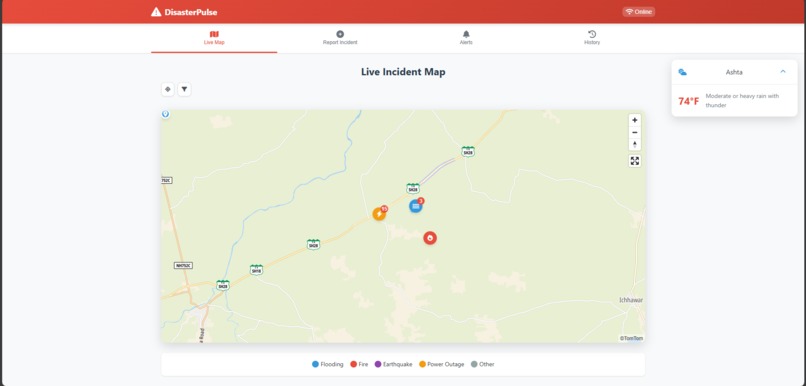
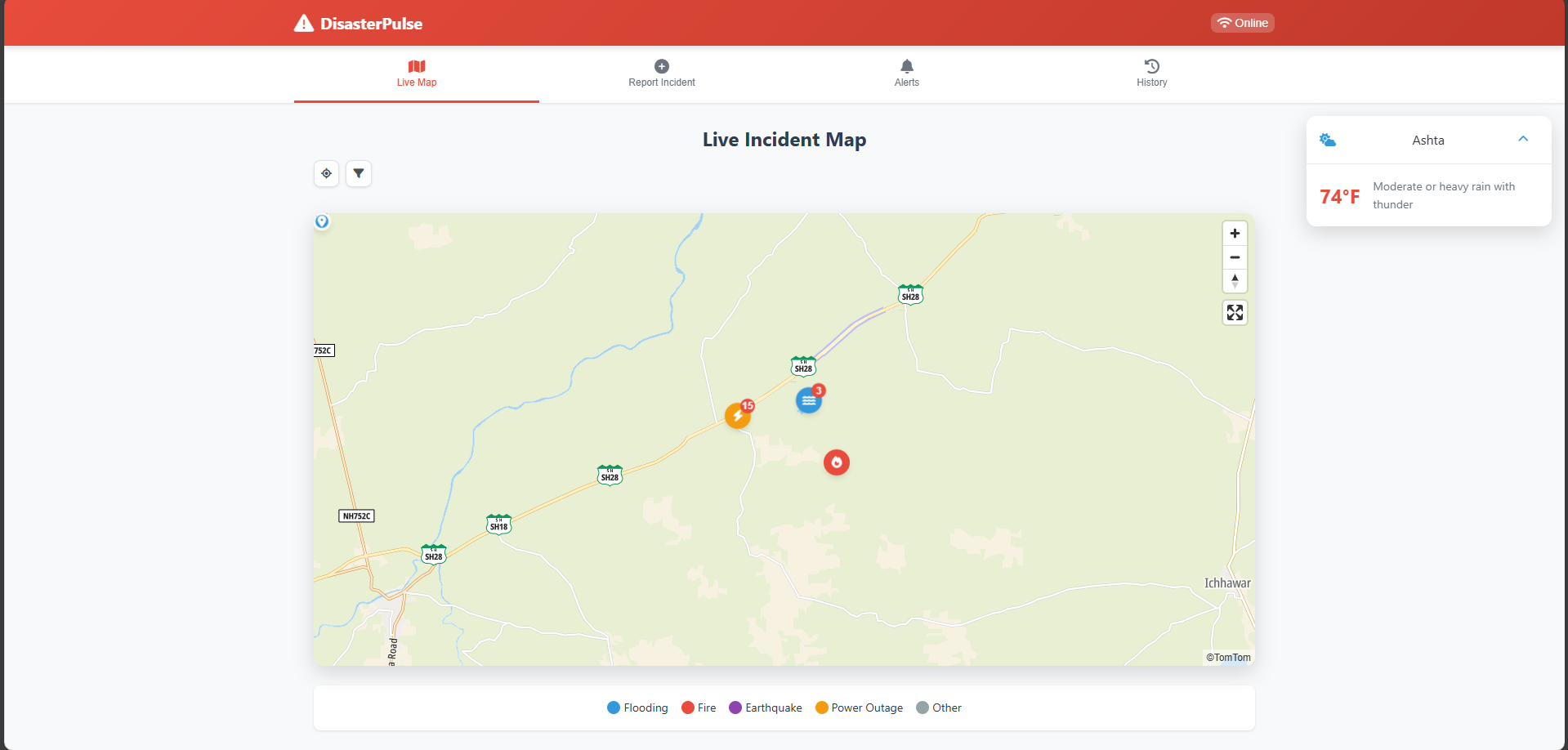
Dashboard- Landing page shows activity near the users current location
-
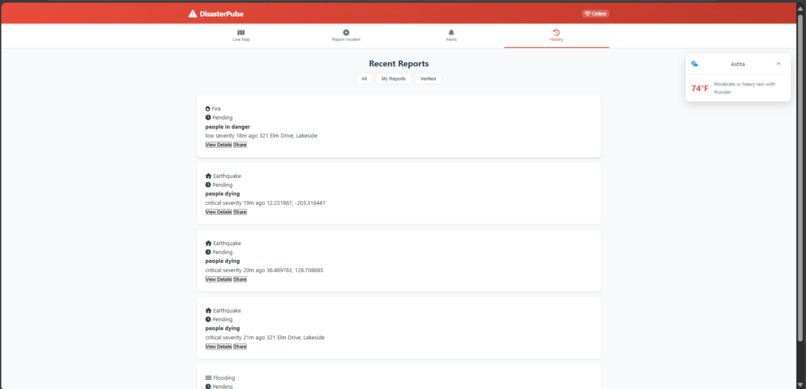
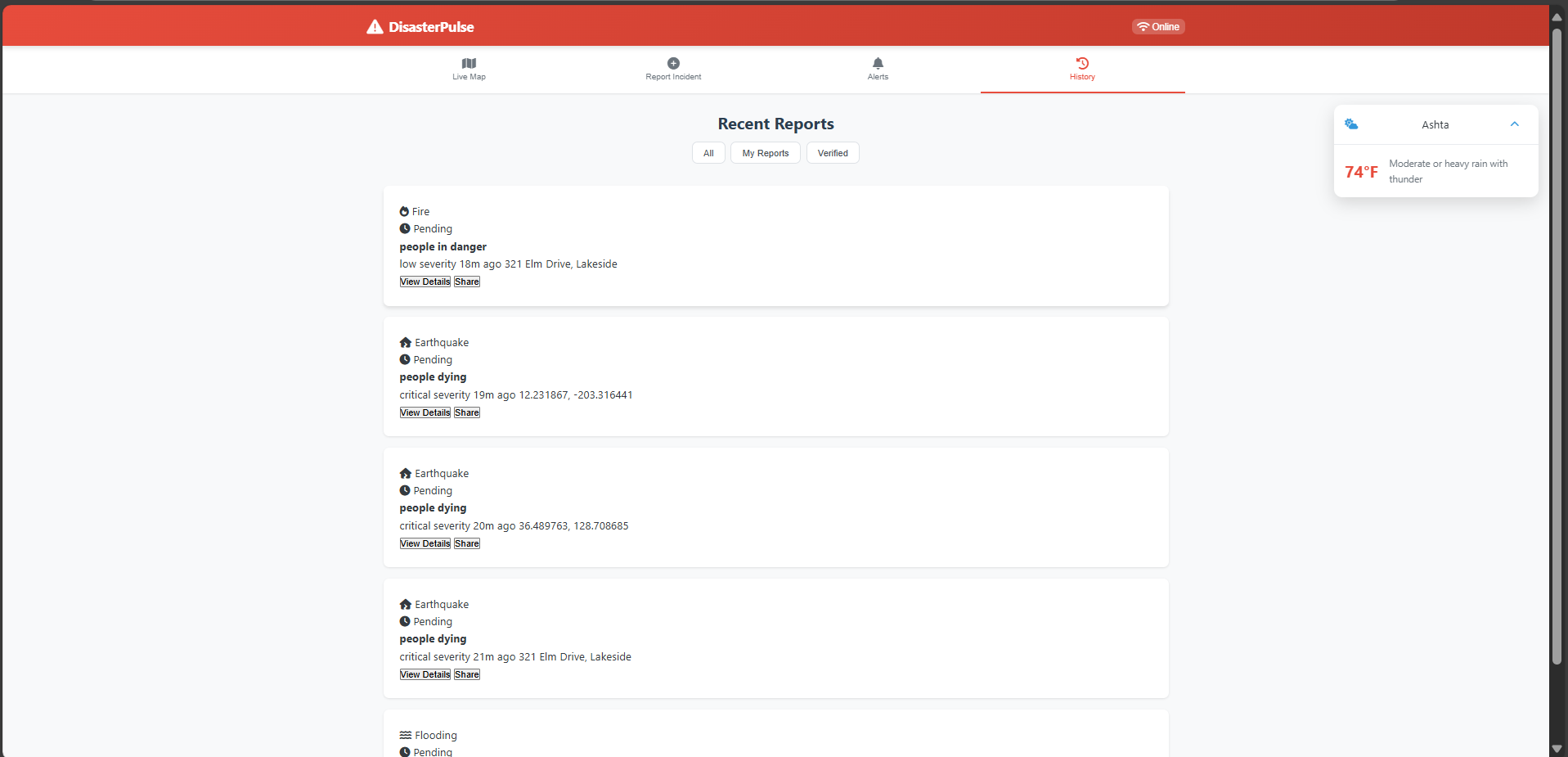
Alert created by the users are shown in this section
Inspiration
Natural disasters frequently don't have accessible, real-time information for first responders. We were motivated to develop a solution that enables communities to crowdsource reports of incidents, particularly in low-connectivity areas, to respond faster and more efficiently during emergencies.
What it does
DisasterPulse is an emergency reporting website with a real-time reporting interface that enables users to file incident reports, observe them on an interactive map, get weather-integrated alerts, and access authenticated content in case of emergencies—offline too.
How we built it
We implemented DisasterPulse with TomTom Maps API for location services, Vue.js for the frontend, Firebase for the backend and authentication, and weather data APIs integrated. The platform has an offline-first layout with a responsive UI for accessibility.
Challenges we encountered
It was difficult to integrate several APIs without compromising performance. We also had problems with optimizing map loading and providing stable offline support that synchronizes when the network is re-established.
Achievements that we're proud of
We built a functional prototype within a week that effectively showcases real-time reporting, map visualization, and offline support. Our UI is clean and functions flawlessly across devices.
What we learned
We became more experienced with geolocation services, offline-first development, and API integration. We also discovered the value of user experience design in crisis scenarios.
What's next for DisasterPulse
We will incorporate AI-driven report verification, push notifications, a responder dashboard, and support for many languages. Upcoming versions will include social media integration and community chat features for improved coordination during emergencies.
Built With
- api
- css
- dbms
- html5
- java
- javascript
- xml


Log in or sign up for Devpost to join the conversation.