-
-
Thumbnail
-
Home page
-
LiveDashboard
-
Live Call
-
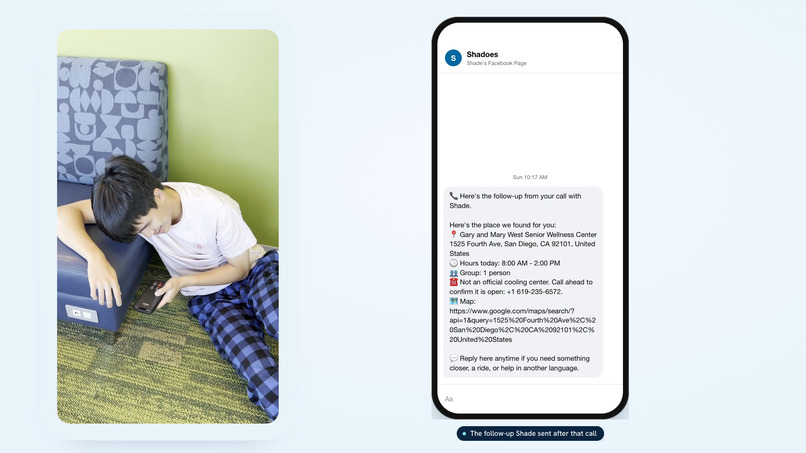
Mobile Followup
-
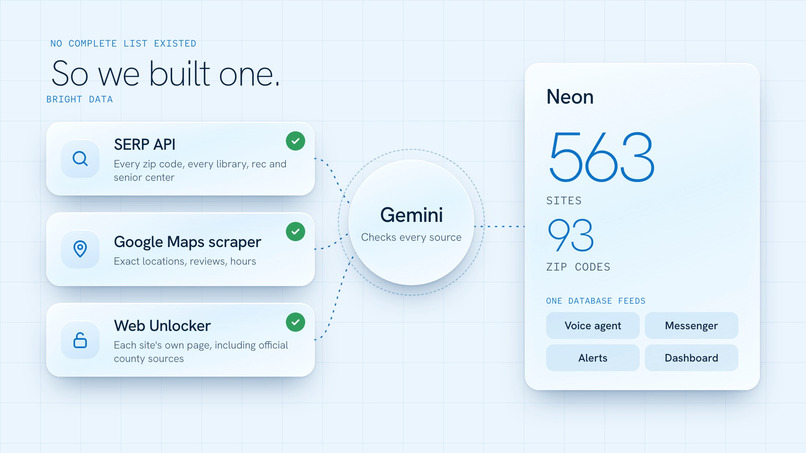
BrightData Architecture
-
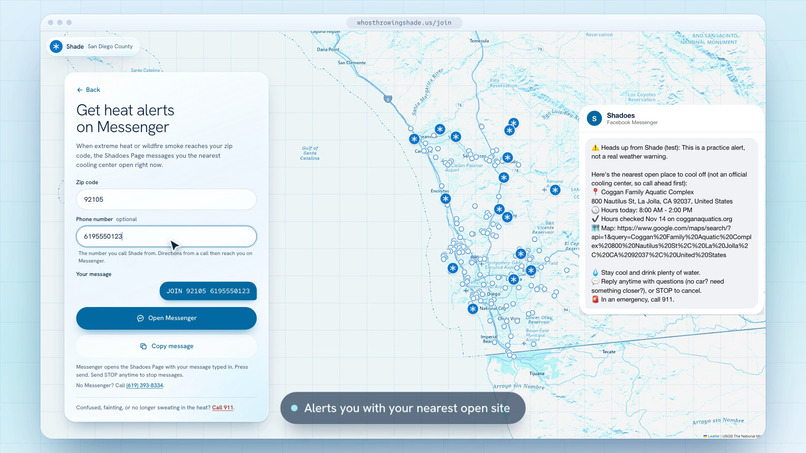
Heat Alerts
-
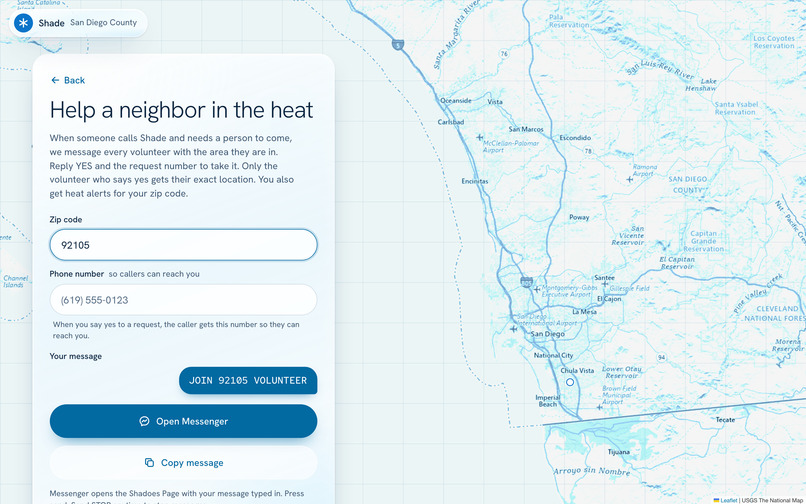
Volunteer Sign Up
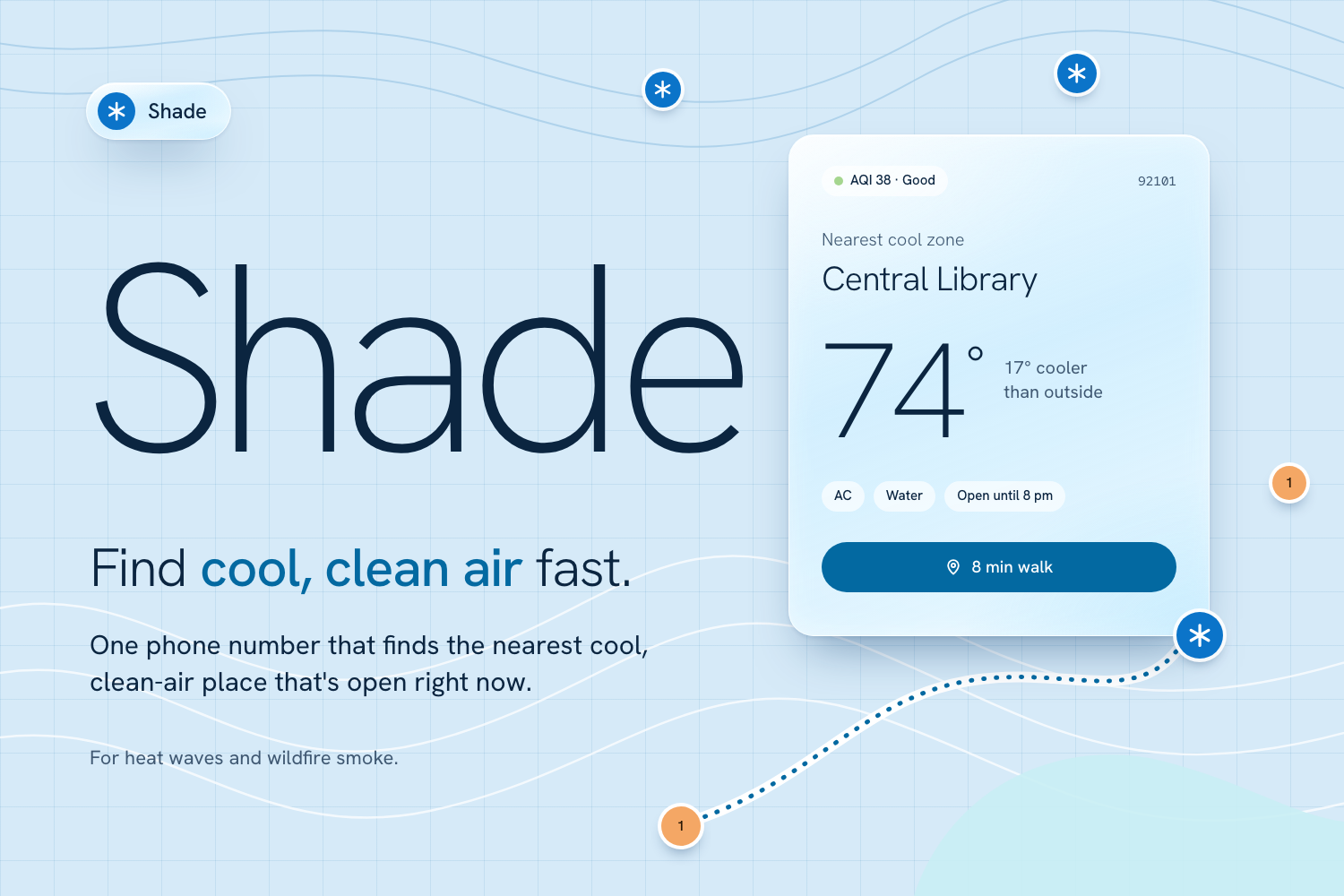
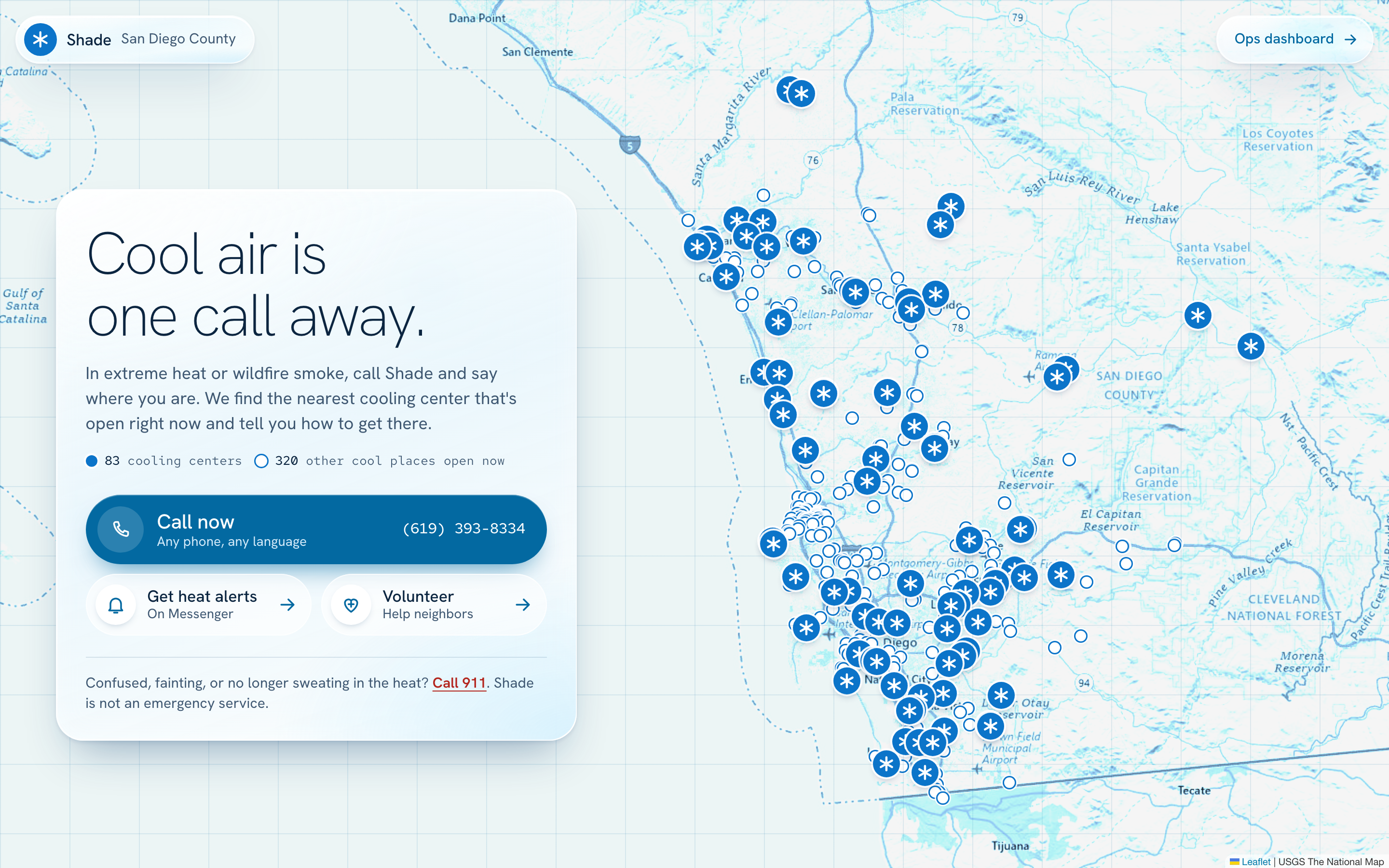
Shade
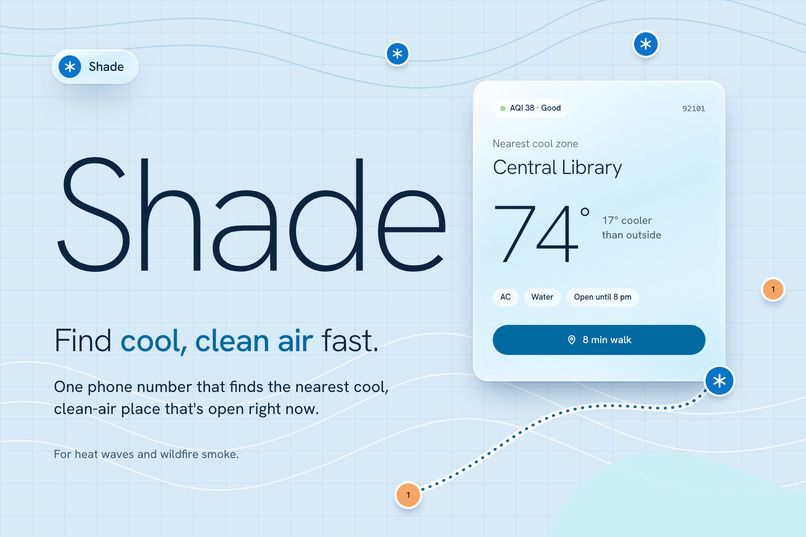
One phone number that finds the nearest cool place that’s open right now

Inspiration
On October 3rd, the city of San Diego reached an average of 105 degrees fahrenheit, hotter than 99% of the planet. Vulnerable individuals in areas with minimal access to public transportation, minimal A/C in their homes, and the elderly are put at risk. San Diego’s designated 'Cool Zones' and 211 hotline can sometimes be inaccurate, incomplete, or present outdated resource information, and 211 doesn’t yet address additional support for people without cars, or direct peer-to-peer transportation. Having the hotline provide locations no longer operating as a cooling center, its hours have changed, or that it has reached capacity, with limited transit availability immensely risks callers’ safety.
The cooling centers are there. What needs fixing is access to transportation and accurate information. During Oregon's 2021 heatwave, the CDC attributed 116 deaths to extreme heat caused by difficulty to access information of cooling centres, obtain rides to said cooling centres, and general understaffing of its 211 information line.
Coordination, transparency, and scalability are what's needed to tackle heatwaves at scale. Shade is our answer.
What it does
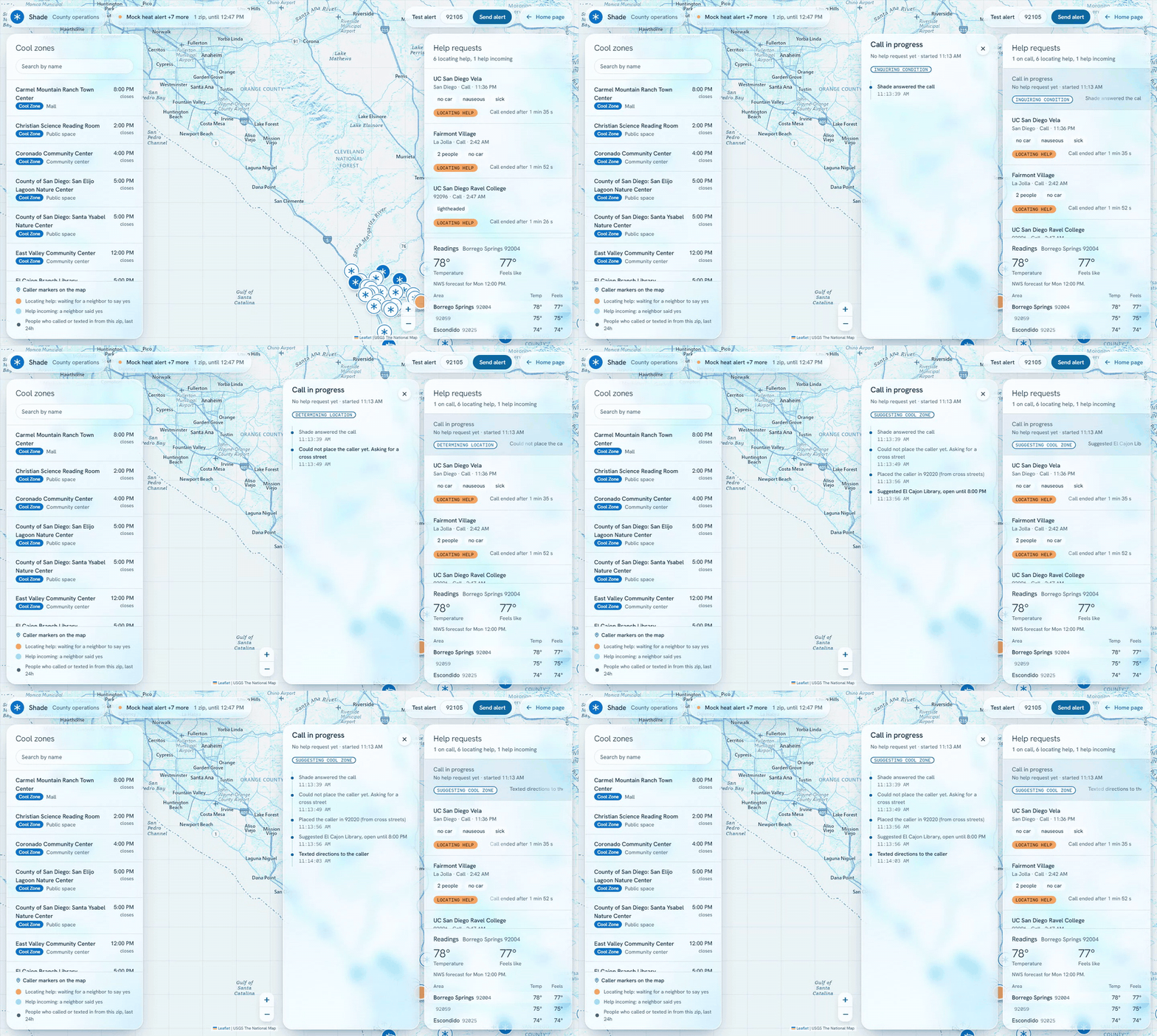
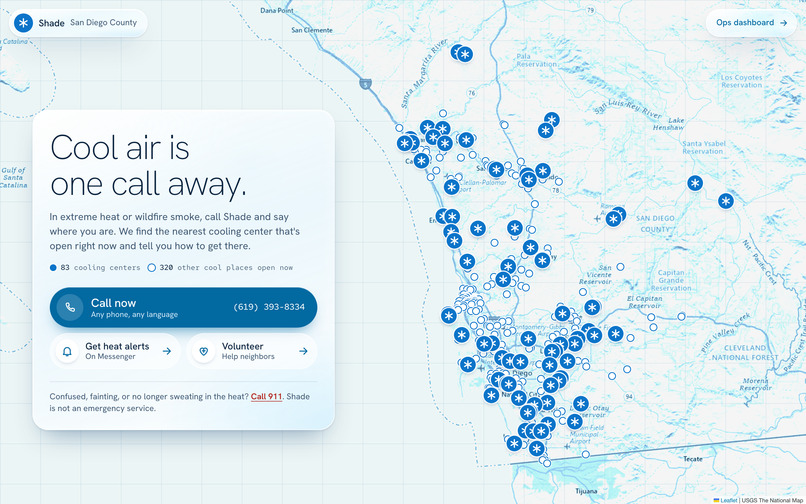
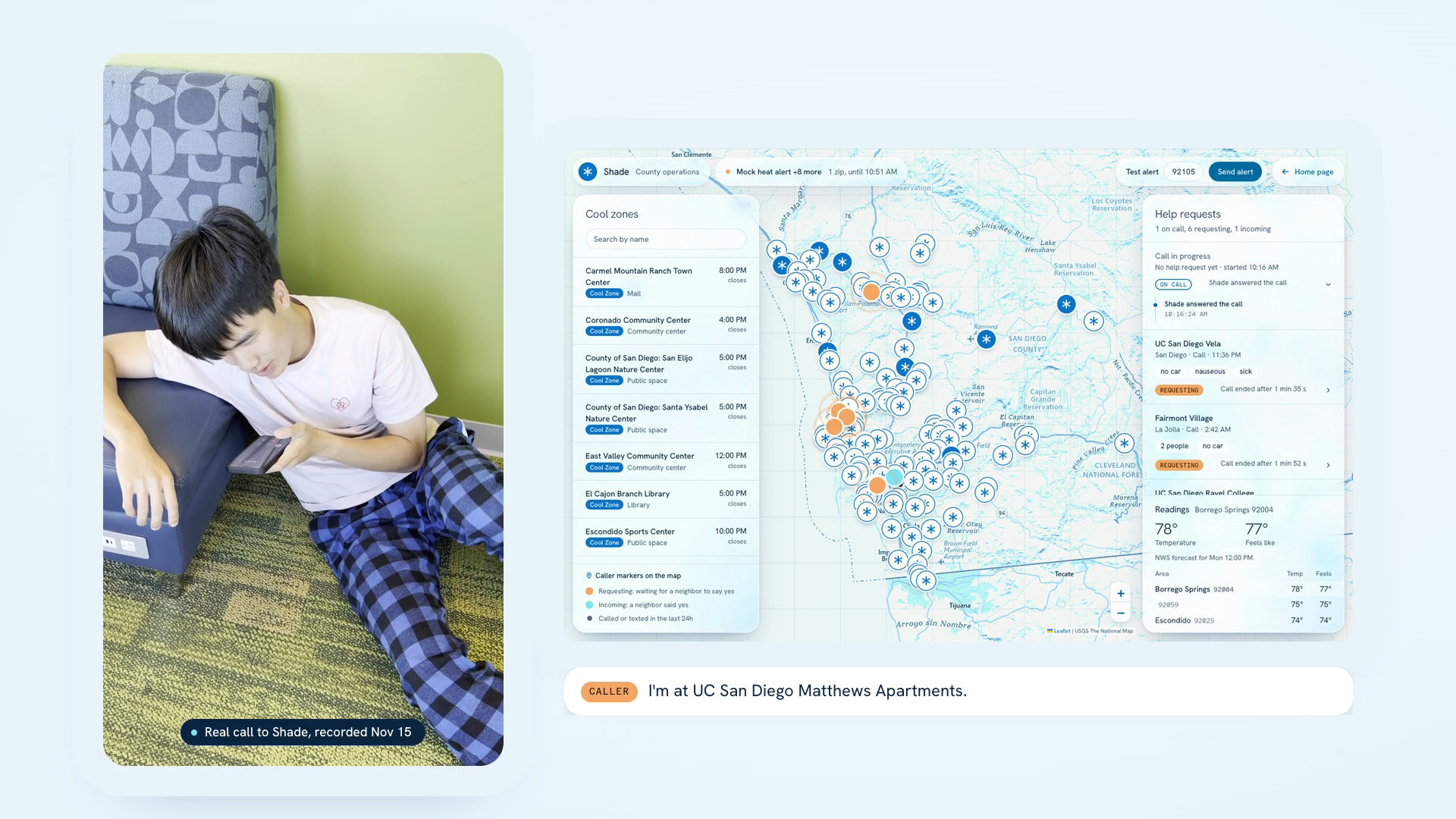
You call Shade and say where you are. "I'm in El Cajon, I don't have a car." "I'm at Parkway Plaza." A cross street, a landmark, or a zip all work. An AI voice agent finds the closest place that is open now with enough time left to get there, tells you how far it is on foot or by bus, says whether it's an official cooling center or a place we found that you should call ahead to, and offers to send you the details. It speaks English, Spanish and Chinese on the same number.
You can keep going on Facebook Messenger, in three modes. Sending
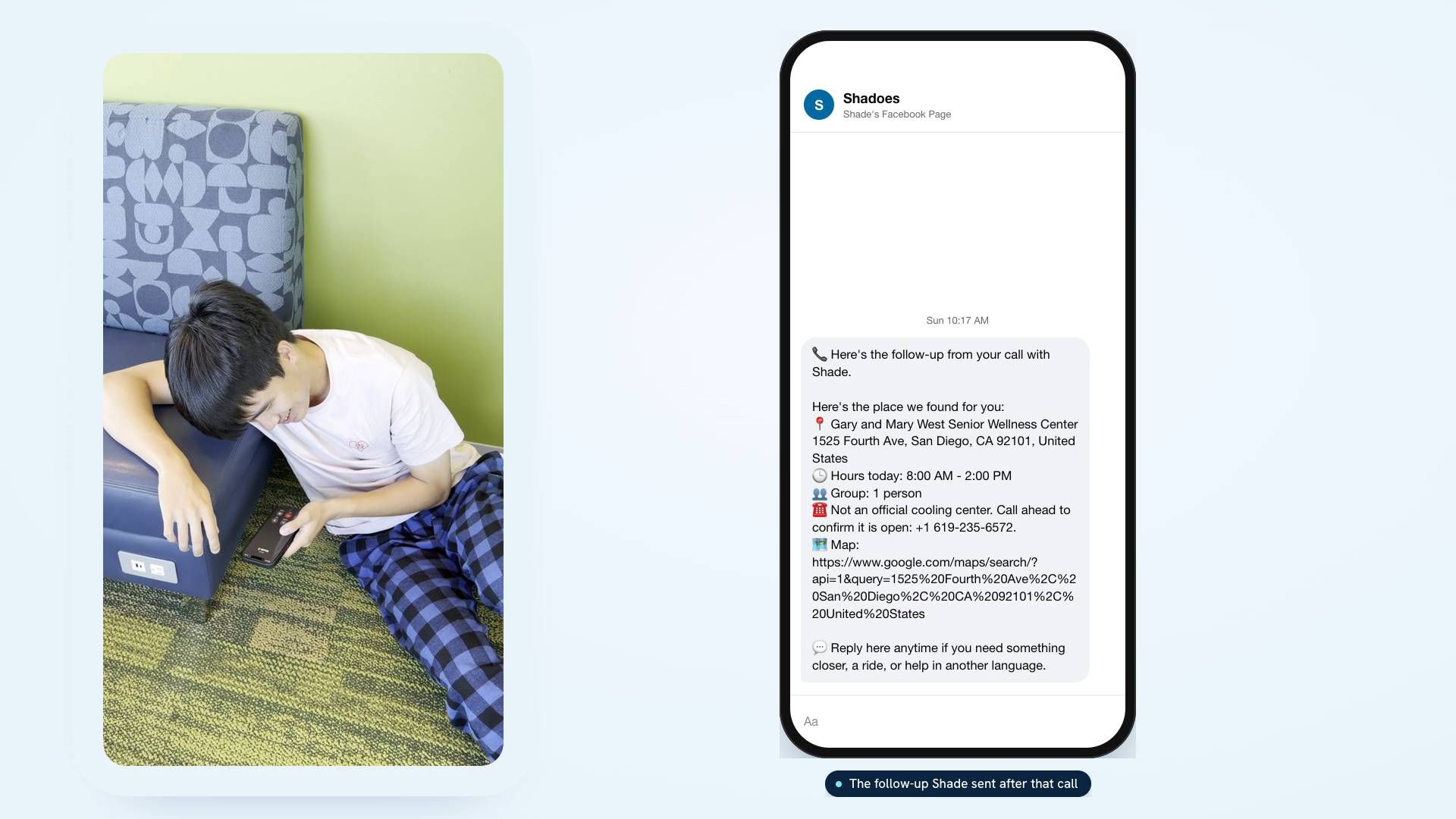
JOIN <zip> <phone>links your Messenger to your phone number.- Follow-up after a call. When the call ends, the site's address, today's hours and a map link arrive on Messenger. They come right away if you've messaged the Page in the last day; otherwise they wait until you next do, because Facebook only lets a Page message you within 24 hours of your last message.
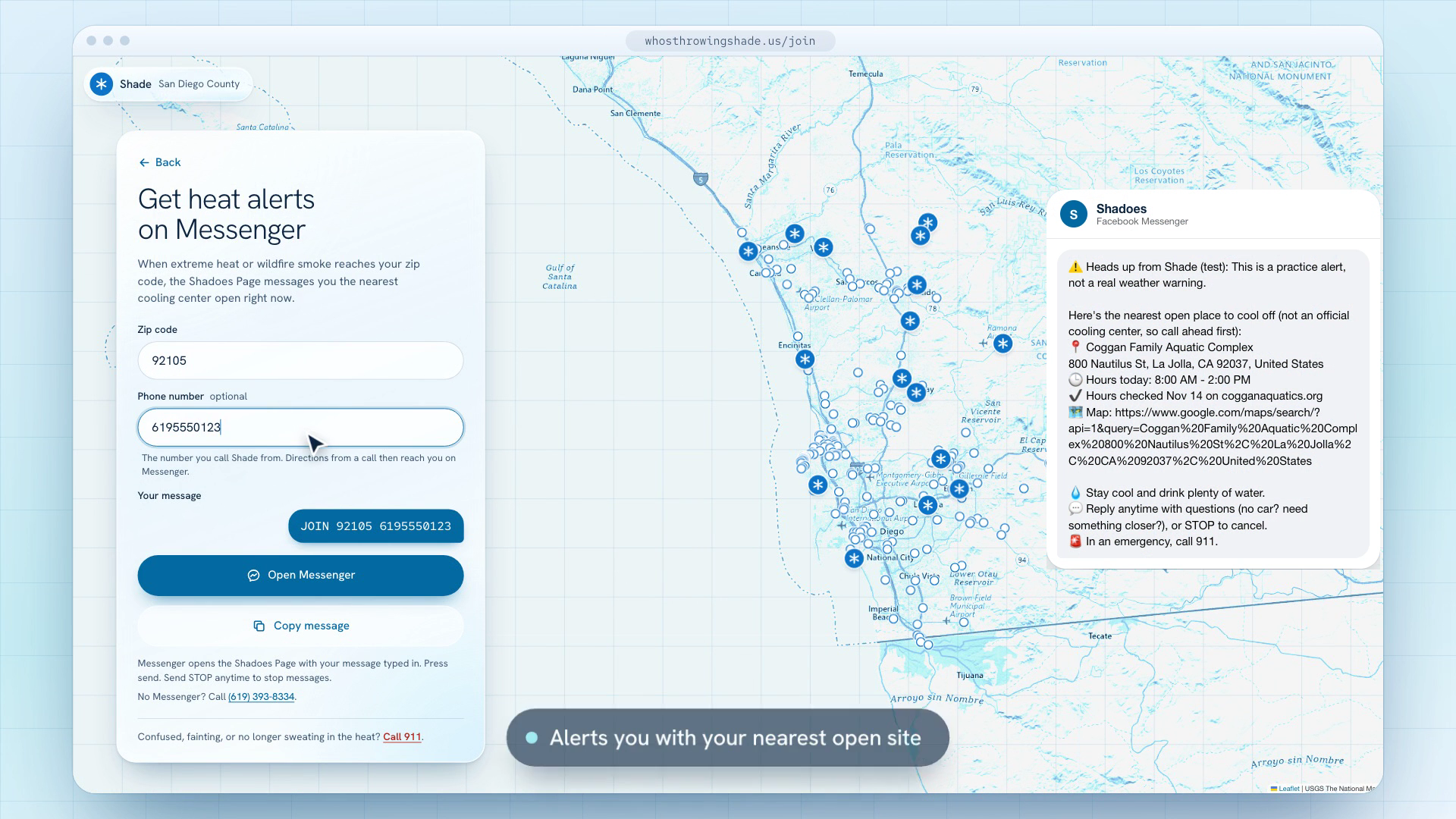
- Alerts. The heat and air-quality alerts above come here, each naming your nearest site that's open now.
- A full chatbot. Reply anytime with "something closer?", "I don't have a car" or "en español". A Claude text agent answers from the same site data as the phone line. It's also where volunteers and callers message each other.
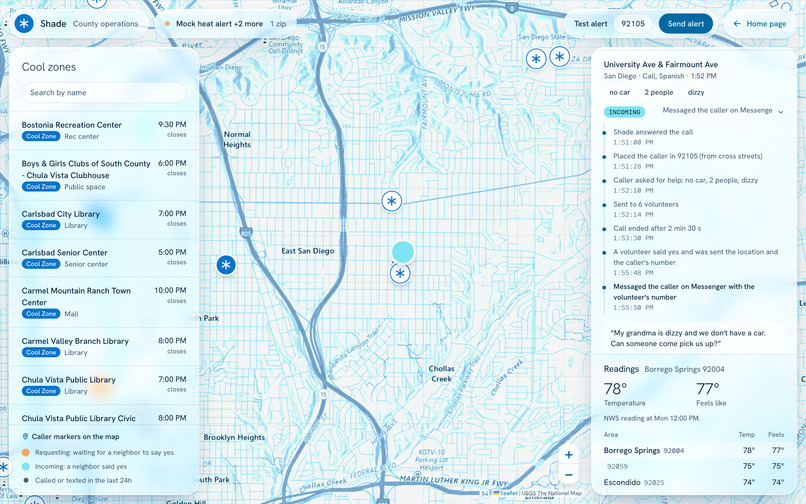
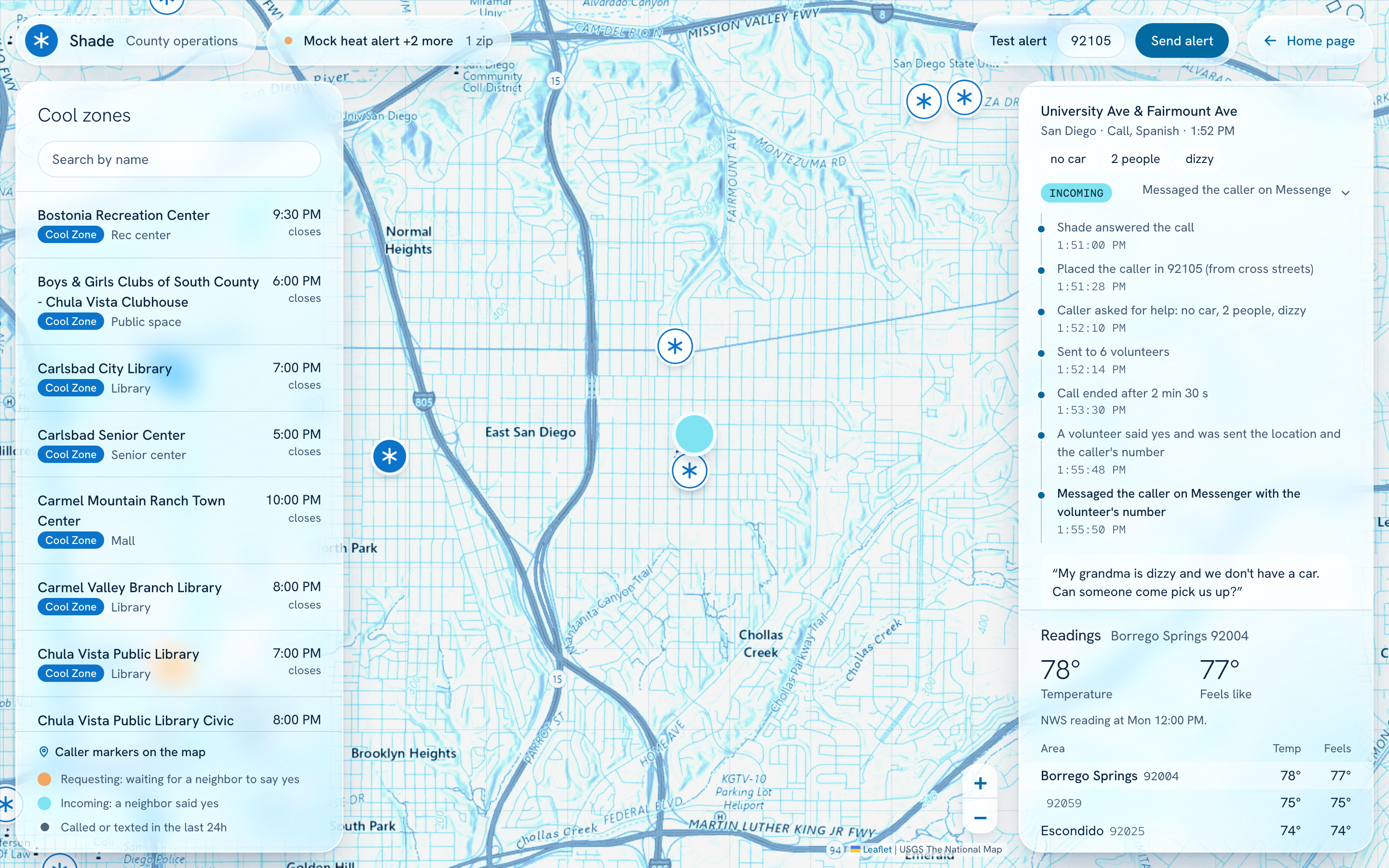
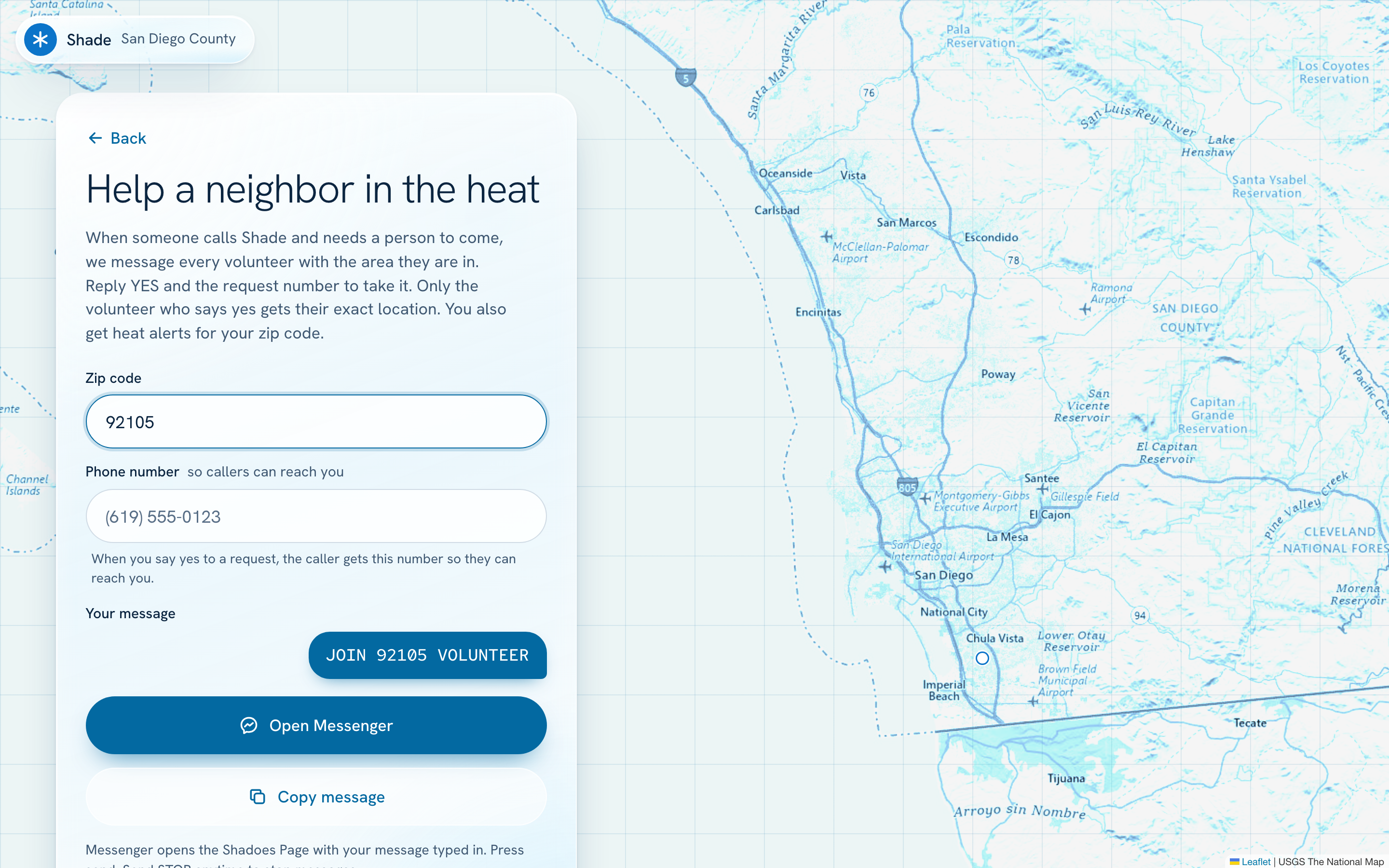
Neighbors help people who can't get there. A caller who needs someone to come is sent to Shade volunteer nearby; the first to reply
YES <id>gets the caller's location and number. Then Shade bot is the middle man, relaying messages between the two and flagging emergencies with a 911 warning.DONE <id>closes the request and tells the caller;CANCEL <id>sends it back to the other volunteers.Heatwave alerts go out before anyone gets heat exhaustion. When the National Weather Service issues a heat or air-quality alert, or our own readings show dangerous heat, Shade messages everyone subscribed in the affected zip codes with the nearest cool place that's open right now. Sign up by sending
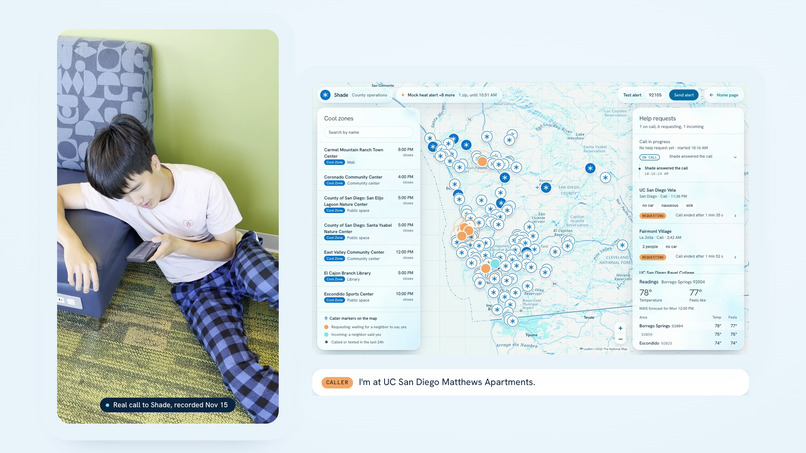
JOIN <zip>. Each zip gets at most one alert of each kind every 12 hours, so nobody gets spammed.The county gets a live dashboard. Lists open cool zones and open call requests. It lists down what callers' specific needs are, are they in need of direct assistance, whether help from volunteers is confirmed and are on their way.
It's careful. On Messenger, every message is checked against a fixed list of English and Spanish heat-illness phrases ("my mom passed out", "no puedo respirar") before any model runs, and a match gets a fixed "call 911" reply. Shade always says it's an AI. People are identified by a salted SHA-256 hash of their number. A number is kept as written only where someone has to dial it: a volunteer's, and a caller's while their request is open. We keep no names.

How we built it

- Voice: an ElevenLabs agent on a Twilio phone number, with Gemini 2.5 Flash as its LLM and language
detection. When it needs an answer it calls tools on our Mastra server by webhook:
find_sitesandsend_sms. - Finding sites:
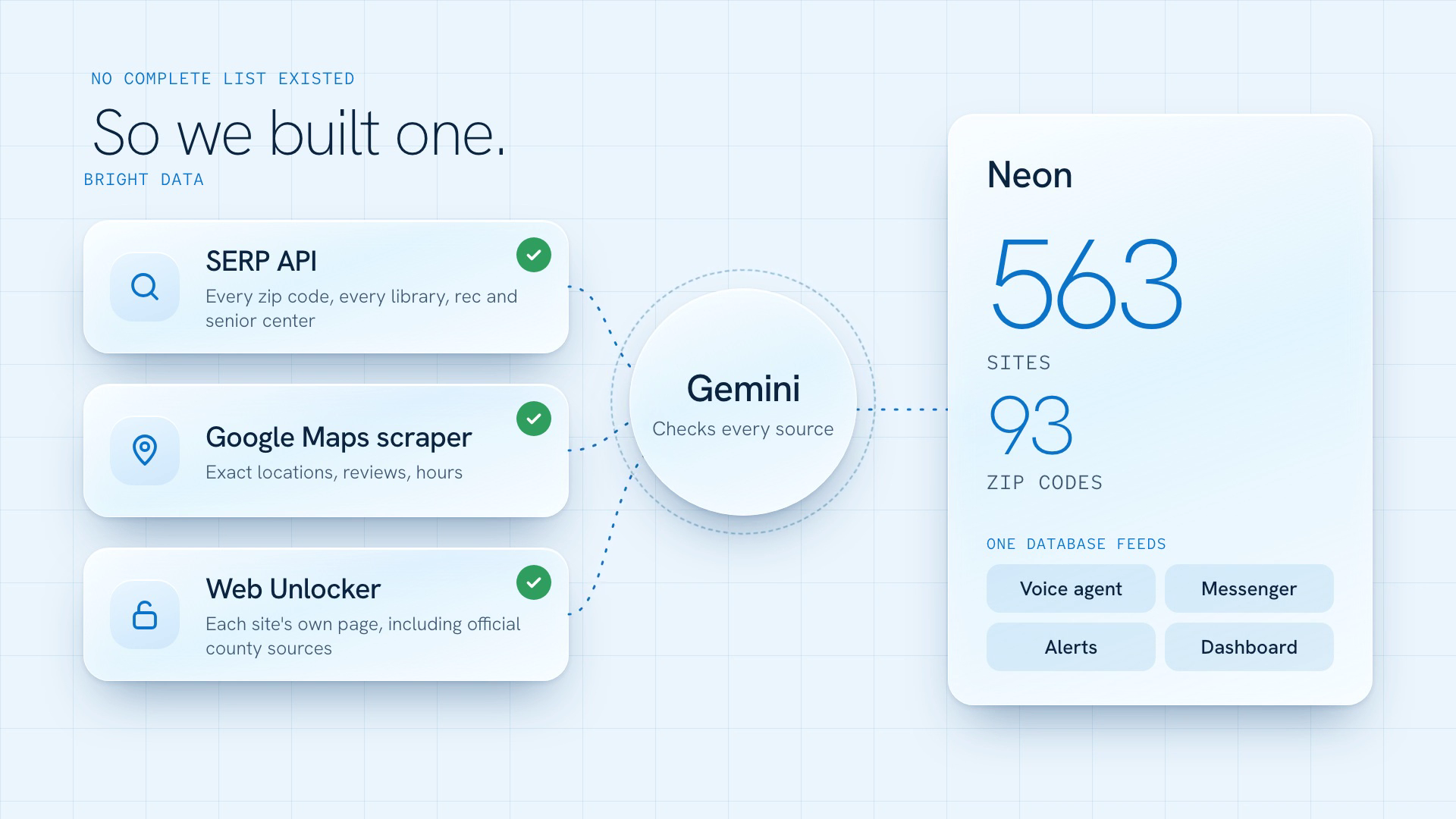
find_sitesresolves the caller's location (addresses and cross streets through Google Geocoding, plus nearly 7,000 landmarks), keeps only sites open now with time to spare (weekly hours, holiday closures, access rules), and ranks them by travel time for someone with or without a car, with honest wording baked in ("call ahead" for anything not official). - The data: no list existed, so we built one. Bright Data scraped the county's official Cool Zone pages, Google Maps listings for every library, rec center and senior center, and over 2,000 Google reviews (for AC and crowding signals). Gemini read each site's own web page for hours, closures and who may enter. Everything lands in Neon Postgres: 563 sites across 93 zips, 120 official and 443 discovered.
- Trust, in code: every record the model extracts must quote its source page verbatim, and the code checks the quote is really there (96% pass, the rest are dropped). Hours from a site's own page are compared against Google Maps hours in code, not by a model, and disagreements are flagged "call ahead". Every scraped page is versioned so changes are caught, and an NWS alert triggers a re-crawl of the affected zips.
- Messenger and alerts: Twilio's Facebook Messenger channel posts to signed webhooks on the Mastra server.
A Claude text agent answers with the same
find_sitestool. JOIN, STOP and HELP are handled in code, and Mastra workflows send NWS and reading-based alerts. - Dashboard: a static page (no build step) on a pale-blue map, polling one Mastra endpoint that reads Neon, with NWS forecasts and US Census data for the cooling-gap view.

Challenges we ran into
- SMS was blocked. US carriers won't deliver texts from a new number without A2P 10DLC business registration, and Twilio still reports those texts as sent. We moved the whole text side to Facebook Messenger through Twilio's Messenger channel.
- Reliable data was hard to come by. The county's Cool Zones were spread across a buried map layer and a PDF. We made the 80 official Cool Zones the backbone, cross-checked their hours against the county PDF and Google Maps, and added the places we found ourselves with a "call ahead" label, which brought the total to 563 sites.
- Integration was harder than building the pieces. All four of us changed the database schema at different times and the voice and Messenger sides ran on two different laptops behind two different tunnels. We put the schema and shared types in one place (data/schema), made every database change add-only, and linked voice calls to Messenger through a JOIN with the caller's phone number.
Accomplishments that we're proud of:
- A real phone number you can call that answers with a place that's actually open, in your language.
- A verified dataset of 563 public cooling spaces built from the open web in a weekend, where no single list existed.
- Model output is never trusted on its own: verbatim-quote checks and in-code cross-source comparison.
- Privacy and safety built in, not bolted on: hashed numbers, no names, opt-in alerts, 911 screening before any model.
What we learned
- The hardest part of "finding a cooling center" isn't the AI, it's knowing which places exist and when they're open.
- Messaging channels have real rules (carrier registration, Meta review, 24-hour windows) that shape the product as much as the code does.
- Honest wording ("call ahead", "not an official site", "verified Nov 14") is a feature people can trust.
What's next for Shade
-Take Shade nationwide. When a call comes in from an area Shade doesn't cover yet, it will send out agents to scrape that area's cooling centers, libraries, rec centers and senior centers, run the same verbatim-quote and cross-source checks, and store the results in Neon. Shade gives the caller the best information it has right away and sends the verified results once they're in. After that, the area is covered for every caller.
-Reach every phone, in more languages. Once we finish the business registration, Shade can text any phone instead of relying on Messenger, and we'll add WhatsApp once Meta lifts its restriction. We'll also add Tagalog and Vietnamese, then the most-spoken languages in each region Shade reaches.
-Better data, straight from the source. A live AQI feed will let smoke alerts fire on actual air quality, not only when NWS issues an alert. We also want to work with counties so Cool Zones, extended hours and closures feed into Shade directly, confirming the moment they change.
Built With
- brightdata
- claude
- elevenlabs
- gemini
- mastra
- neon
- postgresql
- twilio
- vercel


