-
-
cover
-
open dashboard sf12
-
administrator sf12
-
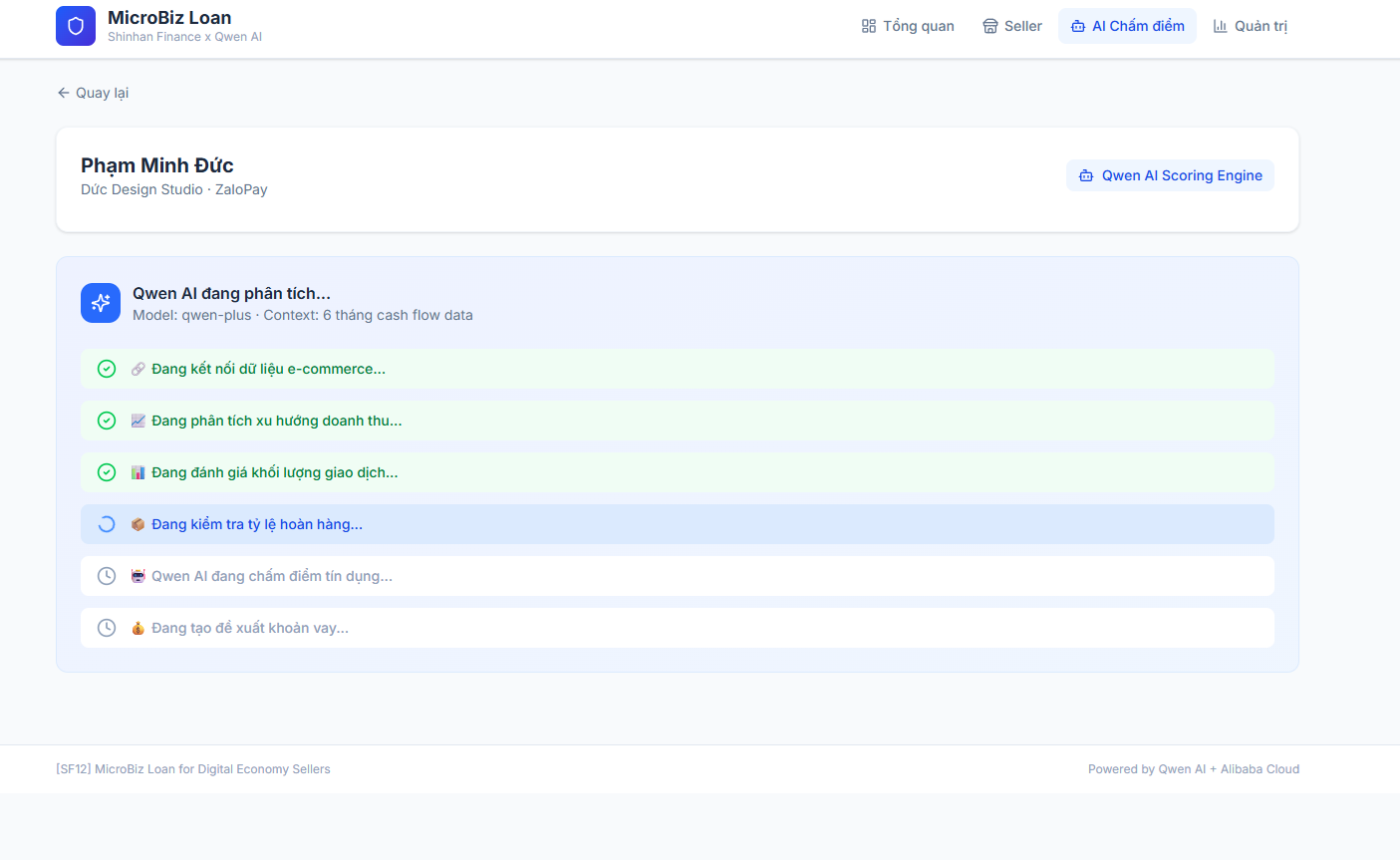
A.I analytic sf12
-
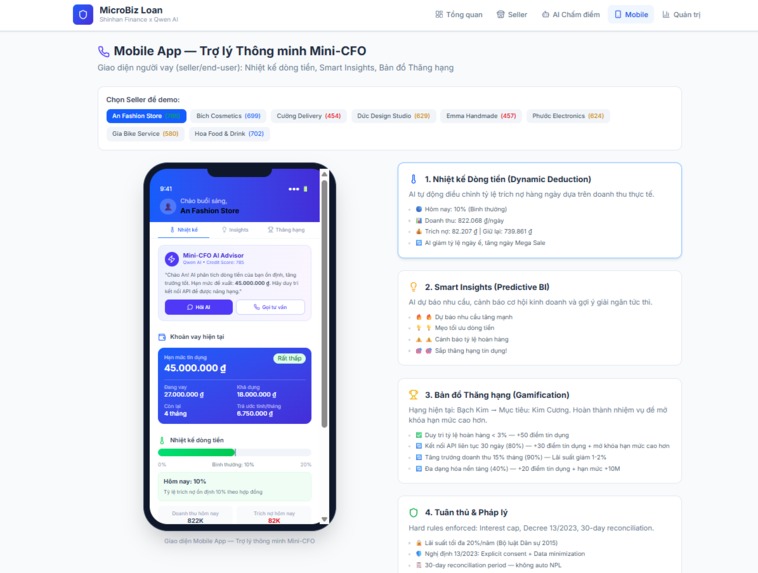
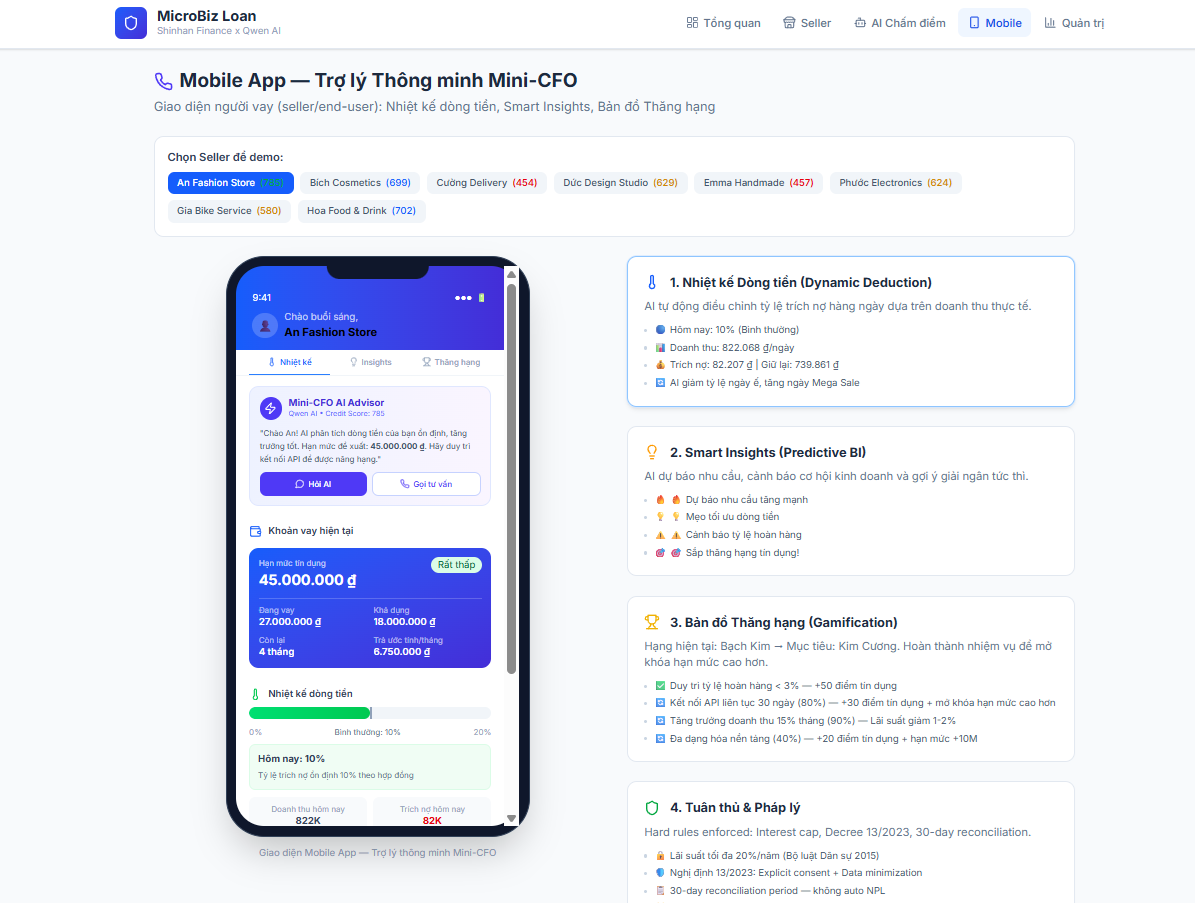
mobile dashboard demo sf12
-
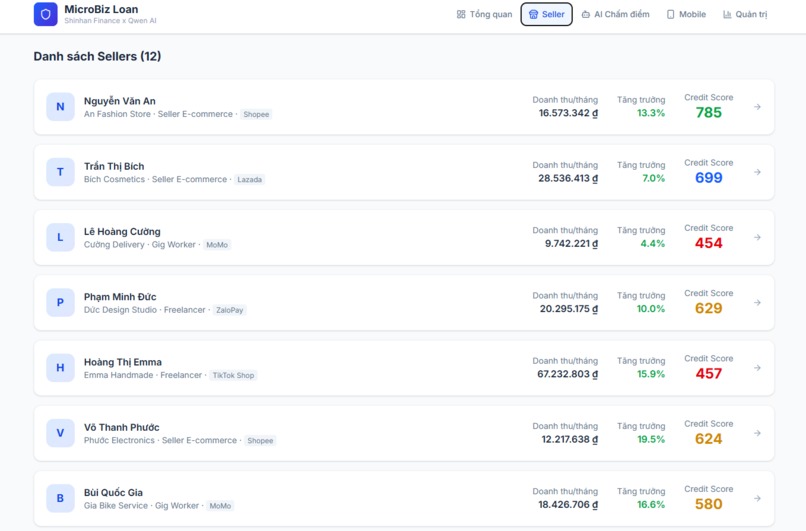
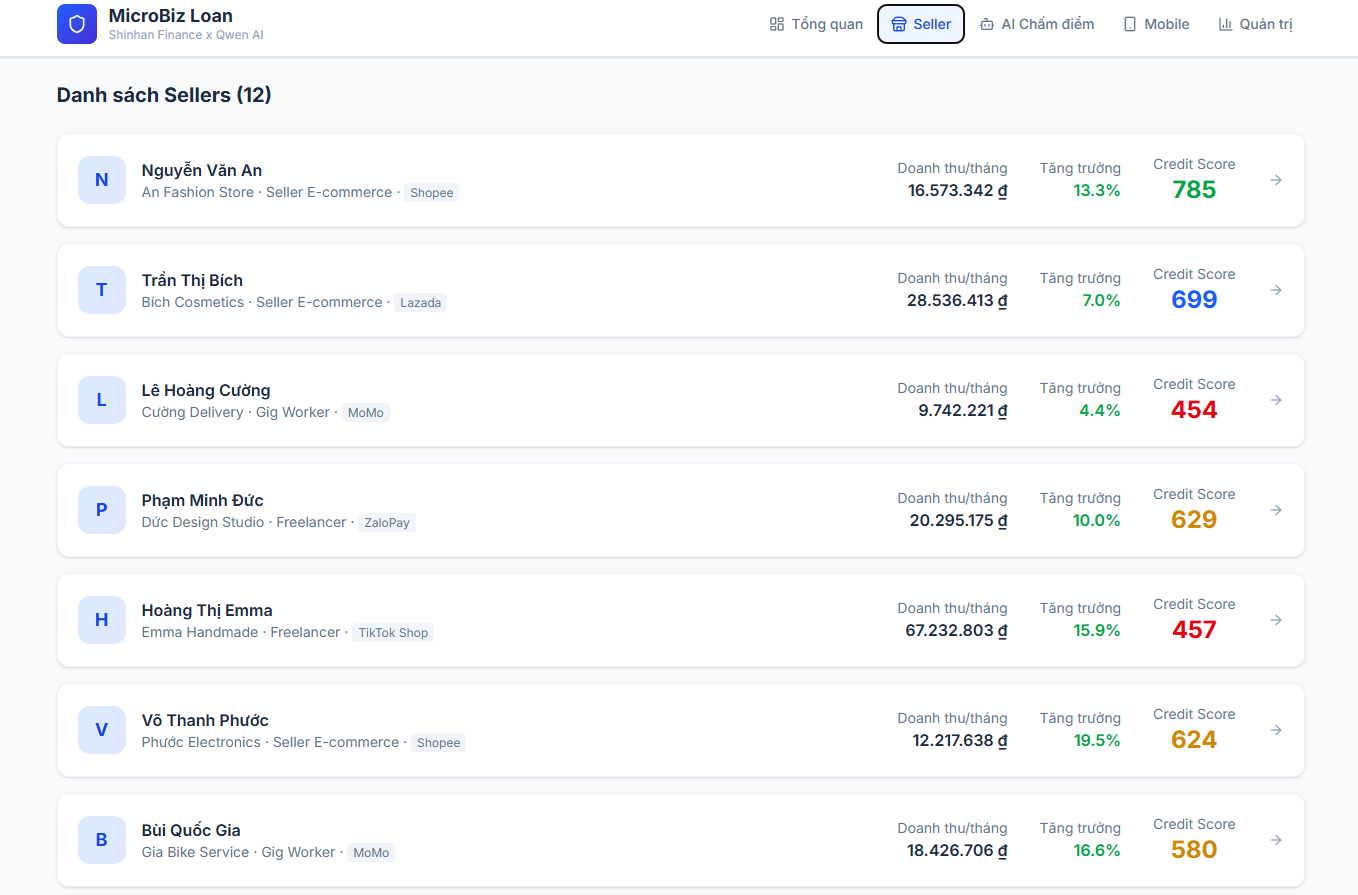
Seller /customer list sf12
-
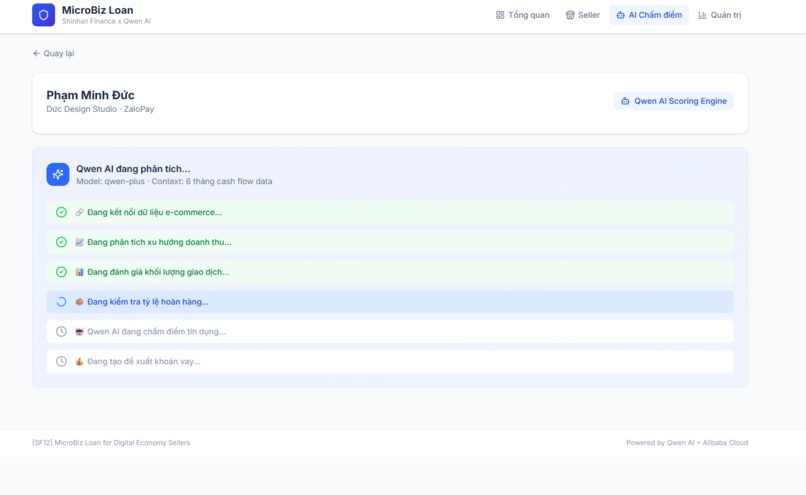
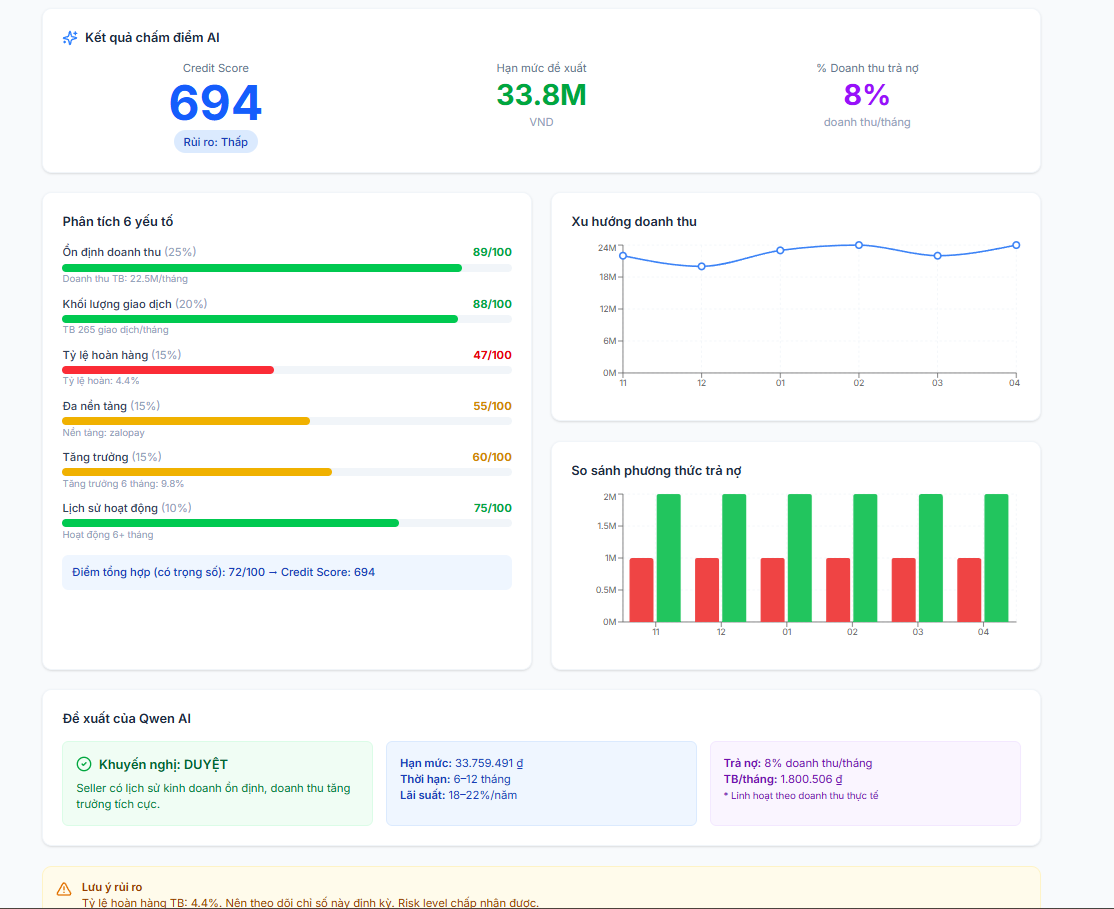
A.I analytic customer score
-
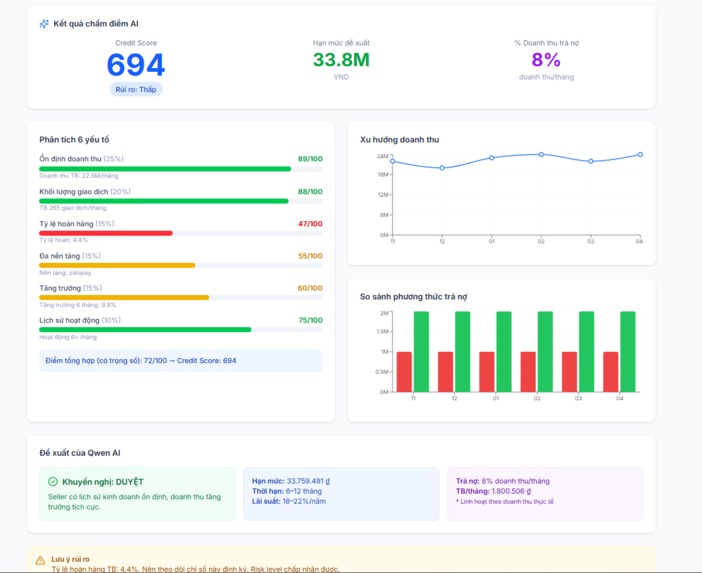
A.I analytic customer summary
MicroBiz Loan
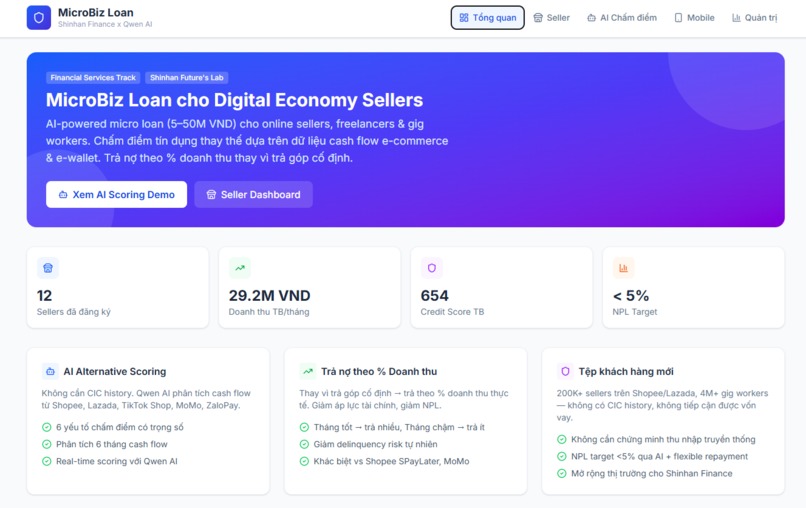
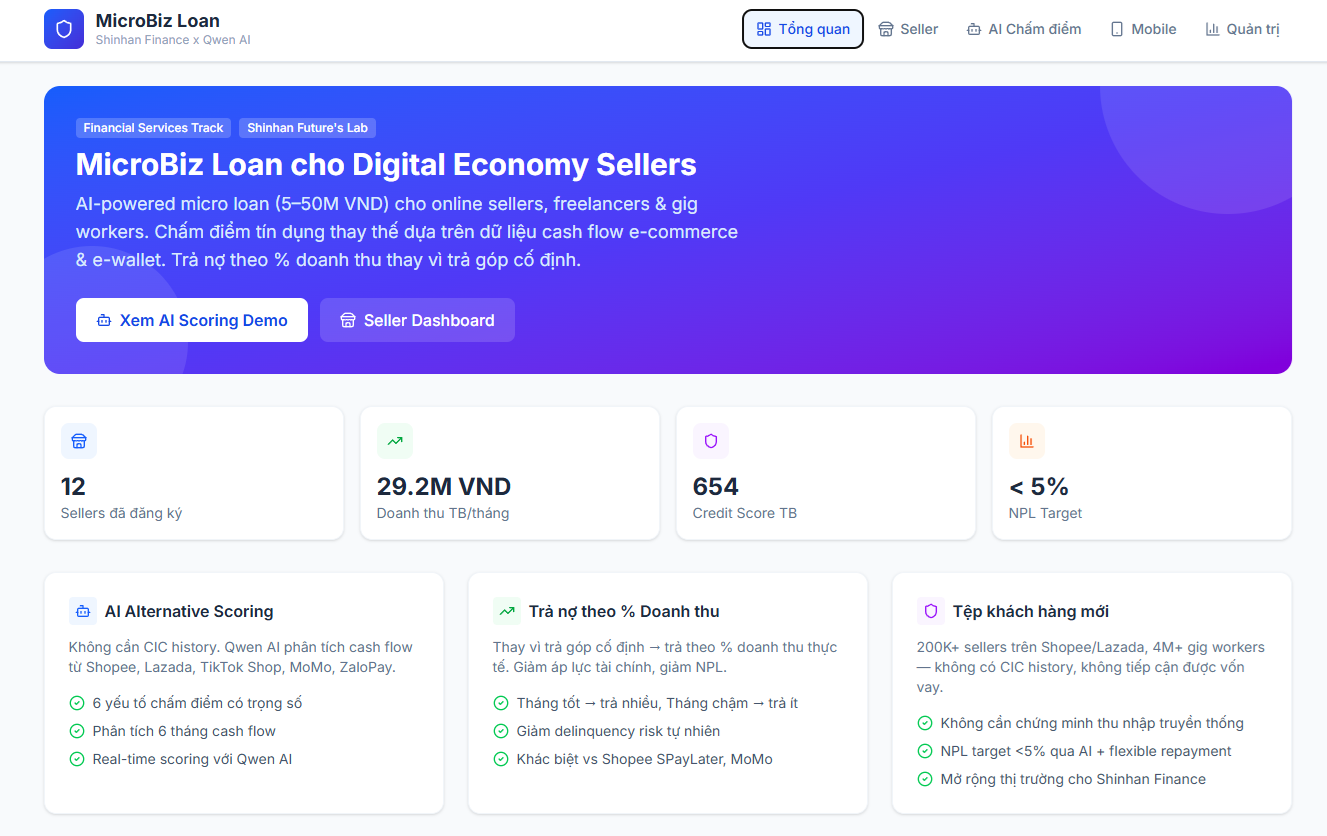
[SF12] Connects digital economy sellers in Vietnam with working capital using AI-powered alternative credit scoring.
Problem
Online sellers, freelancers, and gig workers are invisible to traditional credit systems. They have no CIC history, no payslips, no tax declarations. When a TikTok Shop seller needs 10M VND to restock before a Mega Sale, banks say "no" because there's no paper trail.
Solution
A "Mini-CFO" for digital economy sellers:
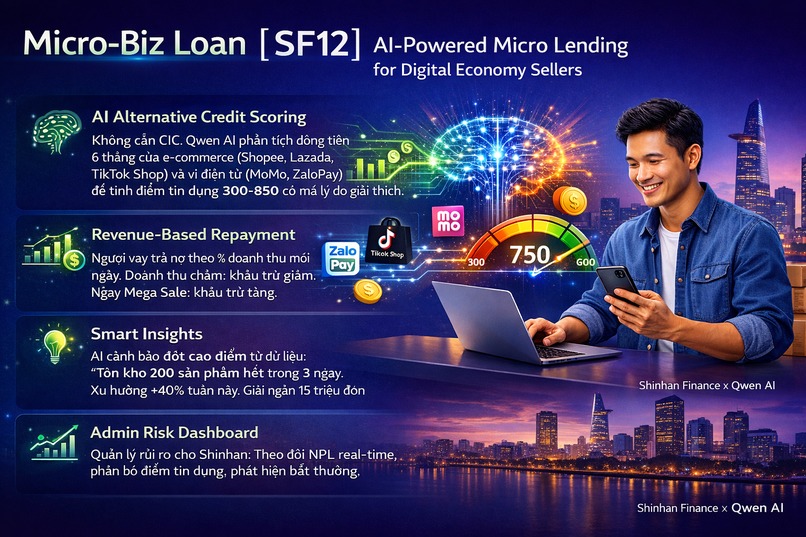
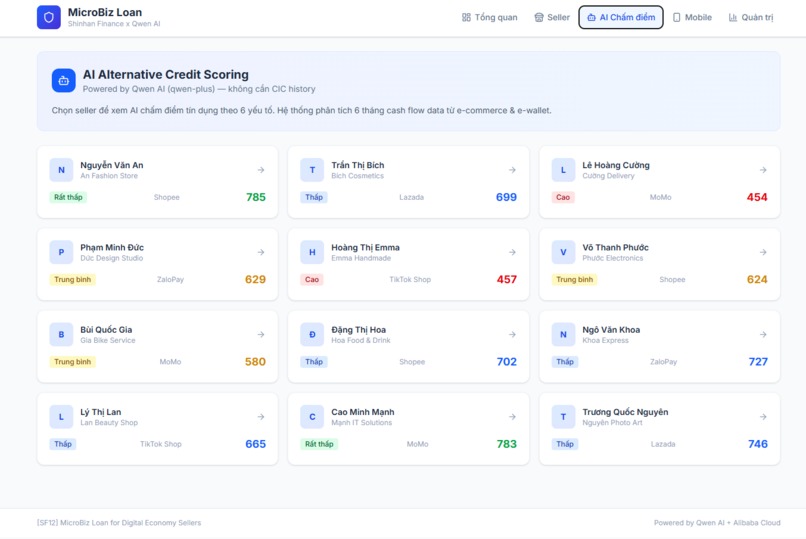
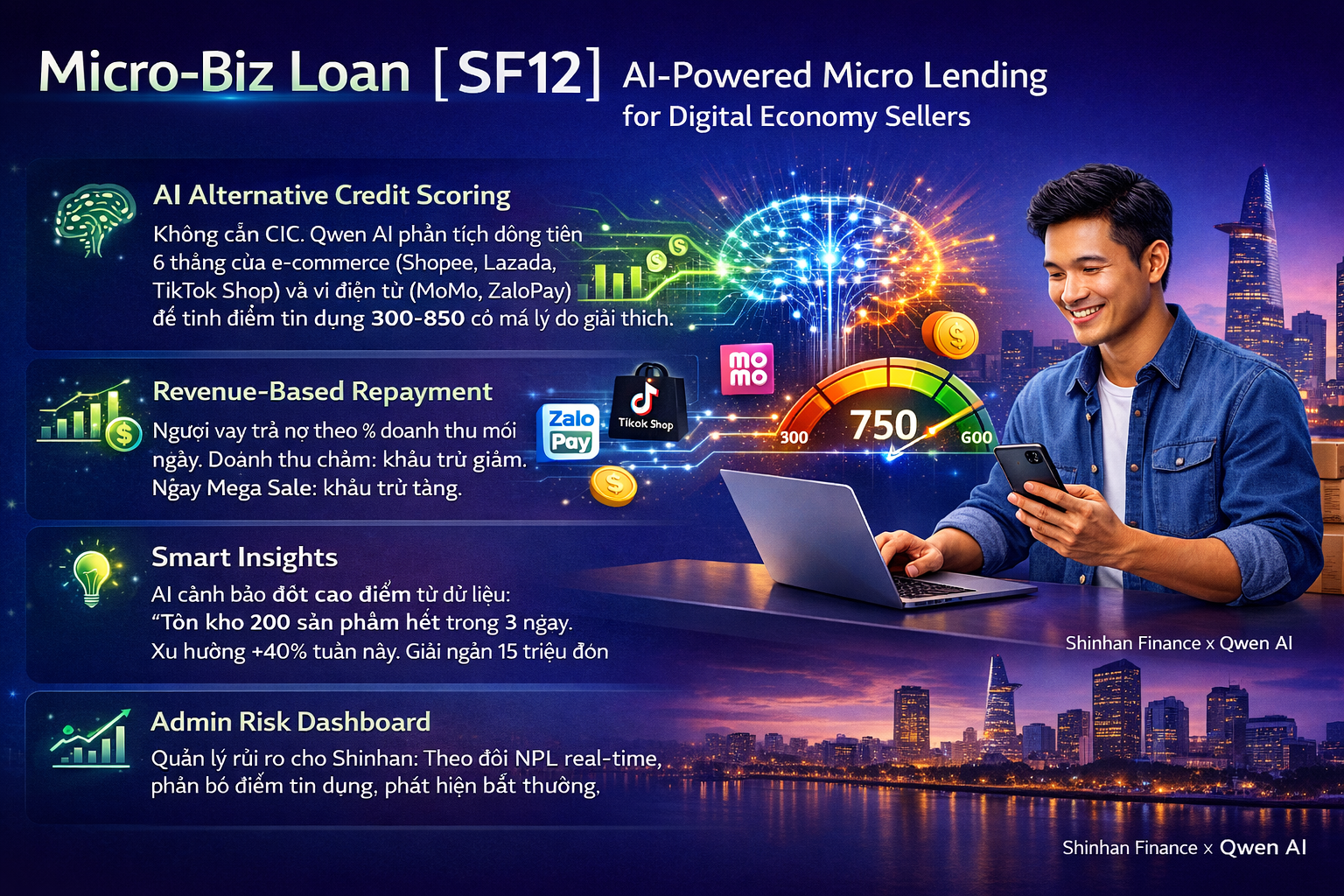
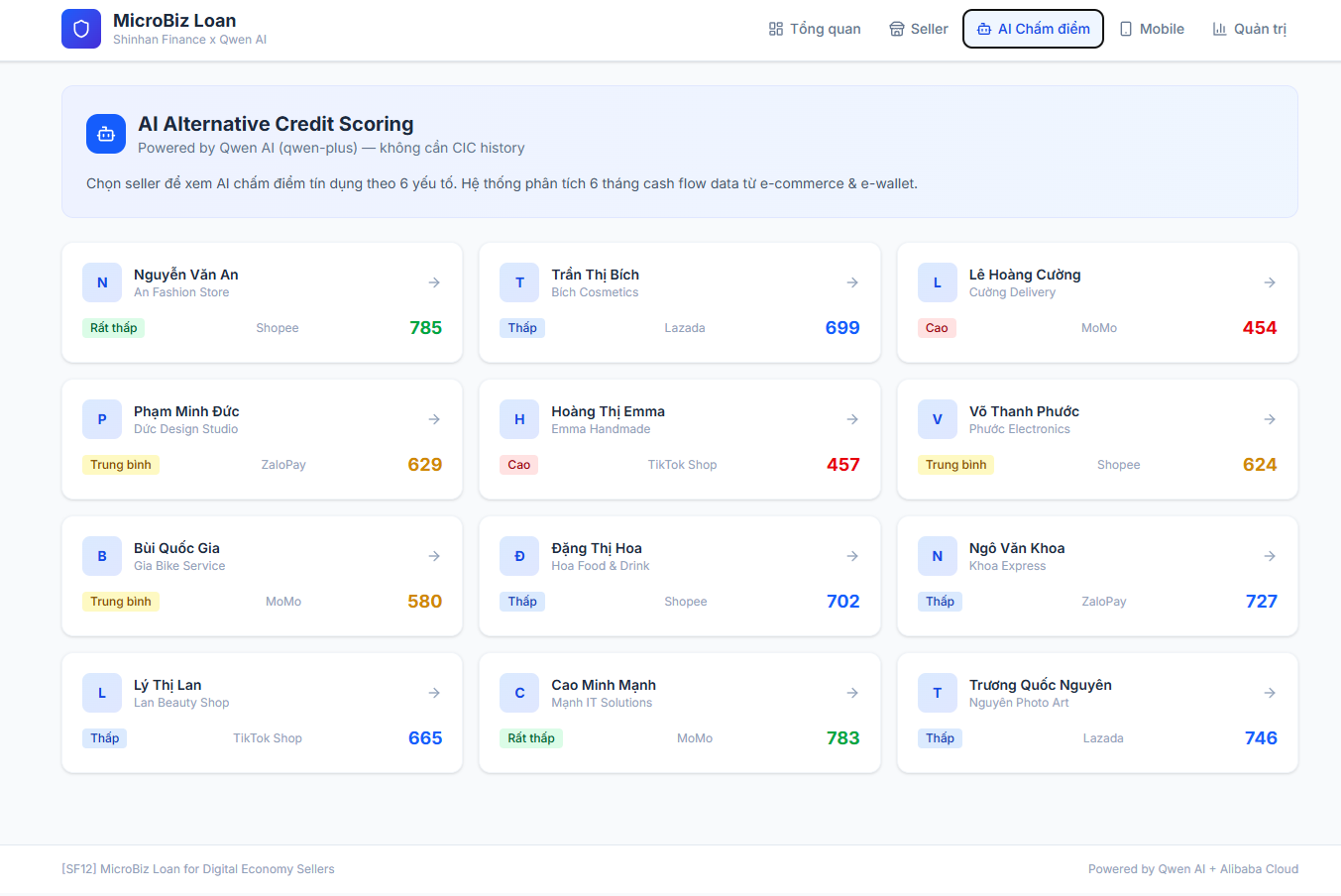
AI Alternative Credit Scoring — No CIC needed. Qwen AI analyzes 6 months of e-commerce cash flow (Shopee, Lazada, TikTok Shop) and e-wallet data (MoMo, ZaloPay) to produce a 300-850 credit score with explainable reason codes.
Revenue-Based Repayment — Borrowers repay as a % of daily revenue instead of fixed installments. On slow days, the deduction auto-adjusts down to preserve working capital. On Mega Sale days, it increases to help them pay off early.
Smart Insights — AI detects demand peaks from historical patterns and alerts sellers: "Your 200-unit stock will run out in 3 days. Trend is +40% this week. Disburse 15M now to capture the surge."
Credit Gamification — Transparent level-up progression. Sellers see exactly what to do to unlock higher limits: maintain refund rate <3%, keep API connected, grow revenue 15% month-over-month.
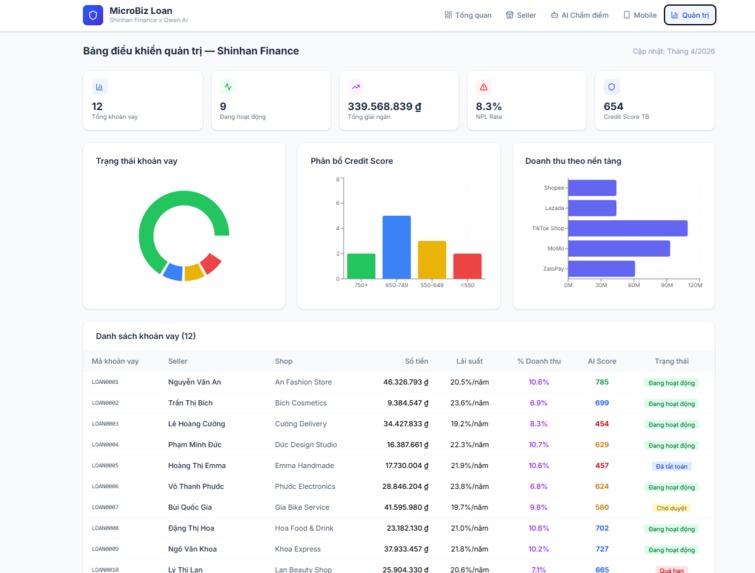
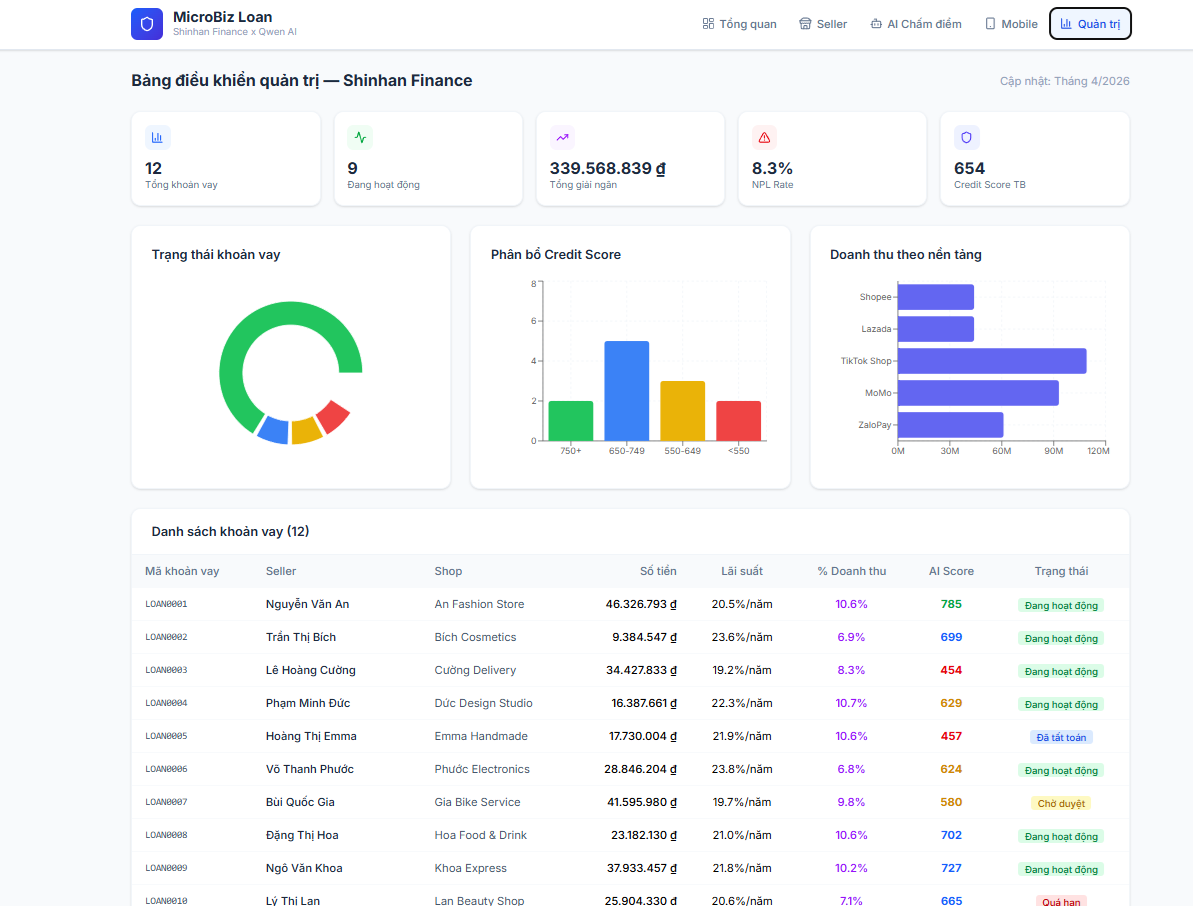
Admin Risk Dashboard — Portfolio-level view for Shinhan: real-time NPL tracking, credit score distribution, and anomaly detection.
Tech Stack
| Layer | Technology |
|---|---|
| AI Engine | Qwen Plus via DashScope API |
| Backend | FastAPI + SQLAlchemy + SQLite |
| Credit Engine | AI-first scoring + rule-based fallback (6 weighted factors) |
| Frontend | React 19 + Vite + Tailwind CSS + Recharts |
| Data | 50 sellers, 8 months, 500+ cashflow records |
Scoring Factors
| Factor | Weight |
|---|---|
| Revenue consistency | 25% |
| Transaction volume trend | 20% |
| Return/refund rate | 15% |
| Platform diversity | 15% |
| Growth trajectory | 15% |
| Account activity | 10% |
Key Features
- Dual-mode scoring: Qwen AI first, rule-based fallback with 6 weighted factors
- Explainable AI: Every credit decision includes reason codes and weighted factor breakdowns
- Revenue-based repayment simulator: Visual comparison of fixed vs dynamic payment plans
- Animated scoring visualization: 6-step sequential analysis with progress bars
- Vietnamese-localized UI: All labels and platform names in Vietnamese
Challenges Solved
- Structured JSON reliability from LLM — Solved with explicit output format requirements and robust rule-based fallback
- Scoring factor weighting — Balanced 6 factors to produce realistic 300-850 scores with iterative calibration
- Revenue-based repayment math — Built month-by-month projection showing compounding effect of dynamic deductions
- Demo data realism — Multi-stage generator with configurable seeds for believable cash flow patterns
What We Learned
- AI for credit scoring is viable but needs guardrails — LLMs analyze cash flow patterns effectively, but rule-based fallback is essential for production reliability
- Revenue-based financing aligns incentives — When repayment scales with revenue, borrowers don't get crushed during dry spells, and lenders get paid faster during boom periods
- Explainability beats raw accuracy — A 720 score with reason codes is more actionable than a 720 score with no explanation
- Data quality determines everything — Realistic cash flow patterns (seasonality, growth curves, platform quirks) are essential for meaningful scoring
NPL Target: <5%
Achieved through conservative scoring, dynamic deduction caps, and real-time portfolio monitoring.
Built With
- css
- fastapi
- json
- next.js
- postcss
- python
- qwen
- tailwind
- typescript
- vercel


Log in or sign up for Devpost to join the conversation.