-
-
SewBerry logo
-
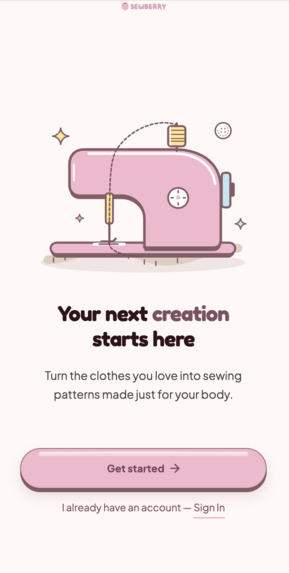
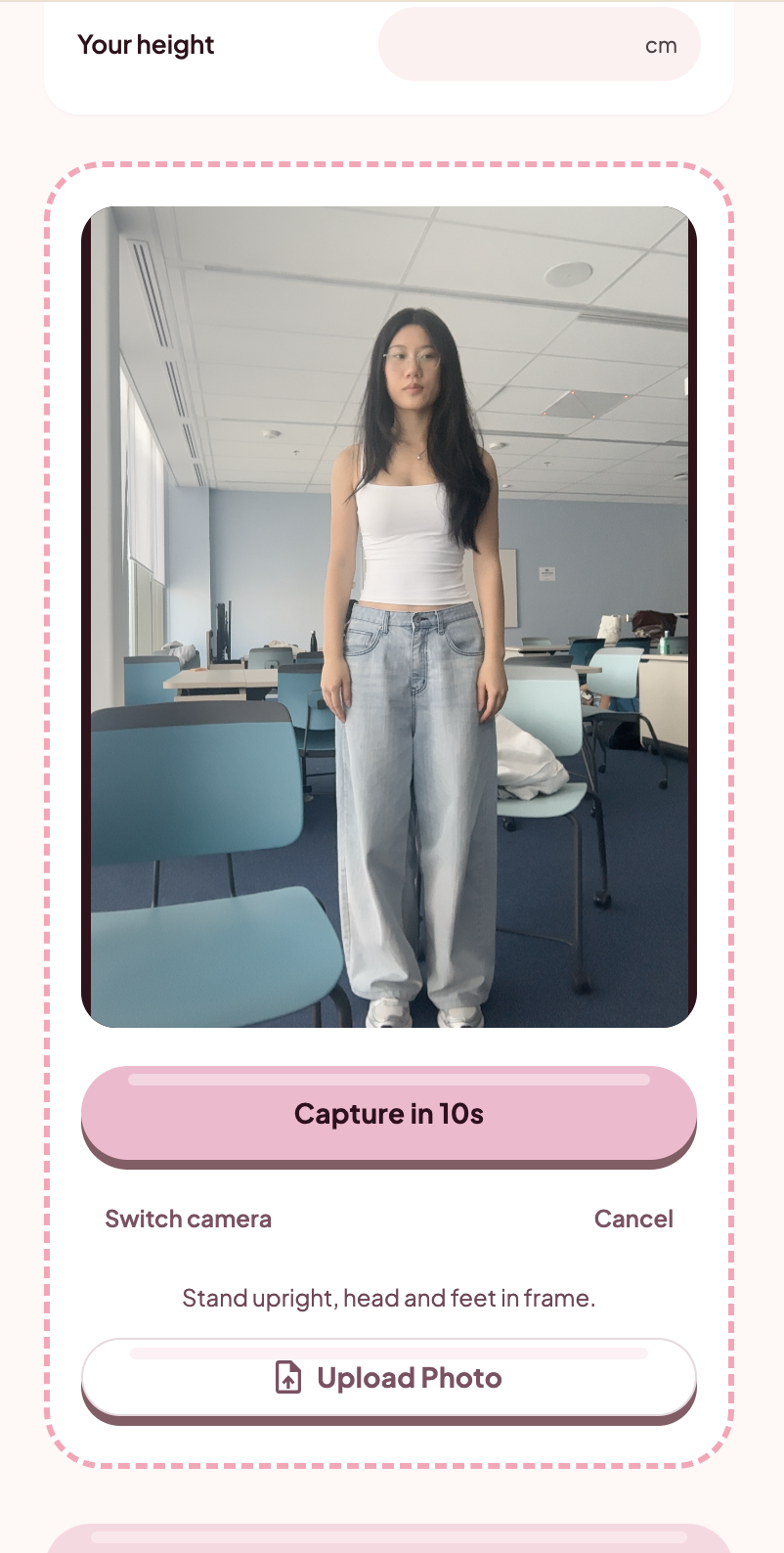
Landing Screen
-
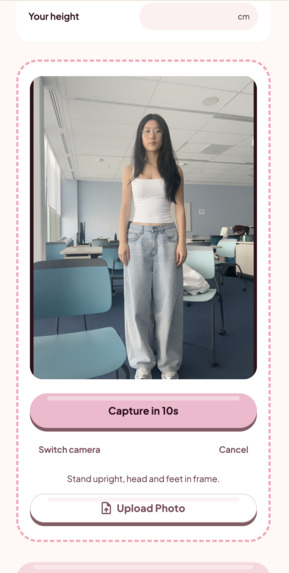
Measurement Calculator
-
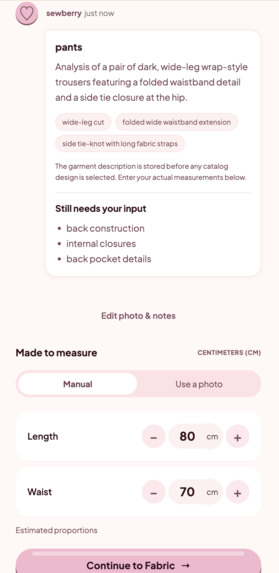
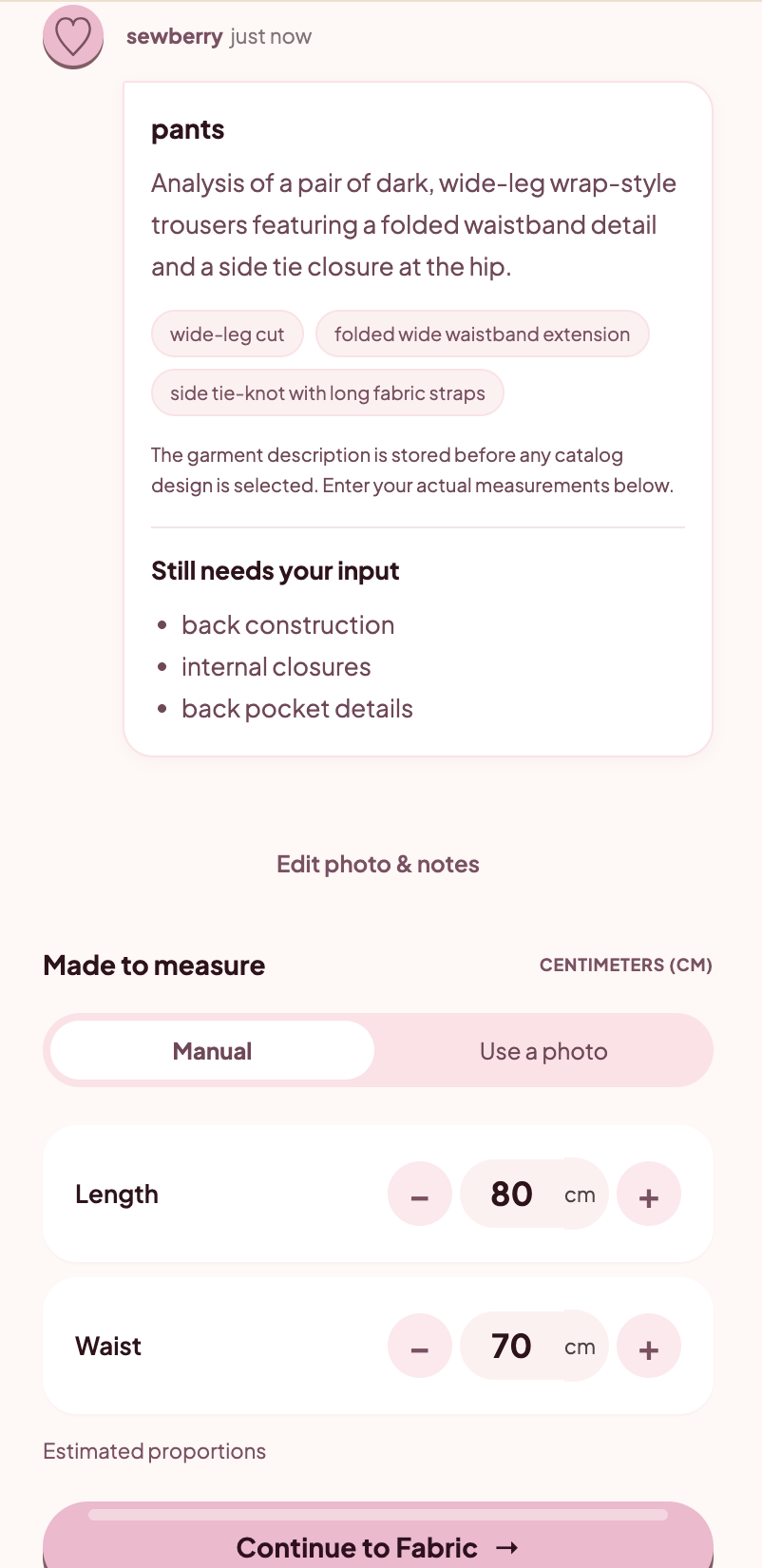
SewBerry AI's Analysis of the Clothing Image
-
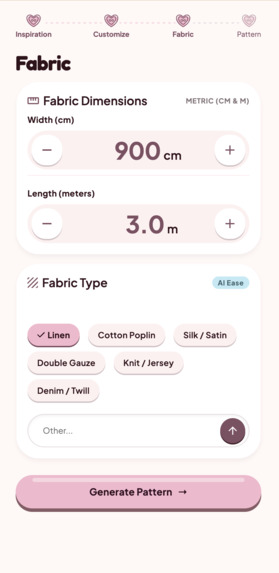
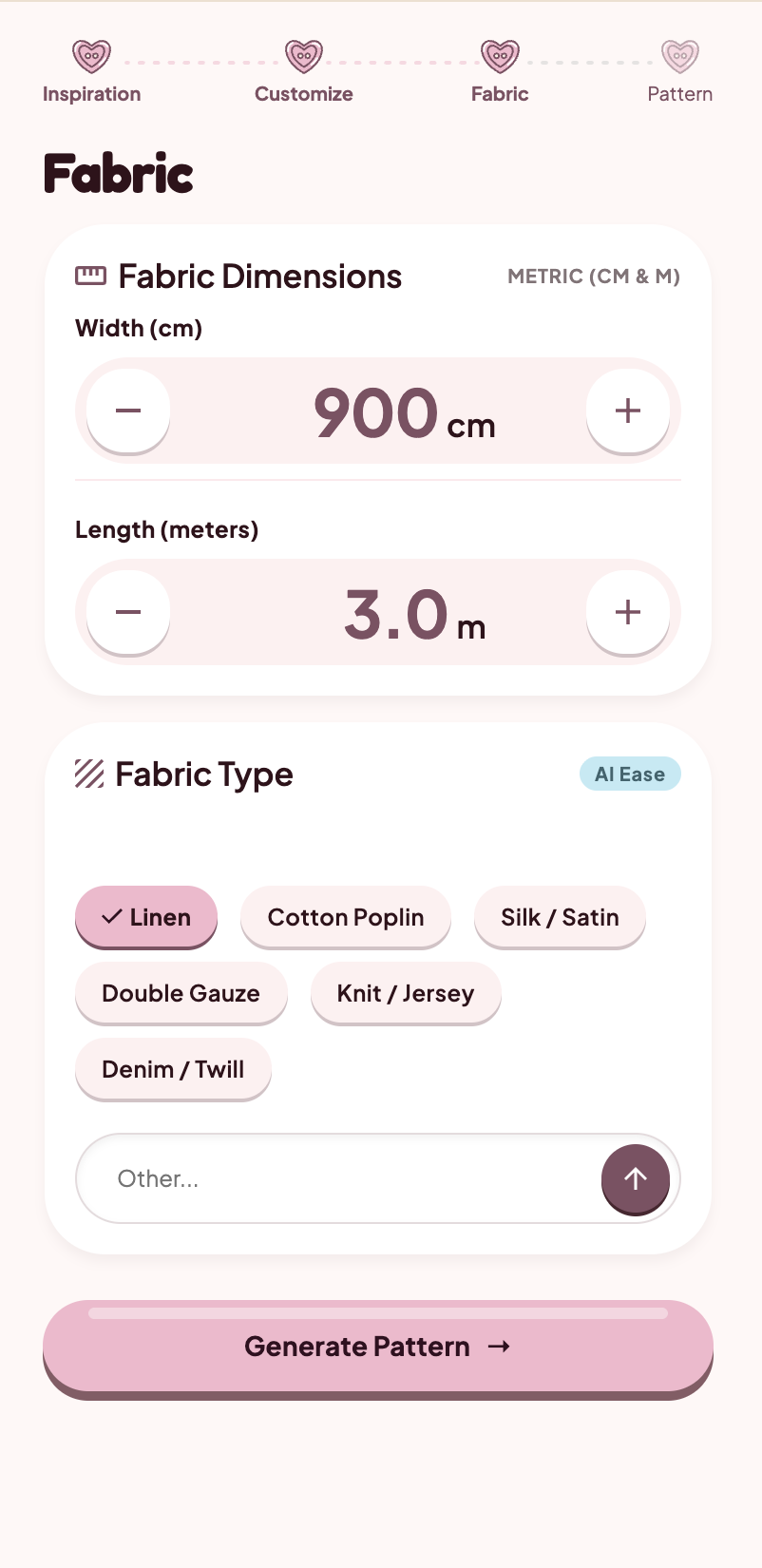
Customized Fabric Dimensions
-
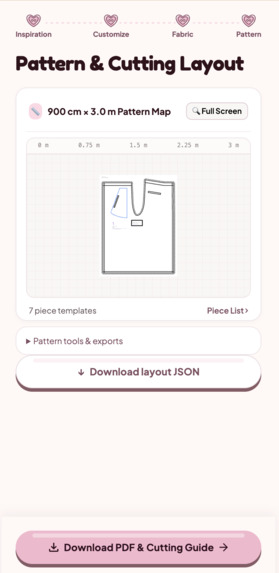
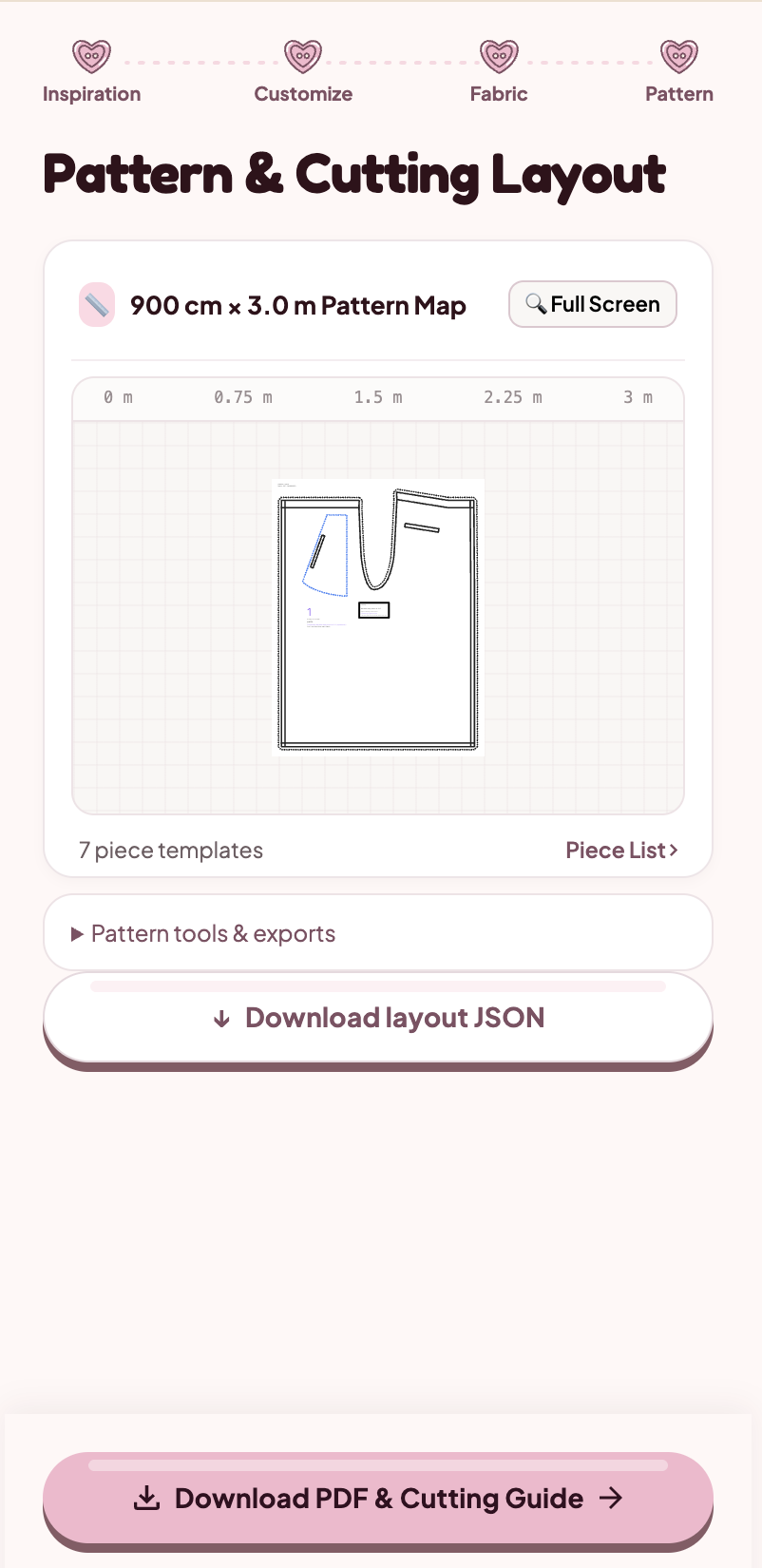
Generated Pattern, With Optimized Layout
Inspiration
We've all saved clothes on Pinterest that we wish we could buy, only to find that nothing in stores looks quite right. Maybe the fit is off, the colour is wrong, or the perfect piece simply doesn't exist.
We started wondering: what if we could make those clothes instead?
Fast fashion makes it easy to keep buying something new whenever our clothes don't meet our expectations. Meanwhile, sewing offers a way to create more personalized clothing and reuse existing materials, but getting started can be intimidating. Finding a pattern, adjusting it to your measurements, and understanding how to draft a garment can be barriers even before you pick up a needle.
We built SewBerry to bridge that gap between wanting something and knowing how to make it.
What it does
SewBerry turns clothing inspiration into personalized, printable sewing patterns.
Upload inspiration: Upload a photo of a garment you want to recreate.
Analyze the design: AI identifies visible garment features and helps match the image to a supported sewing design.
Personalize the fit: Enter your body measurements instead of relying on standard retail sizes.
Work with what you have: Specify your available fabric dimensions, including secondhand fabric or textiles you already own.
Generate your pattern: Our drafting engine calculates pattern geometry and generates downloadable PDF and SVG files.
Instead of starting with a blank page or searching through countless patterns, users get a more accessible starting point for creating their own clothes.
SewBerry is designed for more than experienced sewists. It could help beginners learn to sew, parents make clothing for growing children, and people who struggle to find well-fitting clothes explore alternatives to conventional sizing.
How we built it
SewBerry combines multimodal AI with a parametric pattern-drafting engine.
Google Gemini: Analyzes uploaded garment images to identify their visible characteristics.
Pattern matching: Maps the extracted garment features to a supported design, giving the drafting engine a structured starting point.
Parametric drafting: Uses the selected design and user measurements to calculate the geometry of individual pattern pieces.
File export: Converts the generated pattern into PDF and SVG formats for printing and further use.
The key engineering decision was separating visual interpretation from pattern construction. An AI-generated image might look like the desired garment, but it doesn't provide the measurements and geometry needed to construct it. By pairing AI-based recognition with structured drafting logic, SewBerry aims to turn visual inspiration into a practical starting point for sewing.
Challenges we ran into
Our biggest challenge was translating a visual reference into something that could actually be constructed.
A photograph doesn't reveal everything about a garment. Seams, hidden construction details, exact dimensions, and fabric behaviour cannot always be inferred from an image alone. We needed a workflow that could use AI to interpret the design without relying on AI alone to produce precise sewing geometry.
We also had to consider the relationship between body measurements, garment design, and available fabric. A pattern must do more than resemble the reference image: its pieces need to be dimensionally consistent and suitable for the intended construction.
Finally, we had to scope our idea to fit a hackathon. Supporting every possible garment would require substantially more drafting logic and testing, so we focused on a structured pipeline built around supported designs.
Accomplishments that we're proud of
We're proud of building a project that connects AI to a tangible, real-world creative process.
Our main accomplishment is bringing together image analysis, pattern matching, measurement-based drafting, and pattern export in one workflow. Rather than stopping at a visual recommendation, SewBerry aims to produce an artifact users can take off their screens and use to begin making a garment.
We're also proud of approaching sustainability through accessibility. Reusing fabric is much easier to consider when the process of turning it into something useful feels achievable. By lowering the technical barrier to pattern creation, we hope to make clothing reuse and customization more approachable for people who might otherwise keep shopping for alternatives.
What we learned
We learned that the most important part of an AI-powered application is often what happens after the model produces its output.
AI can interpret visual information, but turning that interpretation into a usable sewing pattern requires structured data, geometric calculations, and garment-specific rules. Defining the boundary between what a model can infer and what software must calculate was an important part of our design process.
We also learned to think about sustainability as a usability problem. Encouraging people to reuse materials is only part of the solution; the tools that make reuse practical need to be accessible to people without specialized skills.
What's next for Sewberry
Sewberry is an AI-powered sewing pattern generator that transforms clothing inspiration into personalized, fabric-efficient sewing patterns. Users upload a reference image, describe their desired design modifications, and provide measurements and fabric specifications.
We integrated Gemini API to interpret the uploaded image and plain-language requests, translating them into a pre-designed JSON specification that serves as the input to our custom-trained pattern generation model. We leveraged FreeSewing, an open-source parametric sewing pattern library, to obtain training data for our model, enabling it to learn the geometric relationships and construction principles underlying sewing patterns. Using parametric geometry and vector-based pattern construction, our model generates personalized pattern pieces tailored to the user's measurements and design preferences.
The generated patterns are converted into SVG vector files, which are then processed by our custom Python-based optimization algorithm. Using geometric nesting techniques, the algorithm determines an efficient arrangement of pattern pieces within the user's available fabric, accounting for its dimensions, proportions, and the shapes of individual pieces rather than simply calculating total surface area.
Built With
- css
- figma
- google-gemini
- html
- javascript
- json
- typescript

Log in or sign up for Devpost to join the conversation.