-
-
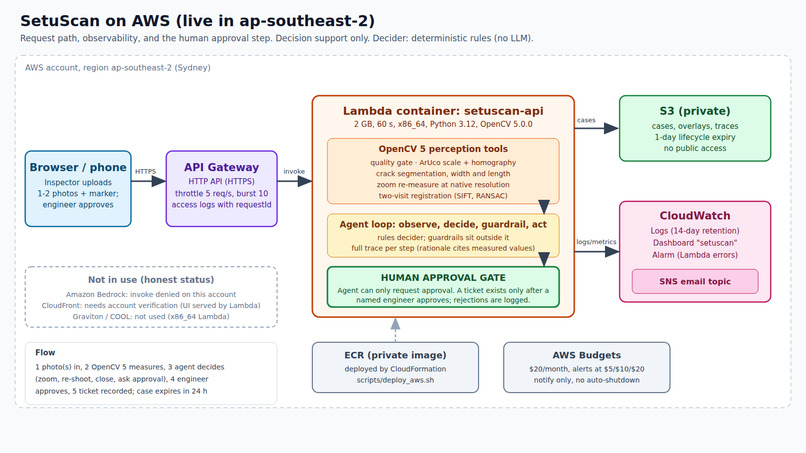
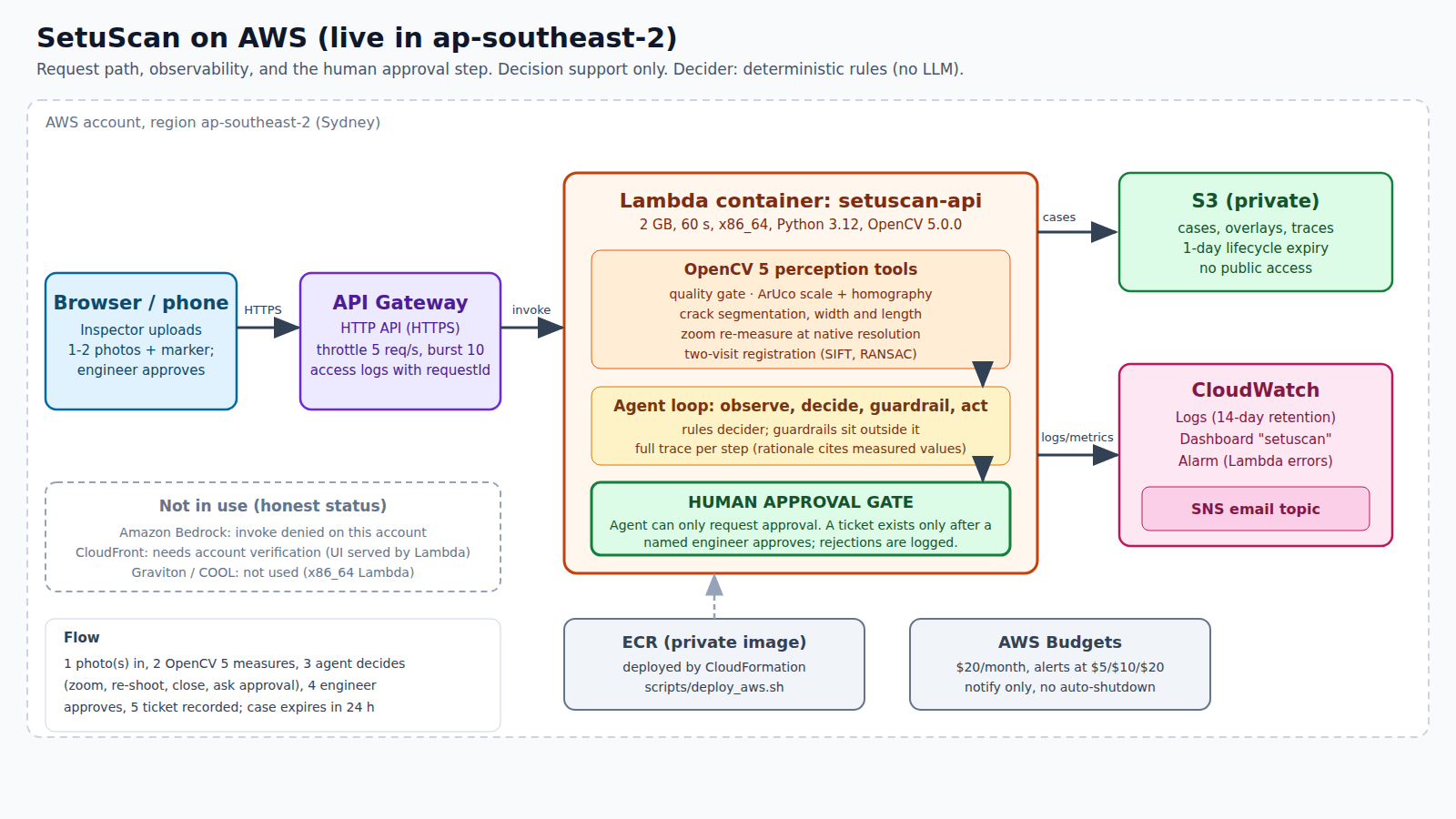
SetuScan on AWS (Sydney): API Gateway, Lambda with OpenCV 5, private S3, CloudWatch, and a human approval gate.
-
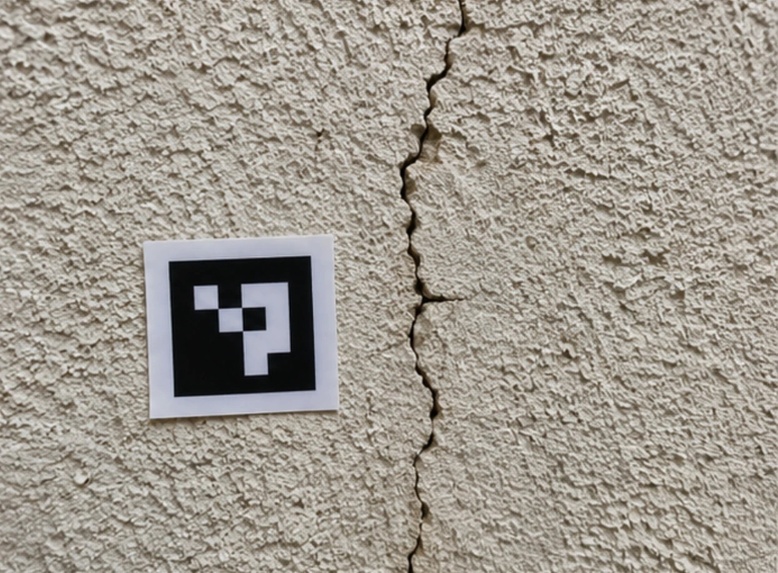
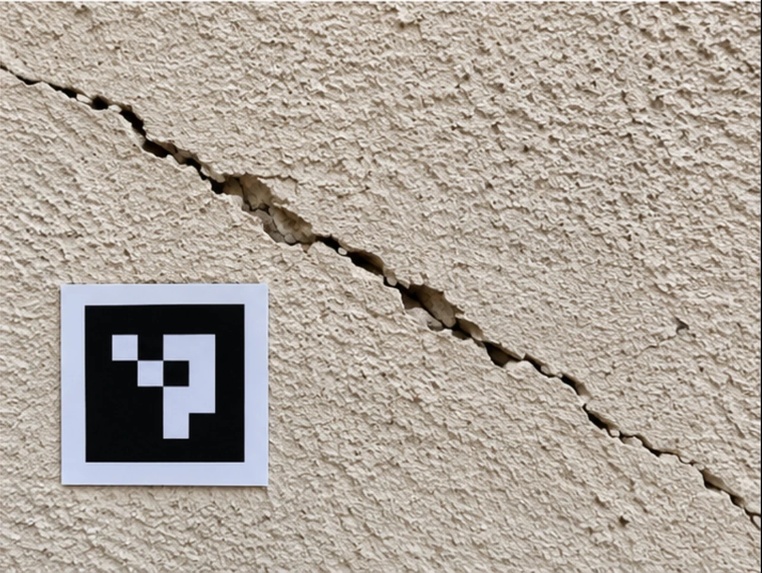
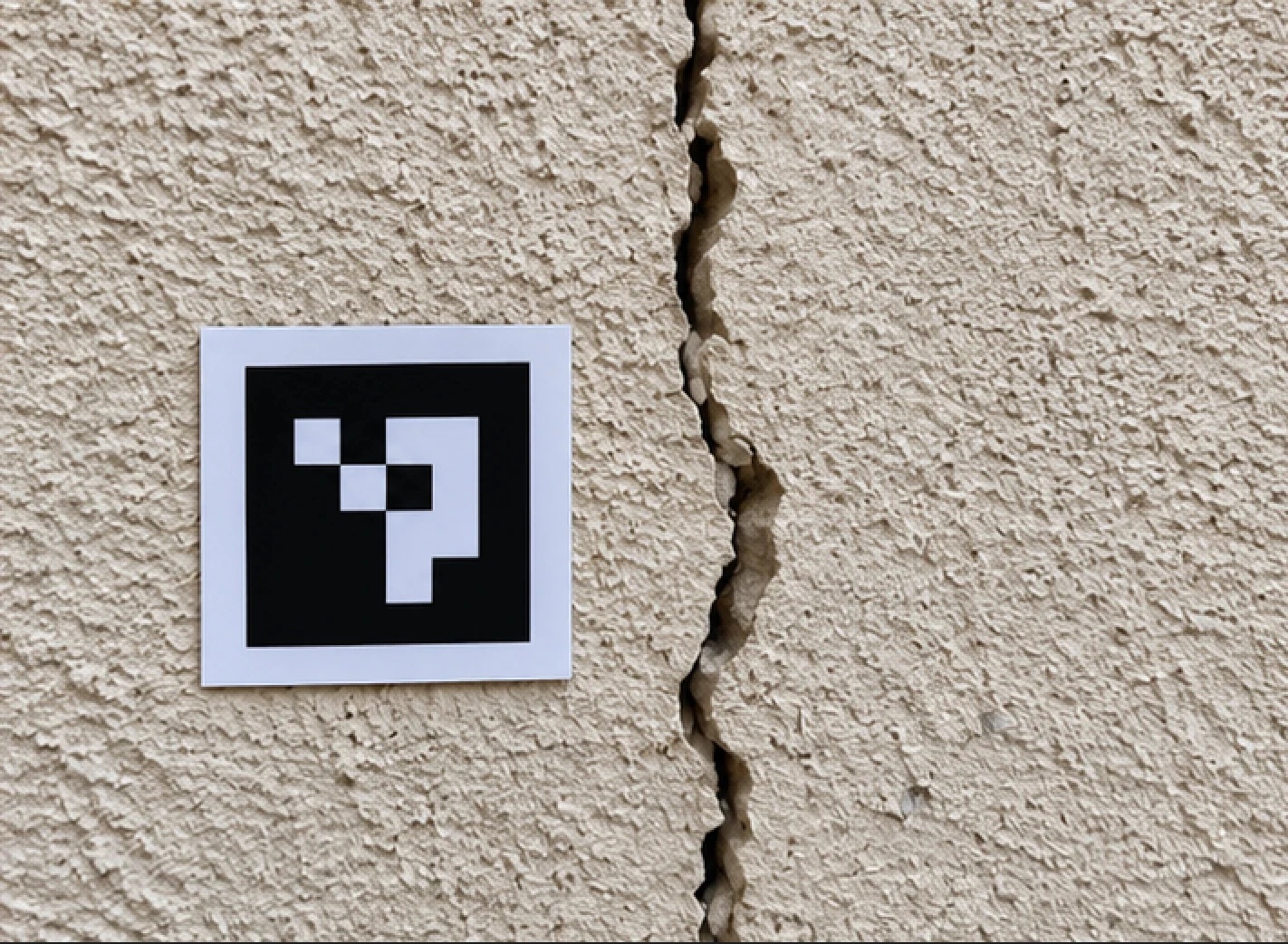
REAL photo, crack A: printed marker for scale. Measured by SetuScan (preliminary check, 4 photos of 2 cracks).
-
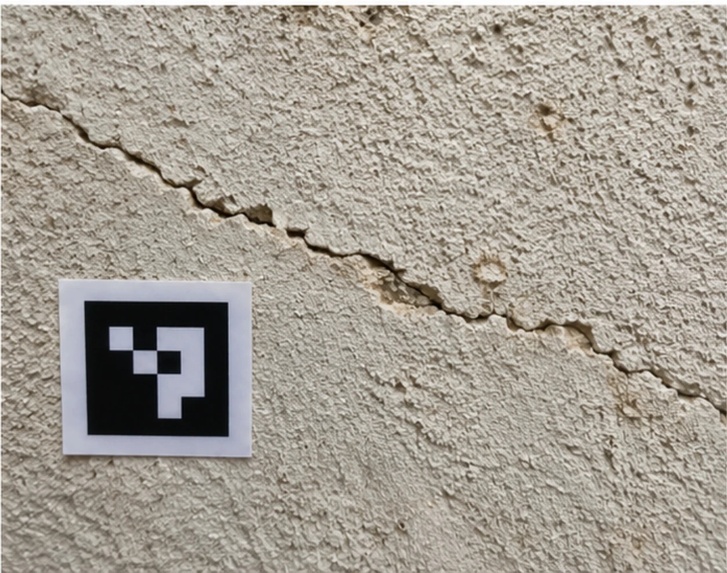
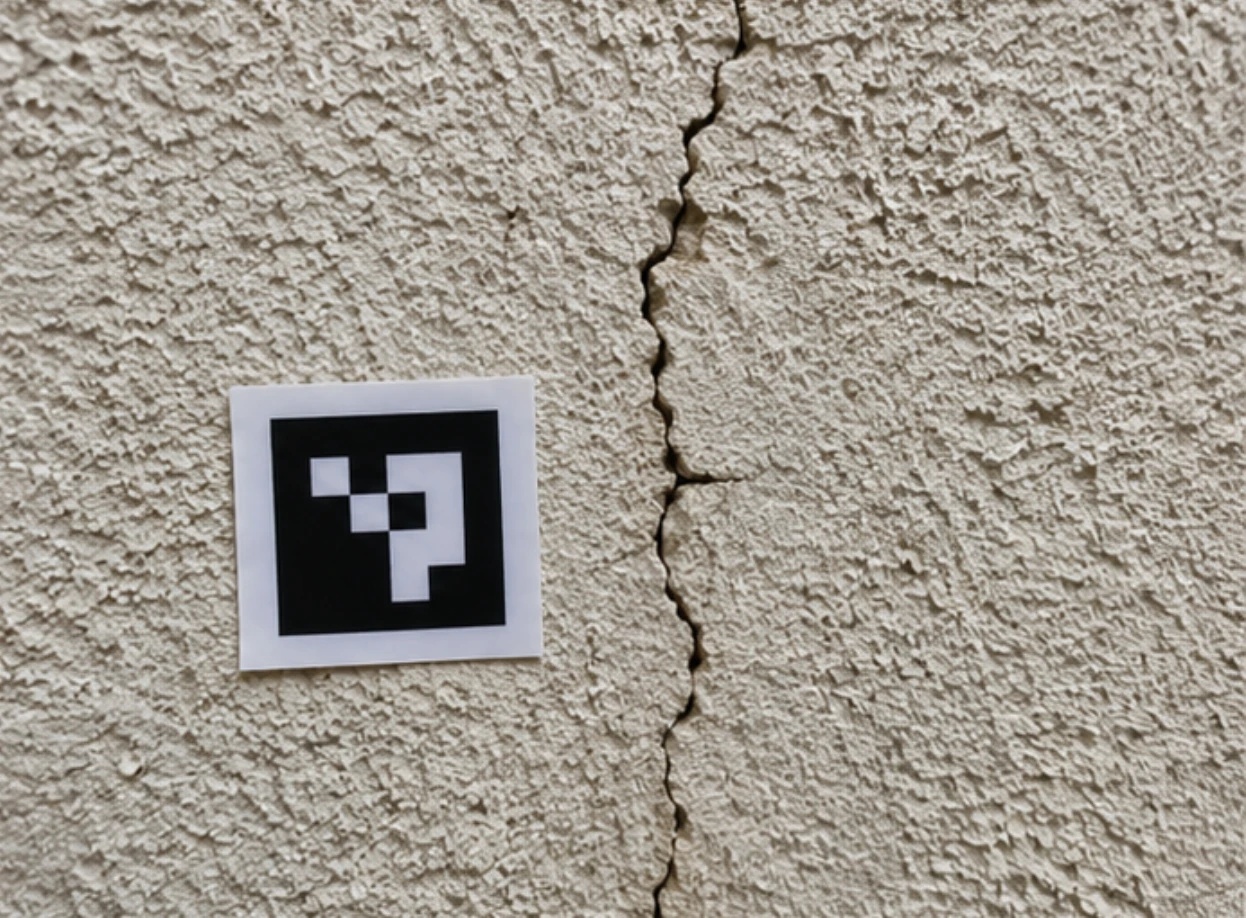
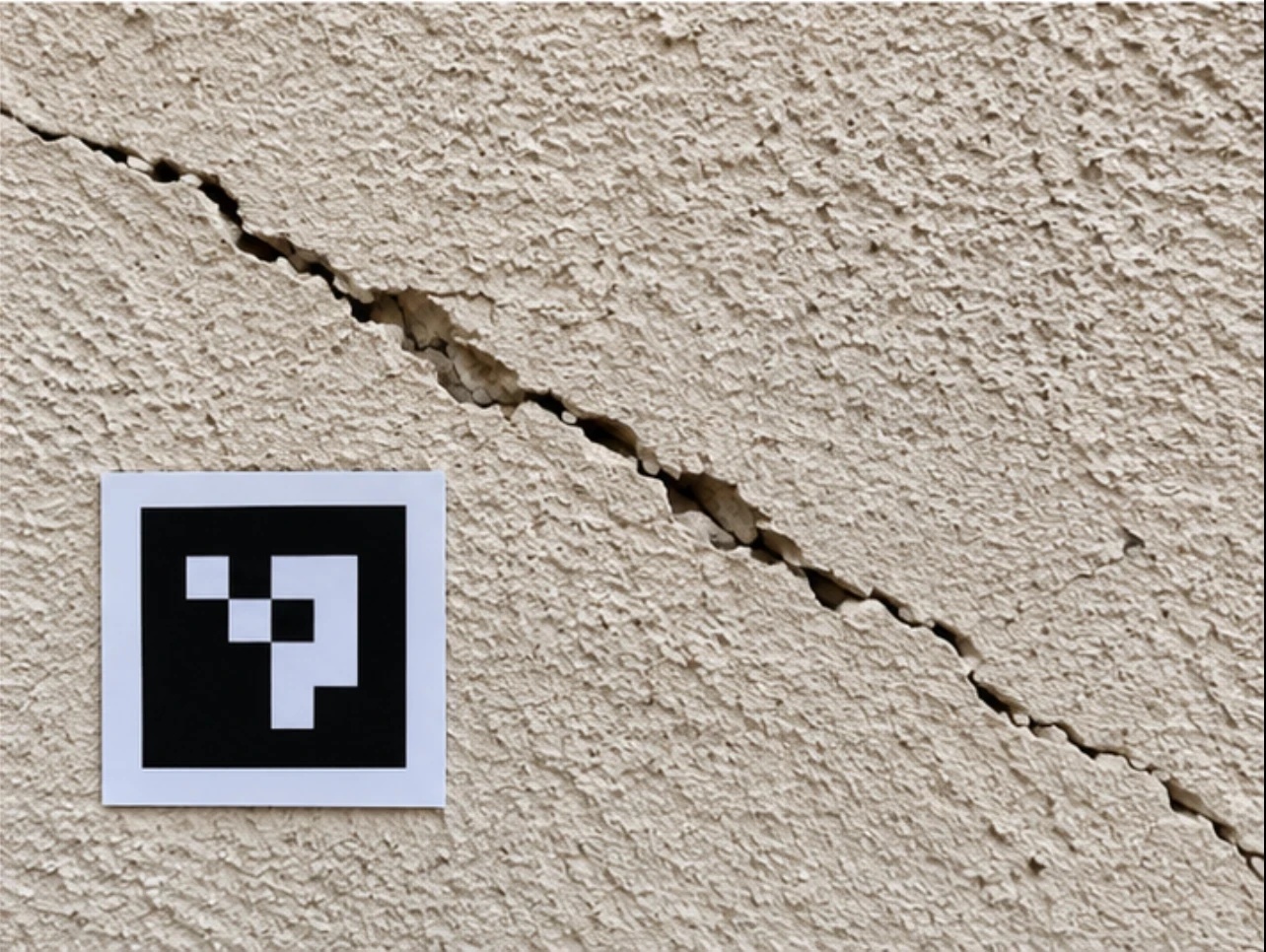
REAL photo, crack B: printed marker for scale. Measured by SetuScan (preliminary check, 4 photos of 2 cracks).
-
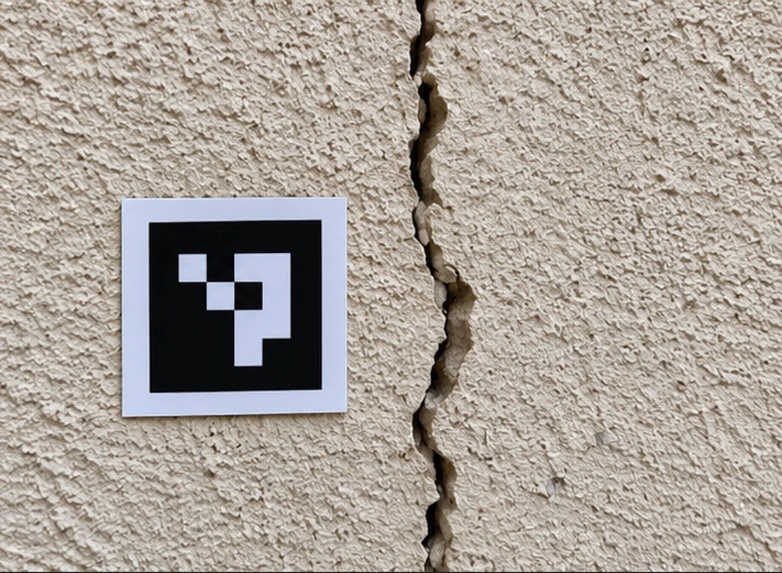
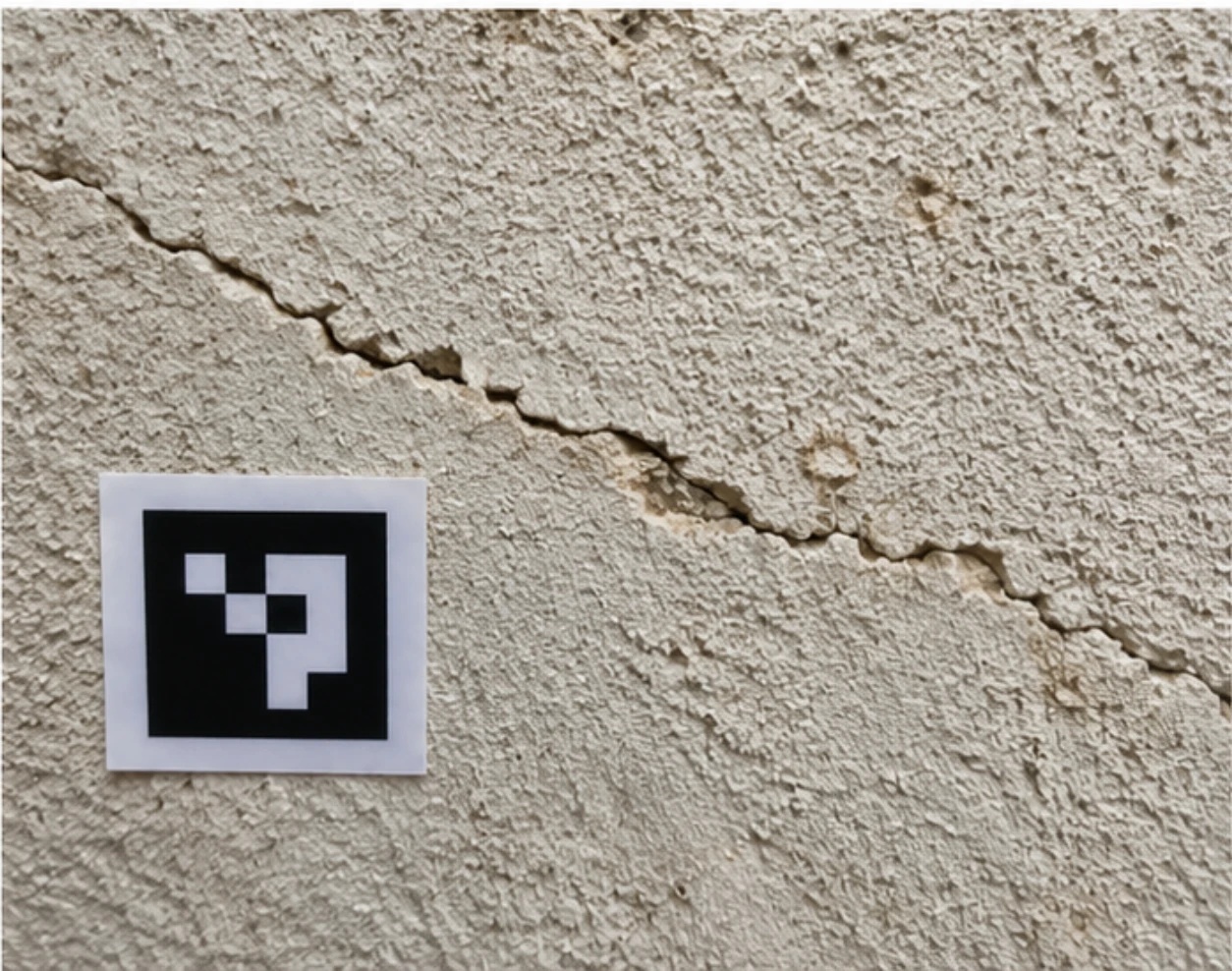
REAL photo, crack A: printed marker for scale. Measured by SetuScan (preliminary check, 4 photos of 2 cracks).
-
REAL photo, crack B: printed marker for scale. Measured by SetuScan (preliminary check, 4 photos of 2 cracks).
Inspiration
Cracks in concrete and masonry are usually recorded by eye. A phone photo has no scale, so nobody can say whether a crack is hairline or wide, or whether it is growing between visits. Setu means bridge in Hindi and Sanskrit. SetuScan aims to make routine visual inspection measured, comparable over time and auditable, with a human engineer in charge. It is decision support, not a structural certification.
What it does
- Quality gate: too dark, glare or a featureless frame leads to a re-shoot request with advice.
- Scale and blur from one printed ArUco marker placed beside the crack (px per mm, perspective removed, and the marker's edges reveal photo blur).
- Crack segmentation and measurement: length from the skeleton, sub-pixel width from perpendicular profiles, blur-corrected.
- Active perception: if a crack is under 3 px wide or near a policy band edge, the agent re-renders it at native resolution and re-measures, or asks for a closer photo.
- Two-visit change detection with SIFT and RANSAC: crack extension in mm and width change.
- Human approval: the agent can only request approval. A ticket exists only after a named engineer approves. Rejections are logged. Every step is in a trace with the reason, citing measured numbers. The decider is a deterministic rules policy (no LLM). The severity bands are an example policy.
How we built it
- OpenCV 5.0.0 (opencv-contrib-python-headless 5.0.0.93): imgproc, objdetect (ArUco), calib3d (homography, RANSAC/MAGSAC), features2d (SIFT, FLANN), ximgproc (thinning). No learned weights.
- Python 3.12, FastAPI, a plain HTML/JS front end.
- AWS (ap-southeast-2): Lambda container image (2 GB), API Gateway HTTP API (throttled to 5 req/s), ECR, private S3 with 1-day expiry, CloudWatch logs, dashboard and alarm, SNS email, least-privilege IAM, CloudFormation, AWS Budgets ($20, alerts at $5/$10/$20).
- One-command deploy and teardown scripts, pinned dependencies (uv.lock, requirements-lambda.txt).
Evaluation
- KrakN public dataset (CC BY 4.0), held-out test split of 2,819 crack and 5,677 background patches: precision 0.852, recall 0.884, F1 0.868.
- SYNTHETIC scenes with exact ground truth (84 scenes): mean width error 0.054 mm, measured on the median width along the crack; at most 1.5 percent median-width error for cracks 0.8 mm and wider (the app shows median and p95; the severity policy uses p95, which reads higher: wide sample true 2.4 mm, median 2.41 mm, p95 2.54 mm); thin cracks (0.3 mm and below) are over-read by 0.09 to 0.16 mm.
- Agent task success on 14 SYNTHETIC scenarios x 5 seeds: 69 of 70.
- Live AWS endpoint, re-run 26 Oct 2026 on the final build (eval/live-aws.md): 6 of 6 labelled samples gave the expected outcome on every run; sample inspections took 1.4 to 3.3 s from India and the two-visit growth sample 6.4 s; real uploads took 4.4 s (one photo) and 8.5 s (two visits); a cold start after idle took 4 to 6.5 s in an earlier measurement. The approval gate and the 404, 409 and 415 error paths were checked live.
Challenges we ran into
- The AWS account sat behind an organisation policy that blocked compute until we found it was region-locked to Sydney.
- Thin cracks are only a few pixels wide, so we added blur correction from the marker and a zoom step instead of trusting one reading.
- Amazon Bedrock was denied on this account, so the agent runs on rules. We chose to say so rather than fake an LLM.
Accomplishments that we're proud of
A live, deployed OpenCV 5 pipeline on AWS with an honest evaluation including failure cases, an agent that refuses to give a number when the photo cannot support one, and a human approval gate that the code enforces.
What we learned
Scale and blur have to be measured from the scene itself (the marker) before any millimetre number means anything, and a conservative agent that asks for a better photo is more useful than one that always answers.
What is not done
- No Amazon Bedrock model and no LLM in the loop (access denied). The LLMDecider code exists but has never run.
- No CloudFront (account verification needed); the Lambda serves the UI.
- No Graviton / COOL build; the COOL award is not claimed.
- Real-photo millimetre validation is preliminary: 2 real cracks, 4 photos, ruler as gauge, marker measured at about 18 mm. Median width within 6-48 % of the ruler's maximum-width reading (mean absolute error 0.24 mm over 3 photos); in 1 of 4 photos no crack was found (a miss); crack length unreliable on rough plaster. Main accuracy is on SYNTHETIC scenes, detection on KrakN.
- Severity bands are an example policy. Not a structural certification.
Awards
- Agentic Vision Award: the agent loop is OpenCV-driven (quality, scale, segmentation, zoom, registration), has guardrails outside the decider, a full trace, failure handling (re-shoot requests) and a human approval gate. Weakness to state plainly: the decider is rules, not an LLM.
- Best Use of COOL: not claimed (x86_64 Lambda, stock OpenCV wheel).
AI-assistance disclosure
The code, tests and documentation were written with an AI coding assistant (Claude Code) under the entrant's direction and review. The first 25 seconds of the video are my own voice; the rest of the narration is an AI text-to-speech voice (Kokoro). No language model runs inside the product. Synthetic images are generated by the repository's own generator and labelled; KrakN (Zarski, Wojcik, Miszczak, 2021, CC BY 4.0) is used with attribution.
Responsible use
Decision support only. Uploads are re-encoded so EXIF and GPS are never stored; cases are deleted after 24 h; users are asked not to photograph people; a named engineer must approve any ticket.
What's next for SetuScan
Collect more real photos with gauge readings, improve crack-length tracing on rough plaster, and try a language-model decider once Amazon Bedrock access is available.
Team
Harsha Shinde, solo builder.
Built With
- amazon-api-gateway
- amazon-cloudwatch
- amazon-ecr
- amazon-sns
- amazon-web-services
- aws-cloudformation
- aws-lambda
- fastapi
- opencv
- python

Log in or sign up for Devpost to join the conversation.