Inspiration
In a Houzz survey of interior designers, transforming spaces was the favorite part of the job; the most common least favorite was "admin work, such as accounting, invoicing and tracking time" (Houzz Pro). Among designers who use AI, 70% use it for that admin and only 34% for design (Business of Home).
Changes multiply that work. "Designing a home is an ever-evolving process," says designer Christina Nielsen, and the cost lands on her: "last-minute changes that cost a lot of valuable time and stress" (Business of Home).
Setti takes that work off the designer: the AI turns the project chat into a revised quote, and PayPal settles each item to match what the client approved. The name comes from settee: settled in a conversation, settled up in PayPal.
What it does
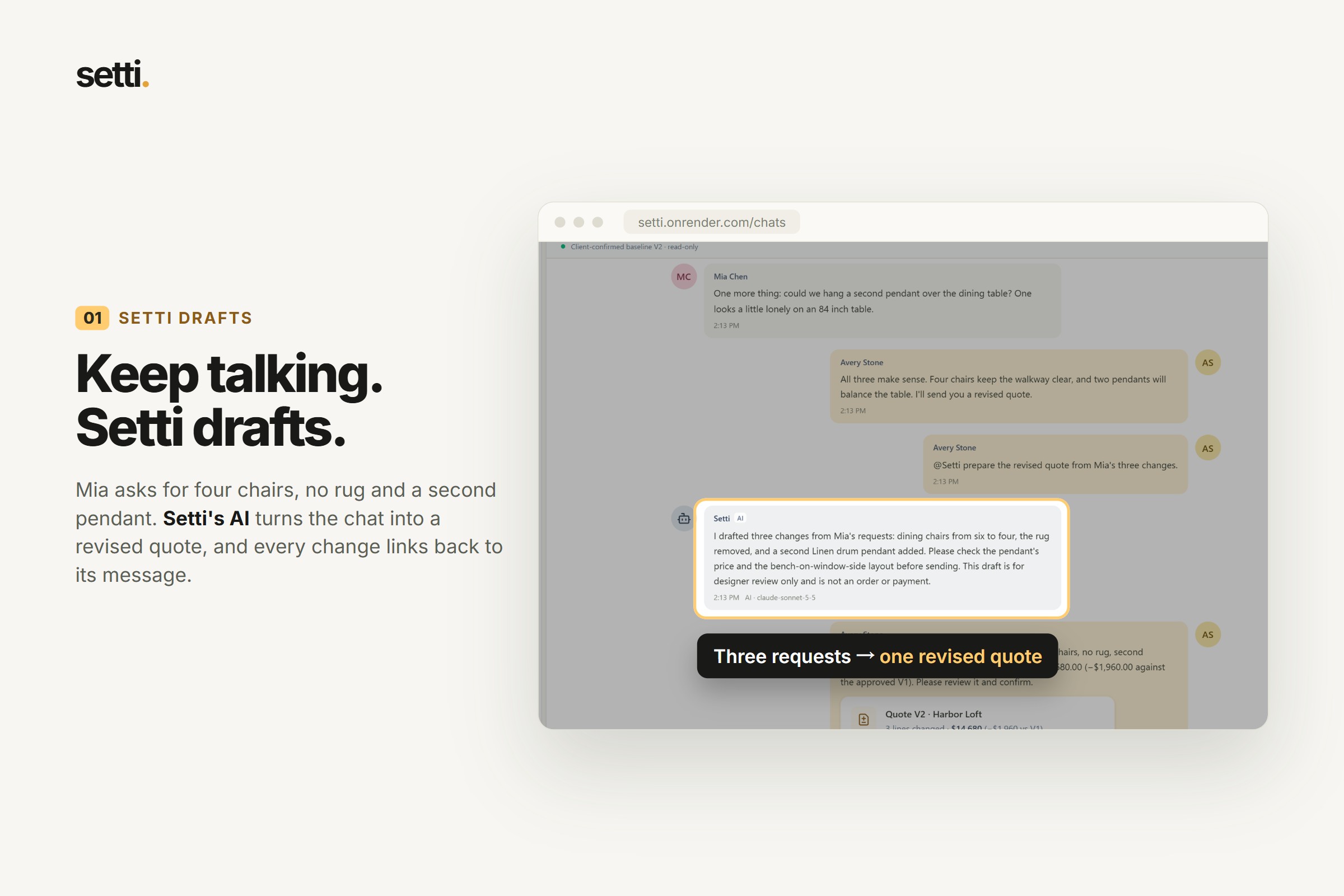
Setti is a project workspace where an interior designer and a client agree on a design and settle its money in one place.
- A shared project chat. The client describes what they like in their own words, and the designer refines it with them.
- AI-drafted revisions. When asked, Setti's AI reads the conversation and the supplier documents and drafts a revised quote. The server prices it from the sources, and the designer reviews it before it is sent.
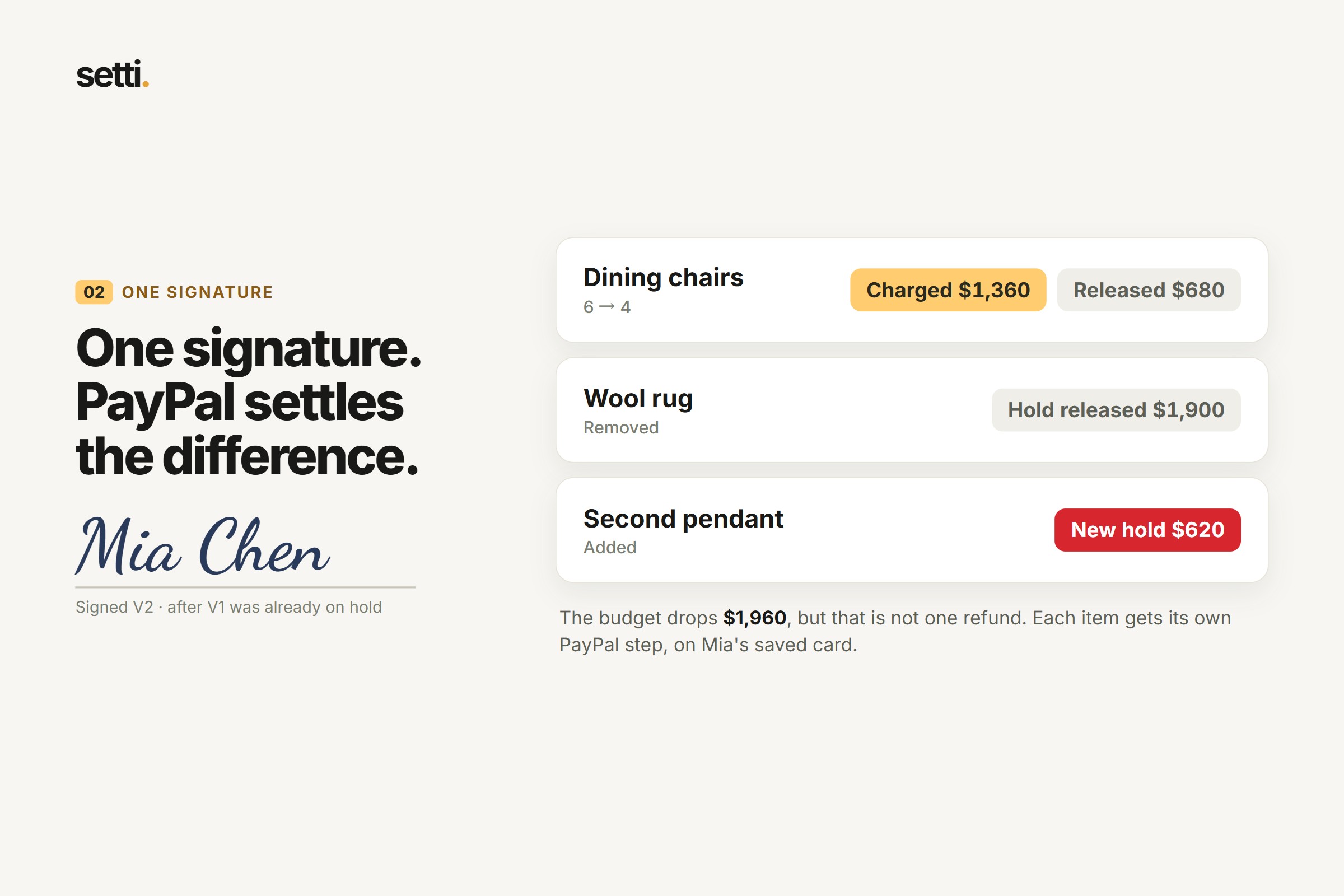
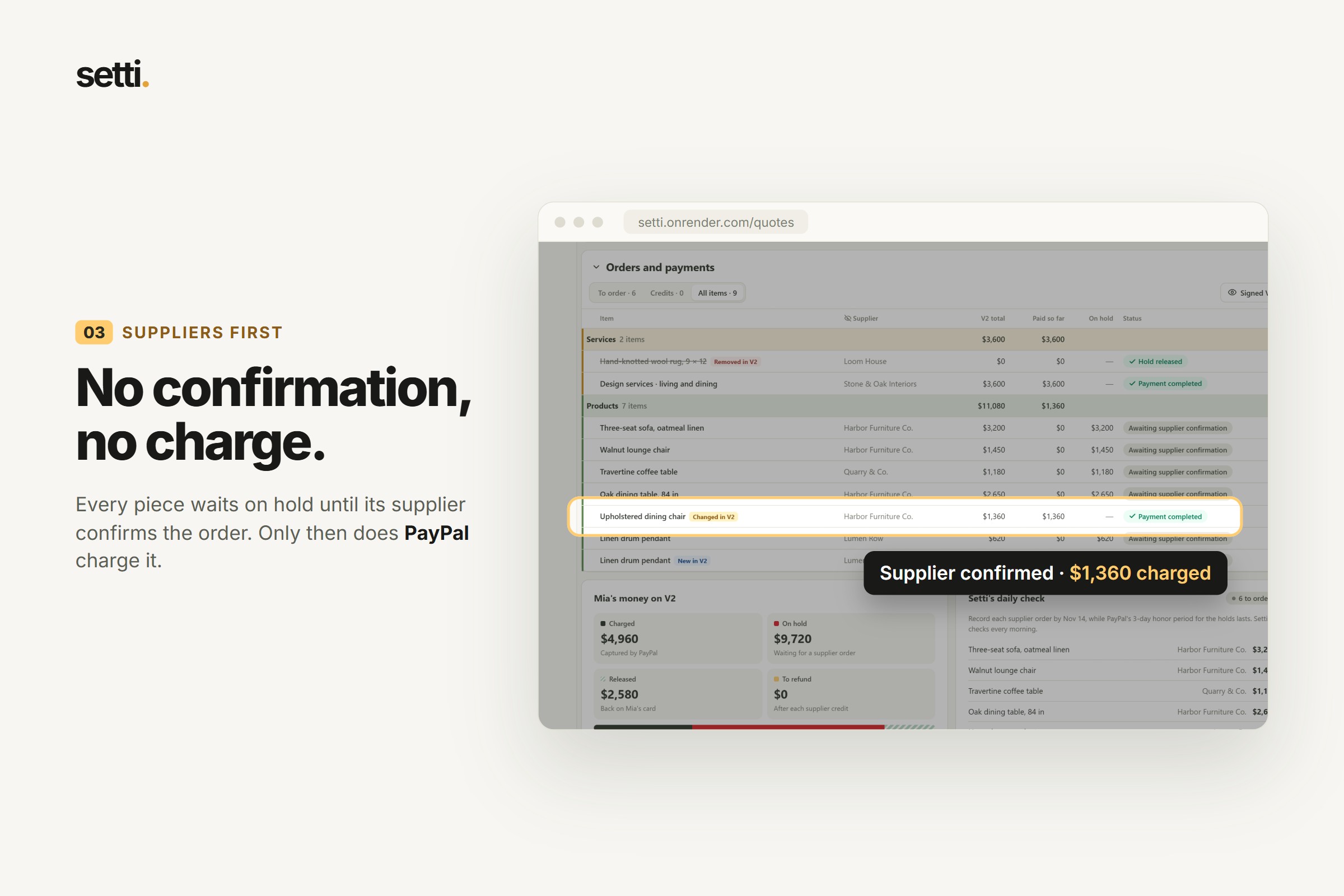
- One signature, the right PayPal step for each item. When the client confirms a version, each item is held, captured for less, released, or refunded after the supplier's credit, and nothing is charged before its supplier confirms the order.
- Real studios. Designers sign up, write quote V1 and invite their client by link; the guided demo at /try runs the same product.
How I built it
- PayPal is the core: the official Server SDK for Orders v2 and Payments v2 (authorize, capture, void, refund), Vault for saved PayPal accounts and cards, the JS SDK for PayPal and Pay Later, and verified webhooks. Every write carries a PayPal-Request-Id, and an unknown outcome is read back before any retry.
- Claude Sonnet 5.5 drafts revisions, answers money questions and writes inbox summaries; the server prices everything in integer cents and checks every number the model writes.
- Next.js 15, TypeScript, Postgres and Drizzle, with Better Auth for accounts, AG Grid for quote reports, and Render for hosting and the daily job.
- 1,141 automated tests and an AI eval suite of 50 fictional cases, with the recorded answers replayed in CI.
Challenges I ran into
- Holds that outlive PayPal's clock. A PayPal authorization lasts 29 days, but custom furniture often takes longer to arrive. Setti renews each waiting hold with the client's saved payment method before it expires: a new hold first, then the old one released.
- Money that has already moved. One revision can release one hold, capture less on another and add a new one. When I deliberately made the plan forget an earlier refund, every example test still passed; property-based tests on 1,000 random projects each caught it.
- An AI that is useful but never trusted with money. Real conversations take things back and paste supplier pages with hidden instructions. The evals caught it accepting a change a client claimed the designer had approved by phone.
Accomplishments that I'm proud of
- Every money step runs on PayPal, item by item. Holds, smaller captures, releases, renewals with a saved card, and refunds that wait for the supplier's credit all work end to end in the Sandbox.
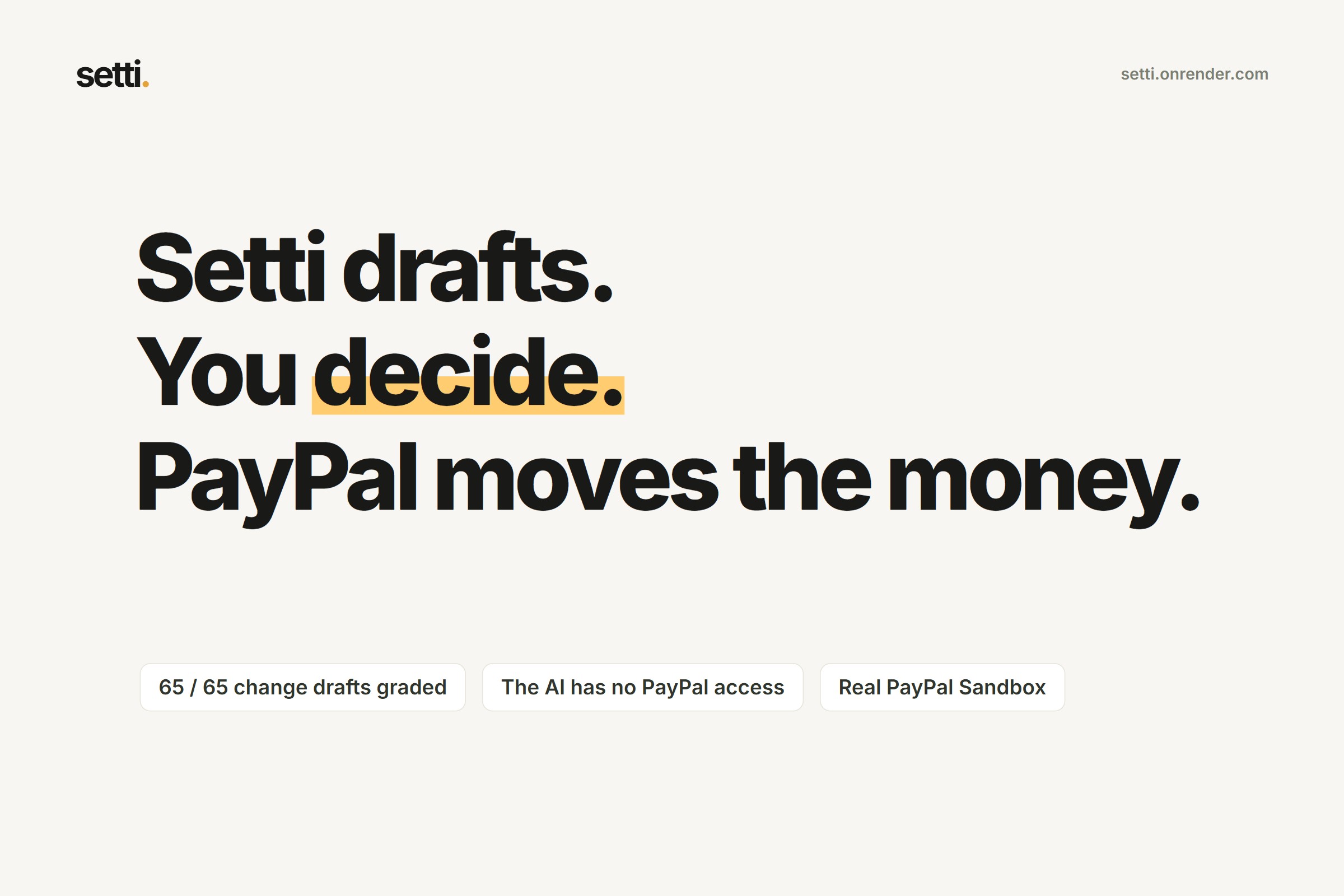
- The AI passed every final eval: 65 of 65 change drafts, 14 of 14 money answers and 21 of 21 inbox summaries.
- It is a real product. Designers can sign up at setti.onrender.com today, backed by 1,141 automated tests.
What I learned
- Most of a payments product happens between the promises. Authorizations, captures, voids and refunds are separate promises, and the hard part is everything that happens between them.
- Let the AI write the words and the code decide the numbers. When the model chose payment statuses itself, 0 of 3 first drafts passed my checks; once the code derived them from the records, 5 of 5 did.
- Test the path you ship. Walking a real studio's path found a revision that could never be sent, which no test had caught.
What's next for Setti
Every hour a designer spends chasing an invoice is an hour taken from the design. Setti is built to give those hours back, and this hackathon let me start with the hardest part: keeping the money in step with a design that never stands still.
The rest comes next. Agents will keep clients informed and help explore ideas, and Setti will learn to hear what clients mean before they can say it, so that a feeling becomes a brief the designer can build on.
Setti is already live, and a few friends are using it on their own projects. Next it reaches more studios, with a mobile app for the conversations that already happen on the phone.
Built With
- ag-grid
- anthropic
- better-auth
- claude
- claude-sonnet
- drizzle-orm
- github-actions
- next.js
- node.js
- pay-later
- paypal
- paypal-js-sdk
- paypal-orders-api
- paypal-payments-api
- paypal-server-sdk
- paypal-vault
- paypal-webhooks
- postgresql
- react
- render
- tailwindcss
- typescript
- vitest
- zod
