-
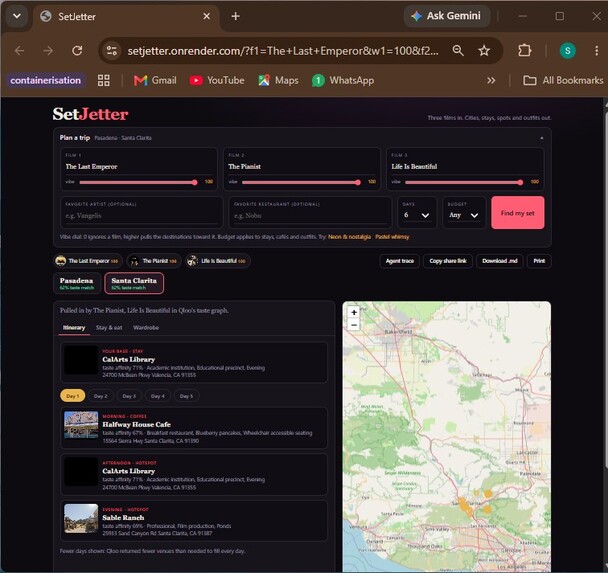
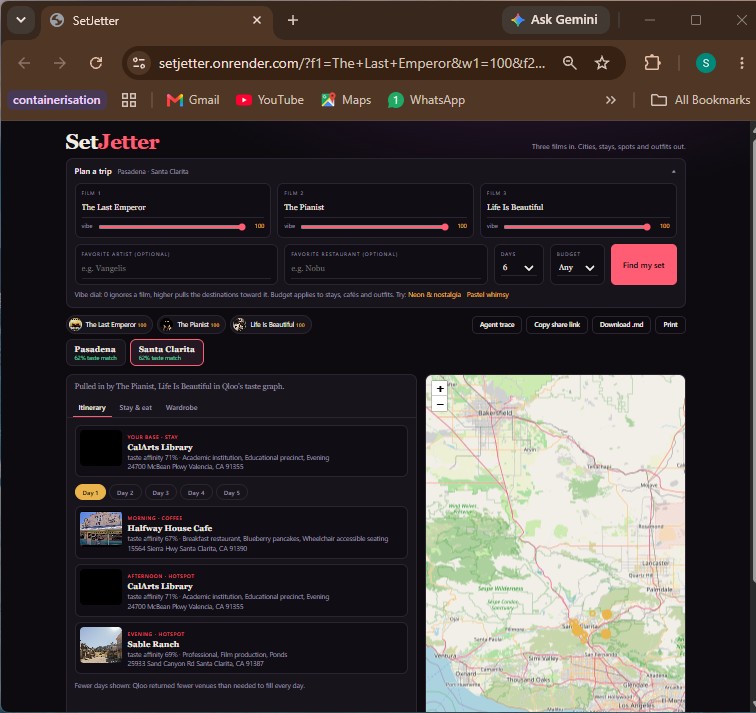
View of the complete Webpage
-
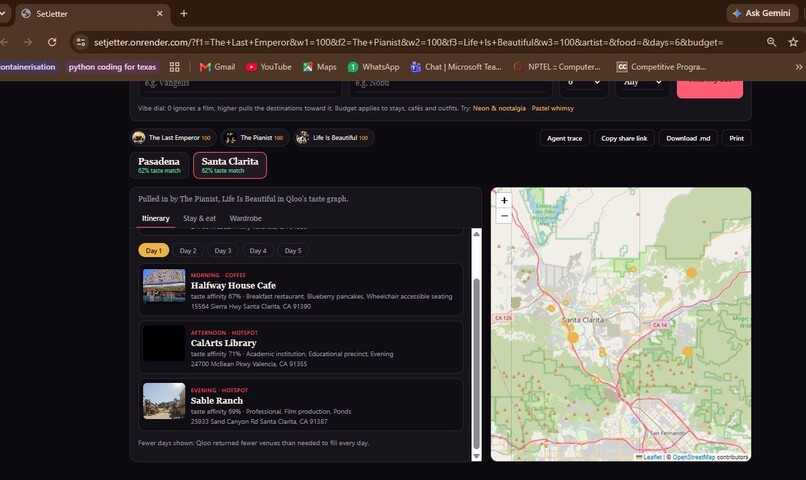
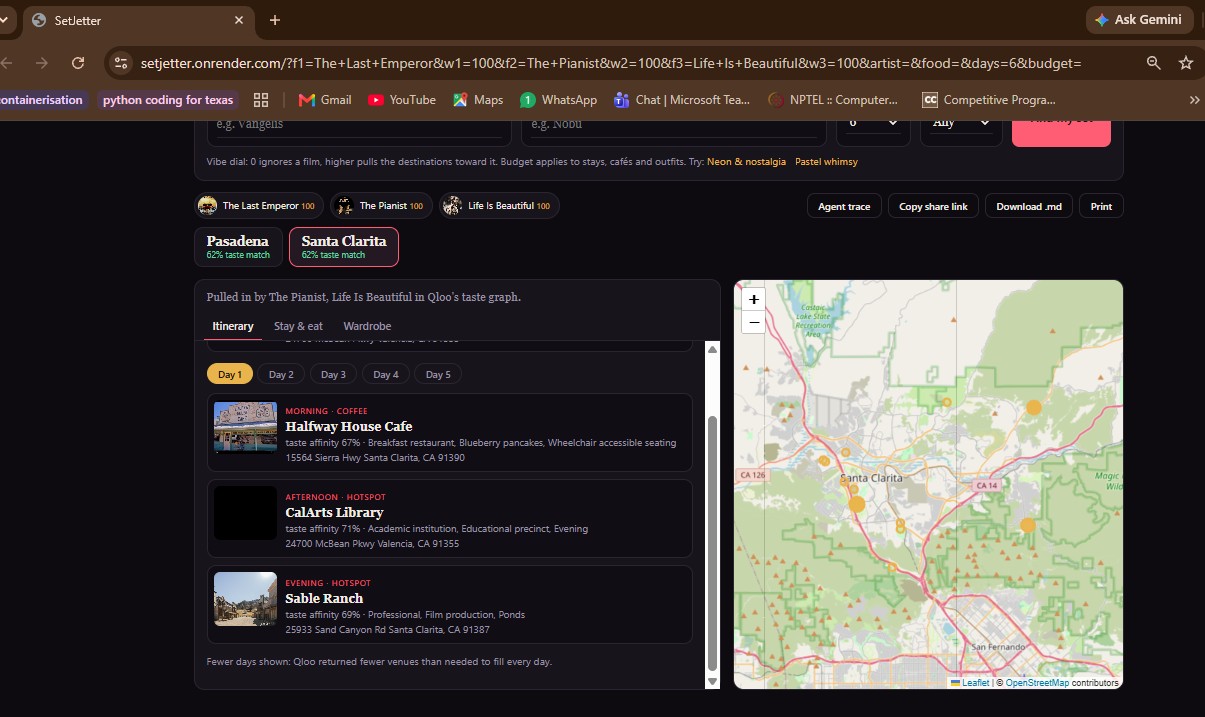
Image focuses on the itinerary and its location based on the movies
-
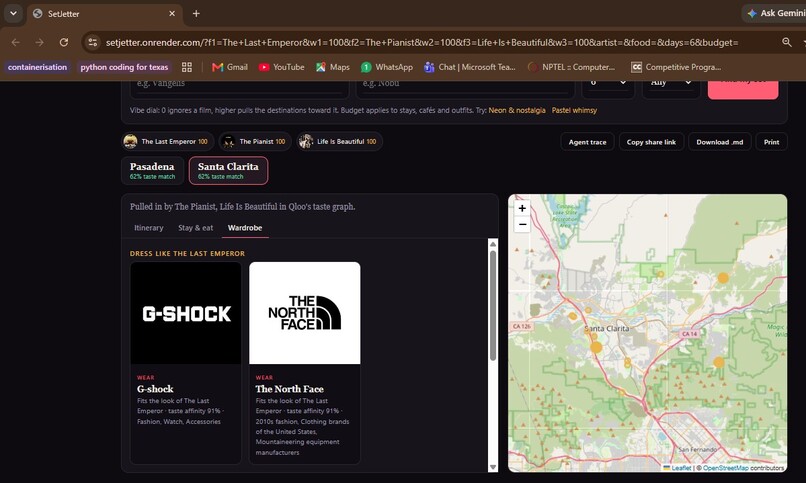
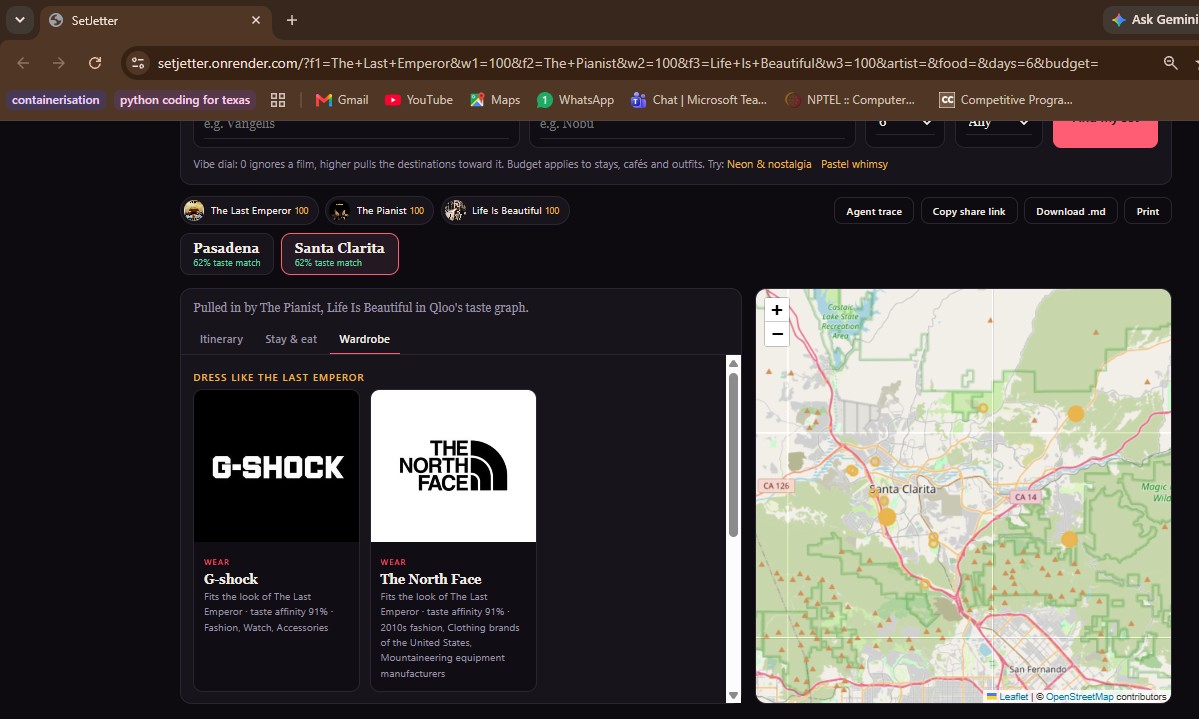
Image focuses on the Wardrobe based on the location and the movies
Inspiration
After watching many movies, the location , the costumes and hotels which looks eye catching makes us do a google search one by one. When set to plan a vacation trip, we tend to visit places that are dreamy as we see in movies. Initially, this started with the idea of visiting places that the movies theme cover creating an itinerary list for our vacation, as planning the itinerary all by ourselves is time consuming. Also finding the location and costumes that they wear are hard to find and all this information is not available at one place and requires multiple searches to get accurate results.
What it does
SetJetter asks for three movies you’re fascinated by and turns them into a trip. It finds the cities that match the look and mood of your films, then builds a day-by-day itinerary with a stay, a café to start each day, and nearby spots to visit and eat at. A map pins your stay and every stop. A Wardrobe tab suggests fashion brands to dress like each film, within your budget. A slider for each film lets you pull the destination toward the one you care about most, and you can add a favorite artist or restaurant for a sharper match. You can share your plan as a link or download it.
How we built it
SetJetter is a small agent built on Qloo’s taste graph. It looks up each film in Qloo, asks Qloo’s cross-domain insights which cities match their taste, then pulls stays, cafés, spots and fashion brands for those cities. Claude can optionally plan the trip, and a scripted planner gives the same results without an LLM. Every city and place is checked against what Qloo returned, so the itinerary comes only from real data. The backend is Python and Flask, the frontend is plain JavaScript with a Leaflet map, and it’s hosted on Render.
Challenges we ran into
Speed: one search needed about 100 Qloo calls in a row, which took over two minutes. Running independent calls in parallel, remembering which options Qloo rejects, and caching brought it to a few seconds in our tests.
Messy responses: Qloo’s results vary by endpoint, so images, coordinates and price levels needed defensive handling.
Keeping the AI honest: we added a grounding check so nothing gets in that Qloo didn’t return. Deployment surprises: a security header we added silently blocked the map tiles, and a misplaced page file caused a 404.
Accomplishments that we're proud of
- It turns a feeling (“I love the look of this film”) into a real, mappable itinerary with outfits.
- The vibe dial gives users control over how much each film counts.
- Every recommendation is traceable to Qloo, and the agent’s steps are visible in a live trace.
- It runs without an LLM, so a public demo costs nothing extra.
What we learned
- Taste is a better starting point for travel than a destination search.
- The slow part of an agent is usually waiting on tool calls, not thinking, so parallel calls pay off most.
- Real data needs checking, since a language model will happily invent a plausible hotel.
- Small deployment details, like headers and file paths, can break a feature that worked locally.
What's next for SetJetter
- Medication-aware flags: travelers could list foods their medicines interact with, for example grapefruit or high-vitamin-K greens. The app would flag dishes and ingredients to double-check. These would be prompts to confirm with a doctor or pharmacist, not medical advice.
- Easier meals for the trip: recommendations could include nearby places that offer low-heat delivery or an easy walk to the restaurant, so dining doesn’t wear travelers out.
- Real-world detail: booking links, opening hours, live availability and local events.
- More taste inputs: music, books and fashion, and combining a travel companion’s tastes with yours.
- Longer trips: routes between stops, and trips that span several cities. Saved trips: saving and revisiting trips, and ranking cities by season or weather.
Built With
- anthropic
- css
- flask
- html
- javascript
- leaflet.js
- python
- qloo
- vanilla

Log in or sign up for Devpost to join the conversation.