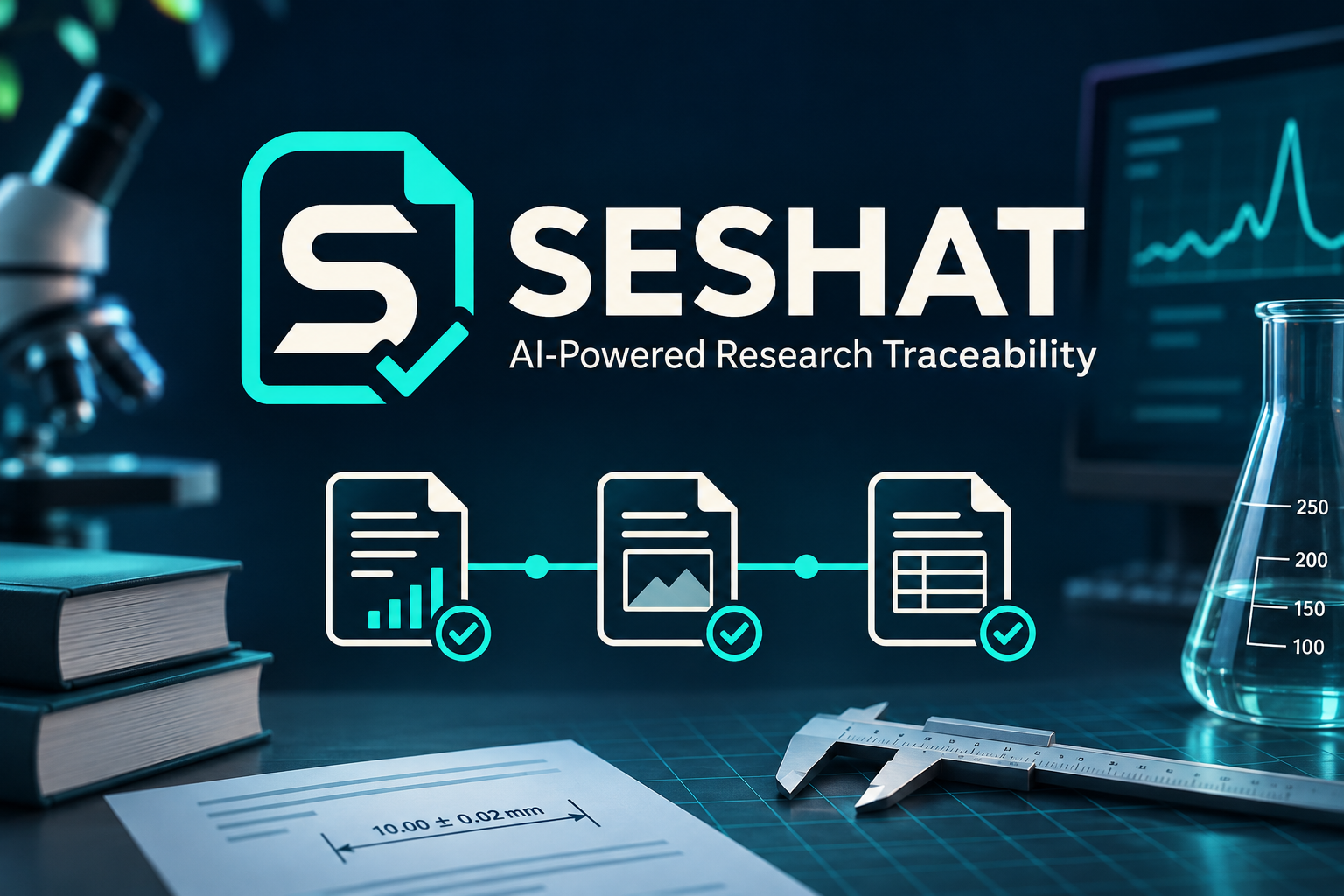
Seshat: AI-Powered Research Traceability
Inspiration
A scientific measurement is only as trustworthy as the evidence behind it.
Engineers and researchers generate calibration certificates, experimental reports, equipment logs, technical procedures, and datasets. These files often end up scattered across folders, making it difficult to answer essential questions: Which instrument produced this result? Was its calibration valid when the experiment took place? Which procedure was followed? Can another researcher verify the conclusion?
We created the concept for Seshat, named after the ancient Egyptian goddess associated with measurement and recordkeeping, to make scientific evidence easier to trace and verify.
What it does
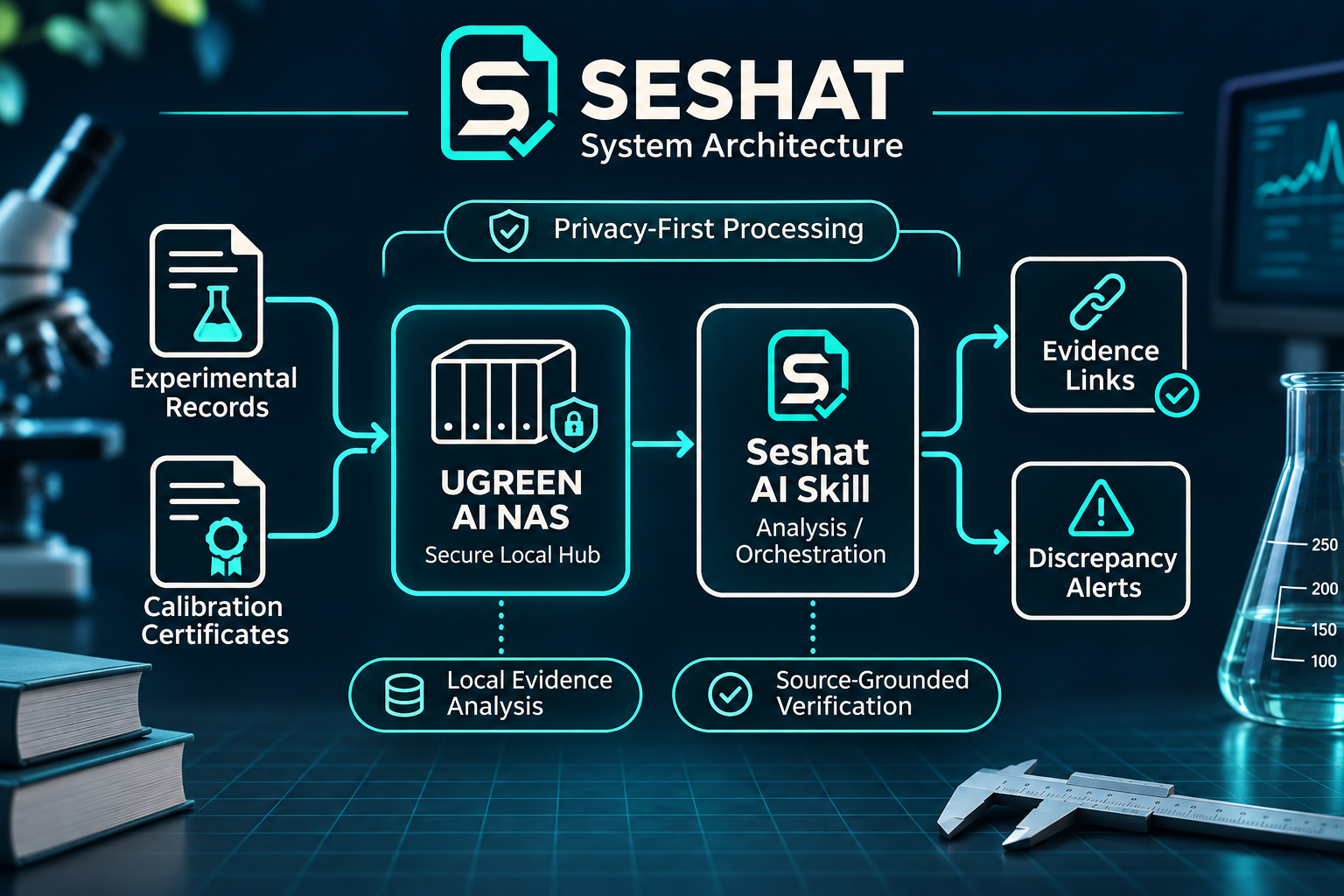
Seshat is a privacy-conscious AI skill for UGREEN AI NAS that connects experimental results with their supporting technical evidence.
Instead of simply summarizing documents, Seshat is designed to examine relationships between:
- Experimental measurements and their source records.
- Instruments and calibration certificates.
- Experiment dates and calibration validity periods.
- Technical procedures and document revisions.
- Reported conclusions and available supporting evidence.
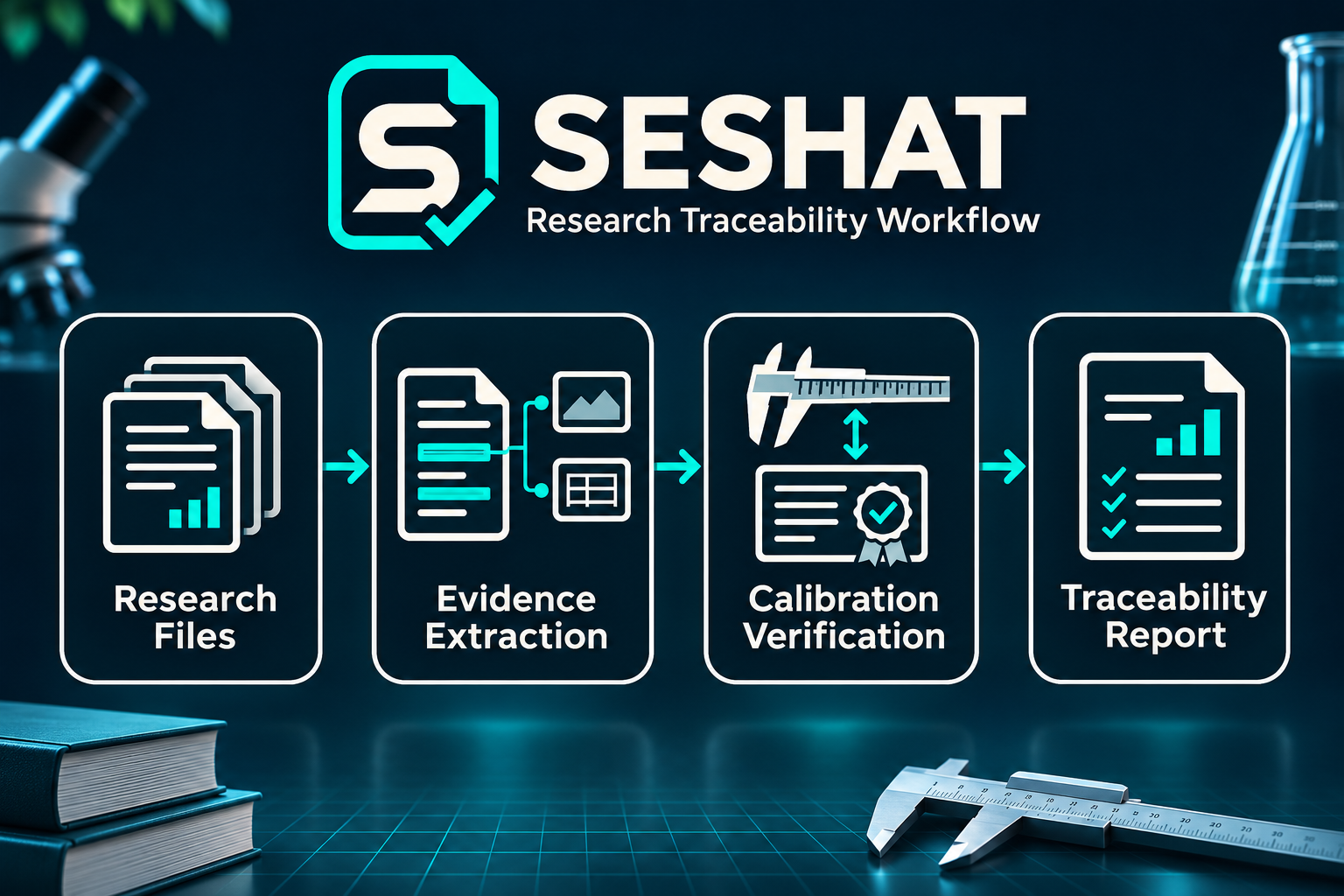
The skill aims to produce an Evidence Traceability Report that distinguishes verified relationships, conflicting information, missing documentation, and findings that cannot be established from the available files.
For example, if an experiment references an instrument whose calibration certificate expired before the measurement date, Seshat should flag the discrepancy and identify the supporting documents.
The objective is not to replace scientific judgment or certify equipment. It is to help researchers find potential problems before they compromise the reliability of their work.
How we're building it
Seshat is designed as an AI Skill for UGREEN UGOS, following the official Uliya Skill development approach.
Its proposed workflow uses authorized NAS file discovery, document analysis, evidence comparison, and structured reporting. The NAS serves as the central repository for the research documents, avoiding the need to manually transfer entire research archives into a separate application.
Our design emphasizes source references, explicit uncertainty, user-controlled actions, and a clear separation between documented facts and AI-generated interpretations.
Challenges
The main challenge is that scientific evidence is rarely organized consistently. Instrument identifiers, dates, units, and document versions can appear in different formats across multiple files.
Another challenge is preventing unsupported conclusions. Seshat is designed to report missing or ambiguous evidence rather than inventing relationships or declaring an experiment valid without sufficient documentation.
What we learned
The central insight behind Seshat is that finding a document is not the same as verifying an experiment.
Useful scientific AI needs to connect evidence across files, preserve context, recognize contradictions, and communicate uncertainty.
What's next
Our next steps are to validate the Skill against the official UGOS development tools and test it using a controlled dataset containing calibration records, experimental reports, and deliberately introduced inconsistencies.
We plan to evaluate evidence retrieval, discrepancy detection, source attribution, and the system's ability to recognize when available information is insufficient.
Our vision is to transform a personal NAS into a trusted research evidence workspace, where every measurement has a traceable story.
Built With
- agents
- ai
- artificial-intelligence
- document-analysis
- markdown
- research-data-management
- ugos
- ugreen-ai-nas
- uliya
