Inspiration
Food waste is usually treated as a logistics problem, but it is also a safety and climate problem. Surplus food can help people, but only when it is handled carefully. Unsafe or poorly matched food can create new risks, especially for children, elderly people, people with allergies, or vulnerable communities.
SERVO was inspired by the idea that local climate action should be practical, safe, and easy to understand. Instead of saying “donate everything,” SERVO asks a better question: what is the safest next step for this food?
What it does
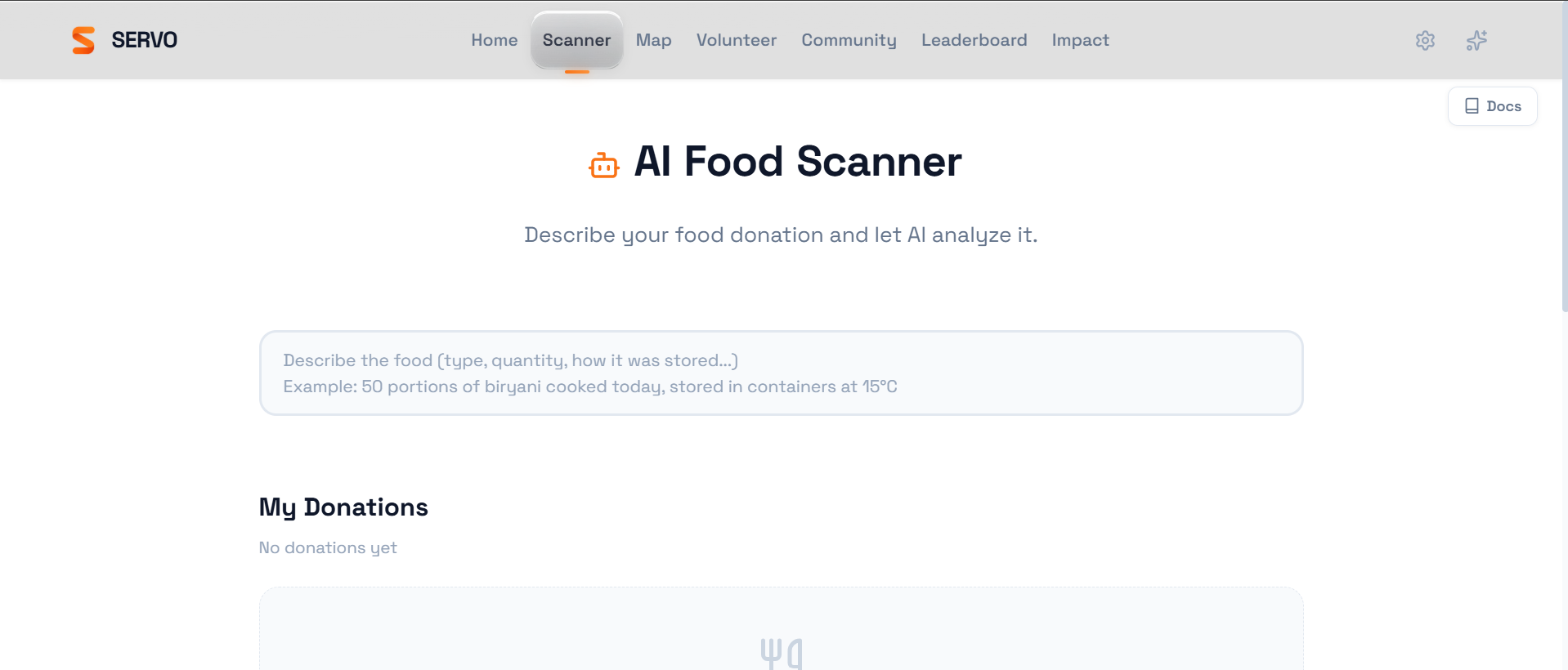
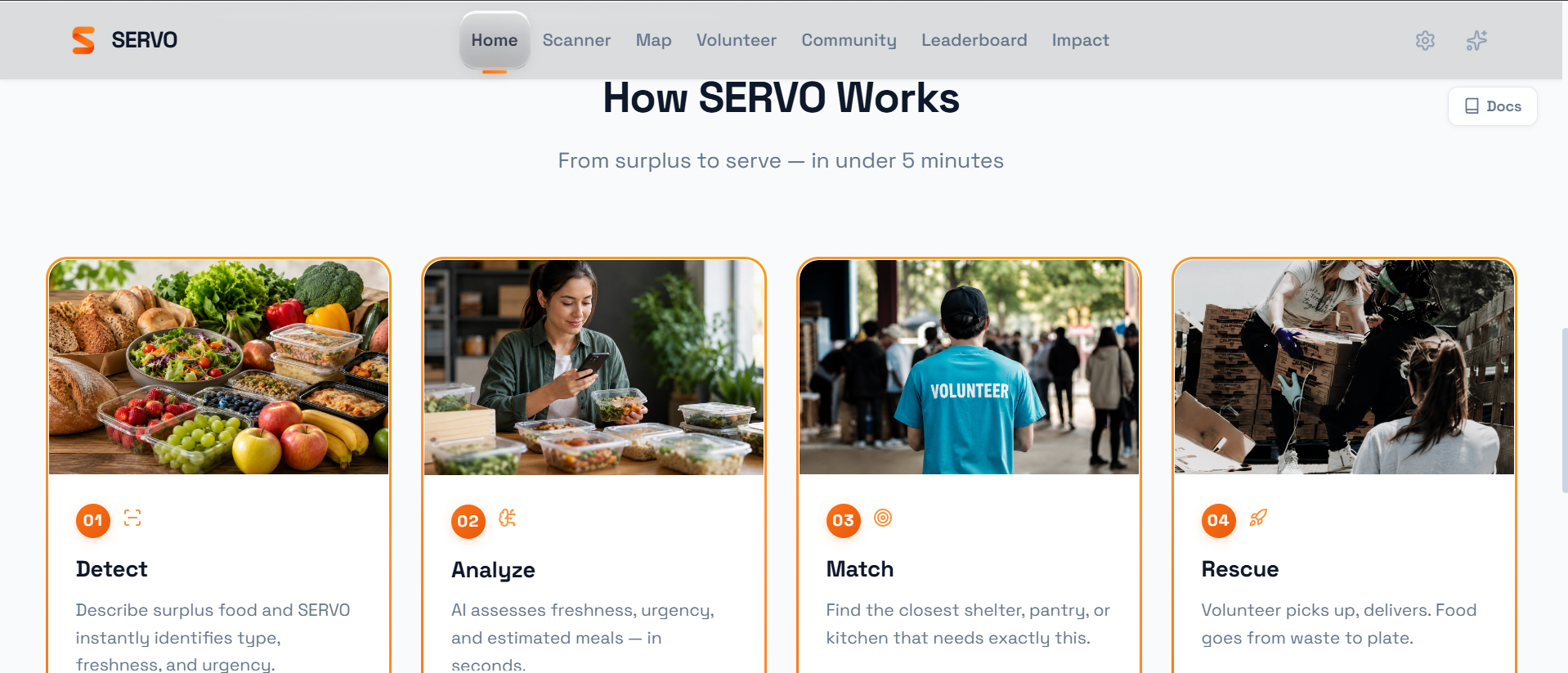
SERVO is a safety-first food rescue coordinator for local climate action. It helps users describe surplus food, checks important risk factors, and gives a clear recommendation.
SERVO can flag issues like missing preparation time, storage conditions, allergens, pickup urgency, and whether the recipient group may be vulnerable. It does not claim that AI can prove food is safe. Instead, it supports human coordinators by giving structured guidance, urgency levels, risk notes, and fallback options.
If food looks suitable, SERVO helps suggest a safe rescue path. If the situation is uncertain, it recommends human review. If food is not suitable for donation, it suggests safer fallback actions instead of risking harm.
How we built it
We built SERVO as a web app using React and Vite for the frontend. The backend runs with Node.js and Express on Railway. The frontend is deployed with Cloudflare Pages.
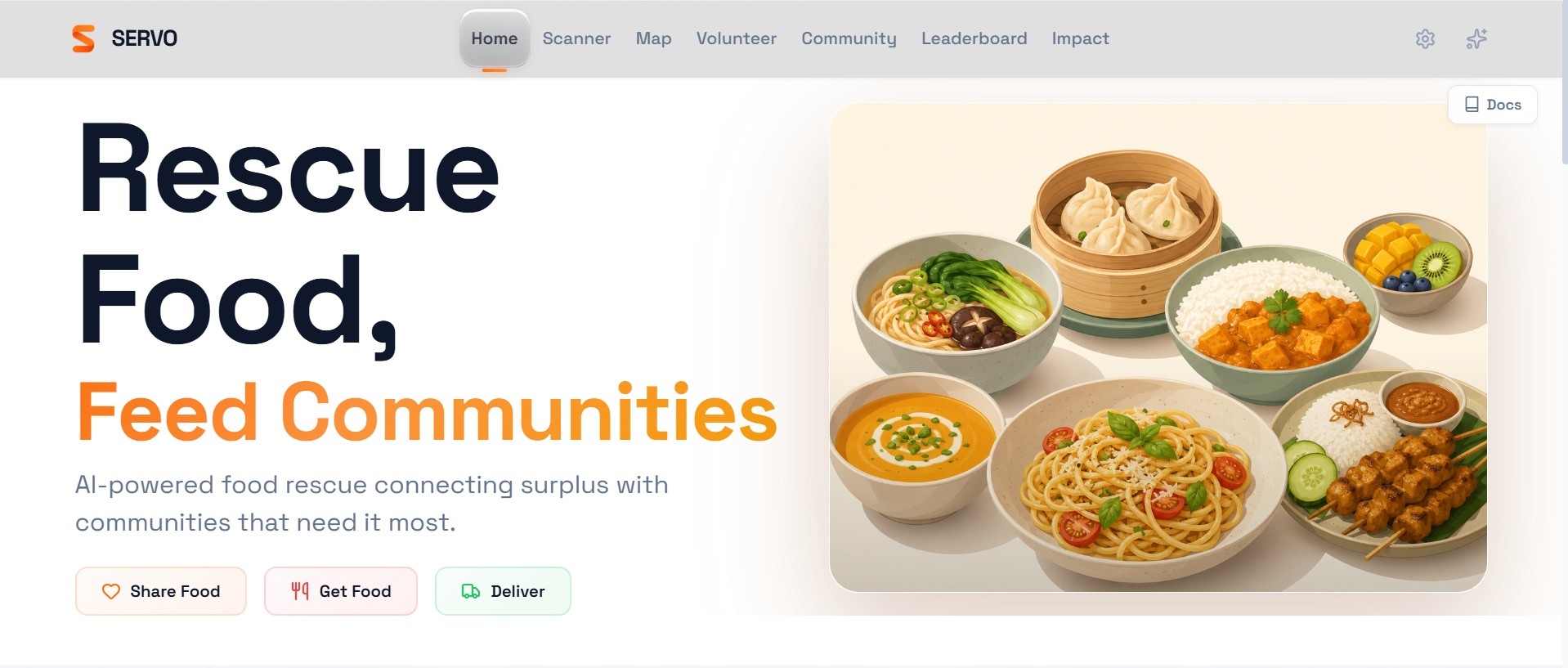
The backend securely handles AI API keys so they are not exposed in the browser. SERVO uses AI to generate safety-first guidance from user input, while keeping the final responsibility with human review. The project also includes image generation support to create useful visuals for the food rescue and climate action experience.
Challenges we ran into
One major challenge was balancing helpful AI with safety. A food rescue tool should not blindly encourage donation, because food safety depends on real-world details that AI cannot fully verify.
We also had deployment challenges while connecting the frontend, backend, environment variables, and API routes across Cloudflare and Railway. Making sure secret keys stayed on the backend was another important part of the build.
Another challenge was designing the project so it felt simple for everyday users while still showing responsible AI thinking.
Accomplishments that we're proud of
We are proud that SERVO focuses on both impact and responsibility. It does not just try to match food quickly; it prioritizes safety, allergens, freshness, and human oversight.
We are also proud of building a full deployed prototype with a real frontend, backend, AI route, and production hosting. SERVO turns a local climate problem into something people can act on with clearer decisions.
Most importantly, the project shows that AI for good should not only be powerful, it should also be careful.
What we learned
We learned that responsible AI is not just about adding a disclaimer. It has to shape the product design, the prompts, the backend, the UI, and the final recommendations.
We also learned more about deploying full-stack apps, protecting API keys, using environment variables, connecting services, and debugging real production errors.
This project helped us understand that climate action can be local and practical, but it needs trust and safety to work well.
What's next for SERVO
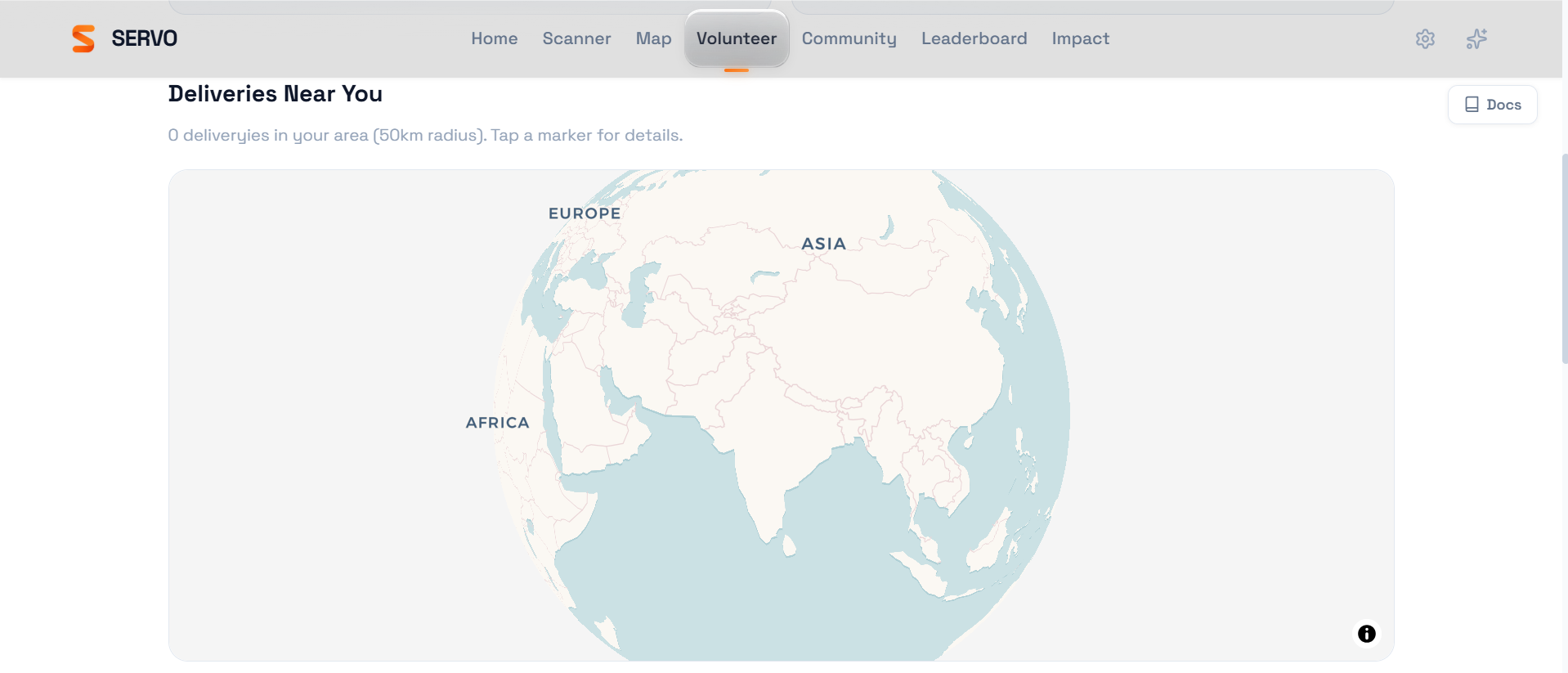
Next, SERVO could add real organization profiles for donors, shelters, volunteers, and community groups. It could include pickup scheduling, map-based matching, food category filters, and a human coordinator dashboard.
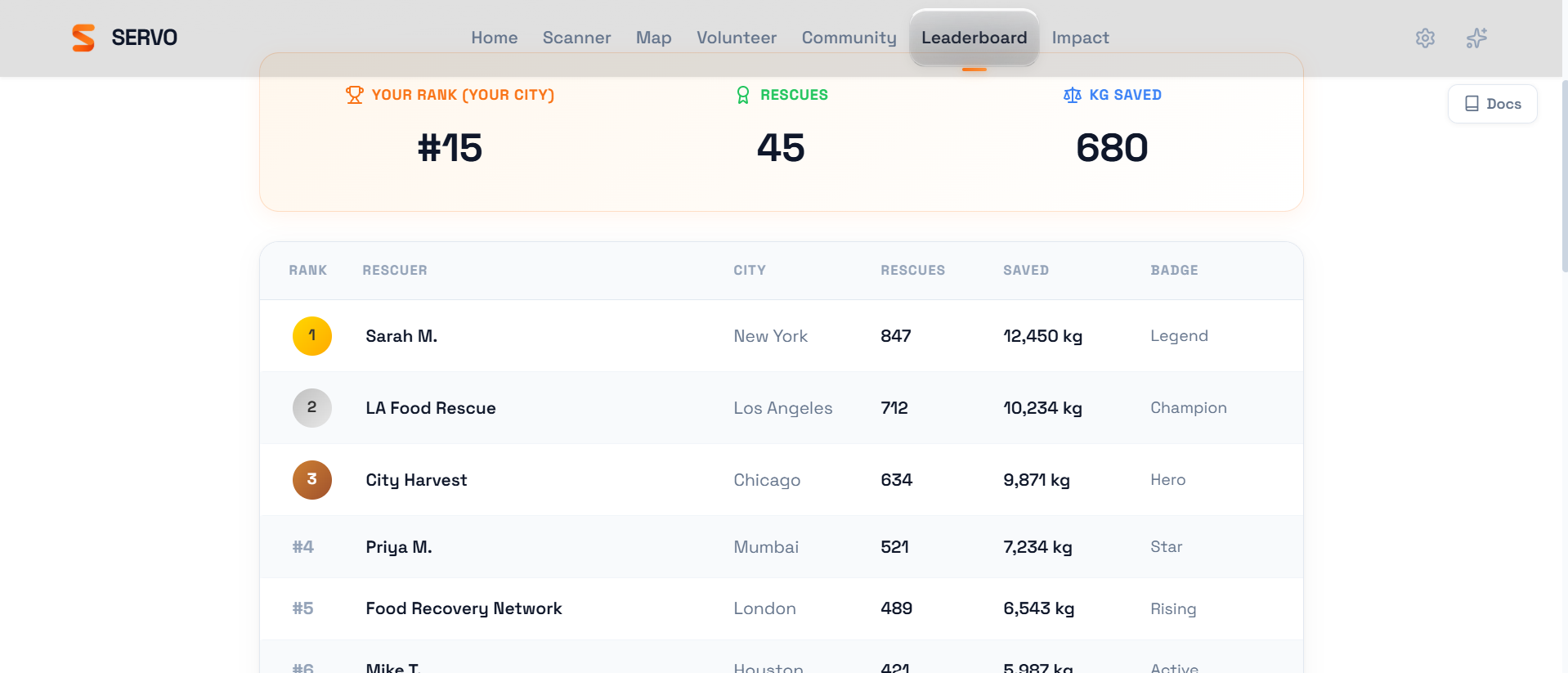
Future versions could also track rescued meals, estimated waste avoided, and local climate impact. SERVO could become a practical tool for schools, restaurants, events, and communities that want to reduce waste without risking food safety.
Built With
- api
- cloudflare
- css
- express.js
- face
- gemini
- github
- html
- hugging
- javascript
- node.js
- pages
- railway
- react
- vite


Log in or sign up for Devpost to join the conversation.