-
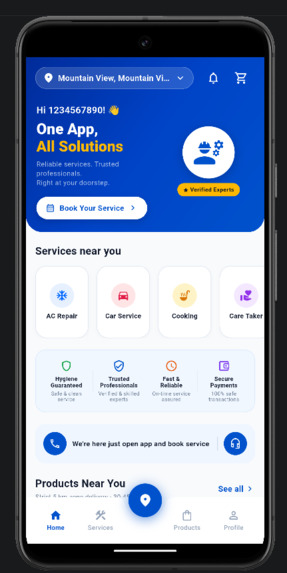
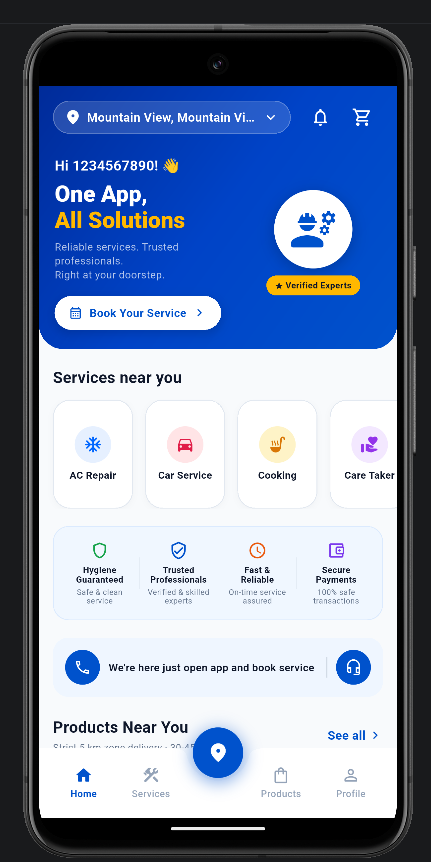
home page
-
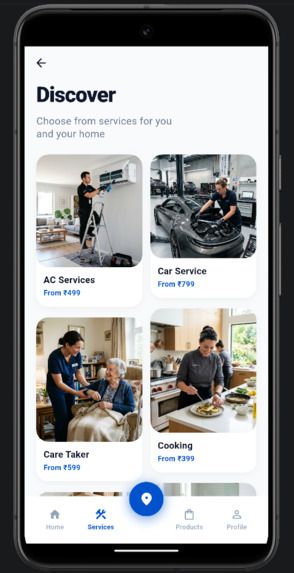
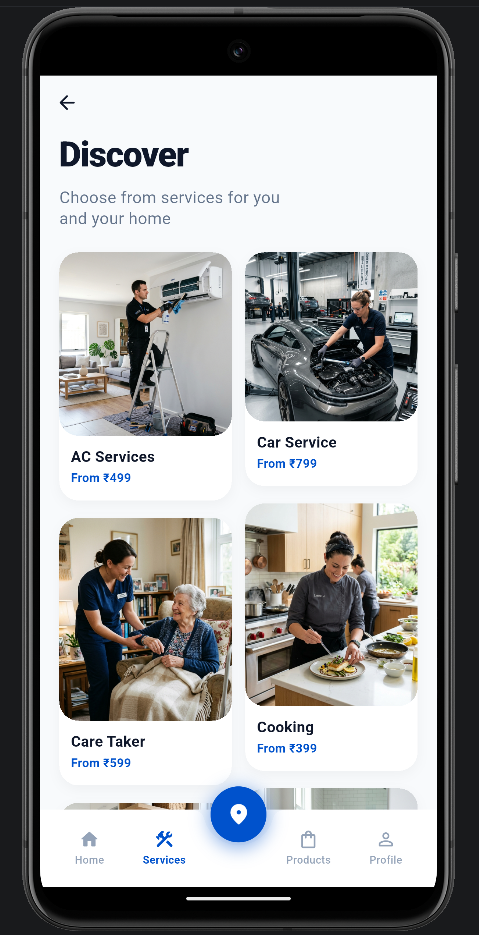
Service page
Inspiration
What it does
How we built it
Challenges we ran into
Accomplishments that we're proud of
What we learned
What's next for ServiceHub
ServiceHub – A Smart Hyperlocal Service and Product Marketplace
Inspiration
The inspiration behind ServiceHub came from observing the difficulties people face when searching for everyday services and products in their local area. Whether someone needs AC servicing, plumbing, laundry, cooking assistance, car servicing or other household services, finding a suitable and reliable service provider can be time-consuming. People often depend on personal contacts, local advertisements, phone calls or different online platforms to fulfil these needs.
Similarly, many small shops and independent service providers have limited opportunities to reach customers beyond their existing networks. They may have the skills and products to serve more people but lack a simple digital platform to promote their services and manage customer requests.
We identified an opportunity to bring customers, local service providers, shopkeepers and delivery partners together through one organised digital platform. This led to the idea of ServiceHub, with the vision of making local services and product shopping easier, more accessible and better organised.
Problem Statement
In many cities and local communities, customers face several problems while accessing everyday services and products:
- Customers need to search across different platforms or contact multiple people to find suitable service providers.
- It can be difficult to identify available professionals within a nearby service area.
- Booking appointments, checking availability and managing service requests can involve unnecessary communication.
- Local shops often have limited digital visibility and struggle to reach nearby customers.
- Customers may find it difficult to track service requests and product orders.
- Service providers, shopkeepers and delivery agents need organised ways to manage their daily activities.
- Managing customer requests, product orders, service bookings and delivery operations through separate systems can create confusion.
These problems show the need for a unified hyperlocal platform that connects customers with nearby service providers and businesses while keeping different operations organised.
Proposed Solution
ServiceHub is a smart hyperlocal service and product marketplace designed to bring everyday home services and local shopping together in one digital platform.
The application connects four main user roles:
- Customer: Searches for services and products, manages bookings and orders, communicates with partners and provides feedback. -Service Provider: Manages service details, availability, booking requests, customer interactions and earnings. -Shopkeeper and Delivery Agent: Shopkeepers manage products, inventory and orders, while delivery agents manage assigned product deliveries. -Super Admin: Manages users, partners, verification requests, services, products, bookings, orders, complaints and overall platform operations.
Instead of requiring customers to use multiple platforms for different everyday needs, ServiceHub aims to provide a common digital environment where these activities can be accessed and managed.
The platform focuses on local availability and nearby service discovery. Its hyperlocal approach is intended to connect customers with suitable providers and shops within the supported service area.
Main Application Modules
A. Customer Application
The Customer Application provides a simple interface through which users can access services and products.
Customers can create an account, manage their profiles and addresses, set their location, explore service categories, view nearby providers and search for relevant products.
For service bookings, customers can select a service, provide the required information, choose an available date and time, select their address and submit a request. They can then view booking updates and manage their booking history.
For product shopping, customers can explore products, view product information, add items to their cart, place orders and follow order updates.
The application is designed to provide customers with a convenient way to manage their everyday requirements from one place.
B. Partner Application
The Partner Application provides a common platform for different partner roles. Its available functions depend on the partner's assigned role.
Service Provider: Service providers can manage their service profiles, update availability and pricing, receive booking requests, accept or reject requests, view customer information and manage service completion.
Shopkeeper: Shopkeepers can manage their shop profiles, add and update products, maintain inventory, receive product orders and manage order processing.
Delivery Agent: Delivery agents can view assigned orders, access customer and shop details, update delivery progress and manage their delivery history.
This role-based structure helps different partners use the same application while accessing only the functions relevant to their work.
C. Super Admin Panel
The Super Admin Panel is designed to support centralised platform management.
Administrators can manage customer accounts, service providers, shopkeepers and delivery agents. They can review partner verification requests, manage service and product categories, monitor bookings and orders, handle complaints and support requests, and manage platform settings.
The panel also supports operational monitoring, commission management, review moderation, revenue reports and audit records.
Its purpose is to help administrators maintain proper control over platform activities and partner operations.
Service and Product Marketplace
ServiceHub combines service booking and product shopping within the same platform.
The proposed service categories include:
- AC Repair and Maintenance
- Plumbing Services
- Car Service and Car Washing
- Home Cooking Services
- Laundry Services
- Care Taker and Nursing Services
The product marketplace focuses on products related to the services available on the platform. These may include AC filters and accessories, plumbing items, car cleaning products, kitchen tools, detergents and fabric care products.
This connection between services and related products creates a more complete local marketplace for everyday requirements.
Service Booking and Product Delivery Workflow
ServiceHub maintains separate workflows for service bookings and product deliveries because both operations have different requirements.
Service Booking Workflow
- The customer selects a required service.
- The customer enters the necessary service details.
- The customer selects a date, time and service address.
- The booking request is submitted to the platform.
- The system identifies eligible service providers based on service category, approval status, availability and location.
- Eligible providers receive the booking request.
- A provider can accept or reject the request.
- After a provider accepts the request, the customer can view the booking status.
- The provider visits the customer's location and completes the service.
- The booking is completed according to the platform's service completion process.
A delivery agent is not required for this workflow because the service provider directly visits the customer.
Product Order and Delivery Workflow
- The customer explores the product marketplace.
- The customer selects products and adds them to the cart.
- The customer confirms the delivery address and places the order.
- The shopkeeper receives and processes the order.
- An eligible delivery agent is assigned to the order.
- The delivery agent collects the product from the shop.
- The order progresses through the delivery process.
- The product is delivered to the customer.
- Delivery completion is recorded through the platform's verification process.
This separation helps keep service operations and product delivery operations properly organised.
Smart Hyperlocal Location System
Location-based service discovery is an important part of the ServiceHub concept.
The platform is designed around nearby service availability rather than showing customers every provider or shop in a large geographical area.
The proposed location architecture uses H3-based geographical indexing to divide areas into hexagonal cells. These cells can help reduce the number of location candidates that need to be considered during nearby partner discovery.
PostGIS can then be used for accurate geographical distance checks, while road-routing data can support more realistic travel distance and time calculations.
The intended process is to identify nearby candidates, validate their actual serviceability and then consider their availability and service category before matching them with a customer request.
This approach aims to improve the relevance of local search results and support future expansion to additional areas.
Technology Stack
ServiceHub is designed using modern application development technologies.
Frontend Development
- Flutter
- Dart
- Riverpod for state management
- GoRouter for application navigation
Backend and Database
- Supabase
- PostgreSQL
- Supabase Authentication
- Supabase Storage
- Supabase Realtime
- Supabase Edge Functions
Location and Mapping
- OpenStreetMap-based mapping
- H3 geographical indexing
- PostGIS for geographical queries
- Road-routing integration for route-based calculations
Notifications and Additional Services
- Firebase Cloud Messaging for push notifications
- Payment gateway integration for digital payments, according to the configured provider
The project follows a structured development approach with separation between application presentation, business logic and data management. This makes the system easier to maintain, test and extend.
Security and Data Management
Security and proper data handling are important considerations in ServiceHub because the platform manages user accounts, addresses, partner information, bookings and orders.
The system is designed to use authentication and role-based access so that users can access functions according to their assigned roles.
Database access is intended to be controlled through Supabase Row Level Security policies. These policies help restrict users to the records and operations they are authorised to access.
Sensitive operations, such as partner verification, booking assignment, order updates and payment-related changes, require proper validation and controlled backend processing.
The platform also considers secure communication, data validation, error handling and audit records as part of its overall security approach.
Challenges Faced During Development
Developing ServiceHub involves several technical and practical challenges.
Multiple User Roles: Creating a connected platform for customers, service providers, shopkeepers, delivery agents and administrators requires careful planning of permissions, screens and workflows.
Location-Based Matching: Finding suitable partners based on geographical proximity, service category and availability requires an organised location and matching approach.
Separate Workflows: Service bookings and product deliveries follow different processes. Maintaining their separate rules while connecting them through one platform requires careful system design.
Database Management: Managing users, partner profiles, services, products, bookings, orders, notifications and verification records requires a well-structured database.
Real-Time Updates: Keeping customers and partners informed about booking and order status changes requires reliable data updates and notification handling.
Application Performance: Maintaining smooth navigation, responsive layouts and efficient loading across multiple application modules is another important development challenge.
These challenges require continuous development, testing, debugging and improvement to make the platform reliable and user-friendly.
What We Learned
Working on ServiceHub has provided practical learning experience in both software development and problem-solving.
We gained experience in Flutter application development, Dart programming, state management, database design, backend integration, authentication, application navigation and role-based access control.
We also developed a better understanding of how geographical indexing, location-based search, database security and real-time communication can be used in a practical application.
Beyond technical knowledge, the project helped us understand the importance of requirement analysis, UI/UX design, teamwork, testing, debugging, time management and converting a real-world problem into a structured software solution.
Future Scope
ServiceHub has the potential to grow into a larger hyperlocal platform.
Future improvements may include:
- Expansion into multiple cities and geographical areas.
- Addition of more home service and product categories.
- Improved intelligent partner matching and recommendations.
- Better route optimisation and delivery management.
- Advanced analytics for customers, partners and administrators.
- AI-based customer assistance and booking support.
- Improved fraud detection and platform security.
- Multilingual support for regional users.
- Loyalty programmes and customer engagement features.
- Dedicated Android and iOS improvements as the platform expands.
These improvements can help ServiceHub become a more scalable and useful platform for customers, local businesses and service professionals.
Conclusion
ServiceHub aims to make everyday local services and product shopping easier by bringing customers, service professionals, shops and delivery partners together through one digital platform. It focuses on solving practical problems faced by customers and local businesses through a structured, location-aware and role-based system.
The project represents an effort to use modern technology to improve access to local services, support small businesses and create a more organised hyperlocal marketplace. With further development, testing and expansion, ServiceHub has the potential to become a practical solution for everyday local needs.
Built With
- android-studio
- antigravity
- dart
- firebase
- flutter
- git
- github
- gorouter
- h3
- hive
- openstreetma
- postgresql
- riverpod
- rls
- role-based-access-control(rbac)
- supabase
- supabase-storage
- supbaseauth
- visual
