-
-
forms
-
forms
-
possiblesolutions
-
document_readiness
-
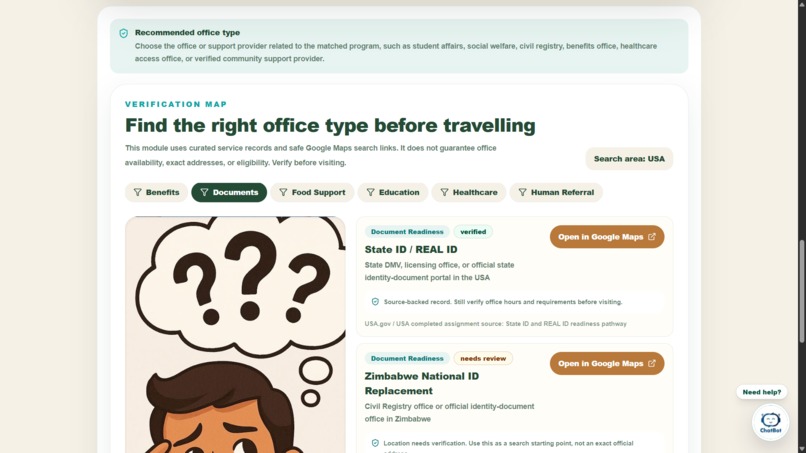
possile pathways
-
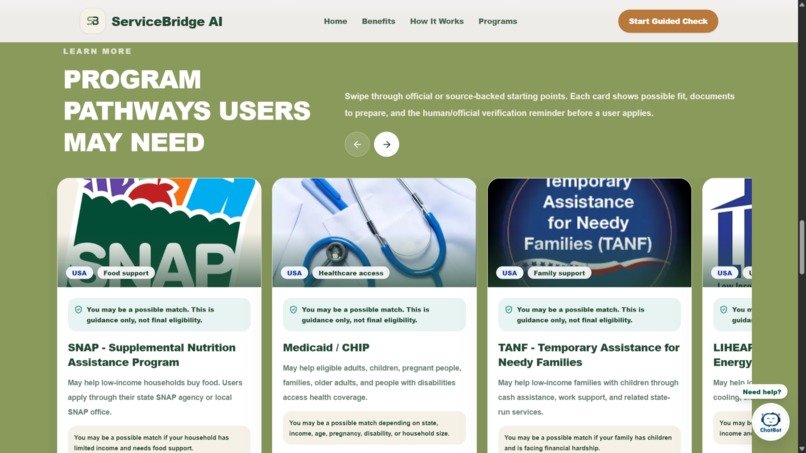
programs
-
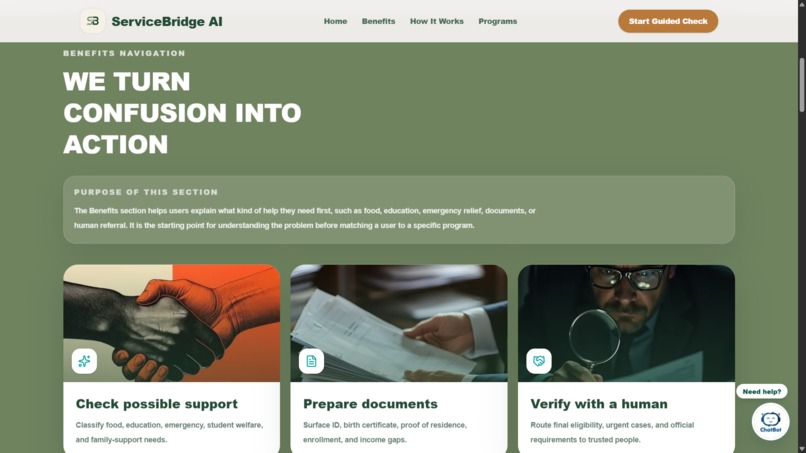
howitworks
-
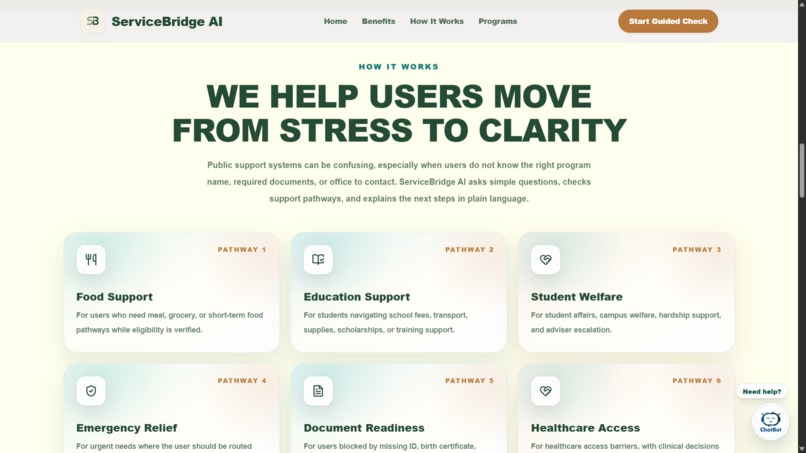
pathways
-
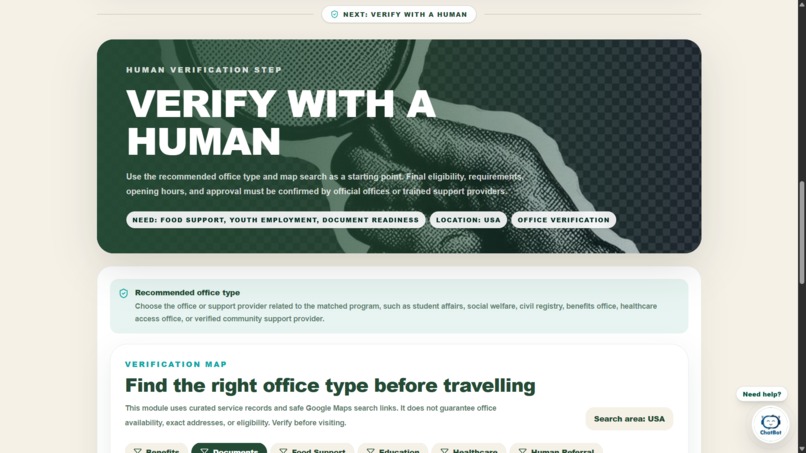
humanhandoff
-
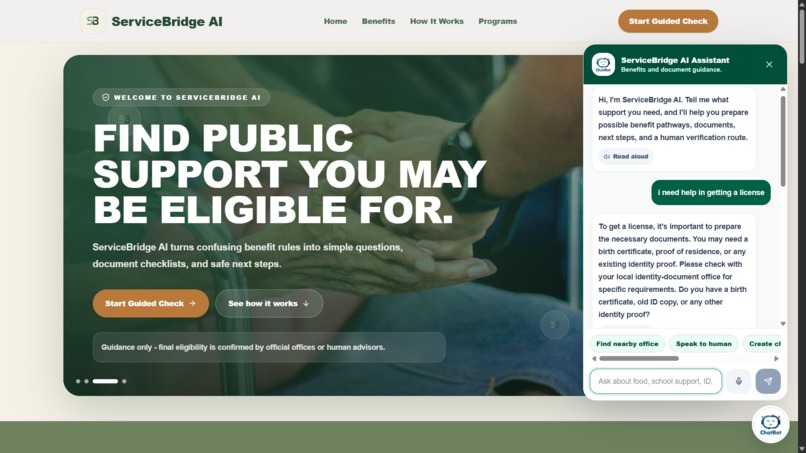
chatbot
-
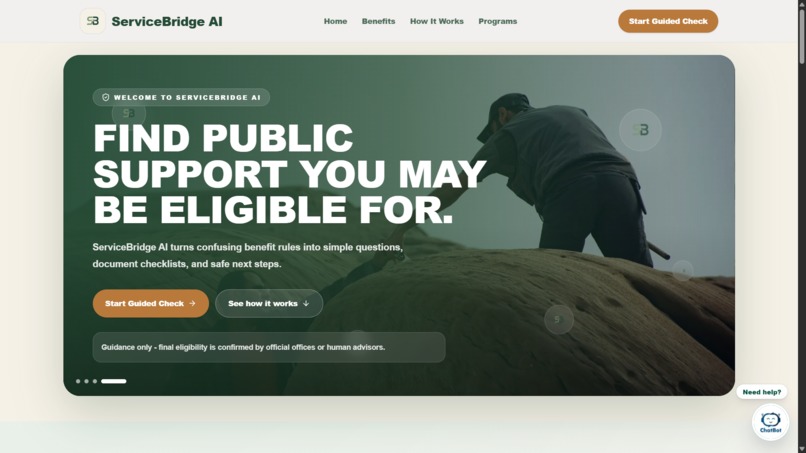
home
Inspiration
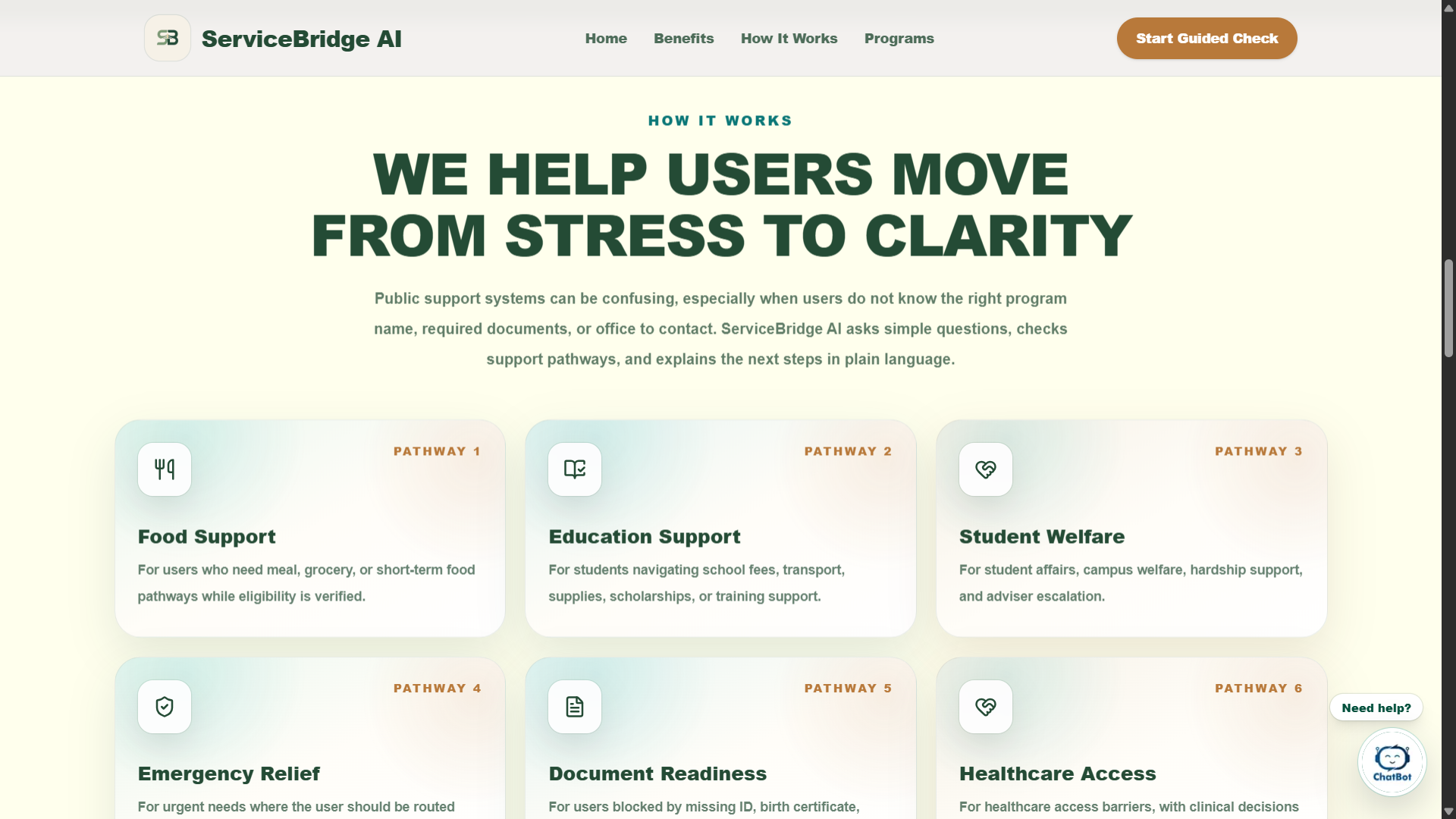
Public support systems can be confusing, especially for people who are stressed, missing documents, or unsure which office to contact. ServiceBridge AI was inspired by the idea that AI can help people take the first safe step: understanding possible support, preparing documents, and knowing when to verify with a real human or official office.
What it does
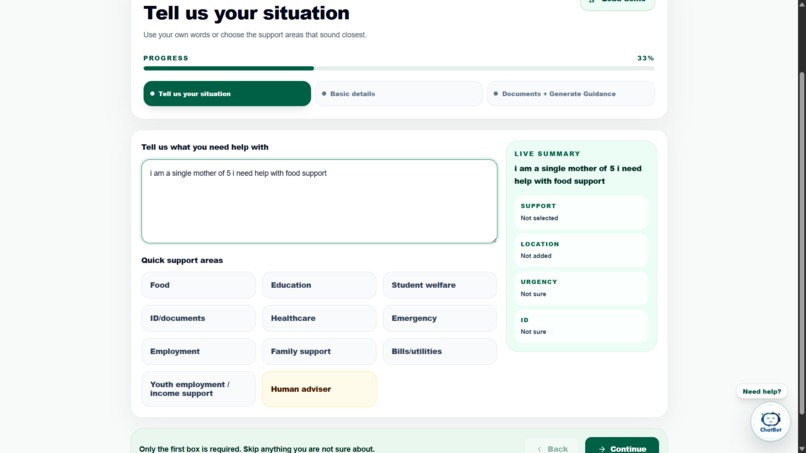
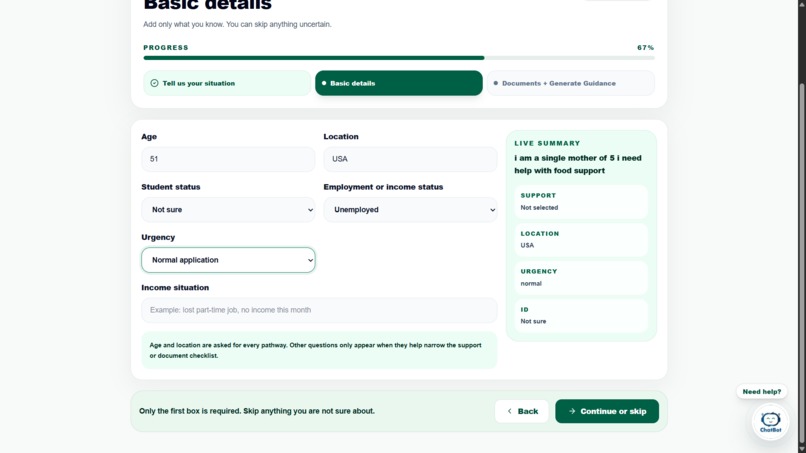
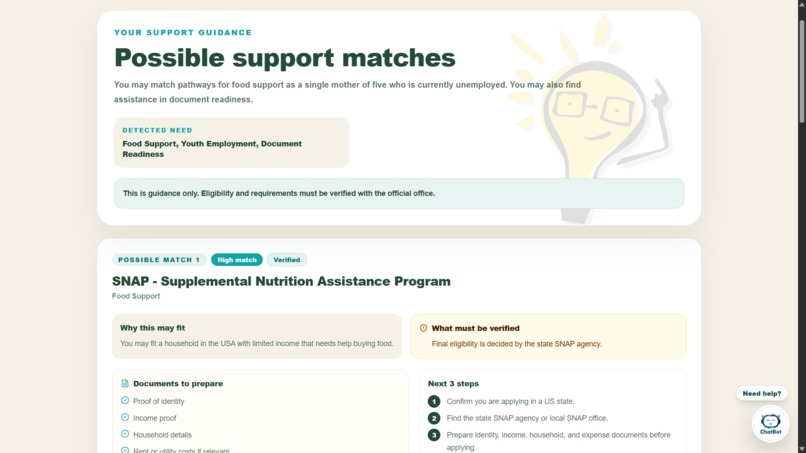
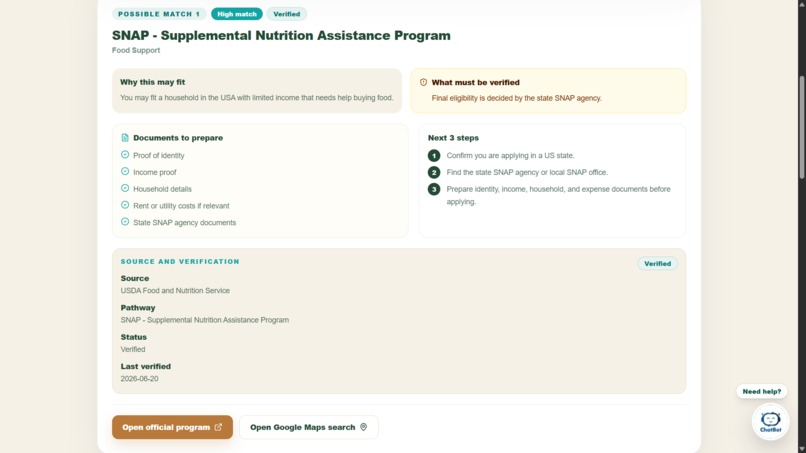
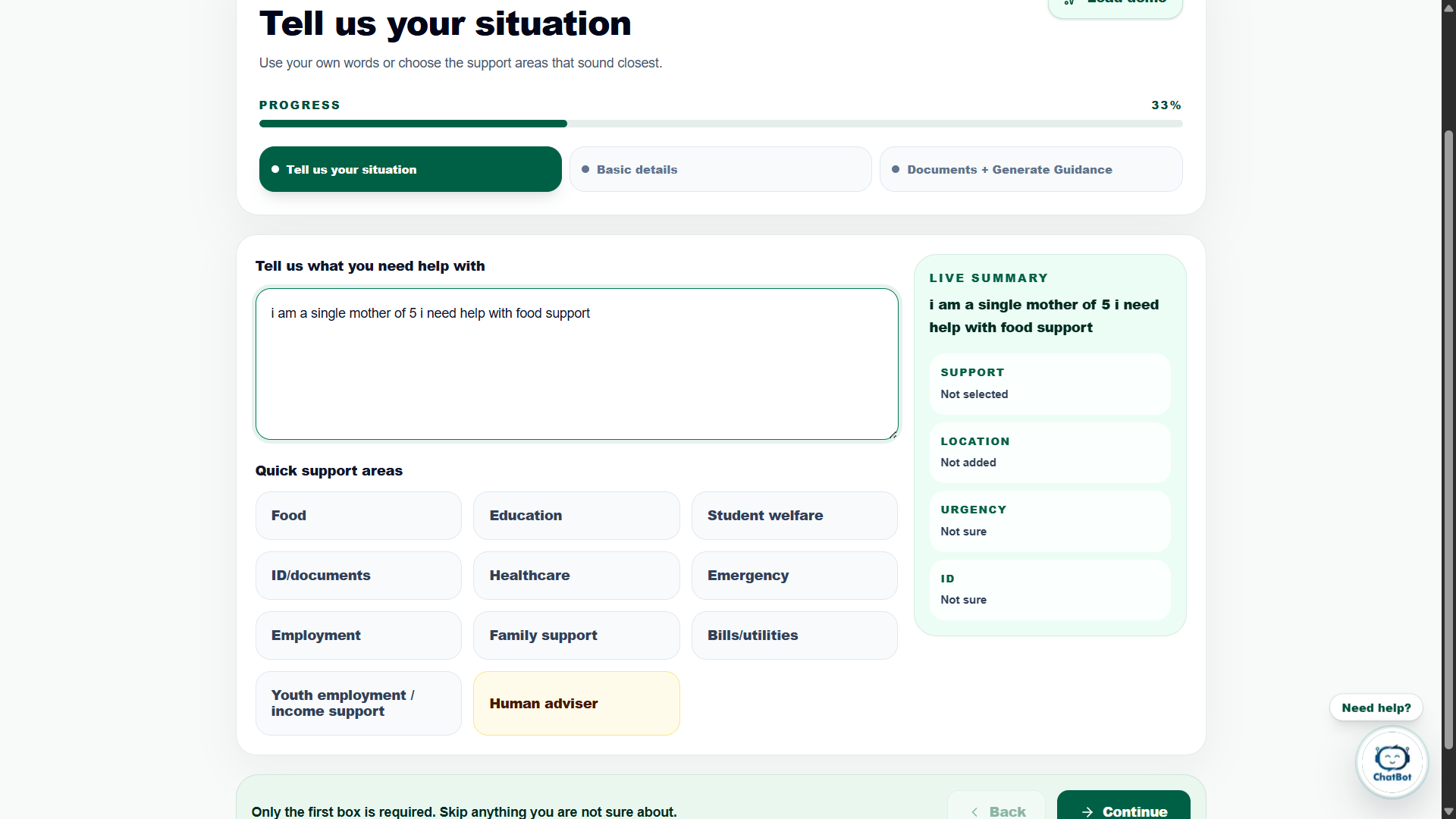
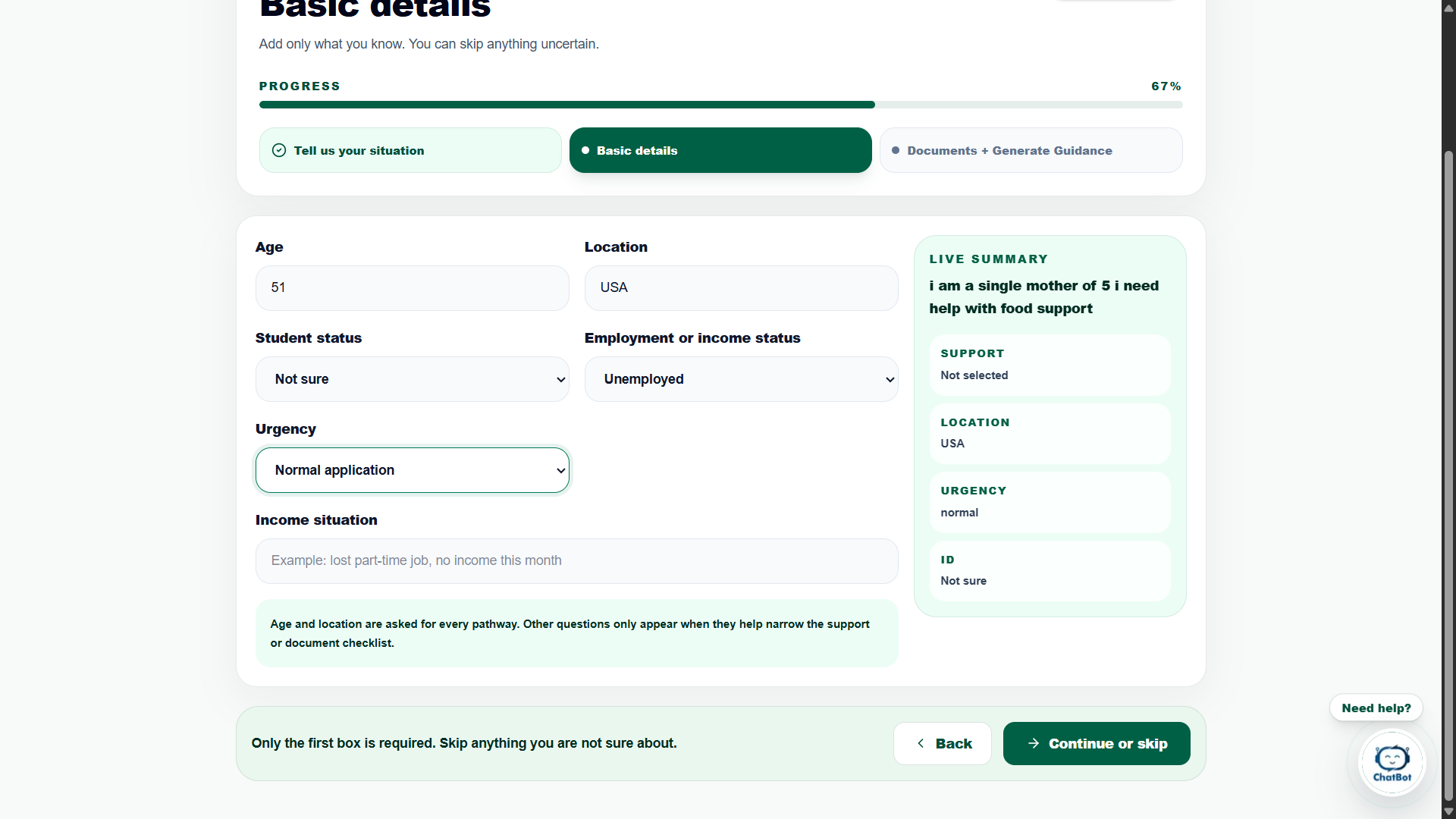
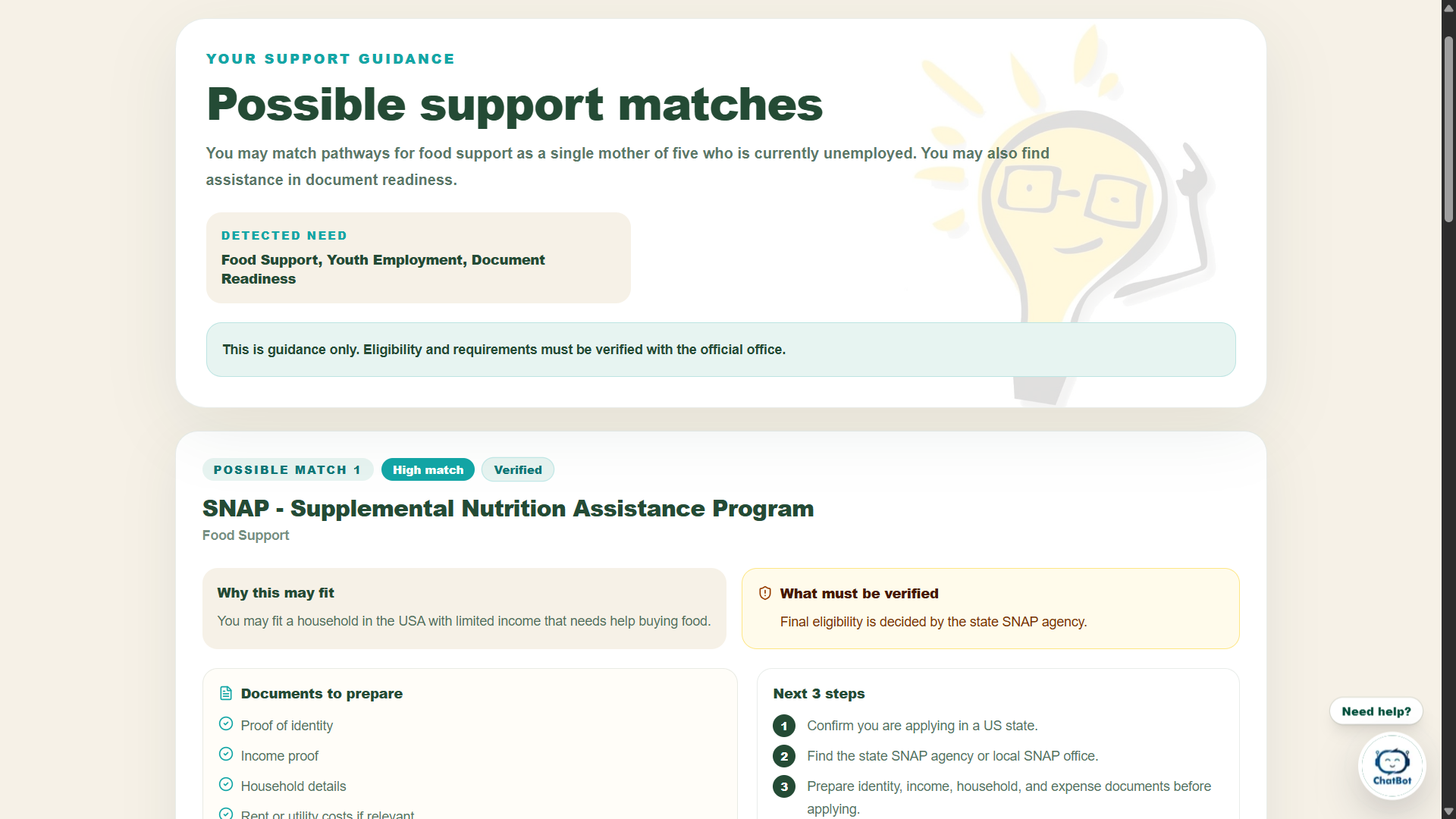
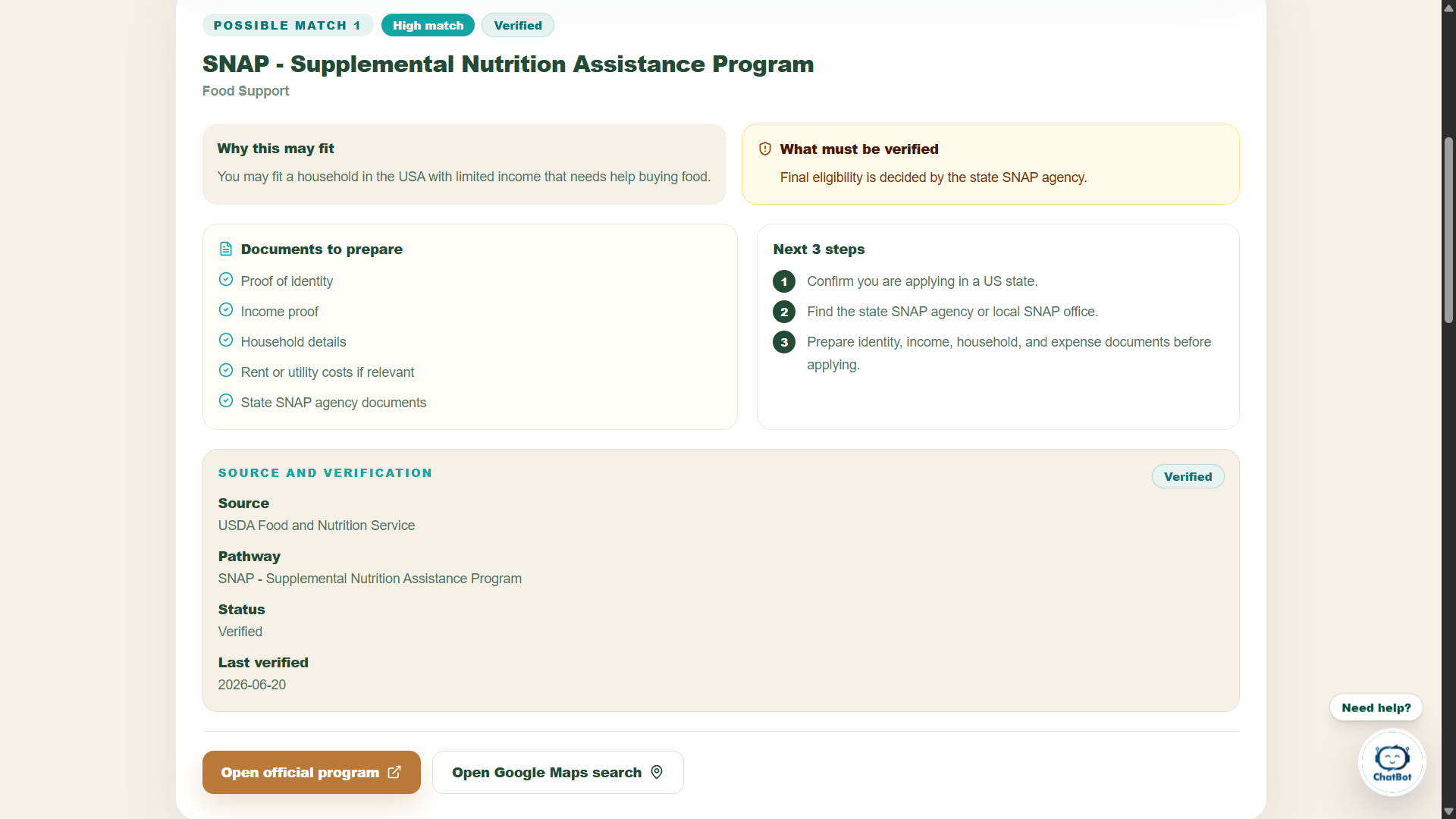
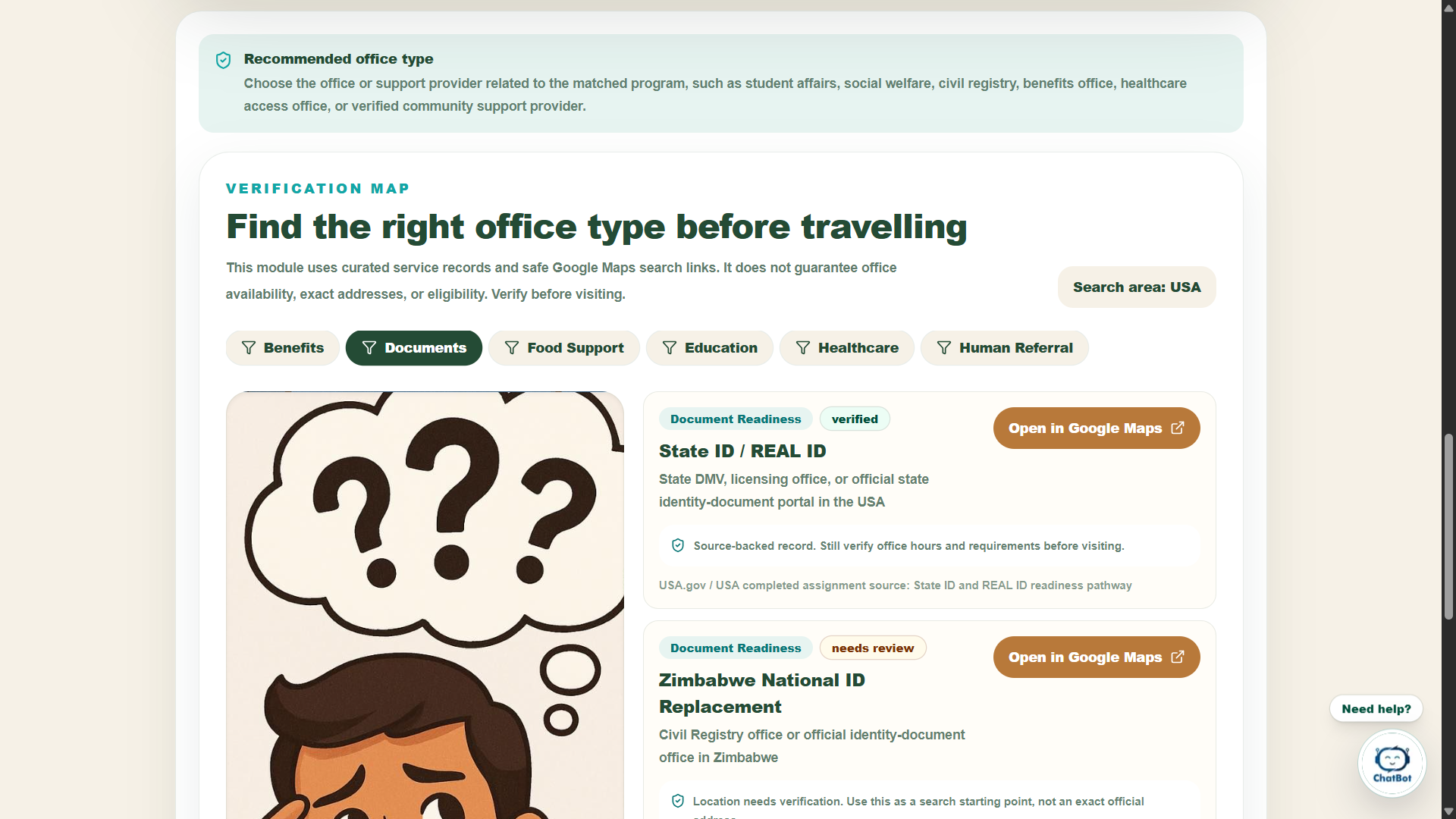
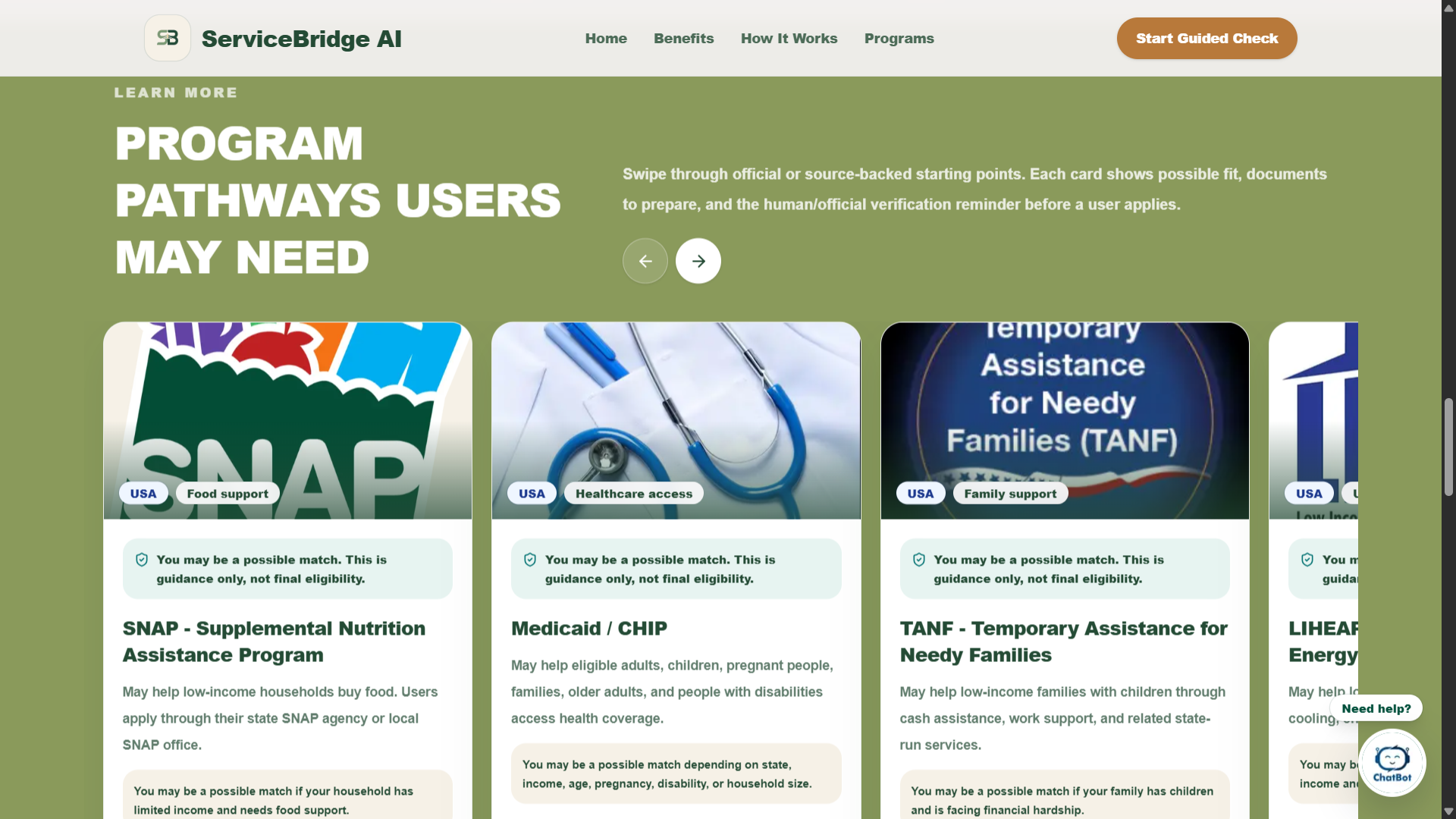
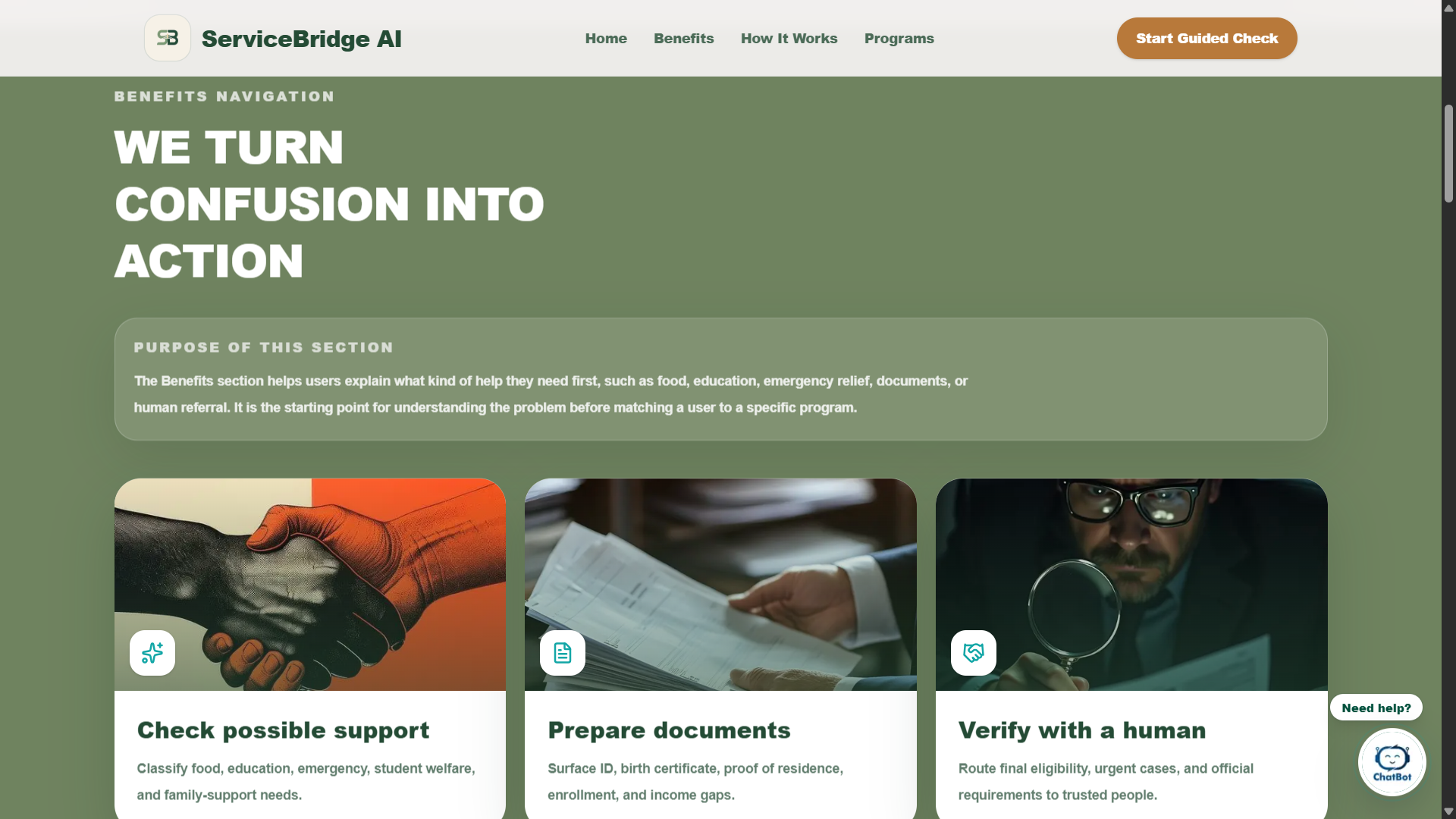
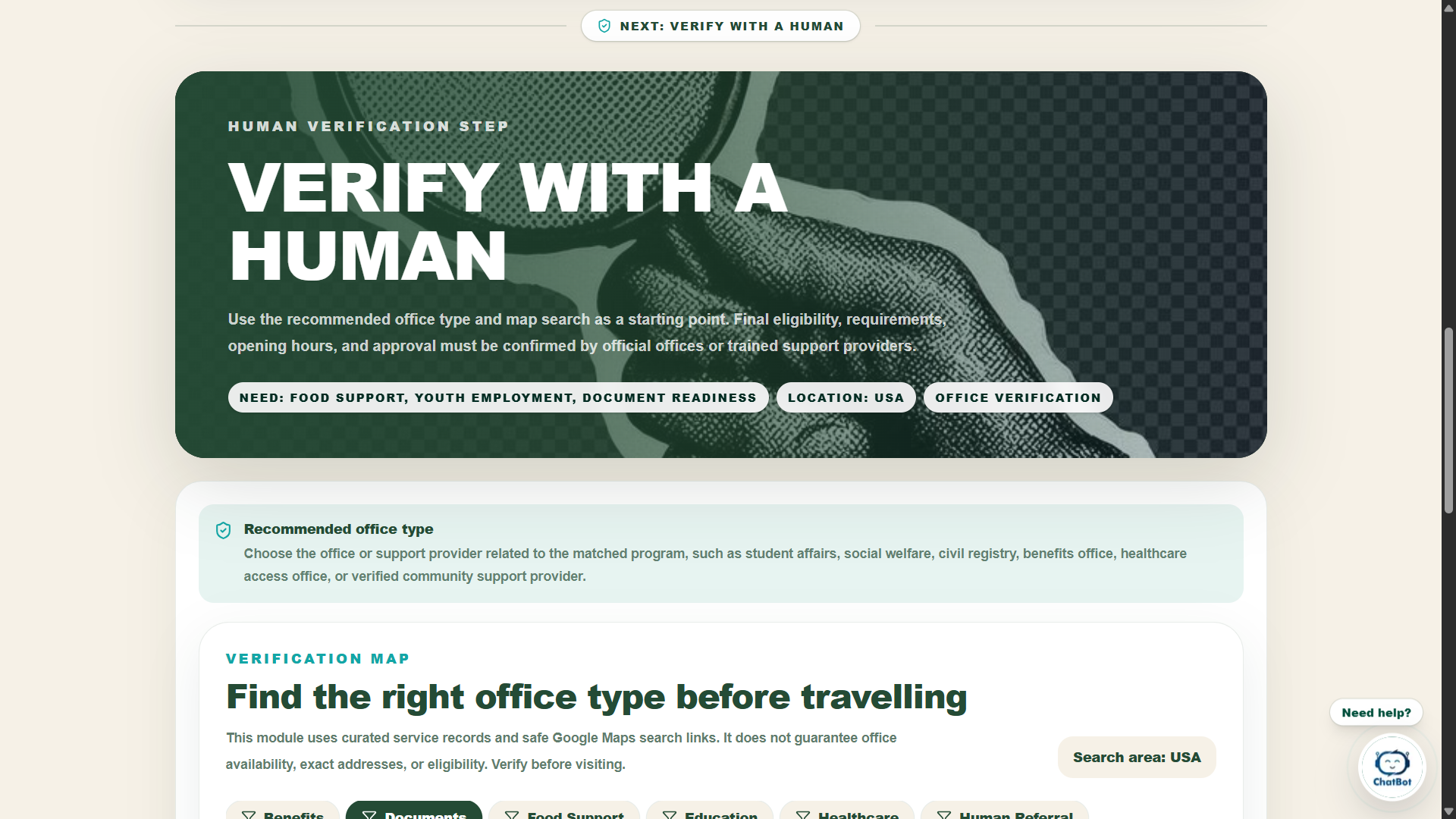
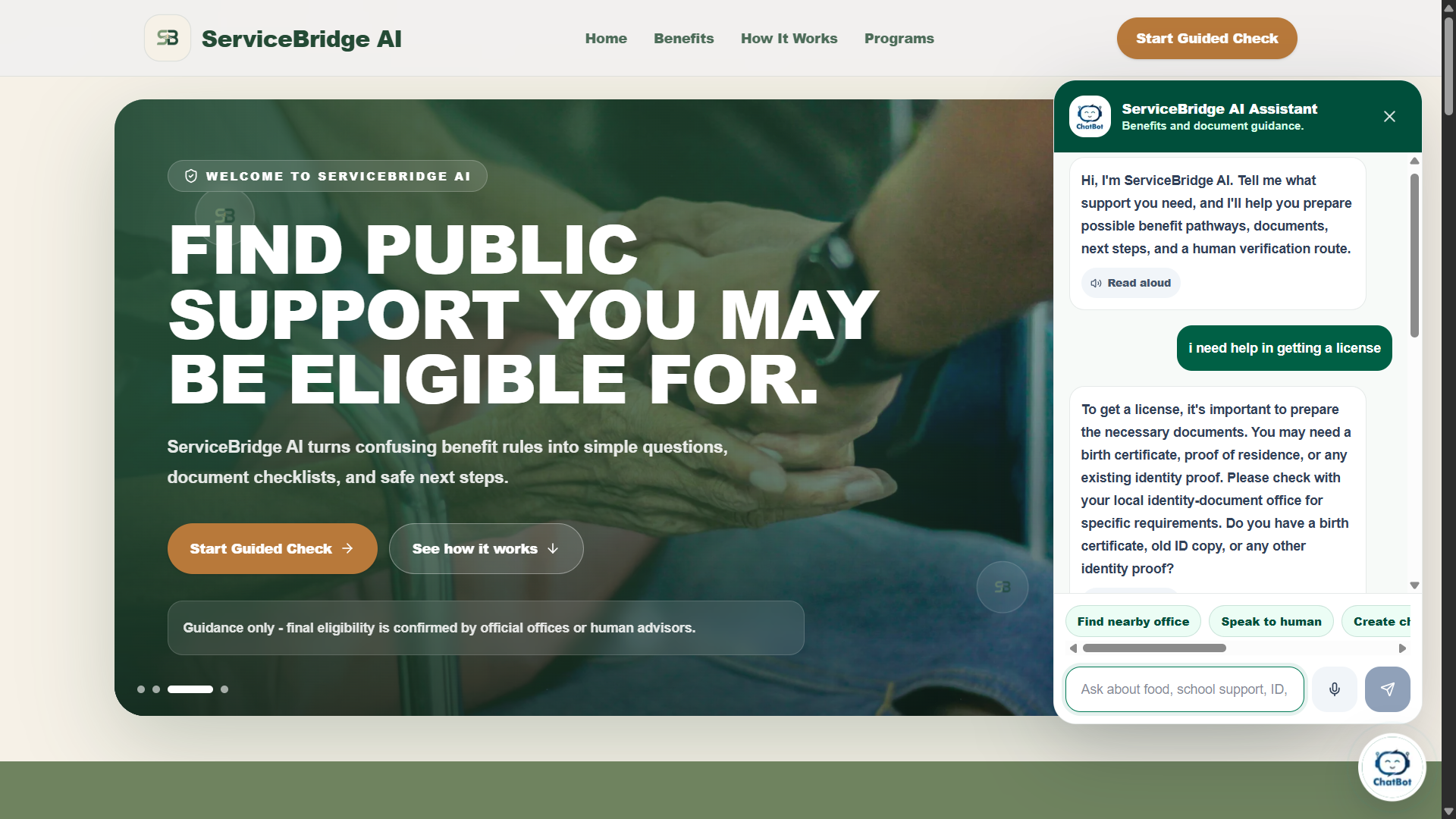
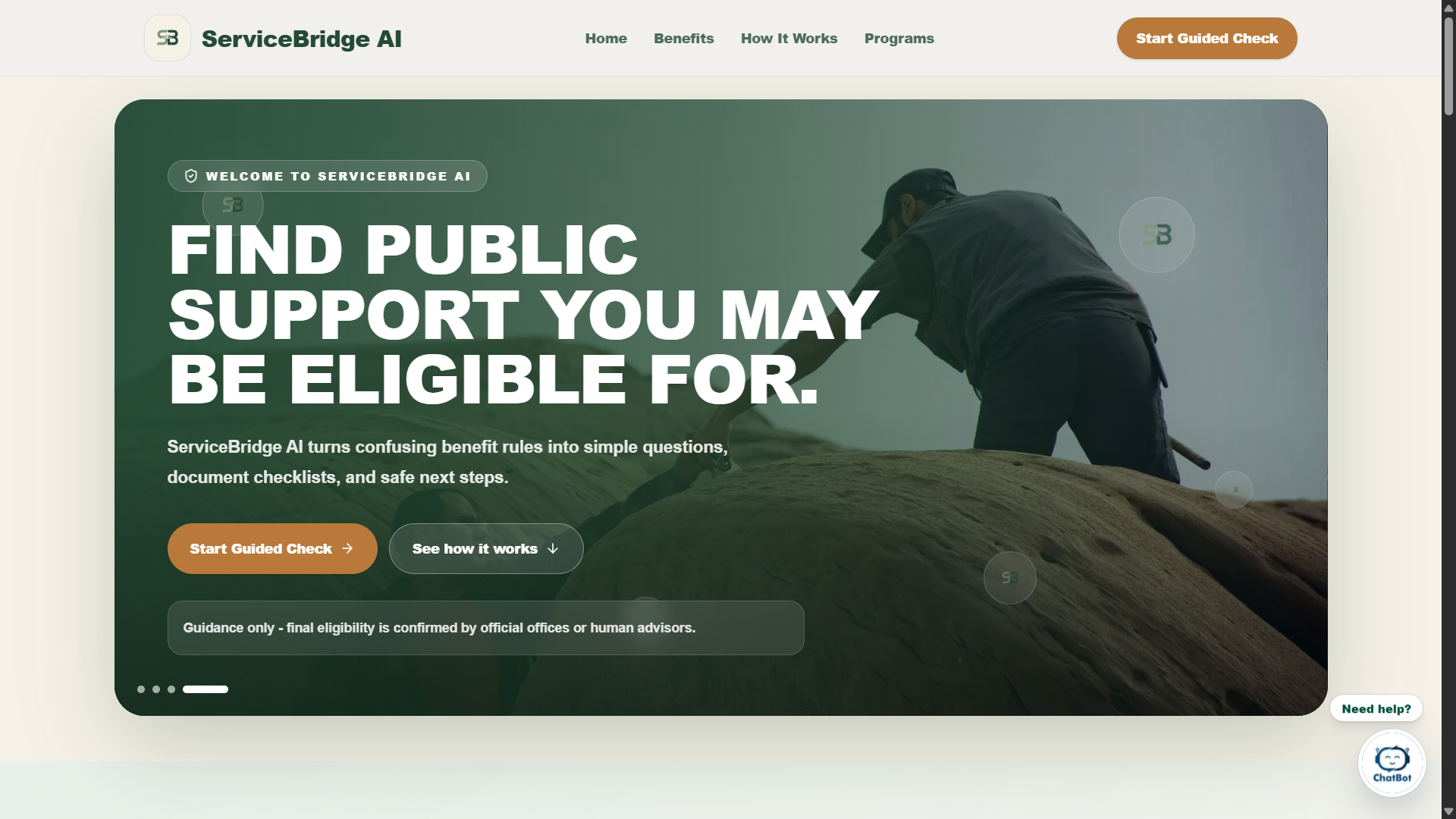
ServiceBridge AI is a benefits navigator. A user can explain their situation in plain language or complete a guided check. The system then suggests possible support pathways, document readiness, next steps, official source links, Google Maps search links, and human verification routes.
It covers areas such as food support, education support, emergency relief, healthcare access, ID/document readiness, youth employment, family support, and human referral. It includes source-backed examples for the USA and Zimbabwe.
How we built it
We built ServiceBridge AI as a Next.js web app using React, TypeScript, Tailwind CSS, OpenAI, Firebase/Firestore support, Vercel, and GitHub. The app combines AI understanding with curated service records so the chatbot can understand plain-language problems while still grounding results in safer program pathways, document checklists, and verification steps.
Challenges we ran into
The hardest challenge was making the AI helpful without making it unsafe. We had to prevent it from claiming users qualify, asking too many follow-up questions, repeating itself, or showing irrelevant documents. We also had to handle urgent situations carefully, such as fires or medical emergencies, where the correct response is immediate human or emergency support, not a normal benefits flow.
Accomplishments that we're proud of
We are proud that ServiceBridge AI is more than a chatbot. It includes a guided check, chatbot, results module, document readiness checklist, official-source transparency, Google Maps office search, voice input, read-aloud support, feedback capture, and a human verification handoff. The app is mobile-first and designed for users who may be stressed or unsure where to start.
What we learned
We learned that responsible AI is not just about refusing unsafe answers. It is about designing the whole user journey carefully: answer first, ask only necessary questions, show uncertainty, explain documents clearly, and hand off final decisions to official agencies or qualified humans.
What's next for ServiceBridge AI
Next, we would expand the verified program database, add more countries and local offices, improve multilingual support, strengthen feedback review, and partner with schools, social workers, public agencies, and community organizations.
Built With
- firebase/firestore
- github
- google-maps-search-links
- next.js
- openai-api
- react
- tailwind-css
- typescript
- vercel


Log in or sign up for Devpost to join the conversation.