-
-
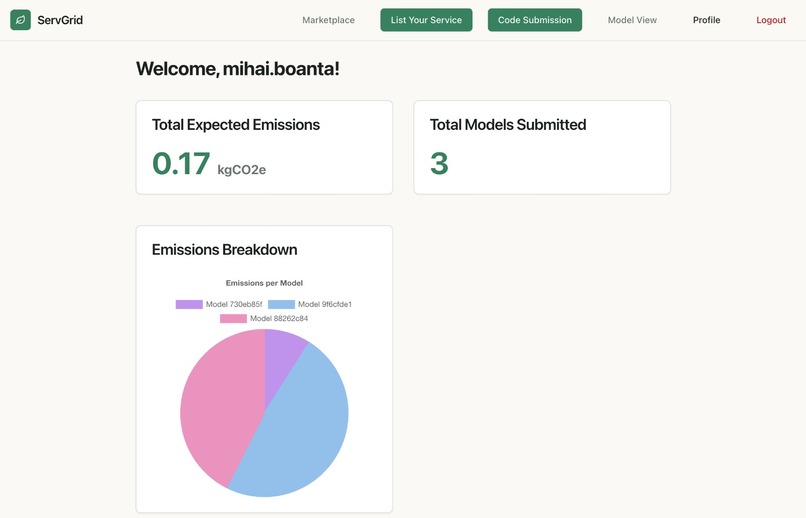
ServGrid's /profile page, displaying the user's carbon footprint based on their workflows
-
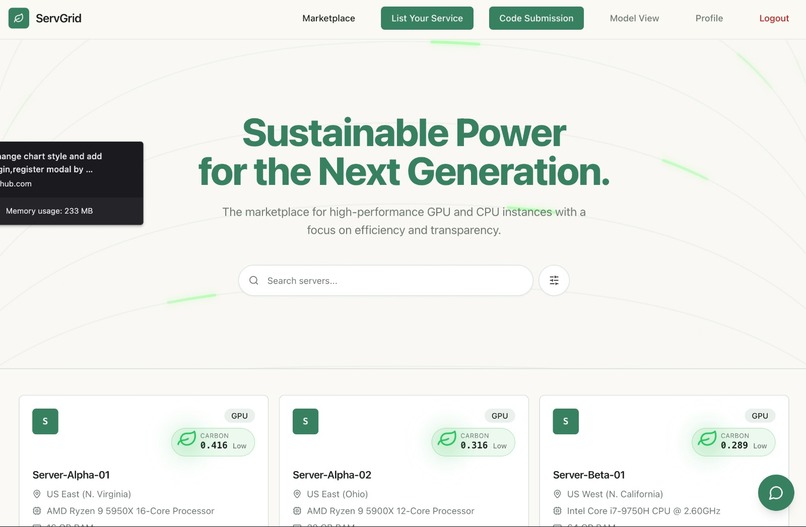
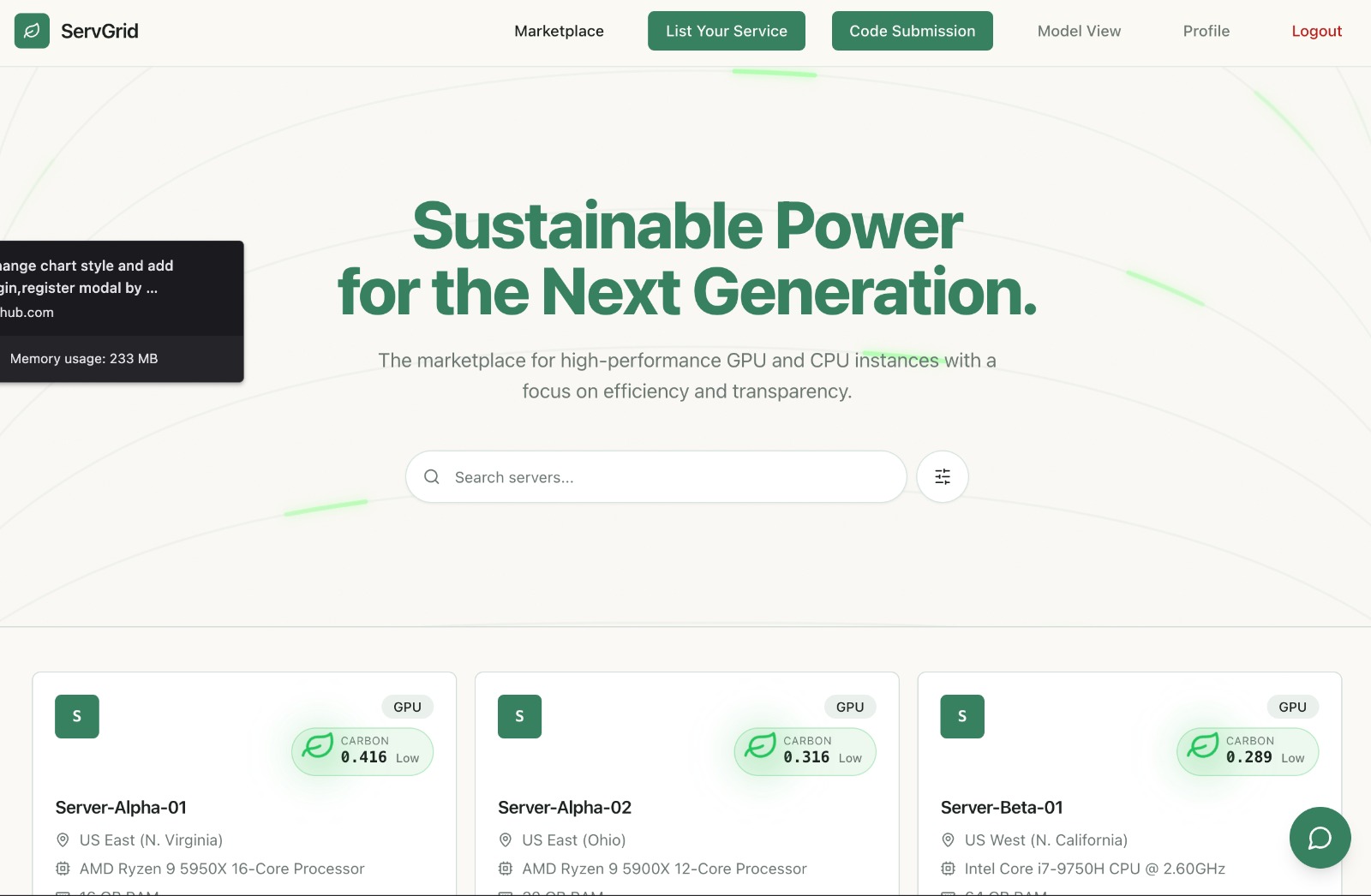
ServGrid's home page
-
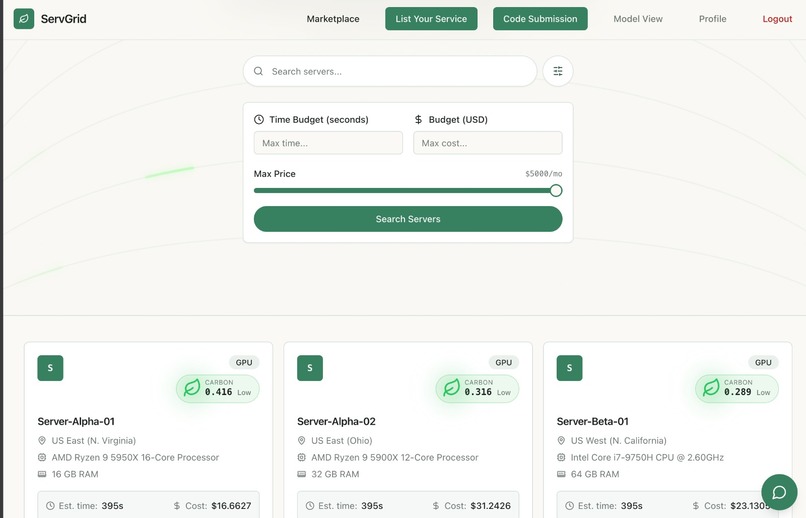
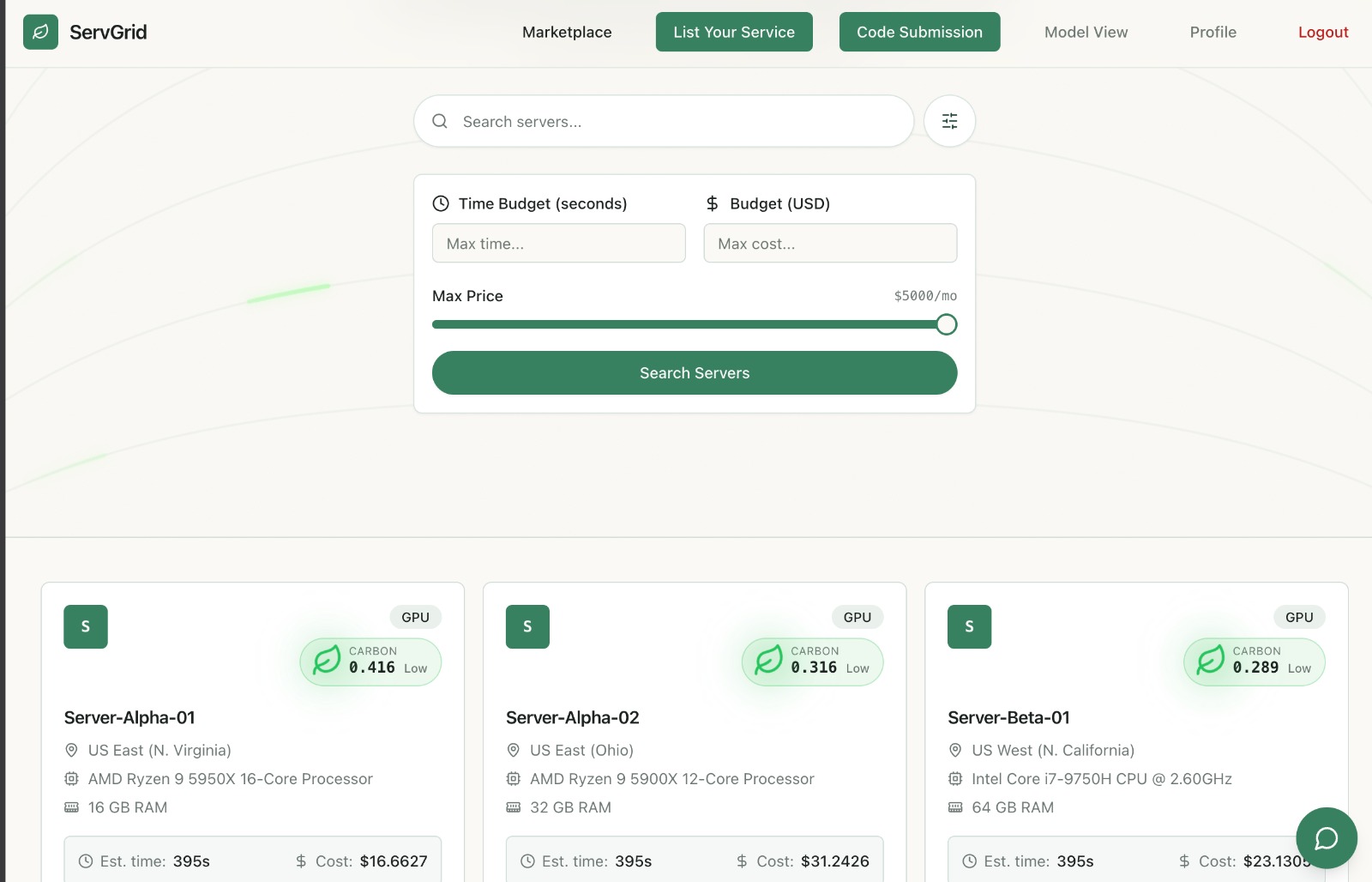
ServGrid's filter function - one of the core functionalities of the app
Inspiration
The rapid advancement of artificial intelligence is thrilling, but it comes with a hidden cost: a massive and growing energy footprint. We recognized that while developers are eager to build powerful models, they often lack the visibility to understand the environmental impact of their workloads. Inspired by the Green Software Foundation and global data initiatives like ClimateTrace, we wanted to bridge this gap. We built ServGrid because we believe the next generation of AI must be not only intelligent but also sustainable and ecologically responsible
What it does
Real-Time Energy Analysis
We leverage comprehensive public datasets to gather and analyze global energy production data. This capability provides users with real-time insights into the energy mix and its environmental implications across various regions. By understanding the current carbon intensity of energy grids, users can make more strategic decisions about where and when to deploy their AI workloads.
Simulation-Based Estimations
ServGrid offers robust simulation capabilities for estimating the environmental footprint of AI models. By analyzing container-based deployments and processing real-world data, the platform provides accurate estimations of CO2 emissions and projected running times. This allows for a proactive assessment of environmental costs before committing to deployment, facilitating optimized resource allocation. Users can upload their Docker images and training datasets to receive these crucial insights.
Promoting Sustainable AI
- Provider Transparency: We champion cloud providers who demonstrate transparency, sustainability, and reliability. ServGrid actively promotes entities committed to green software principles, guiding users toward more environmentally responsible infrastructure
- Empowering AI Companies: Our tool is designed to assist AI companies in developing their models with sustainability at the forefront. By providing actionable data, we empower them to make eco-friendly decisions throughout their development
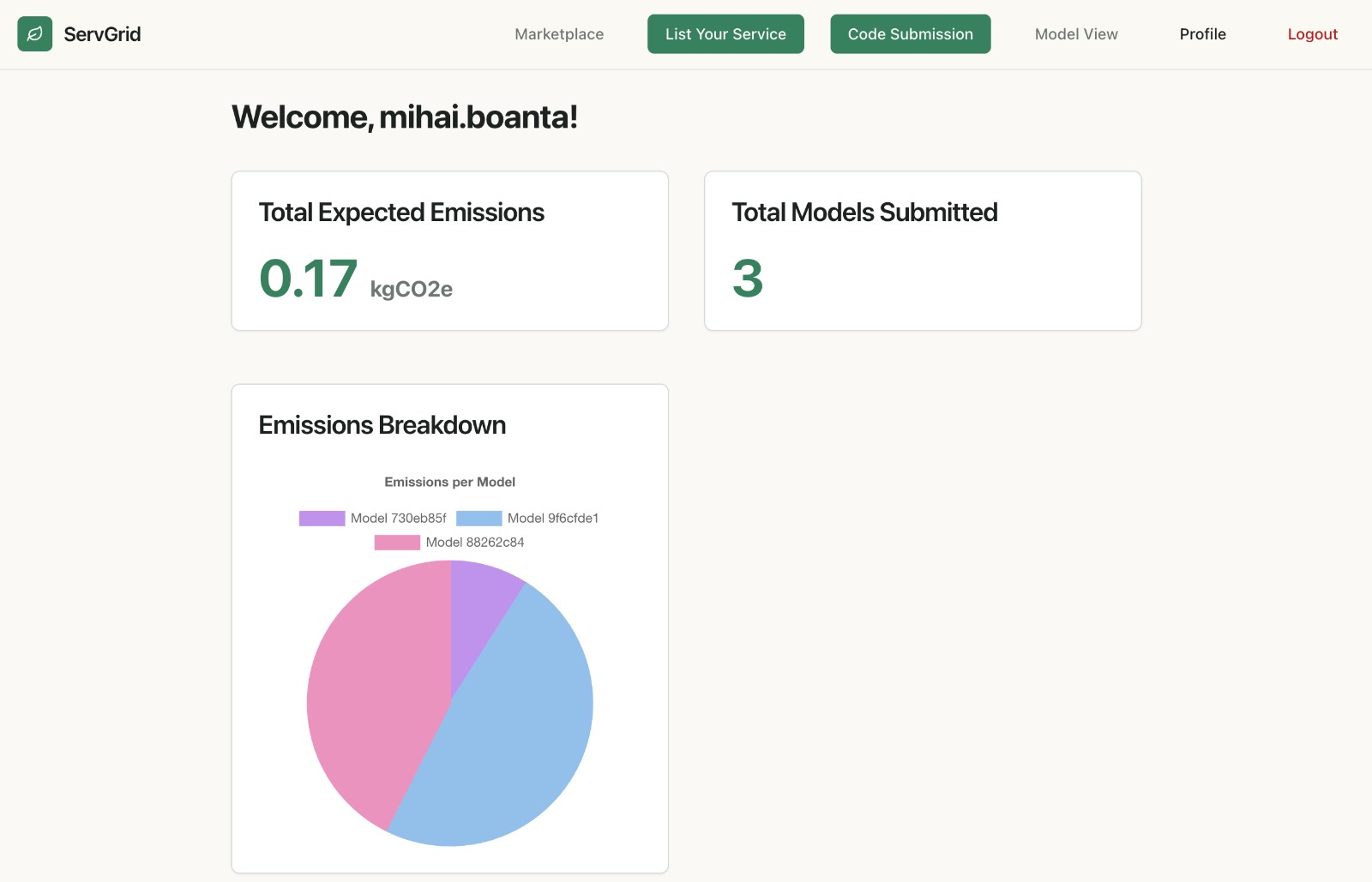
- Emissions Awareness and Visualization: ServGrid enhances awareness by providing comprehensive charts and provider-specific data, illustrating the environmental impact of AI operations. The platform offers detailed analytics, including a user-specific profile page that visualizes total emissions and historical data, making the invisible impact of AI tangible and measurable.
How we built it
ServGrid is built upon a modern and scalable technology stack, designed for both performance and maintainability:
- Frontend: The user interface is a responsive and interactive application developed with React (utilizing Vite for optimized development workflows) and TypeScript for strong type enforcement. Styling is managed using Tailwind CSS and components from
shadcn/uiNavigation is handled byreact-router-dom, while form management leveragesreact-hook-formandzodfor robust validation. Data visualization, particularly for emissions tracking, is powered by Chart.js withreact-chartjs-2. - Backend: The server-side logic is implemented using Node.js with the Express.js framework. Data persistence is managed by MongoDB via the Mongoose ODM, storing all critical information related to users, models, servers, hardware, and locations. Authentication is secured using JWTs (JSON Web Tokens) with
cookie-parserfor HTTP-only cookie management. File uploads are facilitated bymulter, andaxiosis used for internal service-to-service communication. - Database: MongoDB serves as the primary data store, ensuring reliable and flexible storage for all application entities.
Challenges we ran into
One of our primary hurdles was accurately simulating and estimating the environmental footprint of uploaded Docker containers. Processing heavy .tar files and CSV training data seamlessly without blocking the backend required careful stream handling and asynchronous service-to-service communication. Additionally, mapping real-time global energy production data to specific cloud provider hardware to calculate an accurate CO2 estimation was a complex data-integration challenge.
Accomplishments that we're proud of
We are incredibly proud to have built a tool that translates abstract environmental concerns into actionable, tangible metrics for developers. Successfully integrating real-time carbon data with container simulation means we are actively providing a way to reduce AI's carbon footprint. We are also proud of the clean, intuitive dashboard that makes navigating complex emissions data straightforward for the end-user.
What we learned
Building ServGrid deepened our understanding of the intricacies of the global energy mix and how drastically carbon intensity fluctuates by region and time of day. We also learned a great deal about handling large file streams in Node.js, managing robust state in React, and the specific metrics required to evaluate the energy consumption of AI workloads accurately.
What's next for ServGrid
Our roadmap for ServGrid includes continuous innovation aimed at further enhancing its sustainability and efficiency features:
- Automated Deployment and Scalability Management: We plan to implement functionalities for automated, intelligent deployment of AI workloads, ensuring optimal scalability while prioritizing environmental impact.
- Dynamic Workload Relocation: A key future direction involves developing a system capable of dynamically shifting AI workloads to geographically greener or more energy-efficient server locations in real-time. This adaptive approach would respond to fluctuations in renewable energy availability or carbon intensity across different regions.
We are committed to the ongoing development of ServGrid, striving to contribute meaningfully to a more sustainable future for artificial intelligence and the broader technology sector.
Built With
- blender-open-data
- docker
- docker-compose
- electric-maps
- express.js
- flask
- gemini
- javascript
- lovable
- mongodb
- node.js
- python
- react
- react-router
- tailwindcss
- typescript
- vite

Log in or sign up for Devpost to join the conversation.