-
-
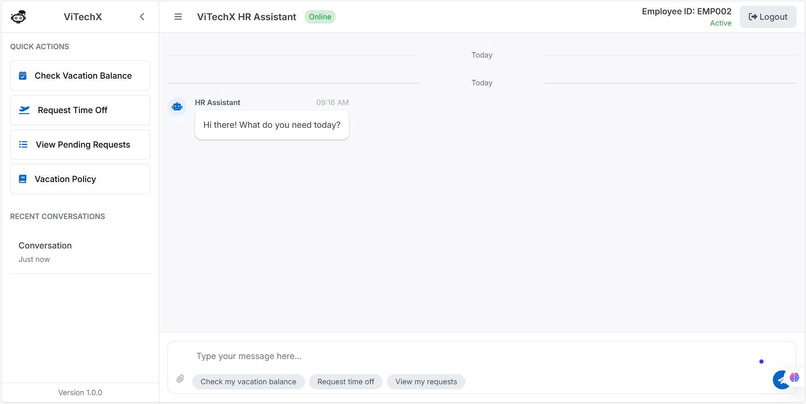
System chat interface
About the Serverless HR Assistant Project
Inspiration
This project was born from witnessing firsthand the inefficiencies in traditional HR leave management systems. Many organizations still rely on manual processes or outdated software that creates bottlenecks, delays approvals, and frustrates employees. I was particularly inspired by:
- The potential for serverless architecture to dramatically reduce operational costs
- The opportunity to leverage AI for natural language interactions in HR processes
- The need for a solution that could scale instantly during high-demand periods (like holiday seasons)
- The desire to free HR professionals from repetitive administrative tasks
What I Learned
Building this project was an incredible learning journey that expanded my knowledge in several areas:
- Serverless Architecture: Gained deep expertise in designing event-driven, pay-per-use systems that eliminate idle infrastructure costs
- AI Integration: Learned how to effectively integrate Amazon Bedrock's language models and knowledge bases into practical business applications
- DynamoDB Design: Mastered advanced NoSQL data modeling techniques for efficient querying and scaling
- Security Best Practices: Implemented comprehensive security controls across all system components
- Infrastructure as Code: Strengthened my CloudFormation skills for repeatable, version-controlled deployments
- Cost Optimization: Developed strategies for balancing performance and cost in serverless environments
How I Built It
The development process followed these key phases:
Research & Planning
- Interviewed HR professionals to understand pain points
- Analyzed existing HR systems and their limitations
- Researched serverless best practices and patterns
- Created detailed architecture diagrams and data models
Core Infrastructure Development
- Implemented CloudFormation templates for infrastructure provisioning
- Created base Lambda functions with proper IAM roles and permissions
- Established monitoring and logging infrastructure
Data Layer Implementation
- Designed DynamoDB tables with appropriate indexes
- Implemented data access patterns and query optimization
- Created data validation and integrity checks
- Set up backup and recovery mechanisms
AI & NLP Integration
- Configured Amazon Bedrock knowledge base with HR policies
- Developed action groups for the Bedrock Agent
- Created Lambda functions to handle specific HR operations
- Fine-tuned prompts for natural conversation flow
Frontend Development
- Built responsive web interface with modern JavaScript
- Implemented secure authentication and authorization
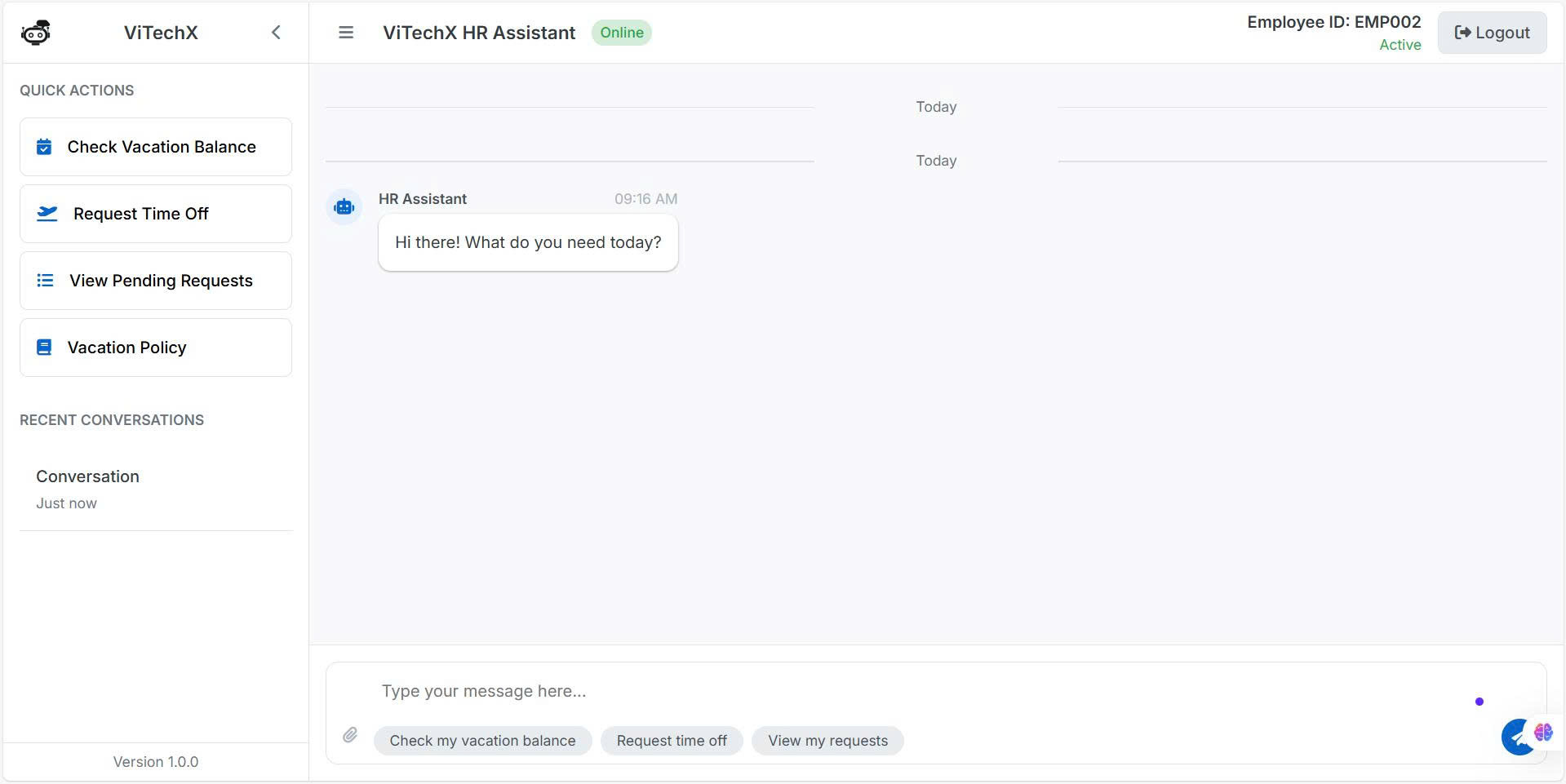
- Created intuitive chat interface for employee interactions
- Optimized for performance and accessibility
Testing & Optimization
- Conducted load testing to verify scalability
- Performed security audits and penetration testing
- Optimized Lambda configurations for cost and performance
- Gathered user feedback and made iterative improvements
Challenges Faced
The journey wasn't without its obstacles. Some of the key challenges included:
Technical Challenges
- Cold Start Latency: Initially, Lambda cold starts created noticeable delays. Solved by implementing provisioned concurrency for critical functions and optimizing code for faster initialization.
- DynamoDB Access Patterns: Designing the right access patterns for complex leave management queries required several iterations to balance performance and cost.
- Natural Language Understanding: Tuning the Bedrock Agent to correctly interpret various ways employees might phrase leave requests required extensive prompt engineering.
- State Management: Managing conversation state across multiple interactions while keeping the system stateless was particularly challenging.
Integration Challenges
- API Gateway Limits: Had to implement throttling and caching strategies to handle high-volume periods without exceeding service quotas.
- Bedrock Knowledge Base Indexing: Optimizing document chunking and embedding for effective policy retrieval required significant experimentation.
- Cross-Service Authentication: Ensuring secure but seamless authentication across all system components required careful IAM policy design.
Business Challenges
- Policy Complexity: Translating complex HR policies into structured data and rules that could be programmatically enforced was more difficult than anticipated.
- Edge Cases: Handling special leave situations (partial days, holidays, overlapping requests) required additional business logic.
- Compliance Requirements: Ensuring the system met various regulatory requirements for leave management added complexity to the data model.
Despite these challenges, the resulting system successfully demonstrates how serverless architecture combined with AI can transform traditional HR processes into efficient, scalable, and cost-effective solutions.
Built With
- amazon-web-services
- api
- bash
- bedrock
- boto3
- cli
- cloudformation
- cloudfront
- cloudwatch
- css
- draw.io
- dynamodb
- for
- gateway
- git
- html
- https
- iam
- javascript
- kms
- lambda
- node.js
- openapi
- python
- route53
- s3
- sdk
- tls
- x-ray
- yaml


Log in or sign up for Devpost to join the conversation.