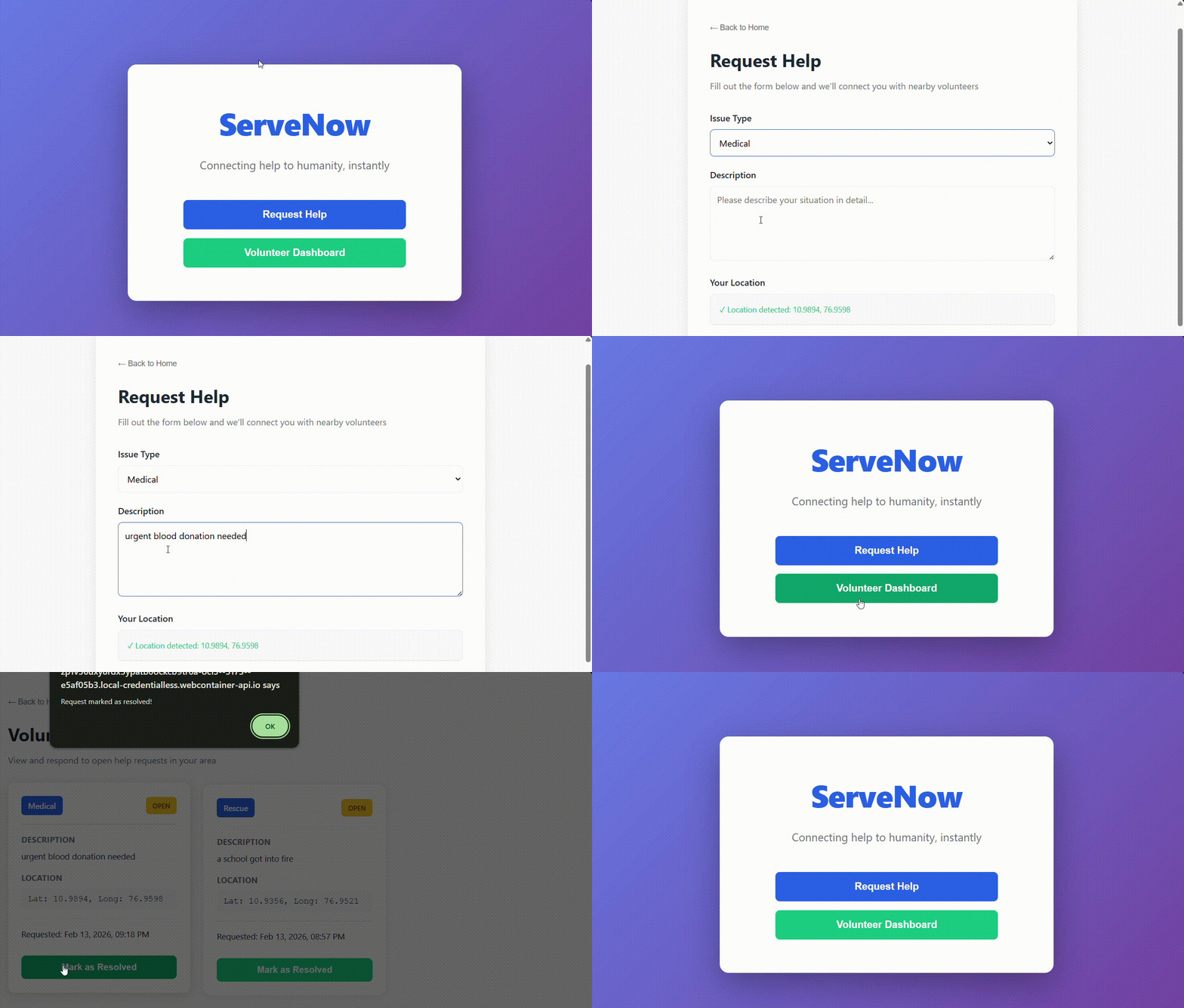
ServeNow
Inspiration
ServeNow was inspired by a simple but painful observation: help is available, but it often doesn’t reach people in time.
During emergencies or social crises, requests for help are scattered across phone calls, WhatsApp messages, and social media posts. This leads to delays, confusion, duplication of effort, and sometimes complete inaction.
We realized the real problem wasn’t the lack of volunteers or NGOs — it was the lack of a centralized, fast, and reliable coordination system.
ServeNow was created to bridge that gap.
What It Does
ServeNow is a centralized emergency coordination platform that connects:
- Individuals or NGOs raising requests for help
- Nearby volunteers who can respond quickly
- NGOs that manage and track ongoing cases
Core Features
- Users can submit help requests
- Volunteers receive location-based notifications
- NGOs monitor and manage active cases
- Requests close only after resolution
Its goal is simple:
Reduce response time and ensure no request goes unnoticed.
How We Built It
ServeNow was developed as a full-stack web application.
Frontend
- React
- HTML5
- CSS3
- Vite
Backend & Database
- Node.js
- Supabase
- PostgreSQL
- SQL
System Architecture
We designed the system to support:
- Real-time coordination
- Location-based matching logic
- Structured case management
The MVP focuses on simplicity, scalability, and practical usability in real communities.
Technical Overview
| Layer | Technology | Purpose |
|---|---|---|
| Frontend | React + Vite | User Interface |
| Backend | Node.js | API & Business Logic |
| Database | PostgreSQL | Data Storage |
| BaaS | Supabase | Auth & Real-time |
Example Workflow (Structured Data)
{
  "request_id": "REQ123",
  "type": "Medical Emergency",
  "location": "Hyderabad",
  "status": "Active",
  "assigned_volunteer": "VOL45",
  "resolution": null
}
System Logic (Conceptual Model)
Inline coordination logic:
The response priority score is calculated as ( P = \frac{U \times S}{D} )
Where:
- (U) = Urgency level
- (S) = Severity factor
- (D) = Distance from volunteer
Display Equation
$$ Response\ Time = \frac{Request\ Load}{Available\ Volunteers} $$
Challenges We Faced
- Designing a system that balances speed with reliability
- Structuring accurate location-based notifications
- Making the platform intuitive for users with varying technical knowledge
- Planning scalability while building an early-stage MVP
- Validating workflows against real-world scenarios
These challenges refined both the product and our problem-solving approach.
Accomplishments We're Proud Of
- [x] Built a working MVP
- [x] Implemented full request-to-resolution workflow
- [x] Created structured NGO–volunteer coordination system
- [x] Designed a solution addressing a real social problem
- [ ] Launch large-scale pilot
Most importantly, we’re proud of building something with meaningful social impact potential.
What We Learned
term : Social problems require both empathy and strong system design
term : Clear workflows are more important than complex features
term : Scalability must be considered from the beginning
term : Startups are about solving real problems — not just writing code
We also learned that complexity equals innovation simplicity drives adoption.
That insight was ==very important== for our MVP.
What's Next for ServeNow
- [ ] Implement real-time push notifications
- [ ] Improve advanced geolocation accuracy
- [ ] Add user verification and trust systems
- [ ] Pilot test with local NGOs
- [ ] Develop a mobile-first version
- [ ] Expand into disaster-response ecosystems
ServeNow’s long-term vision is to become a reliable emergency coordination infrastructure communities can depend on.
Future Scaling Model
As the platform grows, volunteer distribution can be optimized using:
$$ Coverage\ Efficiency = \frac{Resolved\ Requests}{Total\ Requests} $$
Our goal is to maximize this value toward 1.0 (100% resolution rate).
Final Thought
Help should not depend on chance visibility.
ServeNow exists to ensure structured coordination, faster responses, and measurable impact.
That is our mission.
Built With
- node.js
- postgresql
- react
- supabase
- vite


Log in or sign up for Devpost to join the conversation.