-
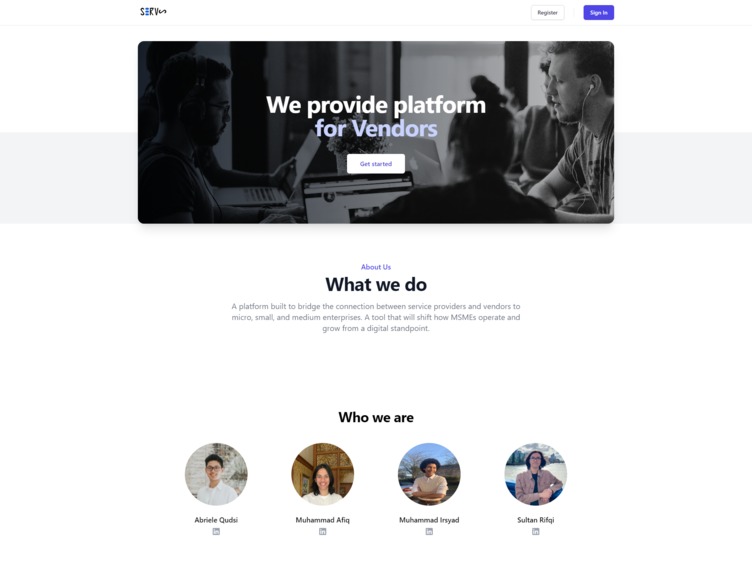
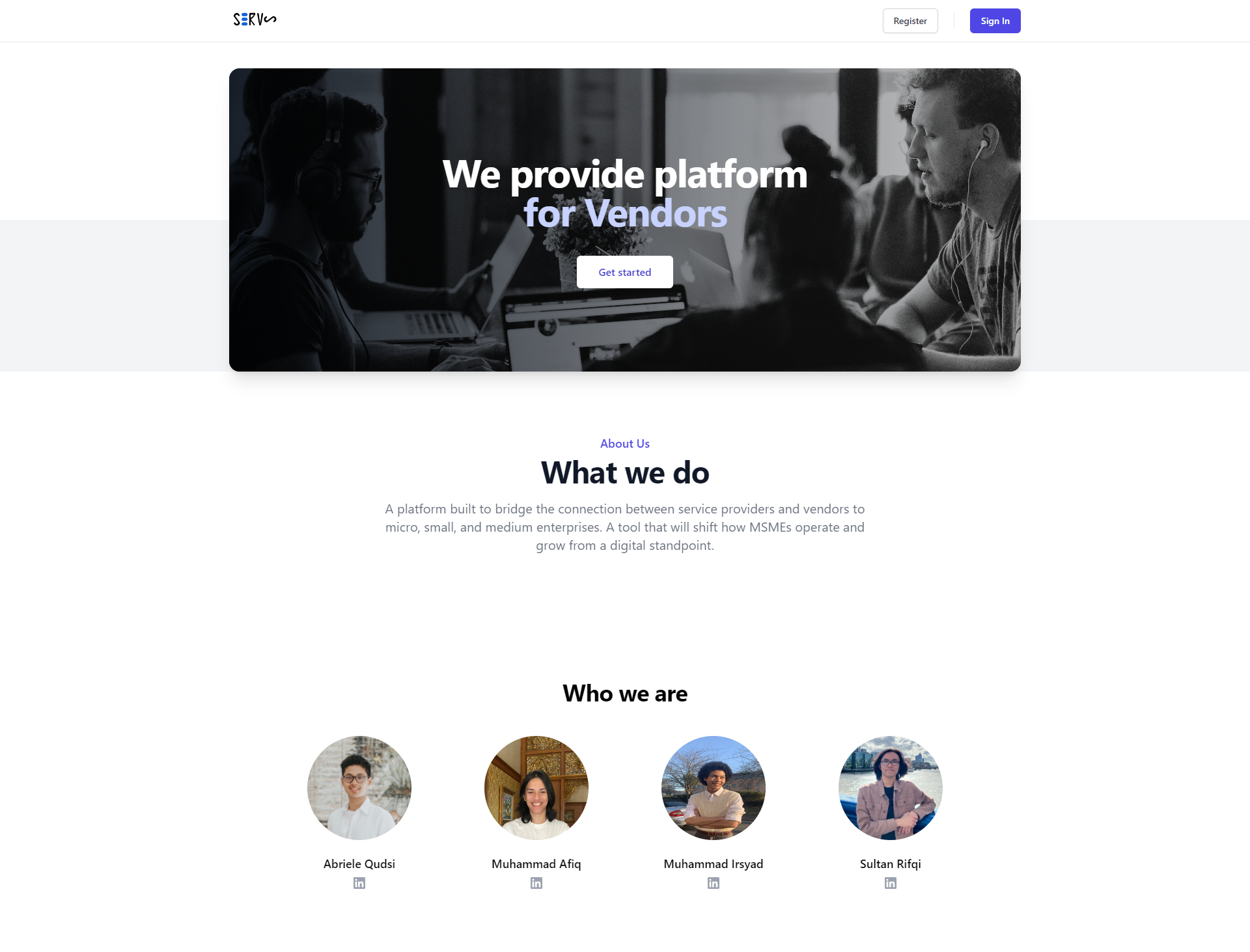
Landing Page
-
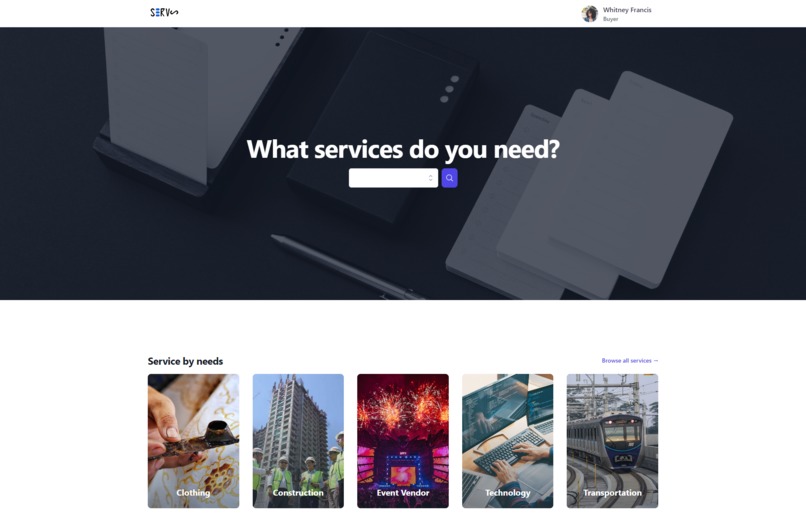
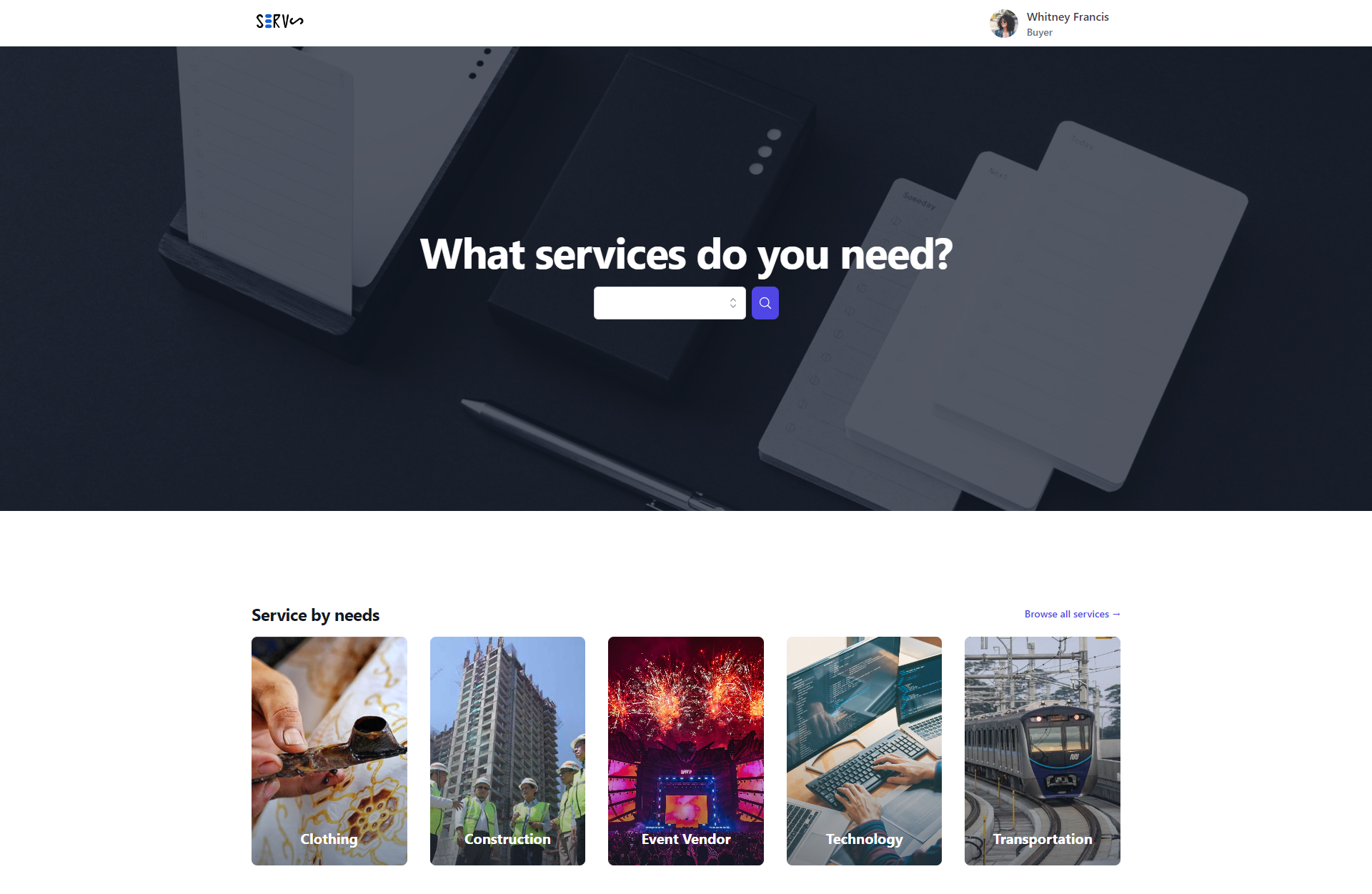
Home Page
-
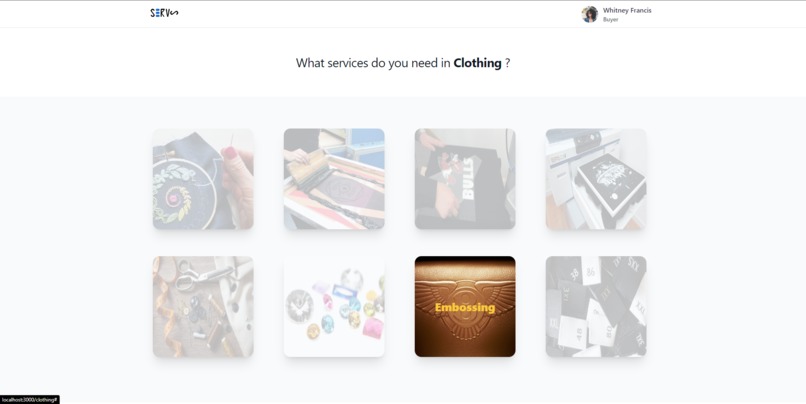
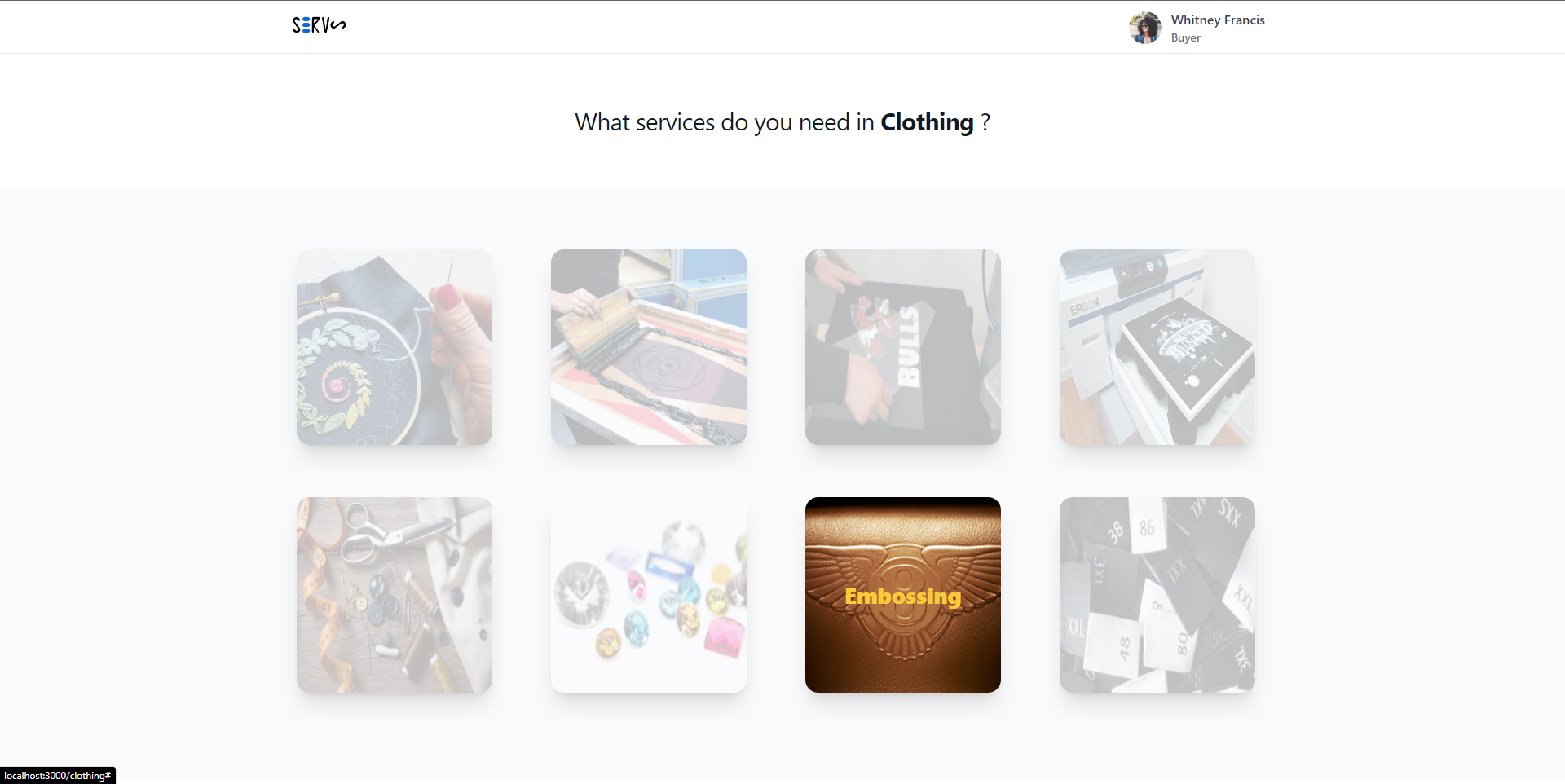
Sub-category Page
-
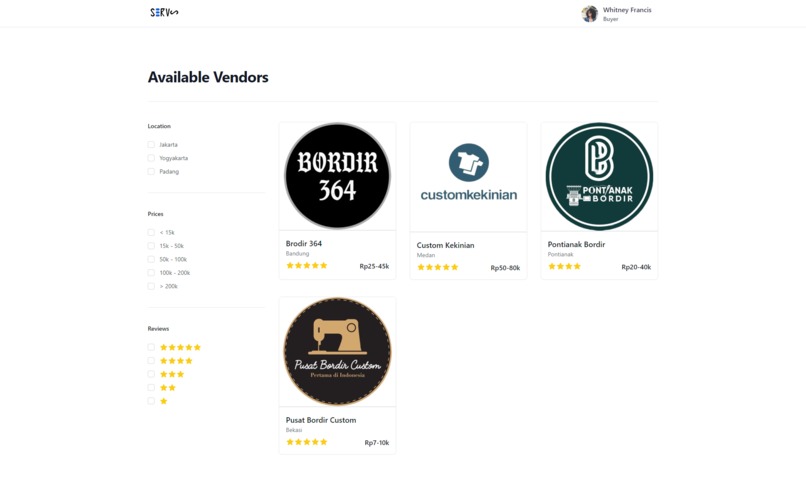
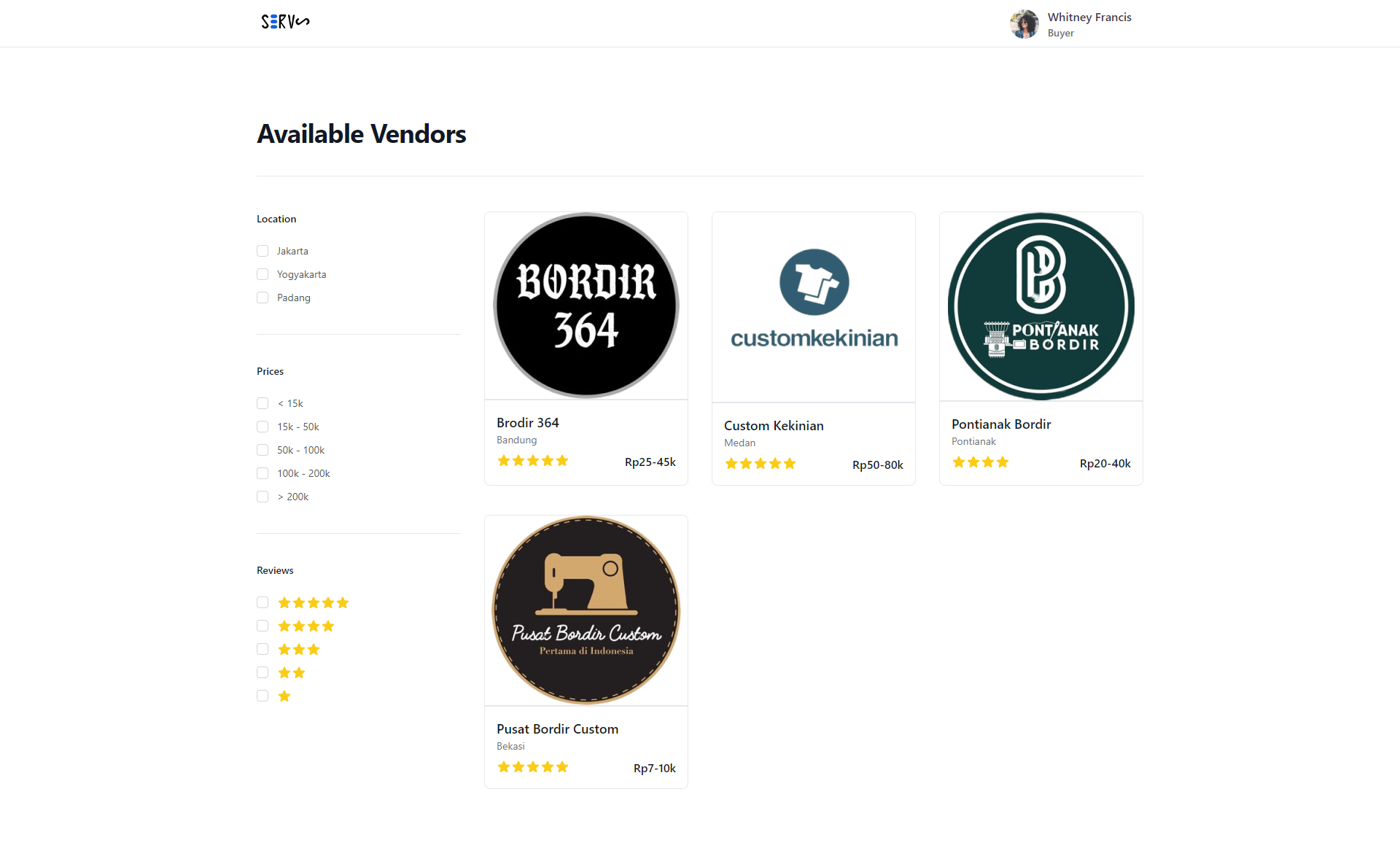
List of Vendors Page
-
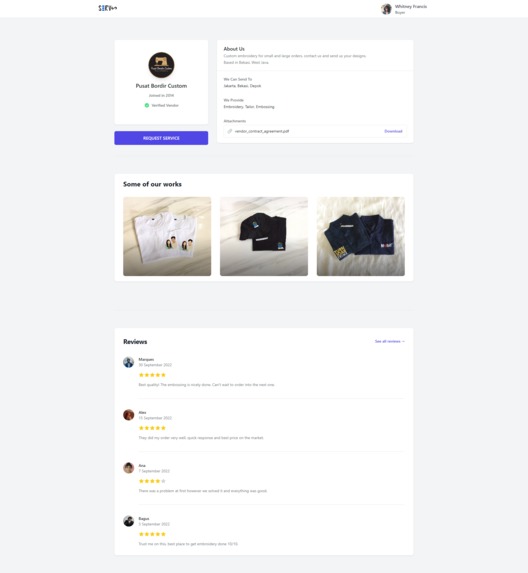
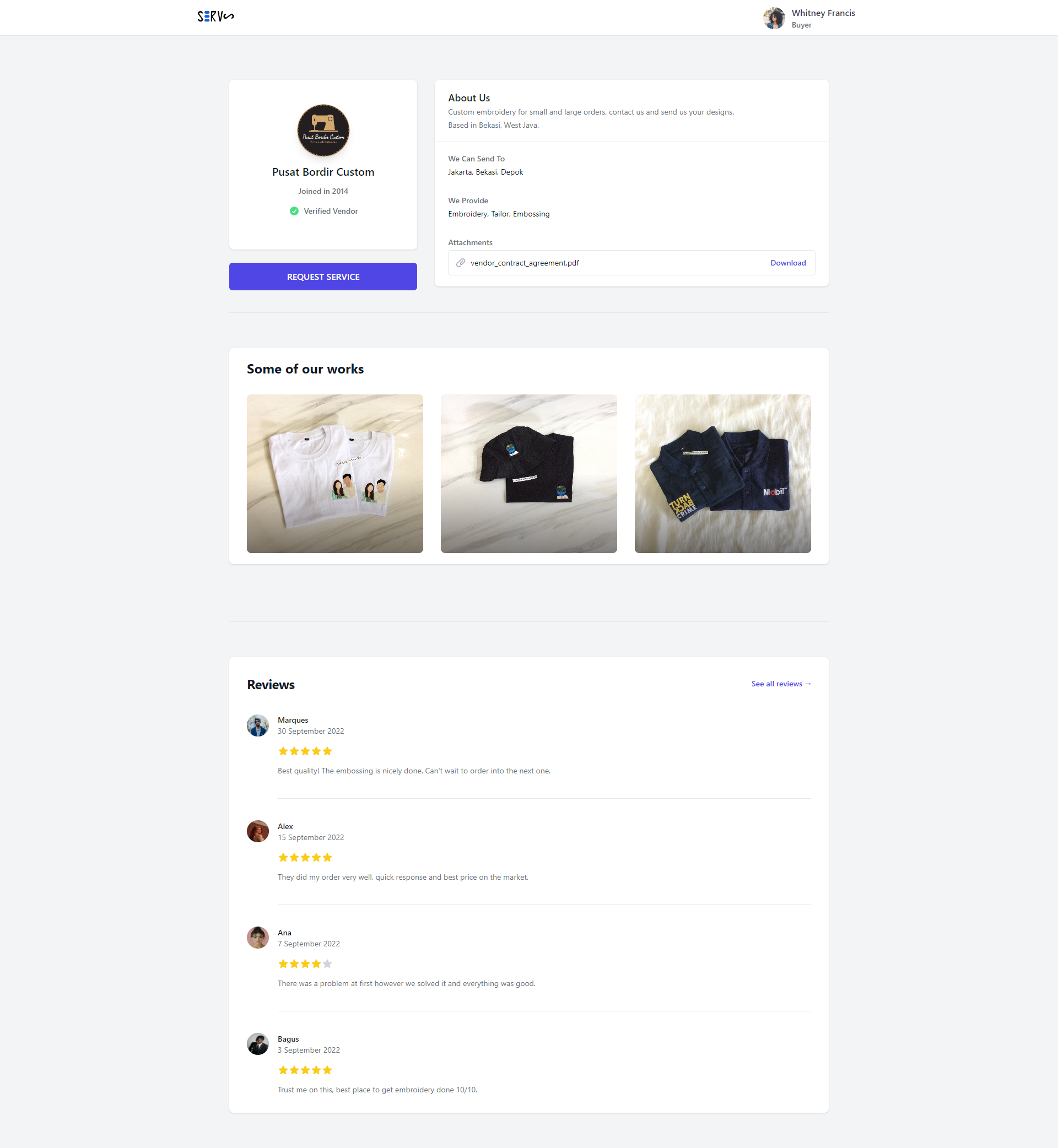
Vendor's Profile Page
-
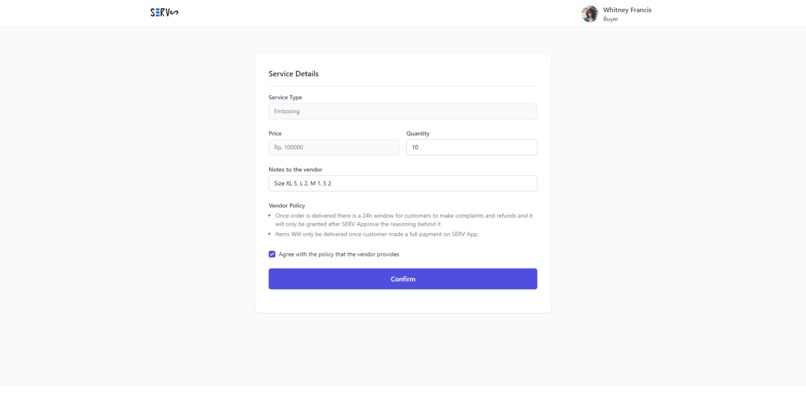
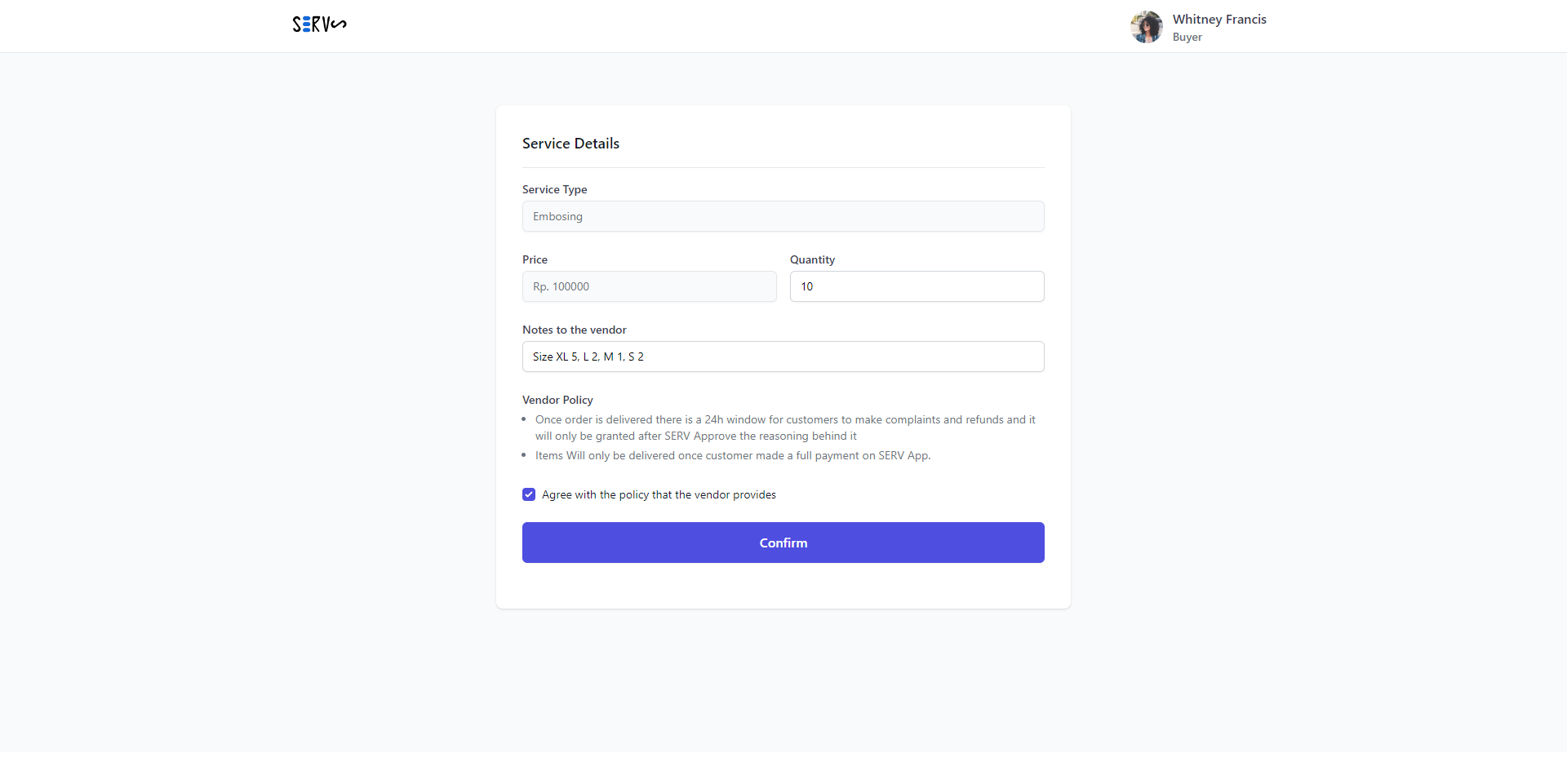
Offer Details Page
-
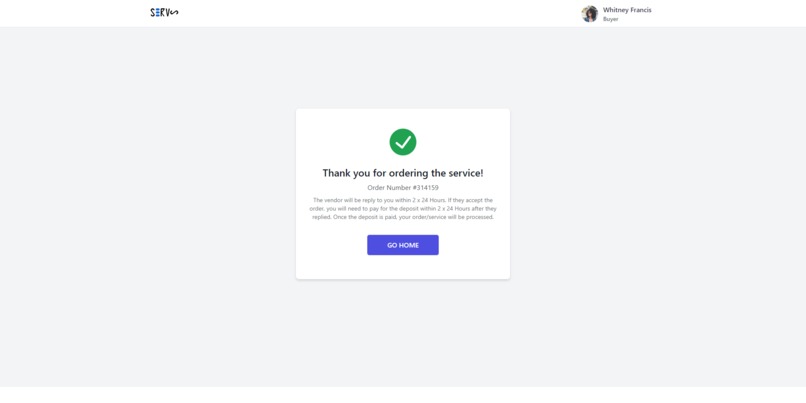
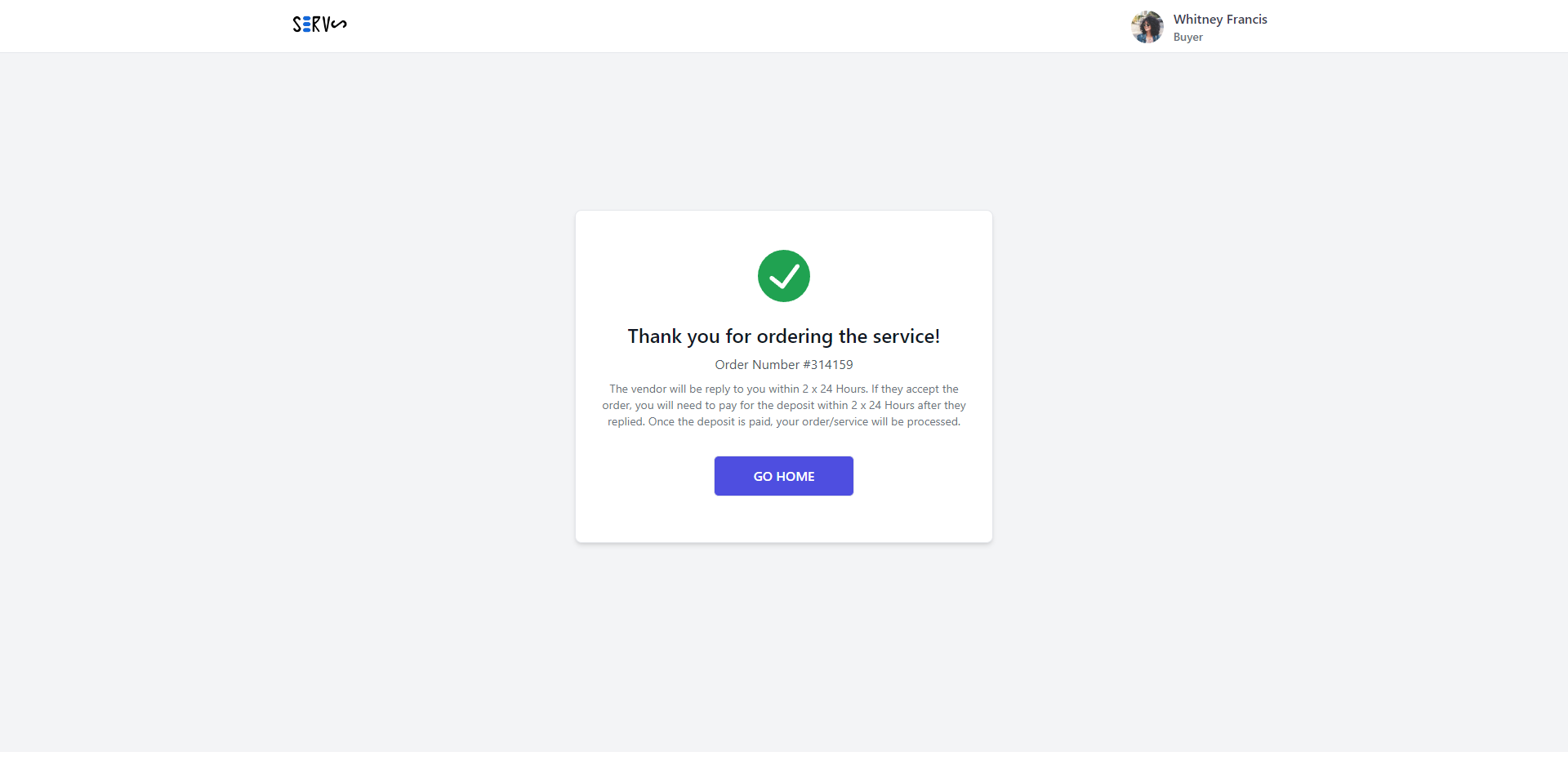
Order Confirmation Page
-
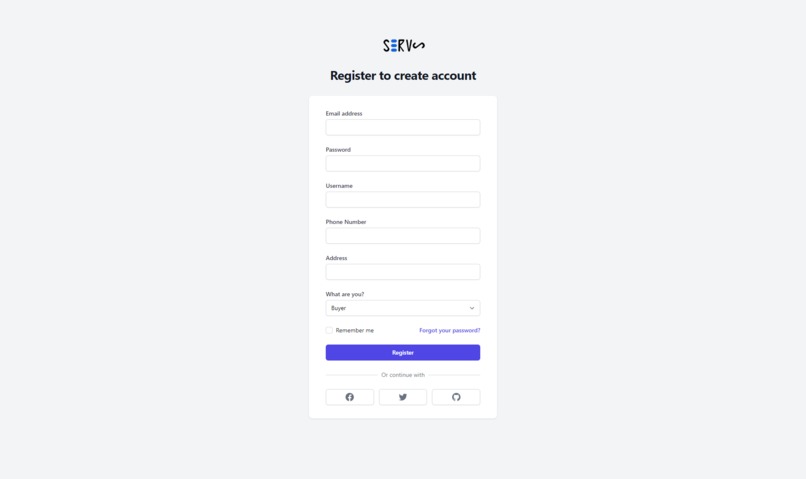
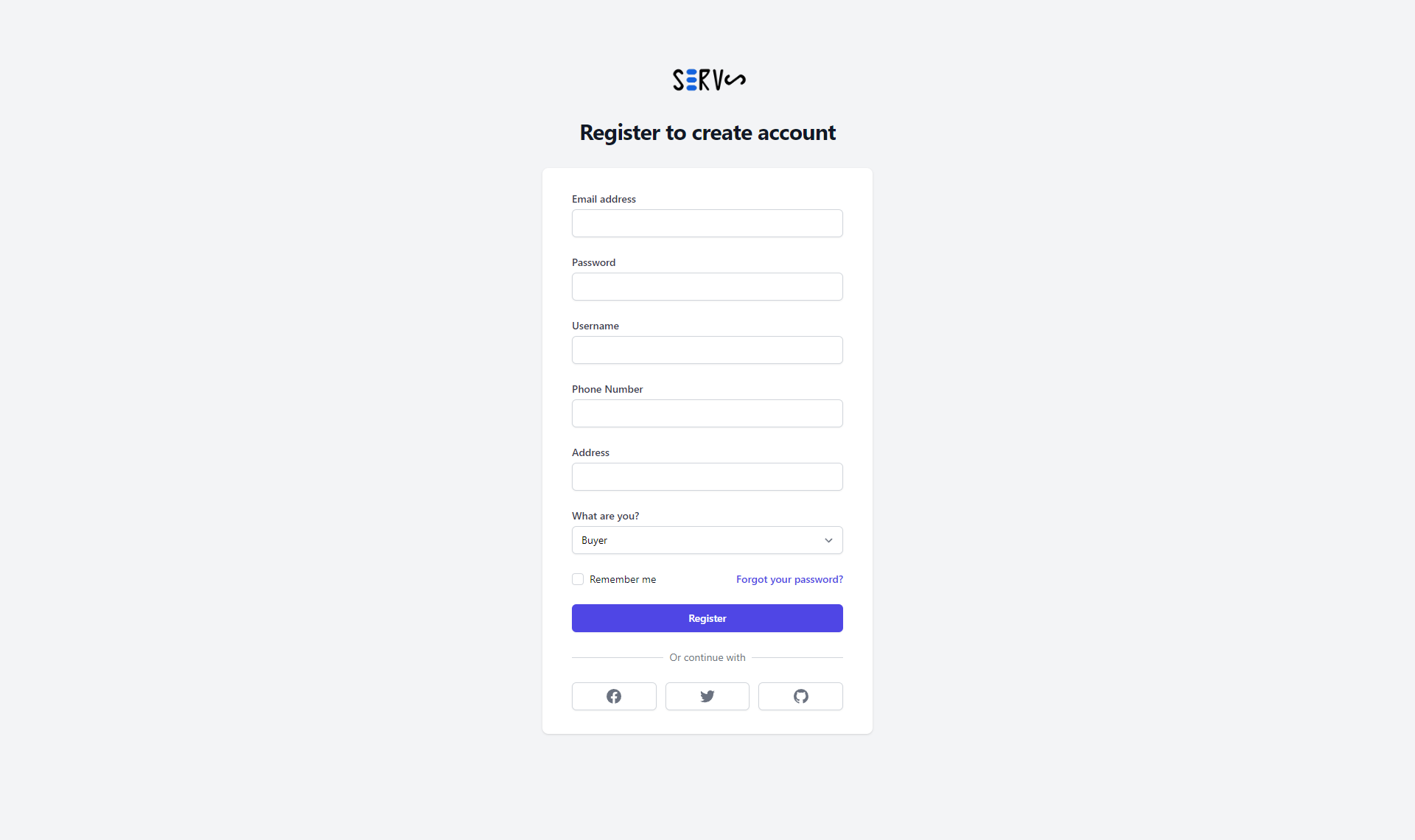
Registration Page
-
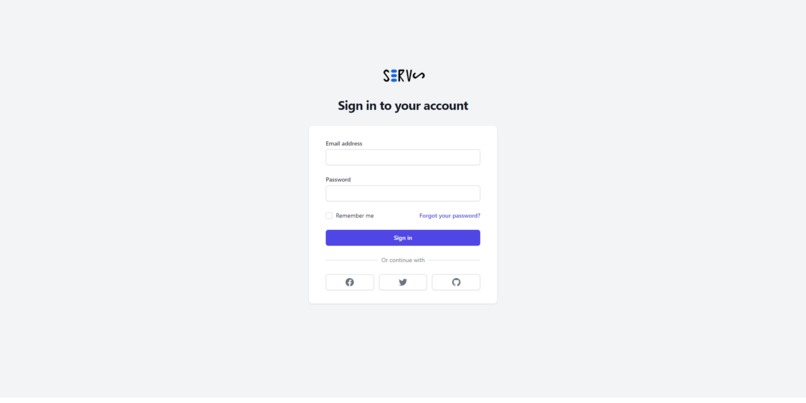
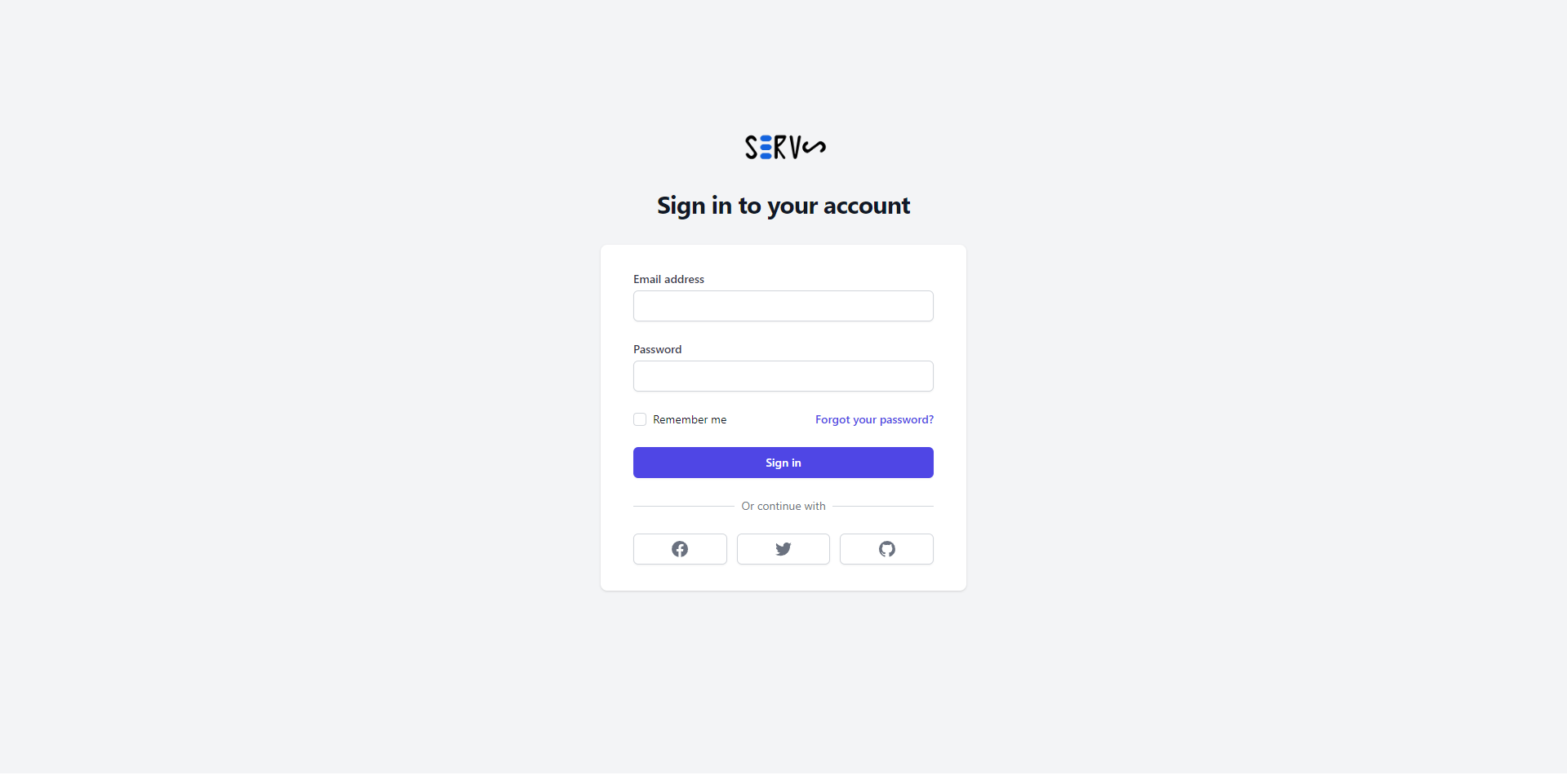
Sign In Page
Inspiration
Facing a topic on Digital Transformation, we reflected on the problems that we faced daily. One of our teammates Irsyad came up with a problem with how he as someone who runs a small clothing brand found it difficult to find reliable services vendors that can help him with manufacturing the products that he wants to build. Procrastination from the manufacturer side, and receiving products that are below the expectation are common problems on the vendors that he already met. From the experienced that he had, we decided that we need to create a platform for someone like Irsyad, who need services from manufacturer or vendors to run small businesses or event.
What it does
Serv is a platform for MSMEs to be able to easily find good vendors or services that are fits their needs. For example, if someone wants to produce graphic t-shirts, they will be able to find vendors who are excellent in their quality, production time and prices. Vendors, on the other hand, are pushed to have healthy competition. This can be proved by looking at the review features where customers can review the vendors after users' orders are finished and a rating system where customers can give vendors a rating from 1-5 stars. To prevent unwanted cases such as late production by the vendors. We designed a system where if vendors are late from the due date of the agreement, then the total money that needs to be paid from the customers is cut by 2%.
How we built it
After we decided on the solution that we are going to build, we assigned each of the team members to do the tasks, such as coding, wireframe designs, and presentation slides while simultaneously communicating with each other. Two of our team members designed the wireframe of the website with Figma. While waiting for the wireframe of the website to be done, one of our team members set up the project environment that will be used together and the last member builds the content of the presentation.
Challenges we ran into
Because we are using new technology stacks, we need to familiarise ourselves with them first. One of the technical difficulty examples was that we need time to realise that in Next.js we cannot import multiple images at the same because of how Next.js works. We tried to import the multiple images, so we can have a clean code and apply the best practices but unfortunately, we cannot. We also encountered a merge conflict on GitHub, which took us some time to solve it.
Accomplishments that we're proud of
We managed to not only just find a solution but also create a UI/UX diagram and a fully-working full-stack website application. We are proud of this because although the three of us just started our first hackathon, we are able to deliver full software life-cycle development for our solution that we finished on time.
What we learned
The obvious thing that we learned was the new technology stacks that we can add to our arsenal. We now can confidently use Next.js after using it so much in this project. In addition, we also learned soft skills such as problem-solving, time management, critical thinking, communication, and teamwork skills. All the skills that we gained from this hackathon will surely be useful for our future employment in the professional industry.
What's next for SERV
If we have the opportunity in the future, we will make the platform even better by adding more features to it. We also want to improve the UI/UX for the app, so that it can make the experience better for customers and vendors to use.
Built With
- figma
- git
- github
- husky
- javascript
- next.js
- node.js
- notion
- postgresql
- react.js
- tailwind


Log in or sign up for Devpost to join the conversation.