-
-
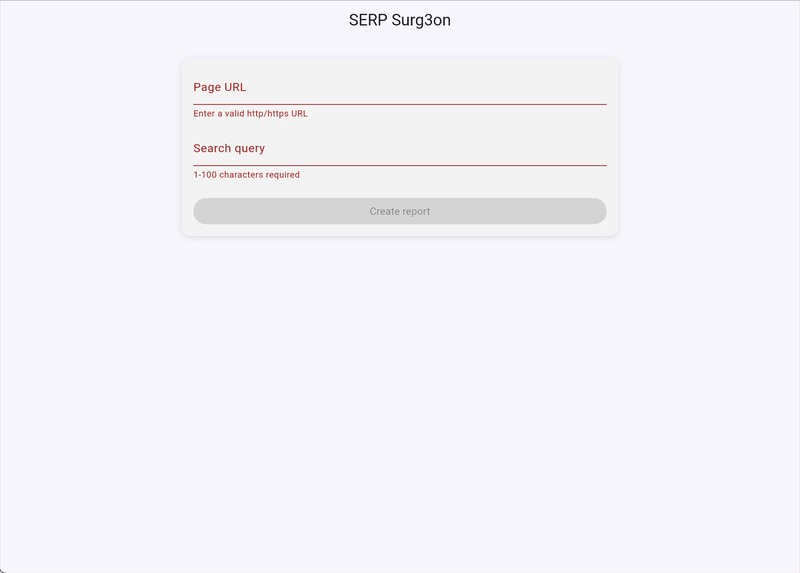
Enter your page
-
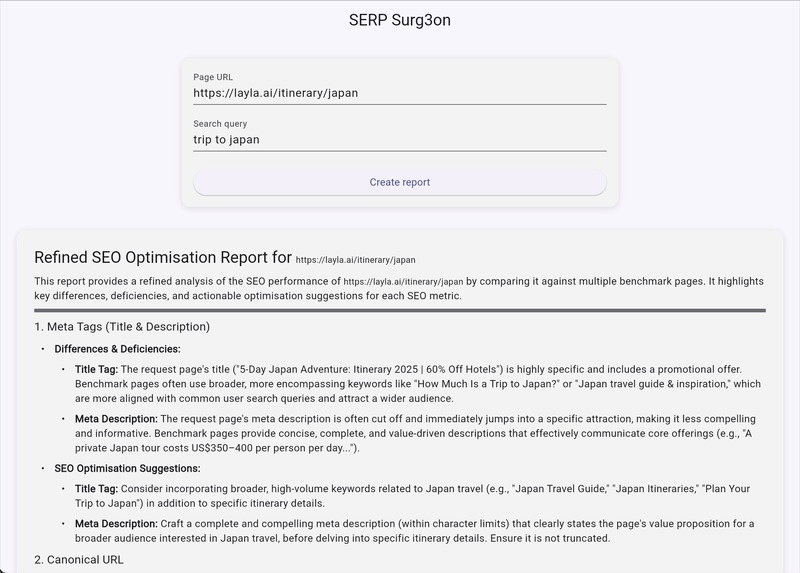
See the report
-
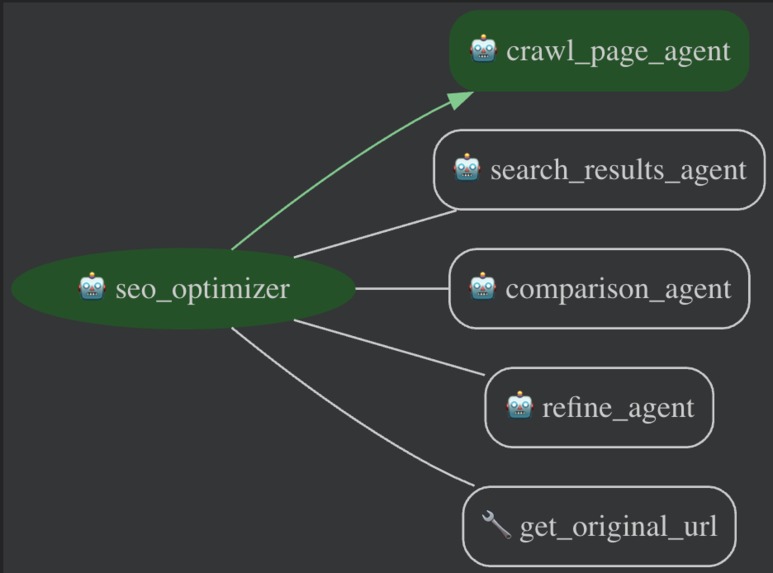
Agent architecture


🌟 Inspiration
Manual SEO audits are slow, error-prone, and rarely leverage the rich reasoning now possible with Google’s Agent Development Kit. We set out to prove that a swarm of small, purpose-built agents can out-analyze a human in the time it takes to reload a page.
🛠️ How We Built It
| Layer | Tech | Role |
|---|---|---|
| Agents & Orchestration | Google ADK (Python) | Hierarchical controller → four specialist agents (SERP Collector, Page Parser, Gap Analyzer, Recommender) |
| Models & Tools | Vertex AI Gemini Flash & Vertex Search Extensions | RAG over competitor pages, real-time SERP, and on-the-fly Python scoring |
| Execution | Cloud Run (backend) | Parallelizes agent calls; retries on rate-limits |
| Frontend | Firebase Hosting + Flutter | Live report |
🔍 What We Learned
- AgentOps first: versioned prompts, automatic trajectory tests, and LLM-as-Judge scoring gave us CI/CD-like safety nets.
- Design patterns matter: the diamond pattern (analysis → tone-polish → user) kept responses concise while preserving depth.
- Agentic RAG beats static RAG: iterative searches lowered hallucination rates by 28 %.
🚧 Challenges
- Agent coordination – in some cases prompting is extremly important to get right.
- Tool selection – building custom tools vs using readily available ones.
- Latency under load – Enabling tools to run in parallel, using faster, ligher models.
🤝 What’s Next
- Add a Contractor Agent to auto-open issues in GitHub when critical SEO errors are found.
- Publish our Agent Ops playbook as a blog post for bonus hackathon points.

Log in or sign up for Devpost to join the conversation.