-
-

LOGO
-
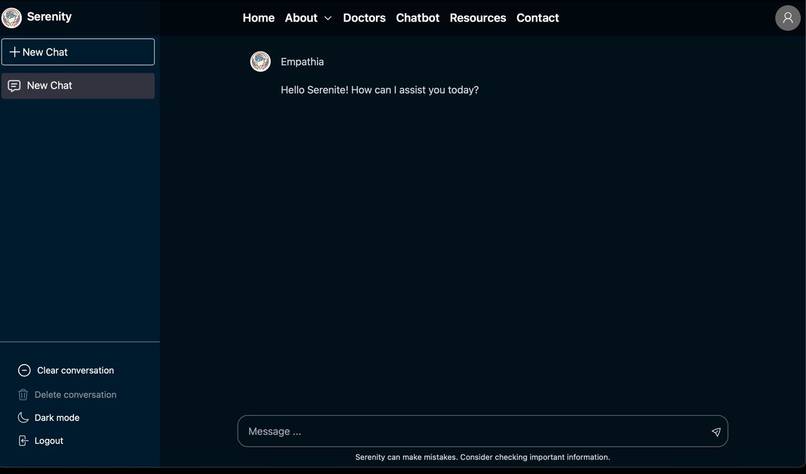
Chatbot Empathia

Inspiration
Mental health support is often difficult to access because of cost, stigma, language barriers, or simply not knowing where to begin. SerenityFeels AI was built around the idea that support should feel more approachable, personal, and available in the languages people are most comfortable speaking.
What it does
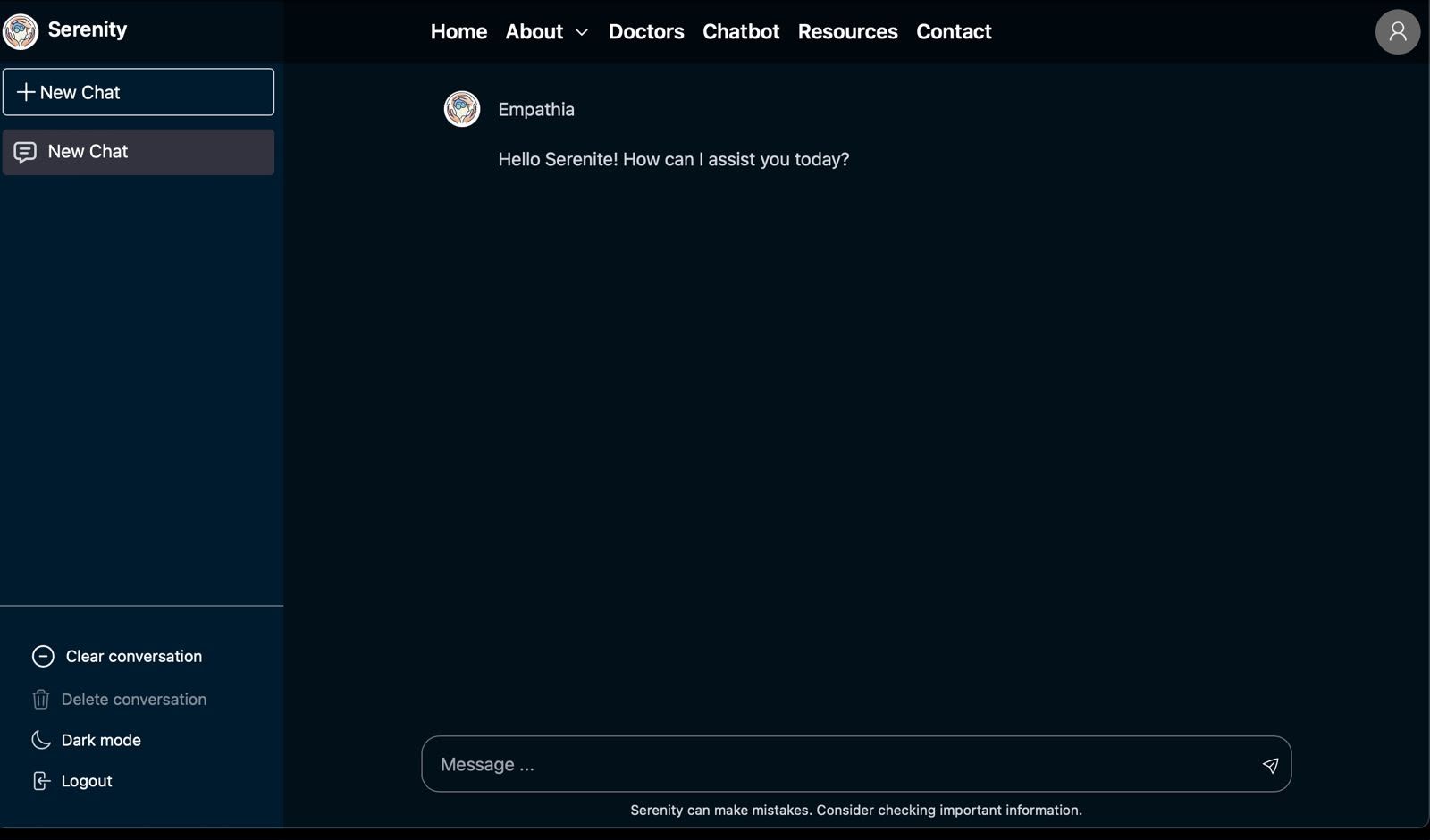
SerenityFeels AI is a multilingual mental wellness platform centered around Empathia, an AI conversational companion.
Empathia allows users to talk through how they are feeling, receive supportive responses, and interact with a more human-like digital companion rather than a traditional chatbot interface.
The platform also explores voice interaction, multilingual communication, and a 3D avatar experience to make conversations feel more natural and engaging.
How I built it
I worked on the technical development of Empathia and the surrounding platform.
The system combines:
- Python and Flask for backend functionality
- JavaScript for the web experience
- LLM-based conversational AI
- Natural language processing
- Speech-to-text and text-to-speech
- Multilingual support
- REST APIs
- 3D avatar development using Blender, VRM, and GLB
- Lip-sync integration for the virtual companion
A major focus was connecting the conversational AI layer with the visual and voice-based experience so Empathia could feel more like an interactive companion than a text box.
Challenges I ran into
One of the biggest challenges was building a convincing 3D conversational experience. Early avatar solutions did not provide the level of lip-sync and customization we needed, which led us to experiment with different pipelines involving Blender, VRM, and GLB models.
Another challenge was making AI-generated responses useful while keeping the experience consistent across different languages and user inputs.
Accomplishments that I'm proud of
I'm especially proud that SerenityFeels AI grew beyond a prototype into a platform used by people across multiple countries.
I also helped build Empathia from the technical side, including its conversational system and the transition toward a more immersive voice and 3D avatar experience.
The project has grown to 15,000+ paid users across 9 countries and has received coverage from multiple national media outlets.
What I learned
This project taught me that building an AI product is much more than connecting a model to an interface.
I learned how to think across the entire stack: backend systems, APIs, conversational AI, user experience, speech systems, and 3D interfaces. I also learned how important reliability and human-centered design are when AI is being used in emotionally sensitive contexts.
What's next for SerenityFeels AI
The next step is making Empathia more natural and personalized through improved multilingual conversations, better voice interaction, stronger avatar lip-sync, and more contextual responses.
We also want to continue expanding SerenityFeels AI across different regions while making the experience more culturally relevant and accessible.

Log in or sign up for Devpost to join the conversation.