Inspiration
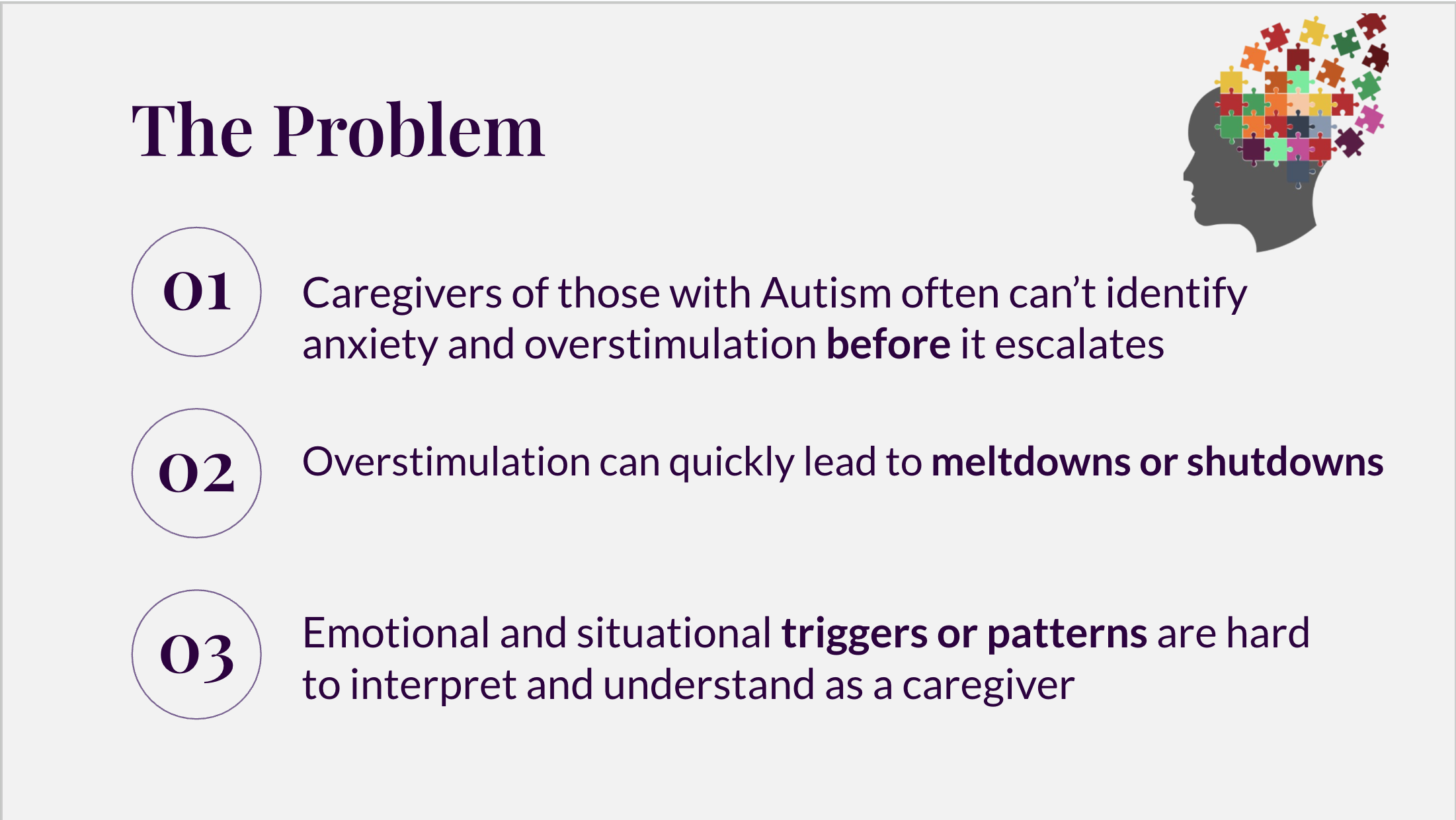
Many caregivers struggle to identify when a person with autism is becoming anxious or overstimulated, especially in unpredictable environments (crowds, noise, bright lights).
By the time distress is visible, it’s often too late, leading to meltdowns, exhaustion, or emotional shutdowns.
There’s currently no accessible, non-invasive way to monitor live brain activity and respond before stress escalates.
What it does
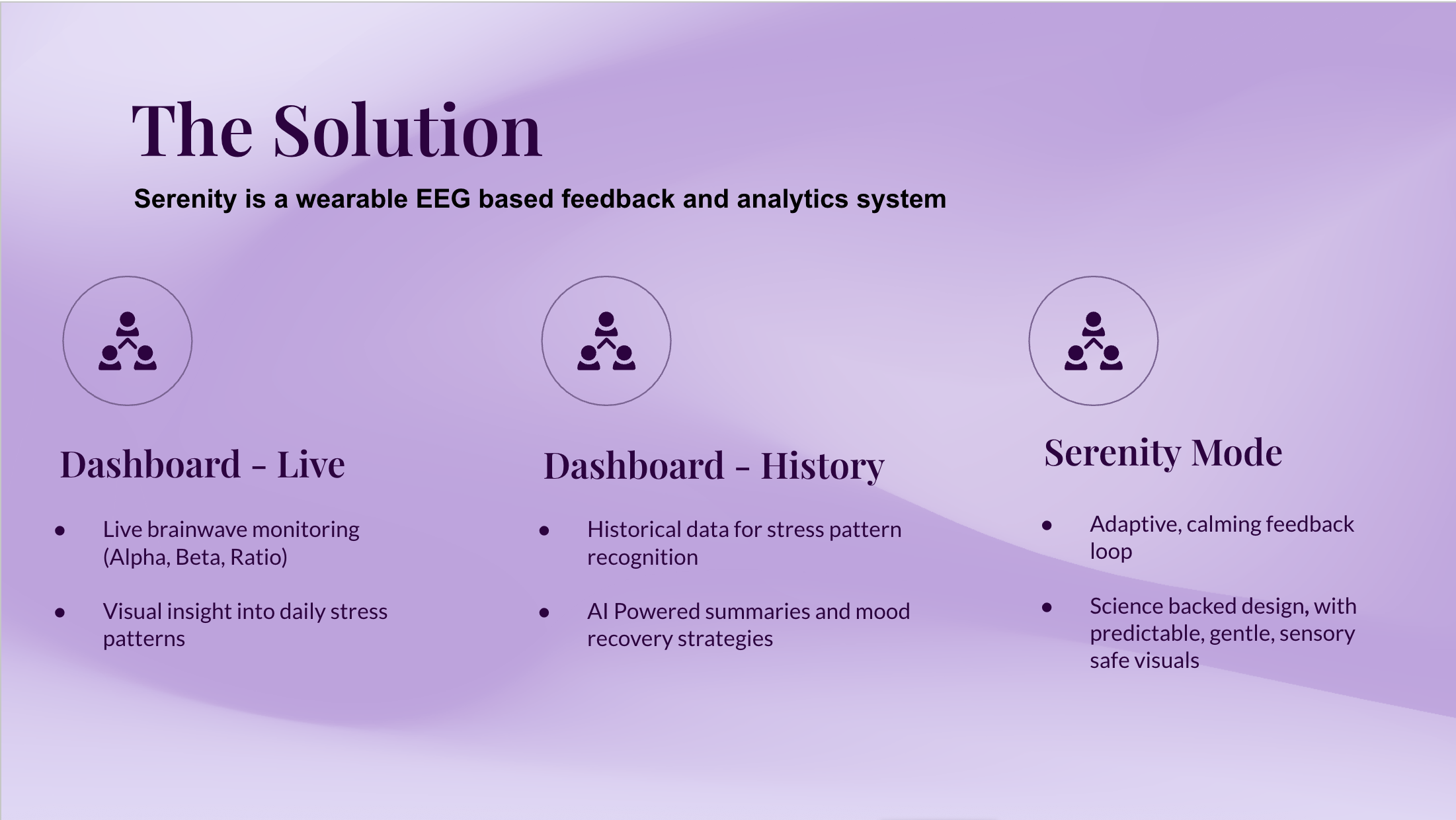
Serenity combines real-time EEG analytics and sensory regulation tools into one seamless platform.
- Detect stress before it becomes visible
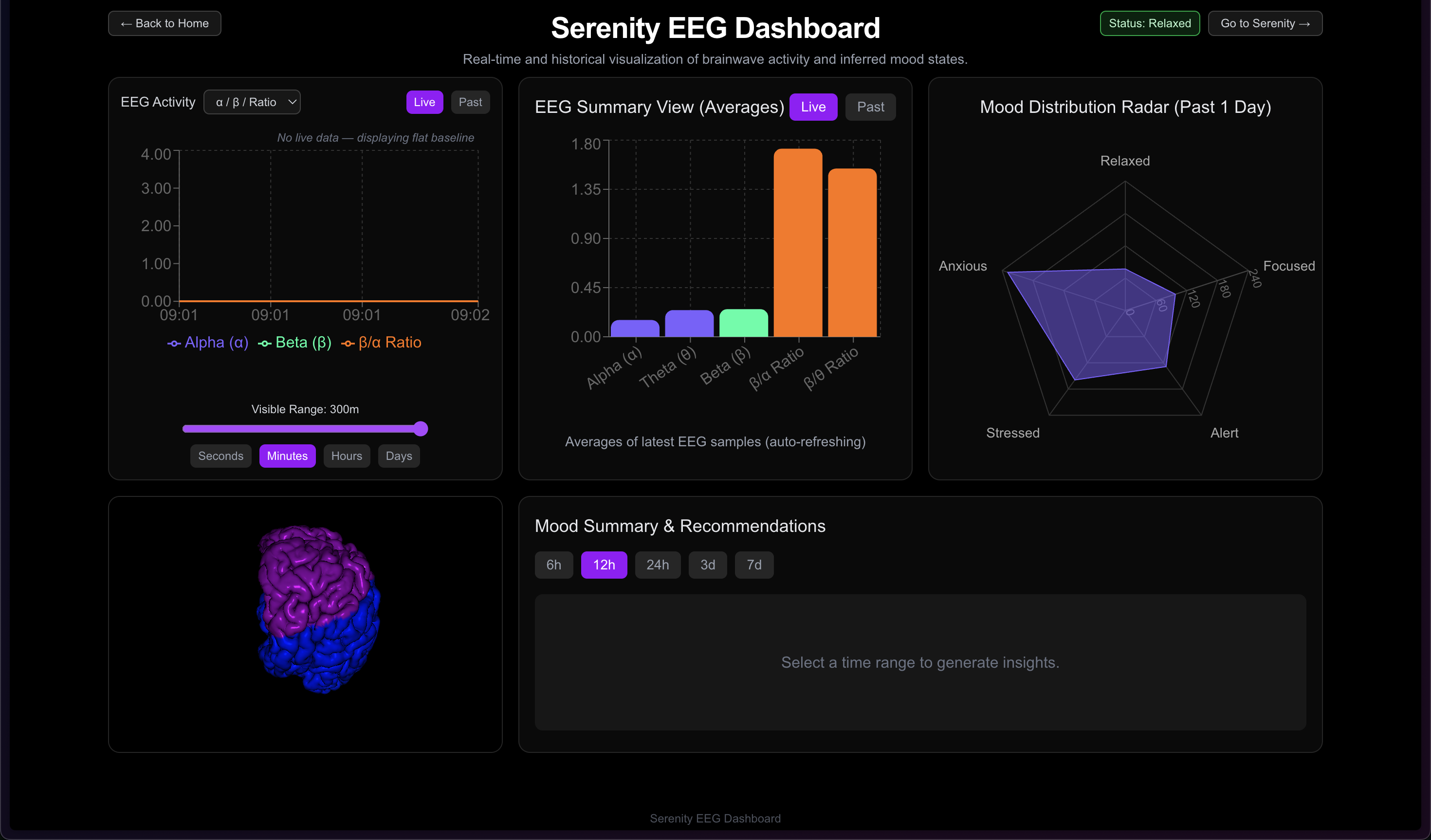
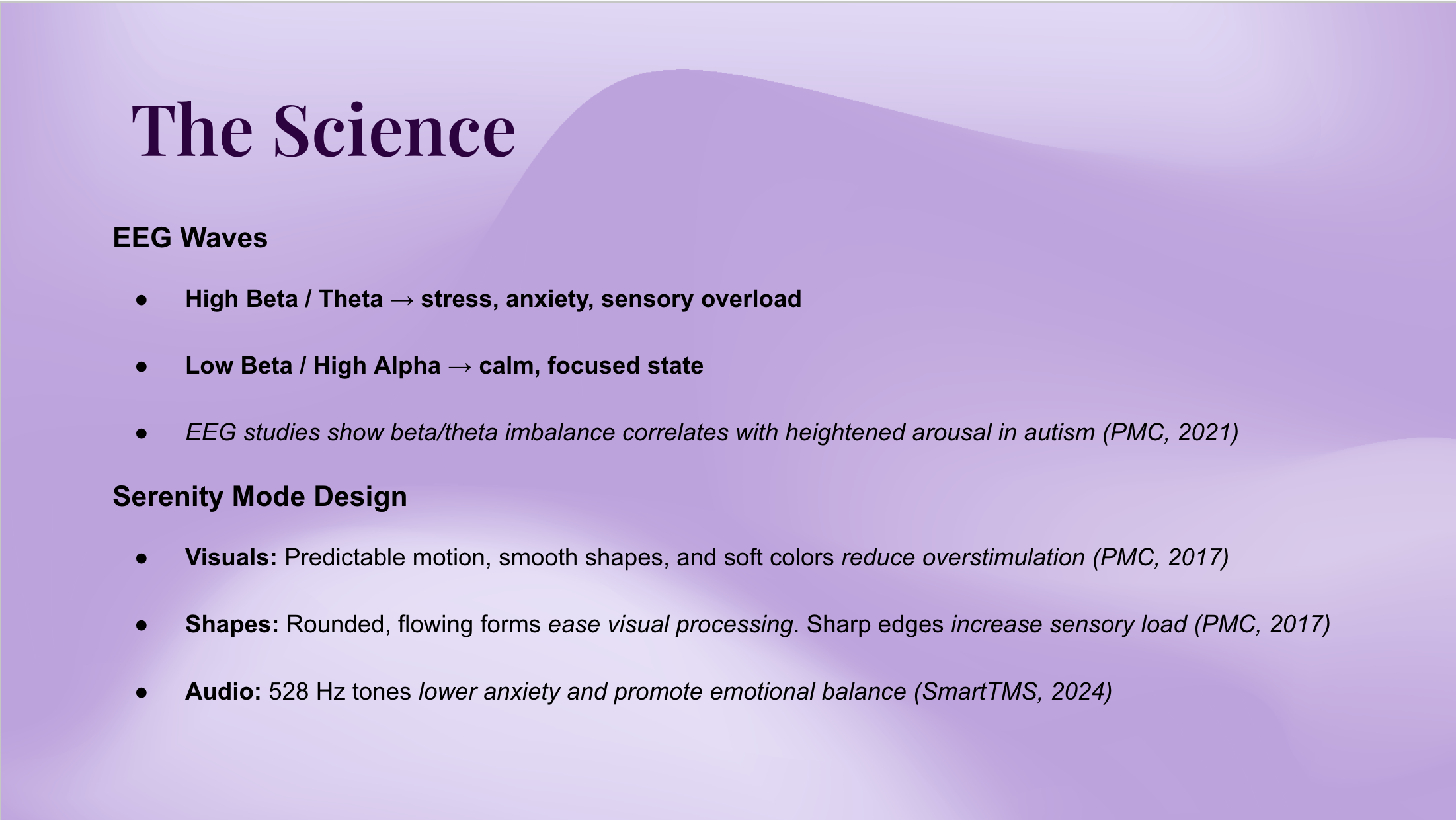
- Visualize alpha/beta, theta/beta wave patterns over time
- Enable caregivers to anticipate triggers (e.g., school drop-offs, crowded areas)
- Activate Serenity Mode — calming visuals and sounds to restore emotional balance
How we built it
Backend (Data Collection)
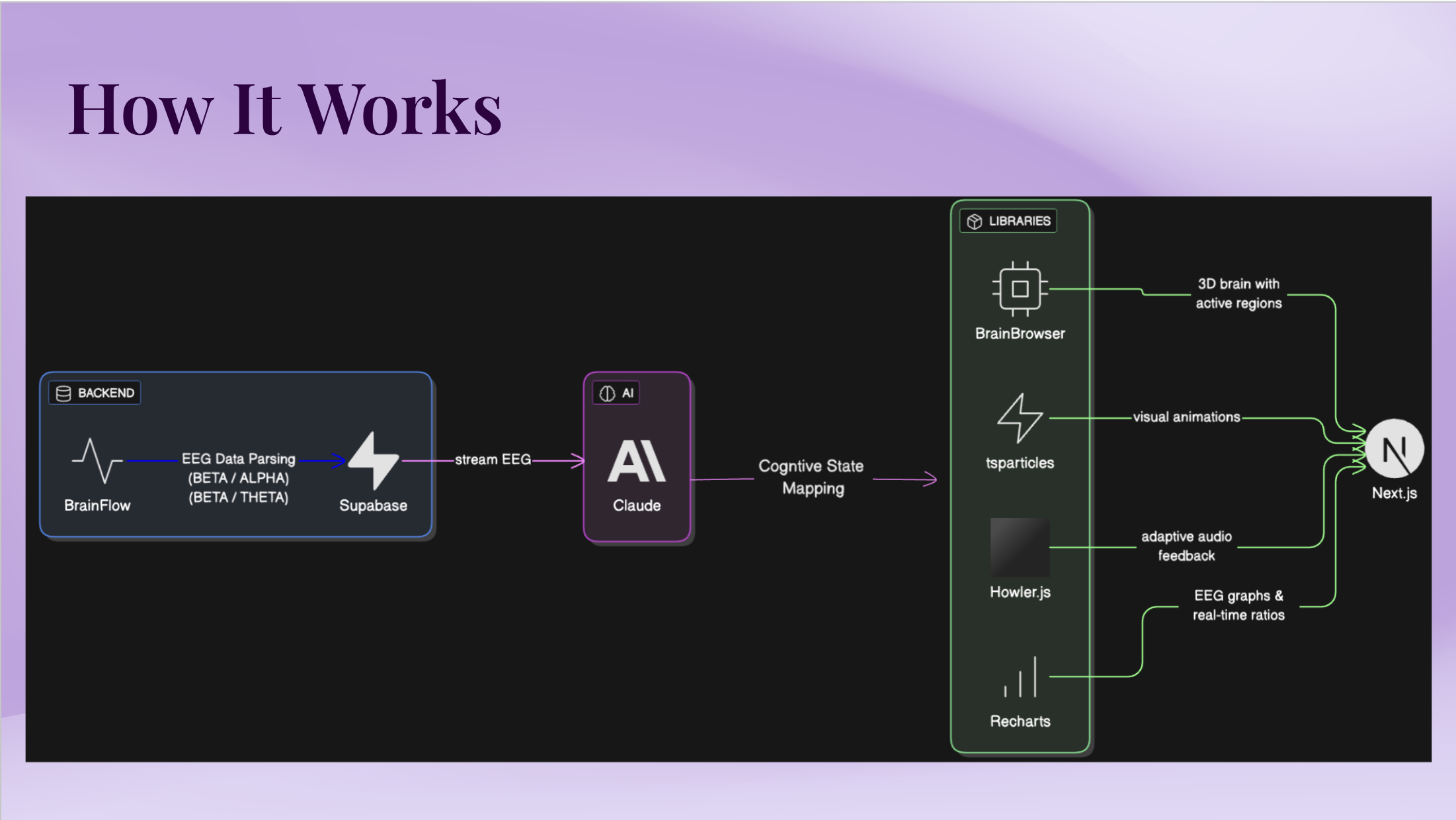
- Read EEG signals (Alpha, Beta, Theta) from Muse 2 headset via BrainFlow
- Stream data to Supabase for real-time processing and storage
- Analyze and compute Alpha/Beta ratio to determine stress state
Frontend (Visualization & Interaction)
- Fetch live EEG data from Supabase
- Render real-time charts using Recharts
- Display 3D brain model with real-time activity using BrainBrowser
- If stress ratio threshold exceeded → trigger Serenity Mode
- Serenity Mode generates visuals & sound via LLM-driven code
Challenges we ran into
We found it extremely difficult to accurately determine stress levels and overstimulation. Initially, we only used alpha / beta ratios as a metric to calculate stress, and it did not accurately represent a stressed state during simulations. Even after discovering a new important metric of theta / beta ratios, we found it difficult to calculate the correct weights of our metrics and accurately determine their impact on stress.
Accomplishments that we're proud of
We are extremely proud to develop a useful product that has great potential to be impactful to many people around the world. Furthermore, we are happy to create a product that can accurately detect, display, and reduce stress.
What we learned
We researched and learned a lot about using EEG and brainwaves to determine stress, the correlation of different brainwaves to stress, and best ways to assist people with autism.
What's next for Serenity
In the future, we hope to create more Serenity modes to help reduce stress for various audiences. Additionally, we want to make Serenity compatible with other EEG headsets.
Built With
- brainbrowser
- brainflow
- claude
- howler.js
- next.js
- python
- recharts
- supabase
- tailwindcss
- tsparticles.js
- typescript


Log in or sign up for Devpost to join the conversation.