-
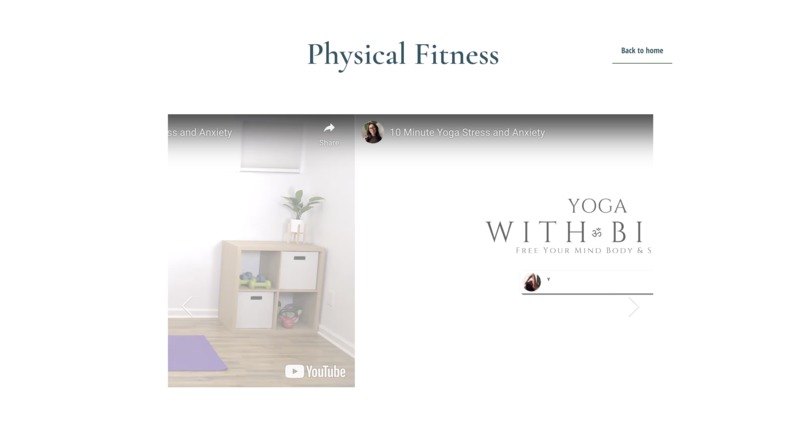
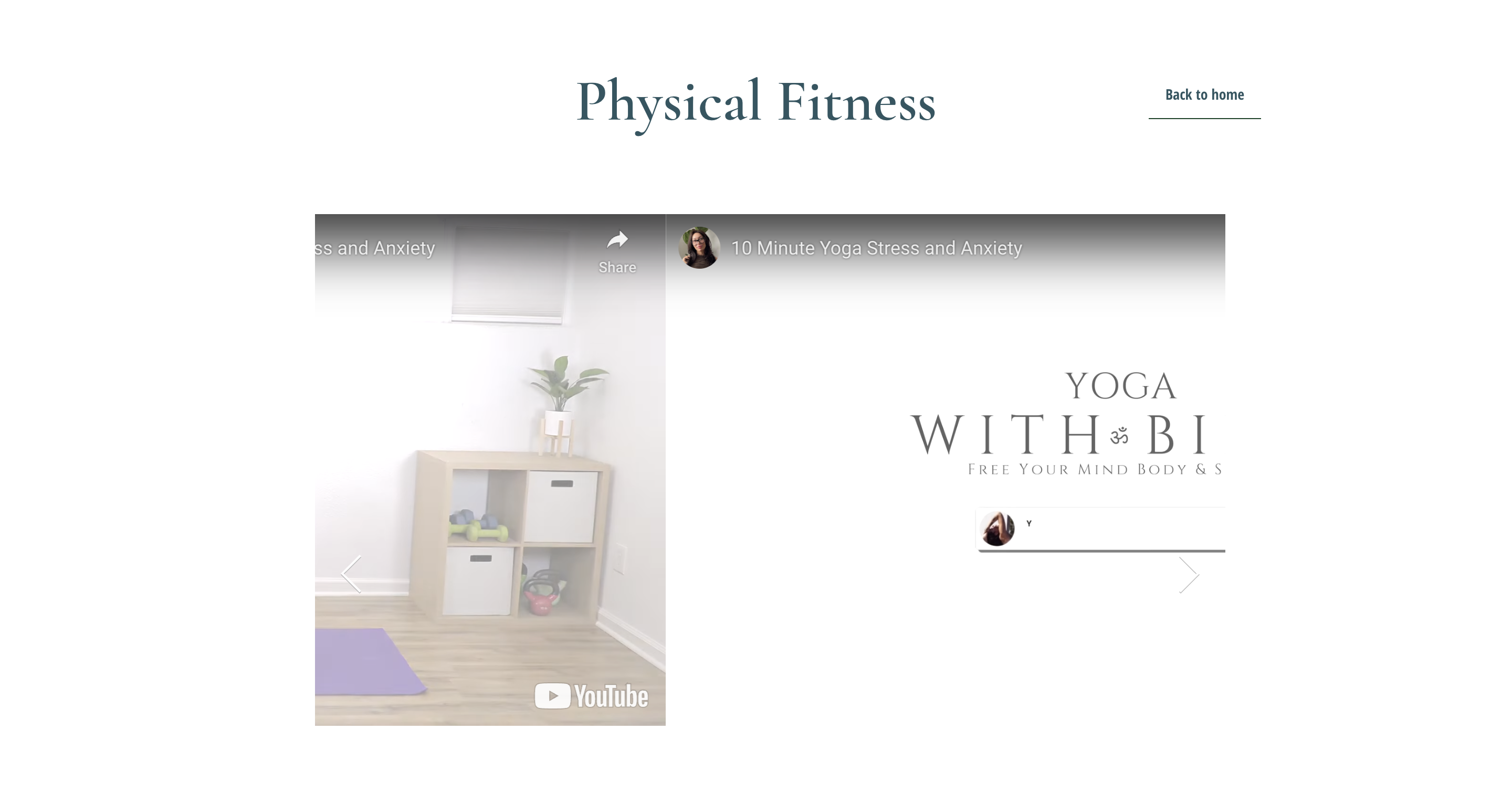
Physical therapy
-
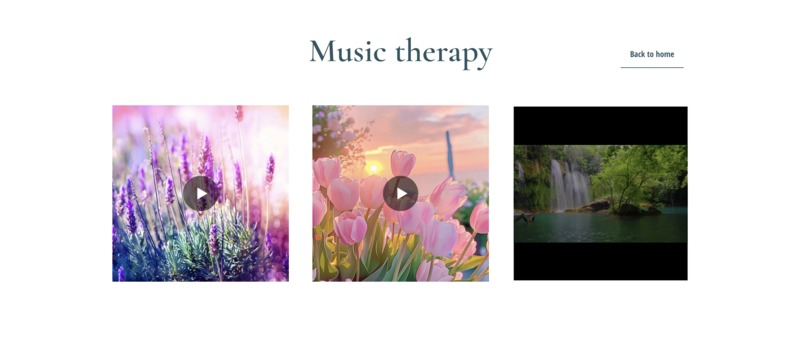
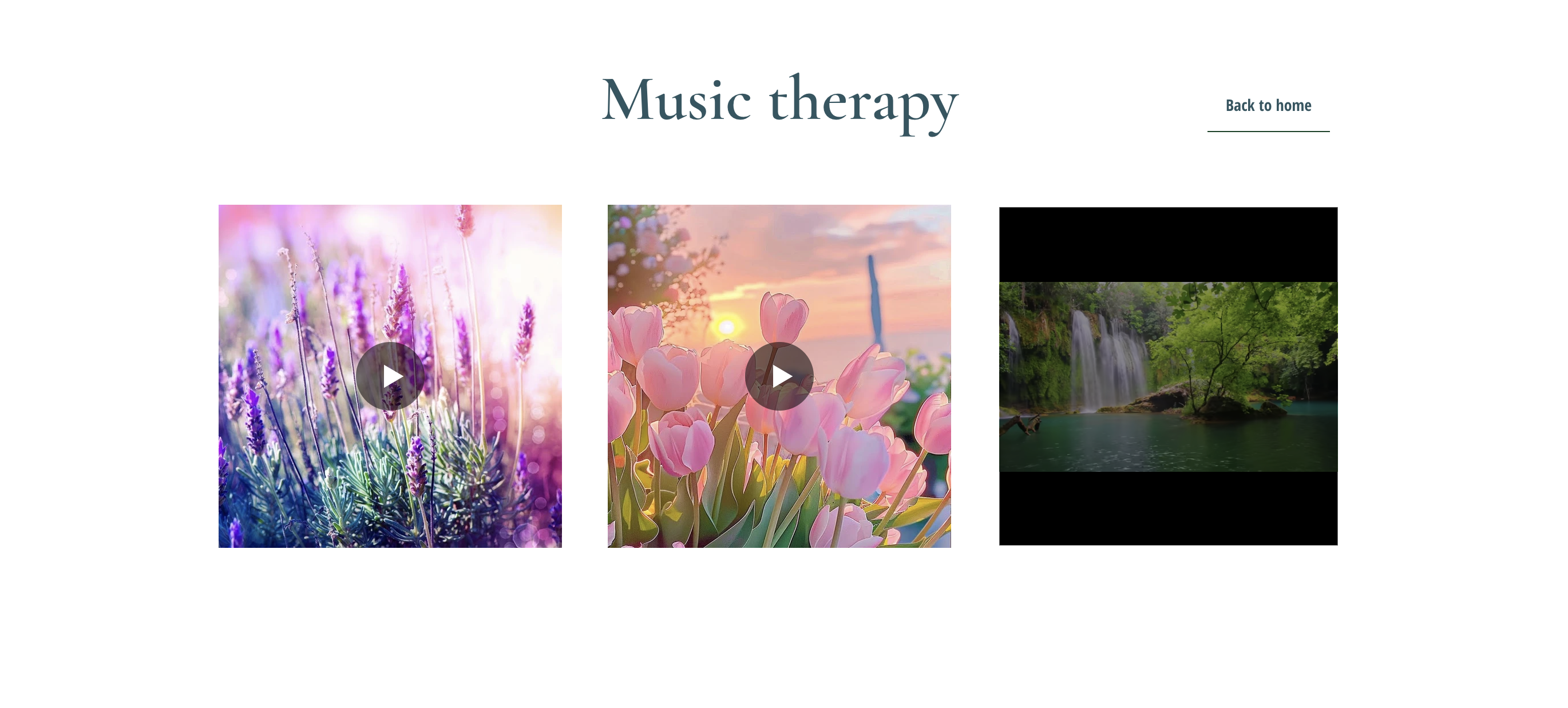
Music therpay
-
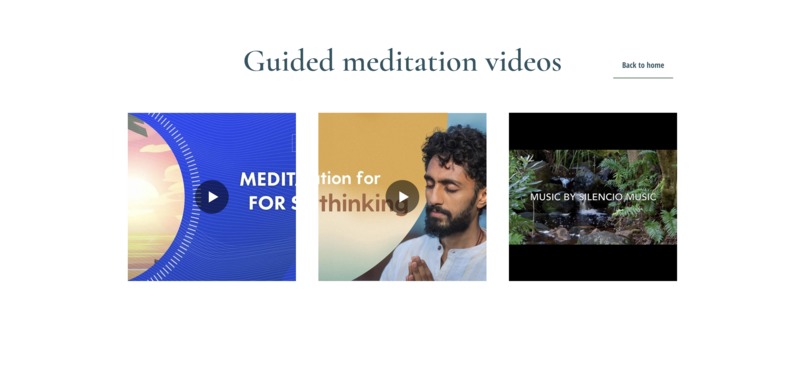
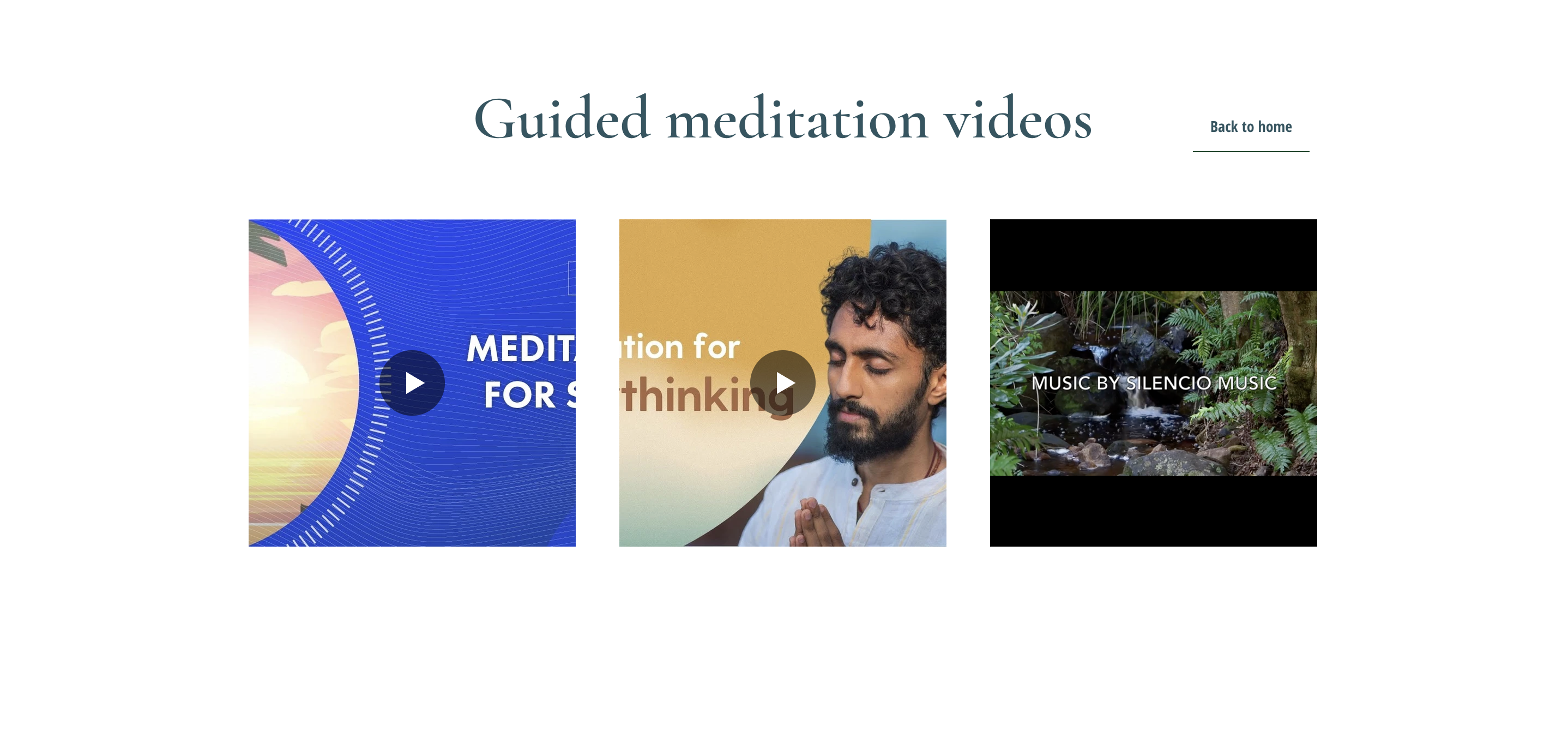
Meditation page
-
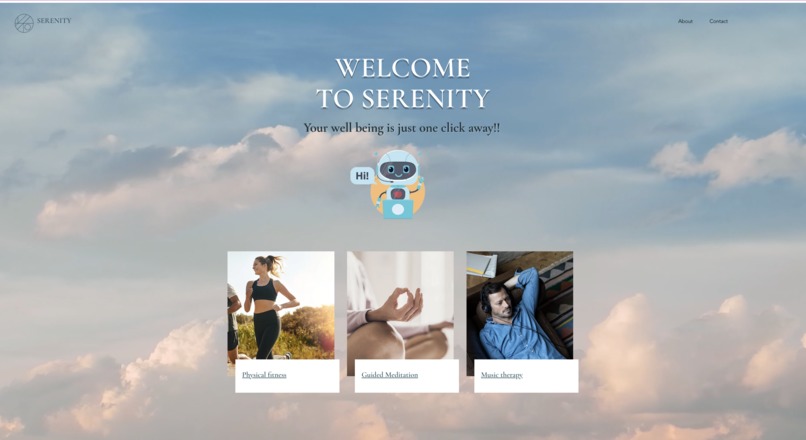
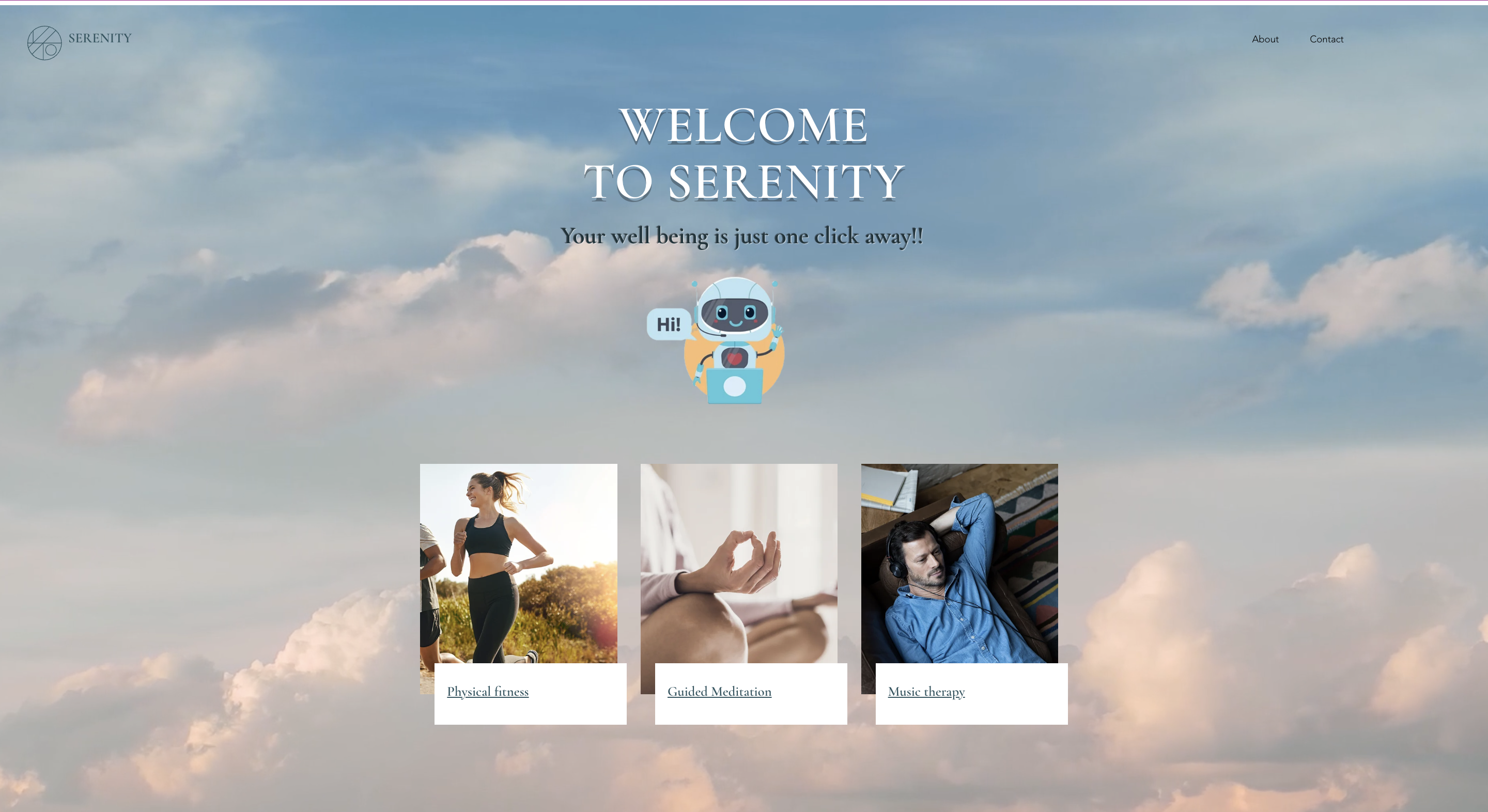
Home page
-
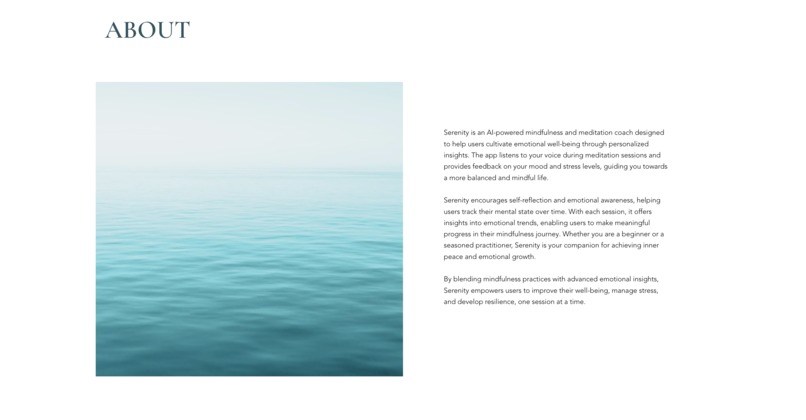
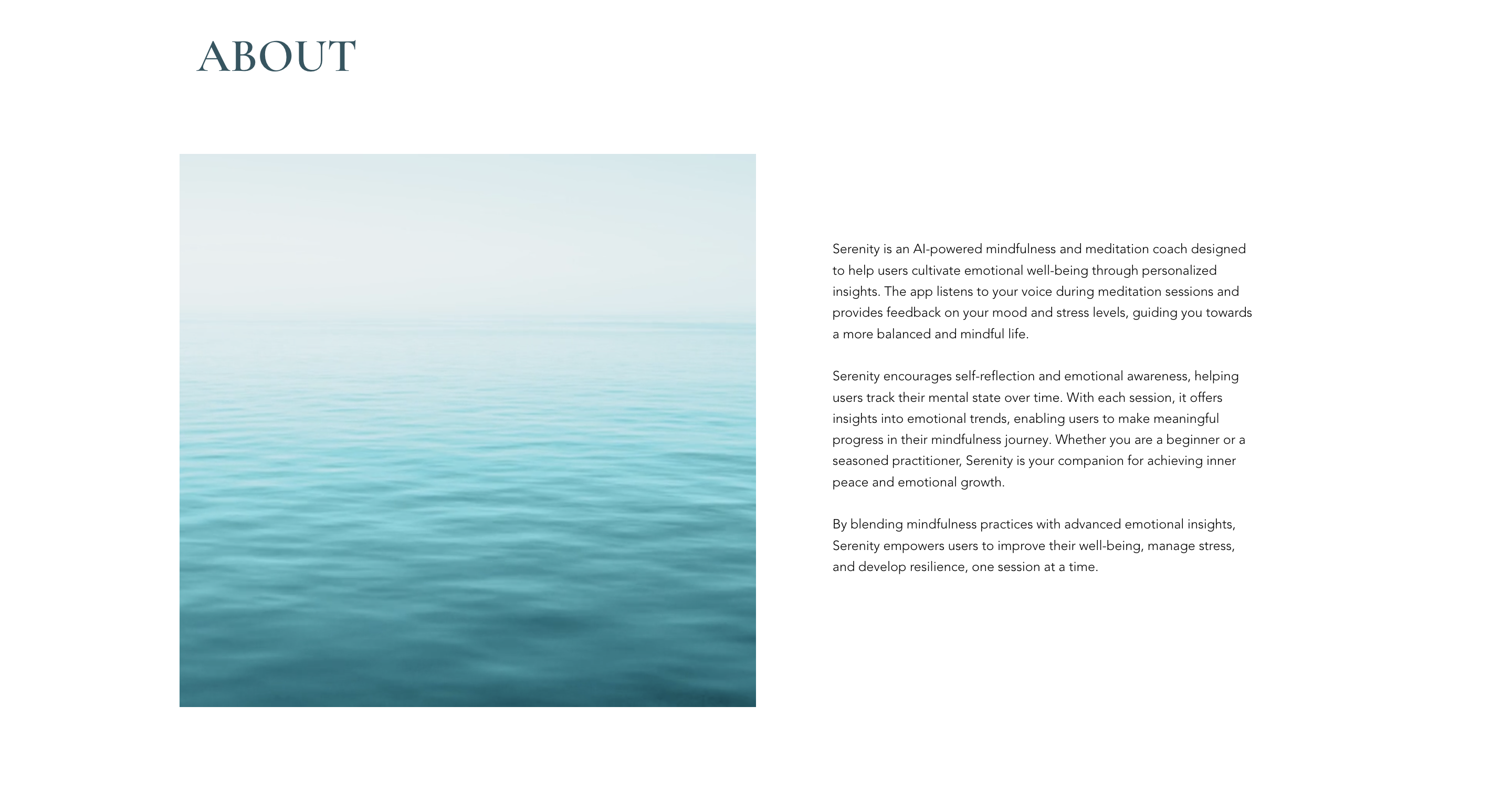
About section
-
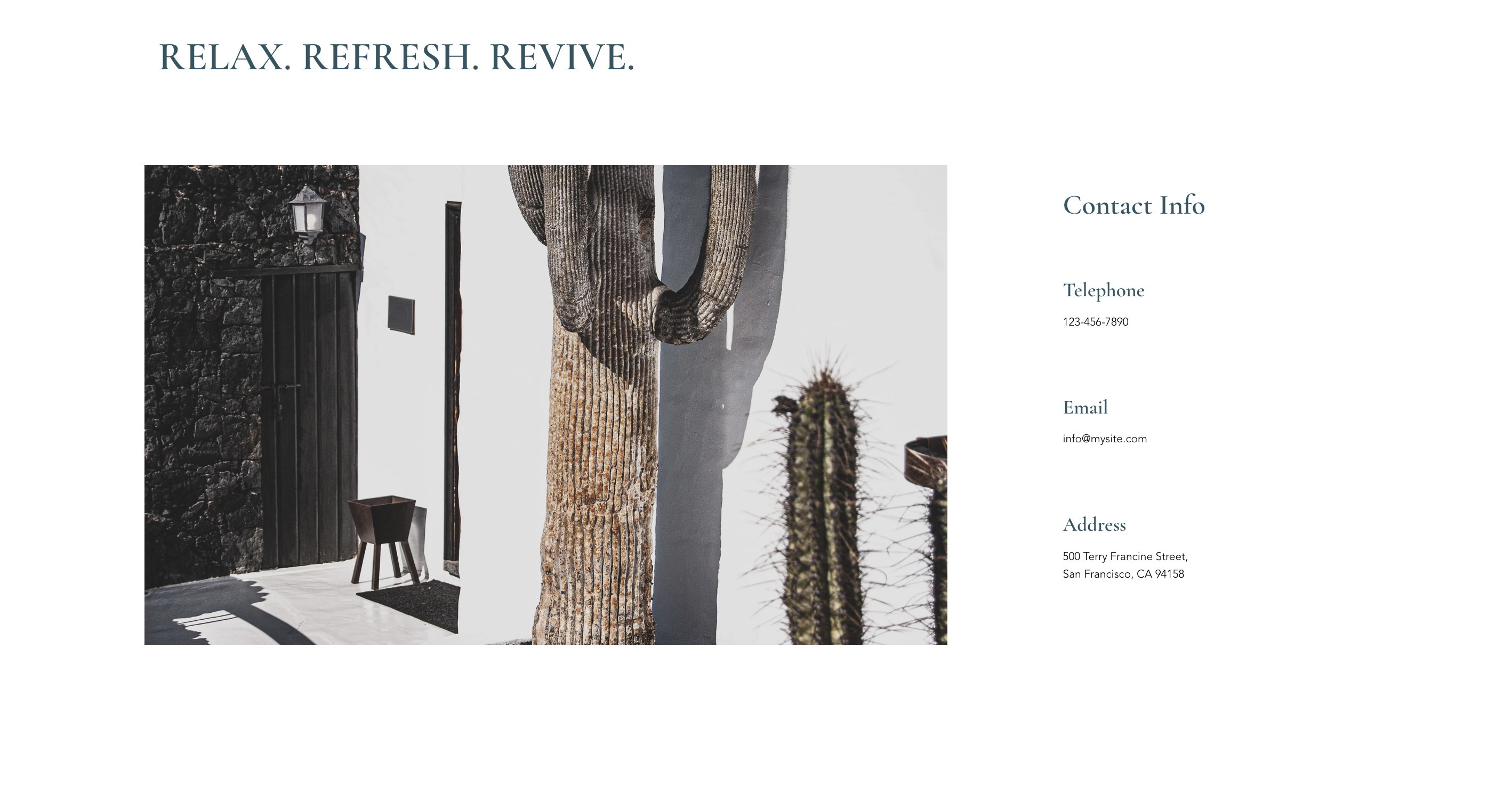
Contact Info
-

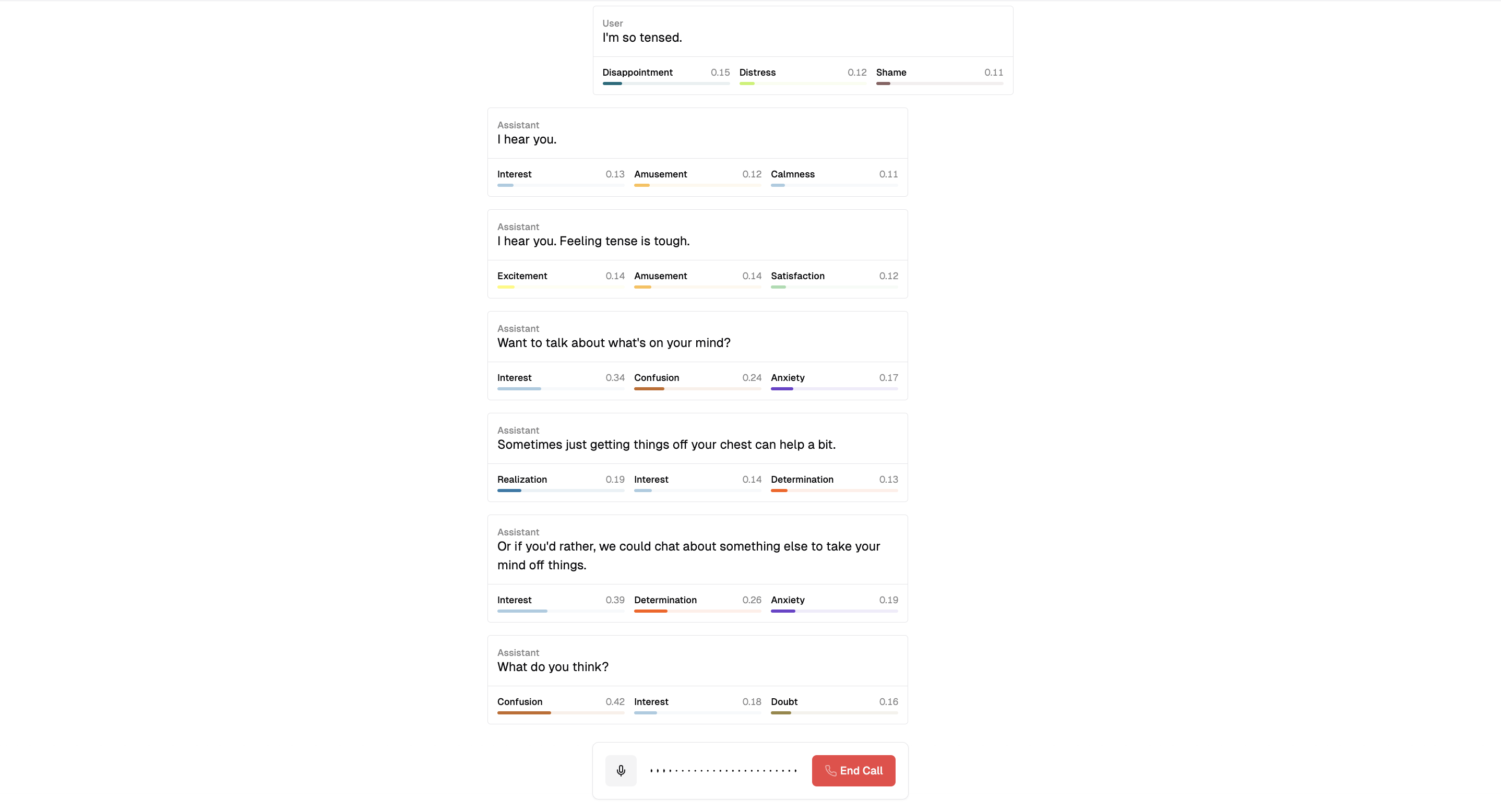
Start call with Chatbot
-
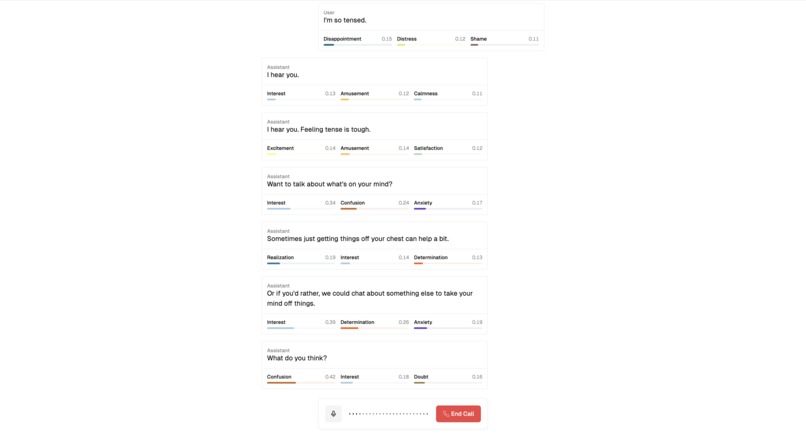
Chat history

Inspiration
At Cal Hacks, we wanted to create a solution that merges technology with emotional well-being. With stress becoming a constant in our daily lives, we were inspired to build Serenity—a meditation and mindfulness app powered by AI. Our goal is to help users connect with their emotions through real-time insights, guiding them toward balance and self-awareness. Serenity is more than just a meditation tool; it’s a companion for anyone striving to turn moments of stress into opportunities for reflection and growth. We believe technology can be a force for calm, and Serenity is our step toward making that vision a reality.
What it does
Serenity is an AI-powered meditation and mindfulness companion that helps users cultivate emotional well-being. During meditation sessions, the app listens to the user’s voice and analyzes their mood and stress levels in real-time, providing personalized insights. Serenity empowers users to track their emotional trends over time, guiding them on a path toward self-awareness, balance, and inner peace. Whether you're just beginning your mindfulness journey or are an experienced meditator, Serenity offers meaningful support to help you manage stress, build resilience, and grow emotionally.
How we built it
Full-Stack Development with Reflex: Serenity is built entirely using Reflex, an open-source framework for creating interactive web applications in pure Python. With Reflex, the app offers a seamless experience, allowing users to record audio, receive emotional feedback, and track their progress—all within a beautiful and responsive web interface. AI Integration: Serenity integrates with Hume AI to analyze voice recordings, providing real-time insights into mood and stress levels during meditation sessions. Database: User profiles, session histories, and emotional trends are stored in a SQL database, enabling users to reflect on their progress and emotional growth over time.
Challenges we ran into
Building Serenity at Cal Hacks presented several challenges that tested our adaptability and problem-solving skills. Integrating Hume AI for mood and stress analysis proved tricky, as we encountered 404 errors due to misconfigured API prompts and headers, requiring careful debugging and adjustments to the API parameters. Learning Reflex, a new Python framework, introduced a learning curve as we rethought traditional frontend development approaches and adapted to building interactive components in Python. Handling audio data smoothly and ensuring seamless communication with the AI service demanded effective management of asynchronous operations. Implementing a SQL database to store user session histories and track emotional trends required careful schema design to maintain data consistency. Additionally, achieving real-time insights while keeping the interface responsive was a challenge, requiring fine-tuning of the user experience. These challenges pushed us to learn quickly, collaborate effectively, and create a meaningful product that embodies both technology and mindfulness.
Accomplishments that we're proud of
One of our proudest accomplishments with Serenity is successfully integrating Hume AI to deliver real-time emotional insights from voice recordings, despite initial API challenges. We are also proud of mastering Reflex, a new Python framework, to build an interactive, user-friendly web application that seamlessly combines frontend and backend functionalities. Handling audio data smoothly and ensuring accurate communication with the AI service was no small feat, and achieving this gave us a deep understanding of asynchronous operations. Designing a robust SQL database to track user sessions and emotional trends allowed us to create a meaningful experience for users, helping them reflect on their progress over time. Above all, we are proud of building a product that not only showcases our technical skills but also contributes positively to emotional well-being by merging mindfulness with advanced technology.
What we learned
Through building Serenity at Cal Hacks, we gained valuable insights across multiple areas. We deepened our understanding of API integration by troubleshooting issues with Hume AI, learning how to correctly configure requests and handle errors effectively. Working with Reflex, a new Python framework, challenged us to rethink how we approach web development, giving us experience in building fully interactive applications with Python. Managing asynchronous operations to ensure smooth audio handling and communication with the AI service taught us the importance of efficient data flow. We also learned how to design and implement a SQL database to track user sessions and emotional trends, reinforcing our knowledge of data management. Beyond technical skills, this project emphasized the importance of collaboration, adaptability, and problem-solving—key lessons we’ll carry forward in future projects.
What's next for Serenity
Next, we plan to introduce personalized meditation recommendations based on emotional trends and add visual analytics dashboards to track progress. We also aim to develop a mobile-friendly version for greater accessibility and explore multi-language support to enhance usability. Additionally, we hope to improve the AI’s emotional feedback and incorporate guided group sessions to foster community engagement. Our goal is to evolve Serenity into a comprehensive tool that actively supports users on their journey toward mindfulness and well-being.

Log in or sign up for Devpost to join the conversation.