-
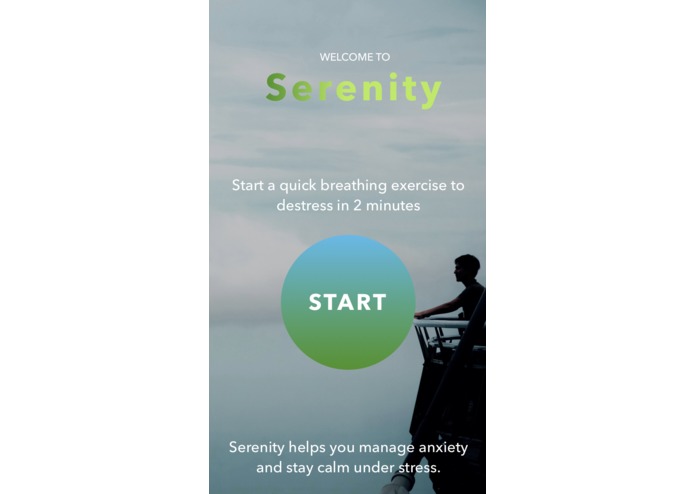
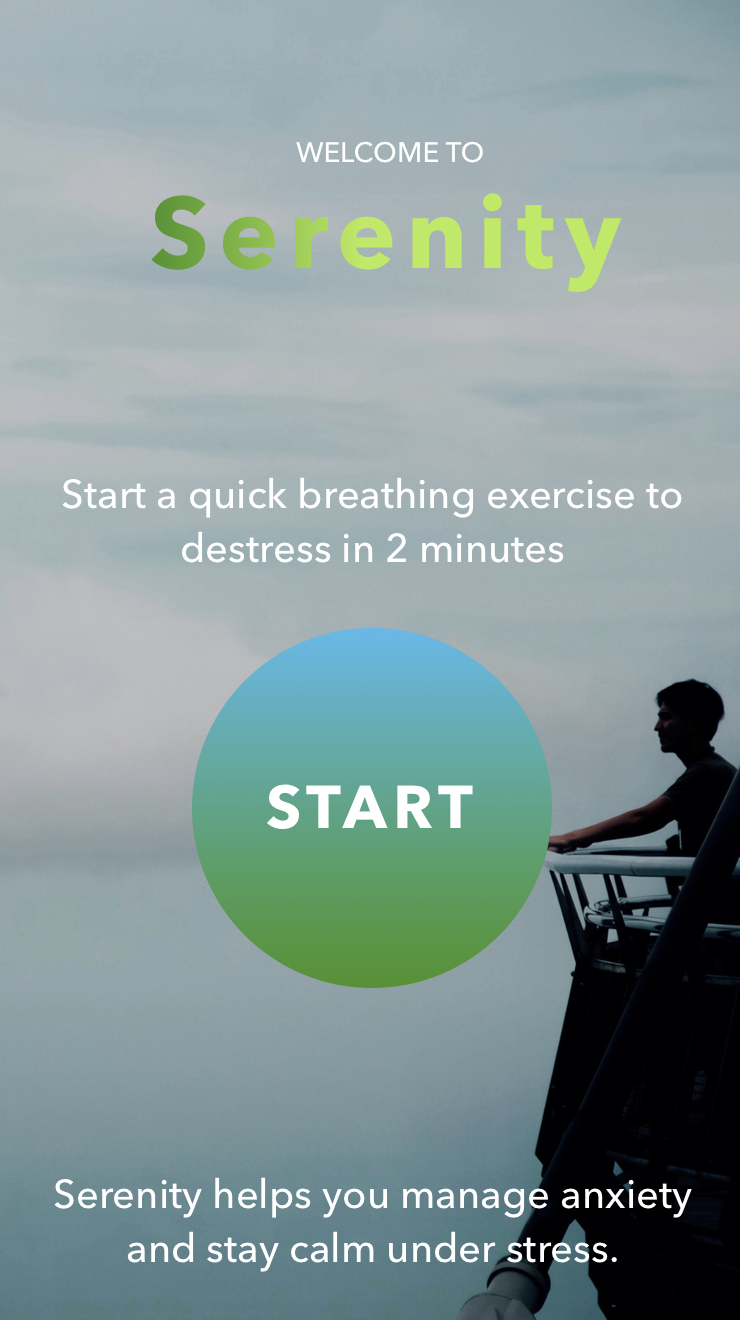
New user splash page
-
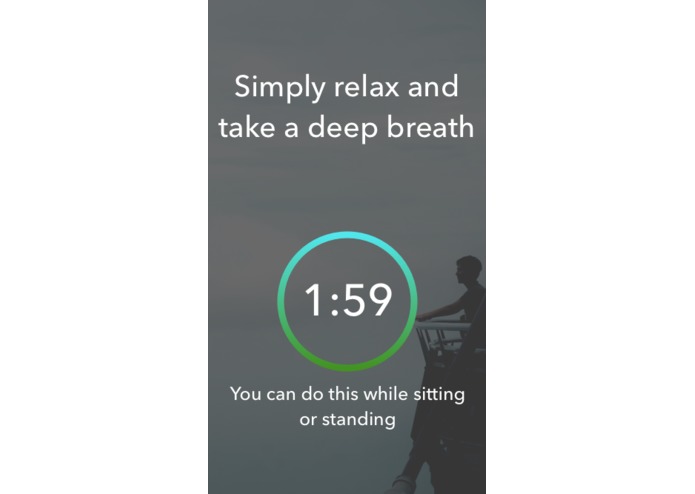
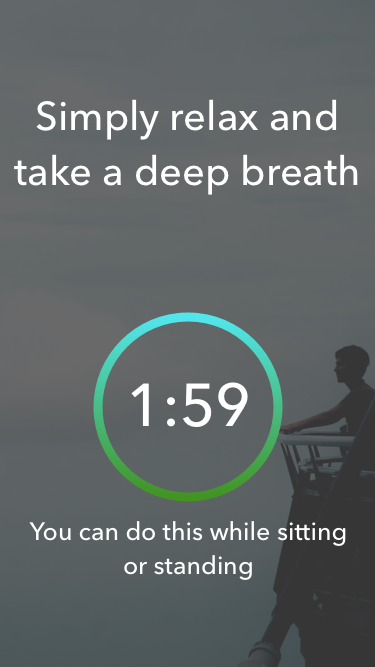
breathing exercise
-
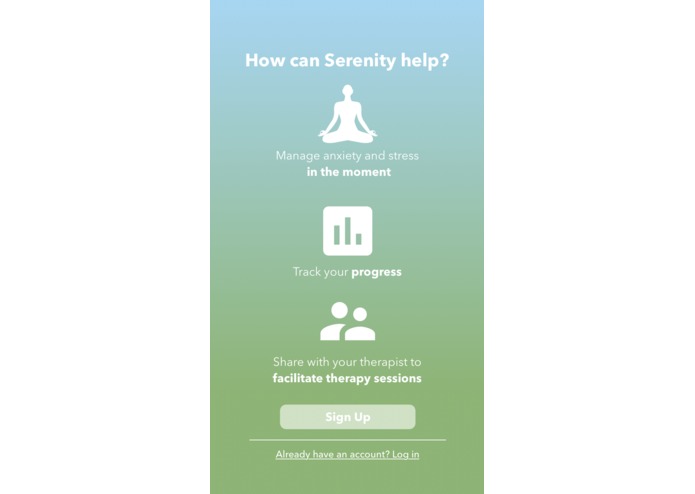
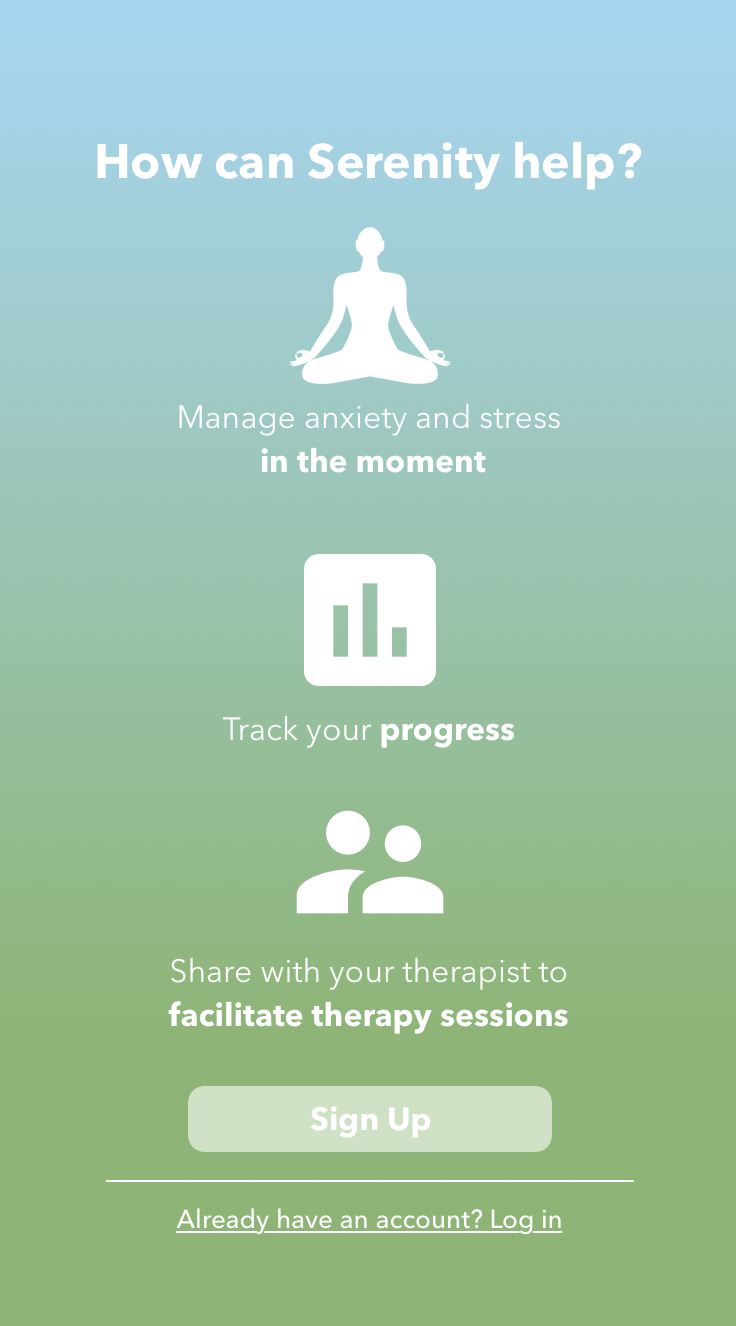
New user sign up/log in
-
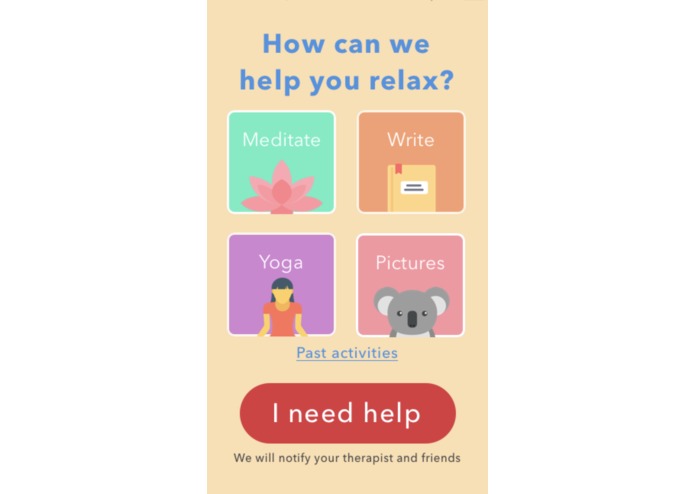
Dashboard
-
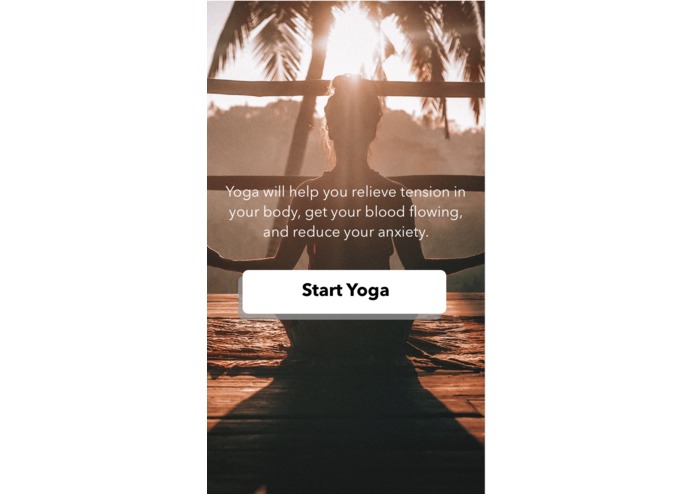
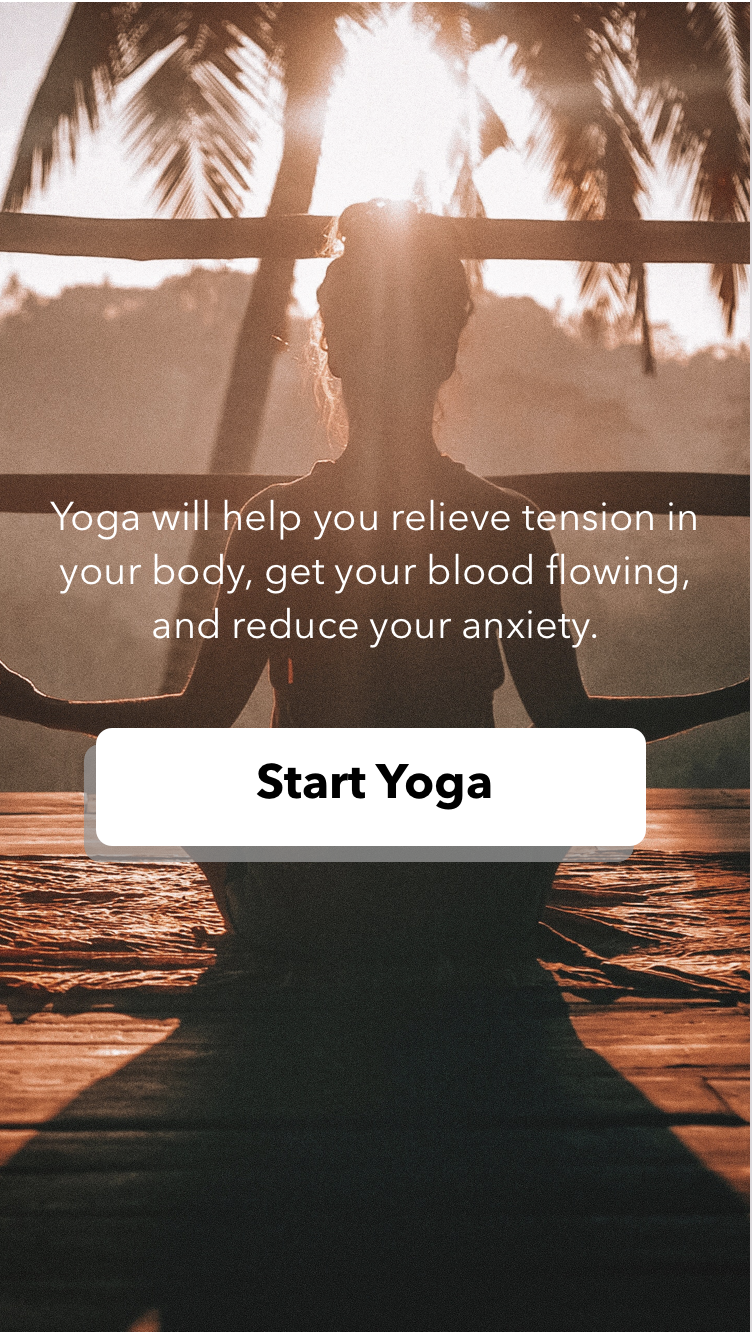
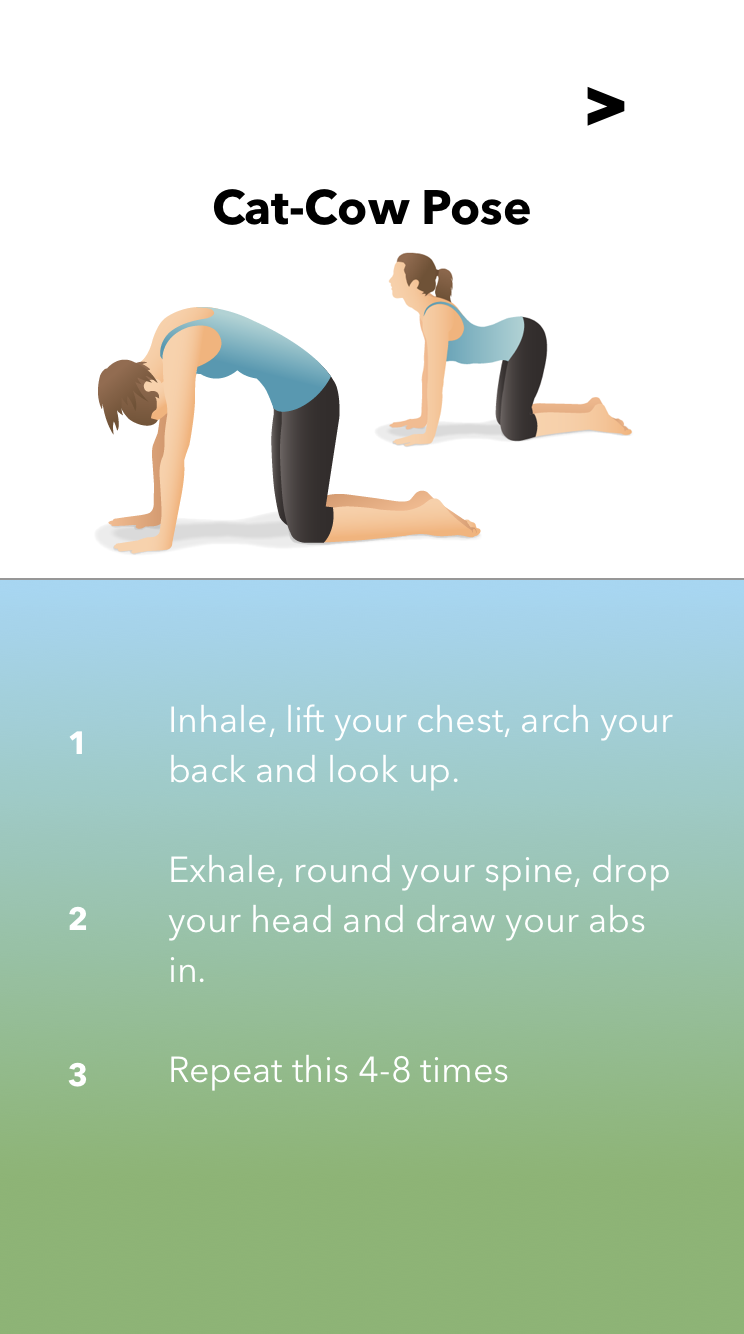
Exercise 1: Yoga
-
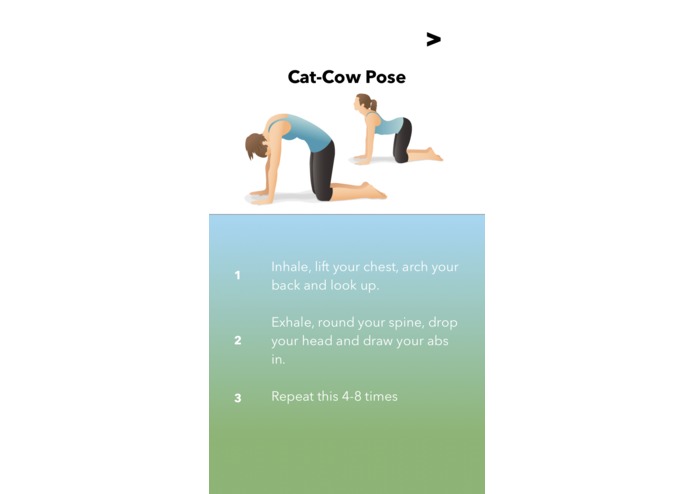
Yoga example
-
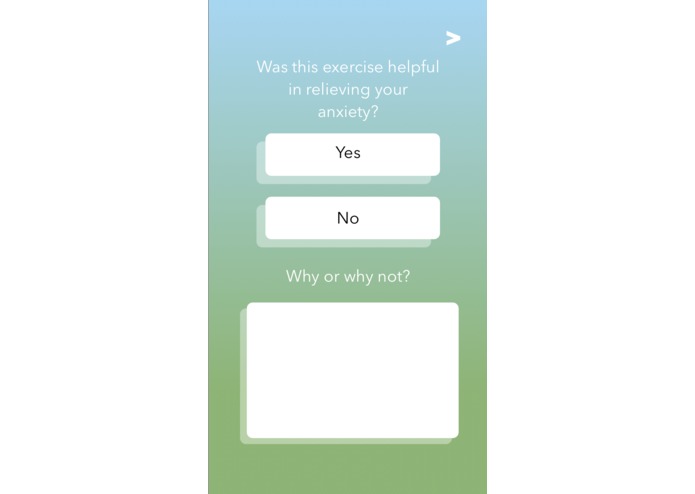
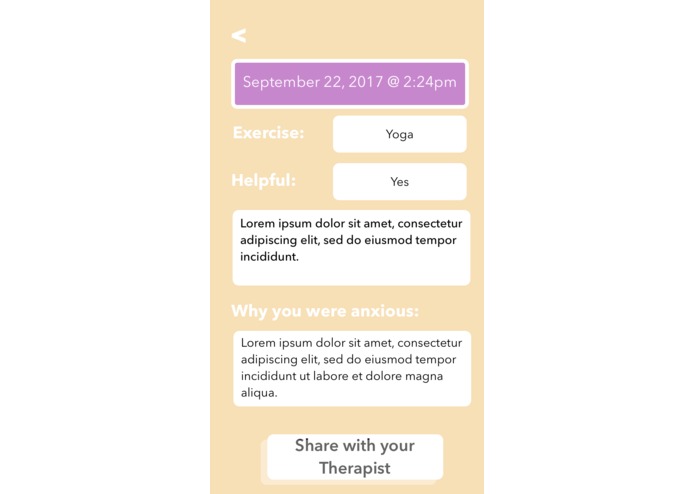
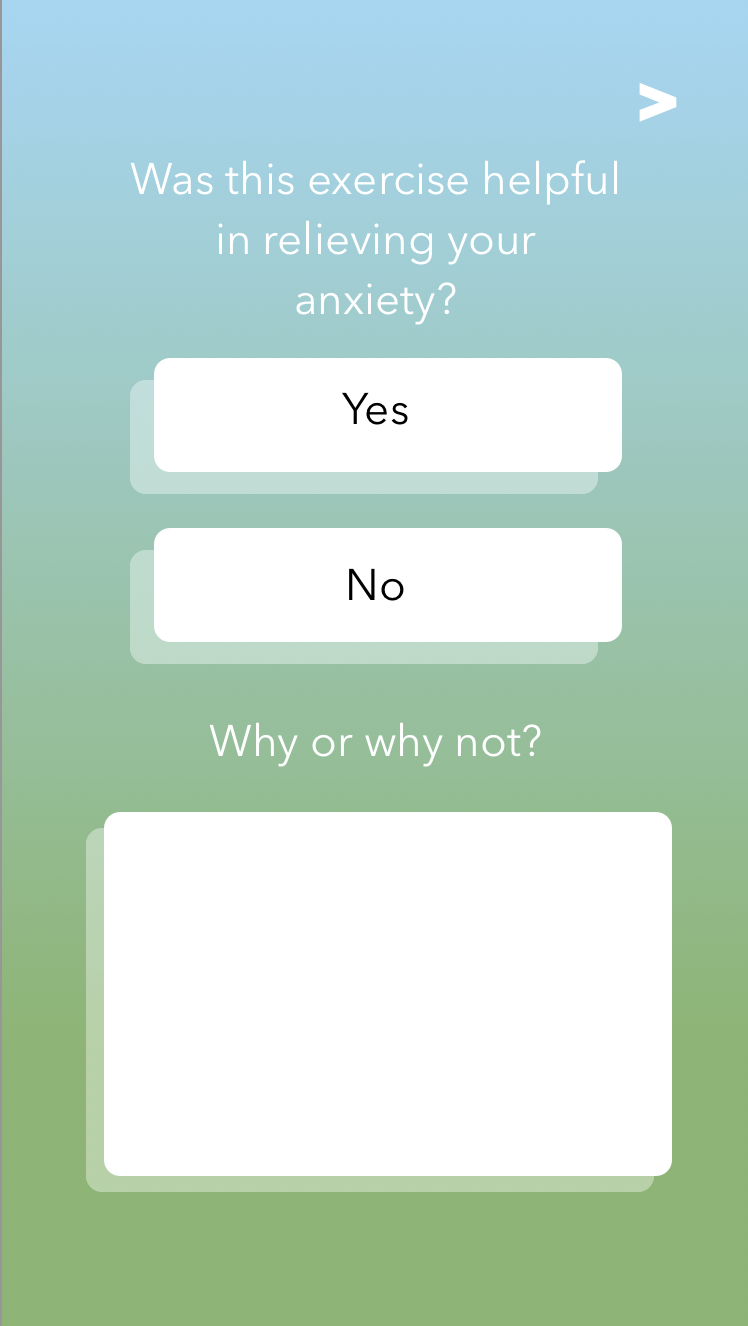
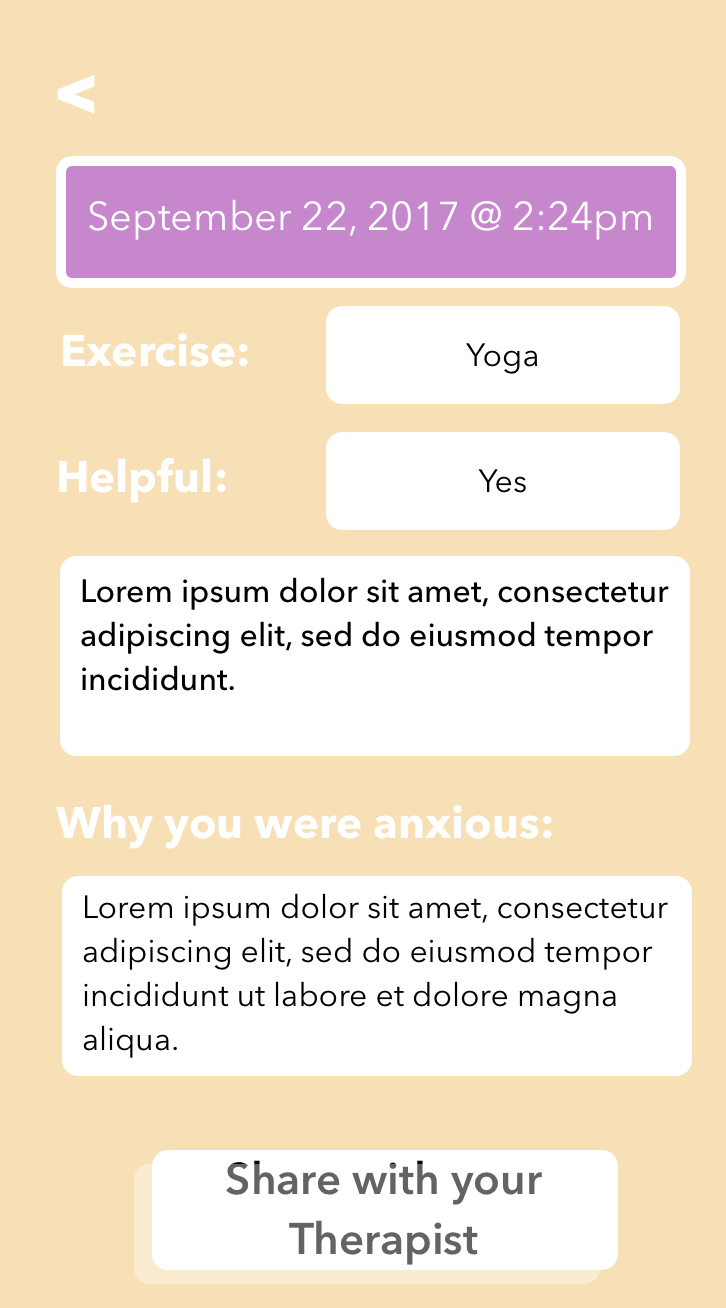
Part of the post-exercise questionnaire
-
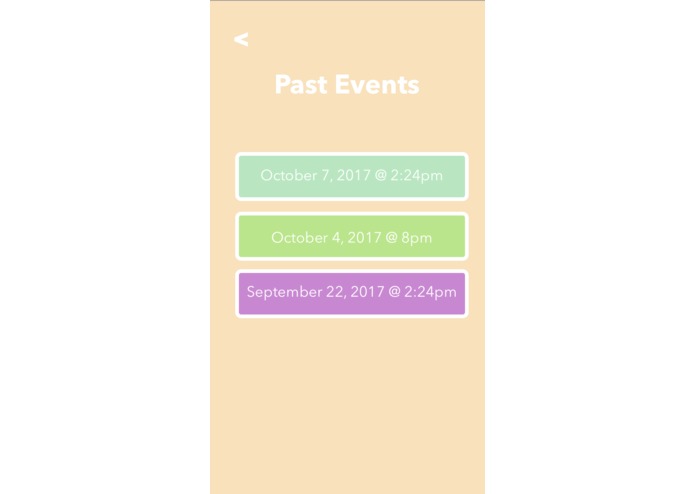
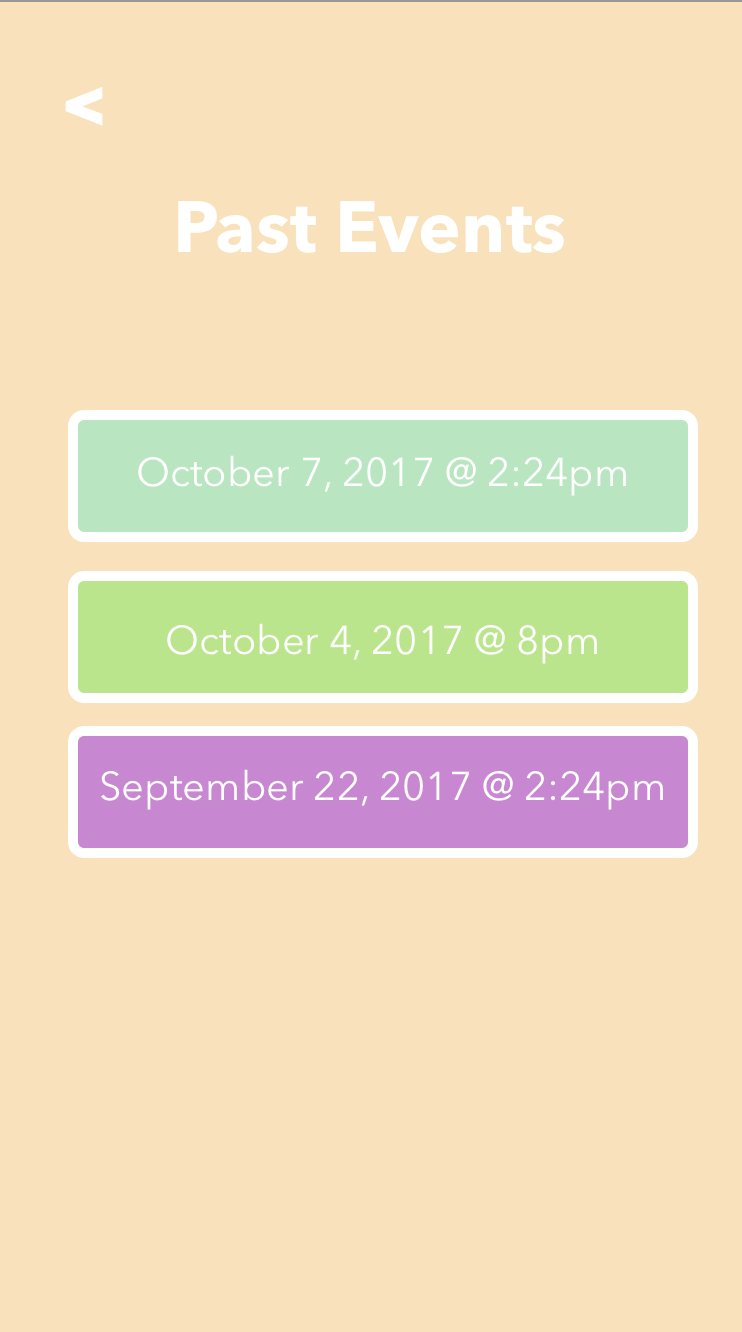
Search past events
-
Inspiration
A moment of anxiety can throw off a whole day. And for some, those moments come more frequently than others. Anxiety disorders are the most common mental illness in the U.S., affecting 40 million adults in the United States age 18 and older, or 18.1% of the population every year. Anxiety disorders are highly treatable, yet only 36.9% of those suffering receive treatment. Currently, there are various apps that attempt to manage anxious occurrences, as well as mental health and well-being as a whole. But we have found that very few incorporate features that aim to aid individuals in the midst of anxiety or facilitate therapy sessions for those in need of counseling. Our first goal with Serenity was to create a tool that any user would feel compelled to use as it provides simple, yet effective anxiety or stress management techniques (yoga, writing, meditating/breathing exercises, etc.) Our next focus was to aid users who are currently in counseling, providing them with a record of their experience to facilitate their therapy sessions.
What it does
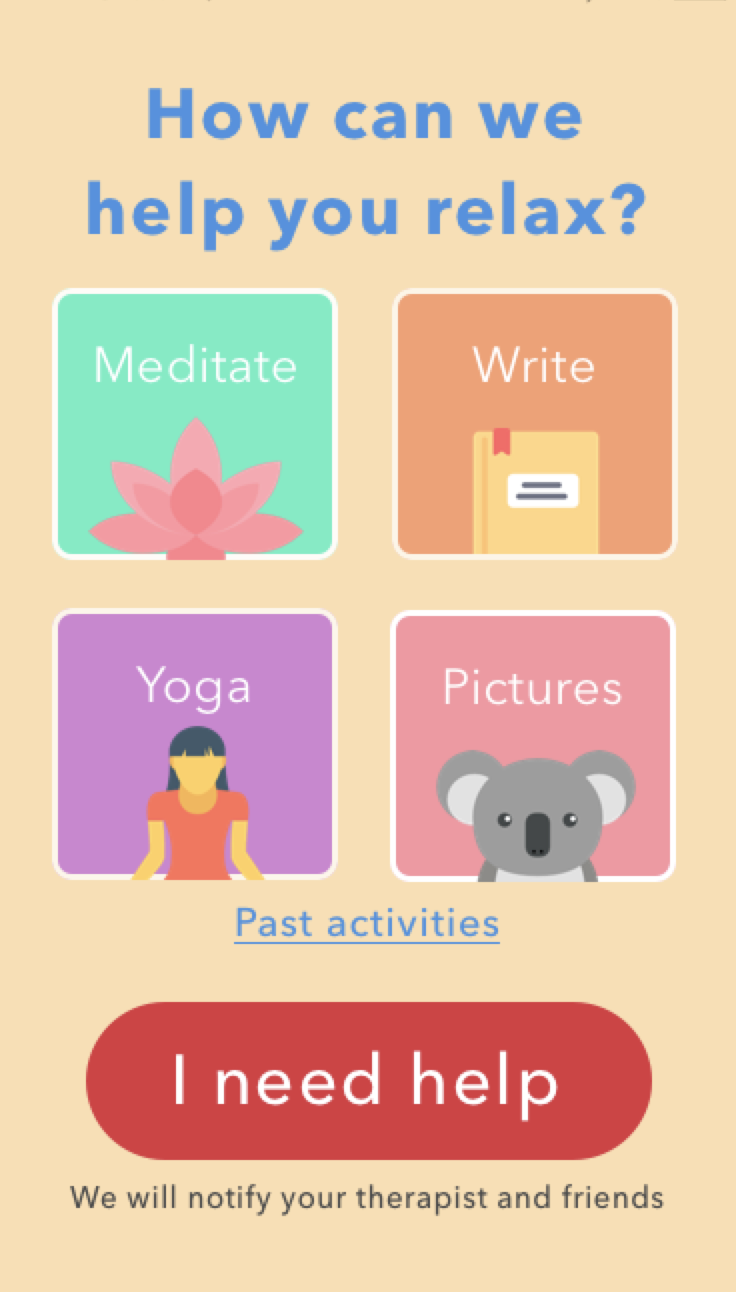
During each use of the app, users complete the exercise with a short follow up a questionnaire to reflect upon why they were anxious, and whether the particular exercise was helpful, and how. Users can then search instances on the app by date, and provide accurate recollections during their therapy sessions. Whether a user is in therapy or not, access to this information will certainly help them cope with similar situations in the future. We also incorporated an “SOS” button on the dashboard to allow users to quickly and easily let a friend, or their therapist, know they’re feeling particularly distressed.
How I built it
We designed the app on Sketch, using Invision to demonstrate user flow through the app. We implemented basic HTML and CSS to bring the tool to life, based off of the Sketch templates. We also attempted to integrate this as a Python-based app using Flask framework with MySQL, but chose to continue with simplified HTML/CSS artifacts.
Challenges I ran into
Since this was our first hackathon, and none of us had a significant full-stack coding background, we had trouble getting started with things. We tried to use Flask and Django with Python to connect with a database, and managed to do that. However, because of the lack of UI coding experience in our team, all our time went to writing the HTML, CSS and JavaScript for the Sketch designs we created, and we couldn’t finish integration with the backend. We wanted to make a more dynamic website, but we struggled quite a bit.
Accomplishments that I'm proud of
We’re proud of creating an app that is not just another way to send emojis or add filters but one that solves a very real and serious problem. Using principles of behavioral economics and human-centered design, our app tries to improve people’s lives. The color palette that we chose for the app is backed by research: blue and green colors have a calming effect on cognition and understanding.
What I learned
With our prototype developed, we wanted to get feedback from people. In true, usability test fashion, each team member got out of the stadium and showed the prototype to one person each. Some of the questions we asked included: have you ever suffered an anxiety attack, what did you find most helpful when you were going through one, and how long did it take for you to get in touch with a therapist. And then we walked them through the app. 3 out of 4 people had a positive reaction to it, stating emphatically that this solution could in some capacity, actually help people suffering from stress or anxiety. 3 out of 4 people had a positive reaction to it, stating emphatically that this solution could in some capacity, help people suffering from stress or anxiety, especially the one-tap SOS button to notify friends and therapists. They also said that while it’s easy to solve this problem on the user’s end, it’s harder to do the same for therapists and that might make it harder to reach out to them. This was some useful feedback that we took note of.
We also learned how to use Heroku and use it with Python to create and deploy web apps.
What's next for Serenity
There are many ways we would love to expand Serenity including creating a dashboard for therapists to access their client's instances of use in the app. There are also many other exercises and features we would like to include, especially those that extend beyond anxiety. We definitely aim to work on making the application dynamically compatible so user information can be stored for representation between screen-jumping.
The link to try out our app (https://shaivya-rastogi.github.io/serenity/Home.html) is accessible on iPhone 6 and 7.


Log in or sign up for Devpost to join the conversation.