Inspiration
High school can be mentally exhausting. Many students silently struggle with stress, anxiety, or emotional burnout but don’t have access to safe, private support systems. We wanted to build a tool that doesn’t judge, doesn’t demand, but simply shows up for students every day to help them check in with themselves and breathe.
What it does
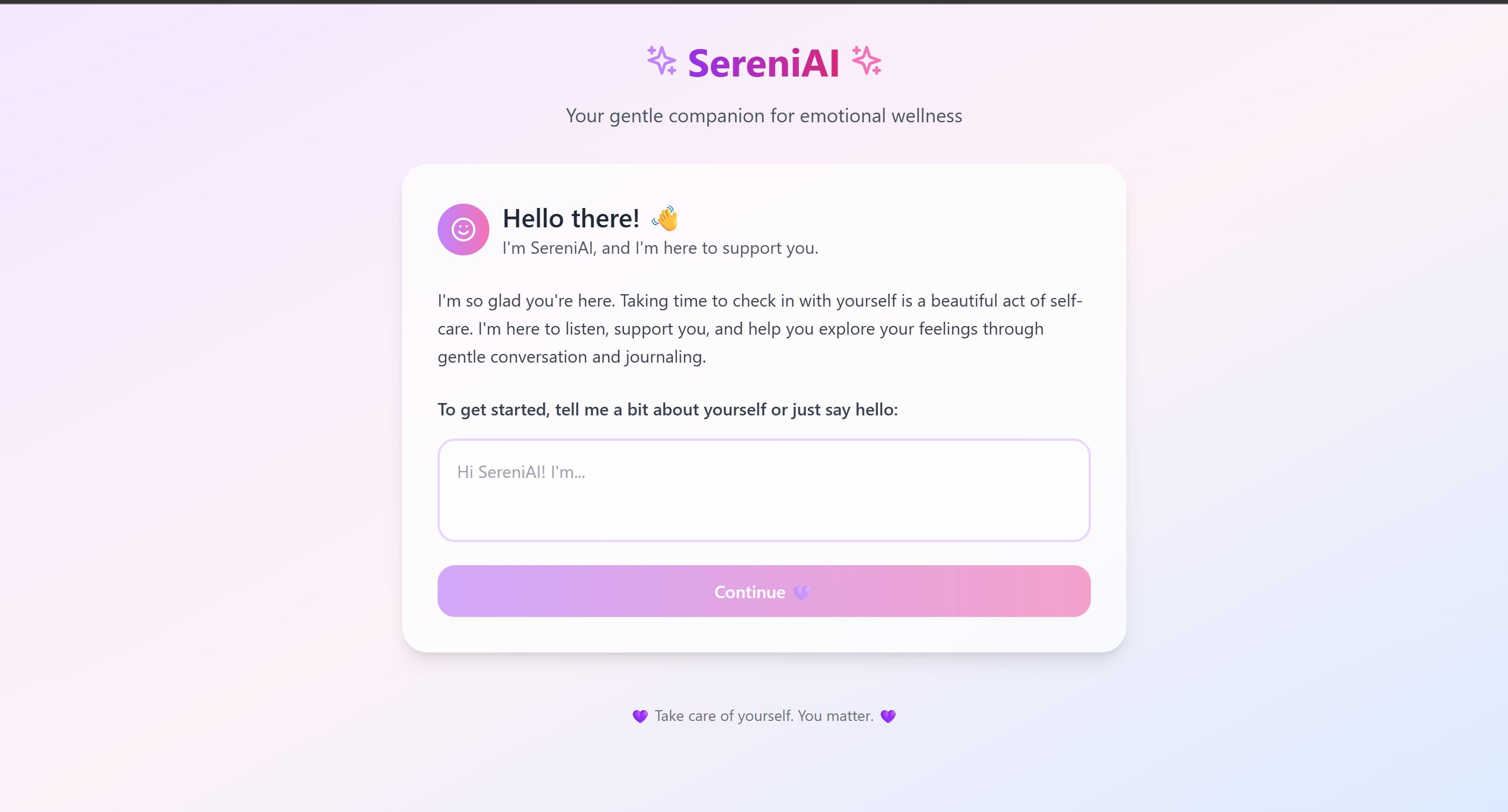
Starts daily emotional check-ins
Uses sentiment analysis to detect emotional patterns
Offers mood-based journaling prompts
Recommends mindfulness tips and encouraging affirmations
Tracks mental patterns over time (with privacy-focused logging)
How we built it
We built SereniAI using Python, combining the power of OpenAI’s GPT-4 API for natural, empathetic conversations and VADER sentiment analysis from the NLTK library to understand student emotions in real time. The front end was developed with Streamlit, providing a clean, chat-like interface where users can check in, reflect, and receive tailored journaling prompts or affirmations based on their mood. All interactions are processed instantly, with optional privacy features to keep journaling data secure. Git and GitHub were used for version control and collaboration throughout development.
Challenges we ran into
One of the biggest challenges was designing an AI system that feels genuinely empathetic without being overly scripted or robotic. Balancing emotional intelligence with technical logic required thoughtful prompt engineering and fine-tuning responses. Integrating sentiment analysis in real-time and adapting the chatbot's tone to the user’s mood also posed difficulties. Additionally, building a clean, distraction-free UI in Streamlit while maintaining responsiveness was a unique design challenge.
Accomplishments that we're proud of
We're proud to have created a mental wellness tool that doesn't just function, but feels like a supportive presence. From successful real-time sentiment detection to generating mood-based journaling prompts, SereniAI became more than just a chatbot — it became a space for students to pause and reflect. Creating something that aligns empathy with AI is our proudest achievement.
What we learned
We learned how to blend AI tools like GPT-4 and VADER to create emotionally intelligent responses. Beyond technical skills, we explored how important UX is in mental health tools — the tone, wording, and layout all impact the user’s comfort. We also deepened our understanding of how to use Streamlit for dynamic web apps and how to build tech that prioritizes emotional safety and student well-being.
What's next for SereniAI – The Mental Wellness Co-Pilot for Students
We plan to expand SereniAI by adding voice-based check-ins, daily streak tracking, and a progress dashboard that visualizes emotional trends over time. We also aim to build a mobile app version with optional cloud-based journaling (with encryption) to ensure accessibility and privacy. Long term, we hope to integrate with student platforms and provide teacher-friendly insights to support early intervention — always with the student’s consent and data privacy at the core.

Log in or sign up for Devpost to join the conversation.