-
-
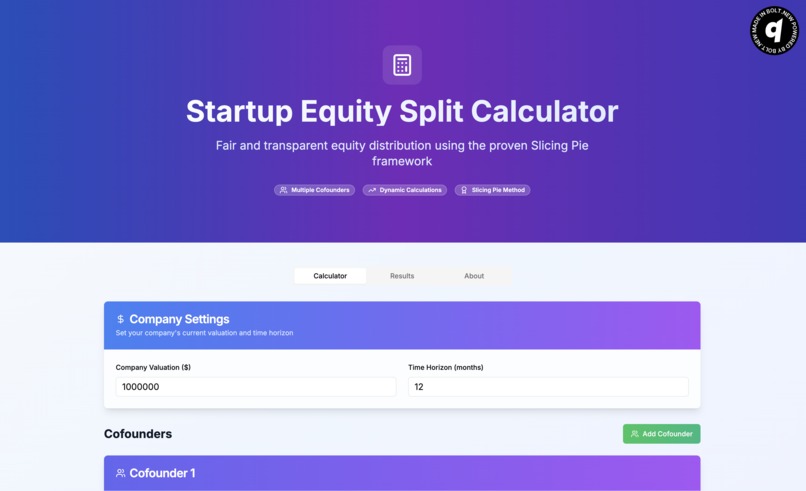
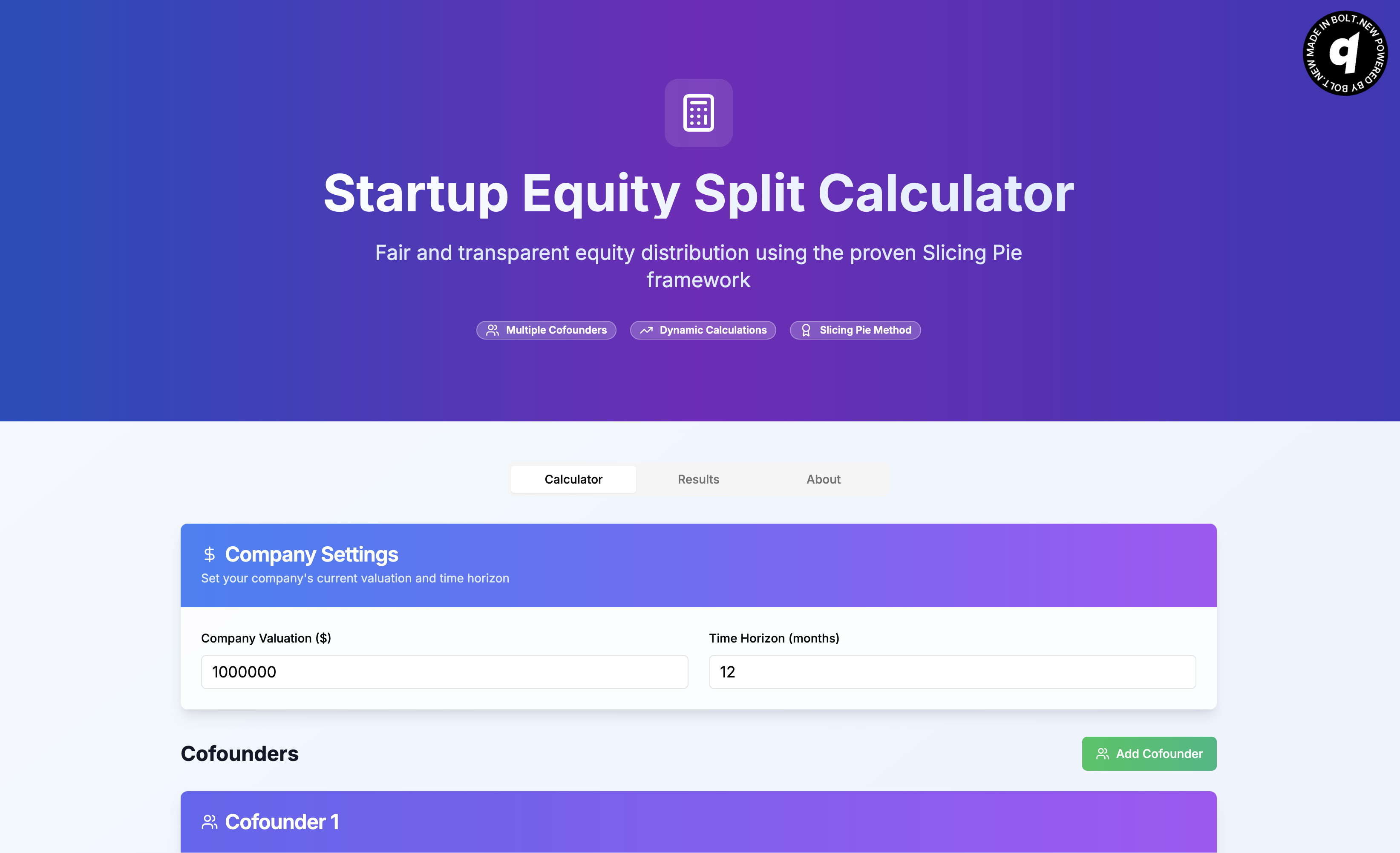
A simple and straightforward UI for user to use
-
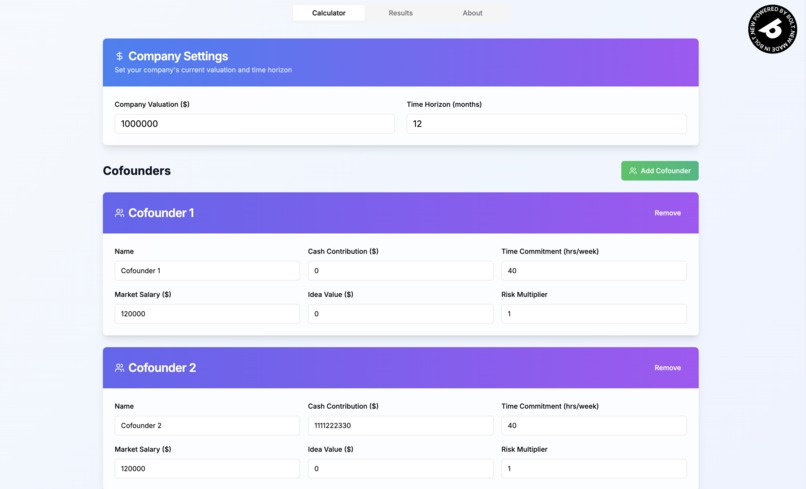
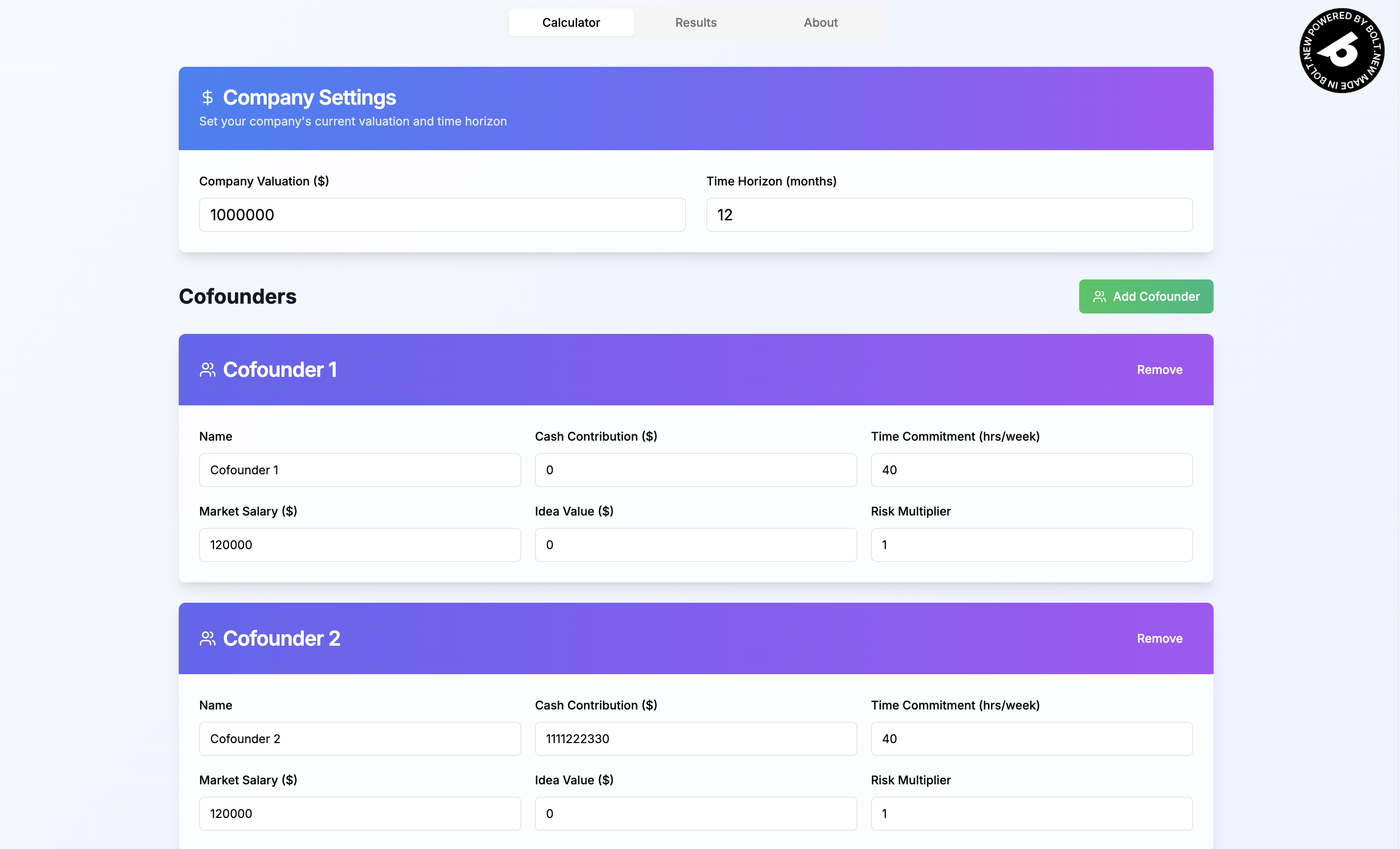
The layout of the form for user to input the information of the contribution
-
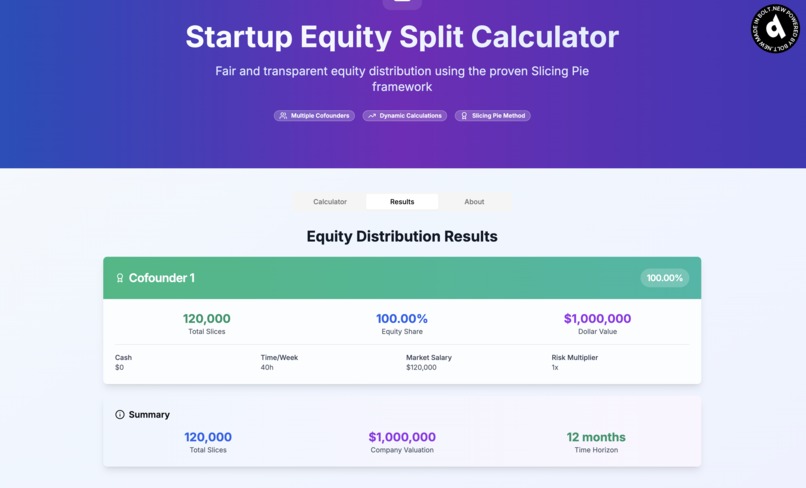
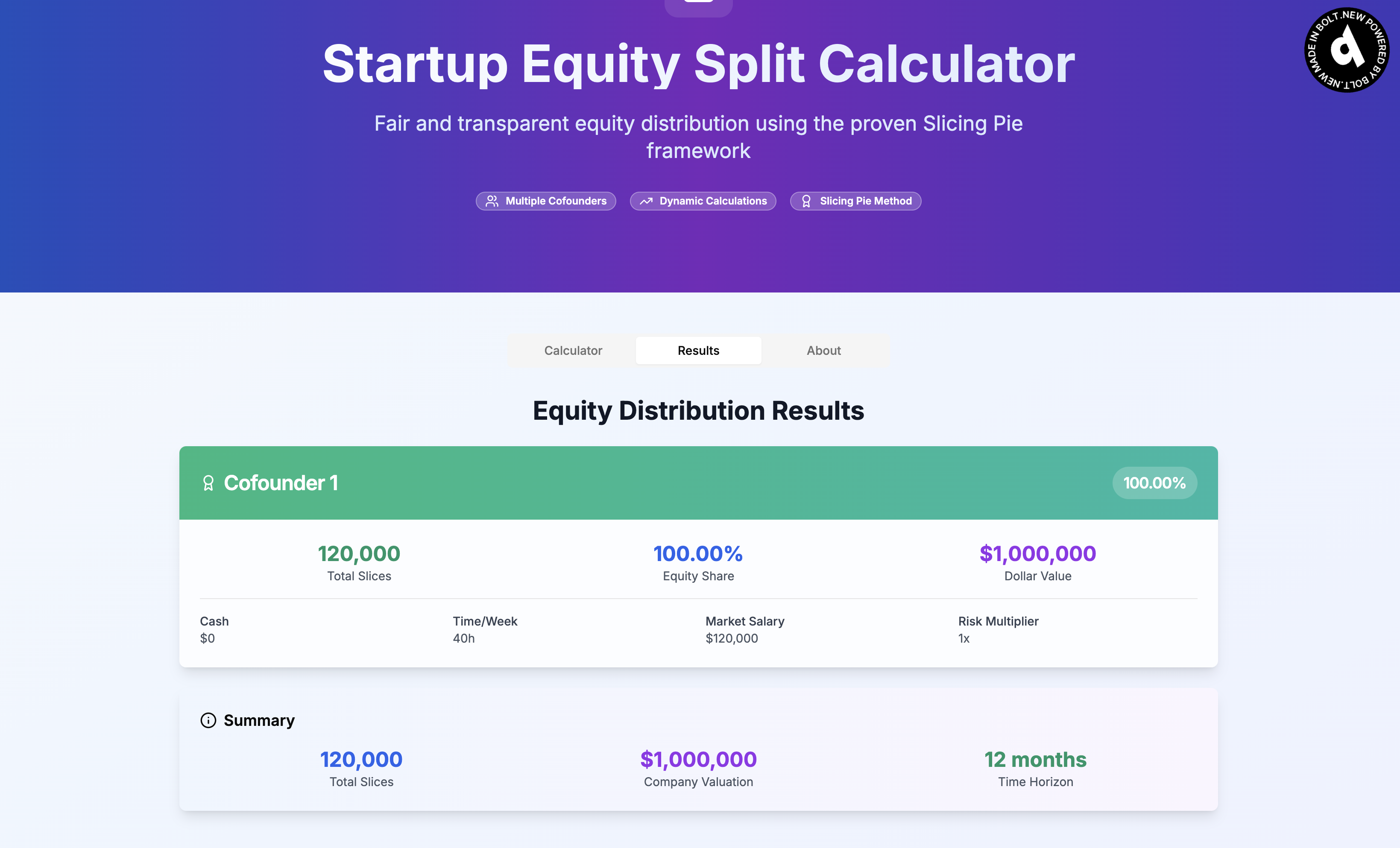
The result of the calculation based on the user's input
-
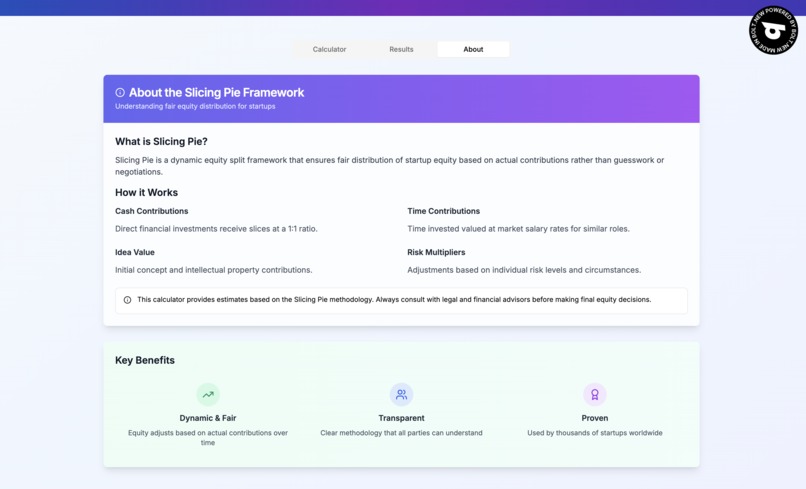
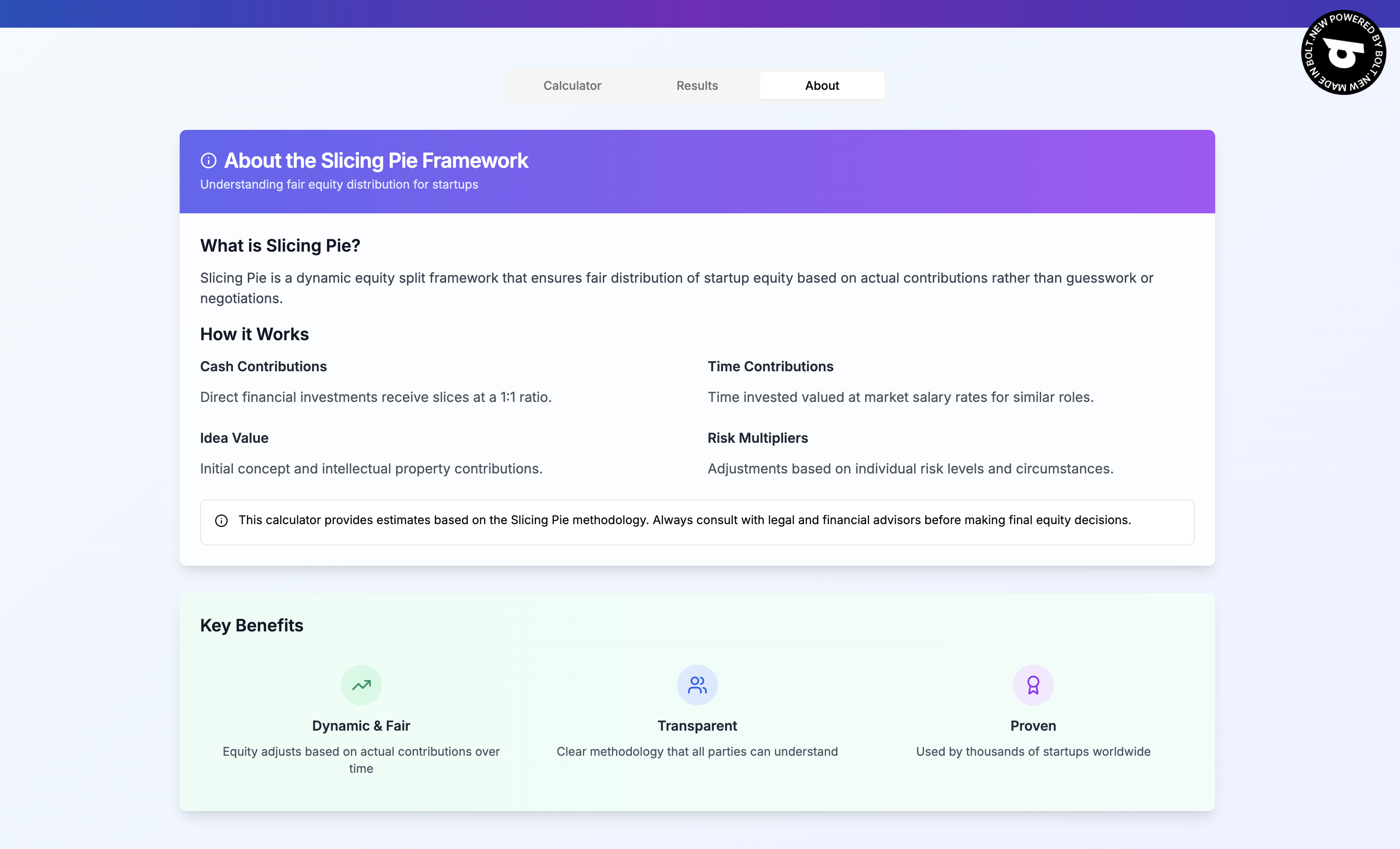
A section to briefly explain to users what is Slicing Pie framework and its benefits
Inspiration
The inspiration for the Startup Equity Split Calculator came from witnessing the devastating impact of equity disputes on promising startups. As someone deeply embedded in the entrepreneurial ecosystem, I watched countless founding teams implode not because their business ideas were flawed, but because they couldn't agree on who deserved what percentage of the company they were building together.
I realized that most startup equity conversations happen in an information vacuum, with founders making permanent decisions based on incomplete data and emotional negotiations rather than objective contribution tracking. The Slicing Pie framework offered a proven methodology for dynamic equity allocation, but implementing it required complex calculations and ongoing tracking that most founders found overwhelming. This gap between sound theory and practical implementation inspired me to create a tool that would make fair equity distribution both accessible and automatic.
What it does
The Startup Equity Split Calculator transforms the contentious process of equity distribution into a transparent, data-driven system that evolves with actual contributions:
Dynamic Contribution Tracking: Continuously calculates equity percentages based on real-time contributions across multiple categories—cash investments, time commitments, intellectual property, and risk factors—ensuring equity distribution always reflects current value creation.
Comprehensive Contribution Categories:
- Cash Contributions: Direct financial investments with 1:1 value ratios
- Time Contributions: Work hours valued at fair market rates for each contributor's role and experience level
- Idea and IP Value: Systematic valuation of intellectual property, concepts, and pre-existing assets brought to the venture
- Risk Multipliers: Dynamic adjustments based on contribution timing, market conditions, and individual risk profiles
Slicing Pie Framework Implementation: Built on Mike Moyer's proven methodology, providing theoretical soundness with practical usability, eliminating guesswork from equity decisions while maintaining flexibility for unique circumstances.
Real-Time Transparency: Live dashboard showing each founder's current equity percentage, contribution history, and projected ownership changes, creating accountability and preventing surprises in equity evolution.
Scenario Planning Tools: Advanced modeling capabilities that allow founders to project equity changes under different contribution scenarios, helping teams make informed decisions about resource allocation and role distribution.
How I built it and the challenge I ran into
I approached the Startup Equity Split Calculator as a comprehensive web application built using Typescript and leveraging on the Next.js framework. I want the application to handle complex financial calculations while remaining intuitive for non-technical founders. However, due to the restriction imposed on me participating in the single prompt challenge, I'm limited to only using a single prompt to let Bolt develop this application. I'm glad that the application turn out to be working well even though there were some hiccups experienced during the deployment process, which was easily solved by Bolt.
Accomplishments that I'm proud of
Methodology Implementation: Created the most comprehensive digital implementation of the Slicing Pie framework, making advanced equity calculation accessible to founders without financial or legal backgrounds.
Scalability Success: Designed architecture that handles everything from two-person founding teams to complex multi-founder situations with contractors, advisors, and early employees.
What I learned
Equity is About Relationships, Not Just Math: While accurate calculations are essential, successful equity tools must address the interpersonal dynamics and communication challenges that make equity discussions difficult for founding teams.
Transparency Reduces Conflict: Founders who can see exactly how equity percentages are calculated and how they evolve over time experience significantly fewer disputes and maintain better working relationships.
Timing Matters More Than Total Contribution: Early contributions carry higher risk and should be weighted accordingly, but implementing this concept fairly requires nuanced understanding of startup development phases.
Founders Need Education, Not Just Tools: Successful equity conversations require founders to understand contribution valuation principles, making educational content as important as calculation accuracy.
One Size Doesn't Fit All: Every startup has unique circumstances that require flexible frameworks rather than rigid formulas, highlighting the importance of customizable calculation parameters.
Documentation Prevents Future Problems: Comprehensive contribution tracking becomes invaluable during investment rounds, founder changes, and legal discussions, making audit trails as important as current calculations.
What's next for Startup Equity Split Calculator
Advanced Contribution Categories: Expanding beyond basic contribution types to include network effects, strategic partnerships, regulatory expertise, and other specialized value contributions that modern startups require.
Integration Ecosystem: Building connections with cap table management software, legal document generation tools, and accounting systems to create seamless workflows from equity calculation to formal documentation.
Investor Integration: Creating features that help founders communicate equity structures to potential investors, including scenario modeling for various investment and dilution situations.
Legal Document Generation: Partnering with legal professionals to automatically generate founder agreements, vesting schedules, and equity documentation based on calculated distributions.
Analytics and Insights: Implementing advanced analytics that help founders understand contribution patterns, identify potential equity issues before they become problems, and optimize team resource allocation.
Educational Platform: Expanding into a comprehensive learning platform that teaches equity principles, founder relationship management, and startup finance concepts through hands-on calculation experience.
Compliance and Reporting: Adding features for tax reporting, regulatory compliance, and integration with startup accounting practices as companies grow and formalize their financial operations.
Built With
- bolt.new
- css
- html
- javascript
- netlify
- next.js
- react
- shadcn
- tailwindcss
- typescript

Log in or sign up for Devpost to join the conversation.