-
-
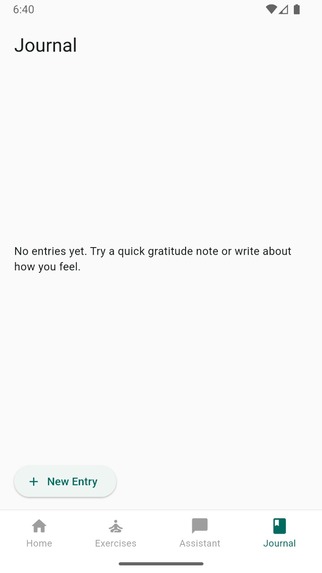
Journal Entries
-
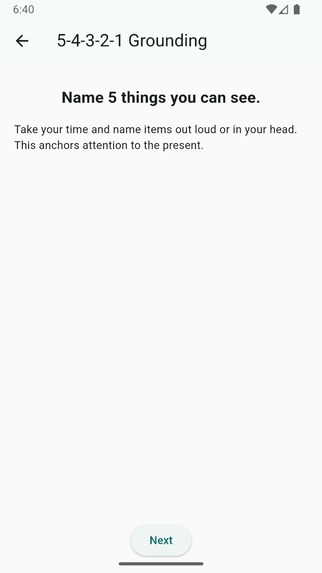
Grounding Exercise
-
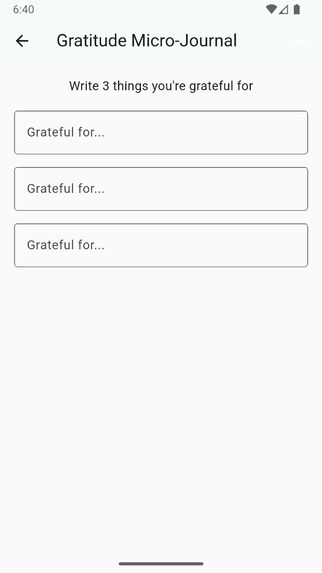
Micro-Journal
-
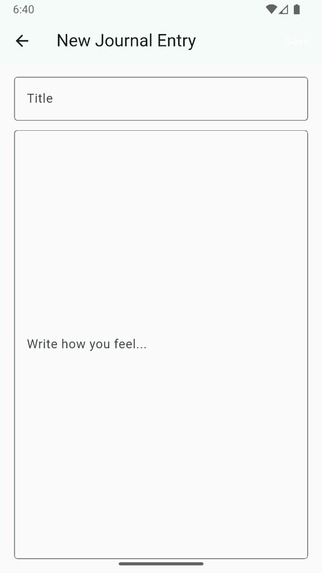
Journal Entry
-
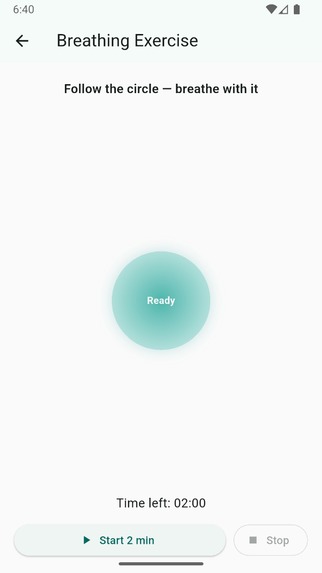
Breathing Exercise
-
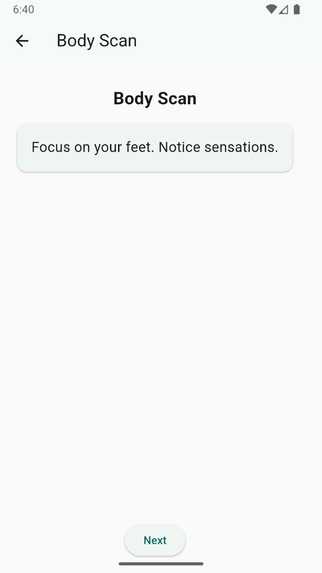
Body Scan Exercise
-
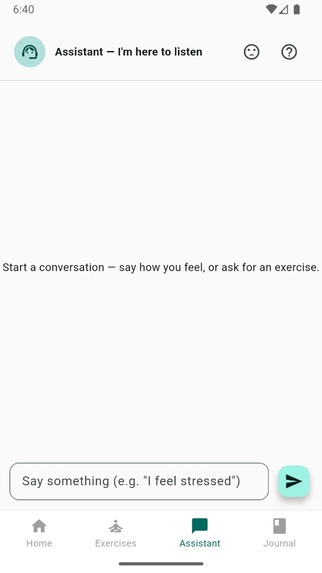
AI Assistant
-
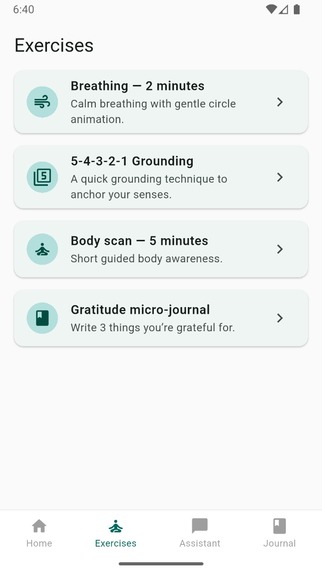
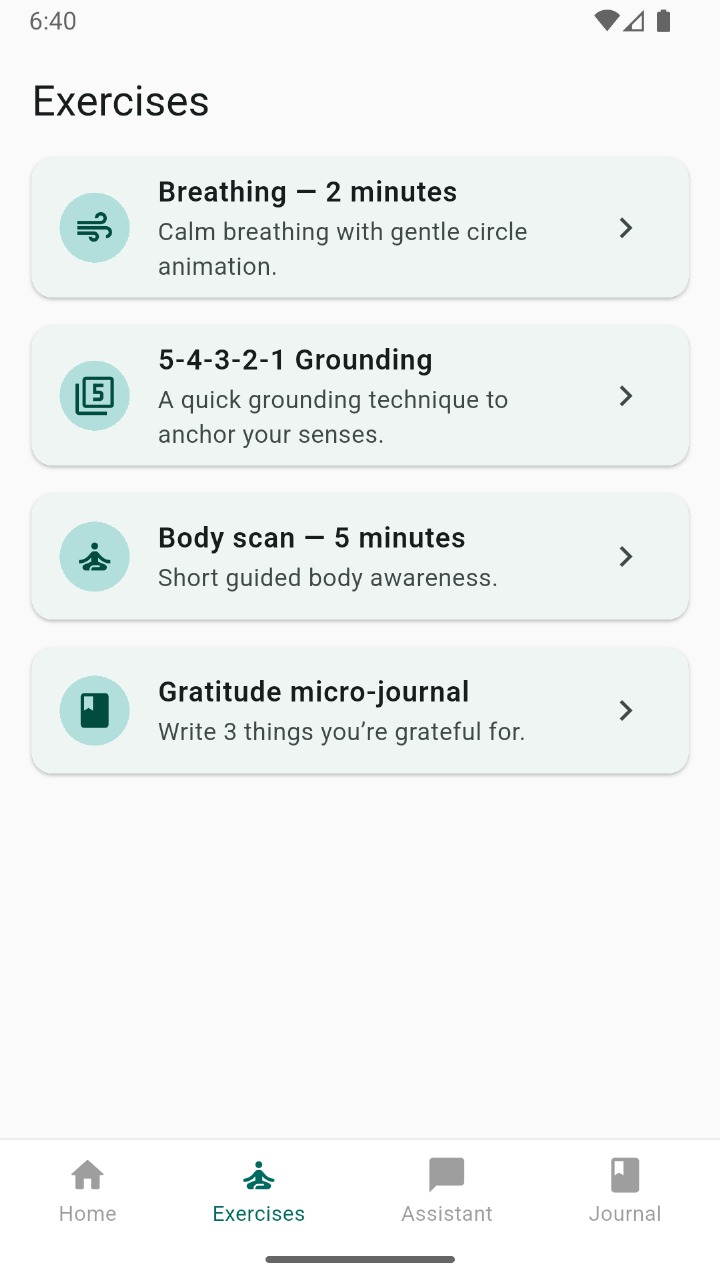
Exercises for Mindfulness
-
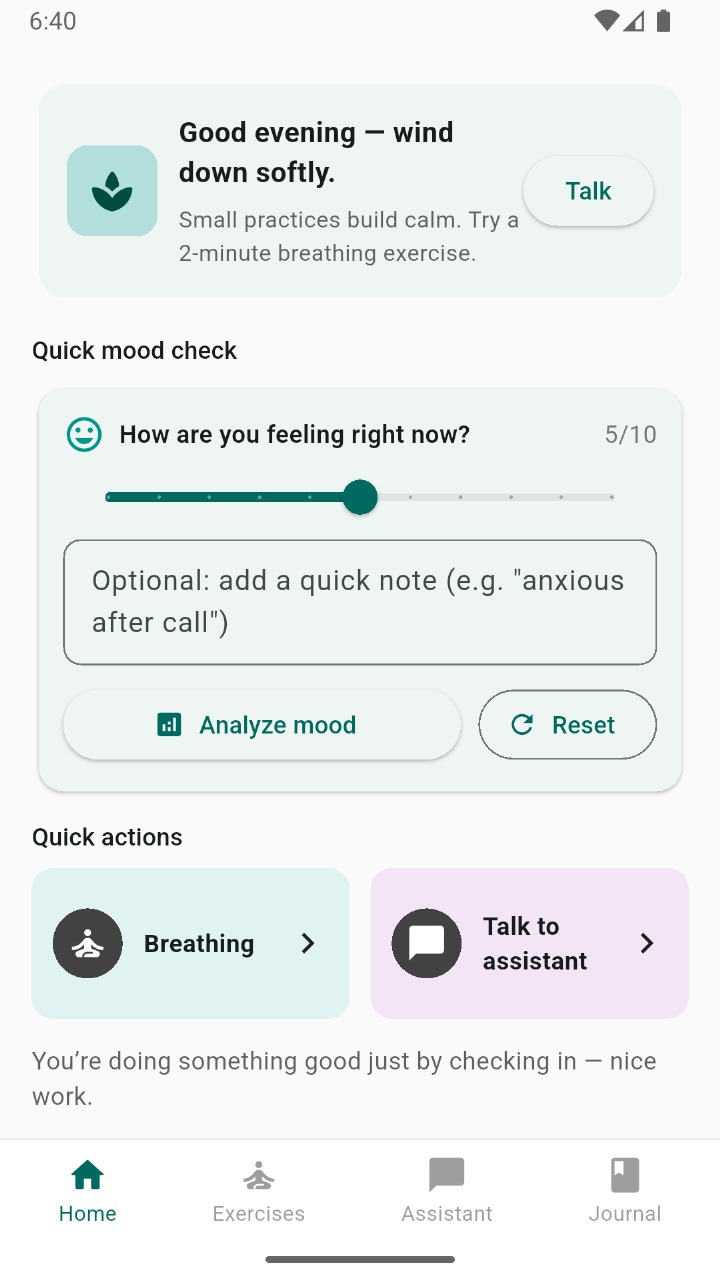
Home Screen
🌱 Inspiration
The idea for Serene came from noticing how often people silently struggle with their emotions. Mental health is something we all carry with us, yet it often gets brushed aside until it feels overwhelming. I’ve seen friends, classmates, and even myself go through moments where having just a small space to pause, breathe, and reflect could make all the difference.
Technology is everywhere in our lives, but most apps focus on productivity or entertainment — very few are designed to truly listen and offer gentle support. That’s where Serene began: the wish to make technology feel human, like a quiet companion who reminds you it’s okay to slow down, check in with yourself, and find balance.
💡 What it does
Serene is a mental wellness companion built to feel simple, soothing, and human.
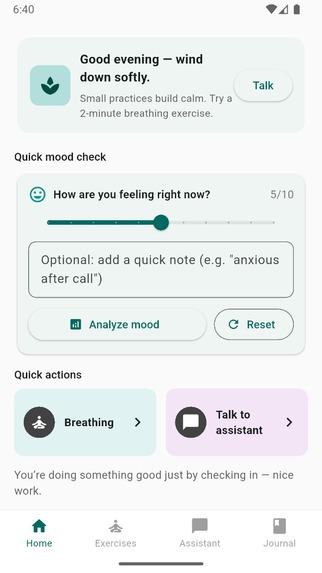
Daily Mood Check-ins: A quick slider lets you record how you feel, with the option to add notes for context.
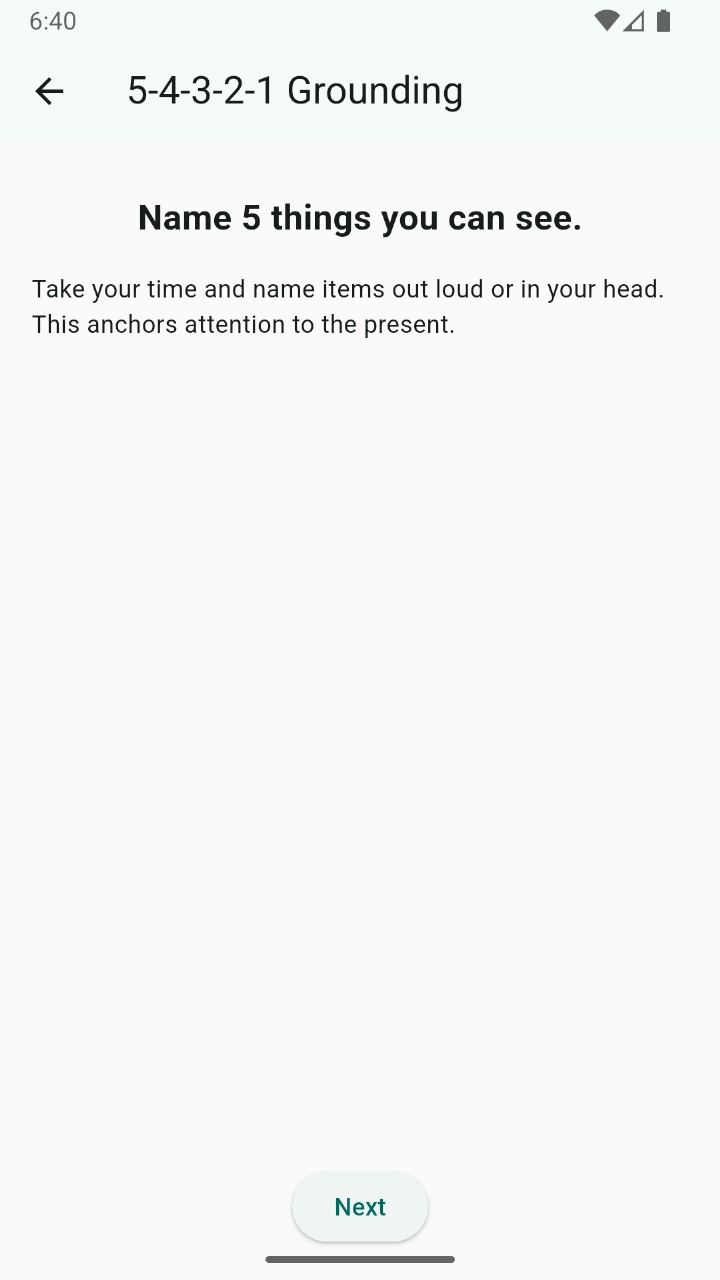
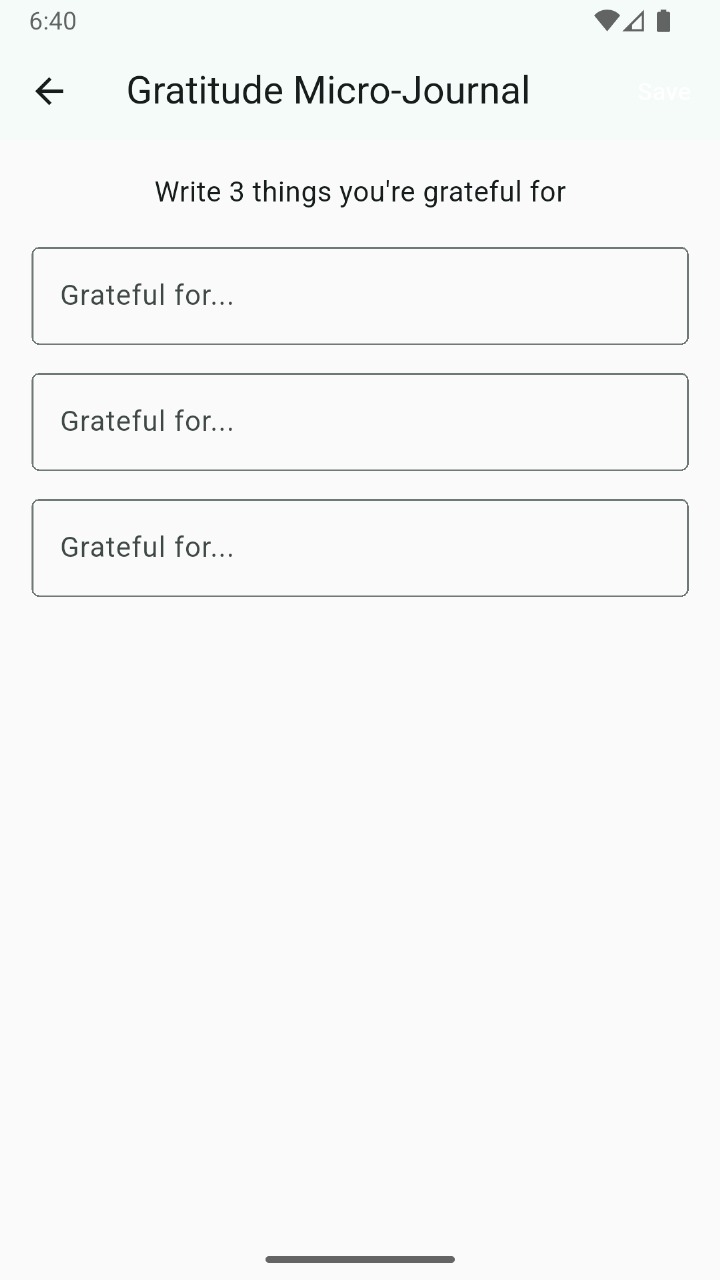
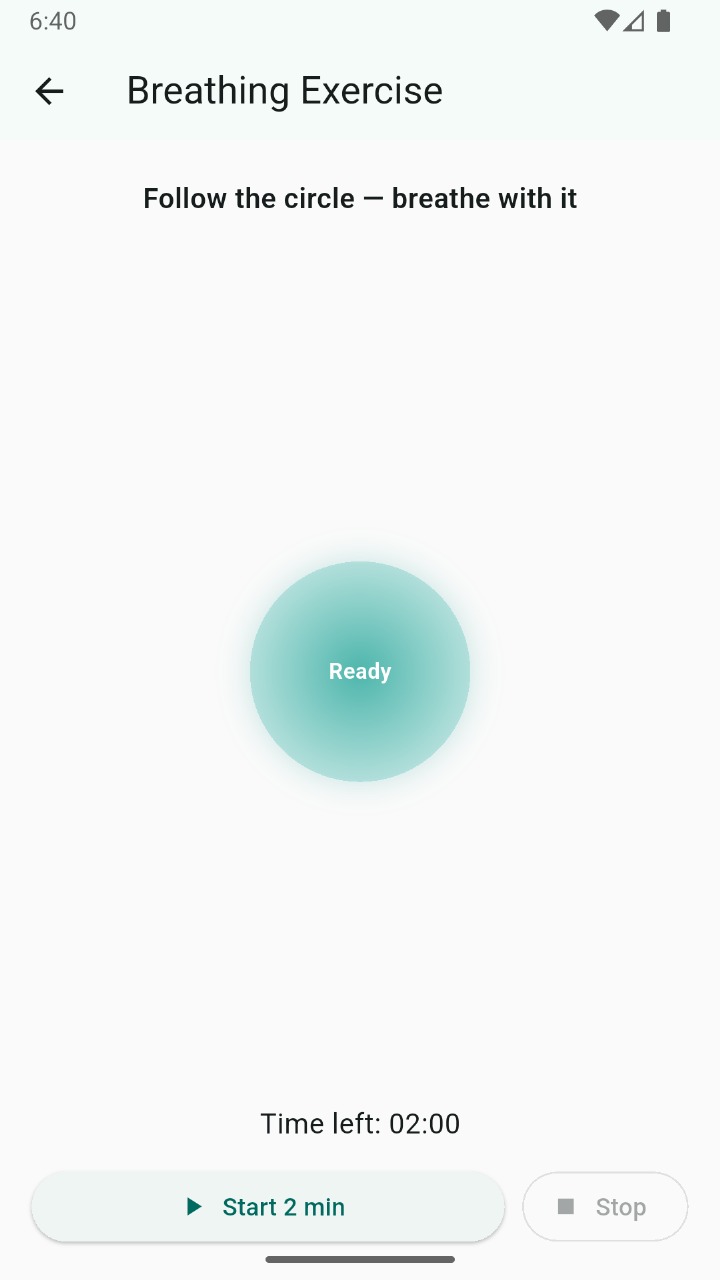
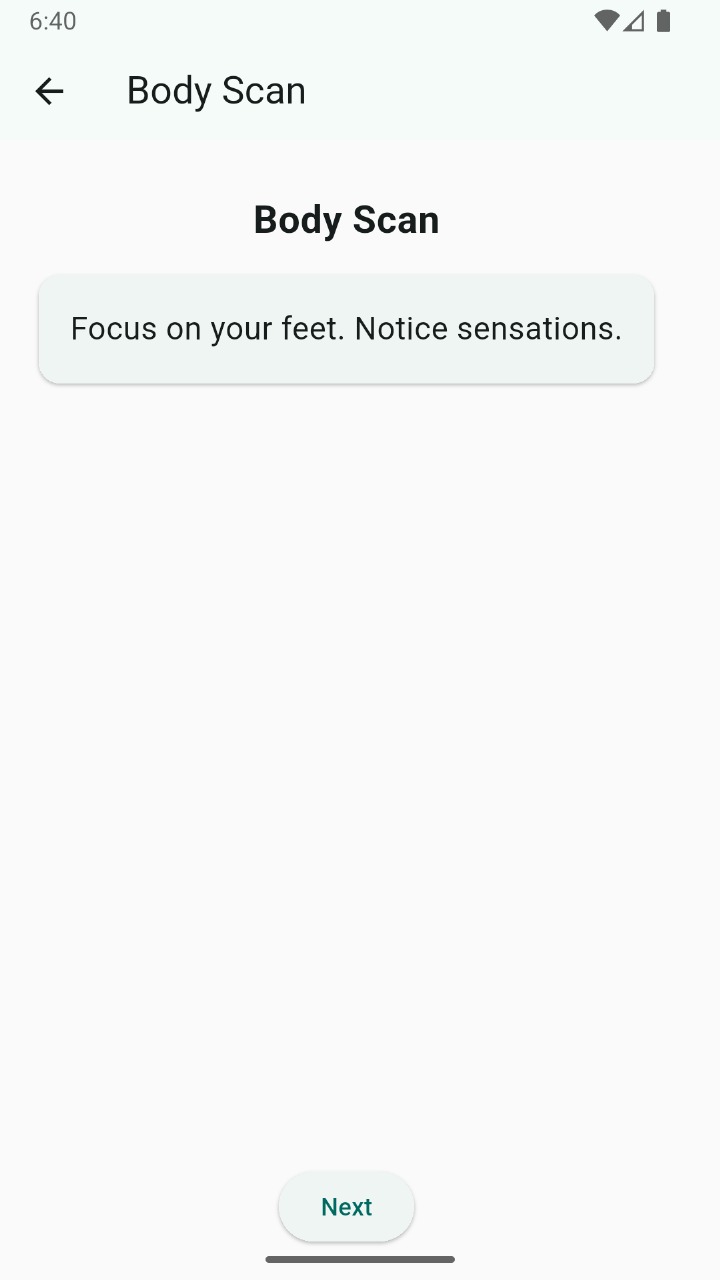
Mindfulness Exercises: Breathing, grounding, body scans, and gratitude journaling — short, guided practices that help you recenter when life feels heavy.
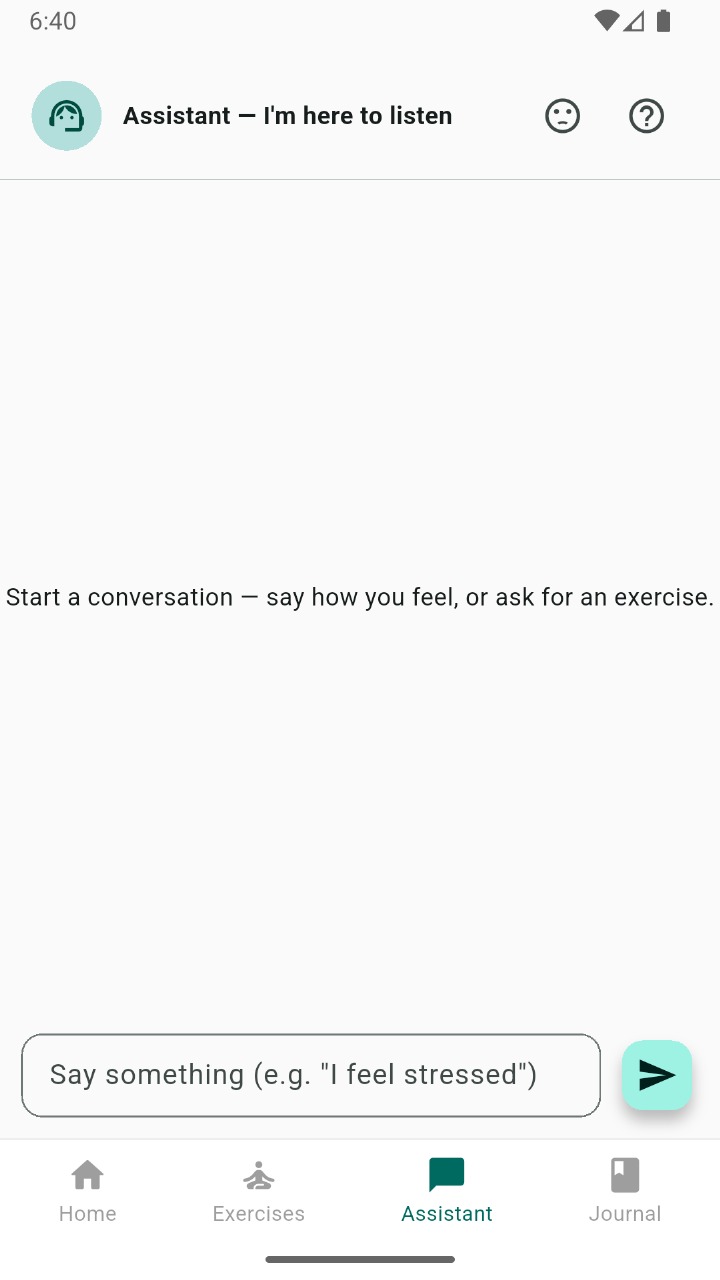
AI Assistant: An empathetic chat interface that doesn’t just give responses, but listens and reflects back with warmth. It suggests exercises or coping strategies based on how you’re feeling.
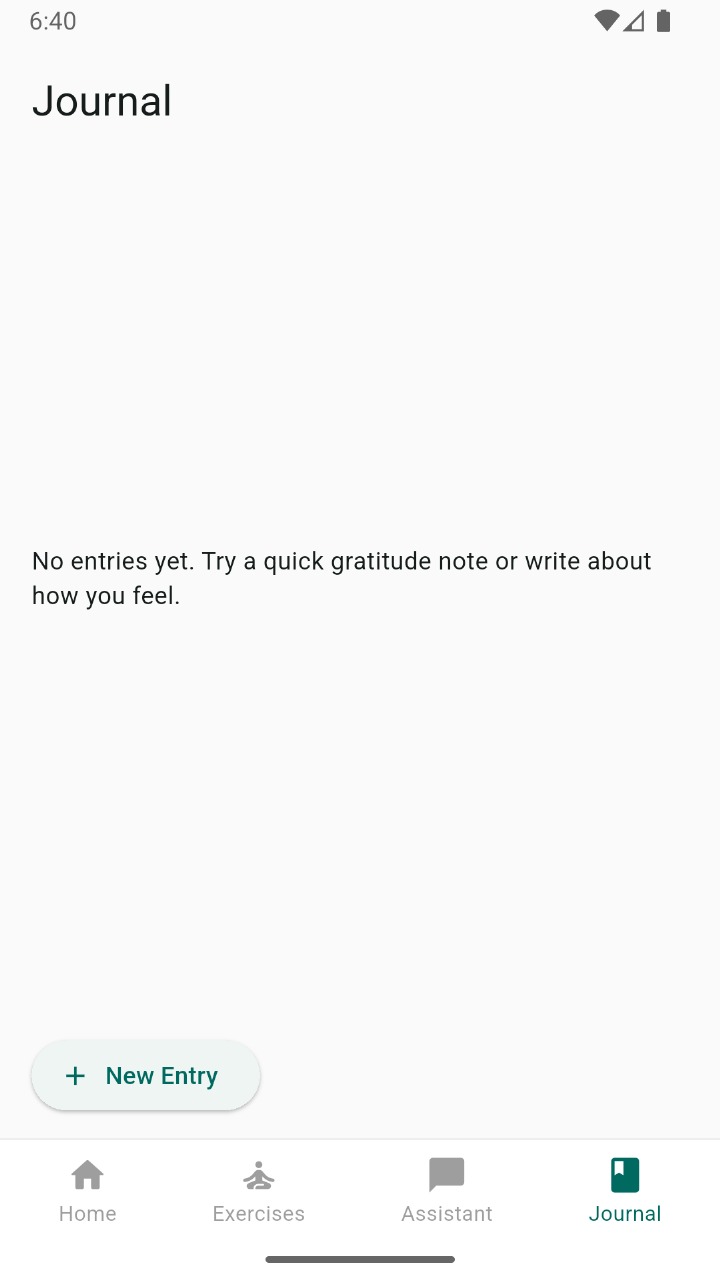
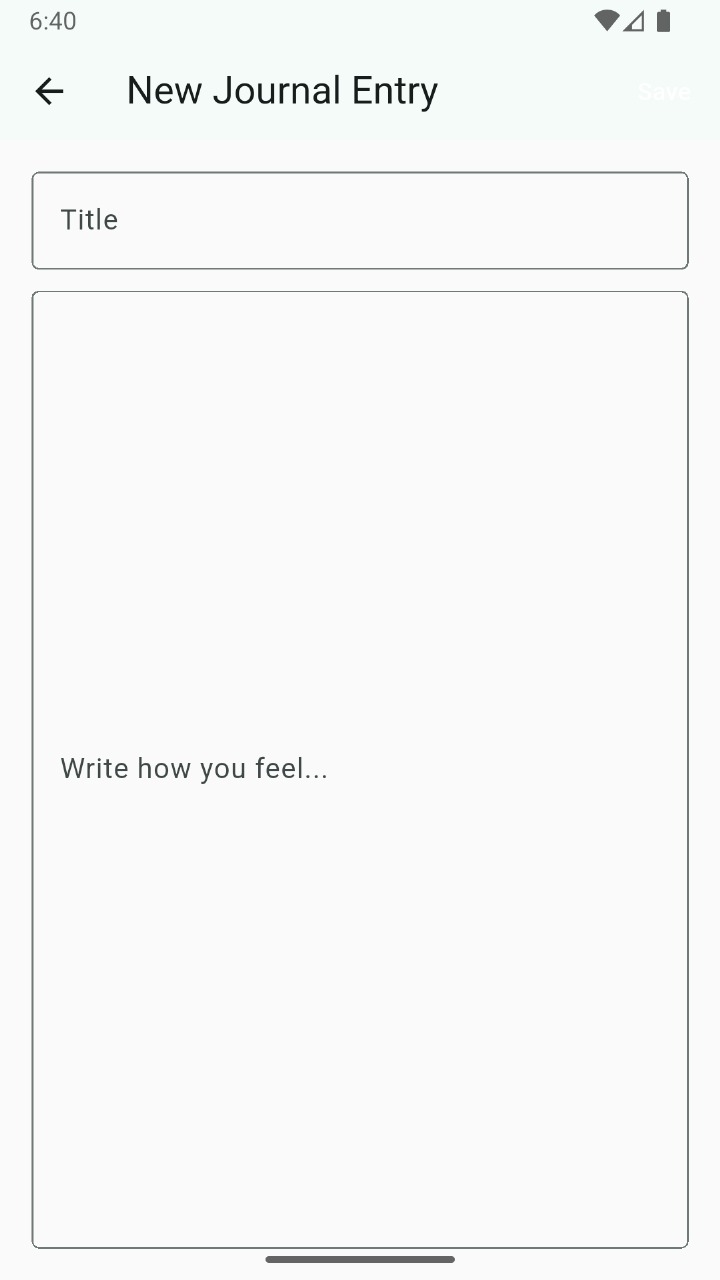
Digital Journal: A private space to write your thoughts, store gratitude notes, and look back on your emotional journey.
Calming Design: A minimalist, teal-toned interface with gentle animations so that every interaction feels like an exhale, not another stress point.
At its core, Serene isn’t about doing a lot — it’s about doing enough to make your day a little lighter.
🛠️ How I built it
I built Serene using Flutter, focusing on making the interface cross-platform and mobile-first.
UI/UX: Designed a calming Material 3 layout, with teal and soft gradients to promote a sense of ease. Animations were added to the breathing exercises (expanding and contracting circles) to make mindfulness more engaging.
Mood Tracking & Sentiment Analysis: Built a simple backend logic that detects sentiment from notes and matches it with supportive suggestions.
Mindfulness Modules: Each exercise was coded as a stateful widget, tracking progress and completion.
AI Assistant: A lightweight, rule-based conversational system that gives empathetic, reflective responses and ties directly into suggesting exercises.
Data Handling: Journals and check-ins are stored in-memory for now, but the structure allows scaling into persistent storage later.
The priority was always emotion before complexity — keeping the app fast, clean, and welcoming.
⚡ Challenges I ran into
Humanizing AI Responses: It’s easy for an assistant to feel robotic. I had to carefully design phrasing and reflective techniques so that the AI “listens” instead of just replying.
Balancing Features with Calmness: Too many features can overwhelm users. The challenge was picking the right tools — only what truly helps in the moment.
Designing for Emotions: Unlike productivity apps, Serene had to feel safe and kind. Every detail — font, spacing, animations — mattered much more than usual.
Time Constraints: Building multiple exercises, an AI module, and journaling while ensuring smooth performance required constant prioritization.
🌟 Accomplishments that I’m proud of
Serene feels human and soothing, not just functional. That was the hardest but most important goal.
I managed to combine technology + empathy in one experience — balancing mental health principles with Flutter development.
The guided breathing exercise with animations is one of my proudest touches; it makes something simple feel alive and supportive.
I’m proud of building Serene in a way that could genuinely help someone on a difficult day.
📚 What I learned
Design = Emotion: The way you design an app deeply affects how people feel using it. Colors, words, and transitions can calm or stress users.
Less is More: For mental health tools, simplicity is power. Users don’t need 20 features — they need the right three or four, presented gently.
Tech Empathy: Coding for emotions is different than coding for efficiency. I learned to think like a designer, psychologist, and developer at once.
State Management in Flutter: Handling mood sliders, exercises, and journaling taught me practical lessons about Flutter’s state management and user experience optimization.
🚀 What’s next for Serene
Secure Cloud Journal Storage: To allow safe, private, and encrypted journaling.
Smarter AI Support: Move from rule-based responses to a more adaptive assistant that learns from user history.
Audio & Guided Sessions: Incorporating short meditations, calming sounds, and guided reflections.
Progress Tracking: Gentle insights into emotional trends over time, without feeling like “data overload.”
Community Integration: Optional, anonymous peer-support spaces for shared encouragement.
Ultimately, I see Serene growing into a pocket-sized companion for mental wellbeing — always there when you need a breath, a thought, or simply a reminder that you’re not alone.


Log in or sign up for Devpost to join the conversation.