-
-

1024×1024 app icon
-
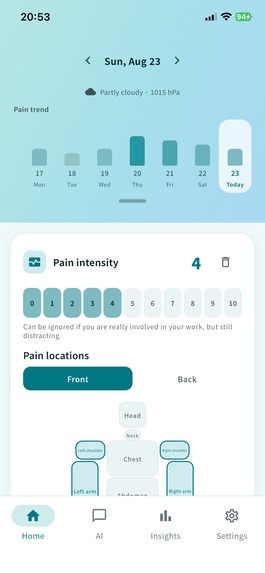
screenshot hero
-
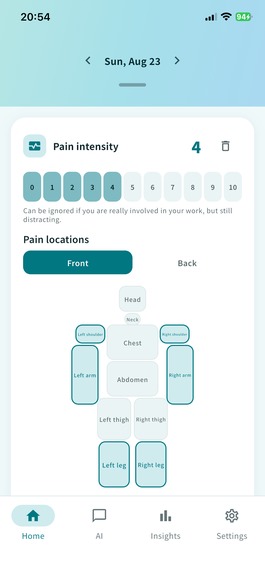
screenshot record
-
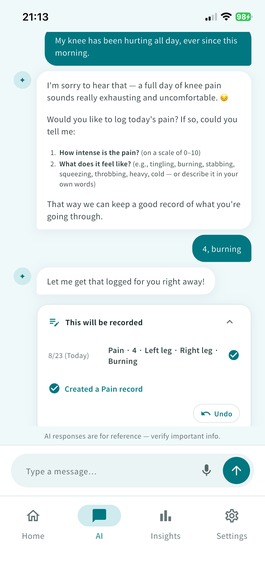
screenshot ai chat
-
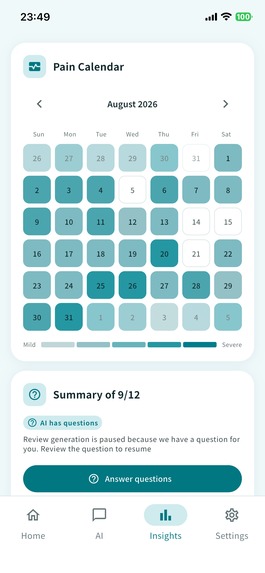
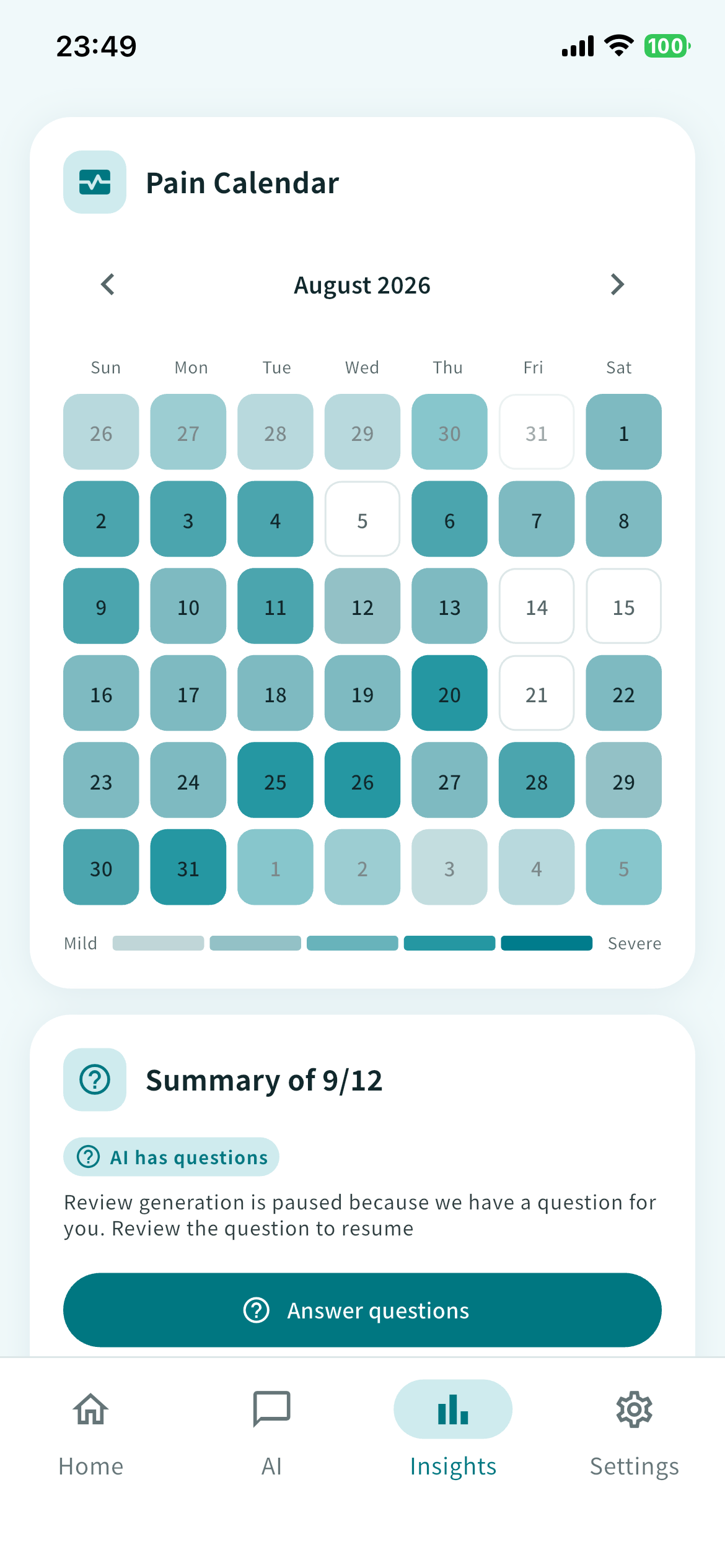
screenshot calendar
-
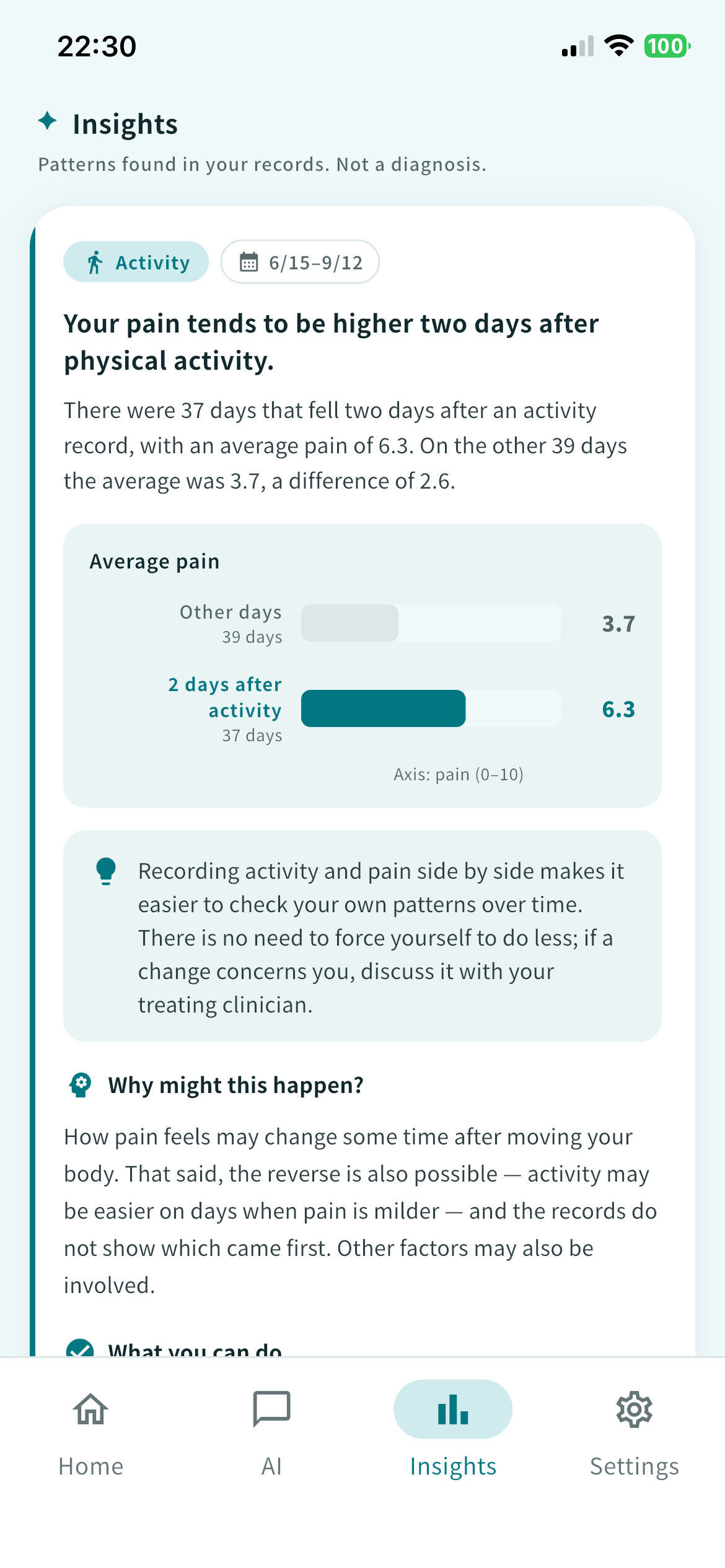
screenshot insights

Inspiration
Seren started with my wife, who lives with chronic pain.
She had been tracking her symptoms, but one day she told me that simply recording how she felt did not make her feel like she was actually doing anything to help herself. Making sense of those records required time and energy — exactly what can be difficult to spare when living with pain.
That made me wonder: what if recording felt less like another task, and more like having someone help you understand what is happening?
As a developer, I had already become used to agentic AI doing more than answering questions — understanding intent, taking actions, and handling repetitive work on my behalf. I wanted to bring that experience to people living with chronic pain without requiring them to understand anything about AI.
Seren became an AI companion that lets people talk naturally about their day, turns those conversations into records, and helps surface changes and patterns over time.
As I learned more about chronic pain, I also learned how easily it can lead to psychological and social isolation. There are probably worries and struggles that even my wife cannot fully share with me. Seren could be more than a pain tracker: it could also be a companion people can talk to and feel understood by.
What it does
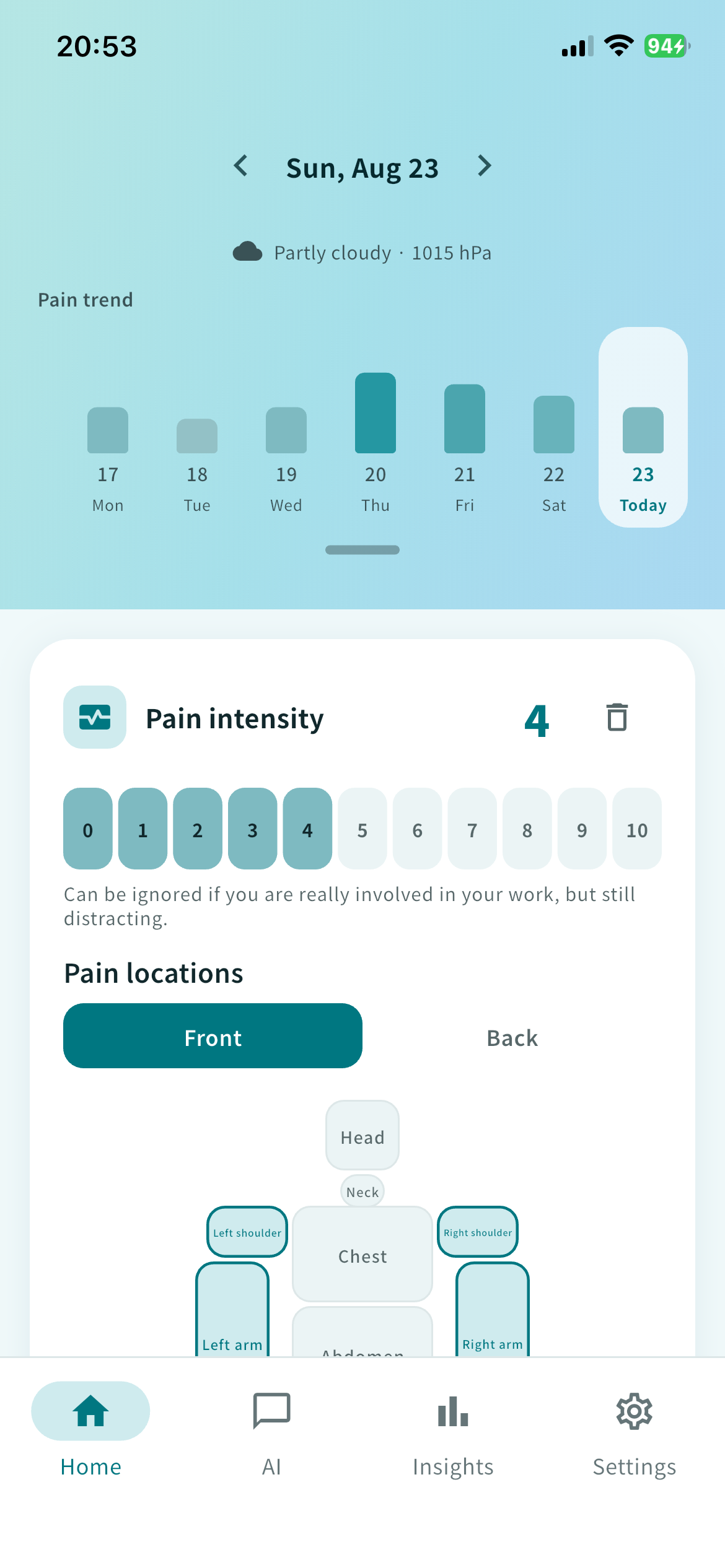
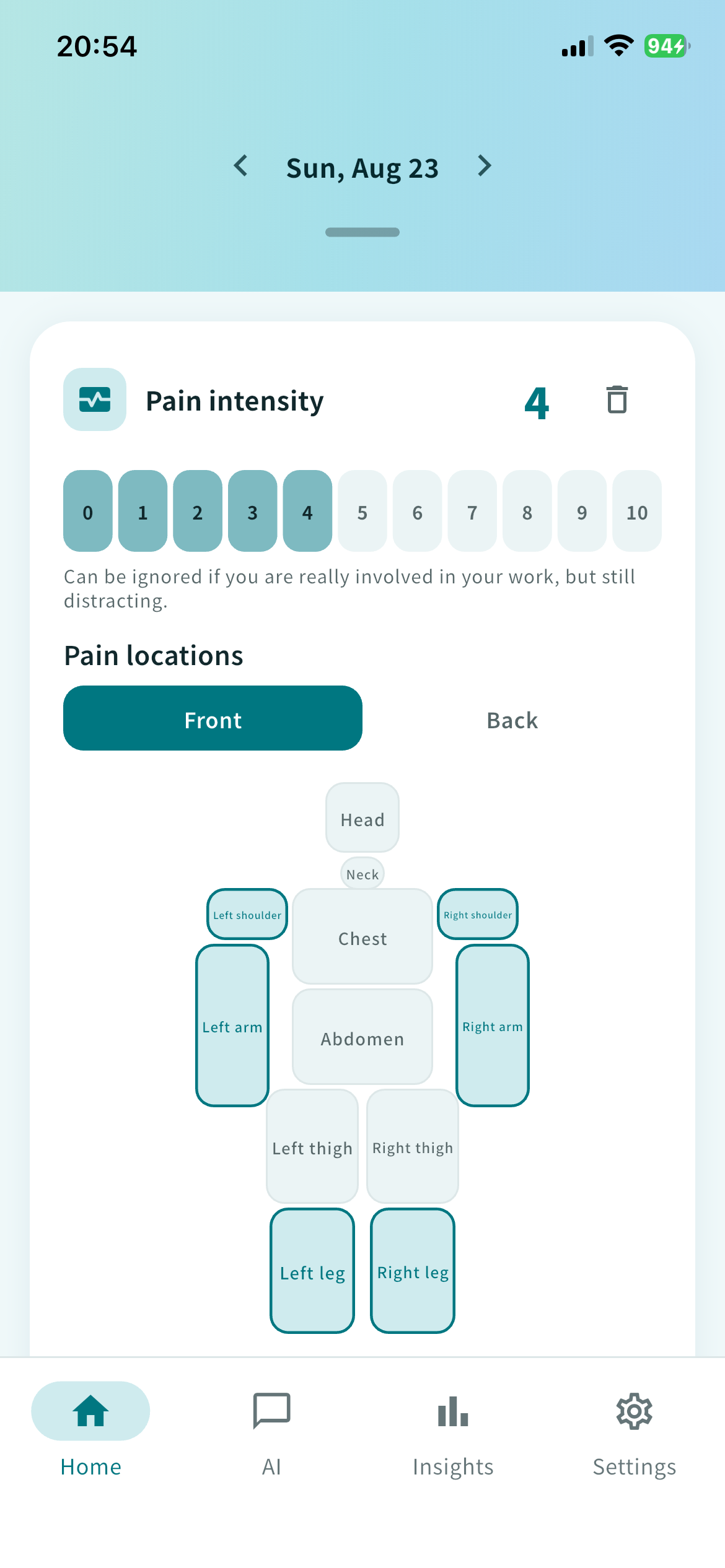
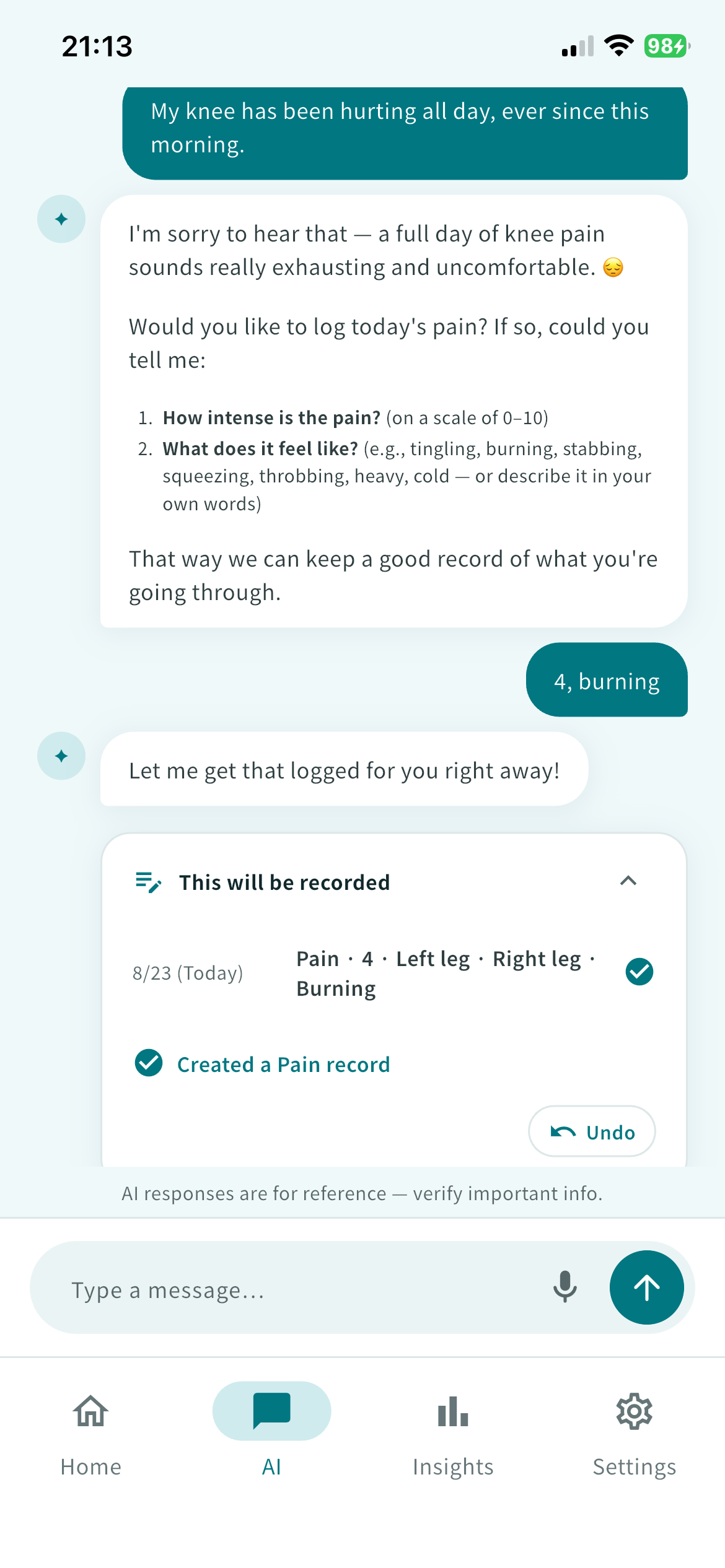
Users can simply talk about their day, and Seren turns those conversations into structured records.
- Track naturally — pain, medication, activities, sleep, and other daily experiences.
- Let AI handle the work — creating, updating, and organizing records automatically.
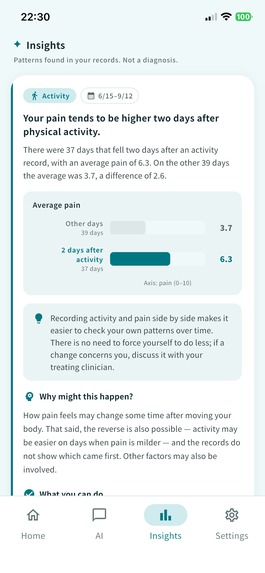
- Review changes and patterns over time — while also providing a place to talk about pain and everyday struggles.
Seren does not diagnose or replace medical care. It is designed to reduce the burden of tracking and help people better understand their own experiences.
How I built it
Although Seren is a solo project, I brought practices from my professional engineering experience into its development. Because it is designed for long-term use, I focused on reliability, maintainability, and continuous improvement:
- Flutter + Firebase — Flutter powers the mobile app, while Firebase provides authentication, Firestore, and backend services.
- Genkit + Function Calling — Genkit orchestrates prompts, models, and tools, allowing the model to create, update, and retrieve records from conversation.
- Second-layer AI safety validation — a separate validation model evaluates user-facing AI responses against Seren's safety rules, including medical judgments and self-harm-related content.
- Infrastructure as Code and production-like environments — Terraform manages cloud resources, with separate development and production environments built from the same infrastructure definitions.
- GitOps-style CI/CD and automated review — GitHub Actions automates builds, tests, and deployments, while CodeRabbit supplements testing and manual review.
- AI agents throughout development — I use Claude Code and Codex across specification, product design, implementation, testing, review, and maintenance.
- RevenueCat for purchase management — RevenueCat handles in-app purchases.
Challenges I ran into
Keeping AI useful, safe, and measurable — Seren must understand health-related conversations without making diagnoses or treatment recommendations. I built a promptfoo-based evaluation framework to detect regressions, compare LLMs quantitatively, and measure AI quality instead of relying on intuition.
Handling sensitive health data responsibly — Privacy and data governance shaped the architecture from the beginning. I carefully controlled what data is collected, stored, shared with external services, and deleted, while preparing the legal documentation required for release.
Making AI-assisted development safe for production — Shortly after release, an AI coding agent accidentally pushed a release tag and triggered the production deployment pipelines. An existing validation gate stopped the deployment, but the incident led me to strengthen the CD pipeline and add stricter guardrails around AI agents and release operations.
Building observability after launch — Seren initially had little monitoring, making failures easy to miss. I added monitoring and alerting with Firebase and Google Cloud so operational issues and user feedback can be detected quickly.
Navigating Android publishing requirements — While preparing to publish Seren on Google Play, I learned that I needed an organization developer account rather than my current personal account. I plan to register as a sole proprietor, set up an organization account, and release the Android version.
Accomplishments I'm proud of
The accomplishment I value most is seeing Seren become genuinely useful to my wife. She has told me that tracking her pain now feels meaningful rather than like simply collecting data, and that Seren has helped her feel more positive about engaging with her care. She also actively gives me feedback to improve the app.
I shared Seren with a Japanese chronic pain community on LINE, where people have already started trying it. Some Android users have also told me they are looking forward to the Android release.
Seren has also been accepted for inclusion in an upcoming newsletter from a Japanese nonprofit supporting people with fibromyalgia, giving me another opportunity to reach people through an established patient community.
What I learned
The biggest lesson was how much AI has changed what a solo developer can accomplish. I had tried building products before, but Seren is the first one I actually shipped. AI supported the entire process — planning, design, implementation, testing, review, infrastructure, and operations.
Building an LLM-powered product also taught me a different approach to quality: rubric-based evaluation, model comparison, regression testing, safety validation, and guardrails for health-related AI.
AI-assisted development can also consume huge numbers of tokens, especially in automated review-and-fix loops. Token efficiency, context management, harness design, permissions, and validation gates became engineering concerns of their own. I was also surprised that implementation agents often proposed deterministic solutions even for features intentionally designed around LLMs, teaching me to be explicit about where AI is part of the product concept.
Finally, Seren made me think seriously about business for the first time — unit economics, KPIs, retention, sustainability, and especially the difficulty of forecasting AI API costs.
What's next for Seren
I plan to keep developing Seren over the long term, starting with these five areas:
- Smarter and more reliable AI — continue measuring and comparing LLMs, refining prompts and safety evaluation, and optimizing quality and API cost.
- Richer tracking — expand the kinds of daily information users can record while keeping the experience simple and low-effort.
- Deeper long-term insights — strengthen review and insight features so accumulated records can help users notice meaningful changes and patterns over time.
- A stronger production foundation — continue improving reliability, security, backups, monitoring, and other non-functional aspects needed for a long-running health-related service.
- Growing sustainably — release Seren on Android, expand availability to more countries, and refine the business model through real usage, retention, cost, and support metrics.
With around 150 GitHub issues already in the backlog 😭 — covering features, AI quality, reliability, security, and operations — I expect Seren to keep evolving for quite a while.
Built With
- claudecode
- coderabbit
- codex
- dart
- firebase
- flutter
- github
- revenuecat
- terraform
- typescript

Log in or sign up for Devpost to join the conversation.