-
-
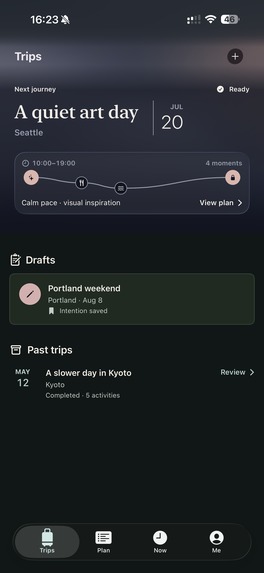
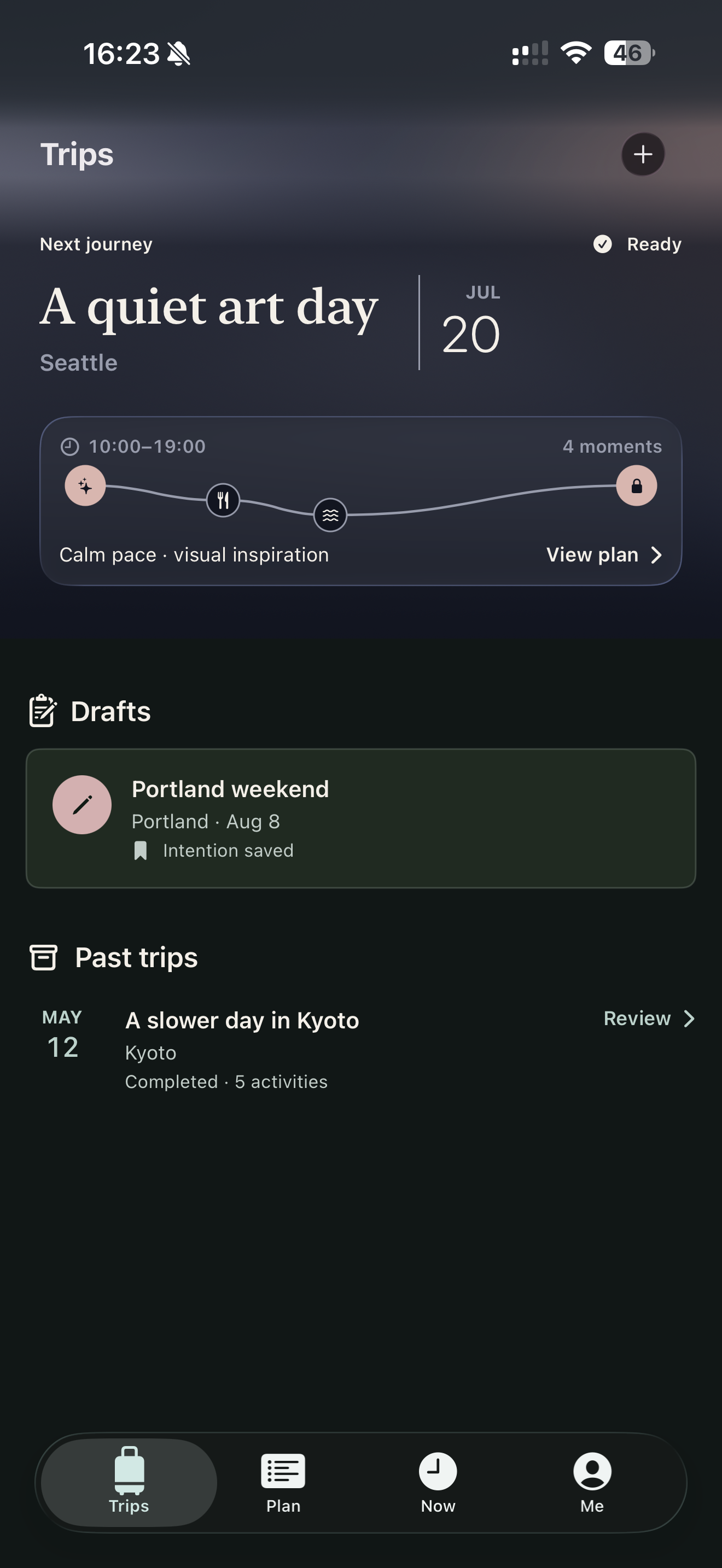
trip page
-
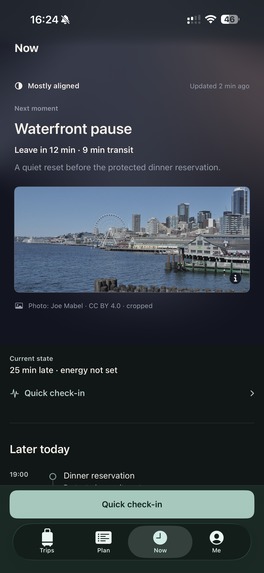
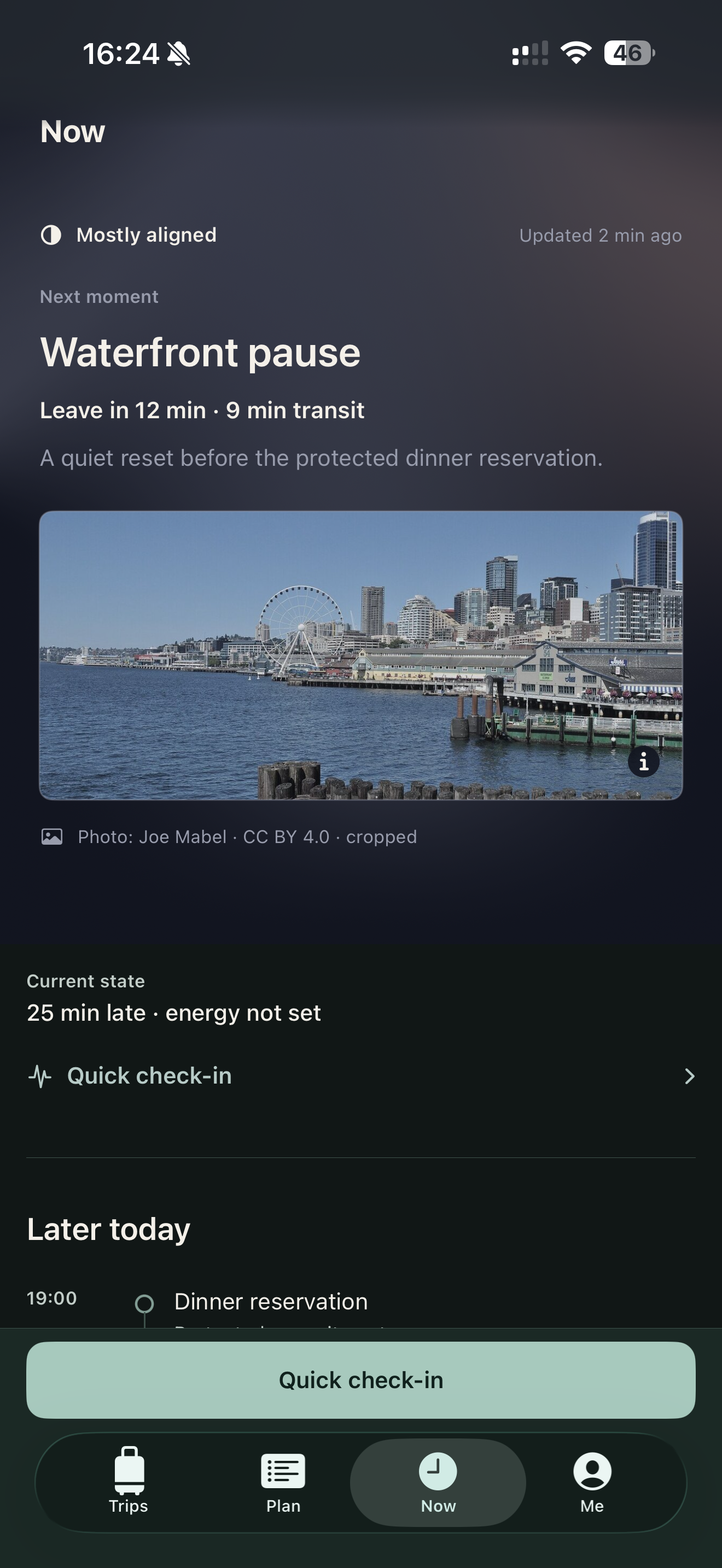
now page
-
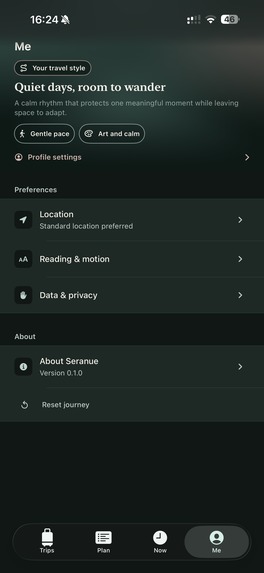
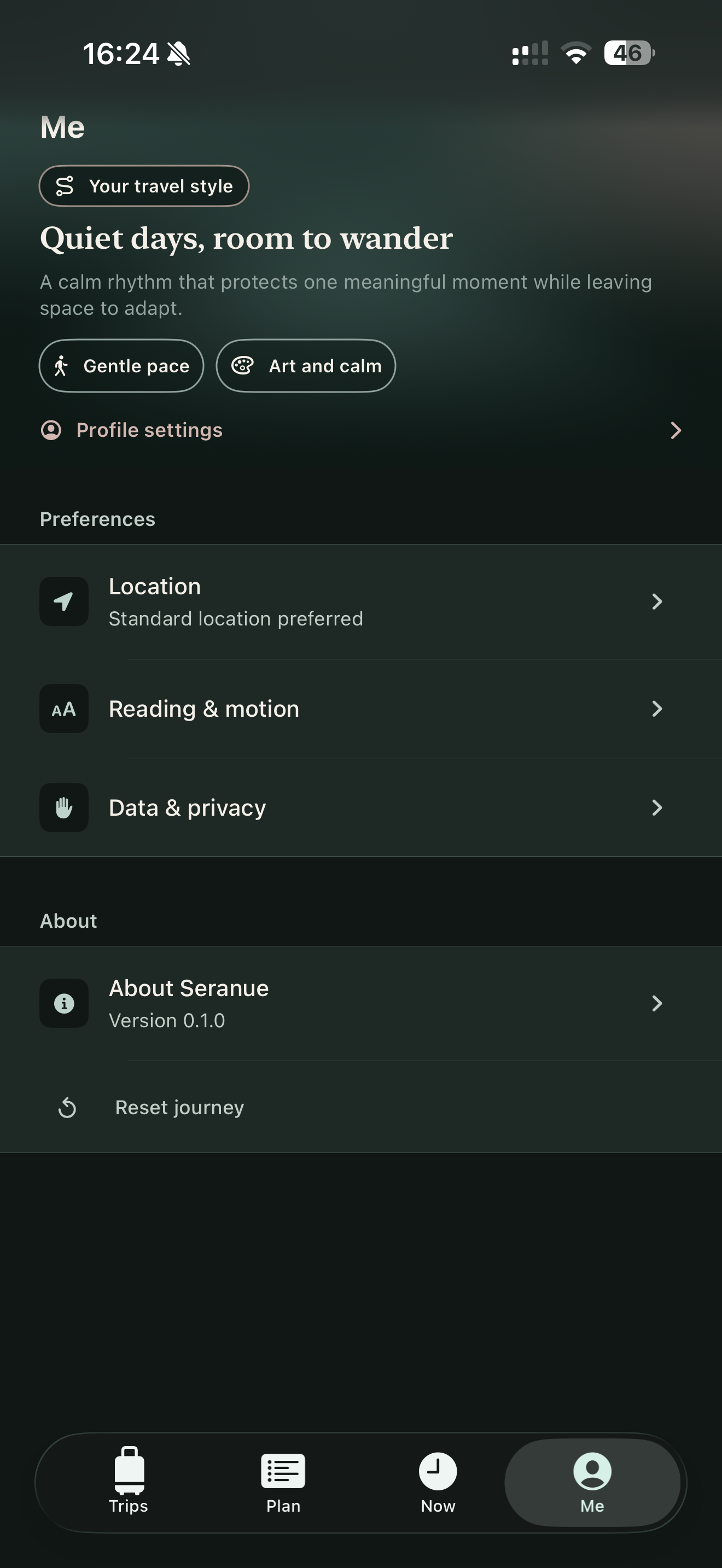
me page
-
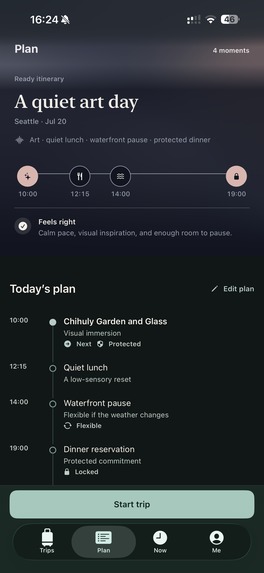
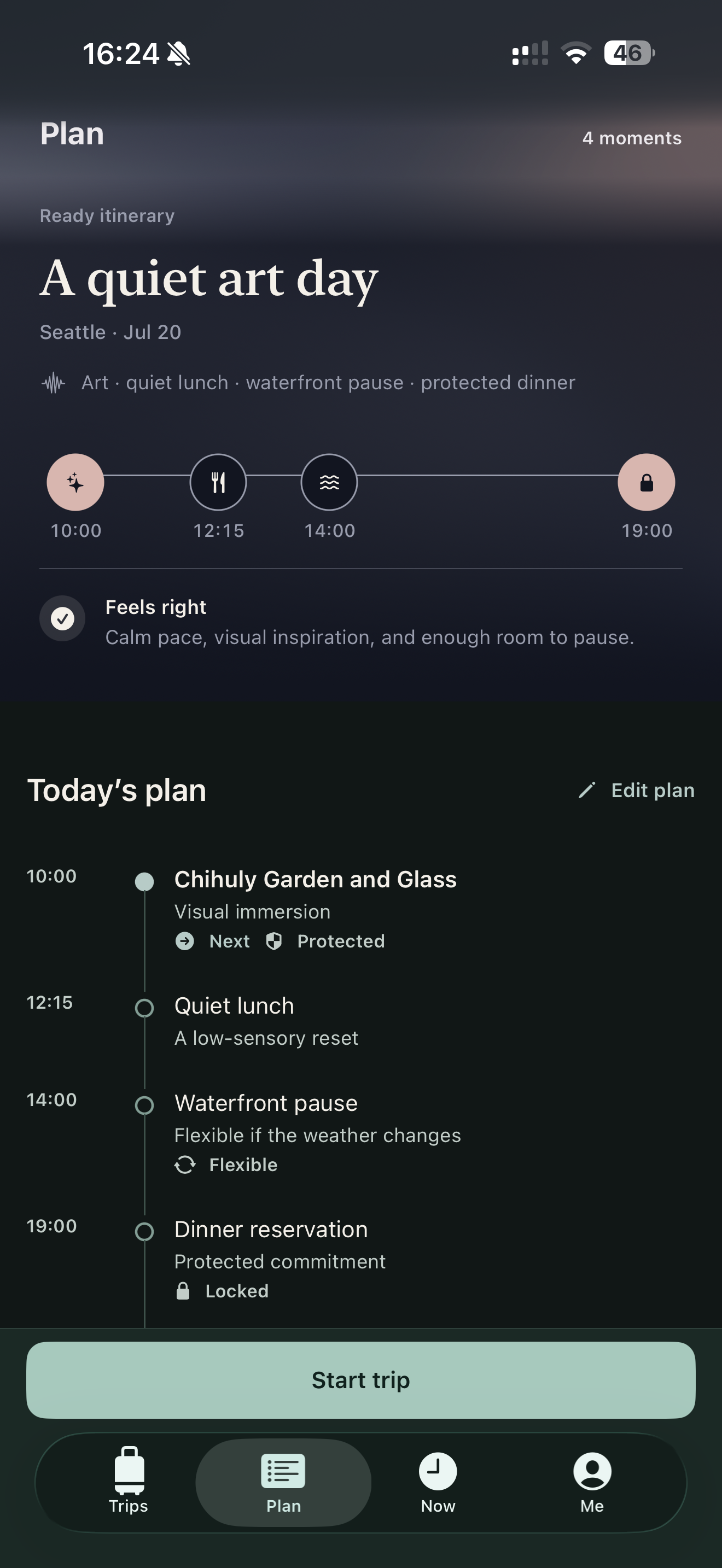
plan page
-
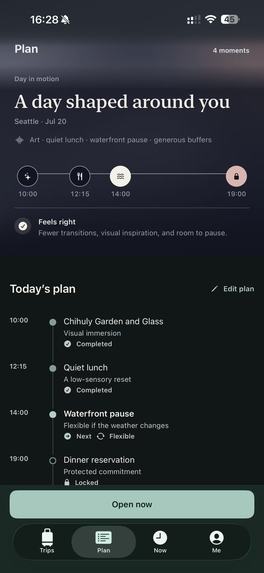
plan page
-
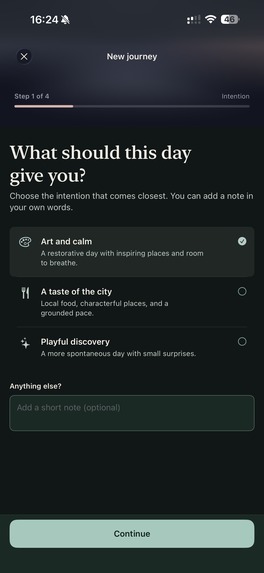
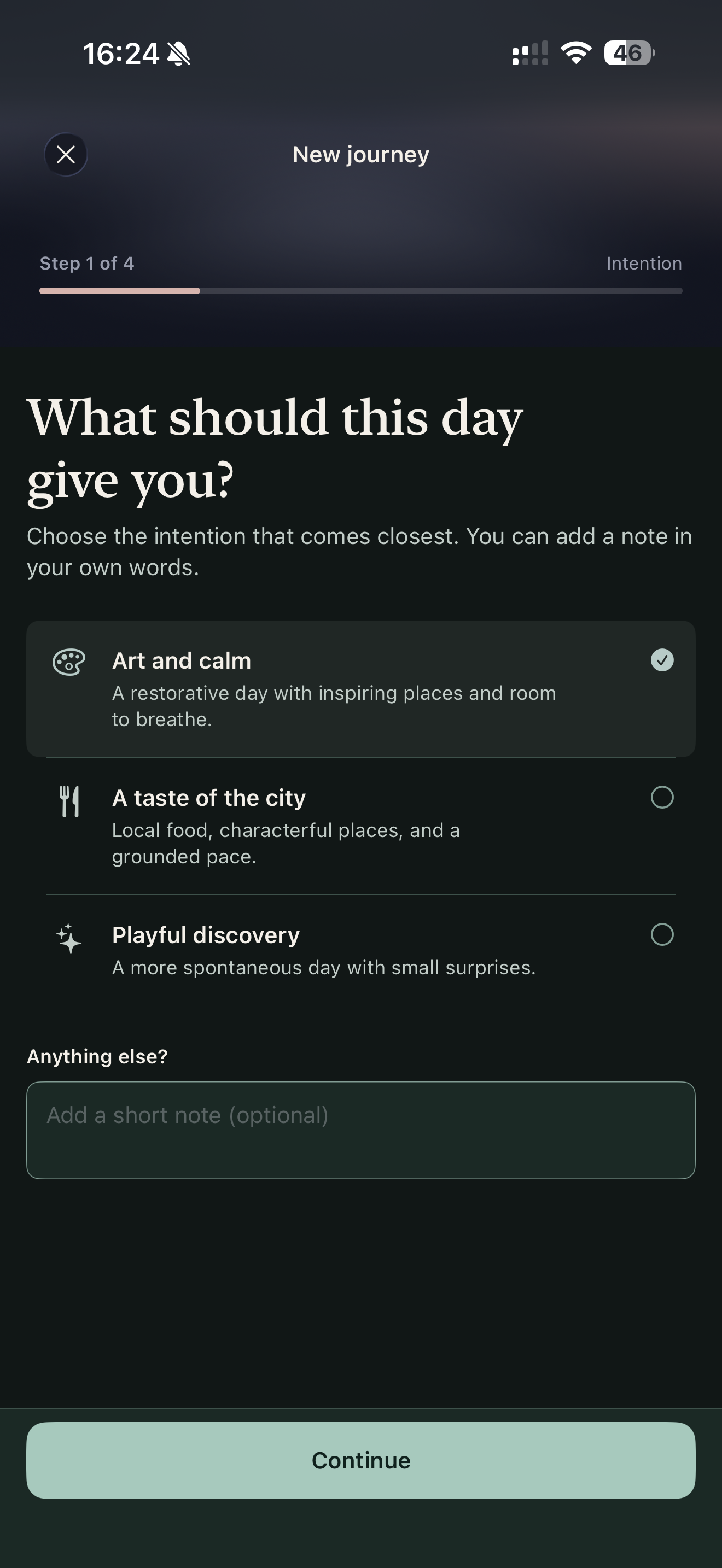
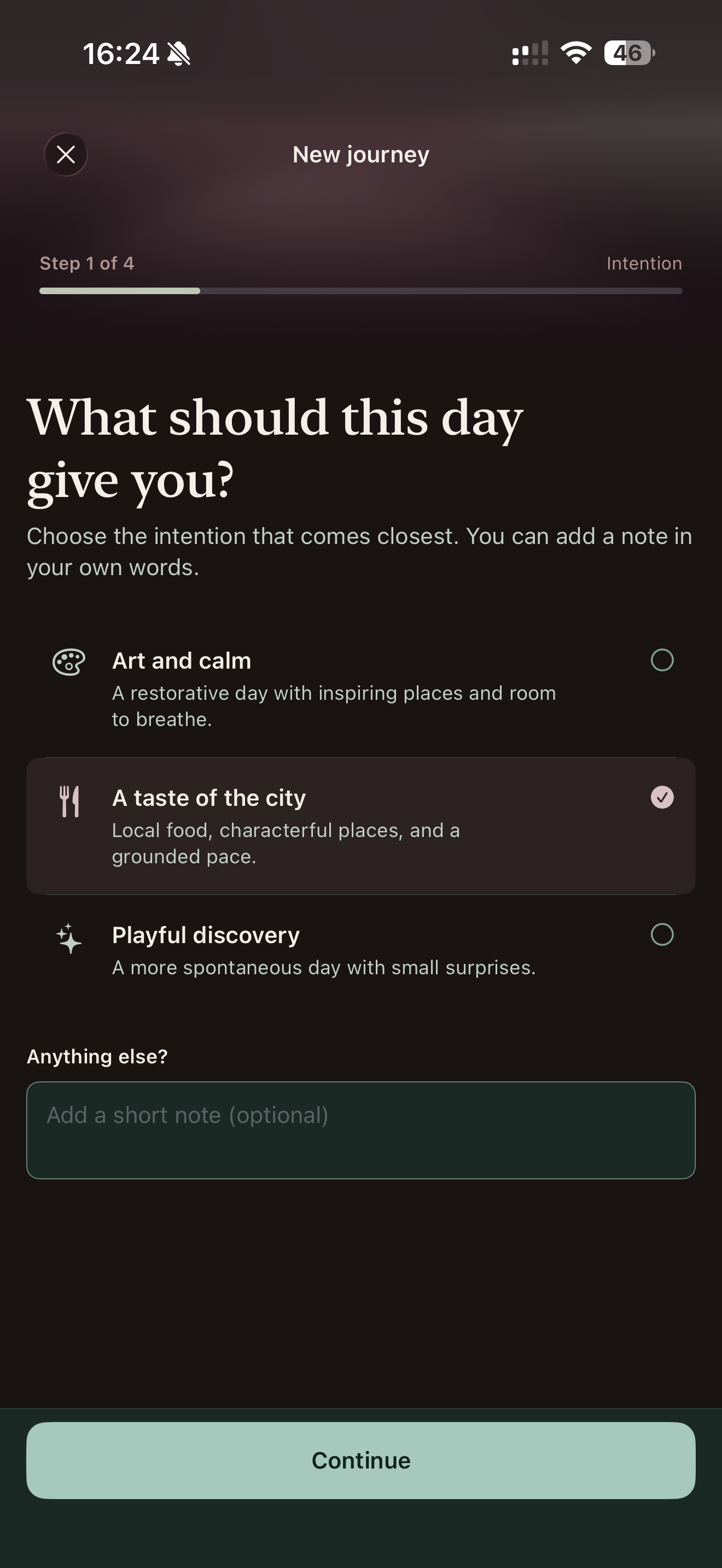
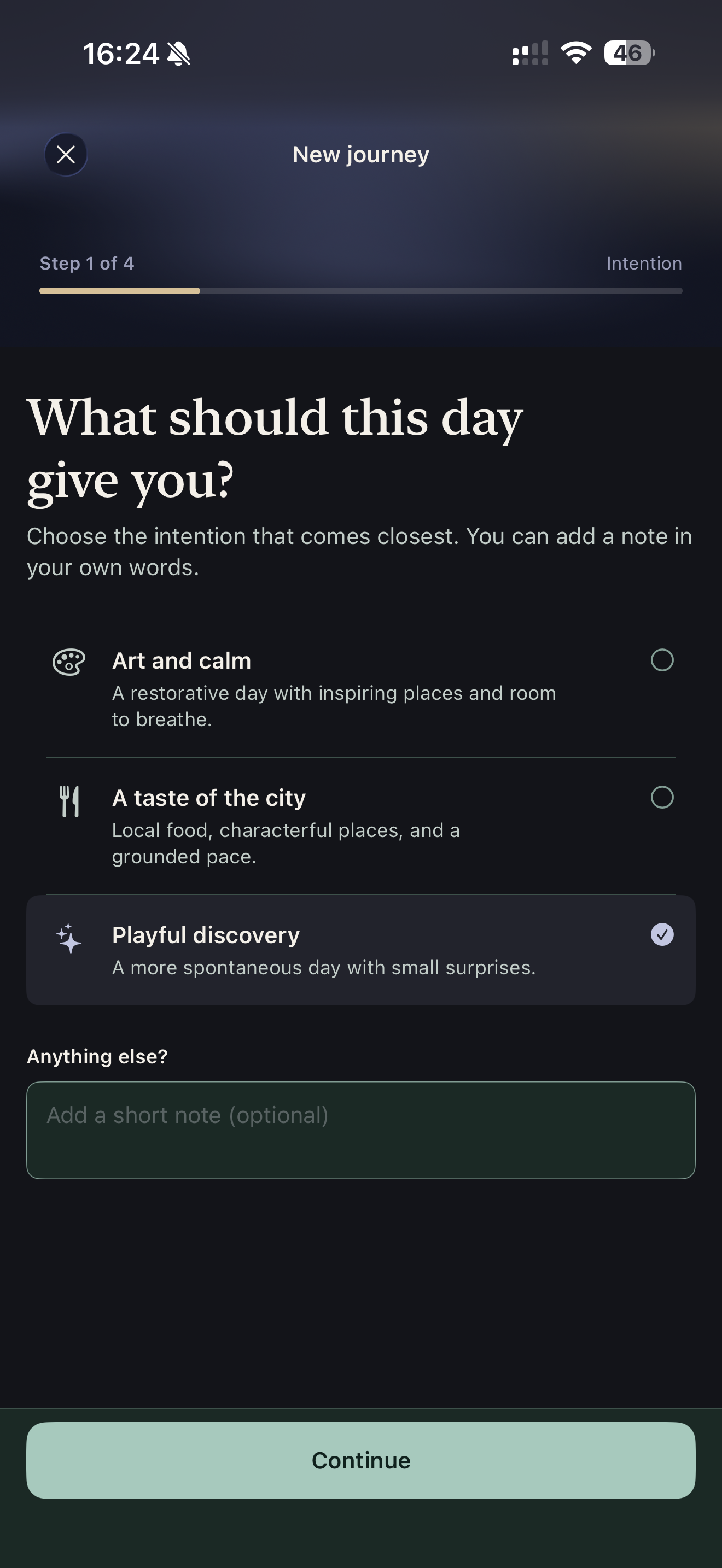
add new journey
-
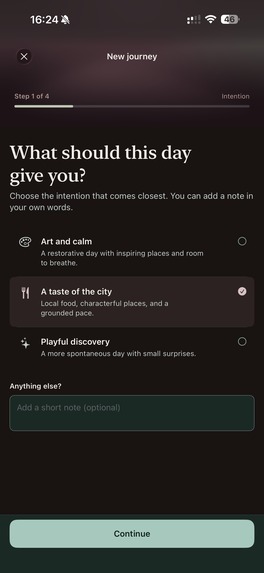
add new journey
-
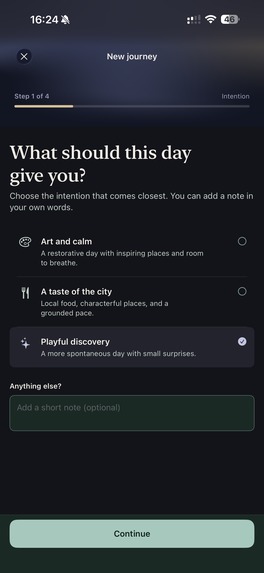
add new journey
-
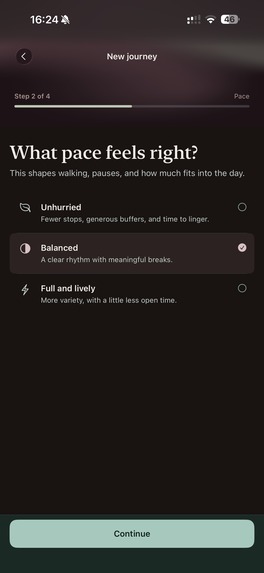
add new journey
-
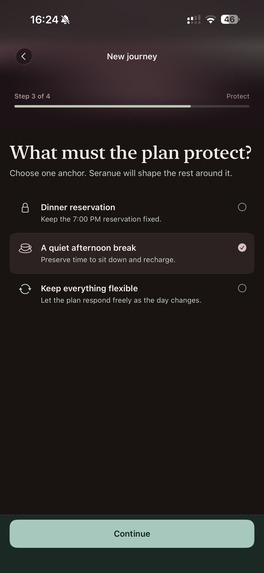
add new journey
-
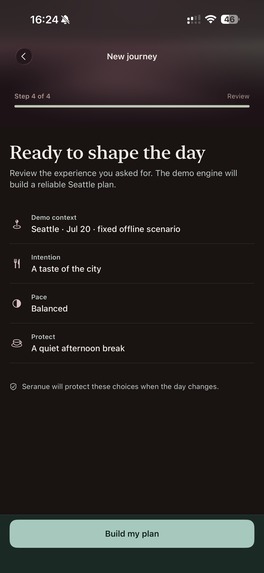
plan ready
-
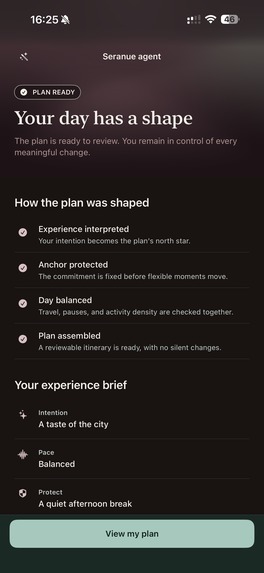
plan preview
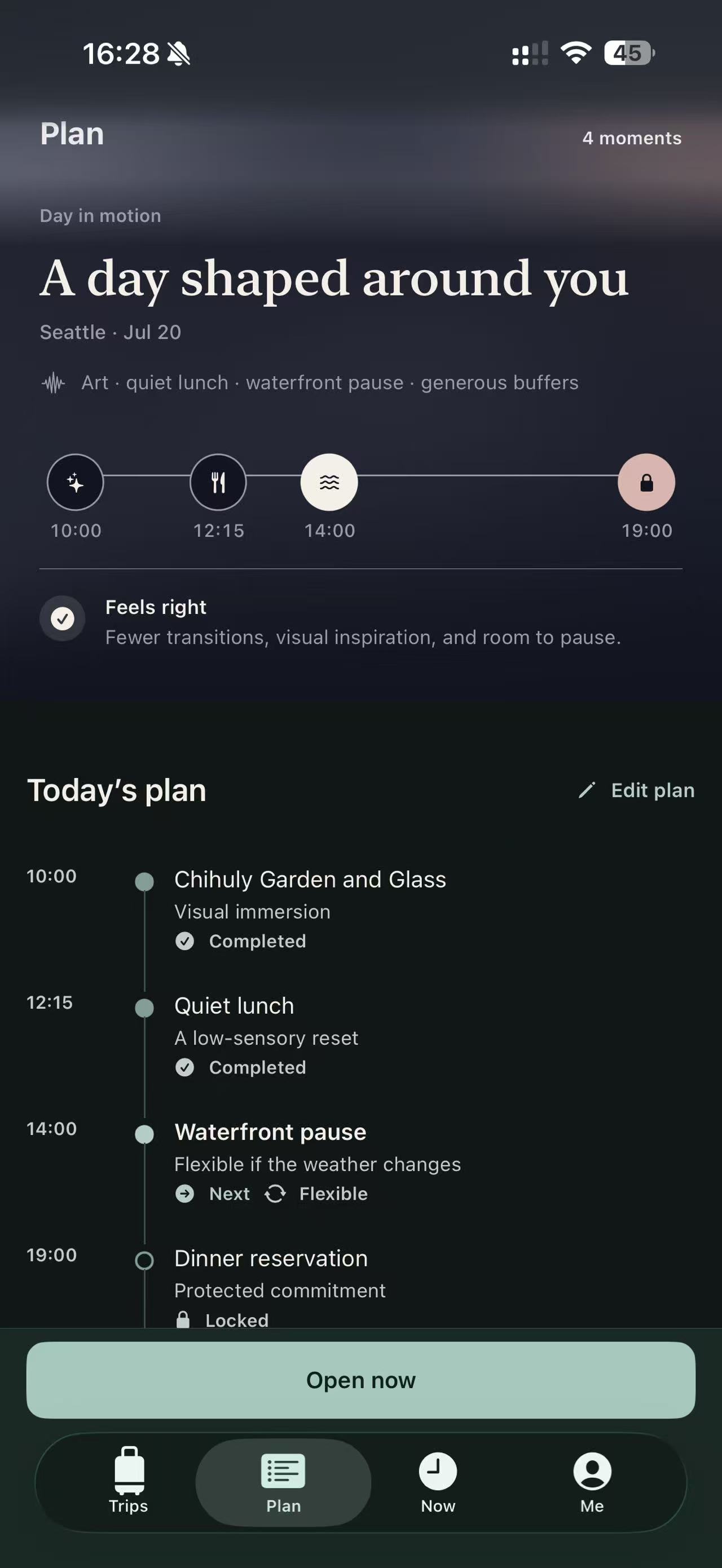
Inspiration
Most travel-planning tools begin with the same questions: Where do you want to go? How many days do you have? What is your budget?
But those questions miss something essential: What kind of trip do you need right now?
A person recovering from burnout may not want a packed itinerary, even if they normally enjoy exploring. Someone traveling after a major life change may need space, calm, and flexibility rather than a checklist of popular attractions. Even during the same trip, a traveler’s energy, mood, and priorities can change from one day to the next.
We created Seranue to explore a more human approach to travel planning—one that plans not only around destinations and logistics, but also around the traveler’s present emotional and physical state.
Seranue — Travel for how you feel now.
What it does
Seranue is an adaptive AI travel companion that creates trips around who the traveler is in the present moment.
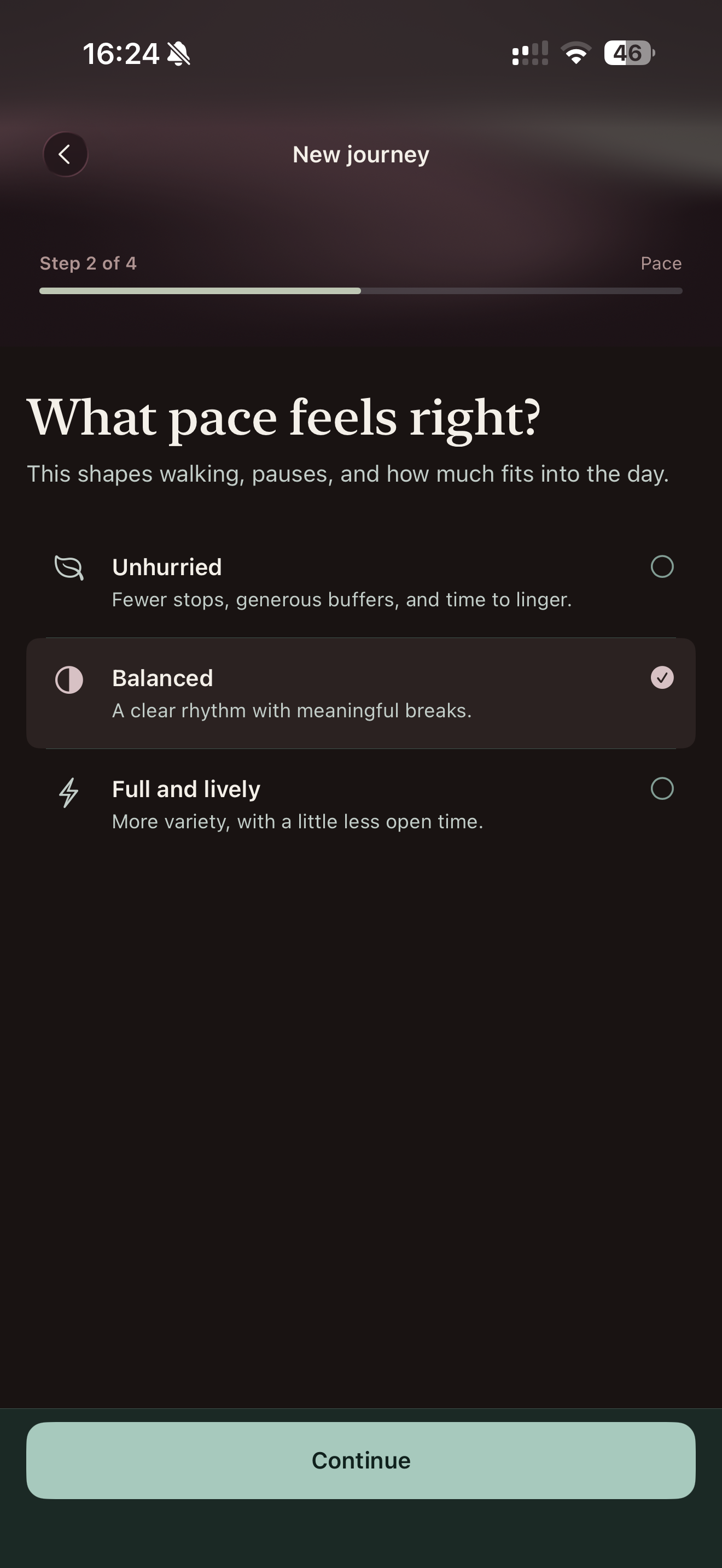
Instead of beginning with a long preference form, Seranue uses a conversational check-in to understand factors such as:
- Current energy level
- Desired emotional tone
- Preferred pace
- Social comfort
- Need for structure or spontaneity
- Budget and practical constraints
- Activities the traveler wants more or less of
Seranue translates these responses into a personalized travel profile and generates an itinerary that reflects the traveler’s current needs.
For example, a traveler who feels mentally exhausted might receive a slower plan with quiet neighborhoods, nature, flexible mornings, and fewer transitions. A traveler seeking renewal might receive a more exploratory itinerary with creative activities, local discoveries, and moments designed to restore curiosity.
The experience remains adaptive throughout the trip. Travelers can check in again by saying things such as:
“I have less energy than I expected.”
“I want something more social tonight.”
“Tomorrow feels too packed.”
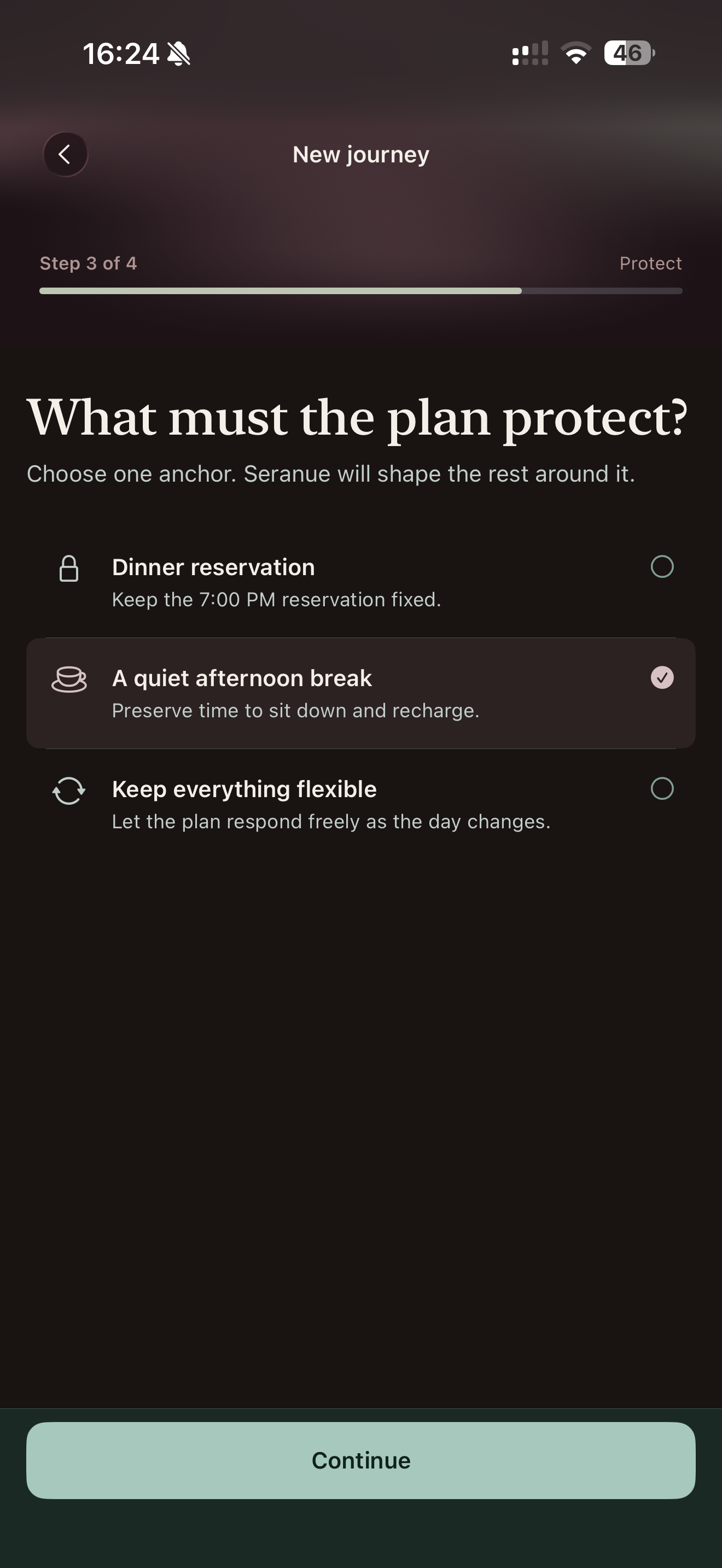
Seranue then adjusts the itinerary while preserving important reservations, time constraints, and the overall intention of the trip.
How we built it
We designed Seranue around a three-stage adaptive planning system.
1. Understanding the traveler
The onboarding conversation captures both traditional travel constraints and more personal signals, including energy, pace, emotional intention, and social preference.
The system converts these responses into a structured traveler-state profile rather than treating the conversation as unstructured text.
2. Generating a state-aware itinerary
The planning engine evaluates possible activities based on several dimensions:
- Relevance to the destination
- Compatibility with the traveler’s current state
- Travel time and geographic proximity
- Budget
- Schedule feasibility
- Desired intensity and pace
- Balance between activity and recovery
This allows Seranue to create an itinerary with a coherent emotional rhythm instead of simply returning a list of highly rated places.
3. Adapting during the trip
When the traveler’s circumstances change, Seranue identifies which parts of the itinerary should remain fixed and which can be adjusted.
It can reduce intensity, replace an activity, reorganize the day, or suggest a different experience without forcing the traveler to restart the planning process.
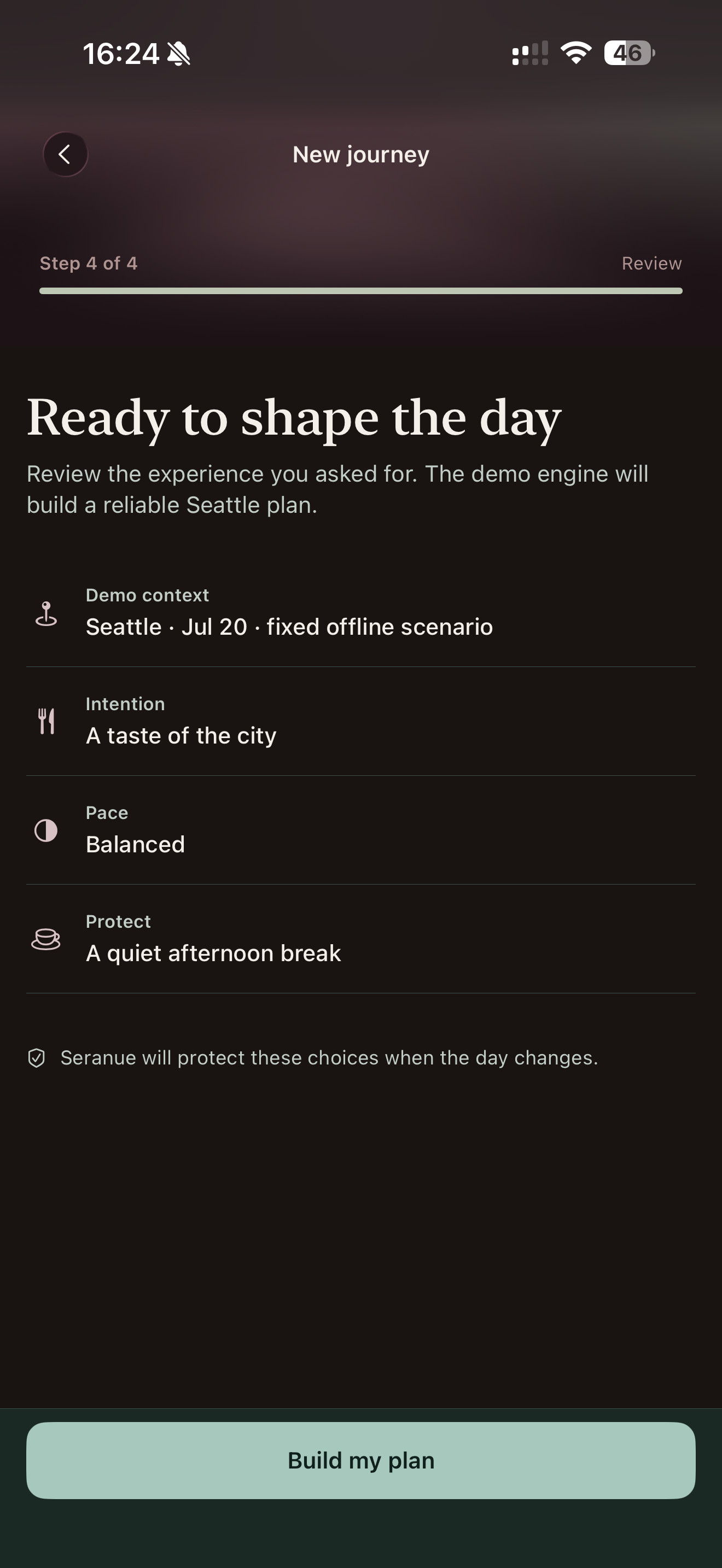
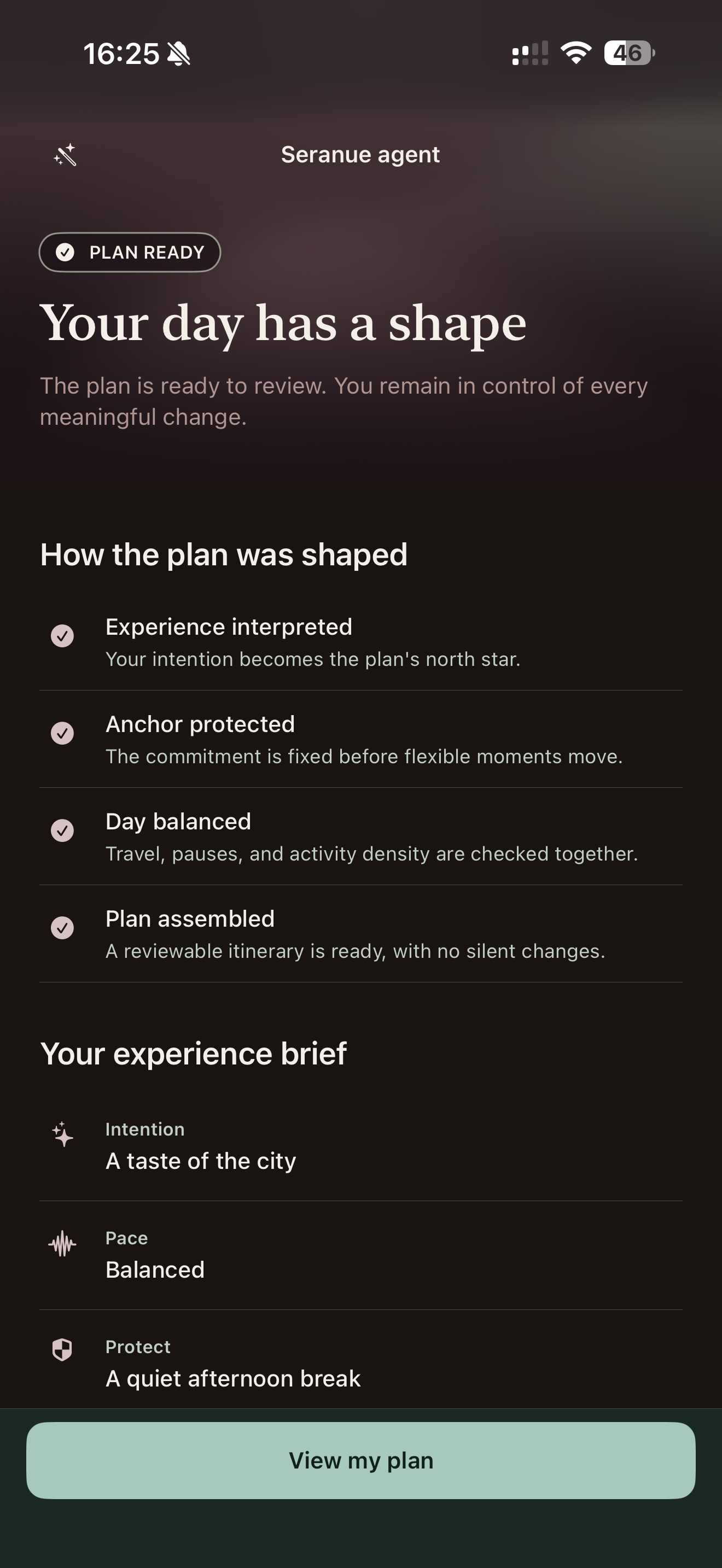
The prototype combines a conversational interface, structured preference extraction, AI-assisted itinerary generation, and an adaptive replanning flow. We also designed the experience to make the reasoning behind recommendations visible, so travelers can understand why an activity fits their current needs.
Challenges we ran into
One of our biggest challenges was translating subjective feelings into useful planning decisions.
Words such as “healing,” “peaceful,” or “adventurous” mean different things to different people. We could not treat them as fixed categories. We needed to connect them to more concrete travel variables, such as walking distance, schedule density, social interaction, noise level, flexibility, and time spent in transit.
Another challenge was balancing personalization with practicality. An emotionally suitable itinerary is not useful if it ignores opening hours, travel time, budget, or existing reservations. Seranue therefore needs to consider emotional fit and logistical feasibility at the same time.
We also had to avoid making the interaction feel like a clinical assessment. Seranue is not a therapist and does not diagnose the traveler. Its role is to help people express what kind of experience they need and translate that intention into travel decisions.
Finally, adaptive replanning introduced difficult product questions. When a traveler changes one preference, the system must determine whether to replace a single activity, reorganize the day, or reshape the entire trip without removing the parts the traveler still values.
Accomplishments that we're proud of
We are proud that Seranue moves beyond demographic profiles and static preference lists.
The project introduces a different planning principle:
The best itinerary is not only the one that matches your interests. It is the one that fits your capacity, intention, and emotional state right now.
We developed a conversational experience that helps travelers articulate needs they may not normally include in a travel search.
We also created a planning framework that connects emotional intentions to concrete itinerary characteristics, including pace, density, transition time, social intensity, and flexibility.
Most importantly, Seranue treats personalization as an ongoing process. The traveler is not locked into the version of themselves who planned the trip several weeks earlier.
What we learned
We learned that personalization is not the same as remembering what someone usually likes.
A system can know a traveler’s favorite food, preferred hotel type, and past destinations while still recommending the wrong trip for their current situation. Meaningful personalization requires context, and that context can change quickly.
We also learned that good AI travel planning requires more than generating attractive recommendations. It must make trade-offs, preserve constraints, explain its choices, and respond gracefully when the traveler changes their mind.
Designing Seranue reinforced the importance of combining AI intelligence with user agency. The system should help travelers understand their options, but the traveler must remain in control of how their trip changes.
What's next for Seranue
Our next step is to develop Seranue into a more complete travel companion that can support travelers before and during a trip.
Future directions include:
- Real-time integration with maps, weather, transportation, and opening hours
- Smarter preservation of bookings and fixed commitments during replanning
- Lightweight daily check-ins that adapt to changing energy and circumstances
- Collaborative planning for travelers with different needs
- Accessibility-aware recommendations
- Transparent explanations of why each experience was selected
- Learning from feedback without reducing the traveler to a permanent profile
In the long term, we want Seranue to make travel feel less like completing an optimized schedule and more like experiencing a journey that genuinely fits the person taking it.

Log in or sign up for Devpost to join the conversation.