Inspiration
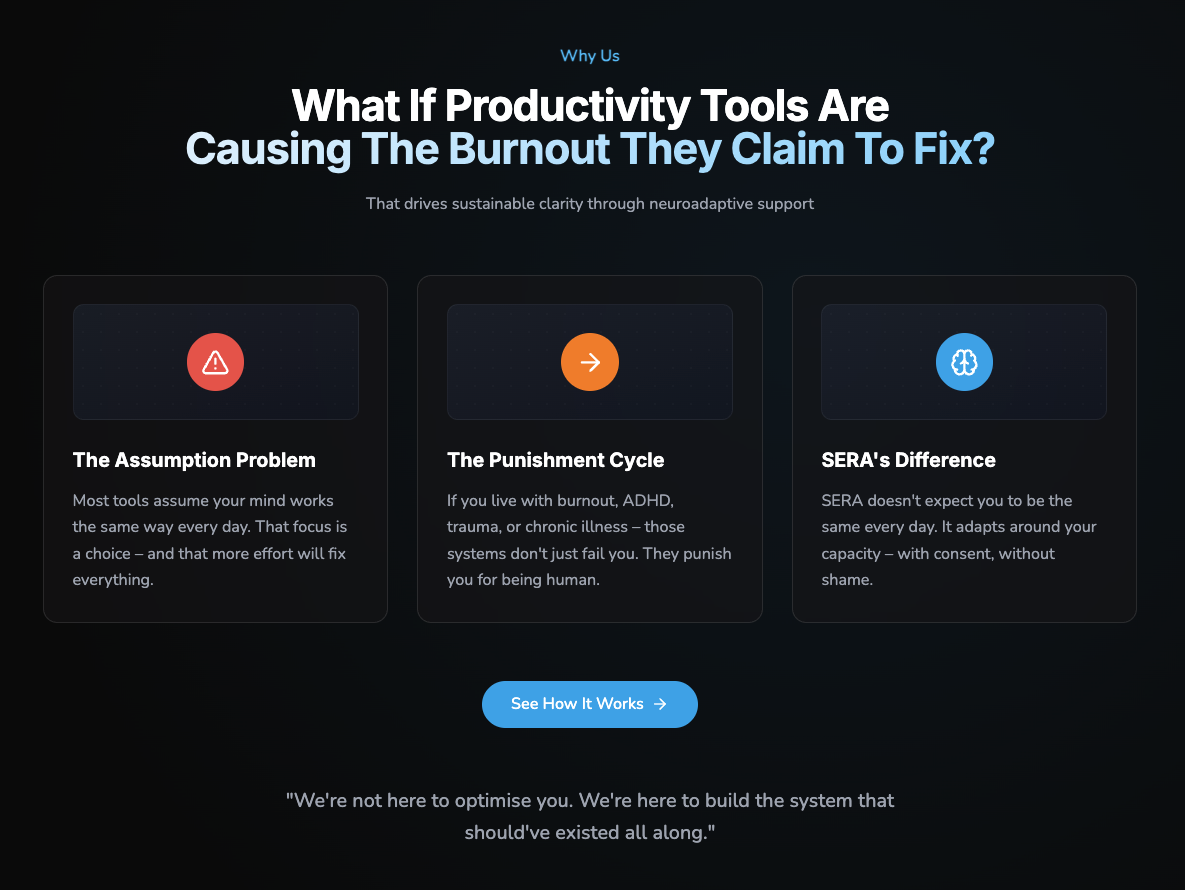
We built SERA because most systems assume stable minds.
But the reality is: life doesn’t run on autopilot—especially not for those navigating neurodivergence, burnout, trauma, or chronic overload.
We were tired of tools that punished inconsistency, pathologised overwhelm, and treated executive dysfunction as failure instead of signal.
So we stopped trying to fix people.
And started redesigning the systems around them.
SERA is the system we should’ve had growing up. Now we’re building it for the future.
What it does
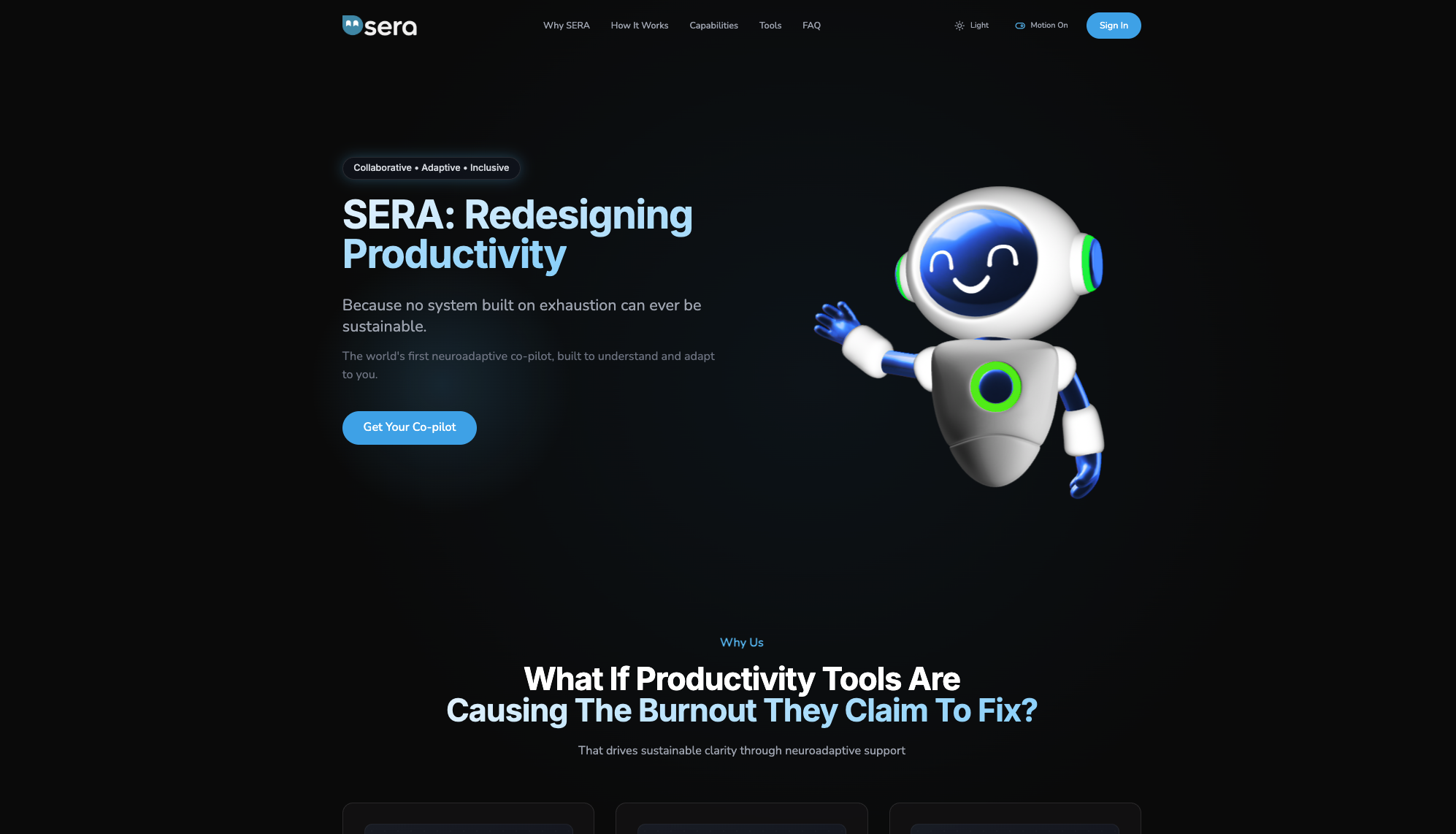
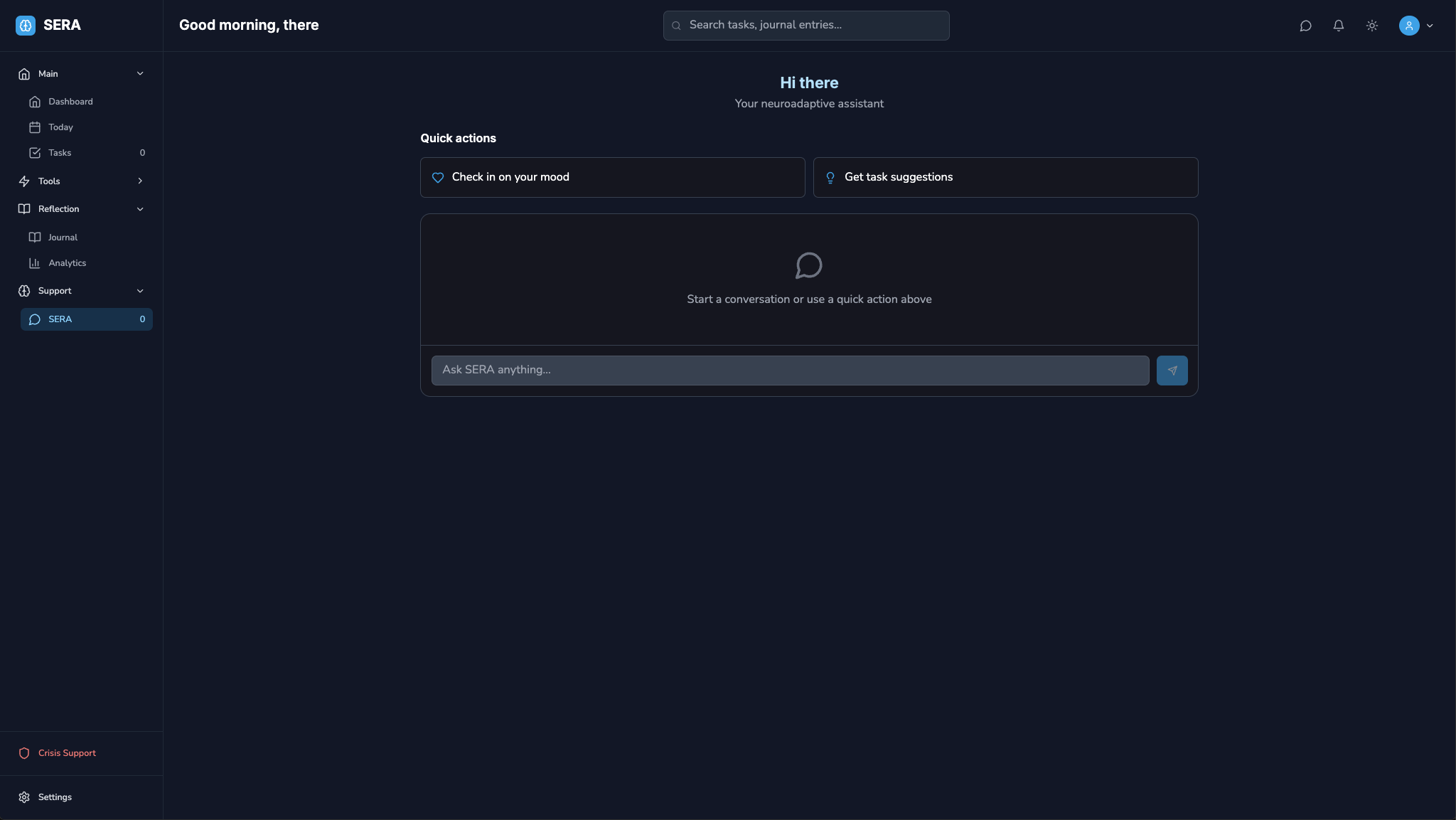
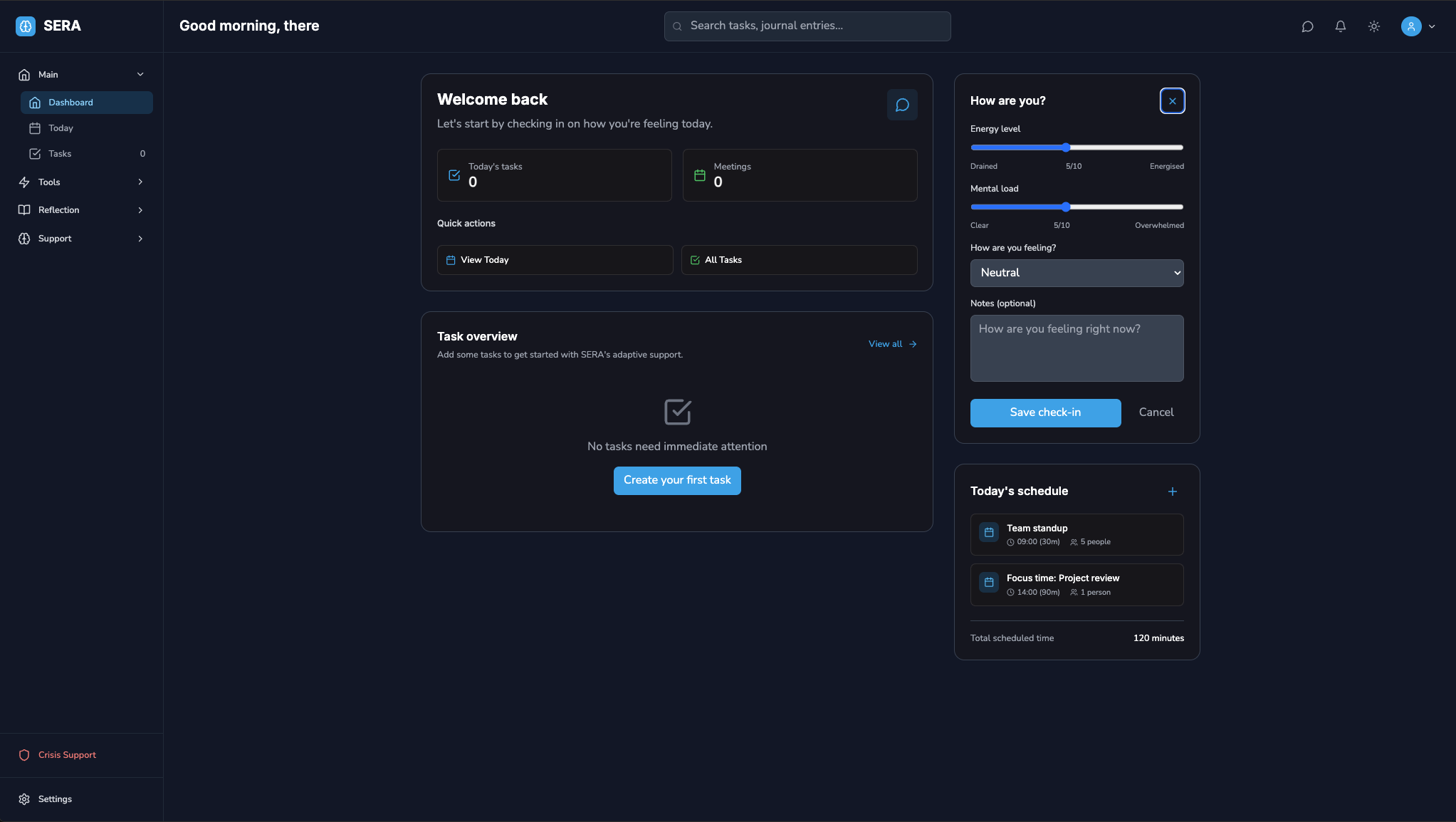
SERA is the world’s first neuroadaptive life OS.
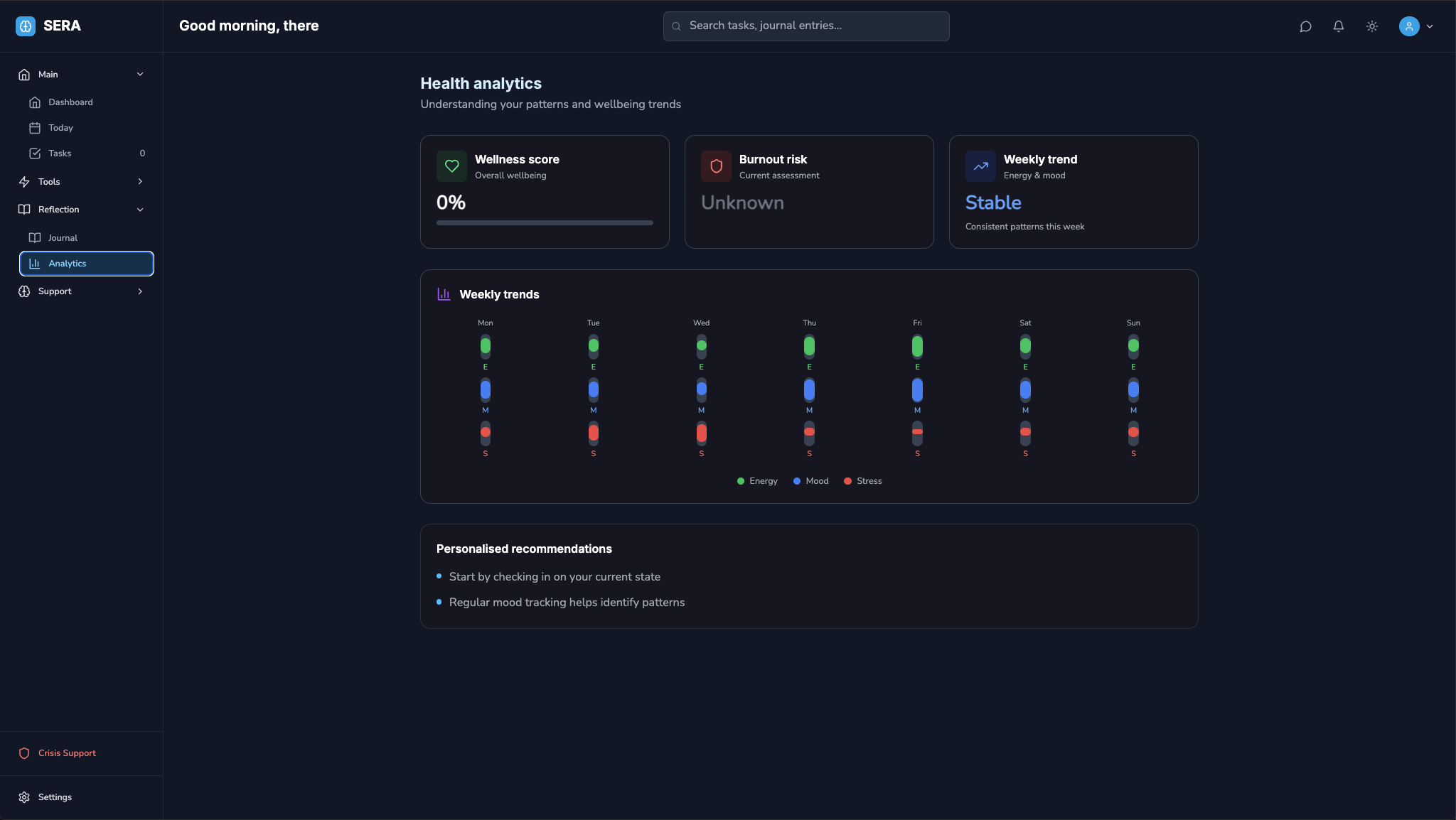
It senses cognitive and emotional strain in real time—then reshapes your day to prevent burnout before it begins.
- When you're overloaded, it slows things down.
- When you're spiralling, it offers stabilisers.
- When you're clear, it gets out of the way.
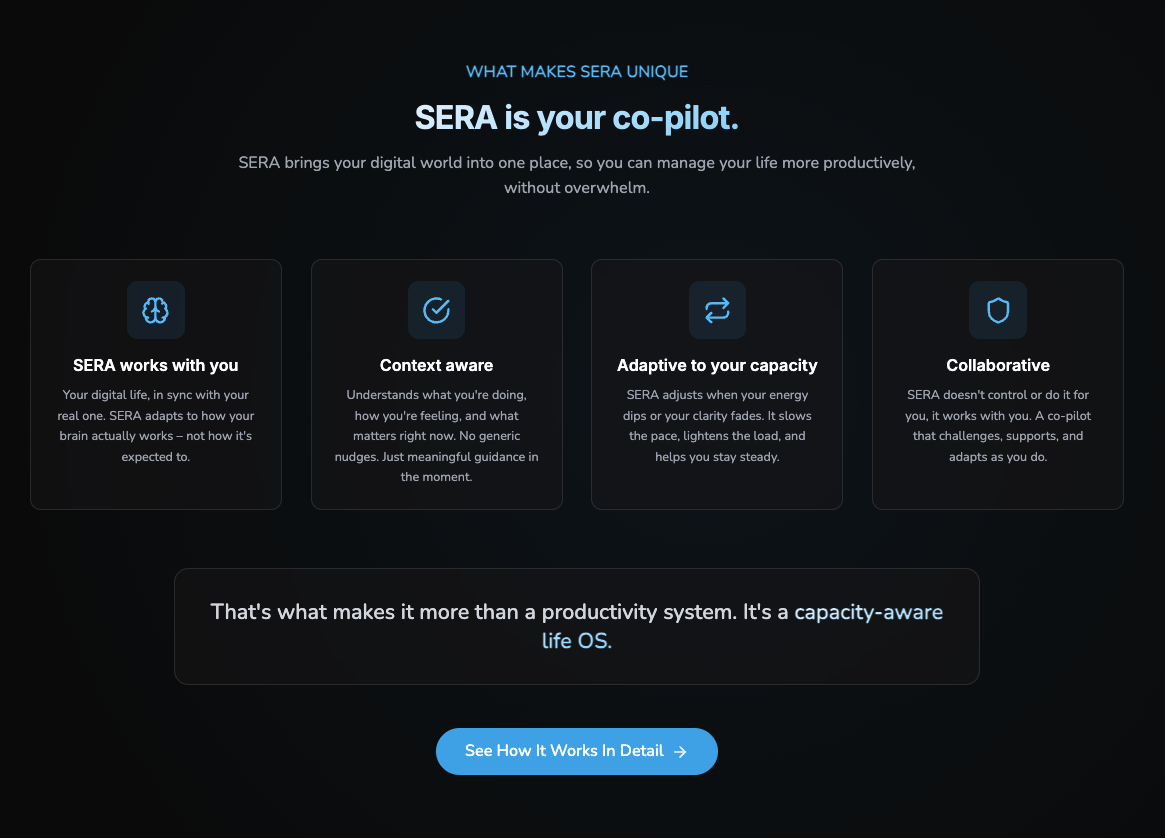
It adapts your plans, priorities, and pacing to match how your brain is actually functioning, not how it "should" be.
It's not a planner. It's infrastructure for clarity.
How we built it
We started with lived experience—then built backwards from need.
- We mapped breakdown moments: freeze, loops, shutdown, shame cycles.
- We designed adaptive logic based on cognitive load, not just time or tasks.
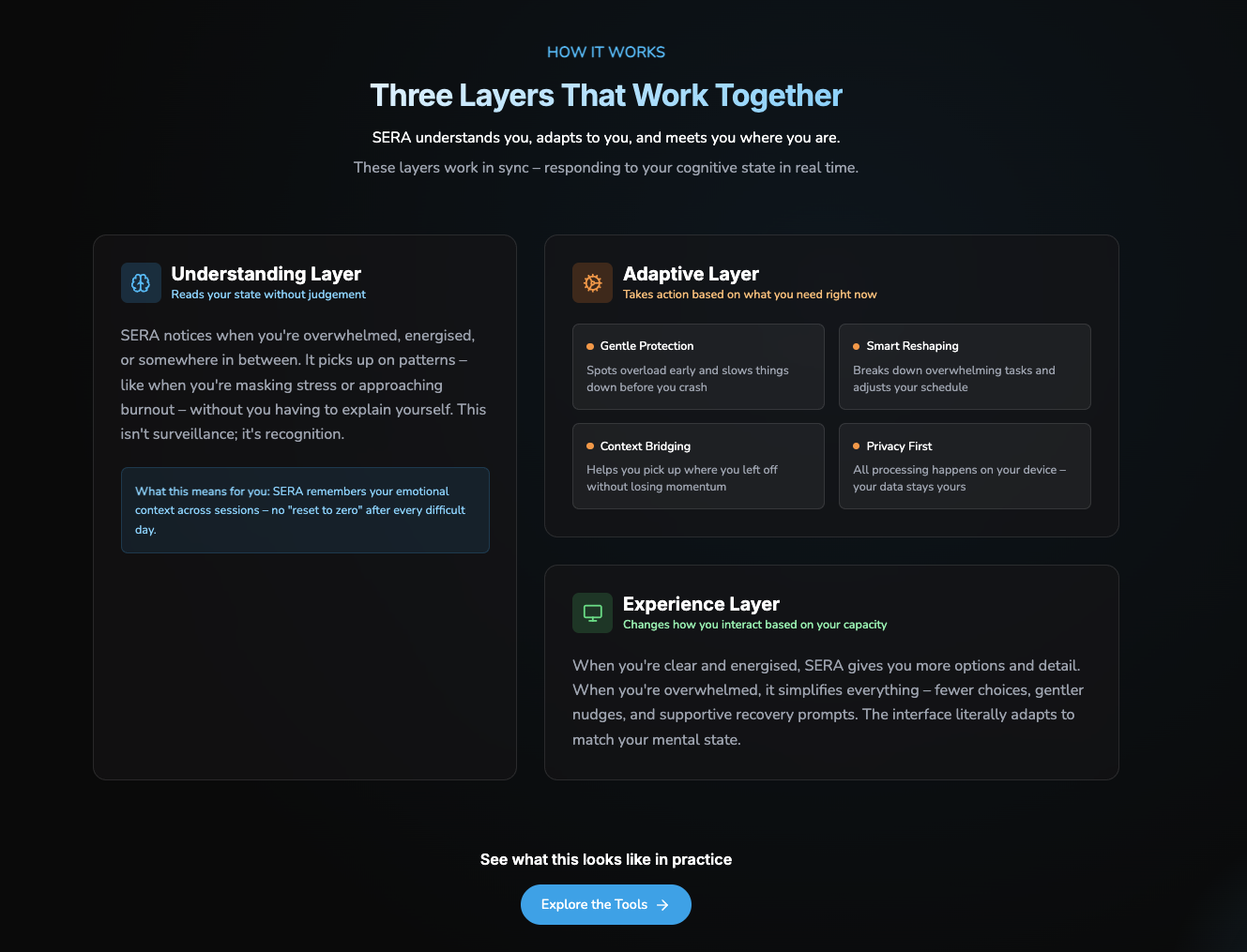
- We built three layers:
- Intelligence – reads behavioural signals and adjusts accordingly
- Engine – recalibrates routines, alerts, and framing in real time
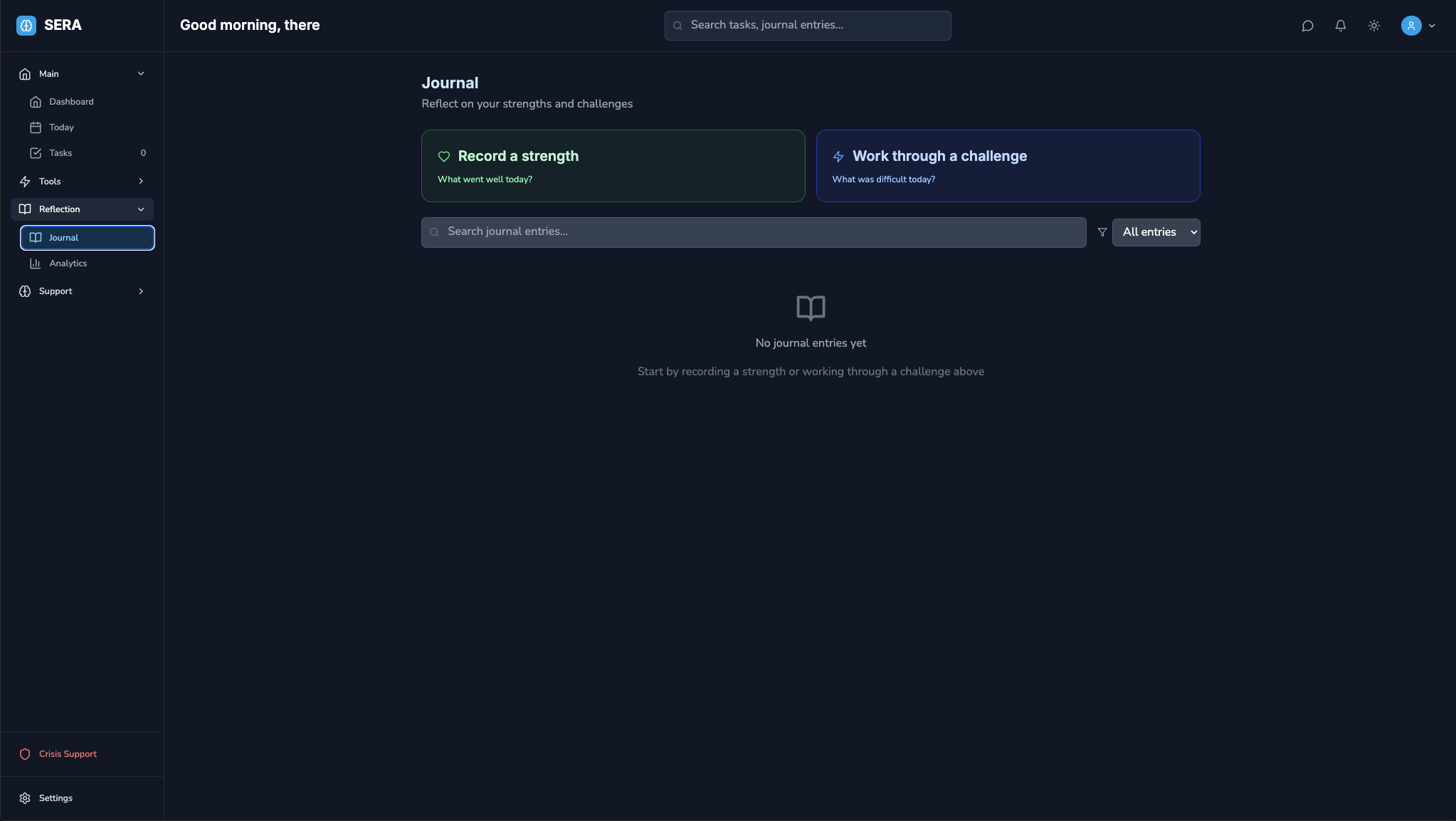
- Interface – language and UX designed for overstimulated, fragmented minds
All local, privacy-first. No content parsing. No manipulation. Just meaningful signal-based support.
Challenges we ran into
- Designing for fluctuation instead of consistency meant rejecting most off-the-shelf logic structures.
- Most AI systems are built to drive engagement, not ease. We had to rewire defaults at every level.
- Prototyping emotional buffering and cognitive scaffolding is incredibly nuanced—it required inventing new UI languages and affordances.
- Balancing prediction with consent: SERA knows when to help, but also when to leave you alone.
Accomplishments that we're proud of
- Invented the concept of a neuroadaptive co-pilot—a system that adapts to your cognitive state, not the other way round.
- Developed state-aware planning logic that shifts based on capacity—not calendar rigidity.
- Created a fully local, privacy-respecting AI engine—no data scraping, no performance gamification.
- Got feedback from neurodivergent beta users that this was the first tool that made them feel “understood, not managed.”
What we learned
The future isn’t about making people more productive.
It’s about making productivity survivable.Neurodivergence isn’t a flaw in the system—it’s a mirror to its design failures.
Real support means adapting to state, not forcing people to push through.
If the system still breaks people, it’s not inclusive.
And I say that with full respect.
What's next for SERA Inclusion
- Launching a closed beta in late 2025 with high-context users (ADHD, autism, trauma survivors, chronically ill folks).
- Building out Team Mode so SERA can support not just individuals, but neuroinclusive collaboration.
- Scaling our enterprise layer (N-Factor) for ethical workplace integration—aligning people, not extracting from them.
- Continuing to prove that when we stop pathologising brains, and start adapting systems, everyone benefits.
We don’t fix broken people.
We ask why we still build systems that break them.
SERA is how we start again—on people’s terms this time.
Built With
- bolt
- javascript
- jsx
- react
- typescript


Log in or sign up for Devpost to join the conversation.