-
-

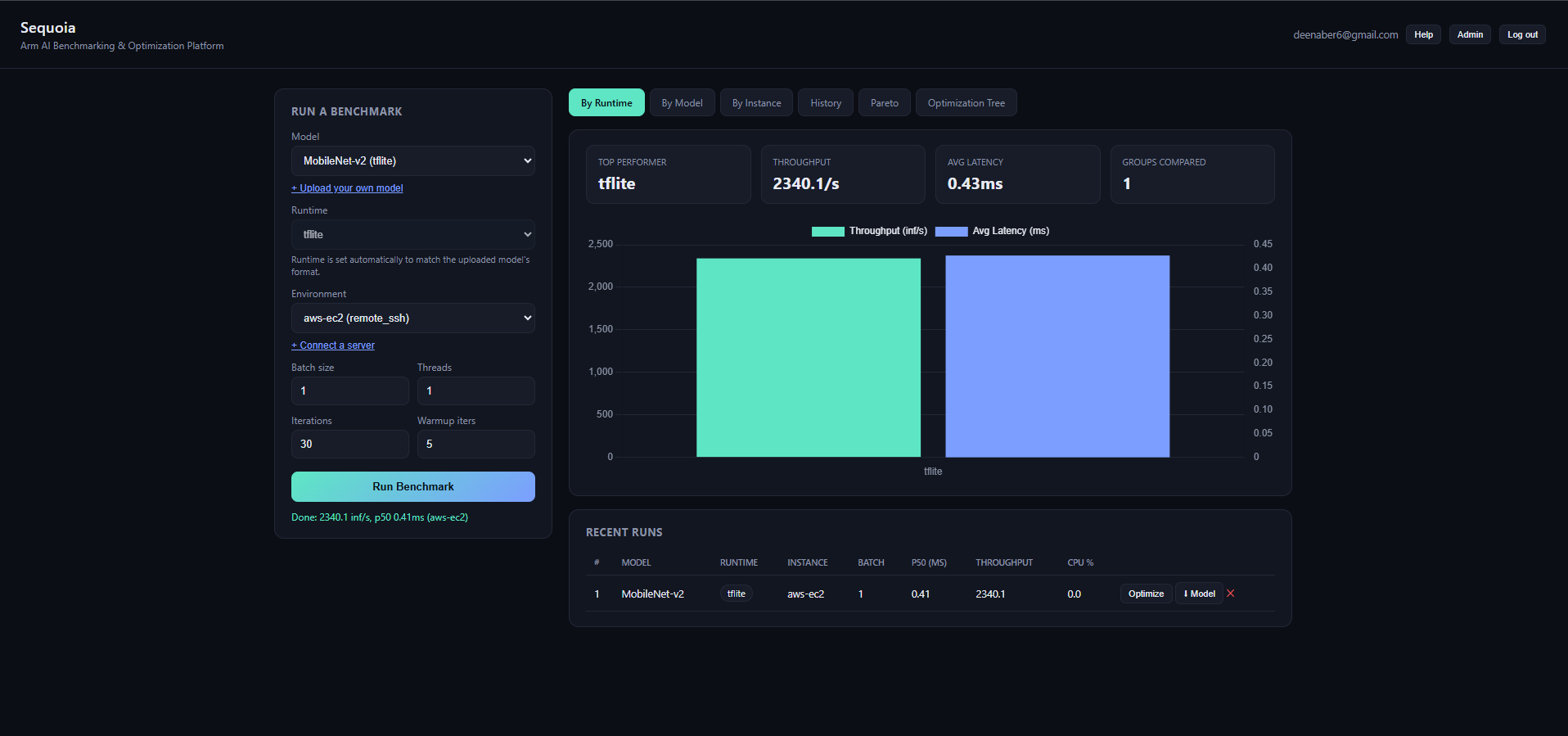
Benchmarking Process
-

Single Process Optimizations
-
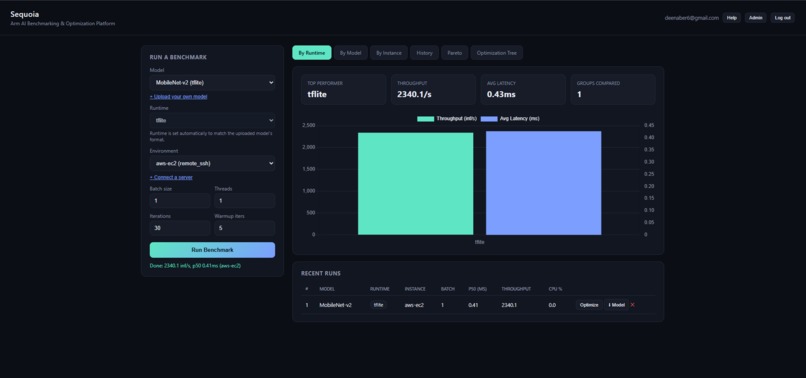
Benchmark Results
-
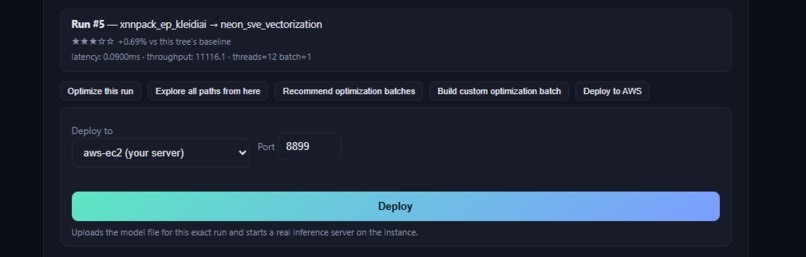
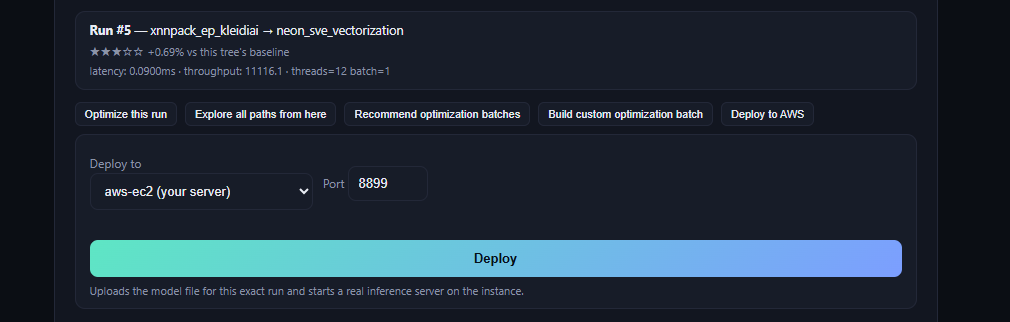
Deploy Optimized Model to AWS Environment
-
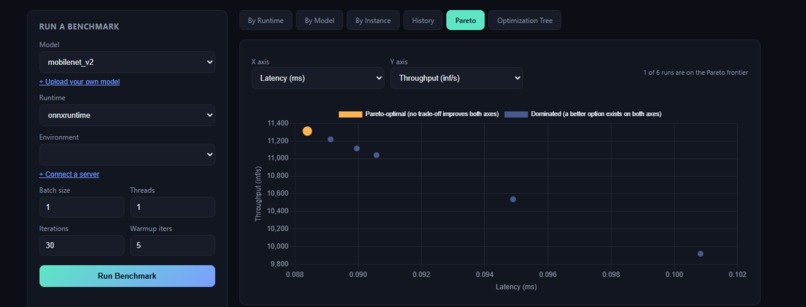
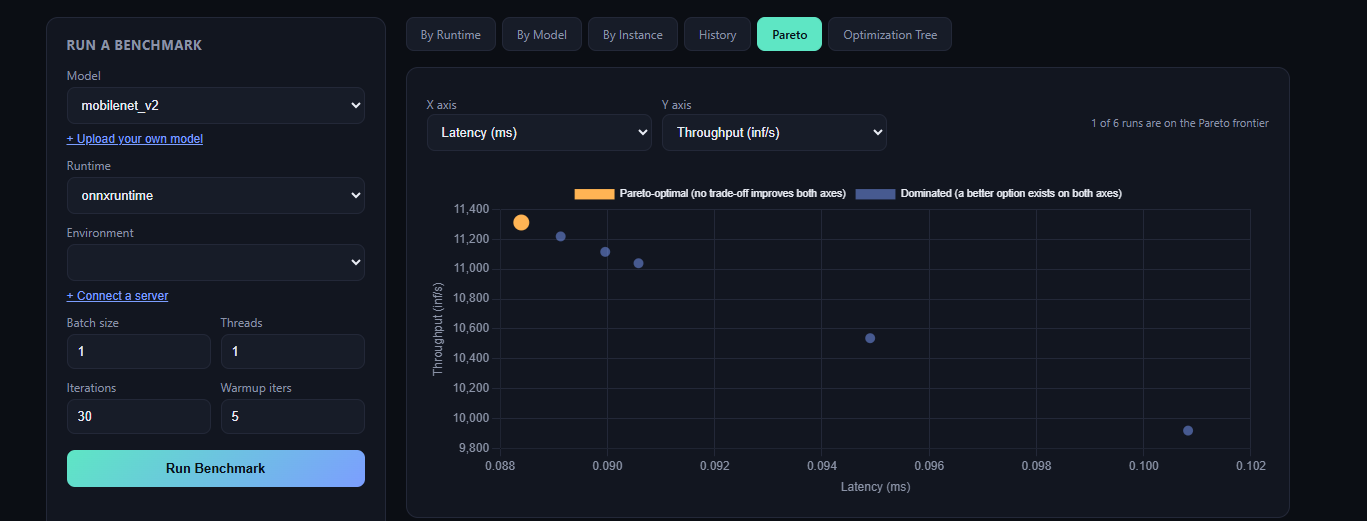
Analysis
-
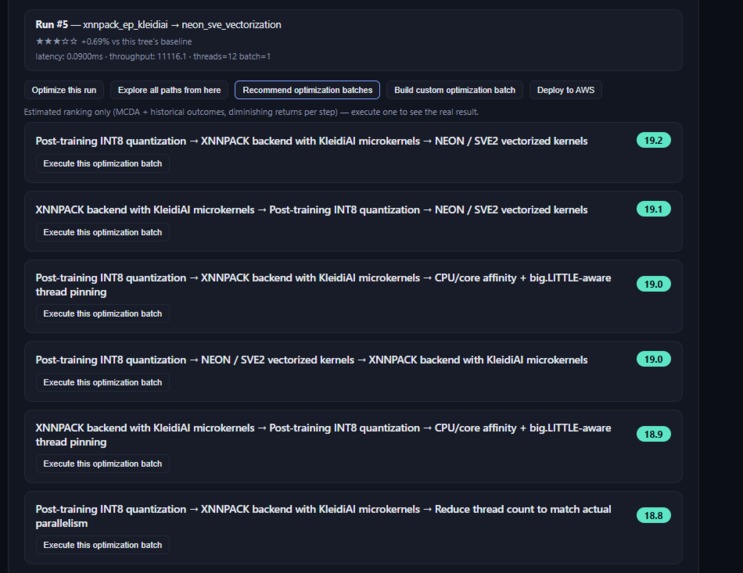
Recommendation of Optimization Batch Processes
-

User Guide
-
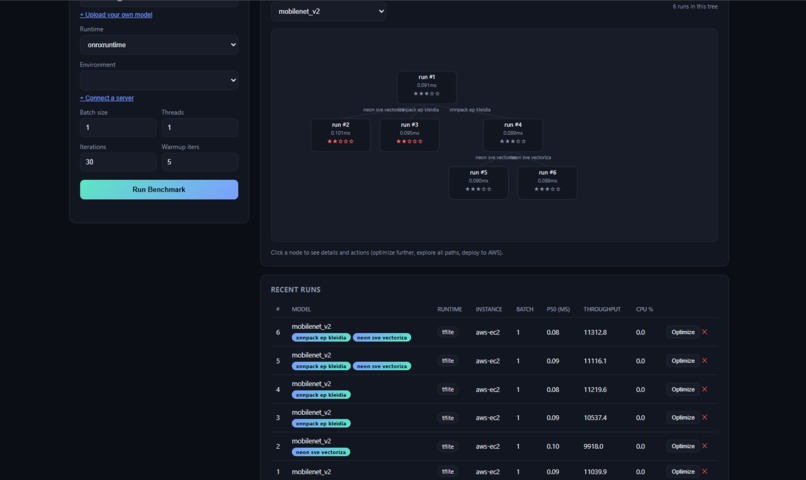
Optimization Tree


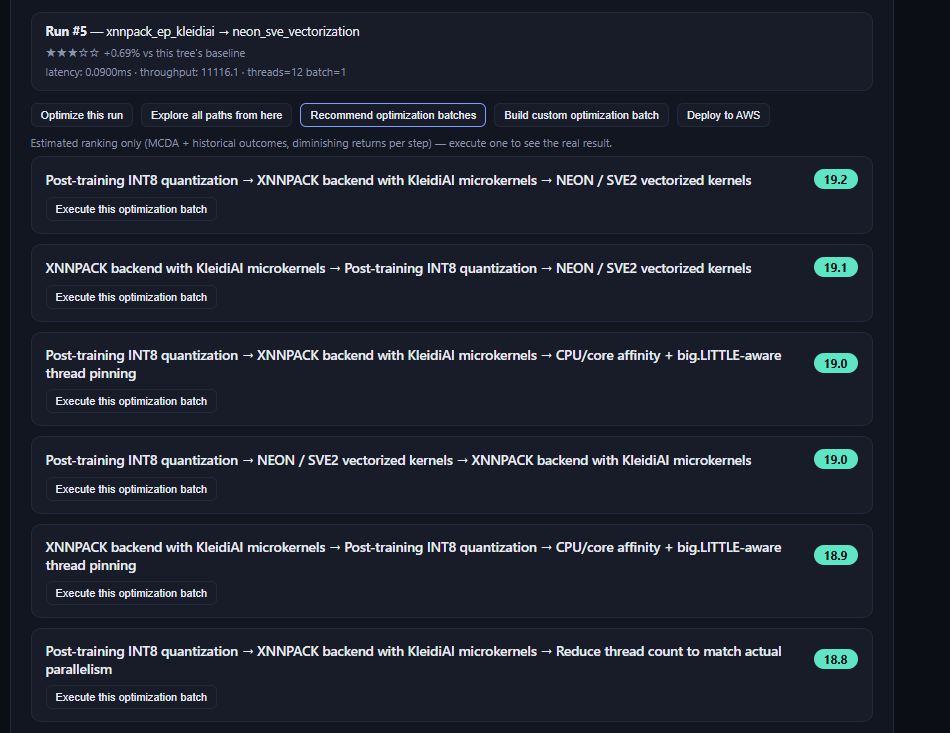

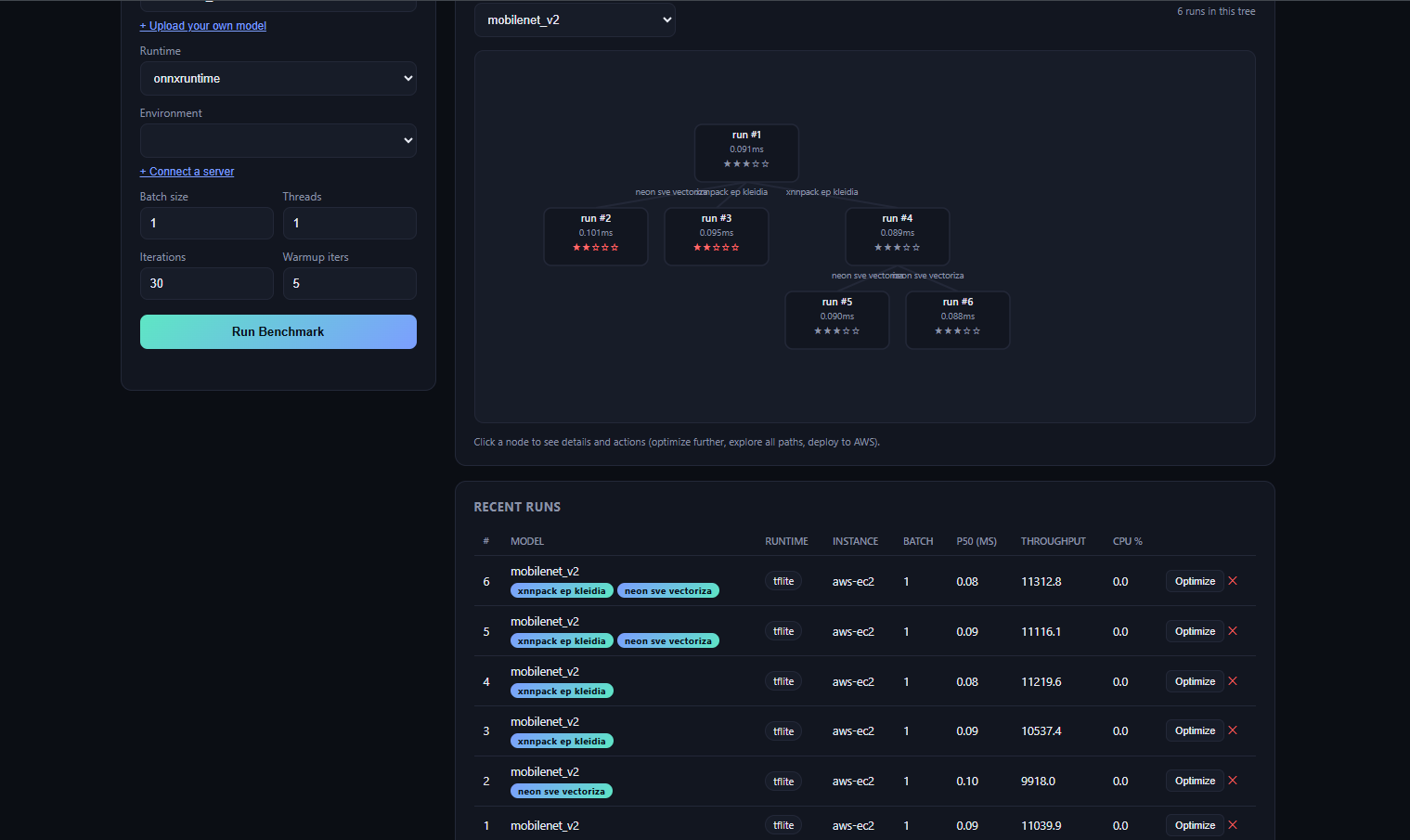
Sequoia was inspired by the growing use of Arm-based processors for AI inference, especially in cloud platforms such as AWS Graviton. As AI workloads become more demanding, developers need to understand not only how fast a model runs, but also why it performs differently across hardware architectures, runtimes, and configurations.
The main motivation behind Sequoia is to make AI benchmarking and optimization more systematic and accessible. Instead of relying on separate scripts, manual testing, and guesswork, the platform provides a single system for running benchmarks, collecting hardware and model-level metrics, comparing results, identifying bottlenecks, and recommending optimizations.
More importantly, Sequoia goes beyond simple benchmarking. It creates a closed loop where an optimization can be applied, tested on real hardware, and compared with the original configuration. This allows developers to determine which changes actually improve performance rather than relying on assumptions.
Ultimately, Sequoia aims to help developers make better decisions about AI inference on Arm platforms by making performance testing reproducible, explainable, and actionable. Its broader goal is to make it easier to discover the best combination of model, runtime, hardware, and configuration for a particular AI workload.
Why Sequoia? Growth that compounds, not resets. Sequoias don't get enormous through one dramatic growth spurt; they get there by adding real, permanent growth on top of what's already there, year after year, for millennia. That's almost exactly the architectural principle I had to go back and fix at one point: early on, applying a second optimization to an already-optimized model was silently discarding the first optimization's real work and starting over from the original file. The fix made each step in a chain genuinely build on the last one's actual result, which is the difference between a tree that grows and one that just gets replanted every year looking slightly different.

Log in or sign up for Devpost to join the conversation.