Inspiration
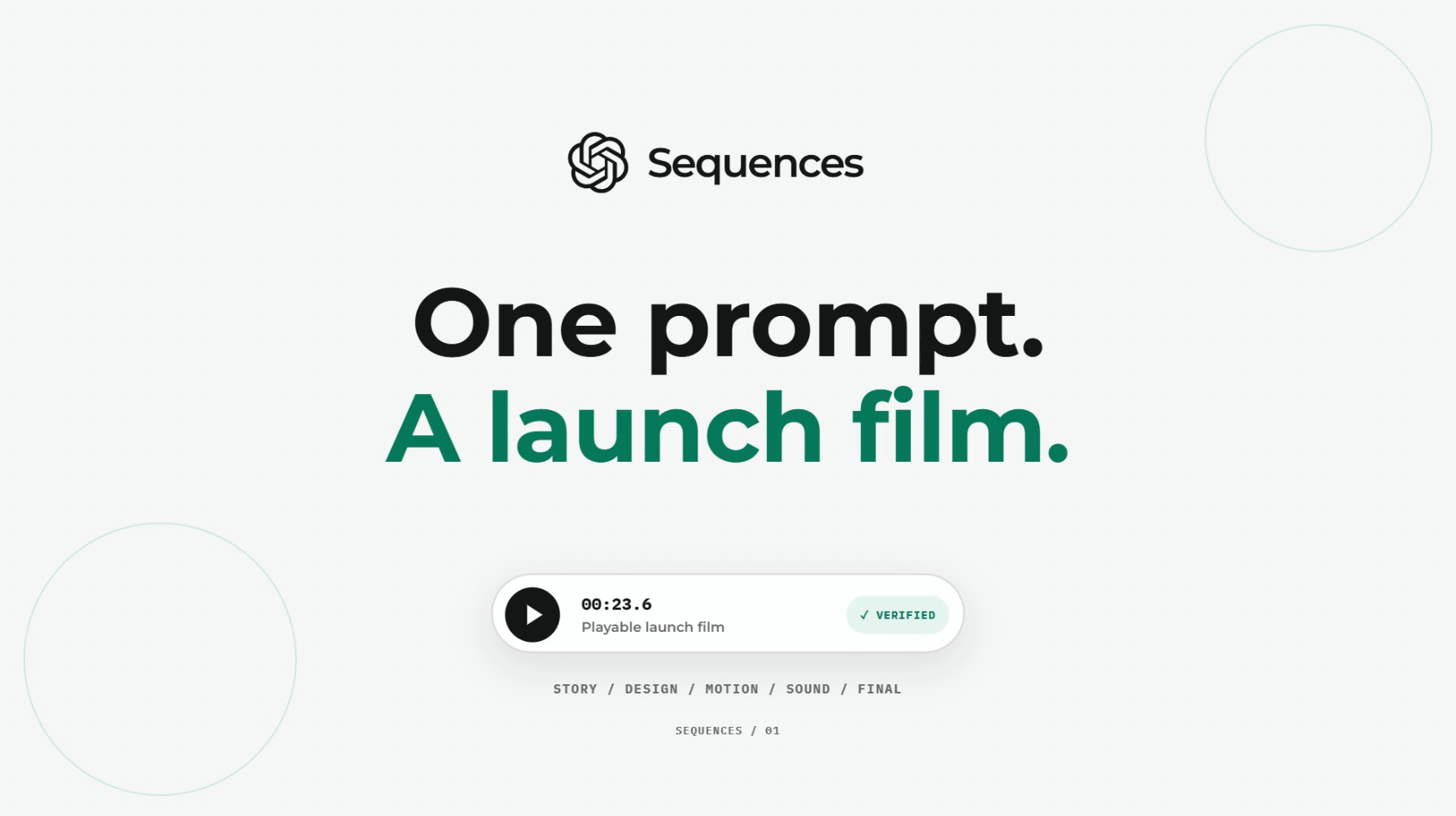
While building software, I kept wishing every project could ship with a proper announcement video. You know the ones. Those slick SaaS ads that look like a real marketing team made them. I didn't want to spend months learning motion design tools, so I asked a different question instead: what if AI could direct the whole creative process rather than just help with pieces of it? That question turned into Sequences, a system that takes a plain text prompt and gives you back a finished product launch film.
What it does
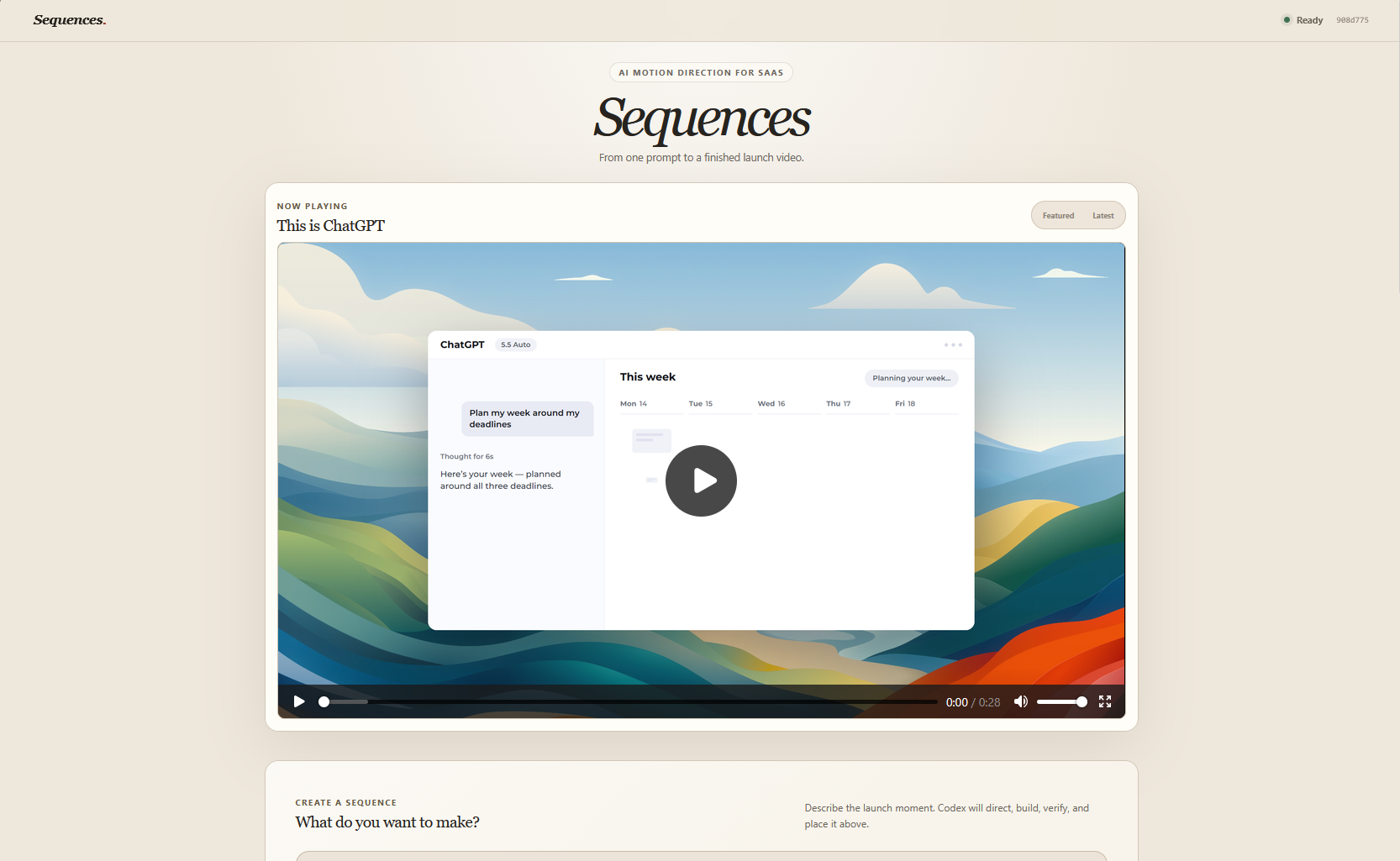
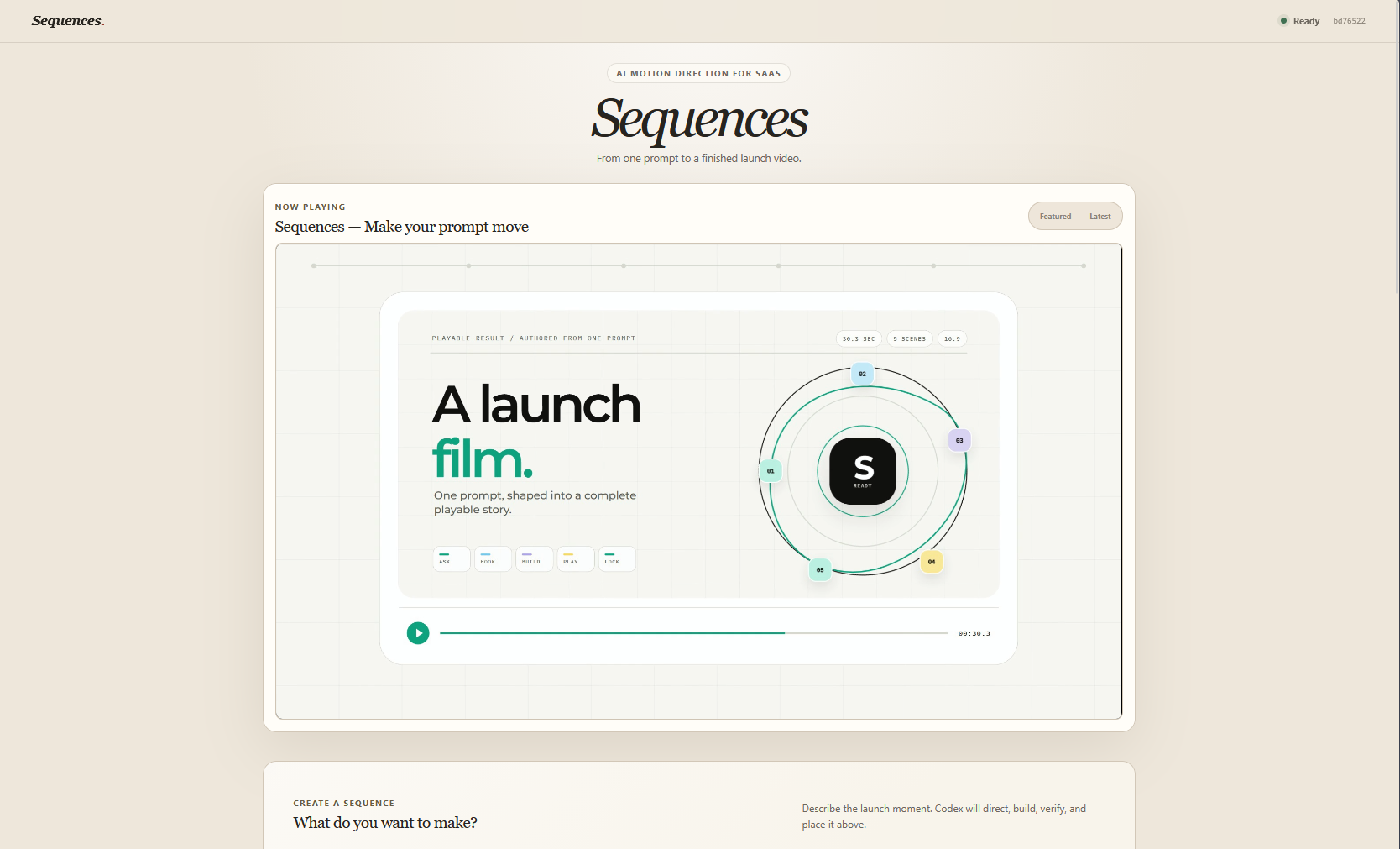
Sequences is an AI-native motion design tool. You describe your product in plain English, attach a few screenshots if you want, and hit Generate.
From there it plans the story, figures out a visual direction, recreates your product's interface as animated scenes, and choreographs the motion and transitions between them. Music and sound effects get added on top. Before anything comes back to you, the whole composition goes through an automated verification pass so problems get caught before you ever see them.
The part I care most about: you never touch a timeline, a keyframe, or any animation software. You direct it in natural language and Sequences handles the motion design underneath.
How I built it
React on the frontend, Bun and Hono on the backend, with HyperFrames doing the heavy lifting on motion graphics and rendering. When someone kicks off a generation, Sequences spins up a fresh, isolated Codex workspace where GPT-5.6 plans and builds an entire motion design project (story, animations, UI compositions, transitions, timing) before it gets rendered into the final film.
I used Codex for building Sequences itself too, not just inside the pipeline. Architecture decisions, feature work, and most of the debugging. Working solo, it felt less like using a tool and more like pairing with someone who never got tired of my half-formed questions.
Challenges I ran into
The hard part was never "can this make a video." It was making that video consistently pass verification, render cleanly, and recover when something in the pipeline went sideways. AI generation is unpredictable by nature, so reliability had to be designed in on purpose rather than assumed. Codex earned its keep here, mostly by helping me reason through architecture and chase down bugs that would have eaten days on my own.
Accomplishments that I'm proud of
One prompt in, a finished launch video out, reliably enough that the system verifies, repairs, and renders without me babysitting it. That's the thing I'm proud of. Pulling it off solo in a week only worked because I wasn't really solo. Codex was part of how this got built, not just what it runs on.
What I learned
AI is useful for a lot more than generating content. It can genuinely participate in a creative workflow. The hard problem isn't getting it to be creative. It's building the scaffolding around it so that creativity actually lands, run after run.
What's next for Sequences
This was a one-week build for OpenAI Build Week, so there's a lot I still want to try. The big one is making video creation ask even less of the user. Instead of writing a prompt, you'd paste a GitHub repo or a website URL and Sequences would work out what the product is, build a narrative around it, and generate the film from there. After that: better generation quality, natural-language revisions once the video exists, collaborative workflows, and generally shrinking the distance between describing an idea and having a professional launch video.
Built With
- bun
- codex
- hono
- hyperframes
- openai
- react
- typescript


Log in or sign up for Devpost to join the conversation.