-
-
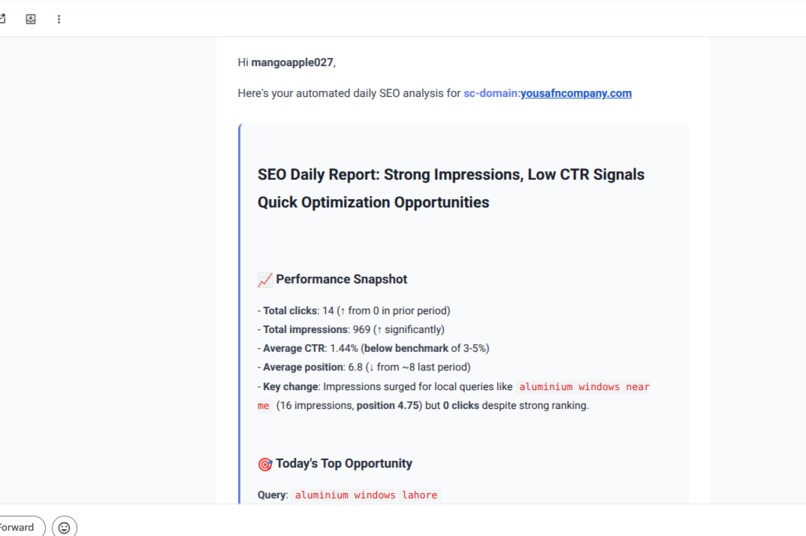
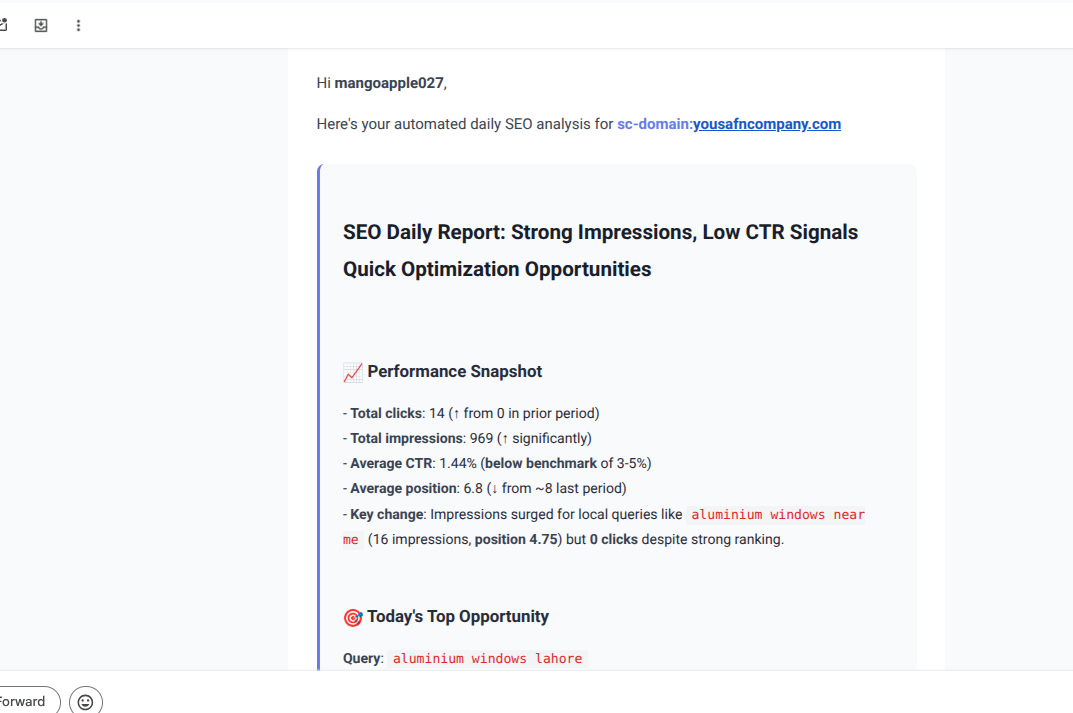
seo-report-on-user-email
-
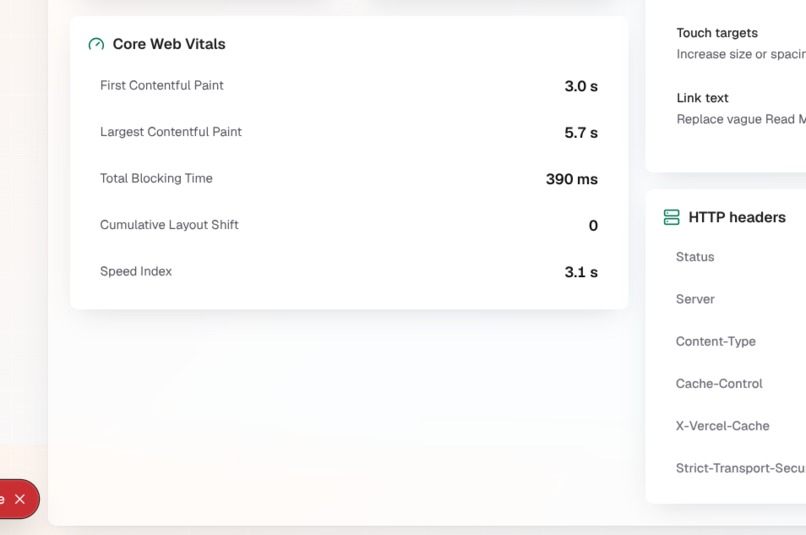
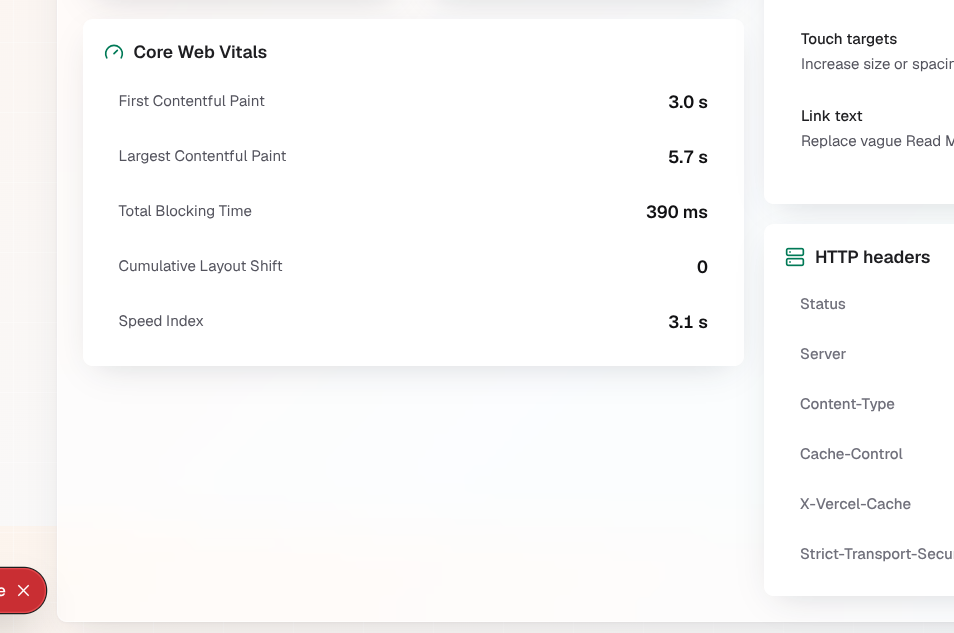
http-haders-along-core-web-vitals
-
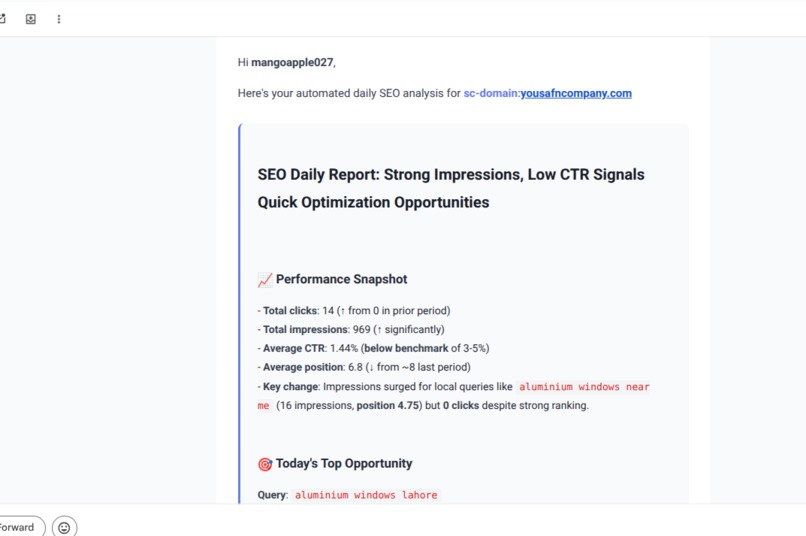
email-report
-
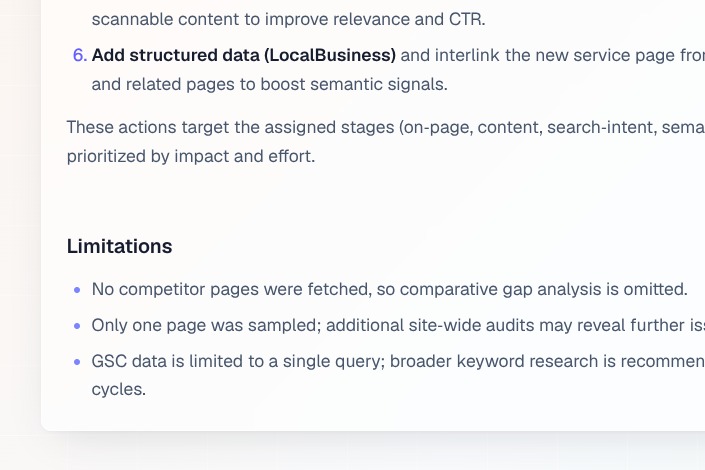
properly-provide-limitations-not-make-guesses
-
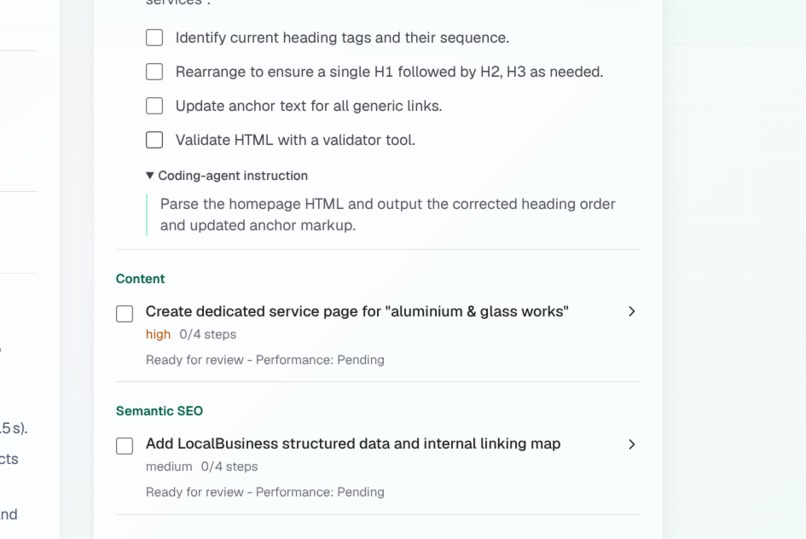
coding-agent-instruction
-
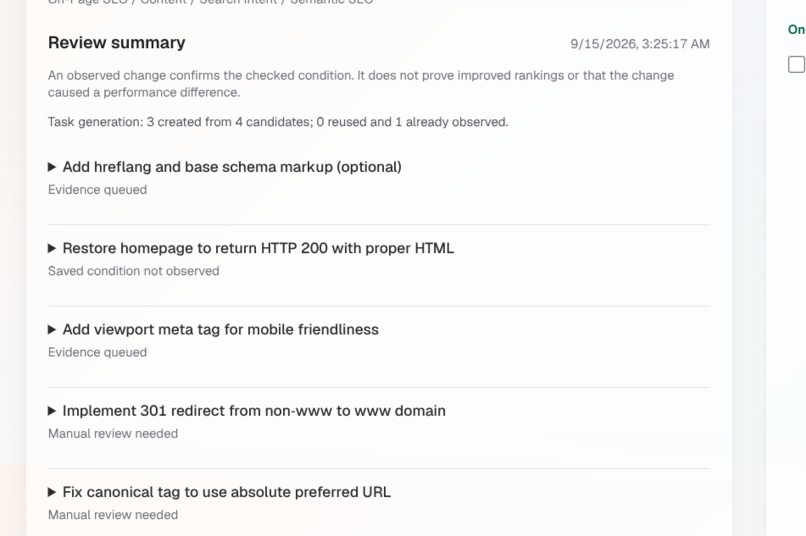
review-summary
-
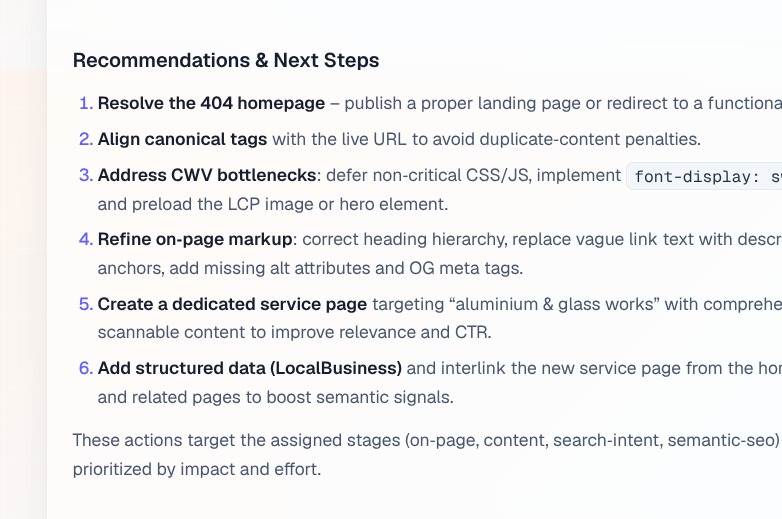
provide-recommendations-for-better-visibility
-
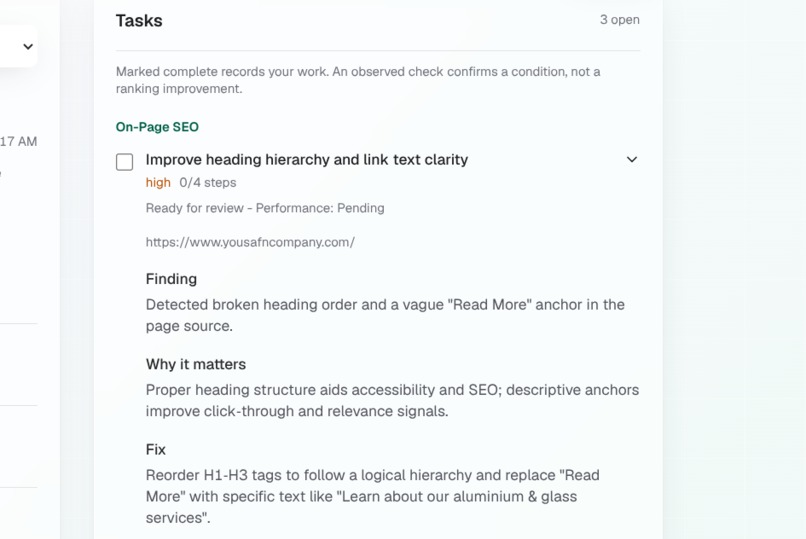
Tasks-with-instructions
-
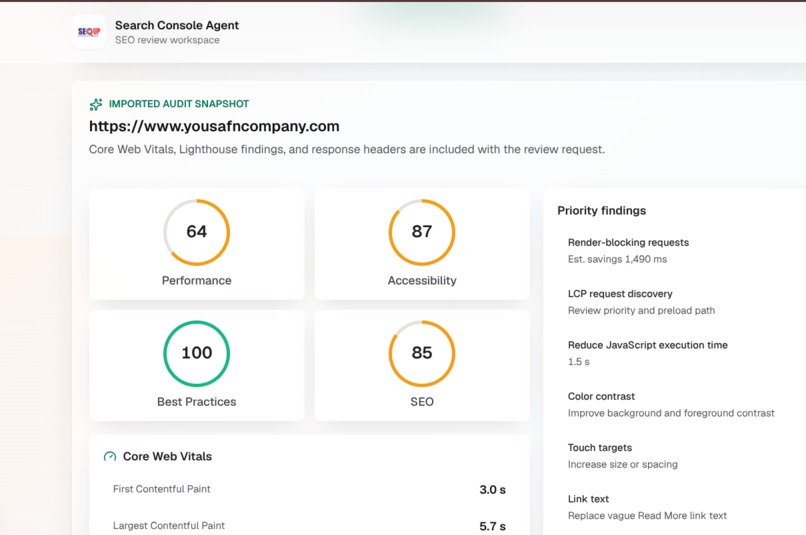
core-web-vitals
Inspiration
As a student, I sometimes work on small projects for local and smaller businesses—building websites, improving their online presence, and helping them get discovered online.
One problem I kept seeing was SEO.
Small and mid-sized businesses often understand that SEO is important, but they usually don't have the budget to pay for a dedicated SEO professional every month. At the same time, doing SEO manually across 7–8 websites is repetitive, boring, and extremely time-consuming. For an SEO professional or developer, the monthly reward may not justify the amount of manual work involved, while for the business, the impact of good SEO can be significant.
I experienced this impact firsthand while doing basic SEO for a local business website. Over a three-month period, the website generated around 180 calls from Google without running ads, contributing to more than PKR 1.5 million in business.
That experience made me realize something: SEO can be extremely valuable for small businesses, but they shouldn't necessarily need a dedicated professional just to handle the repetitive parts of it.
That's what inspired me to build SeOup Agent.
What I Built
SeOup Agent is an AI SEO agent designed specifically for small and mid-sized websites.
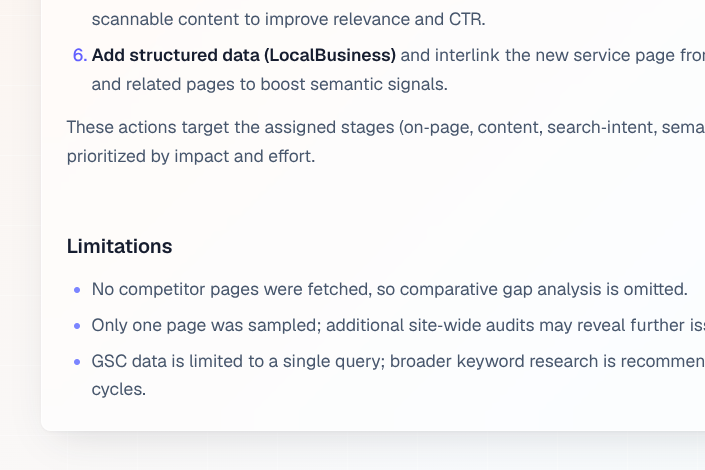
Instead of simply giving generic SEO recommendations, the agent investigates a website using multiple sources and tools, analyzes the results using structured SEO skills, and determines what needs attention.
It can:
- Analyze Google Search Console data and indexing information.
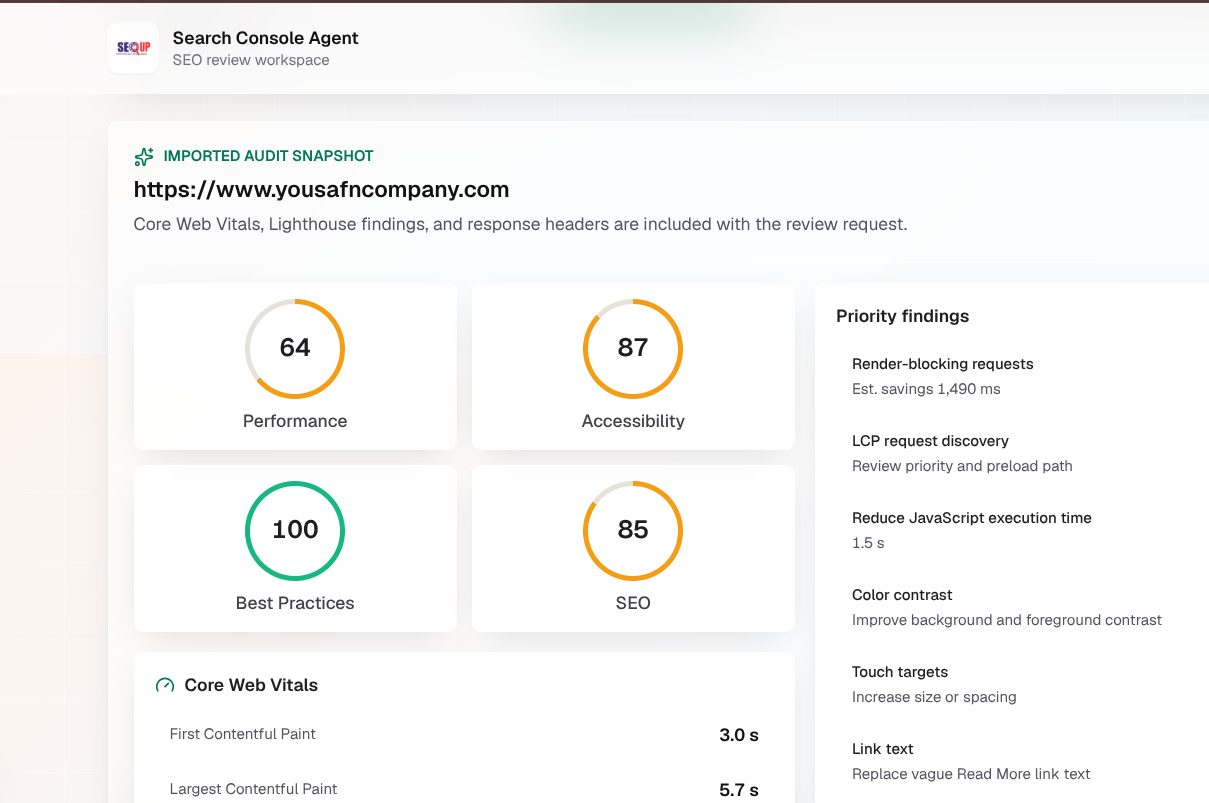
- Analyze website performance and Core Web Vitals.
- Inspect technical website information such as HTTP headers and source HTML.
- Analyze sitemap and other technical SEO signals.
- Consider the website's size, type, and the user's goals.
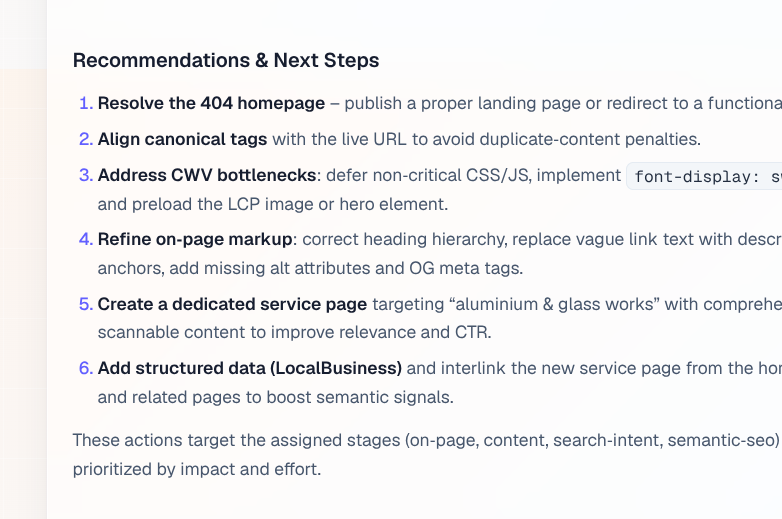
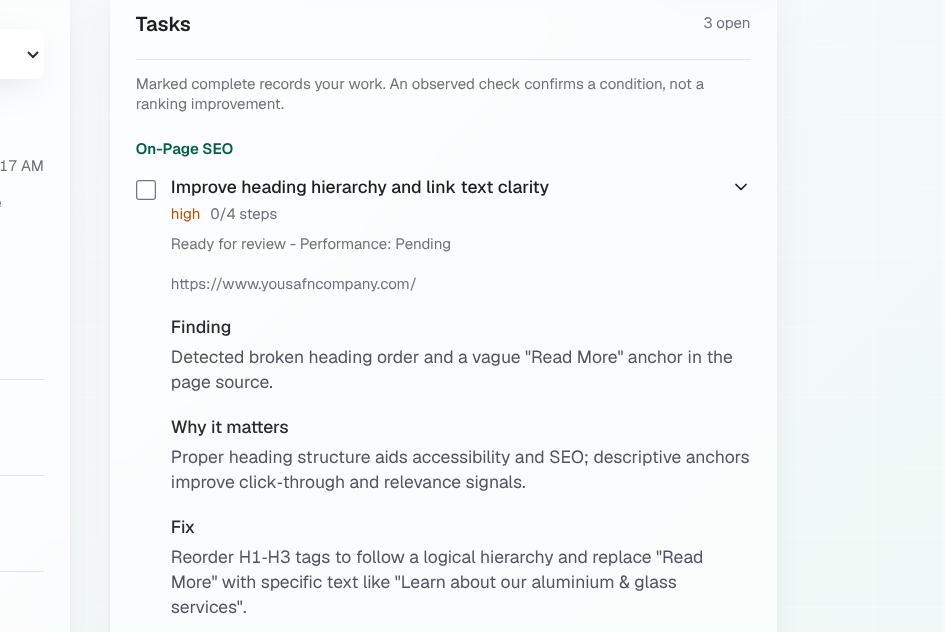
- Explain what's wrong, why it matters, and how to fix it.
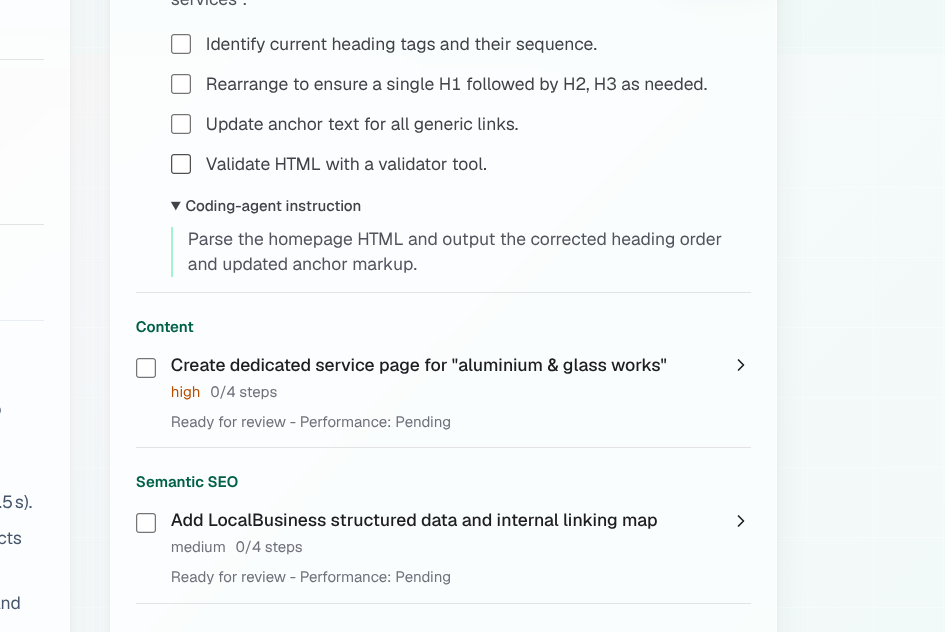
- Provide step-by-step instructions and prompts that users can directly use.
- Perform supported Search Console actions autonomously.
- Create actionable tasks for issues that require human intervention.
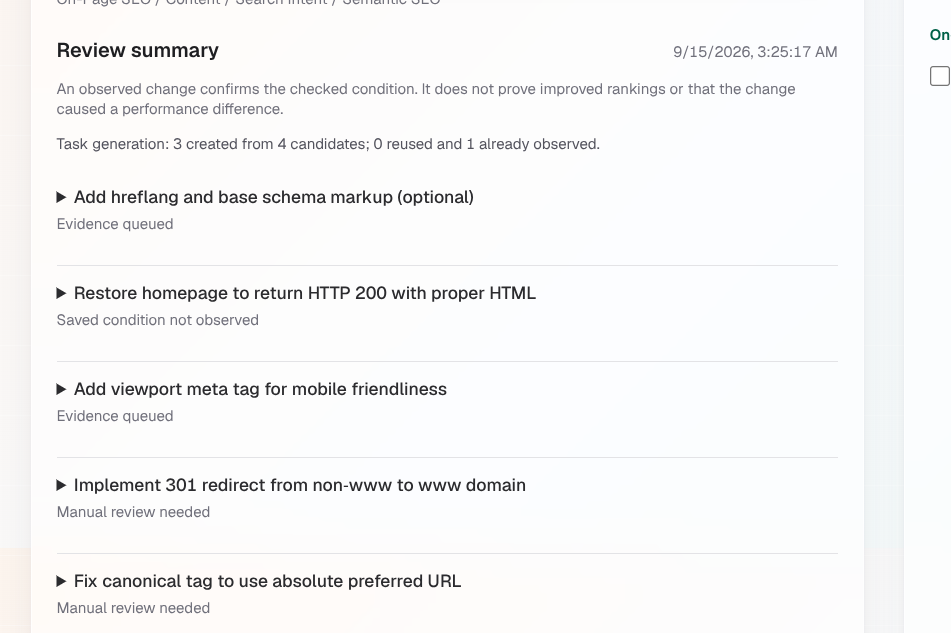
- Save previous SEO reports so users can track their progress.
- Run scheduled weekly analysis and send reports directly to the user's inbox.
The goal isn't to replace SEO professionals. It is to make the repetitive and time-consuming part of SEO accessible to businesses that cannot justify hiring one—and to help developers or freelancers manage SEO across multiple smaller websites without spending hours on manual checks.
How I Built It
The project is built around Strands Agents, which acts as the agent orchestration and reasoning layer.
Rather than following a fixed sequence of API calls, the agent can decide which tools are relevant to the SEO problem it is investigating. It collects evidence from different sources, applies SEO skills, reasons over the results, and then decides whether it can take an action or needs to create a task for the user.
The architecture follows the idea:
Collect → Analyze → Reason → Fix → Create Tasks → Report
This agentic approach is particularly useful for SEO because not every website needs the same checks. A performance issue may require PageSpeed data, while an indexing problem may require Search Console, and a technical issue may require inspecting the website's source HTML or headers.
What I Learned
Building this project taught me that an effective agent is not just an LLM connected to a collection of APIs.
The difficult part is designing when the agent should use a tool, what information the tool should return, and how much information should actually enter the model's context.
For example, passing an entire website's HTML into the model is unnecessary and expensive. Instead, the system needs to extract the important SEO signals first and give the agent a structured representation it can reason about.
I also learned that autonomous actions need to be carefully scoped. If an action can be safely performed through an API, the agent can do it; otherwise, it should explain the problem clearly and create a task for the user.
Most importantly, working on real small-business websites showed me that automation does not always need to solve the biggest or most complex problem to create value. Sometimes automating a repetitive task that nobody wants to do can make a meaningful difference.
Challenges
One of the biggest challenges was balancing agent autonomy with reliability.
SEO involves many different signals, and blindly calling every tool for every website would create unnecessary API calls, increase latency, and overwhelm the agent with information. I therefore designed the system so that tools can be used when they are relevant to the problem being investigated.
Another challenge was handling large amounts of technical data. Website HTML, PageSpeed responses, and analytics can contain far more information than an LLM actually needs. Extracting the important signals before passing them to the agent became an important part of the design.
The project is still evolving, but the goal remains simple:
When you're busy building and running your business, let the agent handle the boring SEO work.
Built With
- amazon-web-services
- aws-event-bridge
- bedrock
- ecr
- ecs
- litellm
- nextjs
- postgresql
- python
- strands
- typescript
- uvicorn
- vpc


Log in or sign up for Devpost to join the conversation.