-
-
Query Passport
-
Local Artifact / MCP
-
Workflow
Inspiration
AI content tools usually optimize for volume: generate an article, publish it, and move on. We wanted a more controlled workflow where search intent, content quality, SEO structure, and human review are part of the same process.
Hermes SEO Content Engine was inspired by a practical problem: creating useful content requires more than generating text. The system must understand the target query, avoid cannibalization, preserve content provenance, and make every publication decision auditable.
What it does
Hermes turns a content idea into a structured, reviewable SEO draft.
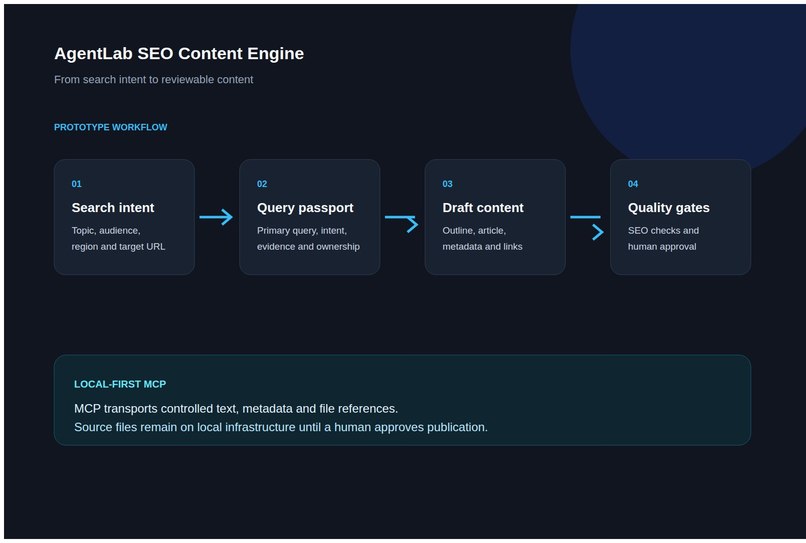
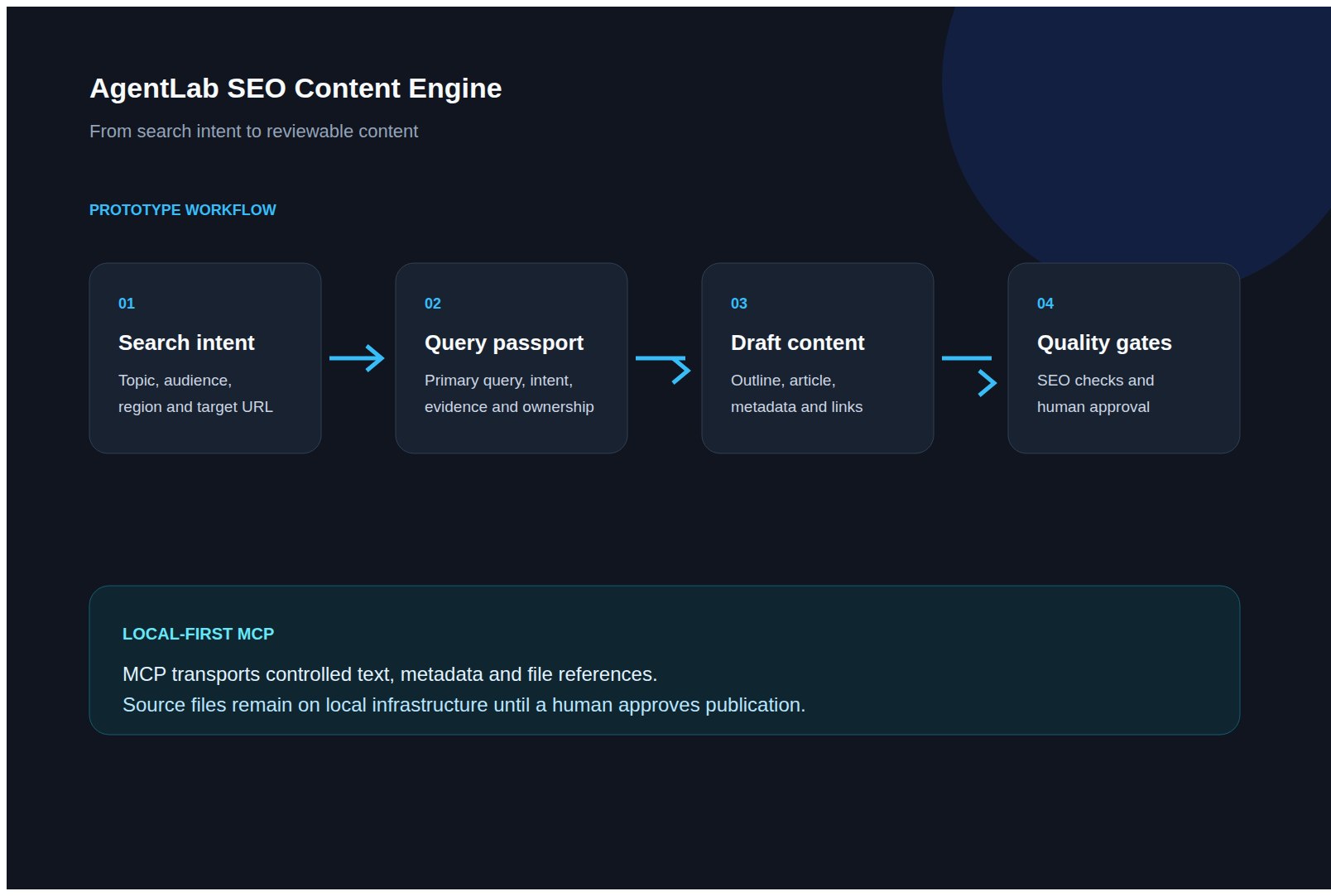
The workflow:
- Define the target audience and search intent.
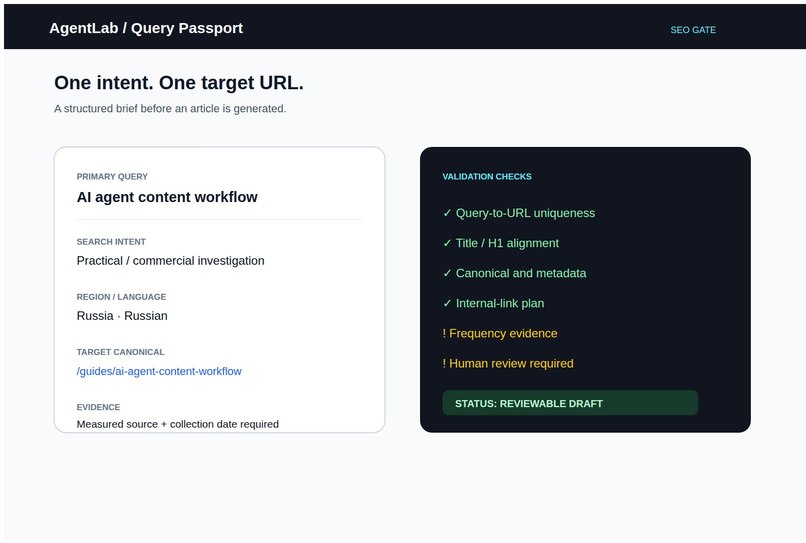
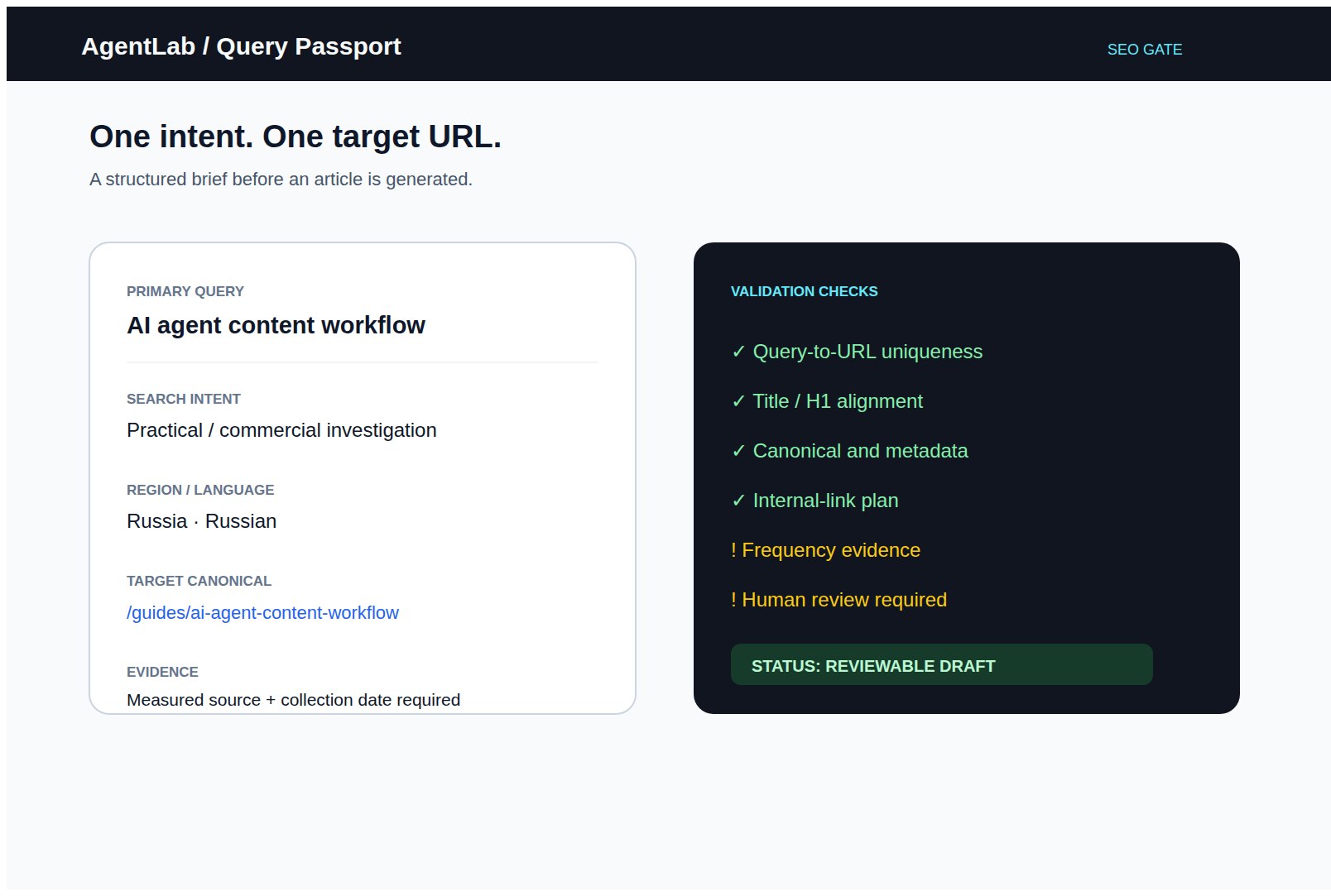
- Build a query passport around one primary query.
- Generate an article outline and draft.
- Check title, H1, description, internal links, canonical URL, and structured data.
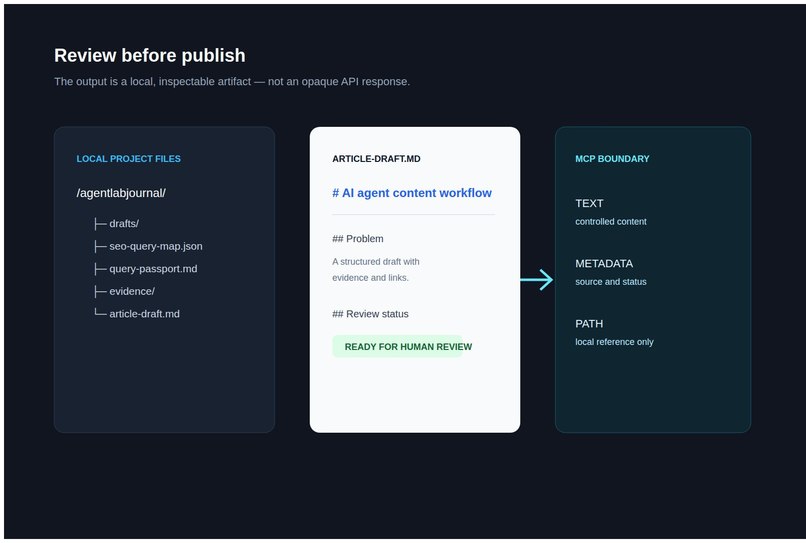
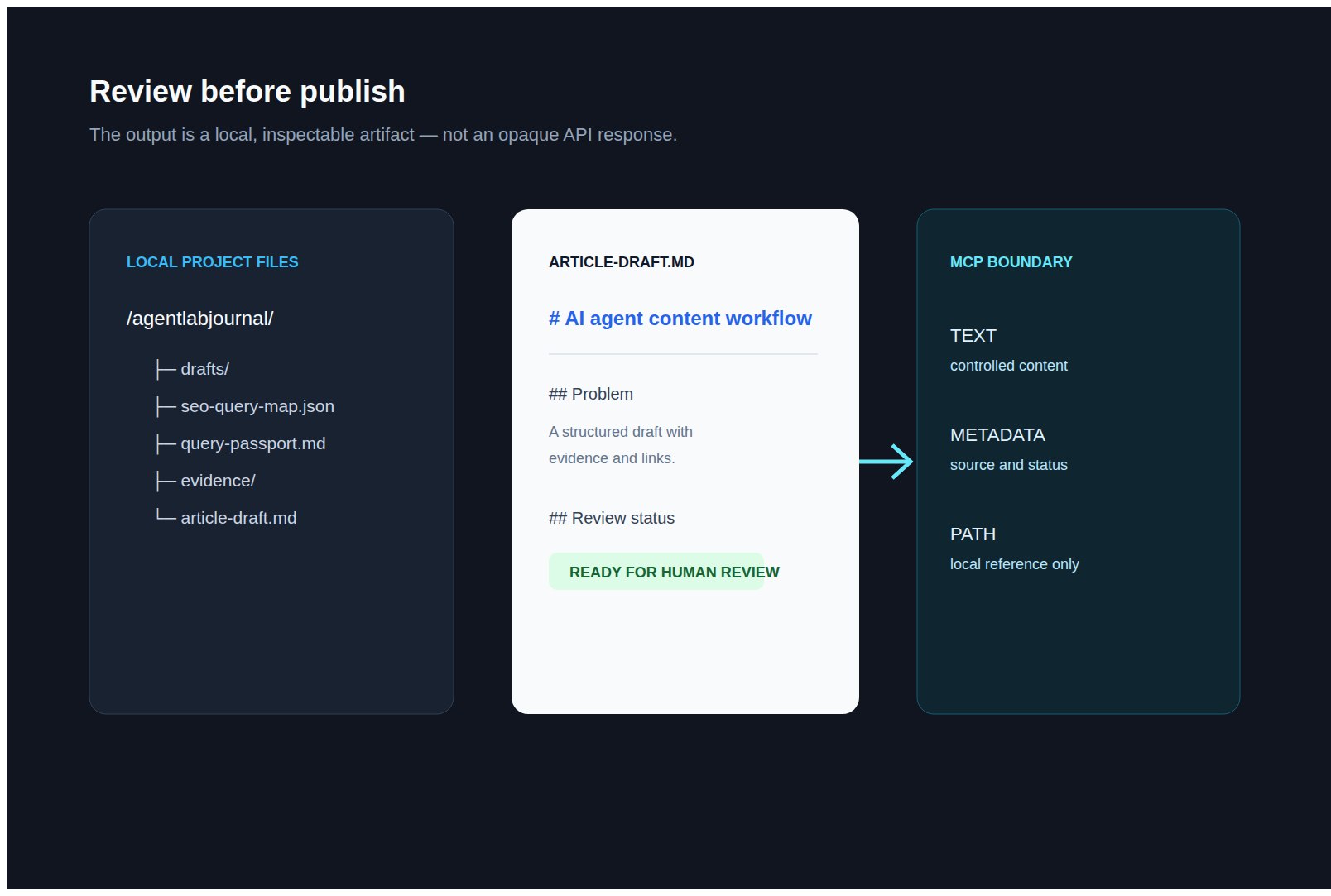
- Save the result as a local Markdown artifact.
- Send only the required text and file metadata through MCP.
- Leave final publication under human control.
The local-first design is important: source files remain on the owner's infrastructure. MCP is used as a controlled interface for text, metadata, search, and tool execution rather than as a replacement for local file storage.
How we built it
The prototype combines an AI agent workflow, MCP tool integration, Markdown-based content artifacts, and explicit quality gates. Each stage produces a verifiable result that can be reviewed before the next stage begins.
Instead of treating SEO as a final checklist, Hermes makes it part of the content-generation pipeline from the beginning.
Challenges we ran into
The main challenge was balancing automation with control. A fully autonomous publisher can create duplicate, low-quality, or incorrectly targeted pages. We therefore designed the workflow around explicit validation gates and human approval.
Another challenge was separating content transport from file storage. The system passes text and safe file references through MCP while keeping the actual project files local.
Accomplishments that we're proud of
- Built a complete workflow from search intent to a structured SEO content draft.
- Added a query passport so every article has a defined primary query, intent, audience, and target URL.
- Designed explicit quality gates for titles, headings, internal links, canonical URLs, and structured data.
- Kept source files local while using MCP to exchange controlled text, metadata, and file references.
- Added human review before publication instead of allowing uncontrolled automatic publishing.
- Made the workflow auditable: each stage produces a visible artifact that can be checked and improved.
- Created a practical foundation that can evolve from a single content workflow into a reusable AI automation platform.
What we learned
We learned that useful AI automation is not only about better text generation. It also depends on reliable data flow, clear boundaries, provenance, validation, and safe human handoffs.
Hermes is our first step toward an AI content workflow that can scale without turning content production into an uncontrolled publishing process.
What's next for SEO Content Engine
Our next priorities are:
- Add integrations with Google Search Console, Yandex Webmaster, and keyword research sources.
- Validate search demand with measured data instead of relying on assumptions.
- Add multilingual query passports and language-specific content checks.
- Improve duplicate-content and keyword-cannibalization detection.
- Add a review dashboard for editors and SEO specialists.
- Support controlled publishing to approved CMS platforms after human approval.
- Track post-publication impressions, clicks, CTR, rankings, and query drift.
- Add reusable workflows for different industries, websites, and content teams.
- Strengthen local-first file handling and permission controls for MCP integrations.
The long-term goal is to make SEO content production measurable, reviewable, and safe to scale without sacrificing editorial quality.

Log in or sign up for Devpost to join the conversation.