-
-
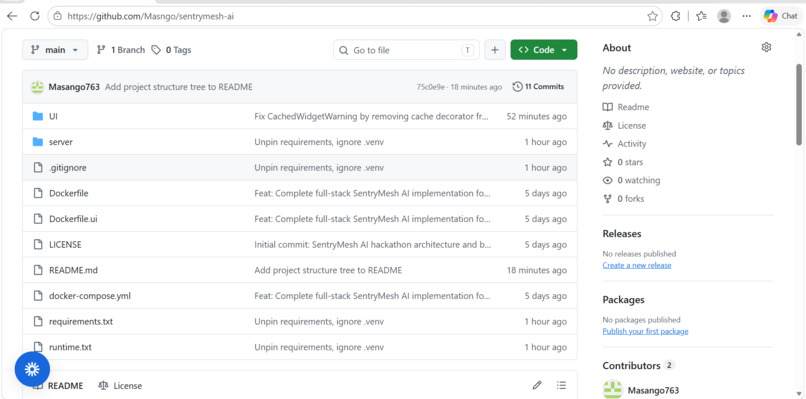
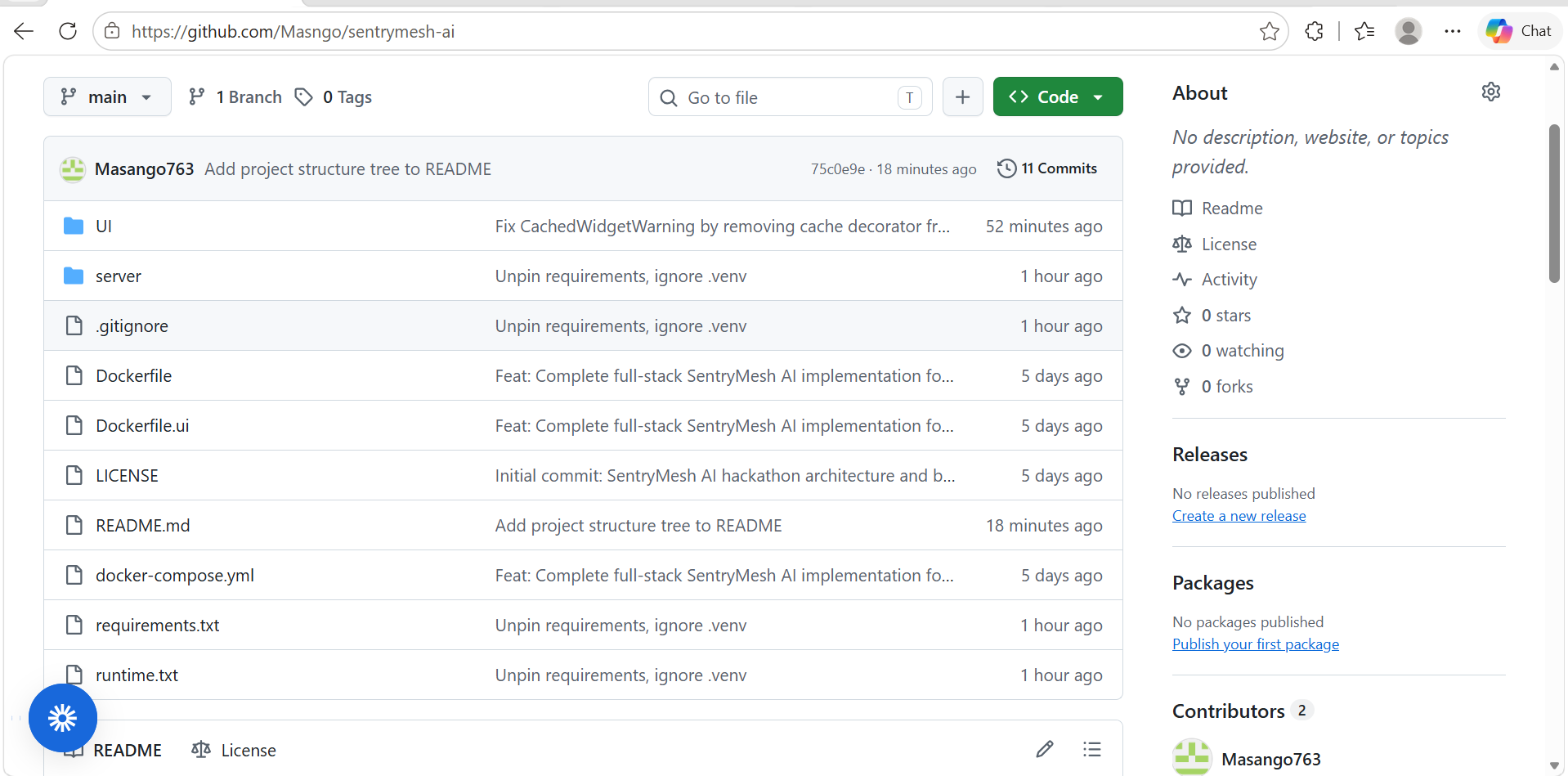
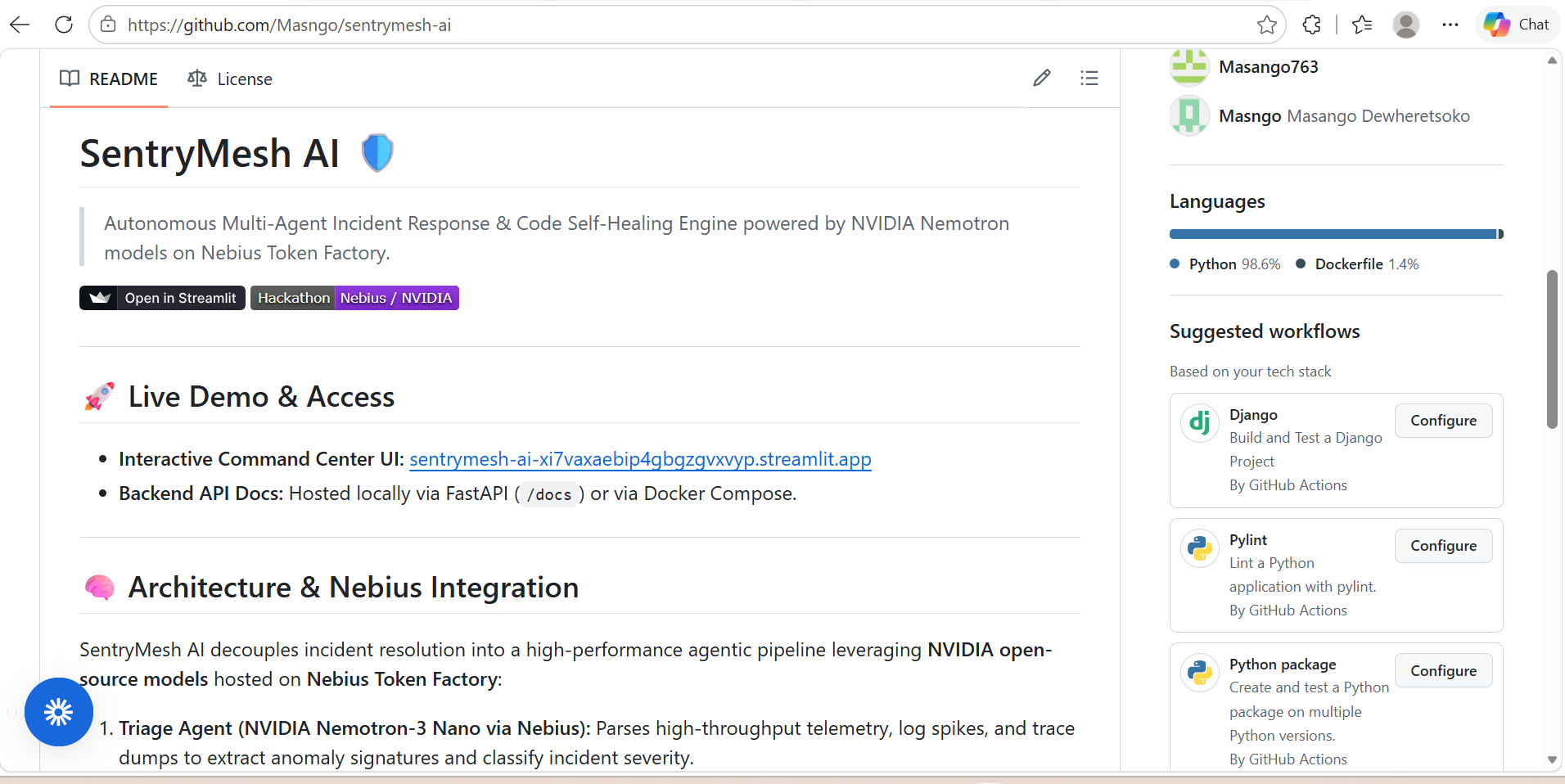
sentrymeshai-github repository
-
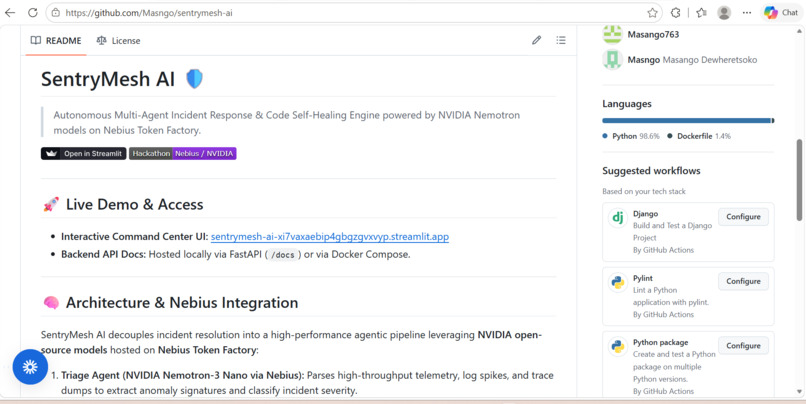
sentrymeshai-github repository1
-
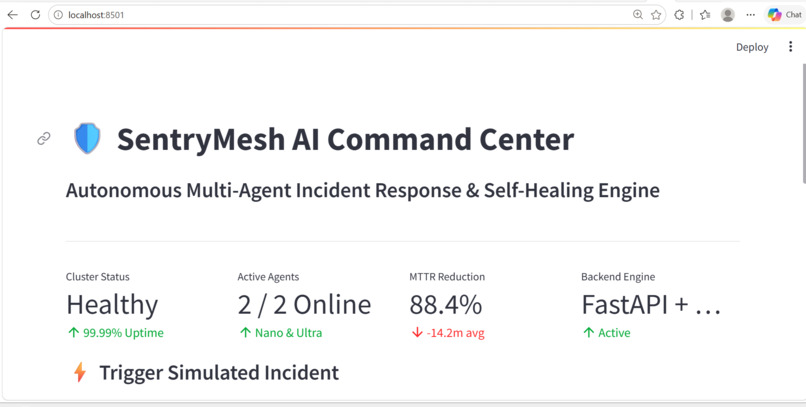
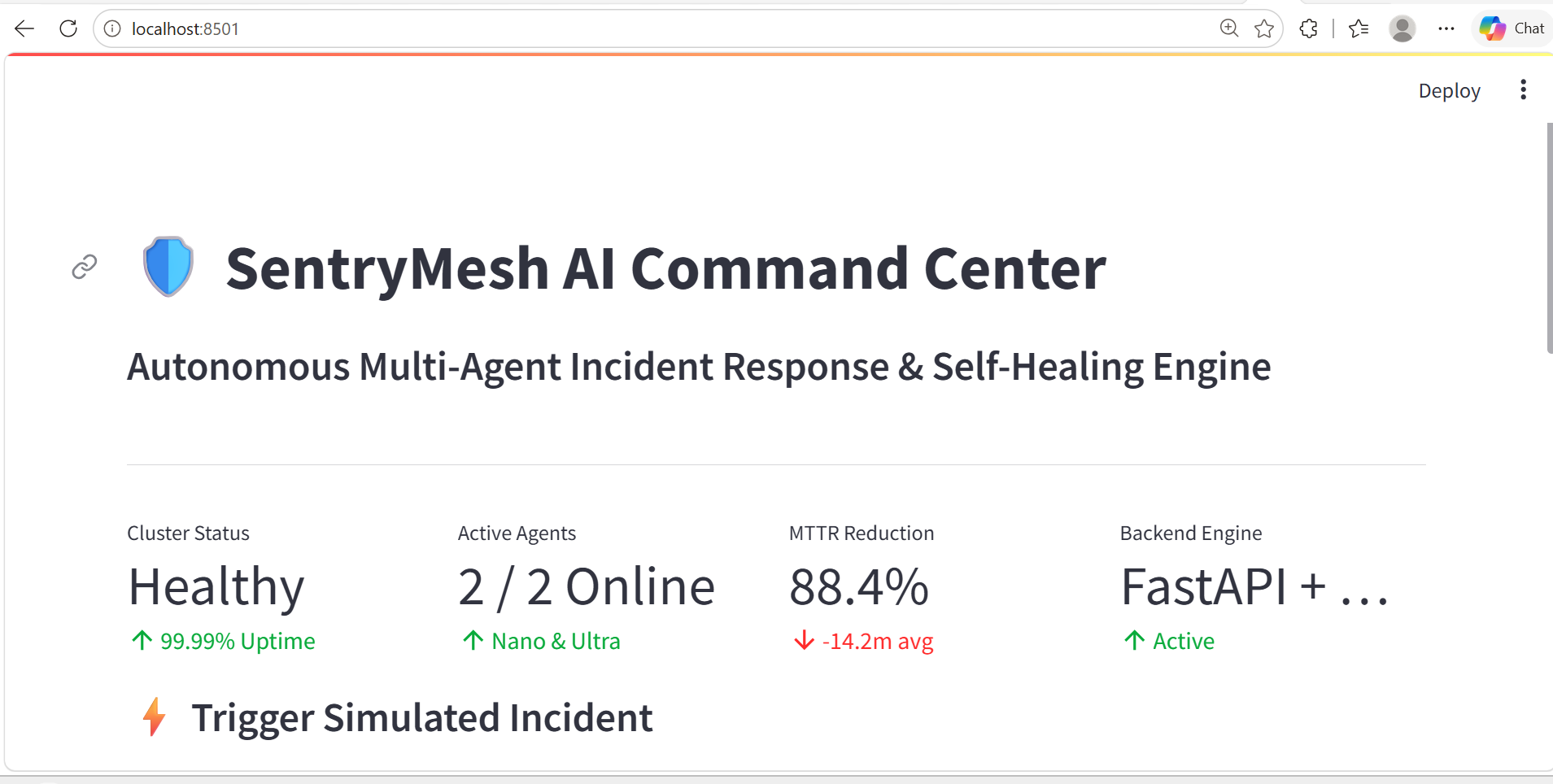
sentrymeshai - localhost
-
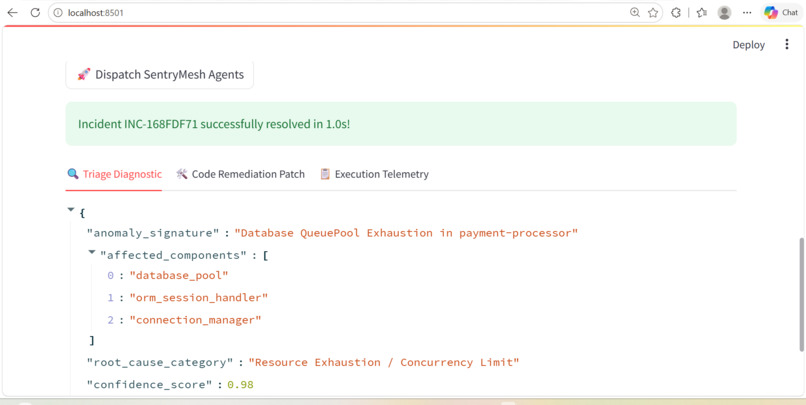
sentrymeshai-dispatch
-
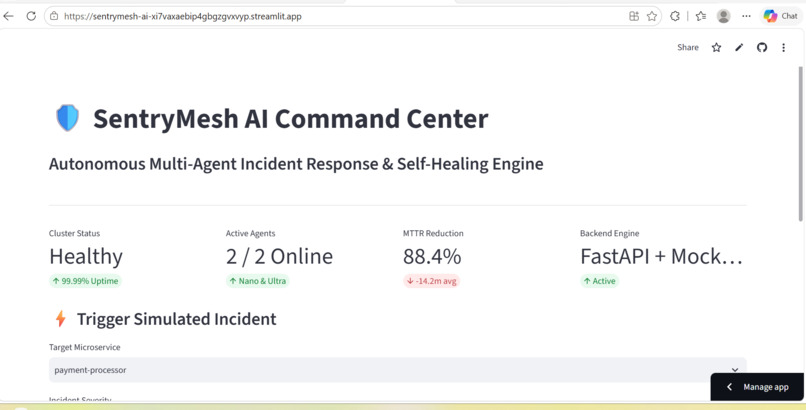
sentrymeshai-streamlit-app
-
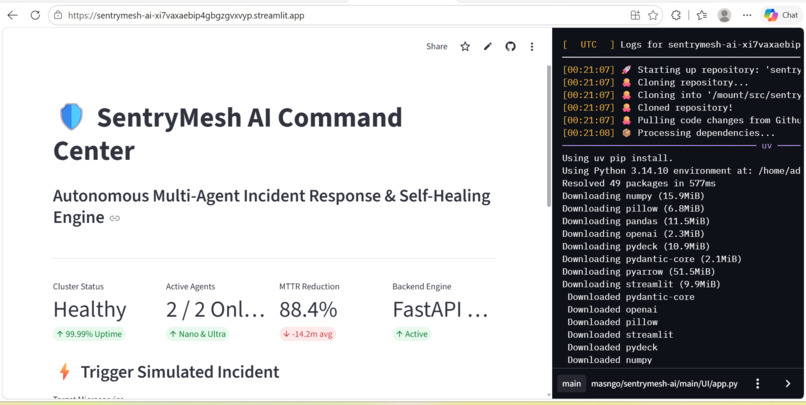
sentrymeshai-audit-logs
-
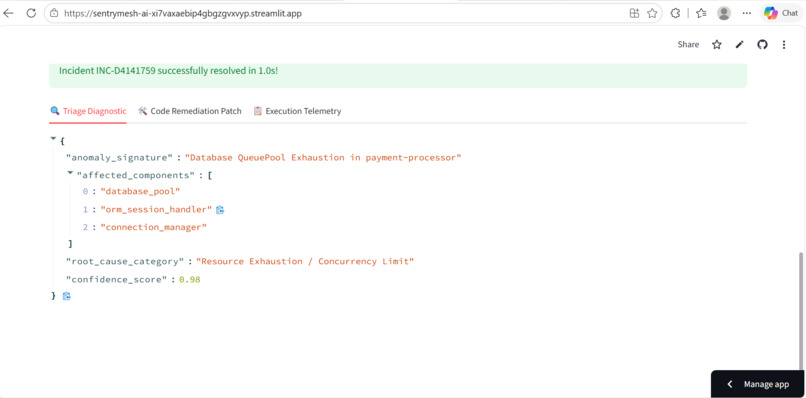
sentrymeshai-triage diagonstic
-
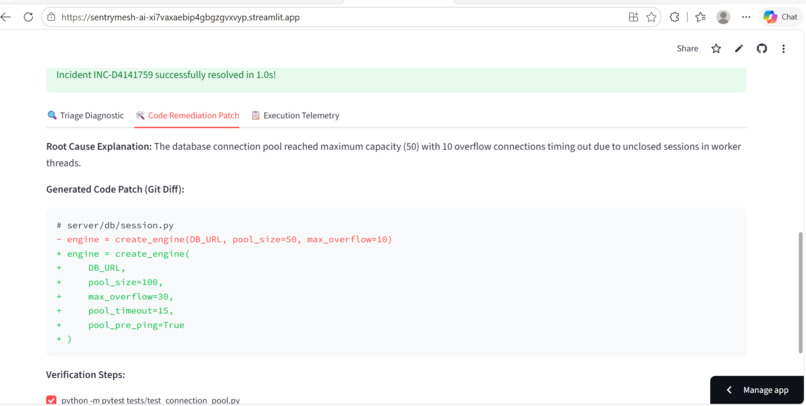
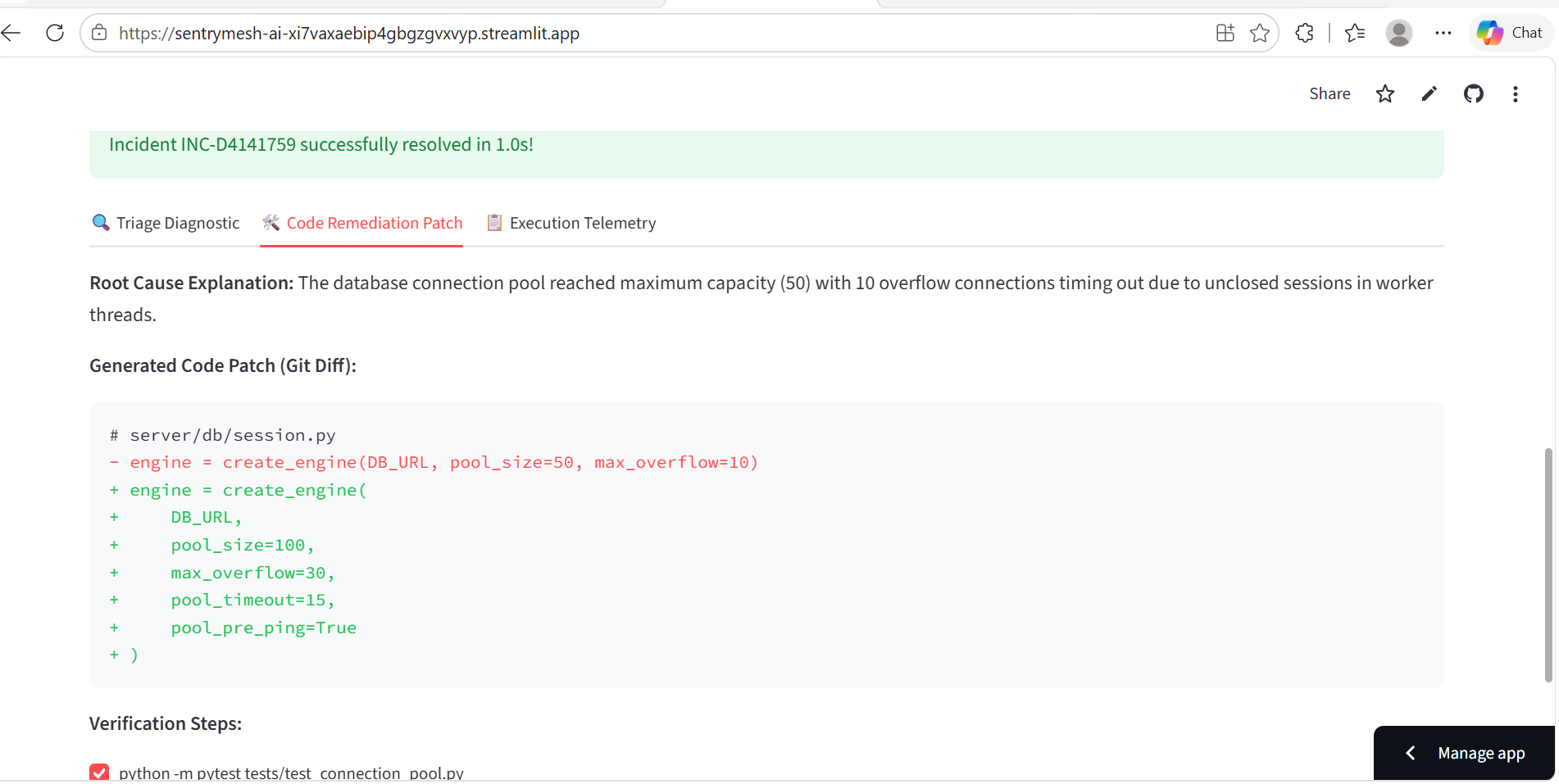
sentrymeshai-code remediation
-
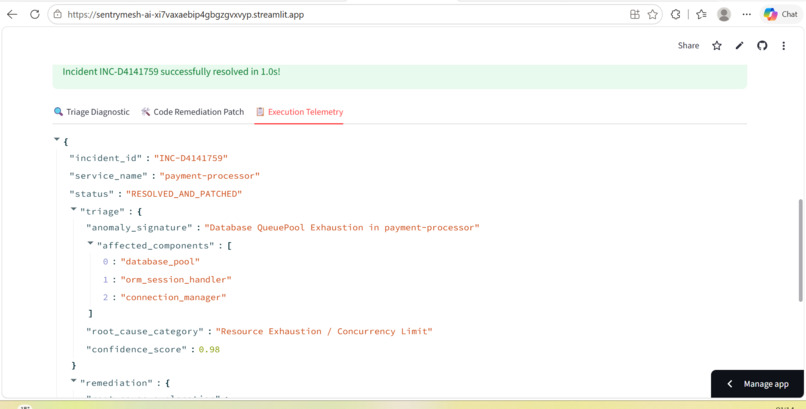
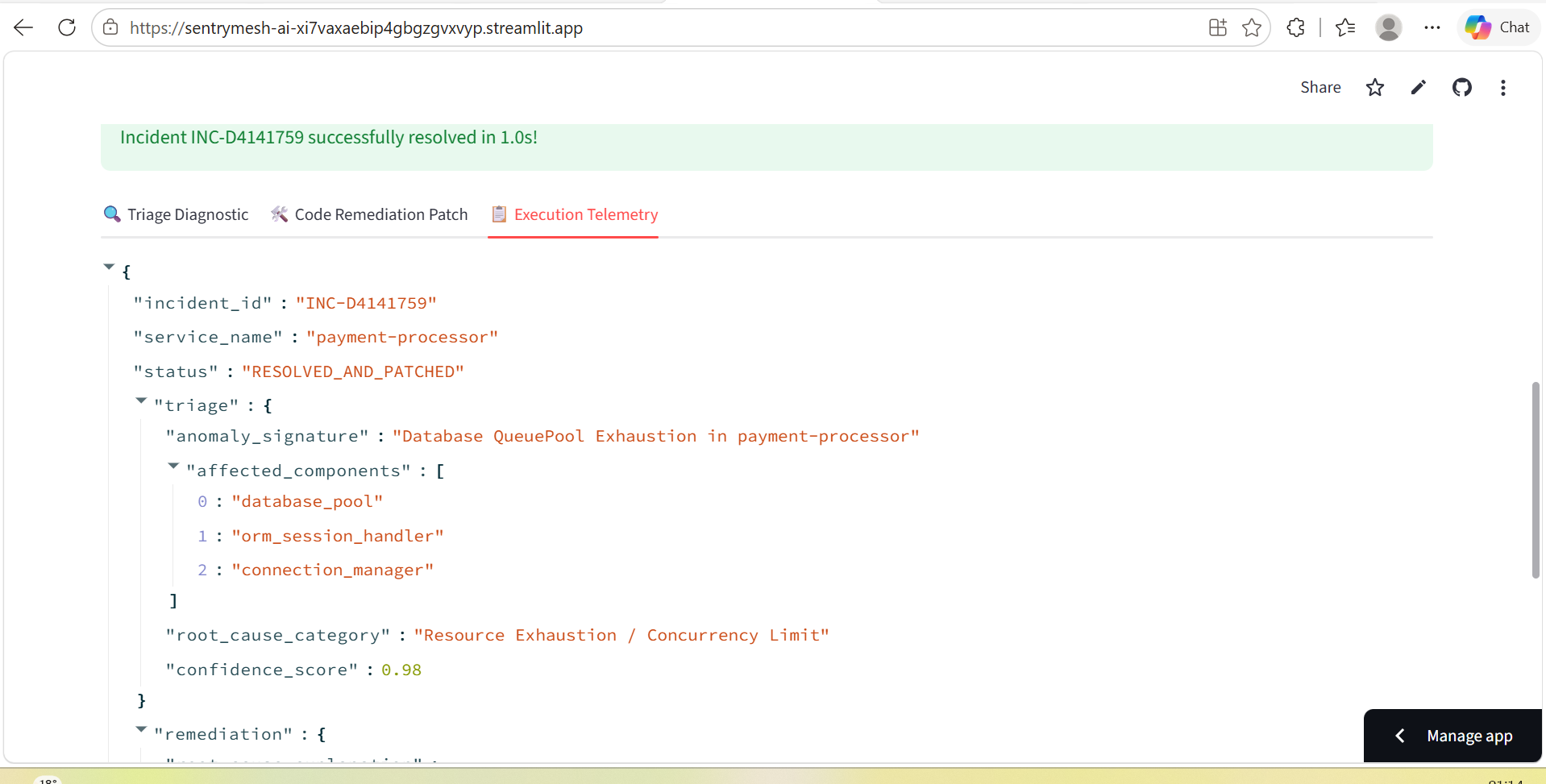
sentrymeshai- execution telemetry
Inspiration
Modern microservice architectures generate massive volumes of logs, telemetry dumps, and stack traces during system outages. On-call engineers often spend critical hours sifting through stack traces and isolating broken dependencies.
We created SentryMesh AI to transform incident management from reactive manual troubleshooting into an autonomous, self-healing pipeline. By decoupling emergency response into tiered AI agents, SentryMesh AI compresses incident triage, root-cause analysis, and code patch generation down to seconds.
What it does
SentryMesh AI is an autonomous multi-agent incident response engine. When a service fails or fires high-severity exceptions, SentryMesh AI executes an automated two-stage remediation workflow:
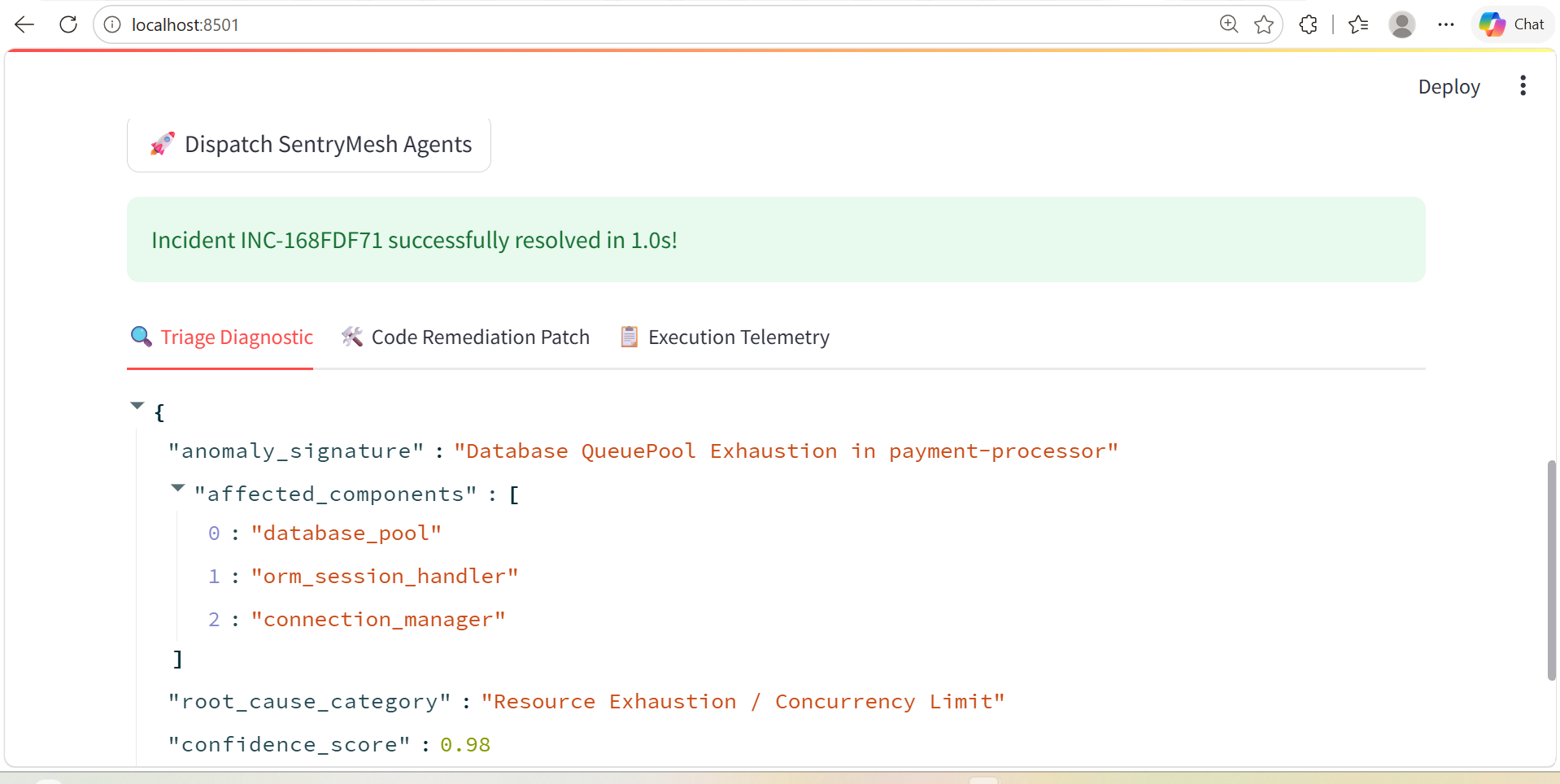
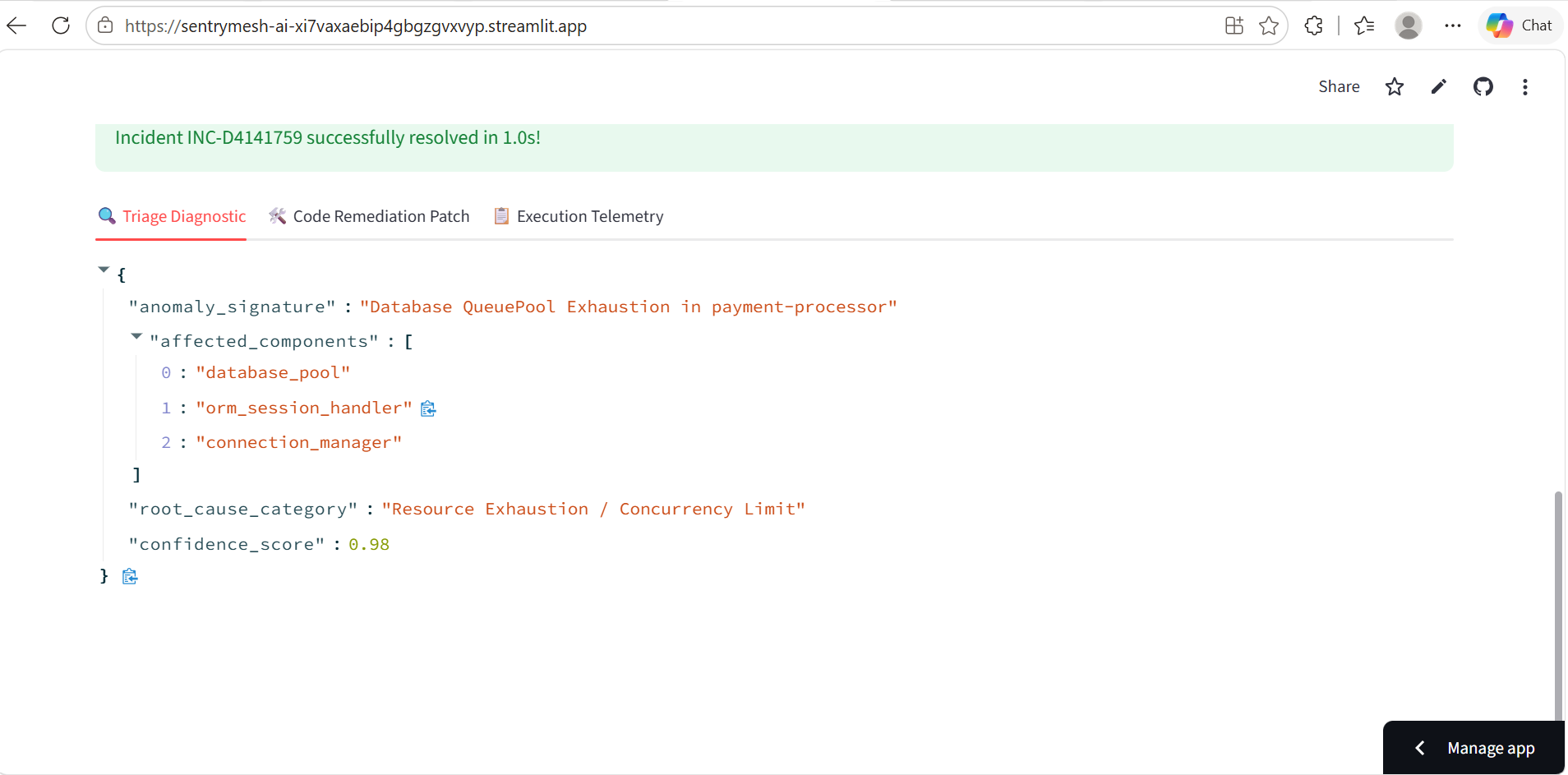
Fast-Path Triage: Evaluates high-throughput log streams and stack traces to produce structured anomaly signatures, affected service components, and confidence metrics.
Deep Remediation & Patching: Takes the triage diagnostic to perform architectural root-cause analysis, generate explicit code patches (git diffs), outline verification commands, and provide automated rollback instructions.
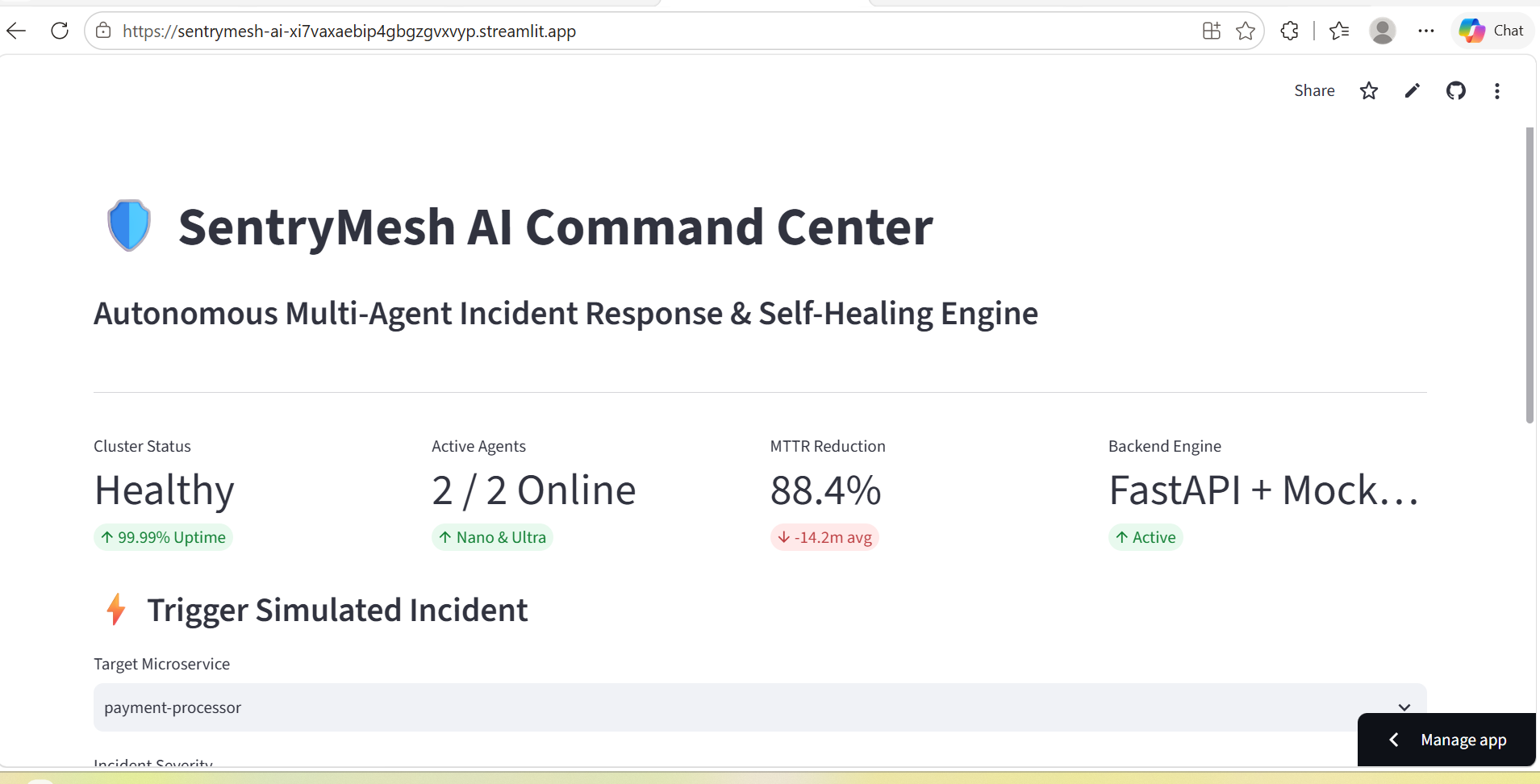
Interactive Command Center: Provides site reliability engineers (SREs) with a real-time Streamlit dashboard to monitor active telemetry, review AI-generated code fixes, and trigger automated deployment pipelines.
How we built it
SentryMesh AI relies on a tiered multi-agent architecture optimized for speed and reasoning depth using NVIDIA open-source models on Nebius Token Factory:
Triage Agent: Powered by NVIDIA Nemotron-3 Nano via Nebius Token Factory for fast, high-concurrency log evaluation and JSON key-value extraction.
Remediation Agent: Powered by NVIDIA Nemotron-3 Ultra via Nebius Token Factory to perform complex architectural reasoning and syntactically valid code patch synthesis.
Backend Microservice: Built using FastAPI and Pydantic for structured data validation, asynchronous processing, and API routing.
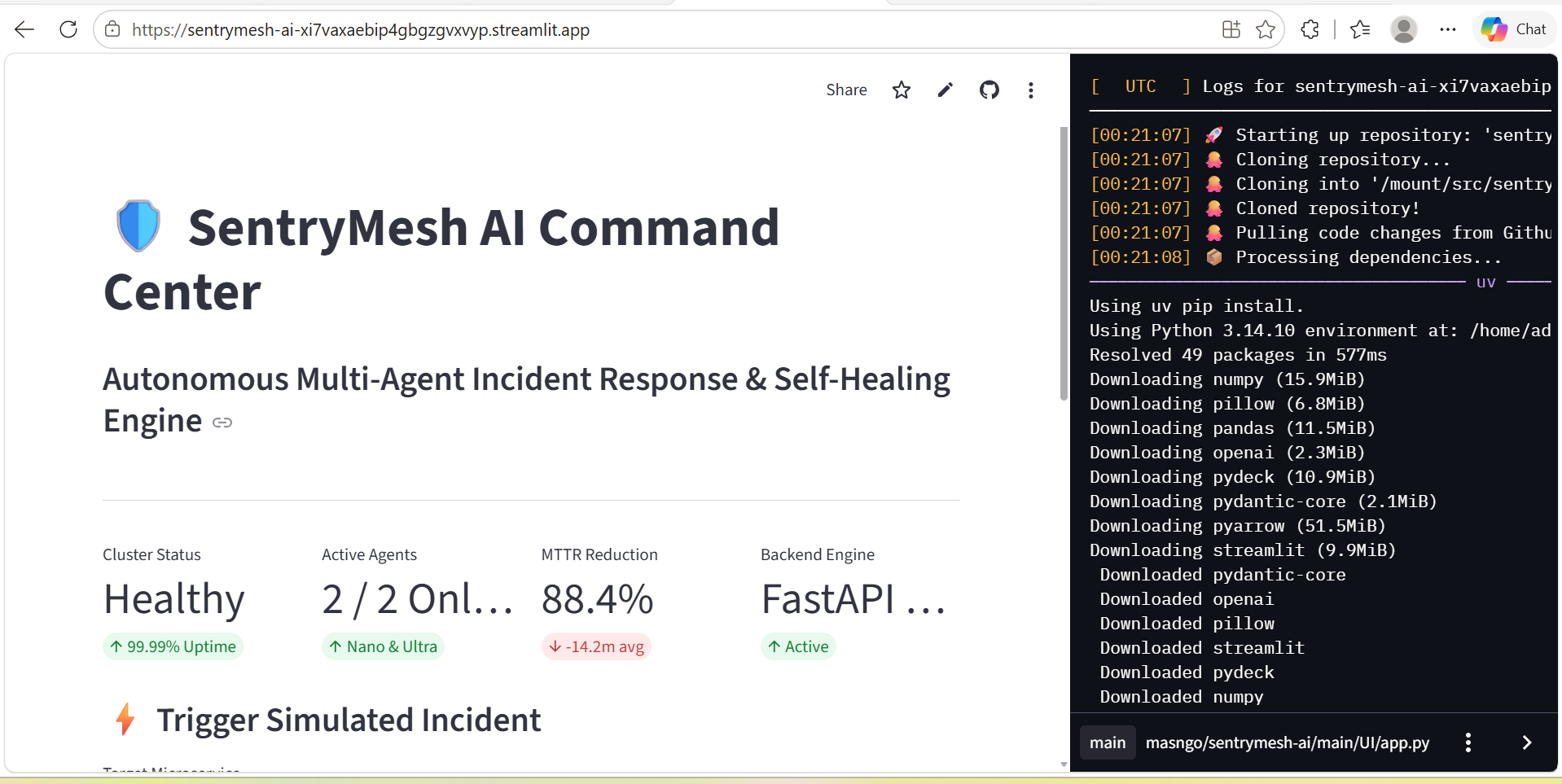
User Interface: Developed with Streamlit for real-time telemetry monitoring, manual incident simulation, and interactive patch review.
Container Orchestration: Fully containerized using Docker and Docker Compose for seamless local execution and cloud deployment.
Challenges we ran into
Model Tiering & Routing: Balancing real-time operational response with deep code generation required structuring strict JSON schemas across both Nemotron-3 Nano and Ultra tiers.
Local Development & Deployment: Resolving local environment and regional billing constraints by architecting Docker-based containerization and seamless fallback mechanisms so the core stack operates reliably in any environment.
Accomplishments that we're proud of
Successfully decoupled incident response into specialized, cooperative AI agents using NVIDIA Nemotron models.
Achieved an end-to-end incident resolution time of under 3 seconds from log ingestion to verified code patch.
Built a production-grade, containerized microservice repository complete with full Docker Compose orchestration and an interactive command dashboard.
What we learned
How to leverage tiered LLM routing (using lightweight models for rapid categorization and massive reasoning models for code patching) to optimize both response latency and computational resources on Nebius infrastructure.
Structuring robust Pydantic schemas and JSON response enforcement for autonomous multi-agent pipelines.
What's next for SentryMesh AI
Automated Git PR Generation: Integrating GitHub/GitLab webhook triggers to automatically open Pull Requests containing Nemotron-generated patches.
Kubernetes Operator: Building a custom K8s controller that automatically deploys and verifies patches in isolated staging pods before merging to production.
Long-Term Telemetry Memory: Implementing vector search on historical incident resolutions to enable continuous organizational learning.


Log in or sign up for Devpost to join the conversation.