-
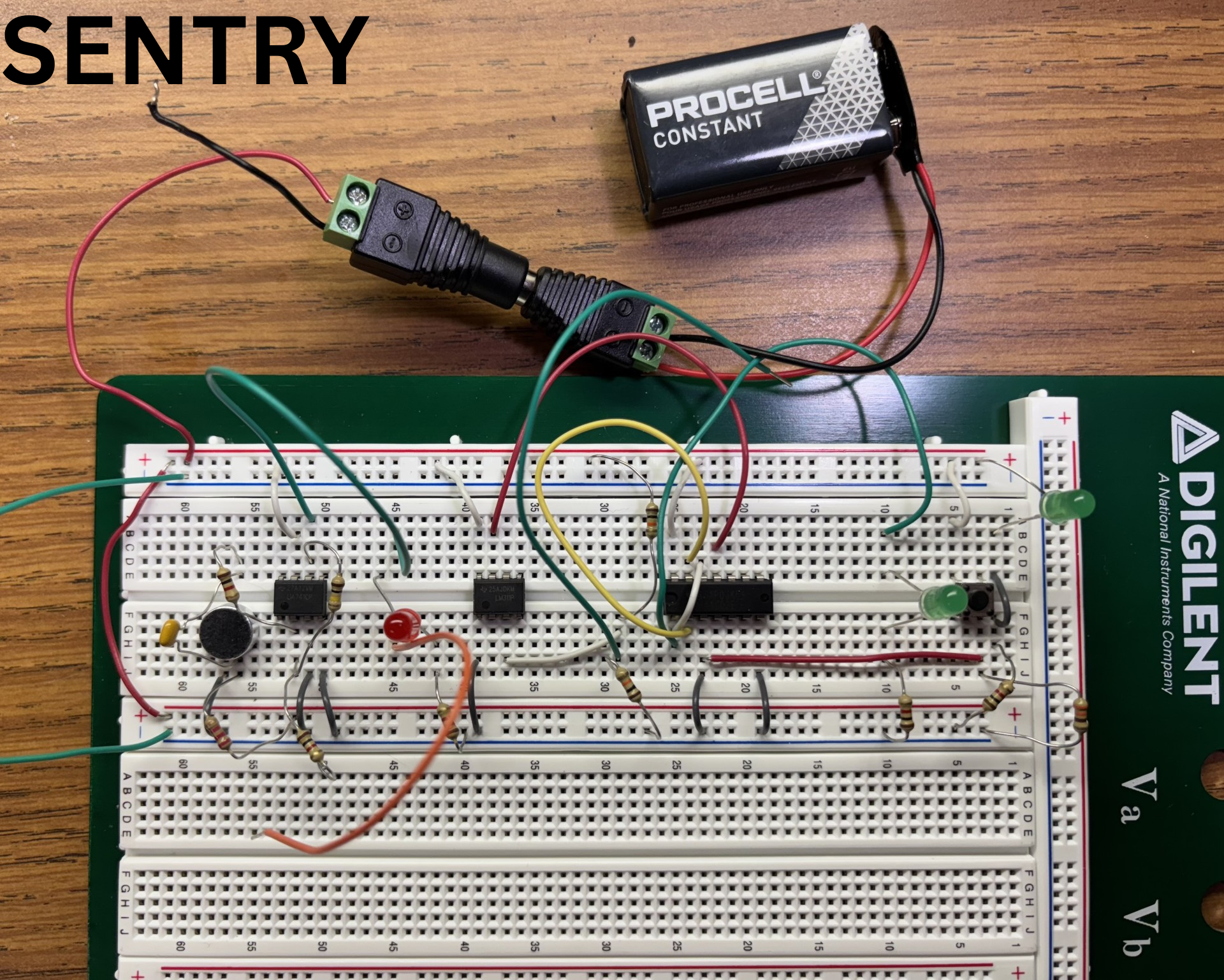
SENTRY Circuit Design
-
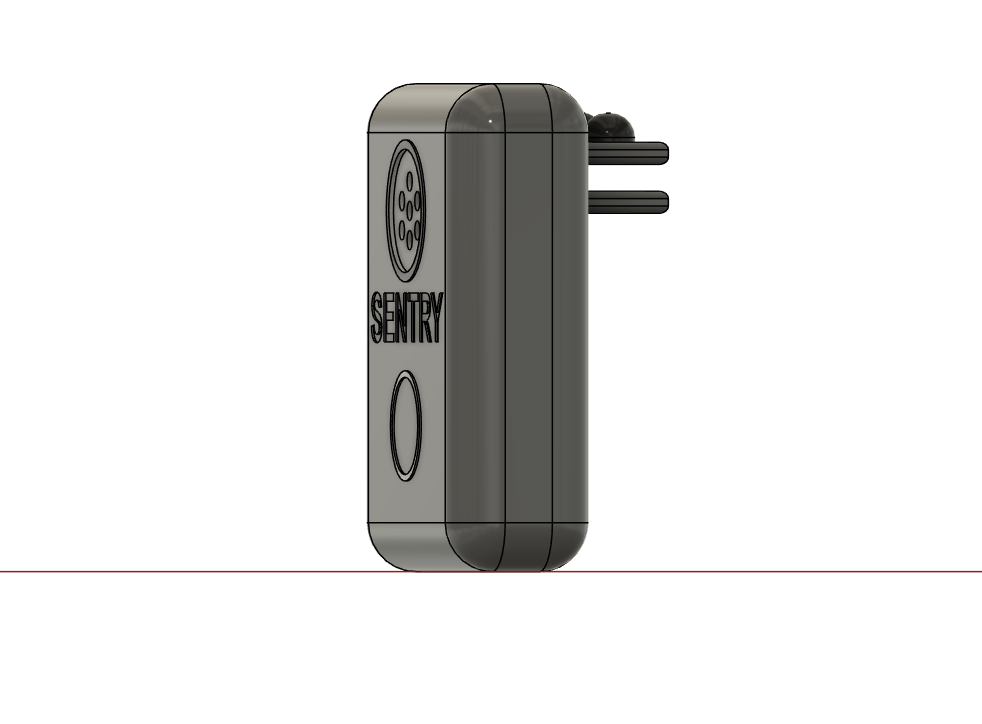
SENTRY Side View
-
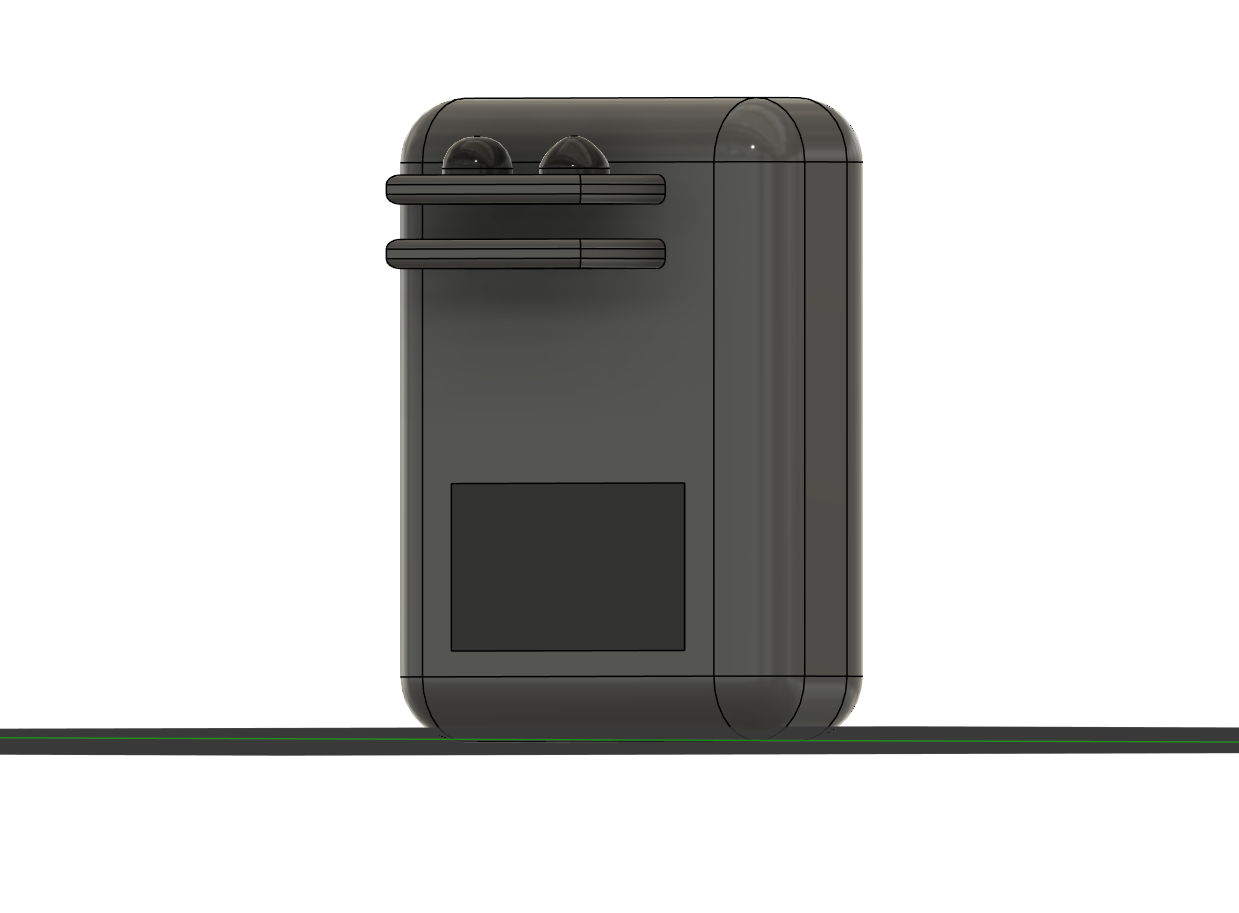
SENTRY Back View
-
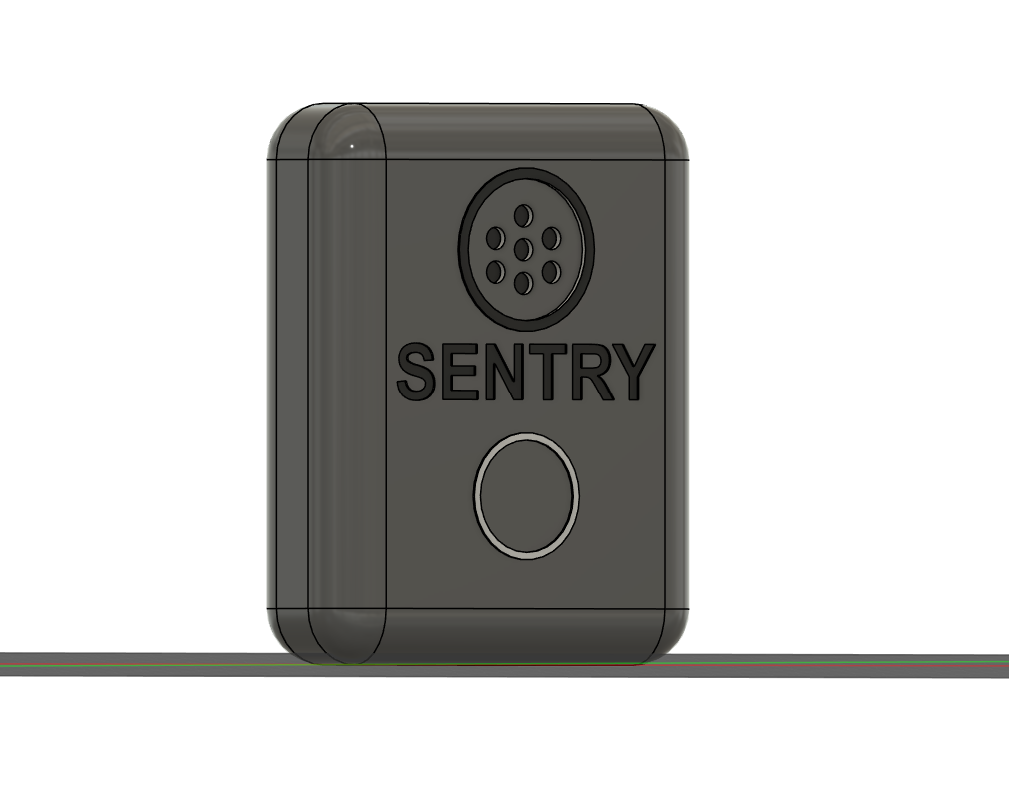
SENTRY Front View
Inspiration
Inspiration Every year, over 60,000 firefighters are injured on the fireground. Thousands lose consciousness due to heat exhaustion, heart attacks, cardiac events, overexertion, oxygen depletion, or direct trauma — and many of them are found too late, not because no one tried, but because no one knew. According to the NFPA (2024), these incidents continue to pose a massive threat to firefighter safety.
At the same time, there’s another invisible problem: communication. Inside buildings made of steel and concrete, both cellular and radio signals often fail. Tim Walsh, from the Illinois Fire Service Institute, shared how this lack of connection forces firefighters to rely on yelling or visual contact. When someone goes missing, a second crew is often sent in blind to find them — risking even more lives to rescue one. I wanted to create something that would help fix both of these problems at once. That’s where SENTRY comes in.
What it does
SENTRY is a compact, helmet-mounted safety module that passively monitors firefighter status without requiring them to do anything during the chaos of a call. It uses motion sensing and time thresholds to detect if a firefighter has gone unconscious, and when it does, it immediately triggers a distress alert.
Each unit emits a unique ping — like the firefighter's name or ID — so responders nearby can hear who’s in trouble. As teammates get closer, the signal gets louder, which helps guide them toward the distressed firefighter. That way, if someone collapses during an search, their partner — who is usually just a few rooms away — can respond immediately rather than having to finish the job, leave the building, and then be told by Ascent or command that someone’s still inside. This doesn’t just improve efficiency; it saves lives.
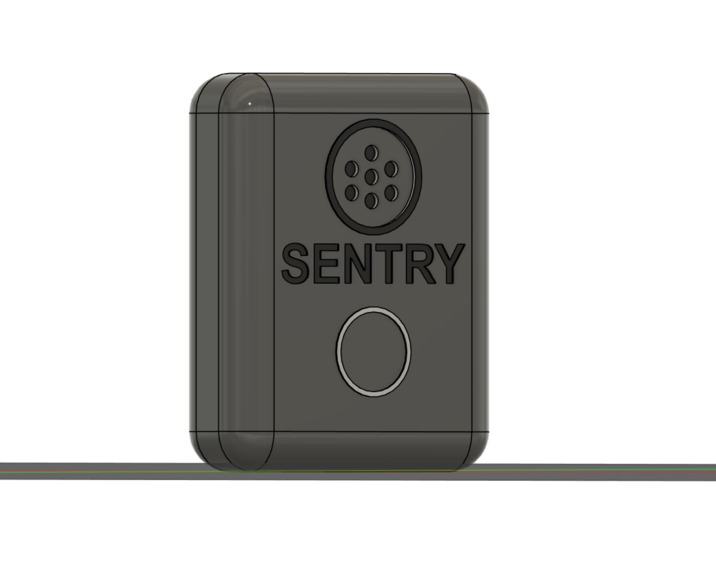
SENTRY also includes a manual SOS button. So if a firefighter becomes trapped but is still conscious, they can hit the button through their gloves to request help. The system is fully automated otherwise — no toggles, no configuration — firefighters will just strap it to their helmets earlier in the day and go out with an extra layer of protection. It uses the same mounting system as standard flashlights or shield tags on firefighter helmets, so there’s nothing new to remember or clip on. It’s already where it needs to be when the firefighter gears up.
How we built it
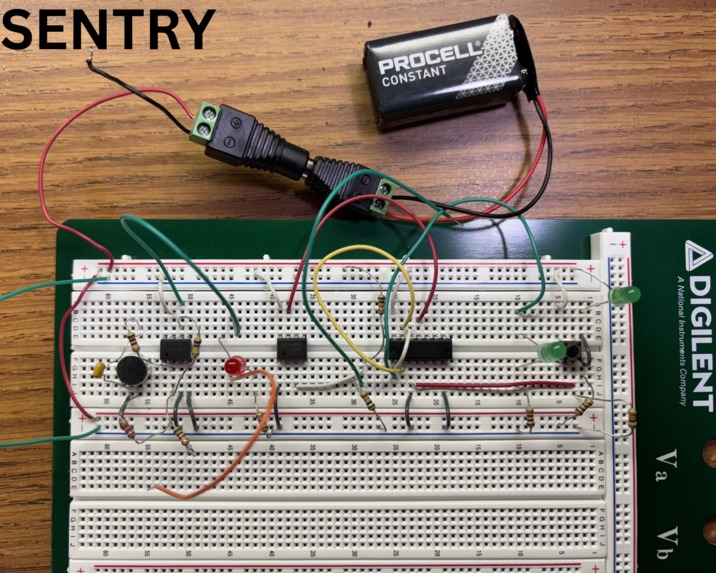
I created a functioning analog prototype of SENTRY using just passive and discrete components from UIUC’s lab kits. The core of the system is a motion detection circuit built from an LM358 op-amp, which amplifies signals from an electret microphone acting as a motion sensor. That feeds into a comparator with a tuned RC delay that monitors for long periods of stillness — if no motion is detected for around 30 seconds, it flips a signal. That signal is held using an RS latch, even if the motion resumes afterward, which prevents false negatives. The output triggers an audible speaker that serves as the distress ping.
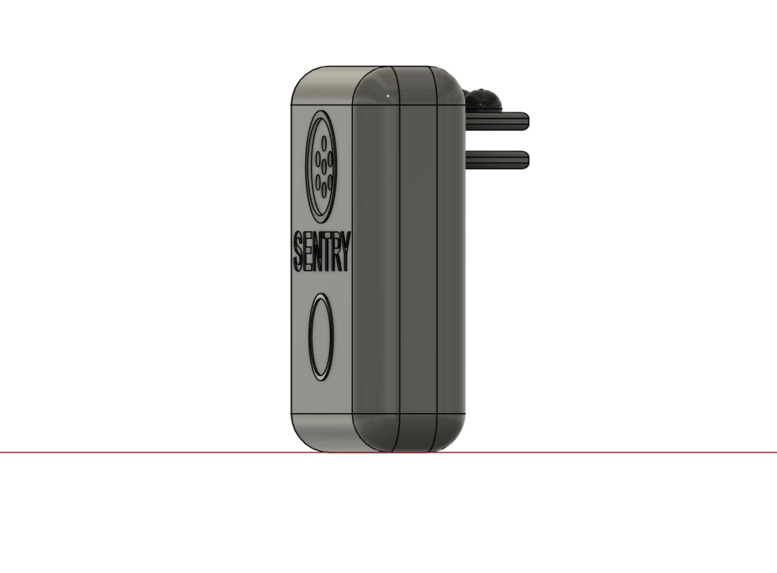
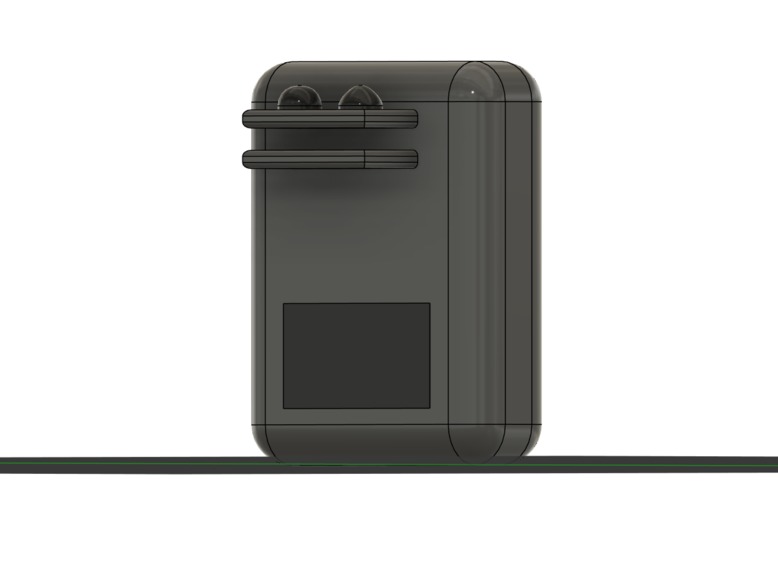
All of this was done using common UIUC lab kit parts: 1µF capacitors, 10kΩ resistors, discrete logic chips, and op-amps. It’s basic, reliable, and more importantly, totally stand-alone. The system works off a single 9V battery using a virtual ground configuration, which I built myself. Once the prototype was working, I moved on to designing a housing that could live up to the challenge. Using Fusion 360, I created a custom enclosure that clips directly to a standard firefighter helmet — right in the same spot where flashlight mounts or ID shields usually go.
Challenges we ran into
The biggest challenge was designing the delay logic to trigger only after meaningful inactivity. If I made the RC constant too short, I'd get false alarms. Too long, and it wouldn’t be helpful. Getting the RS latch to hold the signal properly also required a deep understanding of logic gates and how to prevent bouncing. On top of that, building a full sensor and alert circuit without Arduino or any code pushed us to make something more robust, safe, and analog — which took time, but made the final result more fire-friendly.
Accomplishments that we're proud of
I built a complete, fire-safe alert system using only basic components. It detects unconsciousness, signals for help, and holds the alert — all without needing to be turned on or set up. I also designed a wearable enclosure that doesn’t interfere with any existing gear. It’s just on the helmet, ready to go. And most of all, I found a way to address multiple real problems: unconsciousness, heatstroke, communications breakdown, and search-and-rescue delay all in one device.
What we learned
In designs for emergency devices, every second and every step counts. We learned that if your device takes more than two seconds to put on or activate, it won’t be used. SENTRY is designed to avoid that — it’s already on their gear, and it activates itself. We also learned that even with simple components, you can build something powerful.
What's next for Sentry
We see SENTRY as the missing piece in existing systems like Ascent Integrated Tech. Ascent already tracks where firefighters are in XYZ space, but it creates a time delay for when distress is detected and when help is sent. SENTRY answers that question. In the future, we see SENTRY syncing with Ascent’s data so that incident commanders not only know where a firefighter is — but whether they’re in active distress. This lets teammates respond faster, and gives command a full picture of the interior status in real time.
Down the line, SENTRY could be upgraded with pulse and respiration monitors or even AI-trained movement signatures that detect collapse patterns. But even now, the prototype works. And it’s enough to show what’s possible.

Log in or sign up for Devpost to join the conversation.