-
-
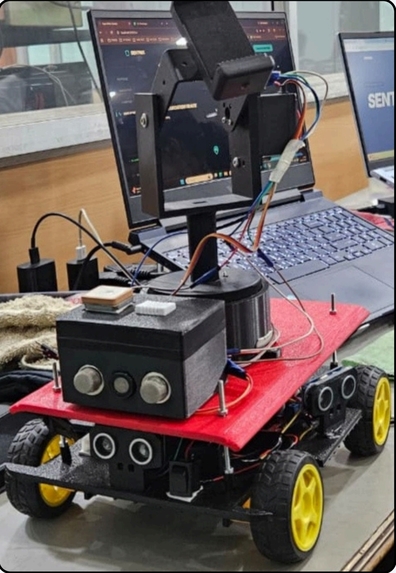
ROVER
-
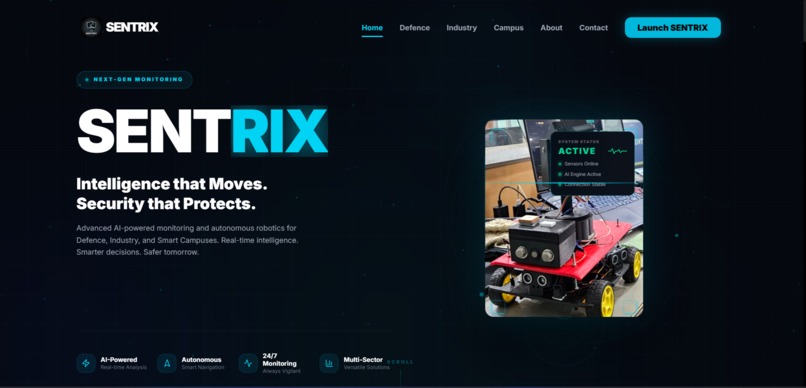
WEBSITE
Inspiration
The inspiration behind SENTRIX came from the limitations of traditional surveillance systems. Most security systems today are static, require continuous human monitoring, and are unable to intelligently respond to real-time threats. In sectors like defence border security, smart campuses, and industries, there is a growing need for autonomous, mobile, and intelligent monitoring systems.
We wanted to build a cost-efficient AI-powered surveillance rover capable of performing real-time monitoring, environmental sensing, and smart threat detection while remaining modular and scalable for multiple sectors.
What it does
SENTRIX is an autonomous AI-powered surveillance rover designed for:
- Defence border monitoring
- Smart campus surveillance
- Industrial safety monitoring
The rover performs:
- Real-time video surveillance
- Unauthorized person detection
- Suspicious activity monitoring
- Environmental sensing
- Obstacle detection and avoidance
- GPS-based location tracking
- Cloud-based data logging
The system uses a 2DOF camera mechanism for flexible surveillance movement and AI-based computer vision using YOLO and OpenCV for intelligent monitoring.
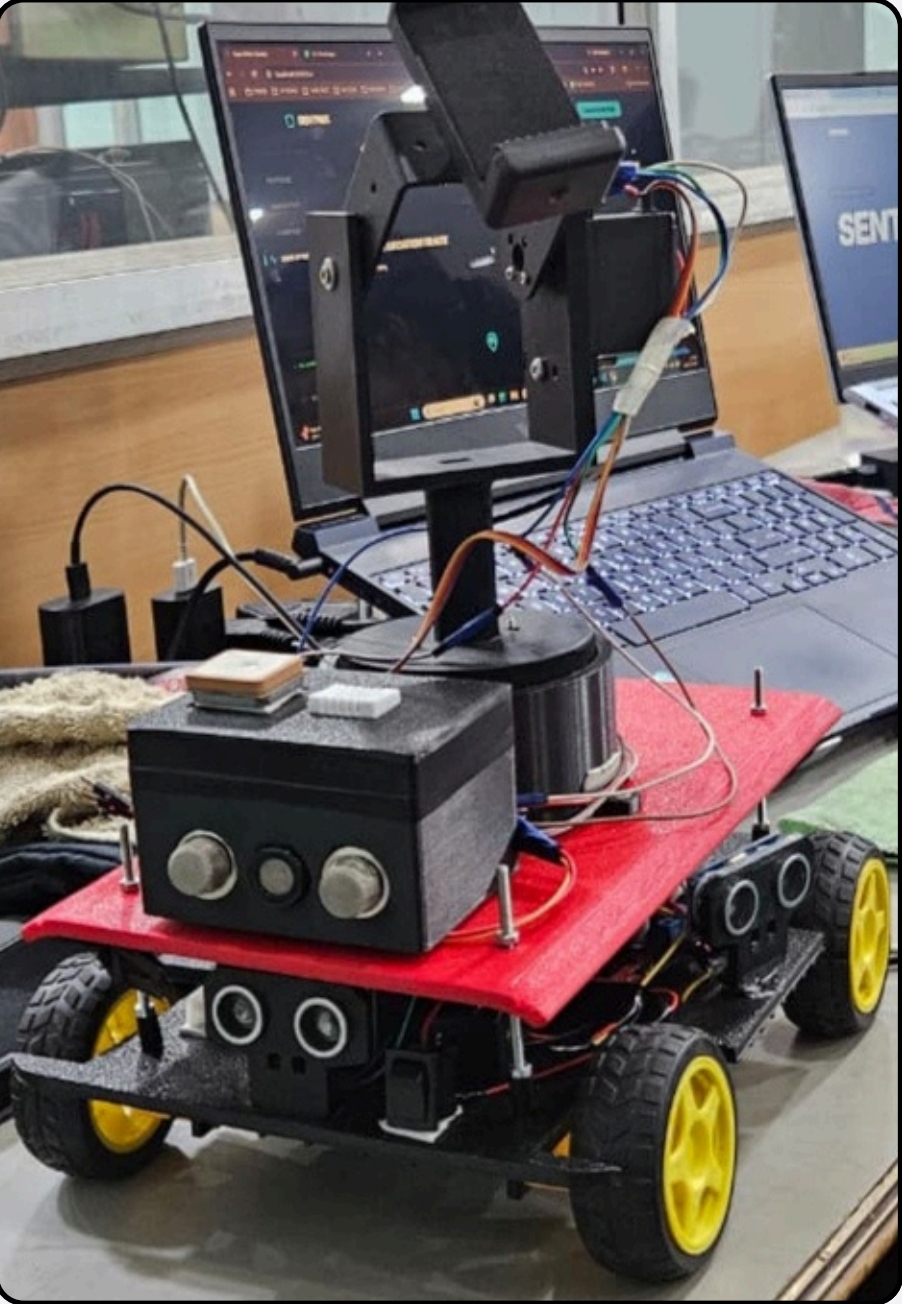
A key innovation of SENTRIX is its modular sensor box architecture, where sensor modules can be changed depending on the sector requirements.
How we built it
The rover chassis was fully designed by our team using Fusion 360 and manufactured using 3D printing.
Hardware Components
- 4 high torque motors
- 12V power supply
- 3 ultrasonic sensors for obstacle detection
- 2DOF camera holder system
- Shrike-Lite (RP2040 + FPGA)
- ESP32 DevKit controllers
Sensor Box
Current sensors include:
- MQ2 gas sensor
- MQ7 carbon monoxide sensor
- MQ135 air quality sensor
- DHT22 temperature & humidity sensor
- Neo6M GPS module
Software & AI
We developed:
- AI detection system using Python, YOLO, and OpenCV
- Backend using Node.js and Express.js
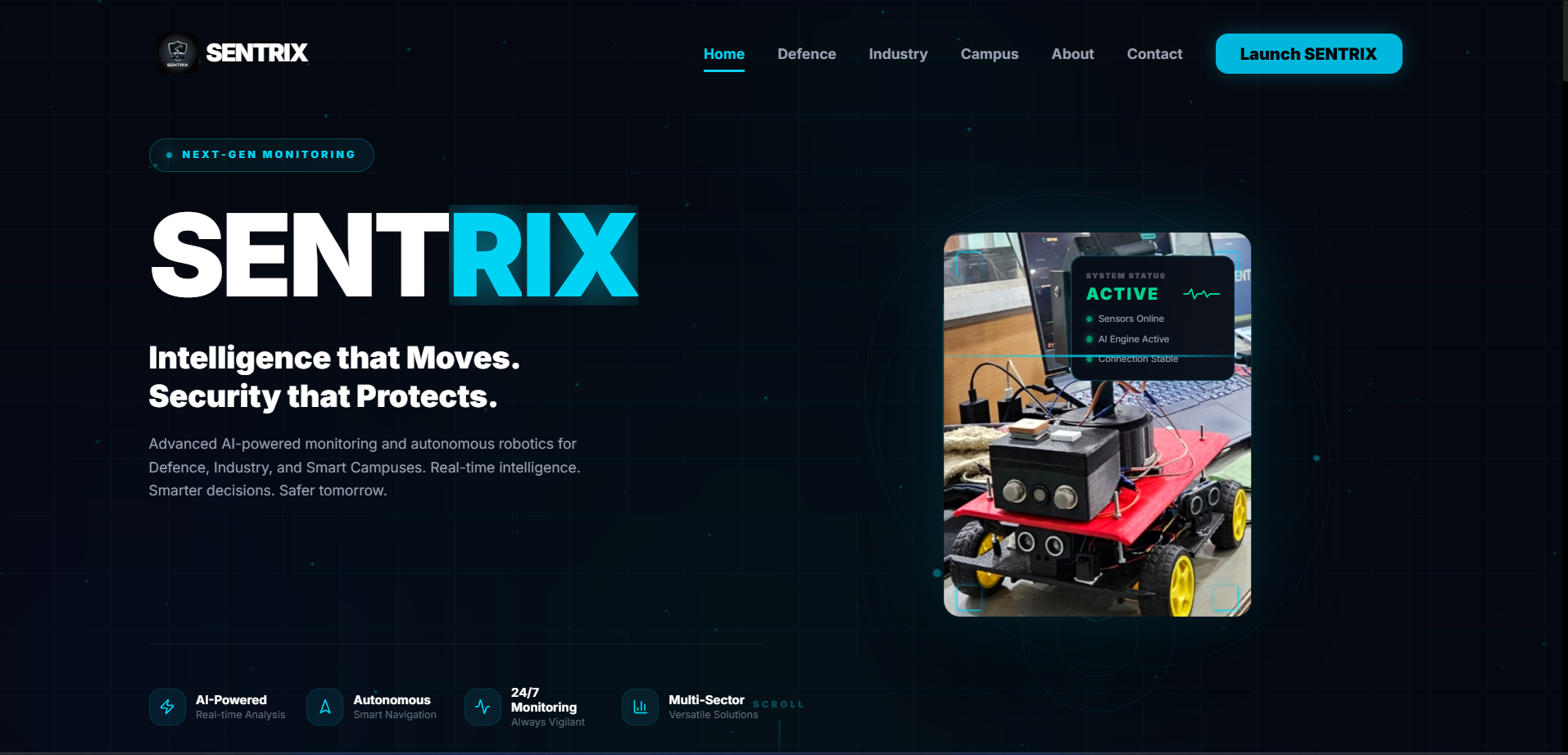
- Frontend monitoring dashboard using React.js and Tailwind CSS
- Cloud logging using MongoDB Atlas and Google Drive
The rover continuously collects camera and sensor data, processes it through AI models, and updates the dashboard in real time.
Challenges we ran into
One of the biggest challenges was integrating multiple technologies into a single working system. Combining AI, robotics, IoT, embedded systems, and cloud communication required extensive testing and debugging.
Other major challenges included:
- Budget limitations during prototyping
- Calibrating ultrasonic and gas sensors accurately
- Managing power distribution for motors and sensors
- Designing a stable 3D printed chassis
- Achieving smooth communication between controllers
- Running real-time AI processing with limited hardware resources
We also faced difficulties in reducing blind spots during navigation, which we solved by placing the side ultrasonic sensors at angled positions.
Accomplishments that we're proud of
We are proud that we successfully built a fully working prototype completely designed and assembled by our team.
Key accomplishments include:
- Designing the rover from scratch using Fusion 360
- Building a modular surveillance platform
- Developing real-time AI detection capabilities
- Creating a working sensor integration system
- Achieving autonomous obstacle detection
- Building a scalable architecture for multiple sectors
- Successfully integrating hardware and software systems together
We are especially proud of the modular sensor box concept, which allows SENTRIX to adapt across defence, campus, and industrial applications without redesigning the entire rover.
What we learned
Through this project, we learned:
- Robotics system integration
- Embedded systems development
- AI-based computer vision
- Real-time data processing
- IoT communication architecture
- Cloud-based monitoring systems
- Mechanical design and 3D prototyping
- Team collaboration and rapid prototyping
Most importantly, we learned how interdisciplinary technologies can be combined to solve real-world security and monitoring problems.
What's next for SENTRIX
Our future roadmap for SENTRIX includes:
- LIDAR integration for advanced autonomous navigation
- SLAM-based mapping and localization
- Thermal camera integration
- Face recognition and behavior analysis
- Mobile application development
- Cloud-based AI analytics dashboard
- Multi-rover communication system
- Drone integration for aerial surveillance
- Smart city and defence-grade deployment
Our long-term goal is to transform SENTRIX into a fully autonomous intelligent security ecosystem capable of operating in critical environments with minimal human intervention.

Log in or sign up for Devpost to join the conversation.