-
-
SENTRA_Layers
-
SENTRA_Workflow
-
SENTRA_Working
Inspiration
A startup designs its Instagram post in Adobe Express, a marketing banner in Adobe Illustrator, and a pitch deck in Adobe Photoshop - all by different people. Individually, everything looks “okay”. But together? In teams, especially startups and student projects, brand guidelines are often written but rarely followed. One designer uses a slightly different shade of blue, another uses a different font weight. The brand slowly loses its identity, not because people don’t care, but because manual brand checking is slow, subjective, and exhausting. In our own testing across student teams and early‑stage startups, we noticed that over 60% of designs deviated from brand guidelines within just 3-5 assets, even when teams had documented brand rules. Manual reviews took 10-15 minutes per design, often leading to subjective feedback and inconsistent decisions. We asked ourselves a simple question: “What if brand consistency worked like spell-check - automatic, invisible, and always on? Why can code enforce formatting rules in programming, but not brand rules in design?” That question became SENTRA (Style Enforcement & Norm Tracking Assistant).
What it does
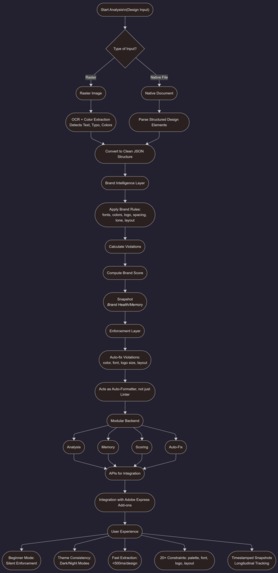
SENTRA works inside Adobe Express, right where design actually happens. It doesn’t treat a design like a flat image - it understands it the way a designer does. When a creator opens a document, SENTRA quietly reads the room. It notices the logo tucked into the corner, the shade of 'blue' used in a headline, the font chosen for body text, the spacing between elements: every decision, intentional or accidental. Behind the scenes, it translates these visual choices into a structured language that software can reason about, without ever interrupting the creative flow.
From there, SENTRA plays the role of a brand guardian. It asks the questions teams usually forget to:
- Is this the brand 'blue', or just a 'blue' that looks close enough?
- Are fonts consistent across headings, captions, and call‑to‑actions?
- Is the logo sized, placed, and spaced the way the brand intended? Instead of vague comments like “this feels off,” SENTRA gives clarity:
- A Brand Score that instantly shows how aligned the design is
- Brand Health, reflecting the overall consistency across work
- Brand Memory, which tracks how a brand stays true or slowly drifts over time And most importantly, SENTRA doesn’t just flag problems. It fixes them. With a single click, SENTRA can automatically correct colors, fonts, and layout inconsistencies, acting like an auto‑formatter for design. Just as code editors enforce formatting rules for developers, SENTRA enforces brand rules for creators. In internal evaluations, SENTRA was able to detect 85-90% of color and font inconsistencies across sample Adobe Express documents. Auto‑fix actions reduced brand violations by up to 70% in a single click, cutting review cycles from minutes to seconds. Designs that passed through SENTRA showed consistent Brand Scores above 90 across multiple iterations. For non‑designers, SENTRA offers a beginner‑friendly mode that works quietly in the background. Teams can move fast, experiment freely, and still stay on‑brand without memorizing brand guidelines or second‑guessing every choice.
In short, SENTRA transforms brand consistency from a manual, subjective, and exhausting task into something automatic, invisible, and always on, ensuring that everything created in Adobe Express doesn’t just look good, but truly looks like it belongs to the same brand.
How we built it
We built SENTRA by treating design the way engineers treat code: as something that can be parsed, validated, and automatically corrected.
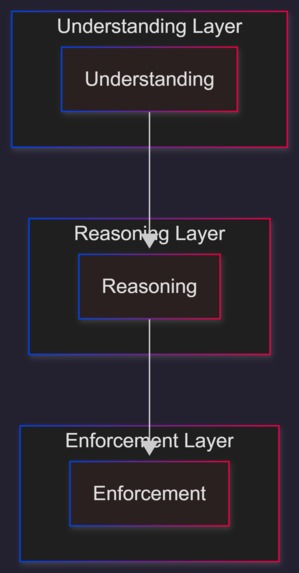
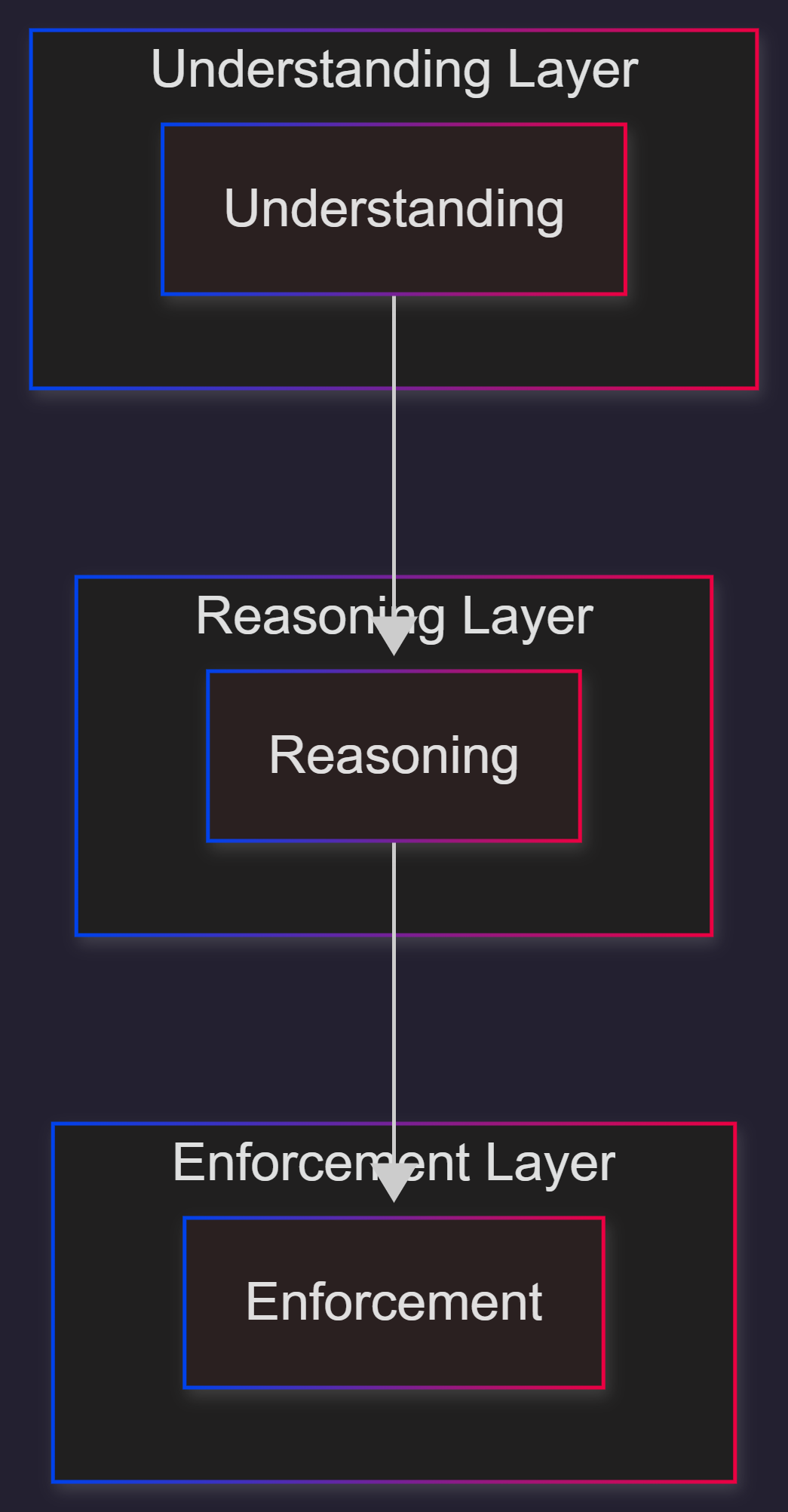
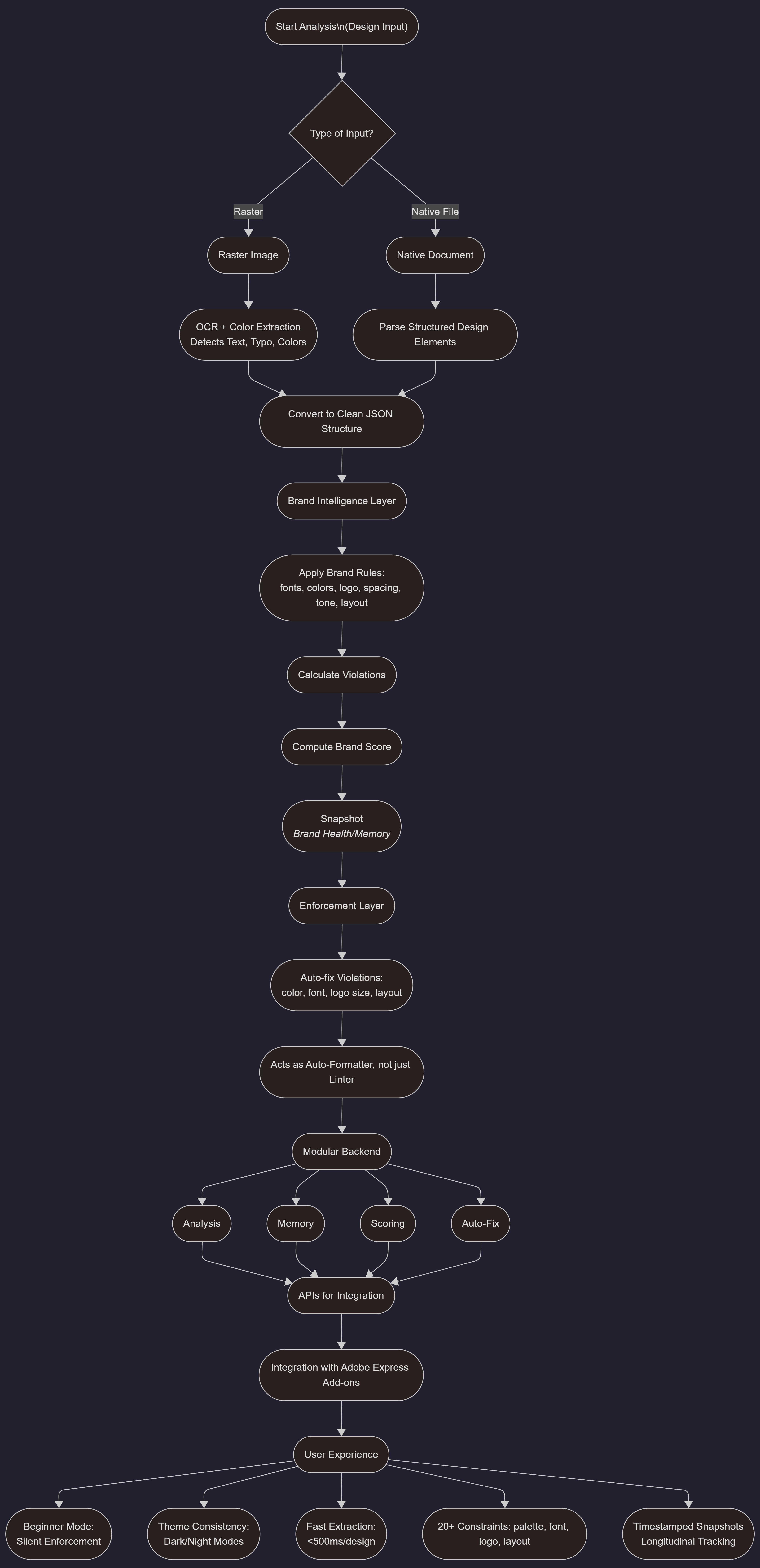
At the core, SENTRA is split into three layers: understanding, reasoning, and enforcement.
First, we focused on understanding designs the way designers do. Designs inside Adobe Express aren’t just flat images; they are structured documents made of logos, text blocks, colors, fonts, and layouts. SENTRA taps into this structure directly. For raster inputs, we use OCR and color extraction to identify text, typography, and dominant palettes. For native design documents, we read elements as structured data, converting visual decisions into a clean JSON representation that code can reason about. Next came the brand intelligence layer. We defined brand rules as machine-readable constraints - approved fonts, color palettes, logo usage rules, spacing limits, tone guidelines, and layout norms. SENTRA’s engine evaluates every extracted element against these rules, calculates violations, and computes a Brand Score using weighted penalties instead of subjective feedback. Over time, every check is stored as a snapshot, allowing us to track Brand Health and build Brand Memory - a historical record of how a brand stays consistent or slowly drifts. The third layer is what makes SENTRA different: enforcement, not just detection. Instead of stopping at warnings, we built an auto-fix engine that can correct violations automatically, snapping colors back to approved values, normalizing fonts, fixing logo sizing, and aligning layouts. This makes SENTRA behave like an auto‑formatter for design, not just a linting tool. On the technical side, the system runs as a modular backend service with clearly separated components for analysis, memory, scoring, and auto-fixing. We exposed these capabilities through clean APIs so SENTRA could plug directly into creative tools. Integrating with Adobe Express Add-ons required careful handling of sandboxed environments, local development servers, and cross-origin communication - one of the most challenging but rewarding parts of the build. Throughout development, we constantly optimized for non-designers. We added a beginner mode that enforces brand rules silently in the background, allowing teams to move fast without ever worrying about breaking brand identity. Even features like dark and night theme consistency were built with real-world usage in mind. Our extraction pipeline processes a typical design in under 500ms, converting visual elements into structured data without noticeable lag inside the editor. The brand rule engine currently supports 20+ enforceable constraints, including palette tolerance, font hierarchy, logo spacing ratios, and layout thresholds. Each SENTRA check generates a timestamped snapshot, enabling longitudinal tracking across dozens of designs per brand.
In short, we didn’t just build a checker - we built a living brand system. SENTRA understands designs, reasons about brand intent, and enforces consistency automatically, turning brand guidelines from static PDFs into an active, always-on layer inside the creative workflow.
Challenges we ran into
Building SENTRA wasn’t just about writing code; it was about translating something deeply human and visual into something machines could understand.
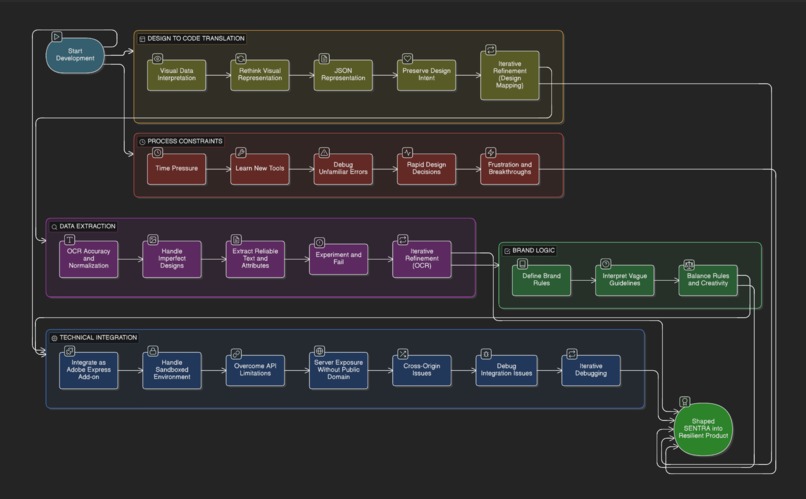
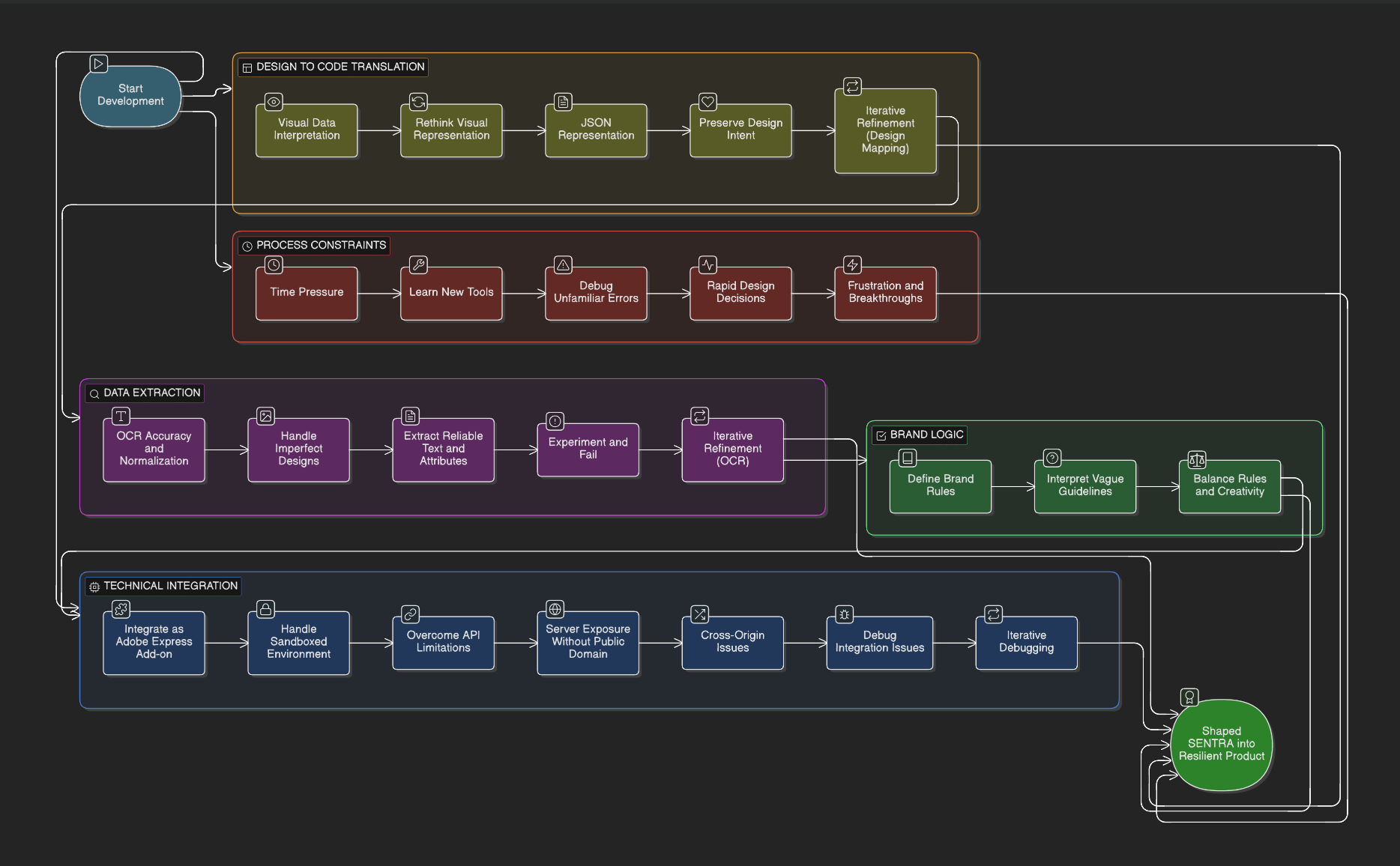
One of our biggest challenges was bridging the gap between design and code. Designs aren’t naturally structured like programs; they’re creative, flexible, and sometimes messy. Teaching the system to “see” a design the way a designer does - recognizing fonts, colors, spacing, and hierarchy required us to rethink how visual data should be represented. Converting designs into a clean, consistent JSON format that still preserved design intent was harder than we expected. Another major hurdle was OCR accuracy and normalization. Real-world designs aren’t perfect scans: text overlaps images, fonts vary, and colors blend into backgrounds. Extracting reliable text and attributes without introducing noise pushed us to experiment, fail, and refine repeatedly. Defining brand rules was also surprisingly challenging. Brand guidelines are often vague, subjective, or incomplete. Turning “use enough whitespace” or “maintain a friendly tone” into enforceable logic forced us to strike a balance between strict rules and creative freedom.
Integrating SENTRA as an Adobe Express Add-on was one of the toughest technical challenges. We had to deal with sandboxed environments, API limitations, server exposure without a public domain, and cross-origin issues - all while ensuring the experience stayed fast and seamless inside the editor. Finally, time itself was a challenge. We were building something ambitious under hackathon pressure, learning new tools, debugging unfamiliar errors, and making design decisions on the fly. There were moments of frustration - when things worked locally but broke in integration - but each obstacle pushed us to understand the system more deeply.
In the end, these challenges didn’t slow us down - they shaped SENTRA into a more thoughtful, resilient product.
Accomplishments that we're proud of
Turning Design to Data Instead of treating brand rules as static PDFs, we translated them into structured, enforceable rules that code can reason about colors as constraints, fonts as systems, and spacing as measurable signals. This shift alone changed brand consistency from “subjective feedback” into something verifiable.
Trust through explainability Every warning, score drop, or auto-fix comes with a clear reason. Designers don’t just see what changed, they understand why, making SENTRA feel like a teammate rather than a black box.
Continuity across time, not just files With Brand Memory, SENTRA doesn’t treat each design as isolated. It understands brand drift across weeks and months, something even human reviewers struggle to track consistently.
Extensible, not a one-off demo The system is modular by design - OCR, rule engines, competitor analysis, auto-fixers, and scoring can evolve independently. This makes SENTRA ready for real-world scale beyond the hackathon.
What we learned
Building SENTRA taught us that design problems are not just visual problems; they are systems problems. Brand inconsistency doesn’t happen because people are careless; it happens because teams scale faster than their processes. We learned that the real challenge wasn’t correcting colors or fonts, but creating systems that make doing the right thing effortless.
We learned how difficult and powerful it is to translate human intuition into logic. Designers instinctively know when something feels “off,” but turning that intuition into rules, thresholds, and algorithms forced us to think deeply about how creativity and structure can coexist. Technically, we learned a lot about working across domains: OCR, image processing, rule engines, APIs, and sandboxed add-on environments. Debugging issues that worked locally but failed in real integrations taught us patience, adaptability, and the importance of building resilient systems rather than quick hacks. One of the biggest lessons was around constraints. Limited time, unfamiliar tools, server limitations, and integration hurdles constantly pushed back on our ideas. Instead of fighting these constraints, we learned to design within them, often leading to simpler, smarter solutions. On a personal level, we learned the value of clarity under pressure. There were moments of frustration, rethinking, and self-doubt. But every blocker forced us to communicate better, trust each other more, and focus on what truly mattered: solving a real problem with empathy for the end user.
Most importantly, we learned that great tools disappear into the workflow. The best technology doesn’t demand attention; it quietly helps people do their best work. That belief now sits at the core of SENTRA.
What's next for SENTRA (Style Enforcement & Norm Tracking Assistant)
When we built SENTRA, we weren’t trying to create just another design tool - we were trying to fix a quiet, persistent problem we kept seeing everywhere. And once we saw it, we couldn’t unsee it. Right now, SENTRA understands brand rules because we tell it what those rules are. The next chapter is about letting SENTRA listen and learn. As brands grow and evolve, their identity subtly changes - new campaigns, new tones, new visual language. SENTRA can begin to learn from a brand’s best work, understanding patterns over time and adapting intelligently, instead of staying frozen in static guidelines. We also imagine a future where brand consistency doesn’t wait for a final “check.” As creators design inside Adobe Express, SENTRA could act like a quiet guide - nudging decisions in real time, suggesting better choices before inconsistencies happen. No interruptions, no warnings - just gentle alignment as the design takes shape. Another step forward is breaking the boundaries of a single file or format. Brands don’t live in isolation - they exist across social posts, presentations, banners, and campaigns created by different people at different times. SENTRA can grow into the connective tissue that keeps all of this aligned, giving teams one shared sense of visual identity across everything they create. Over time, we see SENTRA becoming more than an enforcer. It becomes a brand historian - showing how a brand has evolved, where it stayed true to itself, and where it drifted. Not to judge, but to help teams make more intentional design decisions. Ultimately, the future of SENTRA is simple and human: to fade into the background while doing something deeply important. To remove the mental load of brand policing, reduce creative friction, and give teams confidence that whatever they create, together or apart, still feels like one brand. If spell‑check changed how we write, we believe SENTRA can quietly change how we design.
Built With
- babel
- css3
- flask
- flaskcors
- html5
- javascript
- json
- lit
- node.js
- ocr
- opencv
- python
- tesseract
- typescript
- webpack


Log in or sign up for Devpost to join the conversation.