SENTRA – Secure Before You Transfer
- What Inspired Us
SENTRA was inspired by a critical security gap in digital payments: trusting the person receiving money does not necessarily mean their account is secure. A receiver's account could be compromised due to stolen credentials, suspicious login attempts, unfamiliar devices, or abnormal transaction behaviour. We wanted to address this problem by developing an intelligent security layer that evaluates potential receiver-account risks before a sender proceeds with a payment. Our vision was to move beyond traditional transaction monitoring and introduce proactive, AI-powered pre-transaction risk assessment.
- What We Learned
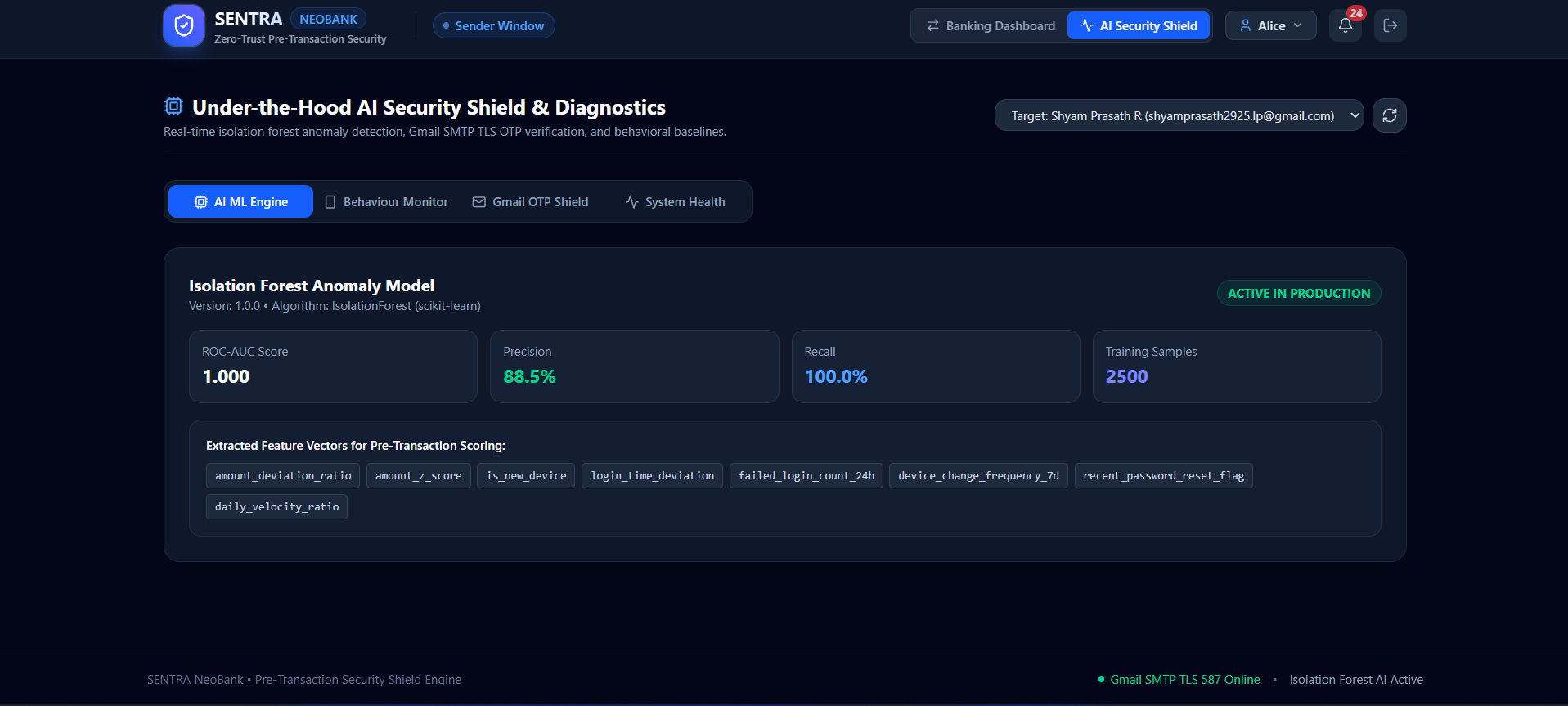
Through this project, we explored how machine learning can be applied to real-world financial cybersecurity challenges. We learned to implement anomaly detection using the Isolation Forest algorithm, process behavioural data, engineer meaningful security features, and develop explainable risk assessment mechanisms. We also gained practical experience with full-stack development, REST API integration, database management, JWT authentication, Redis, secure OTP verification, and real email delivery using Gmail SMTP. Additionally, we learned the importance of distinguishing suspicious behaviour from confirmed fraud and handling situations where available evidence is insufficient.
- How We Built the Project
We designed SENTRA AI as a full-stack FinTech security platform using React.js, Vite, TypeScript, and Tailwind CSS for the frontend, with Python, FastAPI, and SQLAlchemy powering the backend. PostgreSQL manages application data, while Redis handles temporary verification states and OTP expiration.
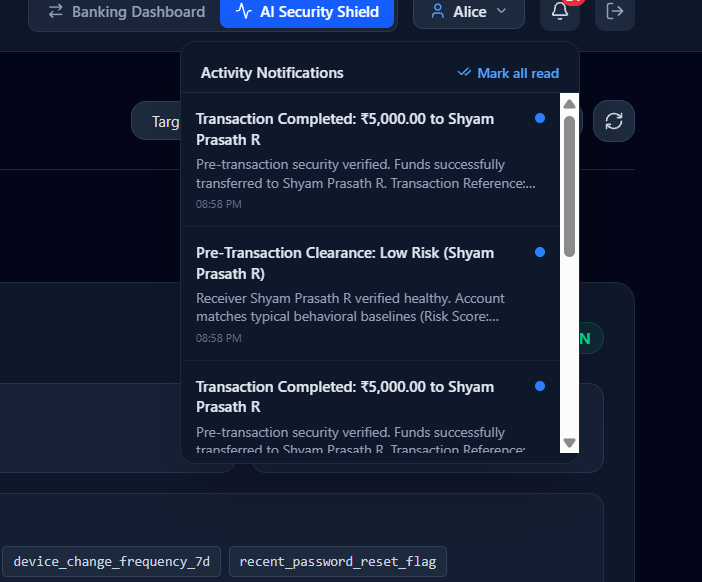
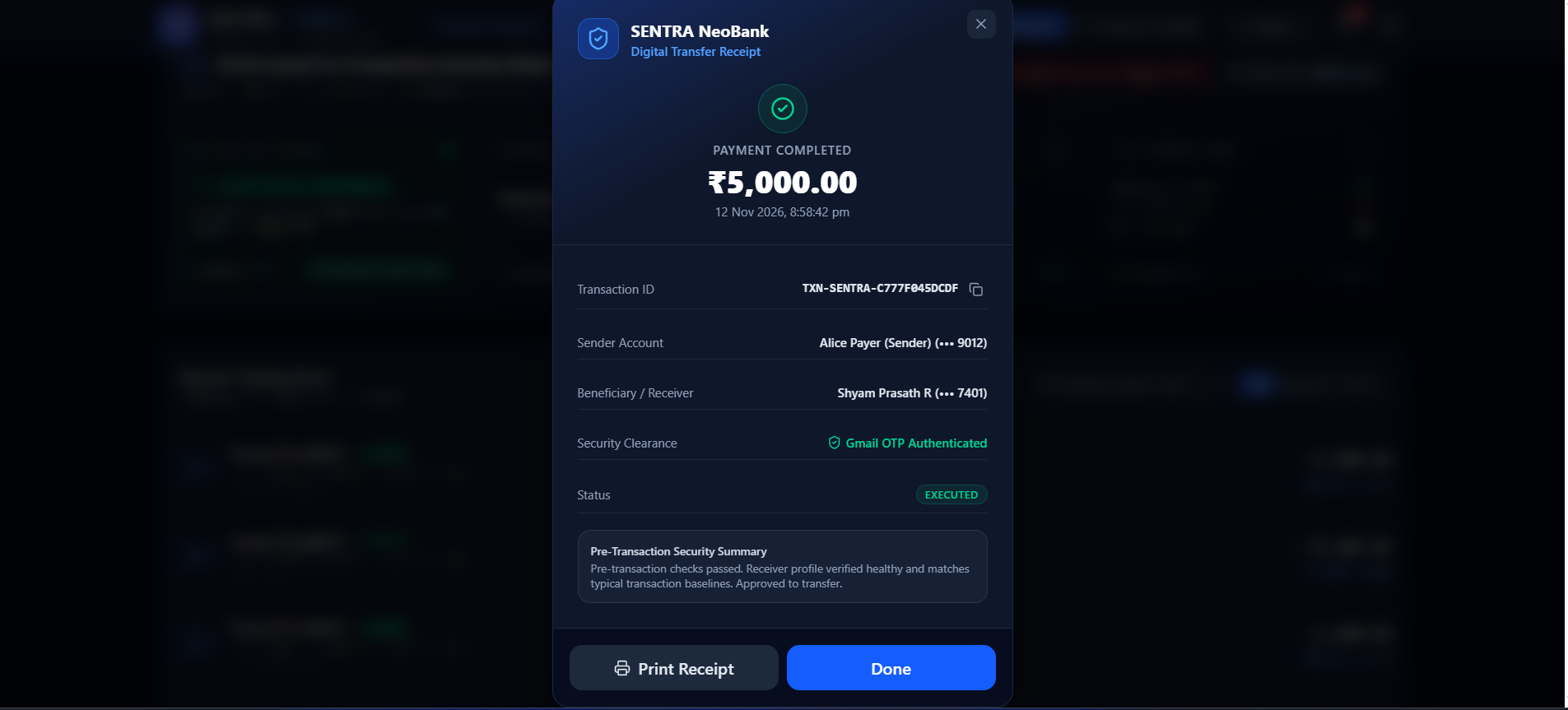
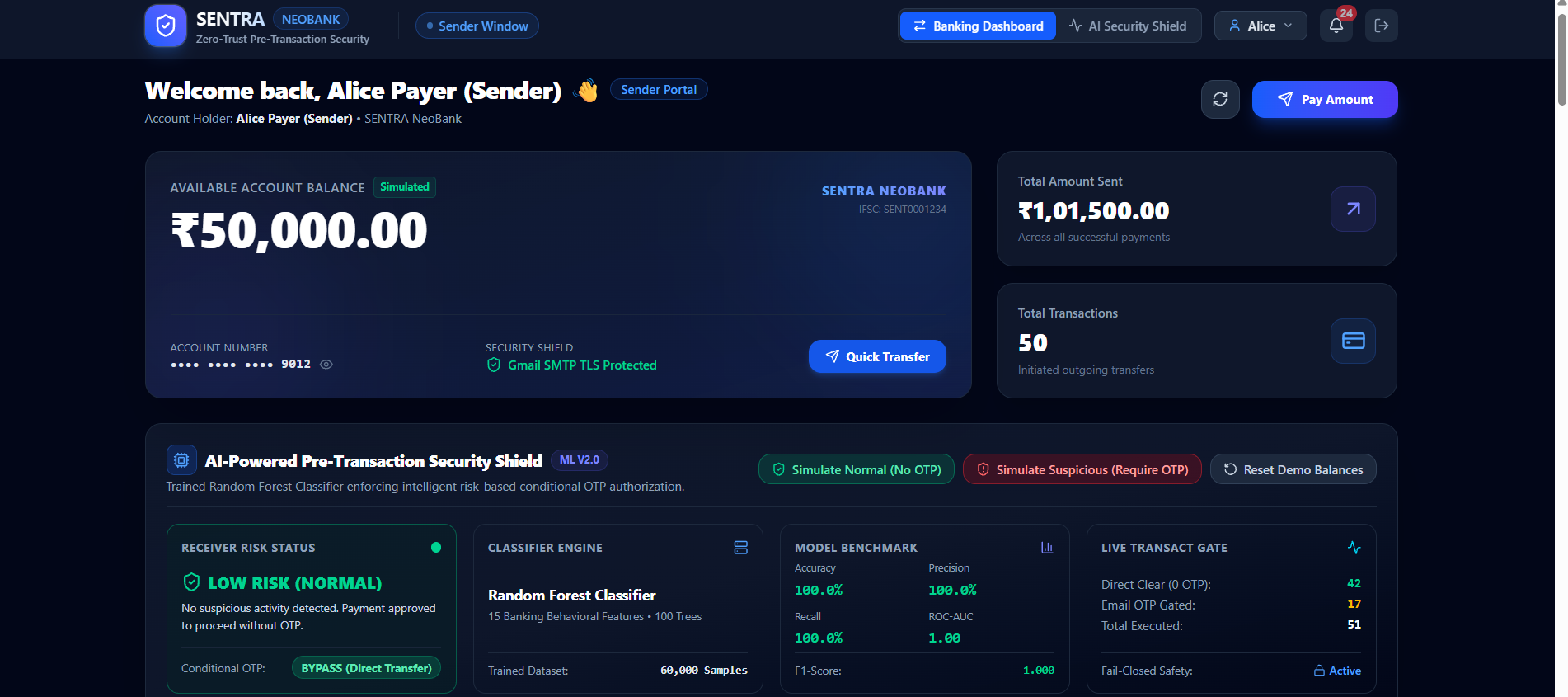
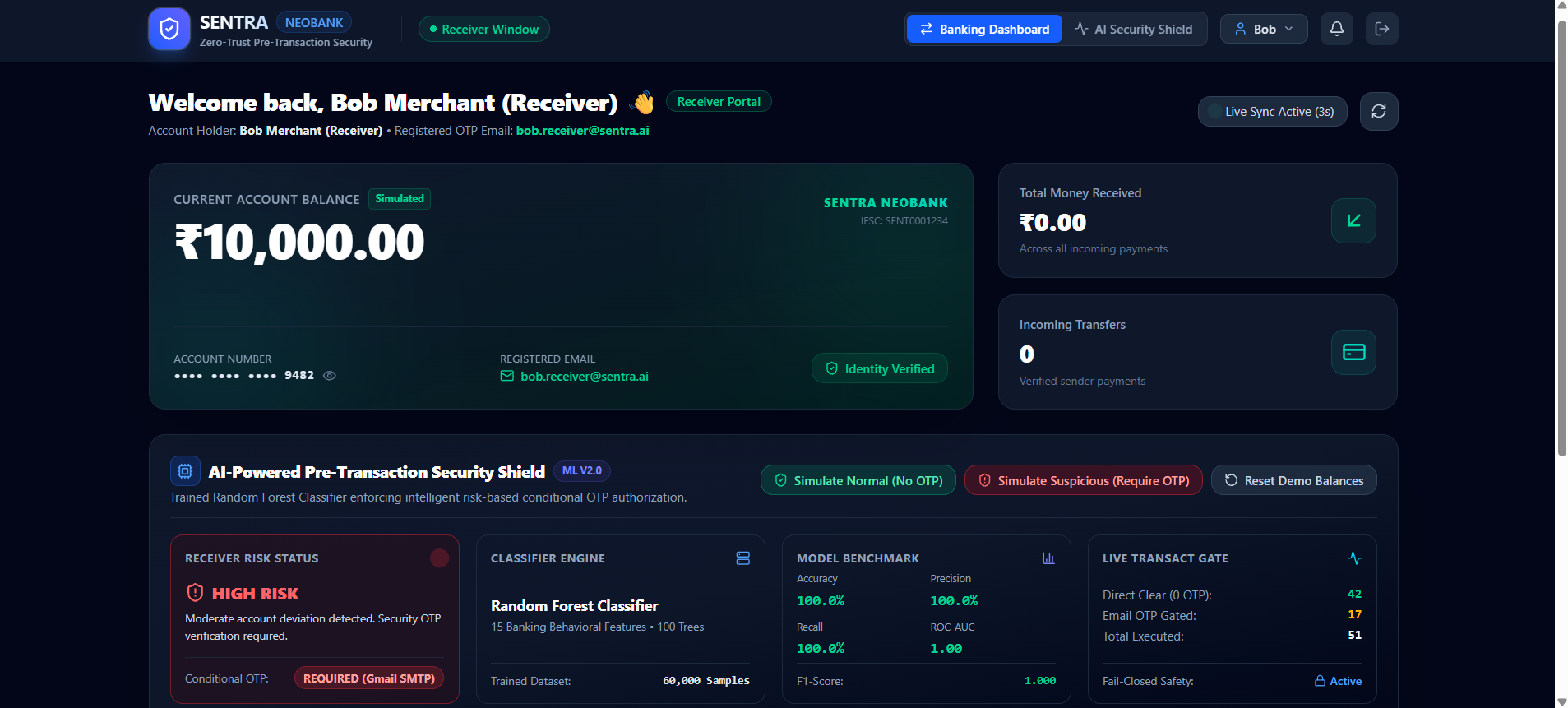
The system collects receiver security events, establishes behavioural profiles, and applies a trained Scikit-learn Isolation Forest model to identify unusual activities. Its independent risk assessment engine combines multiple security indicators, calculates a risk score, and generates understandable explanations. Based on the available evidence, the system produces three security recommendations: ALLOW, VERIFY, and WARN & HOLD. When additional verification is required, it sends an actual six-digit OTP to the receiver's registered email address through Gmail SMTP.
We follow a modular development approach, validating each component through automated tests before integrating it into the complete application.
- Challenges We Faced
One of our major challenges was designing a reliable risk assessment mechanism that considers multiple security signals instead of depending on a single indicator. Building a meaningful anomaly detection pipeline also required careful feature engineering, data preprocessing, model evaluation, and handling insufficient behavioural data.
Another challenge was integrating secure authentication, real-time OTP expiration, email delivery, and temporary verification states without exposing sensitive information. Maintaining consistency between the frontend, backend, database, and machine learning components also required careful architectural planning.
We addressed these challenges through modular development, systematic testing, explainable decisions, secure credential management, and clear separation between implemented functionality and integrations requiring external authorization.
Our ultimate goal: To make digital payments safer by identifying potential receiver-account security risks before money is transferred.
Built With
- fastapi
- git
- github
- gmail-smtp
- javascript
- jwt
- lucide
- numpy
- pandas
- postgresql
- postman
- python
- react
- redis
- scikit-learn
- sqlalchemy
- tailwind
- typescript
- vite
