-
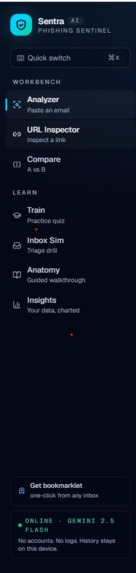
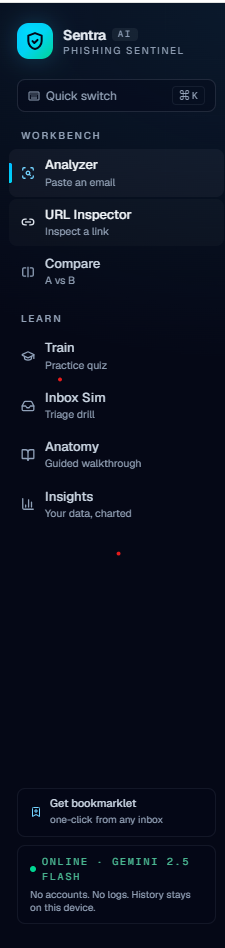
Main menu
-
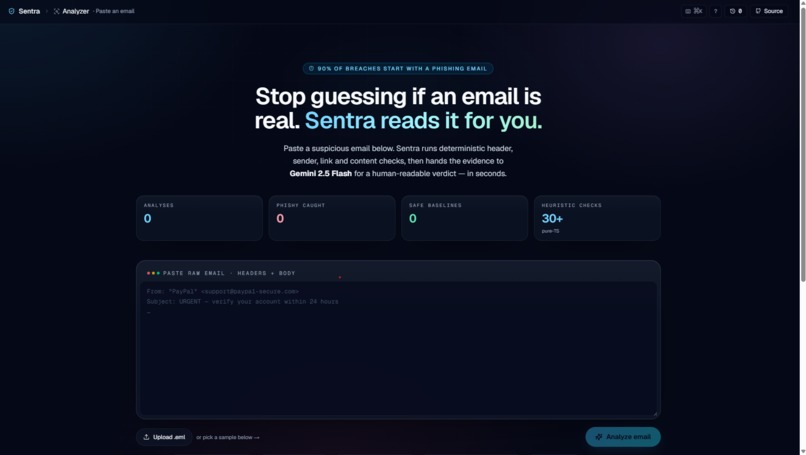
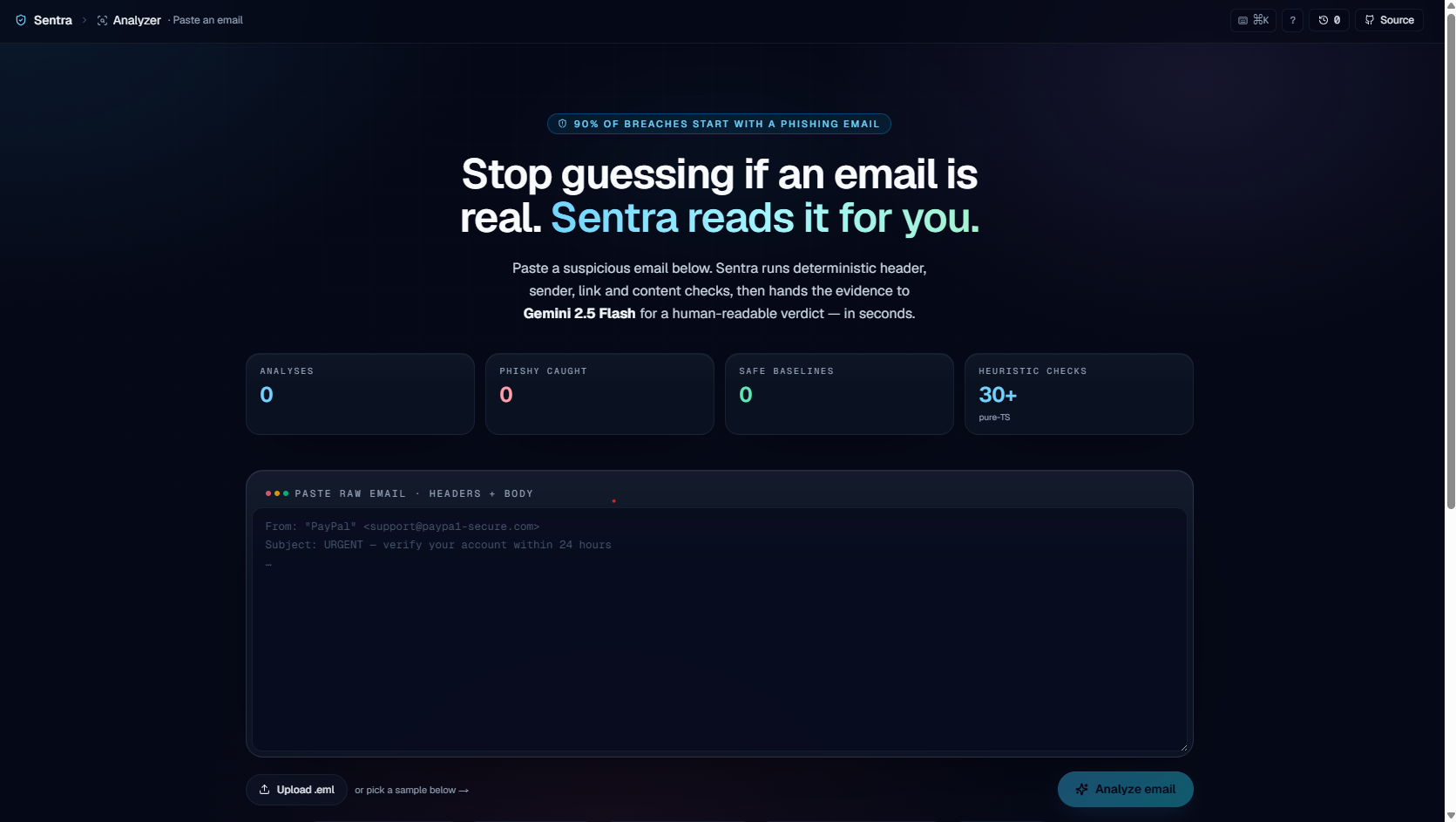
Mainboard
-
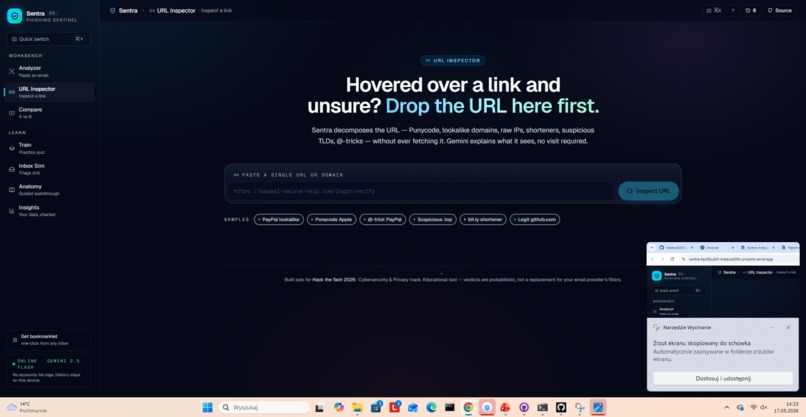
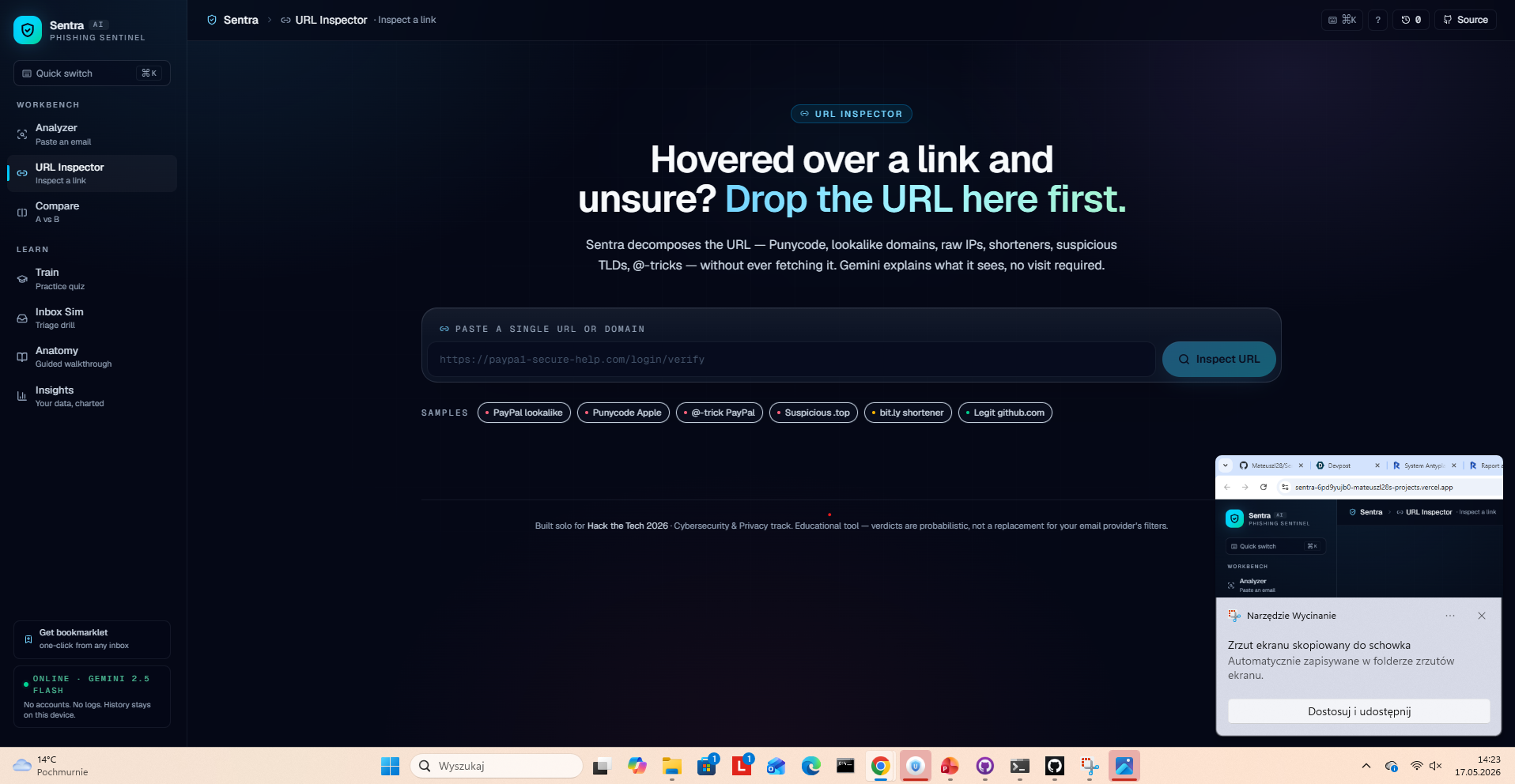
URL
-
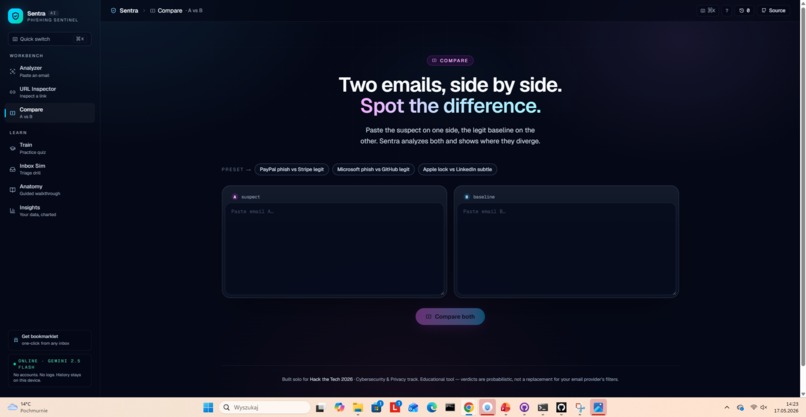
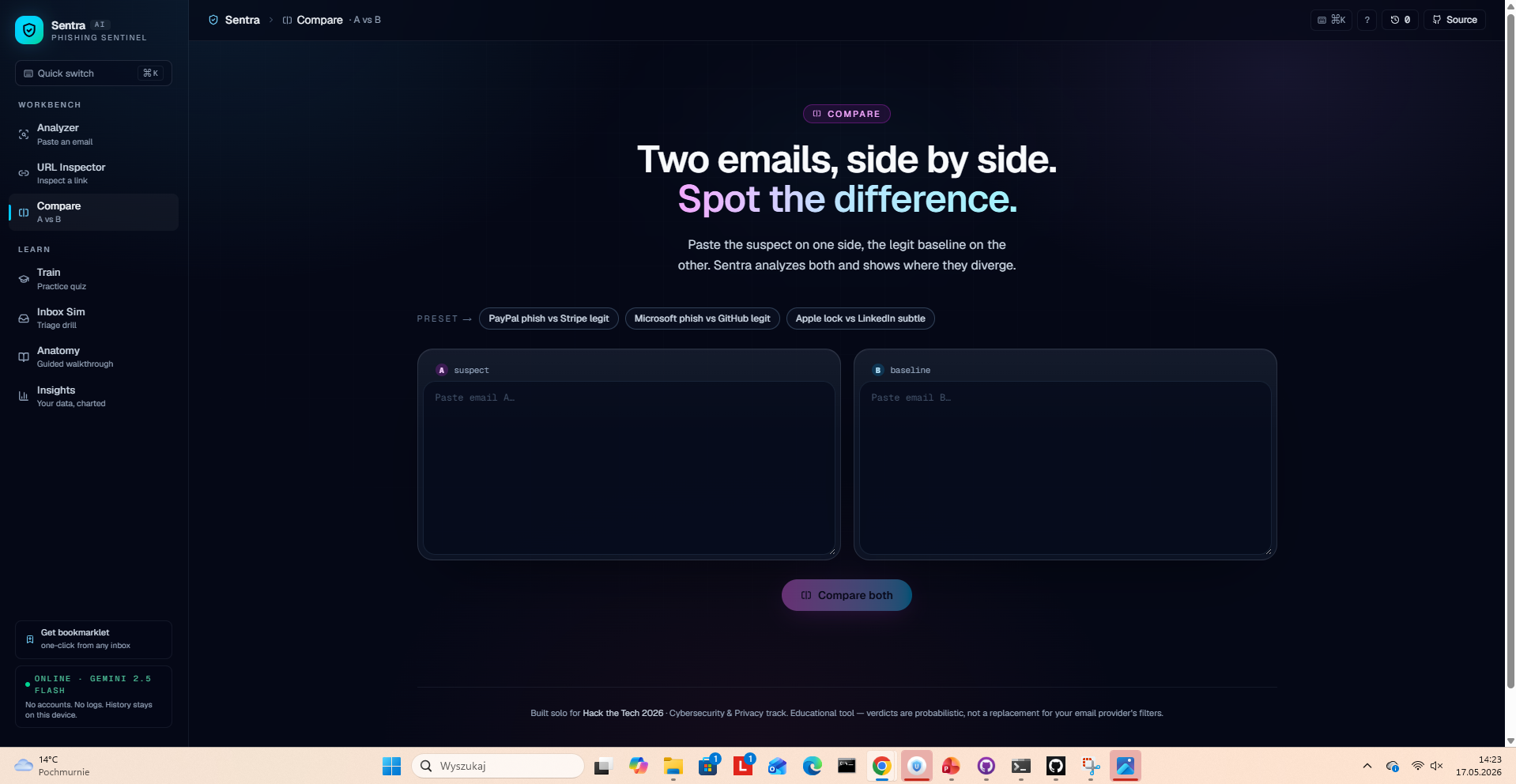
compare
-
learn
-
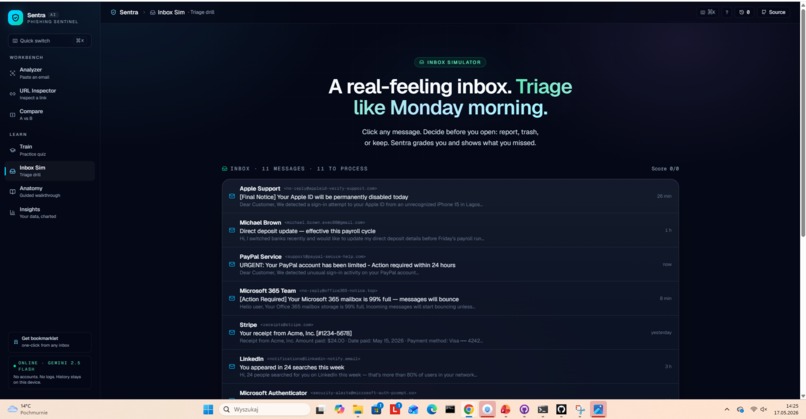
inbox_sim
-
Anatomy
-
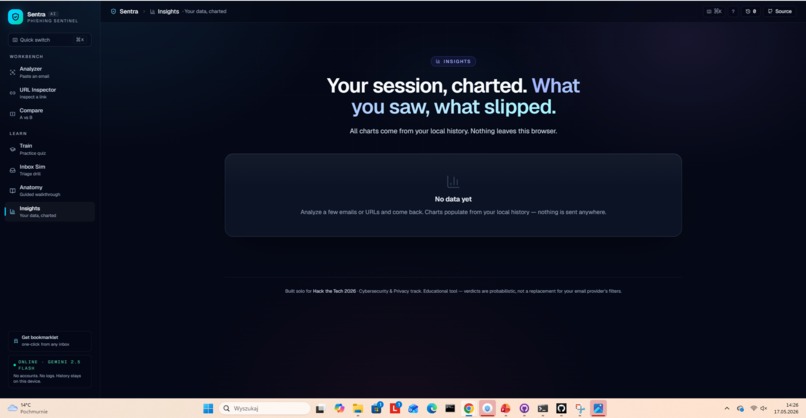
Insights
Inspiration
What it does
How we built it
## Inspiration
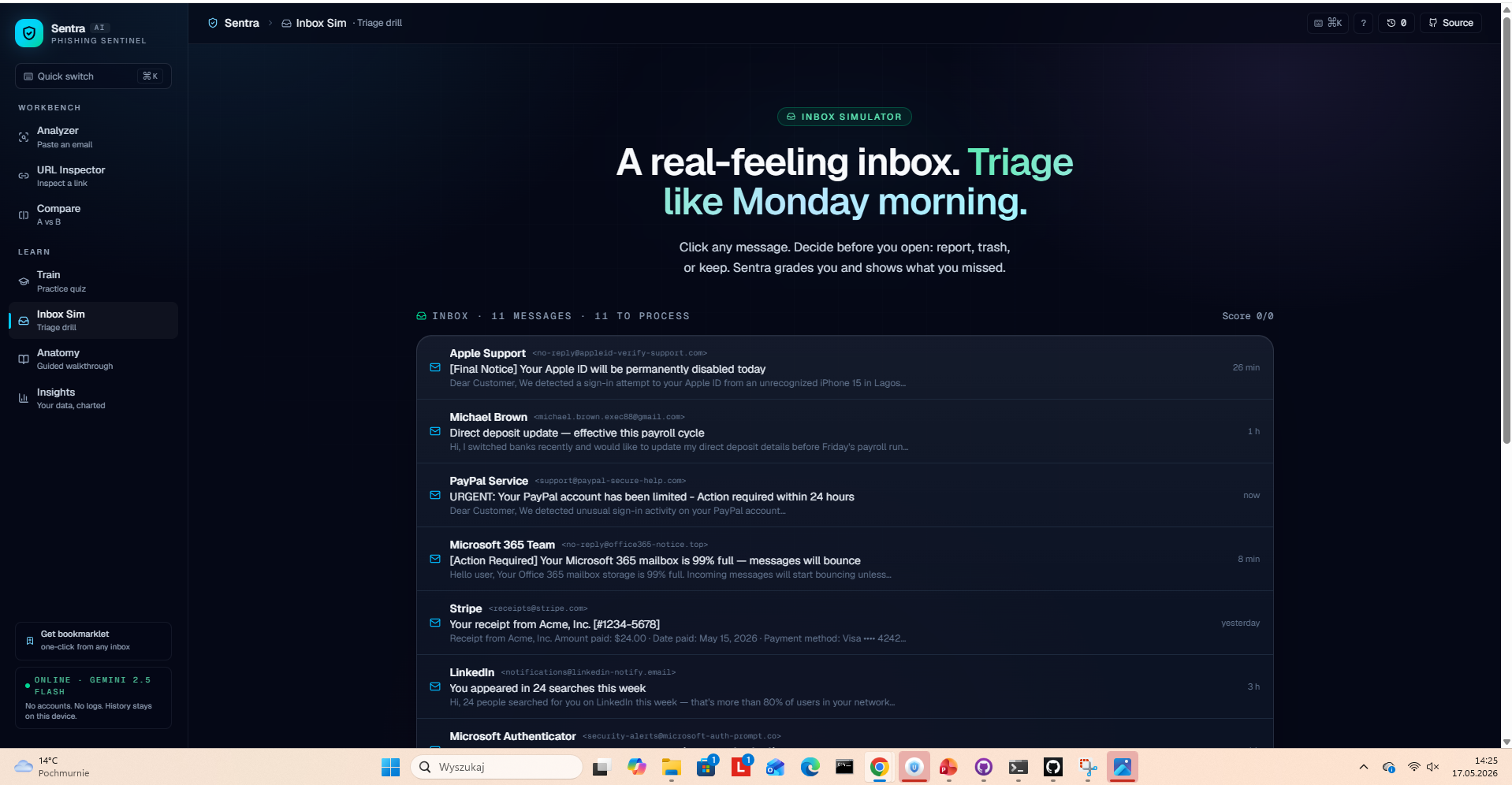
Spam filters catch the bulk, but the phishing emails that get through are the ones that look perfectly legitimate at 9:47 AM on a Monday: brand-perfect HTML, lookalike domains, urgent tone, trust-anchored links. Studies attribute 90% of breaches to phishing as the initial vector — not because users are careless, but because modern attacks are good enough to fool a careful reader.
I wanted a second opinion I could trust — something that does what a security analyst would do, but in 5 seconds and free.
## What it does
Sentra AI is a web app where you paste any suspicious email (raw RFC-822, headers and all — Gmail's "Show original" is one click). It runs a two-layer analysis and returns:
- A verdict (SAFE / SUSPICIOUS / PHISHING) with a 0–100 risk score.
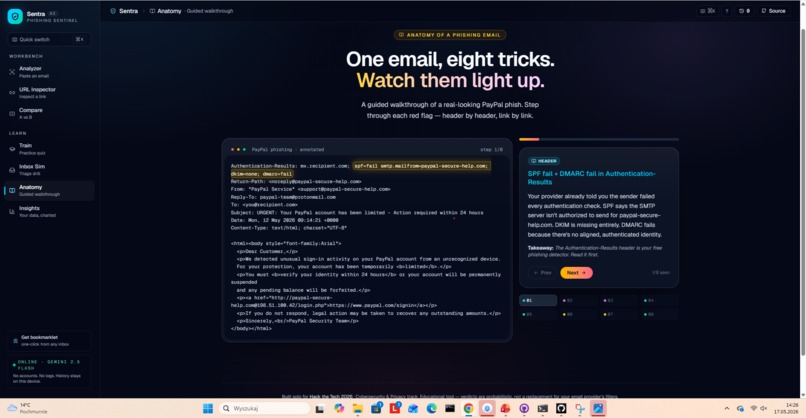
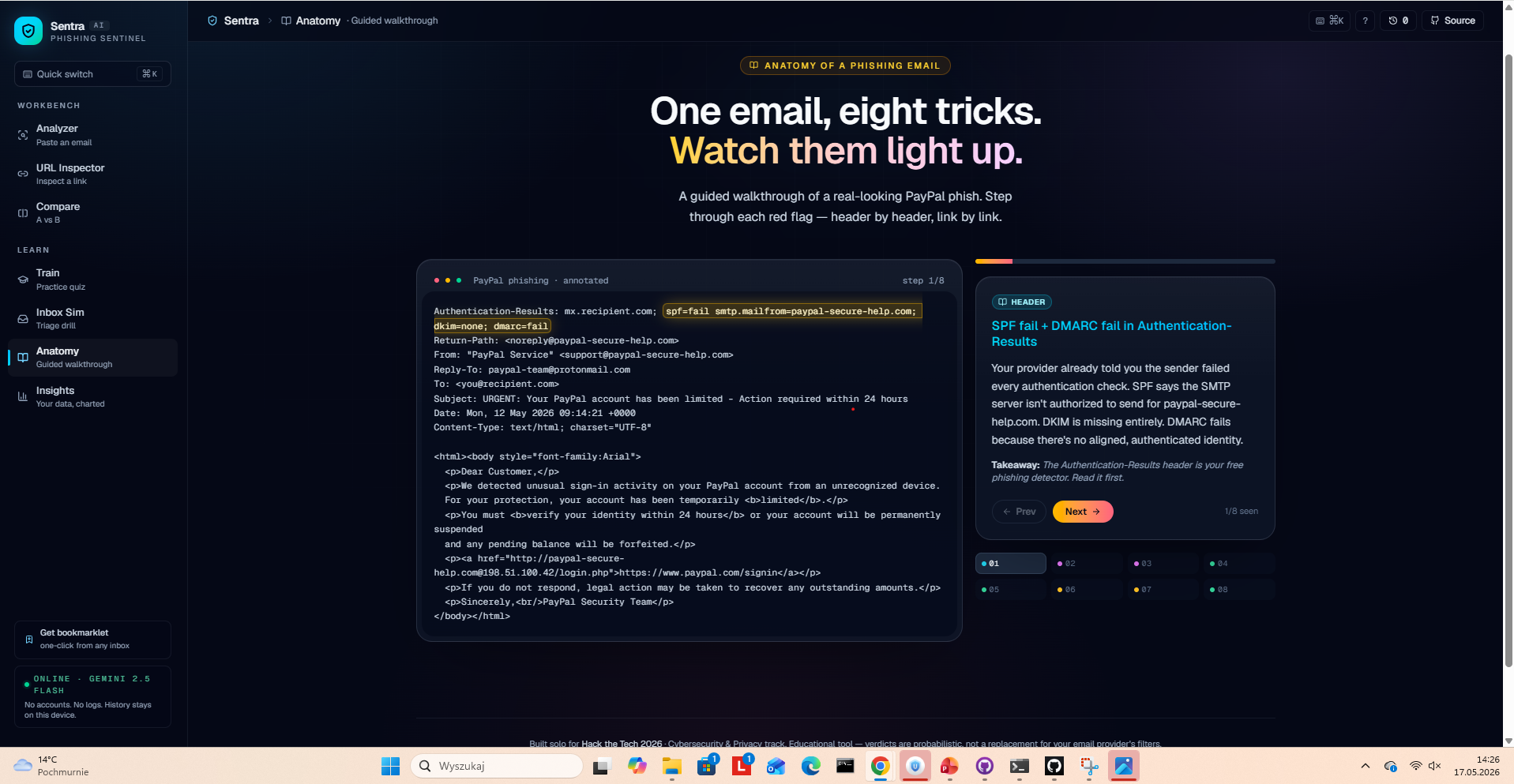
- A ranked list of red flags, each with a plain-English explanation of why the attacker uses that trick — and you can click any flag to highlight the exact fragment in the original email.
- Concrete recommended actions ("Do not click the link. Verify status by signing in at paypal.com directly.").
- A one-line educational takeaway so the user spots the same pattern next time on their own.
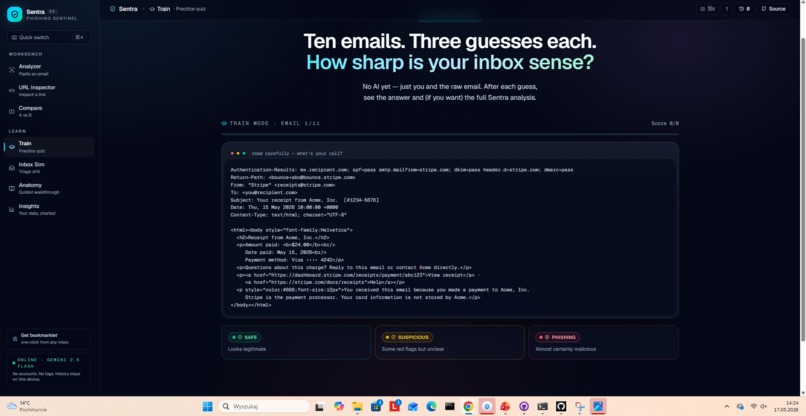
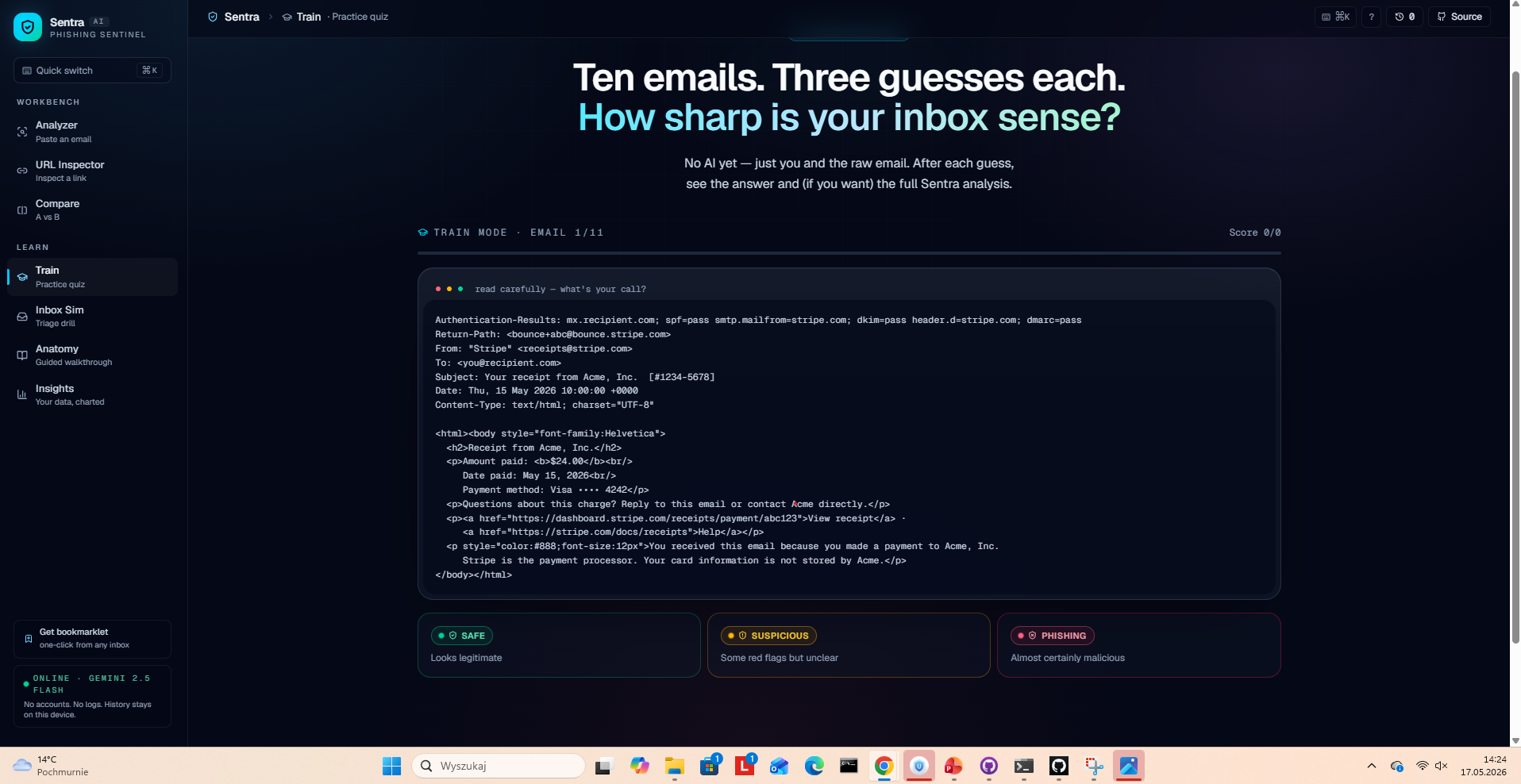
- Train mode — Sentra deals you a shuffled deck of example emails, you guess the verdict, and learn from each miss. The educational angle becomes interactive.
## How I built it
Layer 1 — deterministic heuristics (pure TypeScript, Node runtime):
- MIME parsing with
postal-mime→ headers, body, links, attachments. - SPF / DKIM / DMARC pulled from
Authentication-Results. - Reply-To / Return-Path mismatch check.
- Brand-impersonation detection: free-mail-from-brand, Levenshtein distance against legit brand domain labels, punycode (
xn--) homoglyph detection. - Link analysis: anchor-text vs. real
hrefmismatch,@-trick credentials (http://[email protected]), raw-IP URLs, URL shorteners, high-abuse TLDs (.zip,.top,.click, …). - Content patterns: urgency, threats (account suspension), credential requests, money bait.
- Risky attachment extensions (
.exe,.docm,.iso,.scr, …).
Layer 2 — Gemini 2.5 Flash as the analyst. The model receives the raw email and the heuristic findings, then returns strict JSON via Gemini's responseSchema (no JSON-parsing roulette). This is the key design choice: heuristics are
reliable but blind to context; LLMs read context but hallucinate. The combination gives ground truth + readable narrative.
Stack: Next.js 16 (App Router, Turbopack) · TypeScript strict · Tailwind CSS 4 · @google/generative-ai · postal-mime · lucide-react · Vercel.
## Challenges I ran into
- Windows dev environment fought back.
npxlock-compromised errors on npm 11, a slow secondary drive bottlenecking install, a leftover dev server squatting on port 3000, the lovely "you build the thing, then the laptop builds character" hackathon experience. - Strict JSON from LLMs. Gemini's
responseSchemaparameter saved me hours of regex tolerance — every analysis is now guaranteed-parseable JSON. First attempt withgemini-2.0-flashhit a "limit: 0" quota on a fresh AI Studio project; switched the default to2.5-flashand made the model env-overridable. - Heuristic false positives. First pass flagged every email with the word "urgent." Tuned by adding severity weights and requiring 2+ urgency hits for the high-severity flag.
- Brand-impersonation logic. Detecting
paypa1.comandxn--ppal-2nb.comwithout flagging legitimatepaypalobjects.comtook a Levenshtein-plus-allowlist approach.
## Accomplishments I'm proud of
- End-to-end working product in ~36 hours solo: parser, heuristics, LLM layer, full UI, annotated source view, copy-as-Markdown, demo emails, Train mode, deployed.
- Clean two-layer architecture that's easy to explain in a 60-second pitch and easy to extend (swap Gemini → local Llama, add a Chrome extension, etc.).
- A real educational takeaway in every verdict — Sentra teaches the user instead of just telling them what to do. Train mode pushes that further into gamification.
## What I learned
- Gemini's structured output is a game-changer for "agentic" features — it eliminates a whole class of brittle parsing code.
- The hardest part of an email-security tool isn't catching the obvious phishing. It's not crying wolf on the legitimate Stripe receipt. A
SAFEverdict has to be just as confident as aPHISHINGone. - Tight scope wins hackathons. The temptation to add OAuth, Gmail integration, a Chrome extension was real — and rejecting all of it is why the demo works.
## What's next
- Chrome / Gmail extension that one-click submits the open thread to Sentra.
- Self-hosted variant for security teams that can't send mail content to a third-party LLM — swap Gemini for a local Llama / Qwen behind the same API.
- Outbound link safety check — passive DNS / VirusTotal lookup with explicit user consent.
- Multilingual phishing patterns — current content heuristics are English-only.
- Confidence calibration — log heuristic-vs-LLM verdicts on real corpora (Nazario, PhishTank) to tune thresholds. ## Challenges we ran into
Accomplishments that we're proud of
What we learned
What's next for Sentra AI
Built With
- gemini-2.5-flash
- google-gemini
- lucide-react
- next.js
- postal-mime
- tailwind-css
- typescript
- vercel


Log in or sign up for Devpost to join the conversation.