SentinelX — AI Digital Safety Firewall
Every day, people receive suspicious emails, messages, links, job offers, login requests, and other forms of digital communication. The problem is that simply labeling something as “dangerous” is not enough. Users need to understand why it is dangerous, what the attacker is trying to achieve, and how to recognize the same attack in the future.
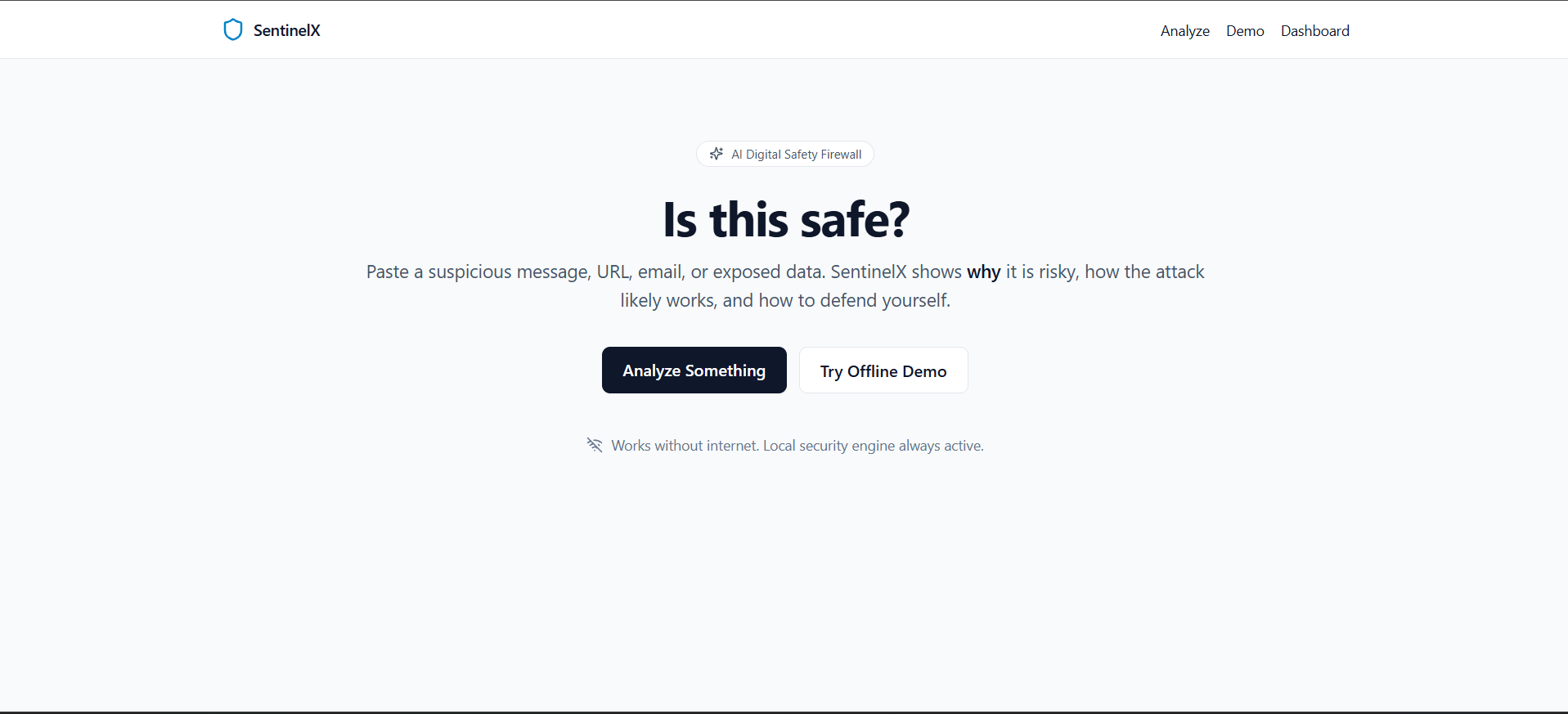
That is why we built SentinelX, an AI-powered personal digital security copilot designed around one simple idea:
Detect the threat. Understand the attack. Learn to defend yourself.
What SentinelX Does
SentinelX follows an evidence-first security workflow:
Input → Evidence → Analysis → Risk → Attack Reconstruction → Defense → Education
Users can analyze suspicious messages, emails, URLs, and other content.
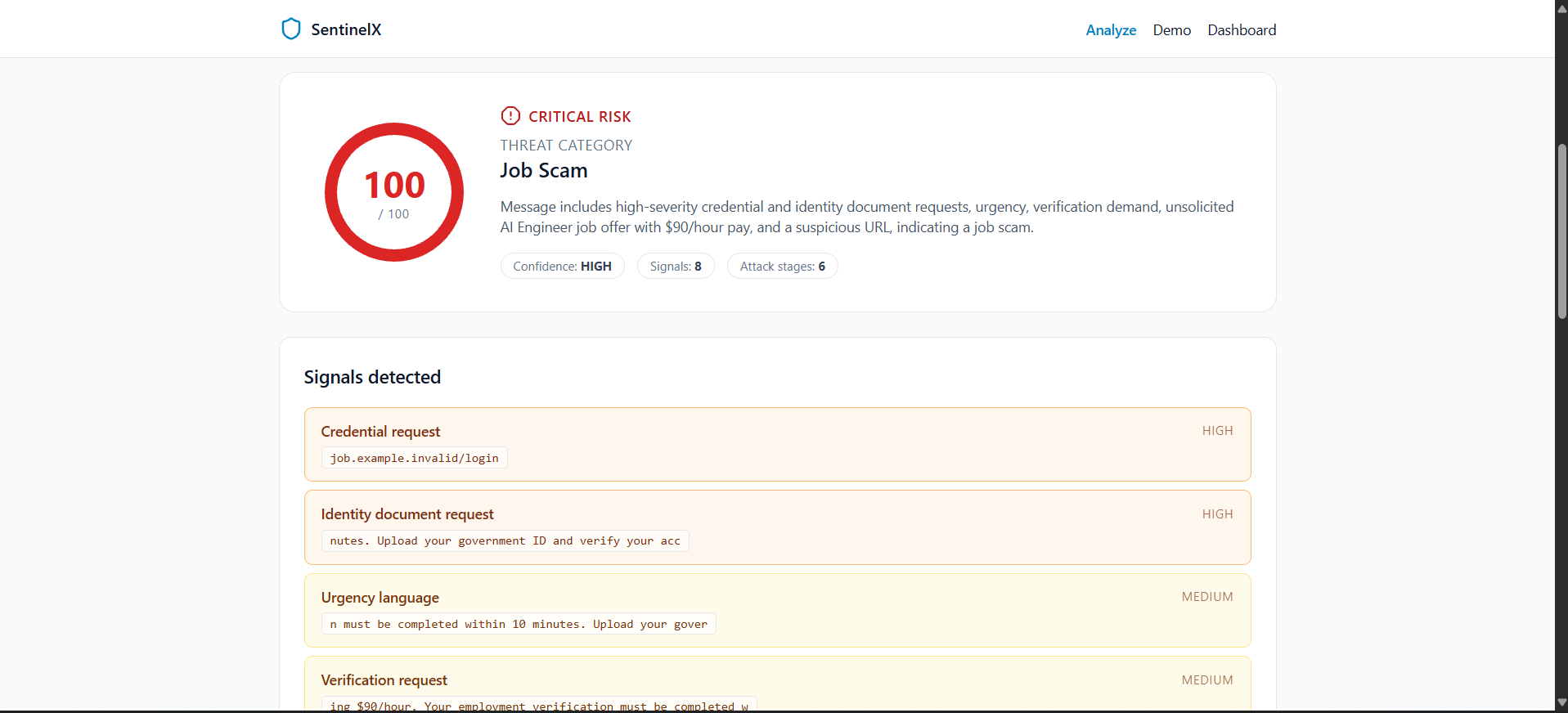
SentinelX identifies security signals such as:
- Suspicious or urgent language
- Credential requests
- Requests for sensitive information
- Suspicious URLs
- Social-engineering patterns
- Possible phishing indicators
- Privacy and sensitive-data exposure
- API keys, tokens, passwords, and other secrets
Instead of returning only a risk score, SentinelX connects findings to evidence from the original input so users can understand why something was flagged.
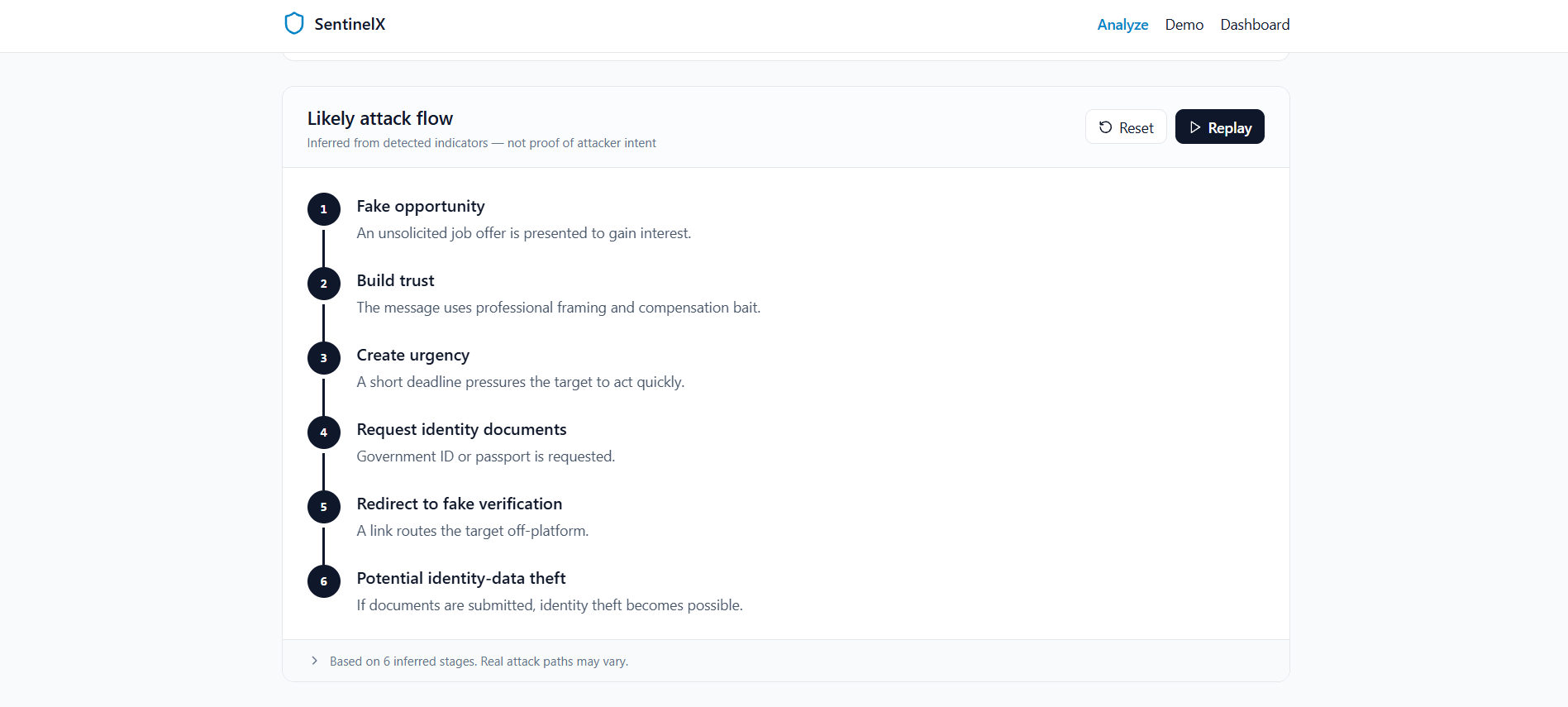
Attack Story Reconstruction
One of SentinelX's key features is “Show Me the Attack.”
After analyzing a threat, SentinelX can reconstruct the likely attack flow as an inferred sequence.
For example:
Fake opportunity → Build trust → Create urgency → Request sensitive information → Redirect to verification → Potential identity theft
The system clearly distinguishes inferred attack steps from directly observed evidence. The goal is to help users understand the attacker's strategy rather than simply receive a warning.
Privacy Protection
Security analysis can itself create a privacy problem if users send sensitive information to external AI services.
SentinelX therefore includes a privacy protection layer that detects sensitive information such as email addresses, phone numbers, passwords, API keys, tokens, and other potentially private data.
The design principle is:
Protect first. Analyze second.
Sensitive information can be detected and redacted locally before being passed to an external AI provider.
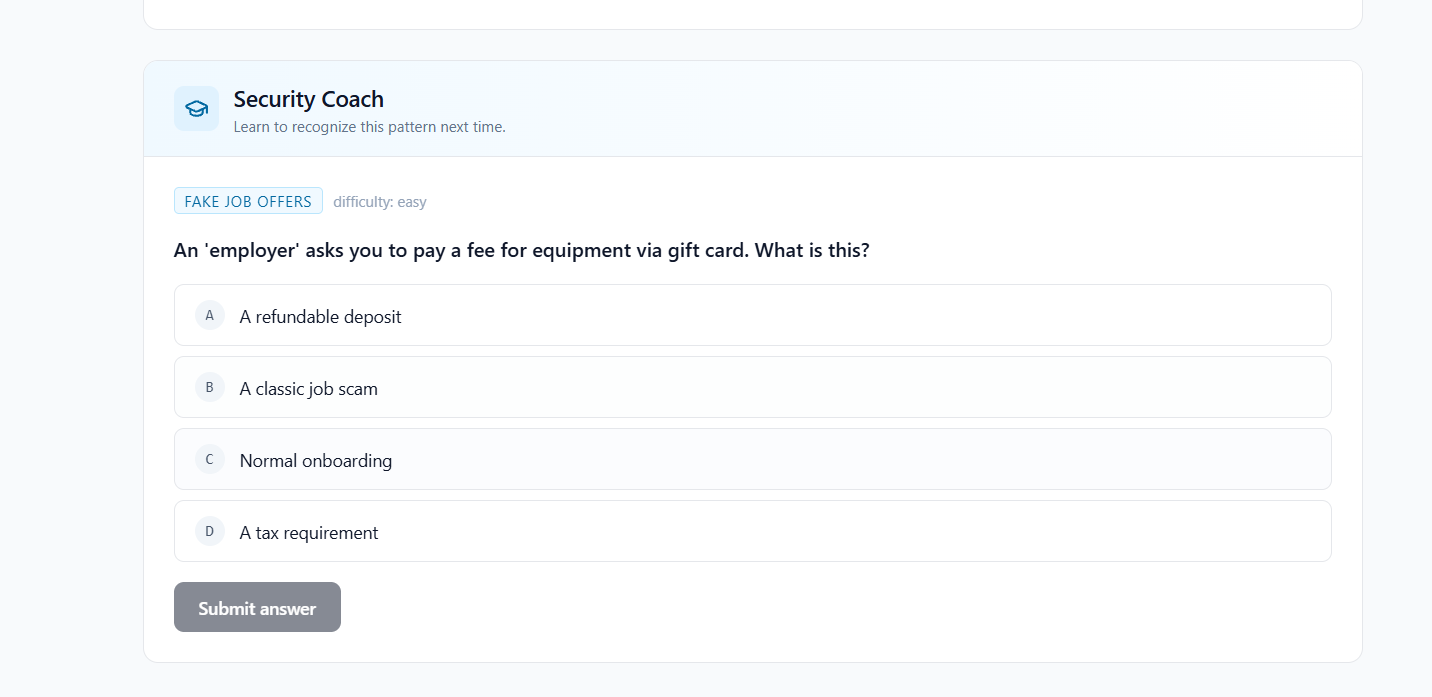
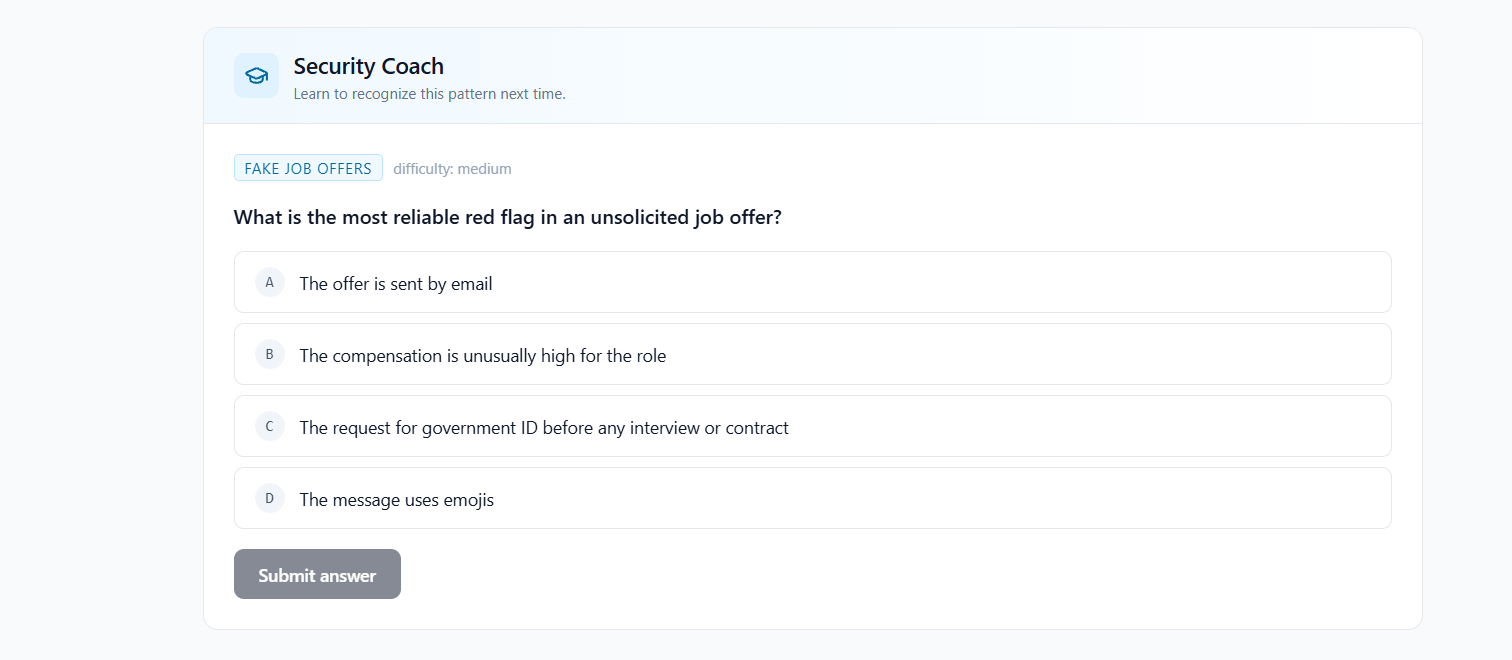
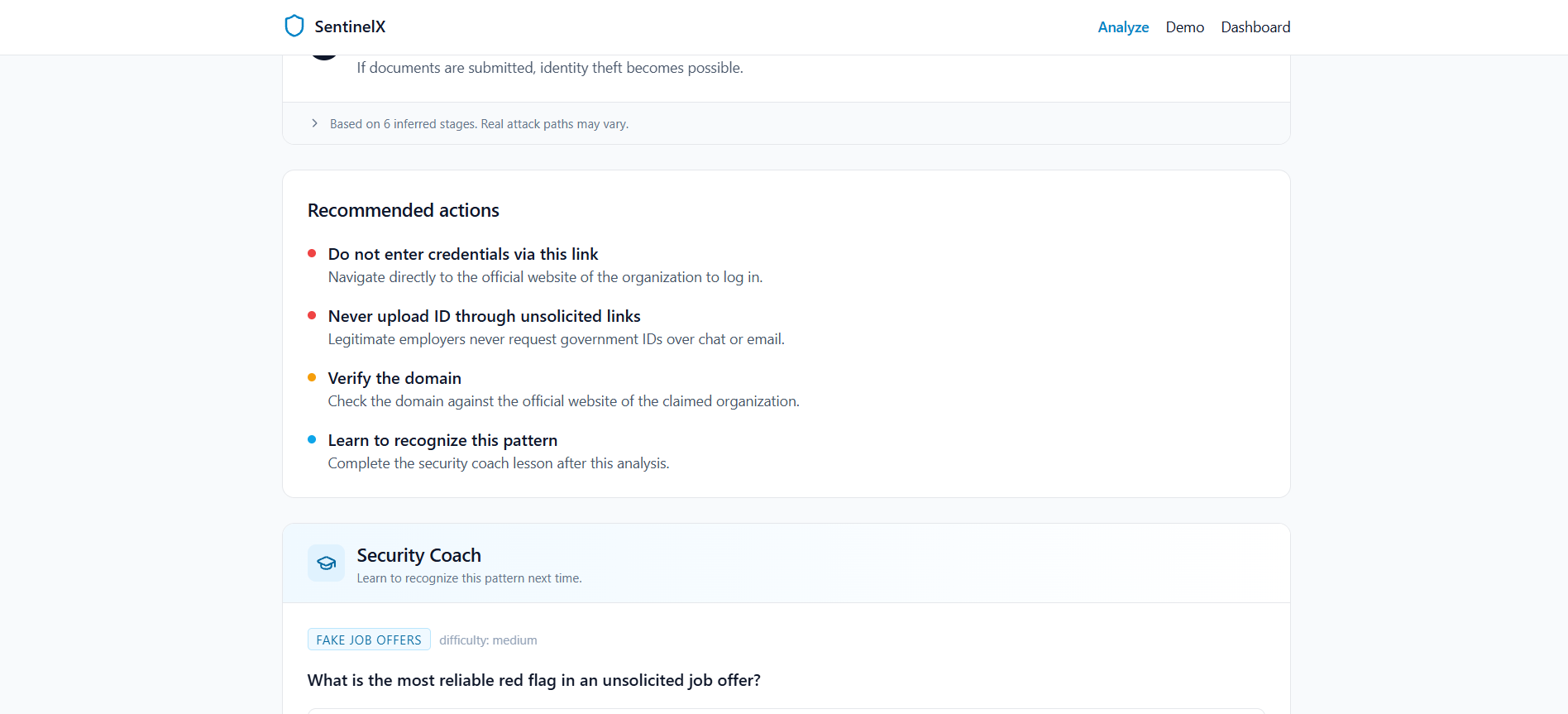
Security Coach
Detection alone does not create long-term security awareness.
SentinelX includes a Security Coach that turns detected threats into short educational lessons and interactive quizzes.
Instead of simply telling a user that they encountered phishing, SentinelX helps them understand the signals involved and practice identifying similar attacks in the future.
This turns a single security incident into an opportunity to build better digital-security habits.
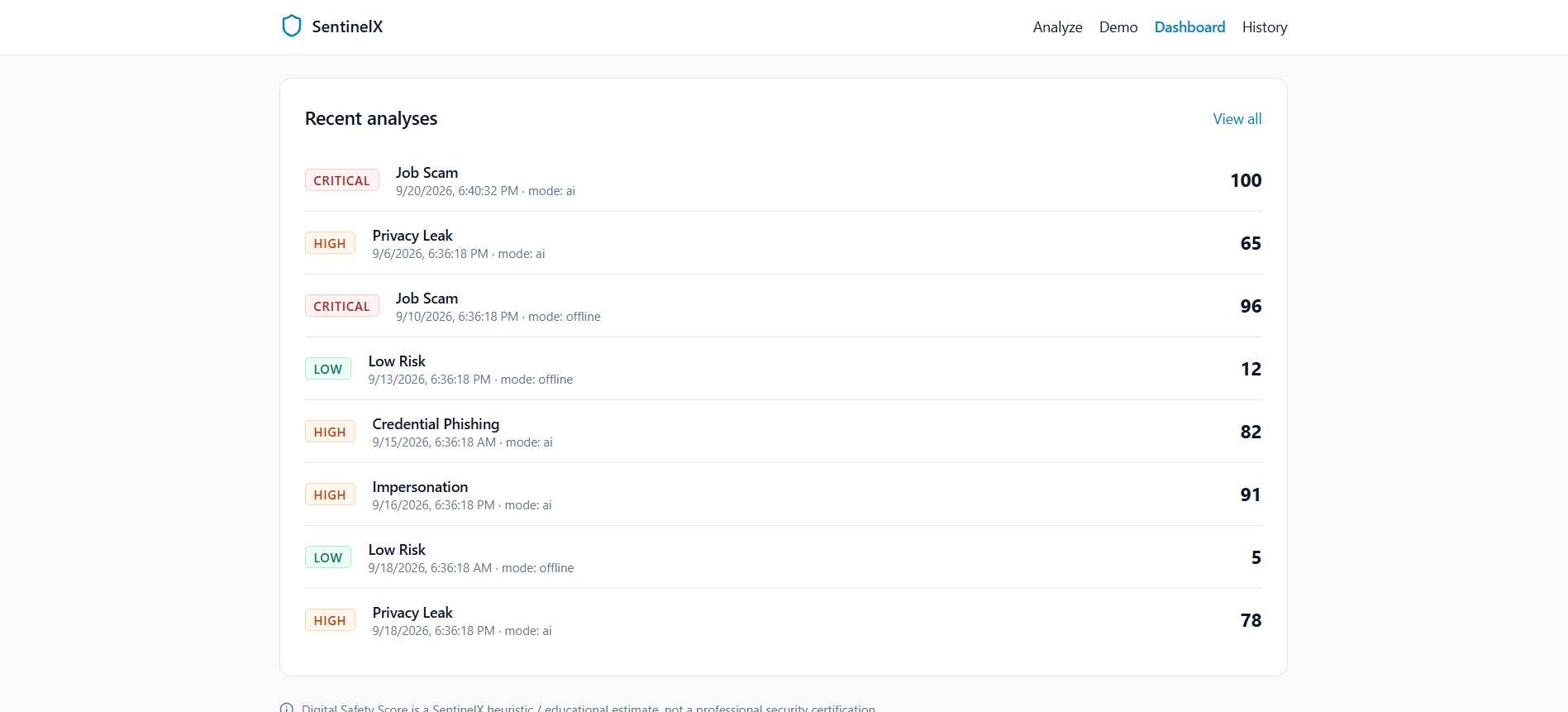
Security Dashboard
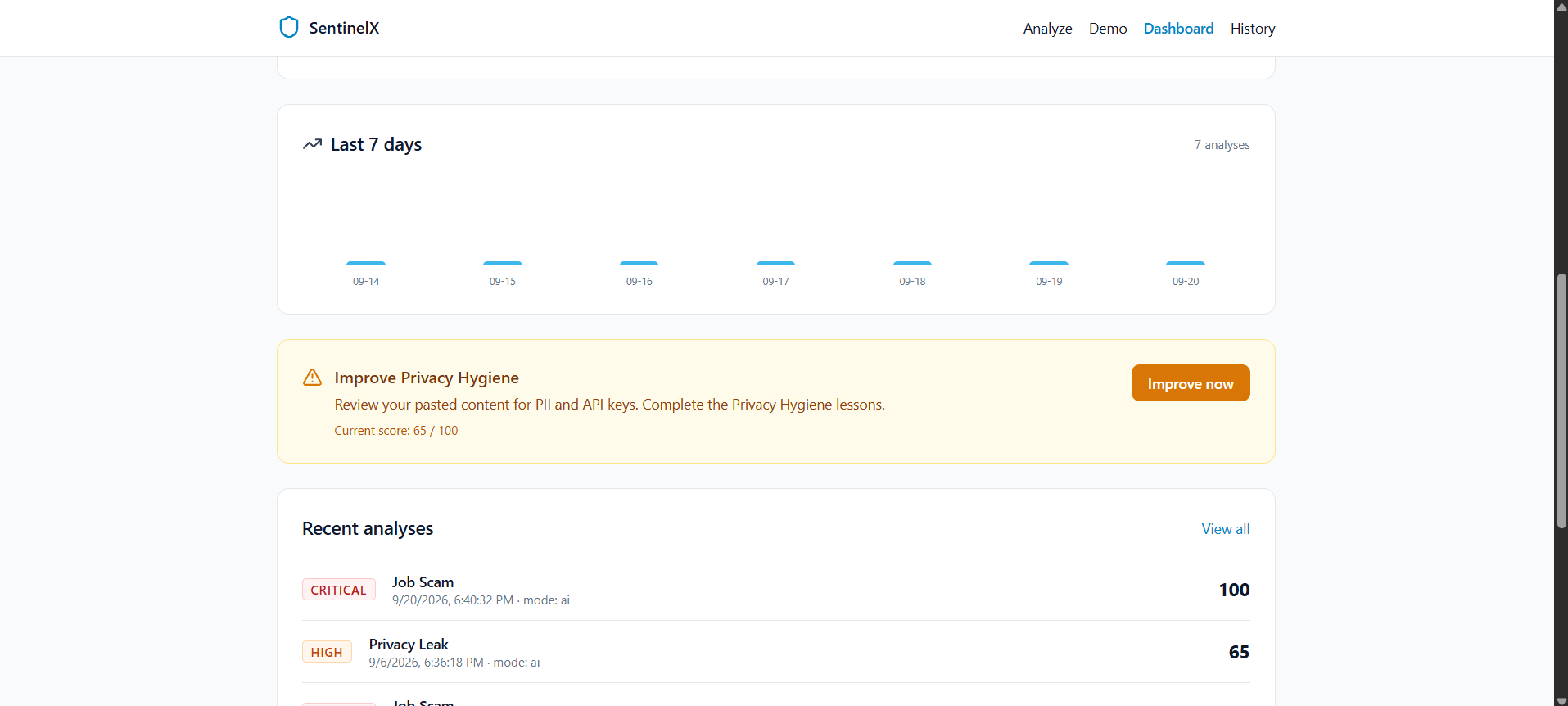
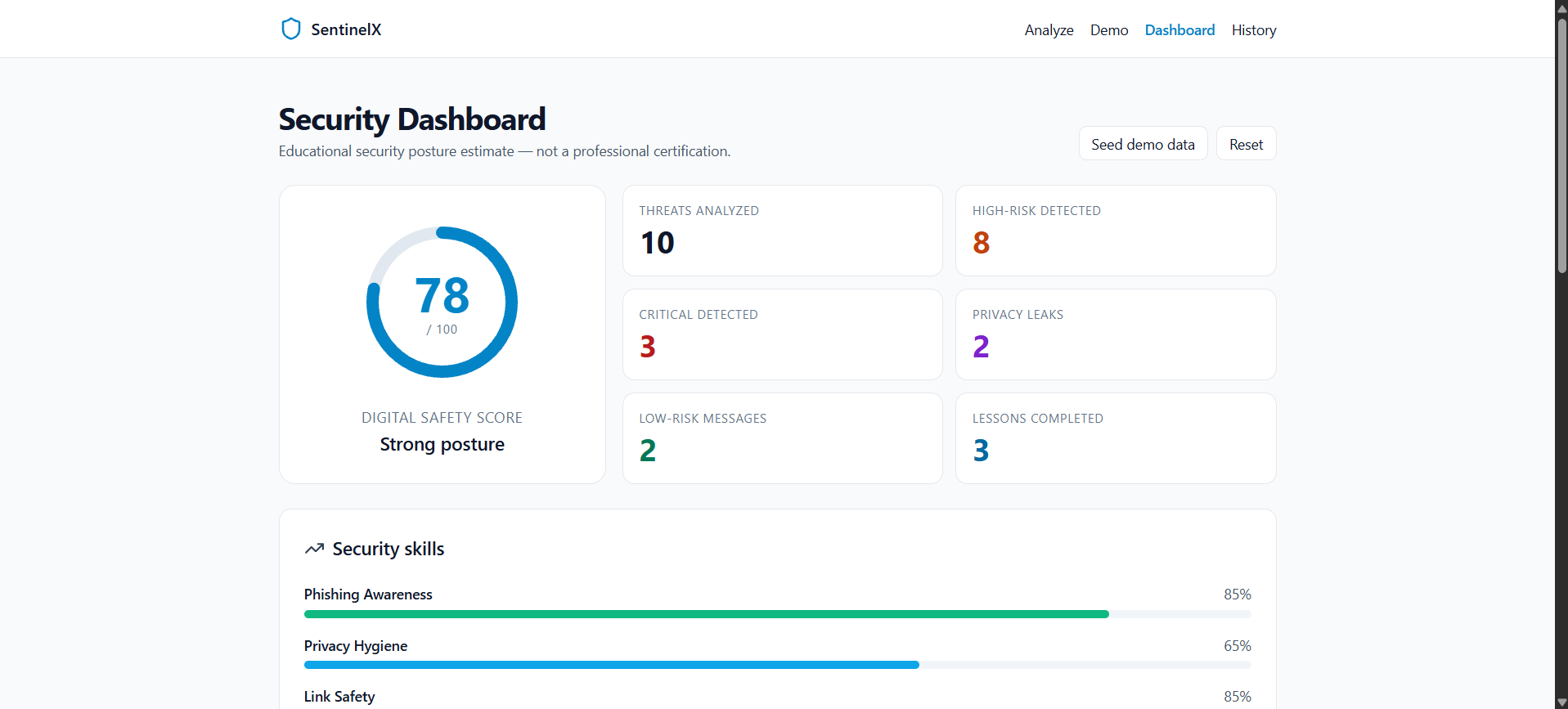
The dashboard provides an overview of the user's security-learning progress, including areas such as:
- Phishing awareness
- Privacy hygiene
- Link safety
- Social-engineering awareness
- Security learning progress
The goal is to make digital safety something users can continuously improve.
Offline-First Resilience
Another important design decision is that the AI should not be a single point of failure.
SentinelX contains a local deterministic security engine that can perform core analysis without relying completely on an external AI service.
When AI is available, it can enhance the explanation.
When the AI or internet is unavailable, SentinelX can fall back to local analysis.
This gives the application a unified experience across both AI-enhanced and offline analysis modes.
How We Built It
SentinelX uses a modular architecture with:
- Python 3.11
- FastAPI
- Pydantic
- SQLAlchemy
- PostgreSQL
- Next.js
- TypeScript
- Tailwind CSS
- OpenCV / security-analysis utilities
- Docker
- An AI provider abstraction with an offline fallback
The backend separates deterministic security analysis from AI interpretation.
The local security layer handles evidence extraction, URL and text analysis, sensitive-data detection, secret detection, risk scoring, and attack-story generation.
The AI layer is used to improve explanations while structured outputs and validation help keep the analysis predictable.
What We Learned
Building SentinelX taught us that cybersecurity products should not treat AI as a black box.
A security system needs to be able to answer:
What did we detect? What evidence supports it? What is inferred? How confident are we? What should the user do next?
This led us to design SentinelX around an evidence-first architecture, where deterministic security signals provide the foundation and AI acts as an explanation layer.
We also learned how important privacy is when building AI-powered security tools. A security assistant should not require users to expose sensitive information just to receive protection.
Challenges
One of our biggest challenges was balancing AI flexibility with security and reliability.
AI can produce useful explanations, but it can also produce unsupported claims. To address this, SentinelX separates observed evidence from inferred explanations and validates structured AI responses.
Another challenge was making the system useful when external services are unavailable. Instead of allowing an AI API failure to break the application, we designed a local fallback engine so the core security experience can continue.
We also had to consider defensive security boundaries carefully. SentinelX is designed for defensive digital safety and education, not unauthorized access, credential theft, malware, exploitation, or destructive activity.
Why SentinelX?
Most security tools focus primarily on answering:
“Is this dangerous?”
SentinelX is designed to answer four additional questions:
What happened? Why is it dangerous? How does the attack work? How can I defend myself next time?
That is the difference between simply detecting a threat and helping a person understand it.
SentinelX — Detect the threat. Understand the attack. Learn to defend yourself.
Built With
- ai
- cybersecurity
- docker
- fastapi
- machine-learning
- natural-language-processing
- next.js
- opencv
- phishing-detection
- postgresql
- privacy
- pydantic
- python
- react
- rest-api
- security
- sqlalchemy
- tailwind-css
- typescript



Log in or sign up for Devpost to join the conversation.