-
-
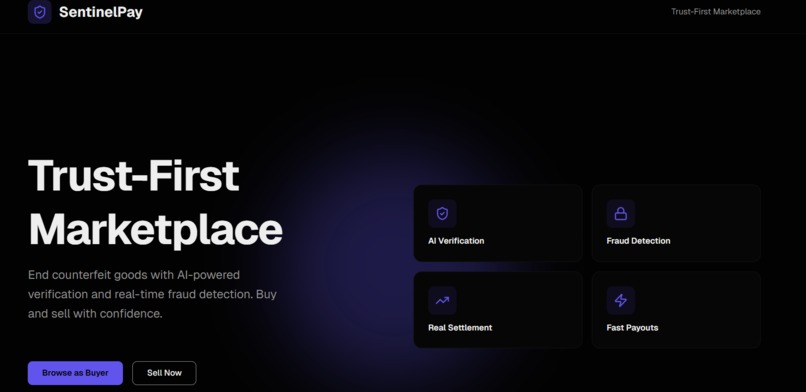
Home Page
-
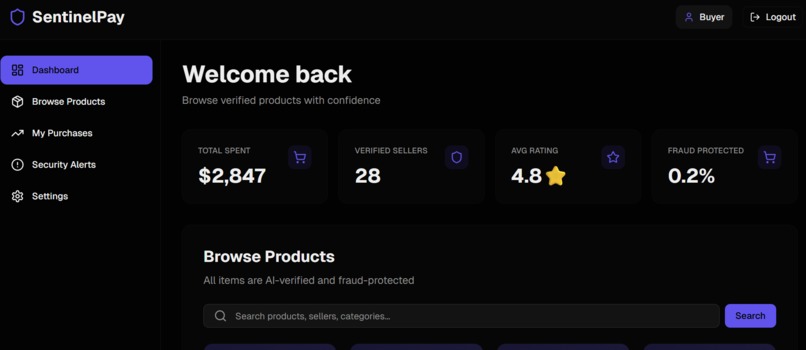
Buyer Page
-
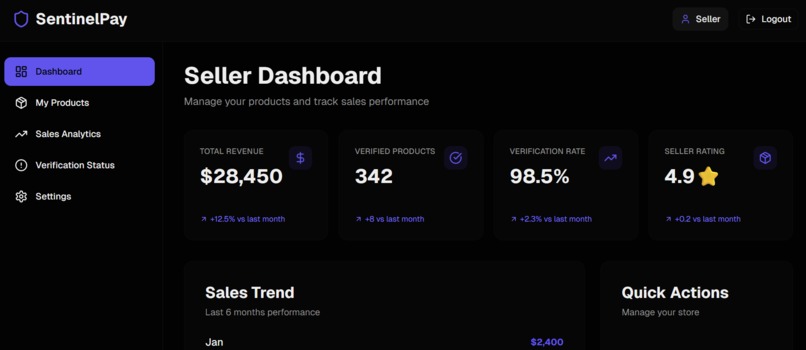
Seller Page
Inspiration
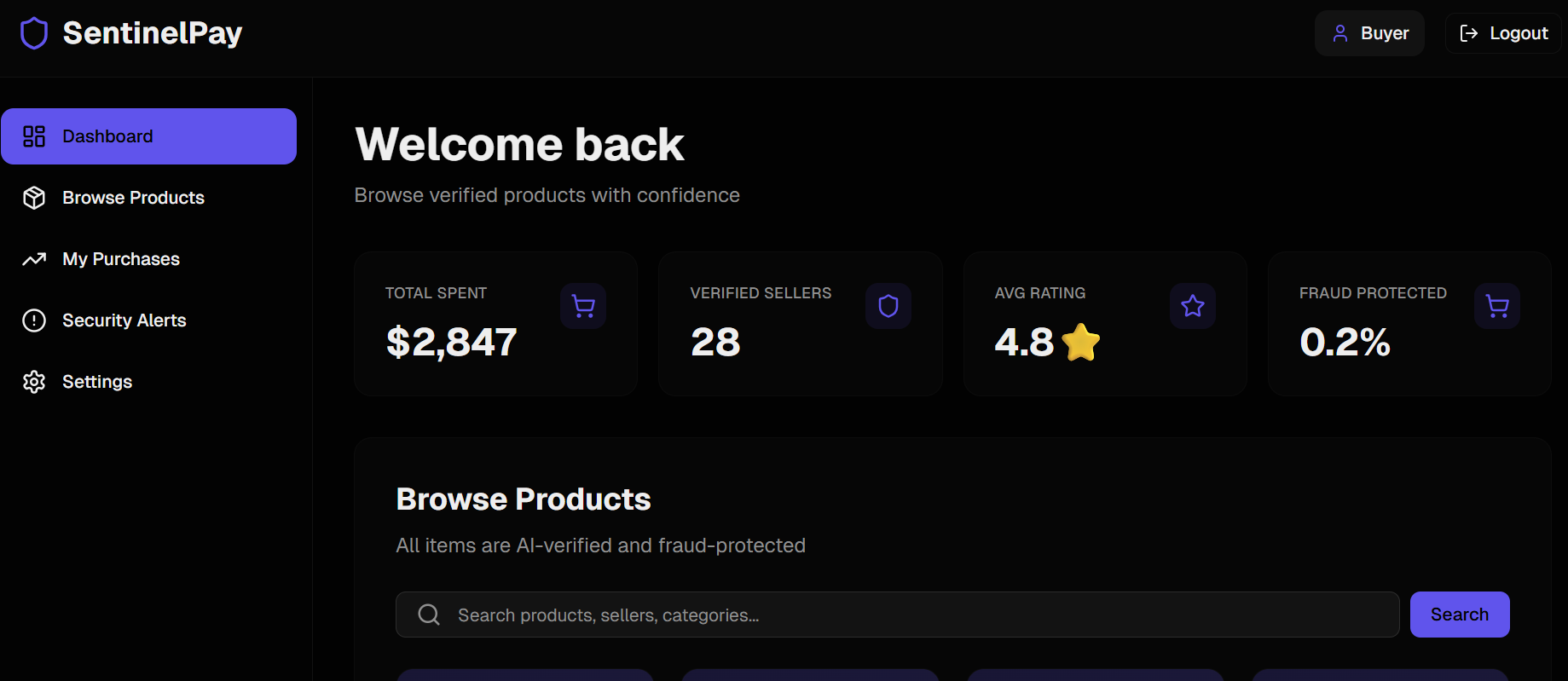
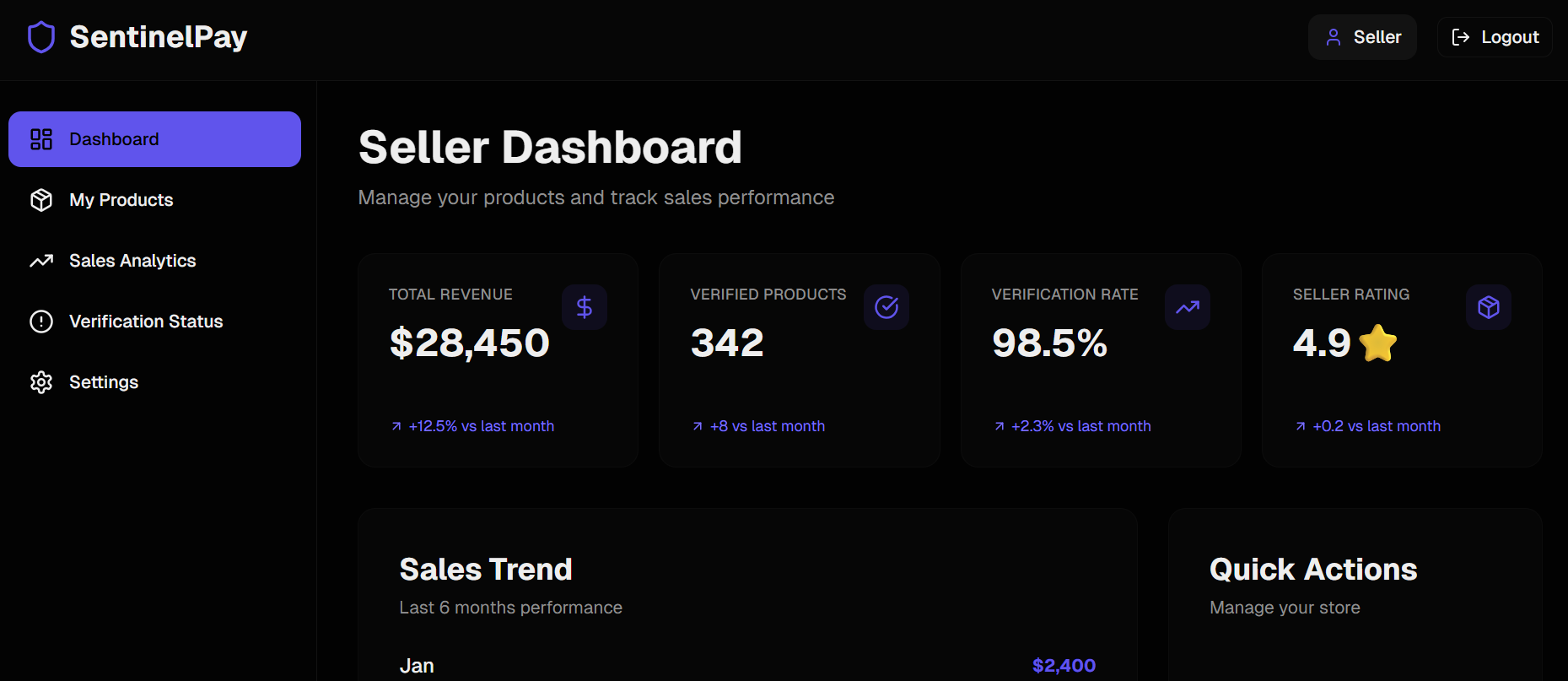
The inspiration for SentinelPay came from observing the "trust gap" in peer-to-peer (P2P) marketplaces. While digital payments have become seamless, the assurance of receiving what you paid for—especially in campus and local community groups—has not. We were inspired by the concept of "Trust-as-a-Service," wanting to move beyond reactive fraud detection (catching scams after they happen) to a proactive, real-time intelligence layer that protects both buyers and sellers at the moment of interaction.
What it does
SentinelPay is a next-generation commerce engine that integrates AI directly into the transaction flow.
AI Visual Verification: It analyzes product photos in real-time to detect stock images, digital manipulation, or inconsistencies with the item description.
Behavioral Risk Scoring: Using a sub-millisecond scoring engine, it evaluates the risk of a transaction based on user behavior and historical trust patterns.
Secure Escrow Integration: It leverages Stripe for secure payments and only releases funds once both parties confirm a physical or digital handoff via a secure QR exchange.
Privacy-First Identity: It allows users to prove their "Verified Student" or "Trusted Seller" status using privacy-preserving principles, ensuring credibility without exposing sensitive personal data.
How we built it
We utilized a high-performance stack tailored for real-time responsiveness:
Frontend: Next.js for a lightning-fast, SEO-friendly marketplace interface and dashboard.
Backend: A Python (FastAPI) server to handle complex AI logic and API orchestrations.
AI/ML: TensorFlow was used to build the image verification models, and Gemini API was integrated for multimodal analysis of product listings.
Database & Cache: Redis serves as our high-speed feature store for real-time risk scoring, while Firebase handles user authentication and live transaction updates.
Payments: Integrated Stripe for the escrow and payment infrastructure.
Challenges we ran into
One of the primary challenges was minimizing latency. Running an AI vision model on every image upload can slow down the user experience. We solved this by implementing an asynchronous processing pipeline where initial metadata checks happen instantly in Redis, while deeper image analysis runs in the background. Another challenge was data imbalance—fraudulent transactions are rare compared to legitimate ones. we had to use synthetic data generation and specific weighting techniques to ensure our model remained sensitive to subtle fraud patterns without flagging honest users.
Accomplishments that we're proud of
Sub-50ms Risk Scoring: We successfully optimized our Redis-based scoring engine to return a "Trust Score" in under 50 milliseconds.
Multimodal Consistency: Built a pipeline that can detect if a seller's photo of a "new iPhone" actually matches the metadata and visual cues of the device shown.
User-Centric Design: Creating a security-heavy tool that still feels as simple and fluid as a modern social media app.
What we learned
This project deepened our understanding of Edge AI and the importance of low-latency system architecture. We learned that in commerce, security is only useful if it doesn't create friction; if the "Trust Score" takes 10 seconds to load, users will bypass the system. We also gained significant experience in handling Privacy-Preserving KYC logic, balancing the need for verification with the user's right to data privacy.
What's next for SentinelPay
Decentralized Trust Network: We plan to explore moving the trust scores onto a private blockchain or distributed ledger to create a portable "Reputation ID" that users can take to other platforms.
Edge Processing: Implementing TensorFlow Lite to move more of the image verification logic directly onto the user's mobile device, further reducing server load and increasing privacy.
Voice-Verified Transactions: Adding an AI layer to verify verbal agreements during physical meetups to add an extra layer of protection for local trades.
Built With
- docker
- fastapi
- firebase
- gemini
- google-cloud
- next.js
- python
- react
- redis
- scikit-learn
- stripe
- tensorflow


Log in or sign up for Devpost to join the conversation.