Inspiration
Modern operating systems and monitoring tools often feel fragmented. System telemetry, security alerts, process management, optimization utilities, and terminal workflows are usually spread across multiple disconnected applications. I wanted to build a unified platform that combines real-time monitoring, operational control, AI-assisted workflows, and futuristic system visualization into a single intelligent command center. I was also inspired by enterprise security operation centers (SOCs), observability platforms, and futuristic interfaces seen in advanced infrastructure environments. My goal was to create something that feels both visually immersive and technically practical while demonstrating how AI can improve system operations and user interaction.
What it does
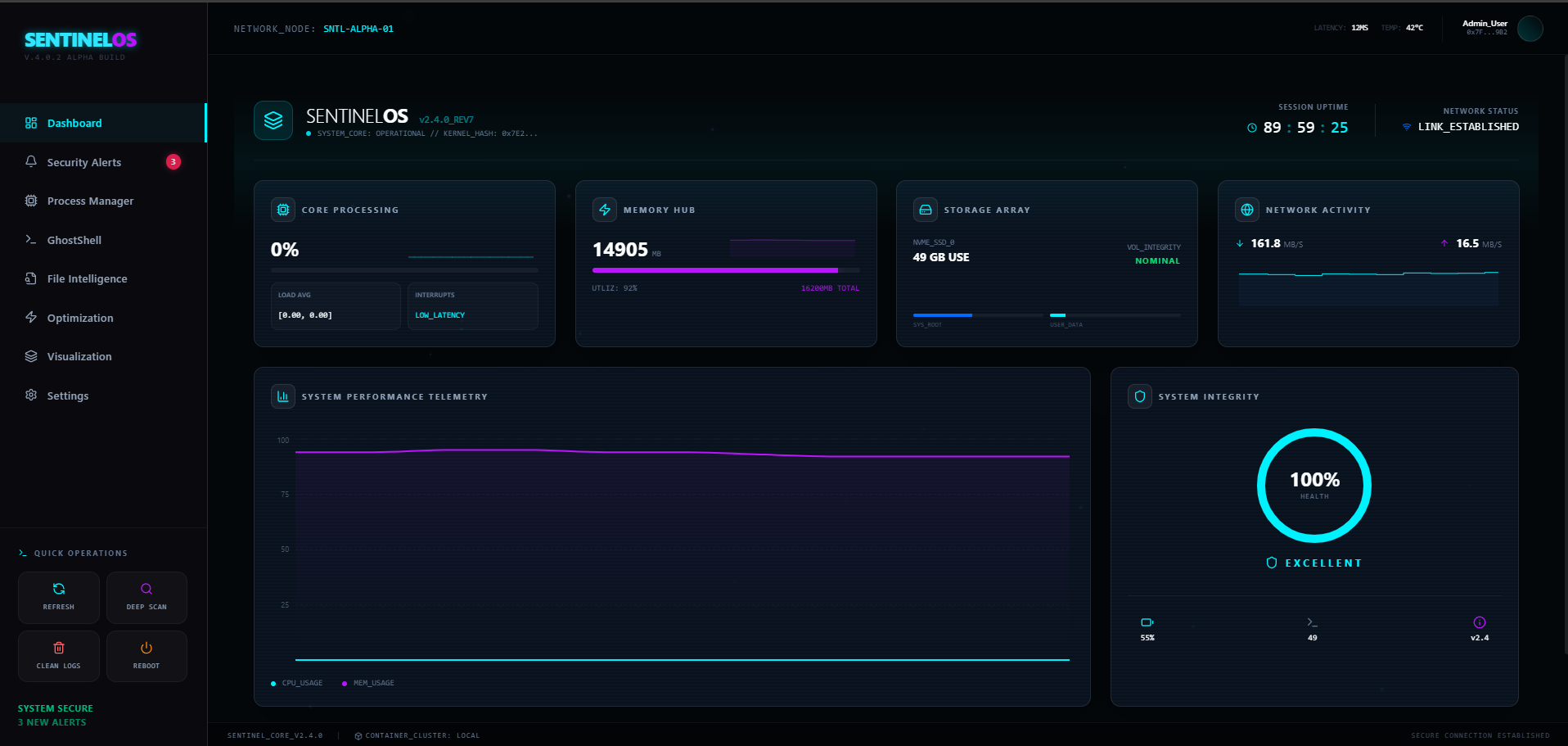
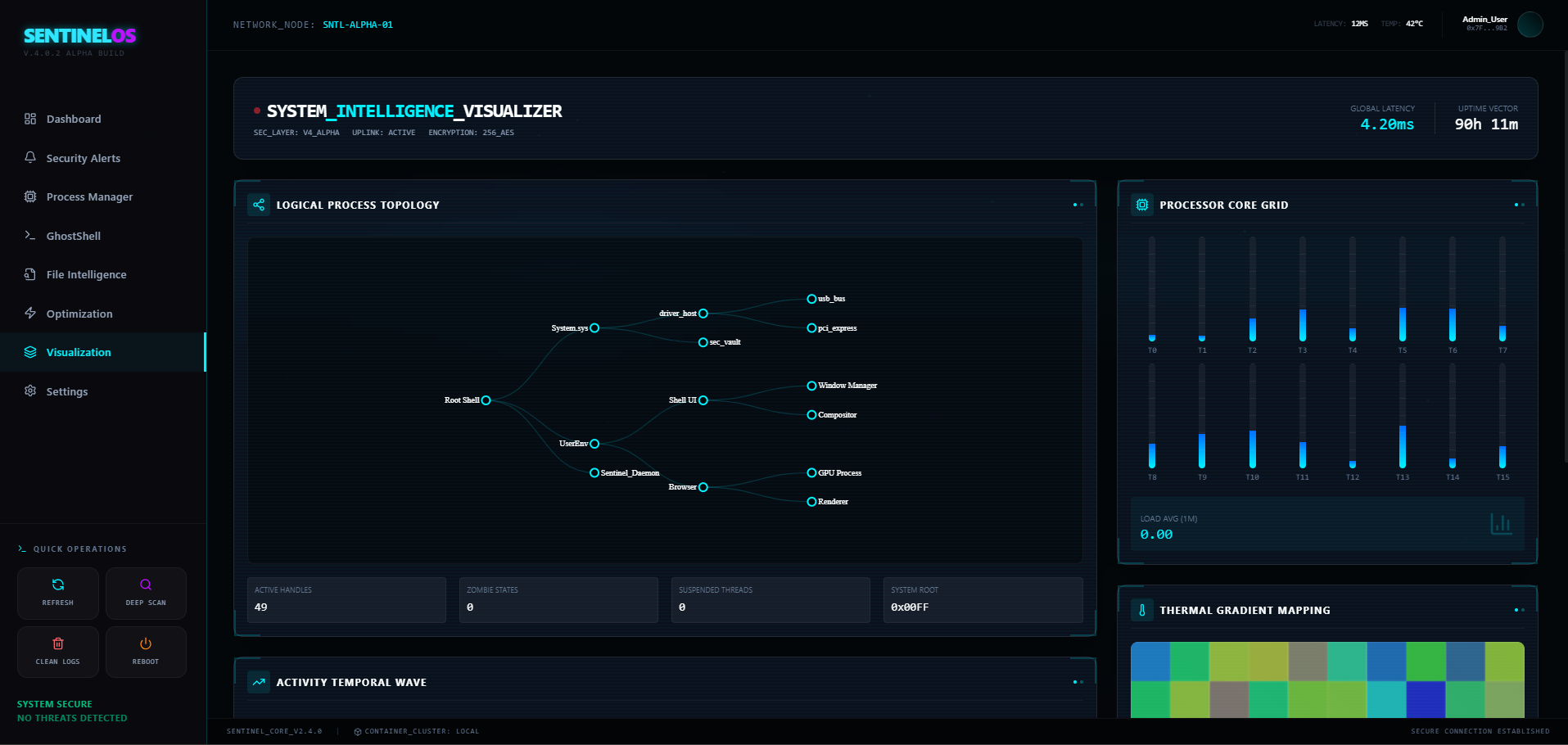
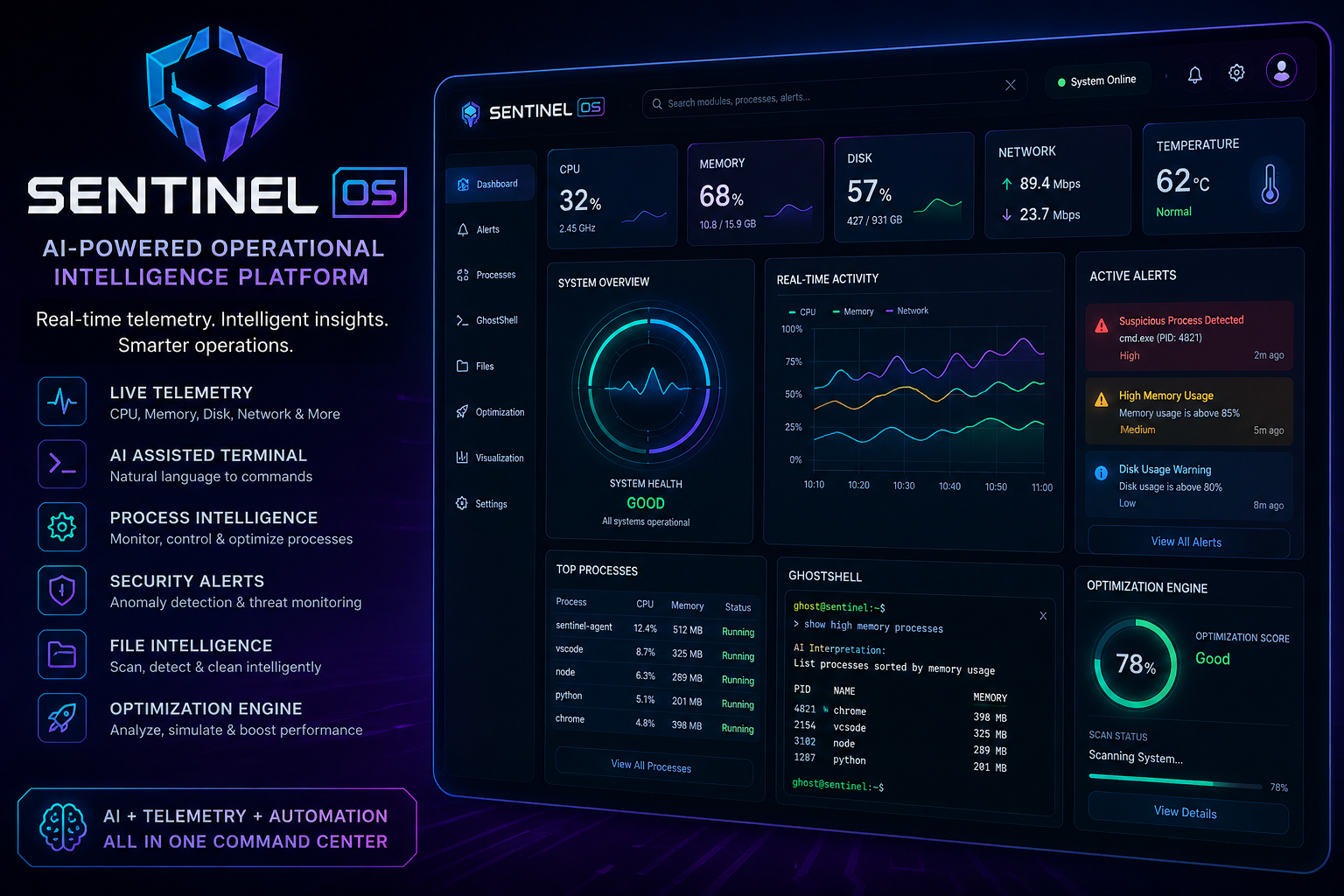
SentinelOS is an AI-powered cyber operations and system intelligence platform designed to centralize monitoring, optimization, and operational workflows. It provides:
- Live system telemetry for CPU, memory, disk, thermal, battery, and network monitoring
- Real-time security alerts and anomaly detection
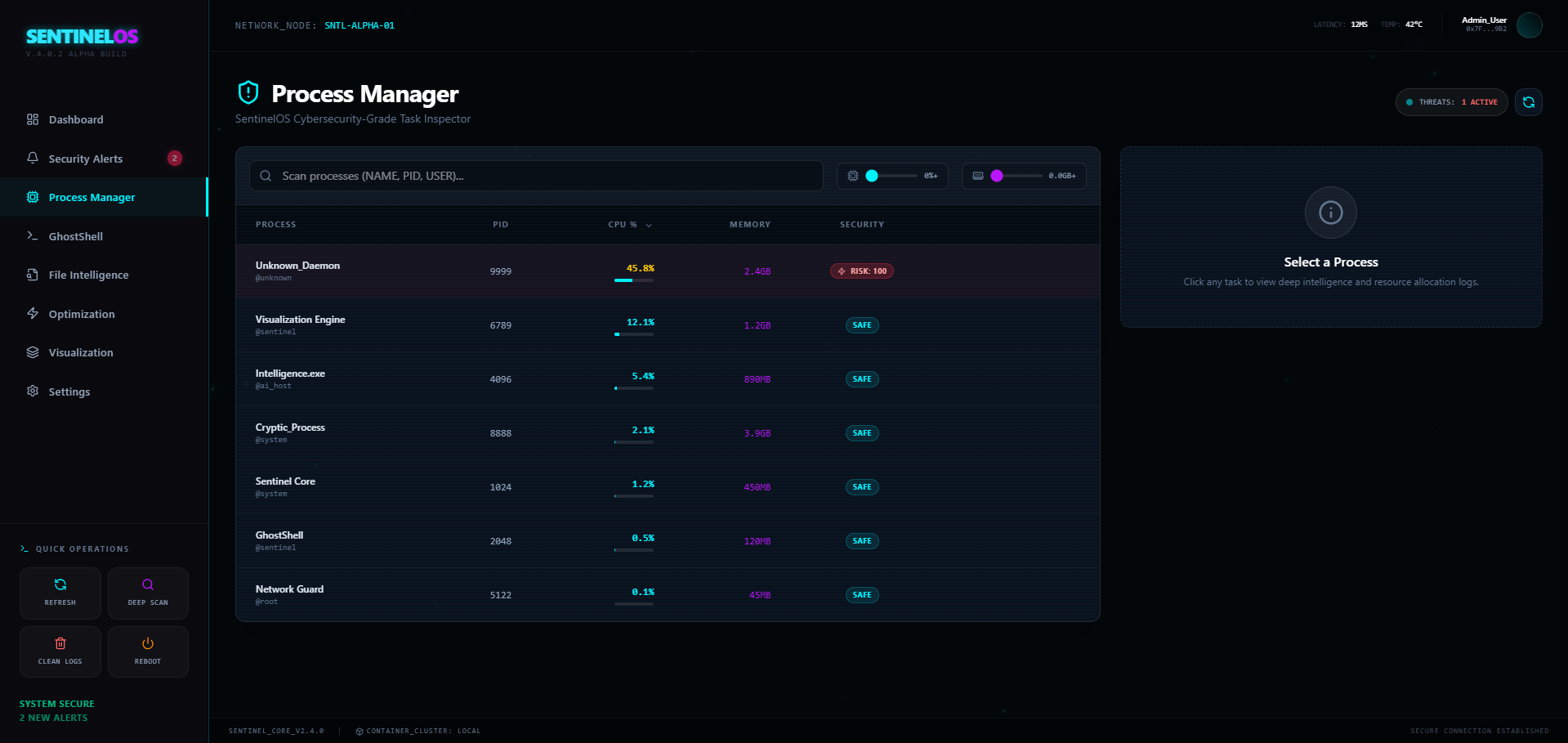
- Process lifecycle management with terminate, suspend, and resume controls
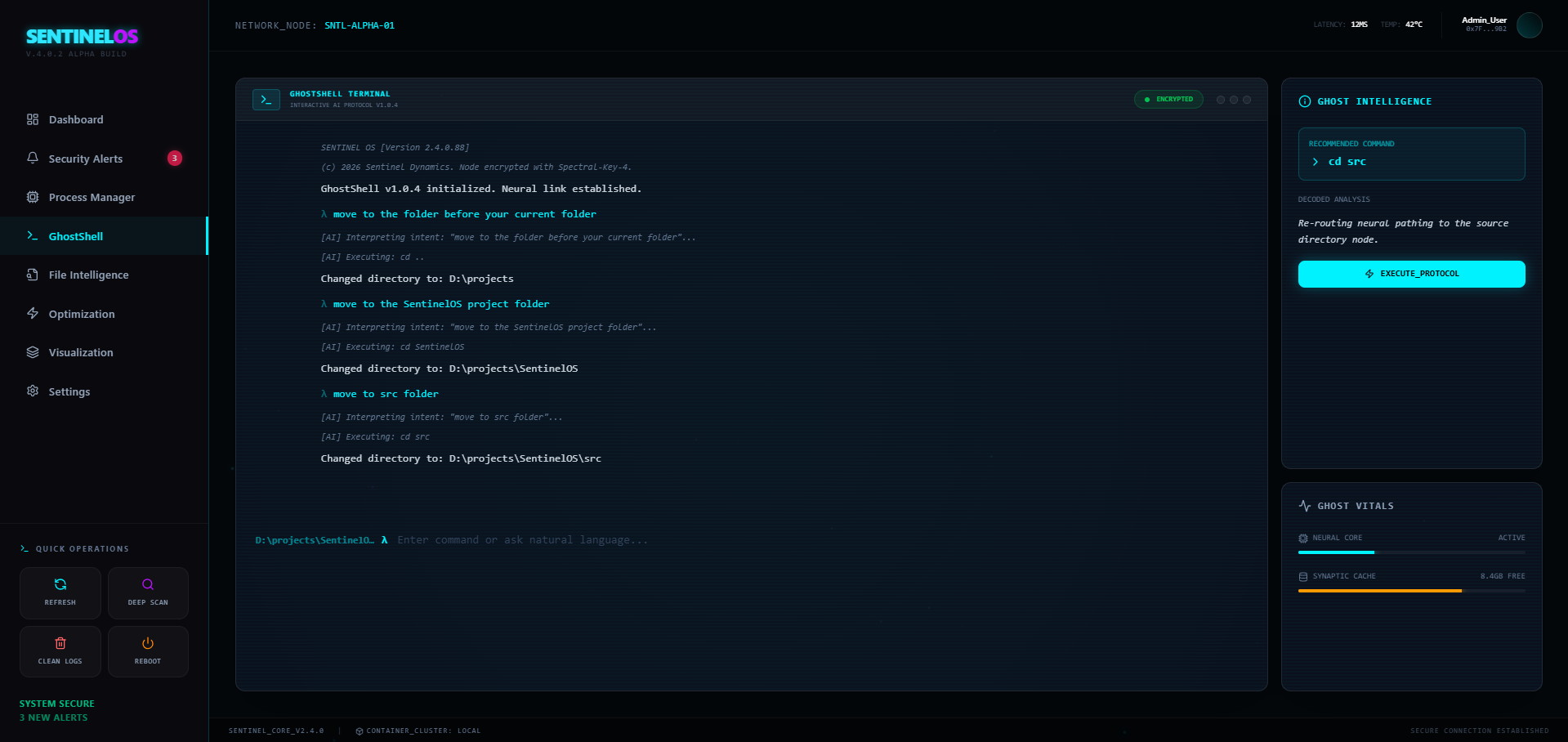
- GhostShell, an AI-assisted terminal that interprets natural language into operational commands
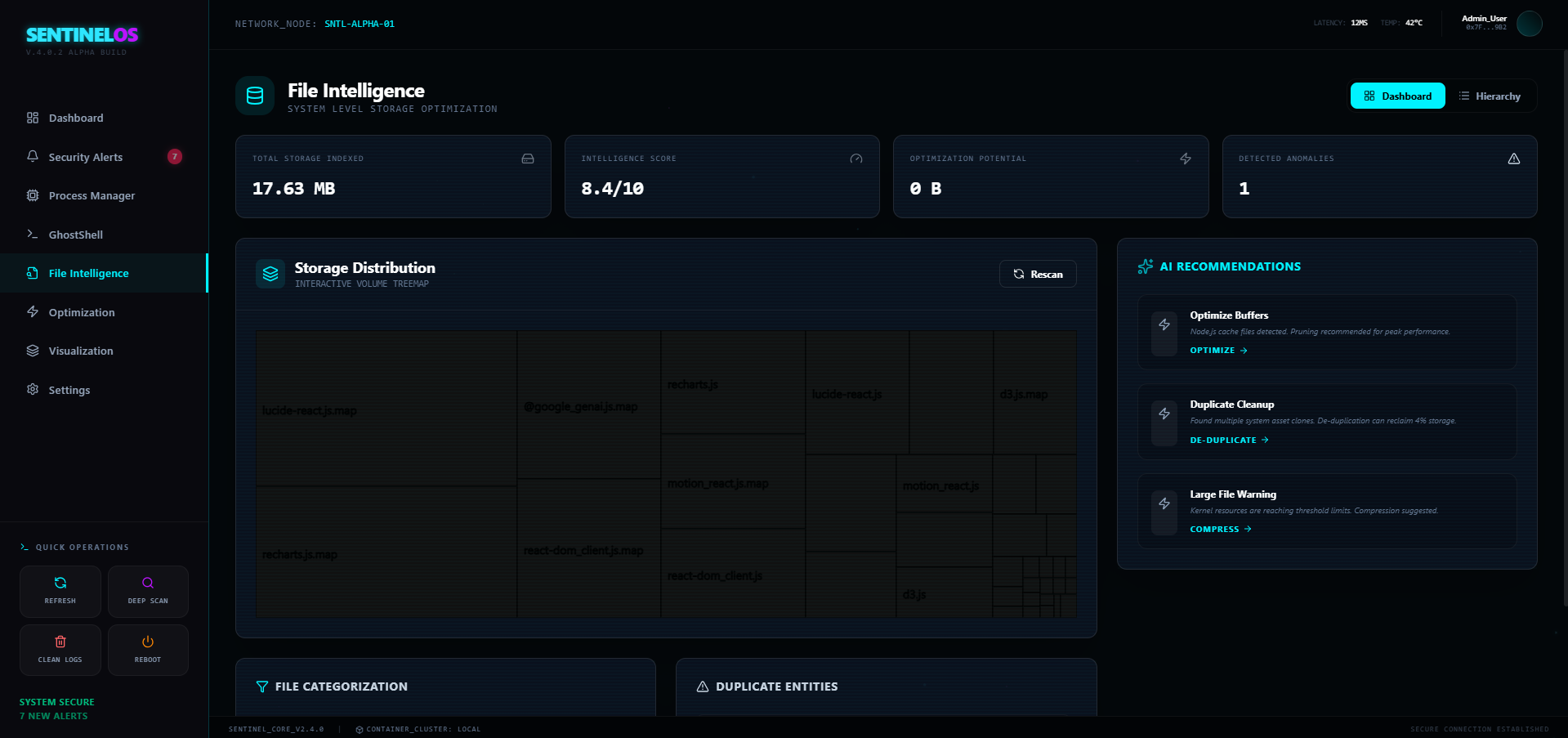
- File Intelligence scanning for duplicate, temporary, and large-file analysis
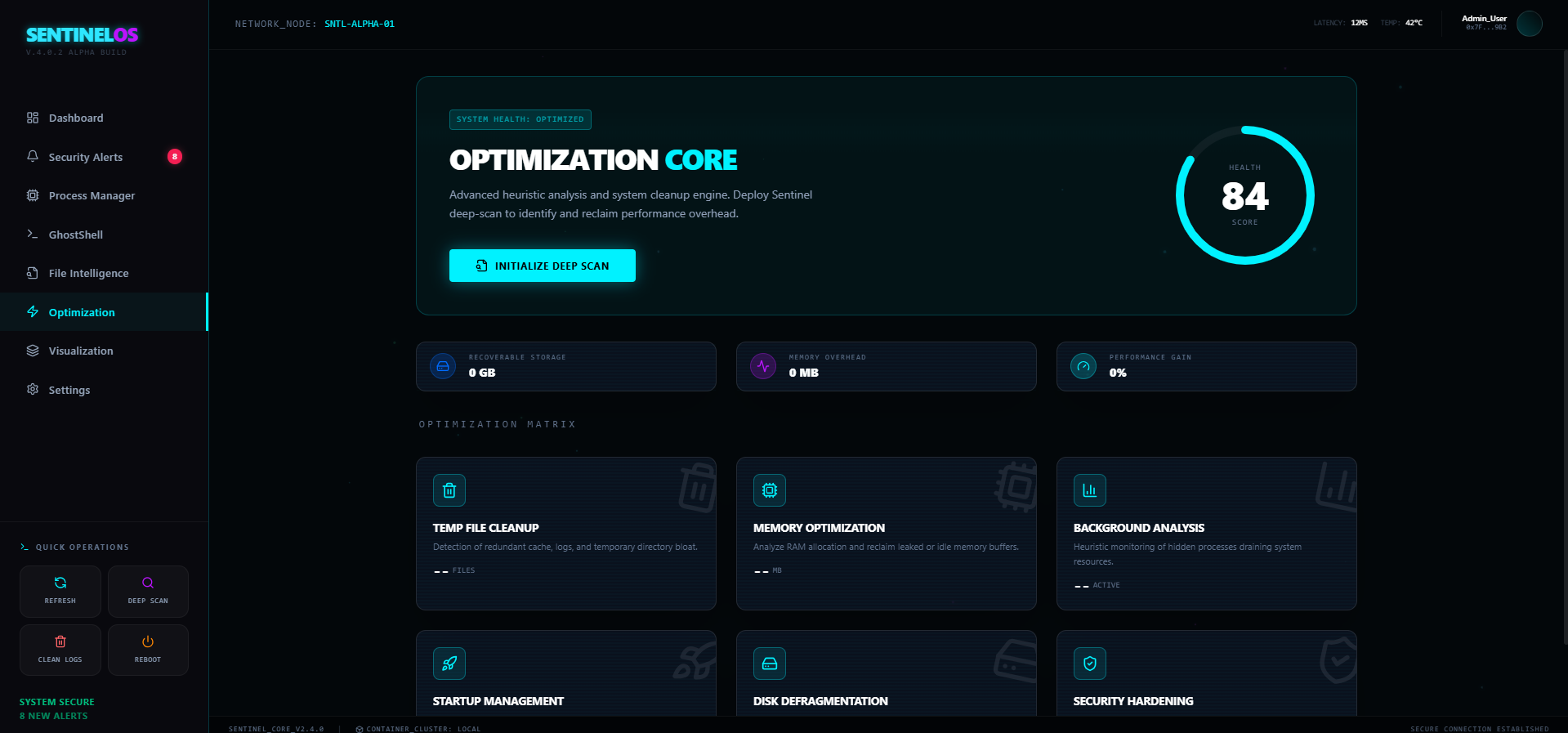
- Optimization workflows powered by dedicated background workers
- Real-time WebSocket-powered dashboards with responsive visualization
- Resilient transport architecture with automatic polling fallback The platform combines a futuristic WebOS-inspired UI with full-stack infrastructure and AI-assisted operational tooling.
How I built it
I built SentinelOS as a full-stack architecture using React, TypeScript, Node.js, Express, WebSockets, and Python.
Frontend:
- React 19
- TypeScript
- Vite
- Tailwind CSS
- Framer Motion
- Recharts + D3
Backend:
- Node.js + Express orchestration server
- WebSocket broadcasting for low-latency telemetry streaming
- REST APIs for operations, shell execution, intelligence scans, and process controls
Analysis Engine:
- Python-based monitoring and analytics engine
- Real-time system metric collection
- Health analysis and anomaly detection
- Structured JSON communication between Python and Node.js
AI Features:
- Google Gemini AI integration for GhostShell natural-language command interpretation and intelligent recommendations
Performance Optimizations:
- requestAnimationFrame batching
- Web worker optimization flows
- Snapshot deduplication
- WebSocket-first architecture with polling fallback
- Chunk splitting for faster route hydration
I designed the architecture to simulate a scalable enterprise-grade cyber operations platform while keeping the project modular and hackathon-demo ready.
Challenges I ran into
One of the biggest challenges was managing high-frequency telemetry updates without causing excessive React re-renders or UI lag. I solved this by implementing snapshot deduplication and batching updates using requestAnimationFrame. Another major challenge was bridging Python system analytics with the Node.js backend in real time. I designed a structured IPC communication flow using JSON streams over stdout to synchronize telemetry and analysis data reliably. Creating a terminal-like experience while maintaining security restrictions was also difficult. I implemented command allowlists and controlled execution flows to reduce unsafe operations while preserving usability. I also faced challenges with WebSocket reliability and transport resilience. To address this, I added automatic reconnect handling and a polling fallback system to maintain uninterrupted telemetry updates.
Accomplishments that I am proud of
I am proud that I built SentinelOS entirely as a solo developer while combining frontend engineering, backend architecture, real-time systems, AI integration, and Python analytics into a unified platform. Some accomplishments I am especially proud of include:
- Building a real-time telemetry system with WebSocket streaming
- Designing a futuristic and highly interactive WebOS-style interface
- Integrating AI-assisted command interpretation through GhostShell
- Creating modular infrastructure that can scale beyond a hackathon prototype
- Implementing optimization workflows using dedicated web workers
- Designing a project that balances strong visual presentation with real engineering concepts I am also proud that the platform feels like a realistic enterprise operations product rather than only a demo application.
What I learned
Through building SentinelOS, I learned a lot about full-stack systems architecture, transport resilience, and real-time application design. I gained deeper experience with:
- WebSocket communication patterns
- Cross-language integration between Node.js and Python
- High-frequency state management in React
- Performance optimization for real-time dashboards
- AI-assisted workflow design
- Operational security considerations and command isolation
- Modular system architecture and scalability planning I also learned the importance of balancing technical sophistication with usability and presentation quality.
What's next for SentinelOS
My future vision for SentinelOS is to evolve it into a more advanced AI-powered infrastructure and cybersecurity operations platform. Planned improvements include:
- Historical telemetry storage and analytics replay
- Multi-node infrastructure monitoring
- RBAC authentication and enterprise access controls
- Containerized sandbox execution for GhostShell
- AI-driven anomaly prediction and adaptive thresholds
- Persistent alert history and audit logging
- Kubernetes and cloud deployment integrations
- Distributed telemetry ingestion pipelines
- Advanced security hardening and compliance tooling
- Accessibility and localization improvements Long term, I want SentinelOS to become a scalable intelligent operations platform that combines observability, optimization, automation, and AI-assisted infrastructure management into a single ecosystem.
Built With
- d3.js
- express.js
- framer-motion
- node.js
- python
- recharts
- tailwindcss
- typescript
- vite
- websockets

Log in or sign up for Devpost to join the conversation.