Inspiration
Modern system monitoring and operational tools are often fragmented, overly complex, and reactive rather than intelligent. I wanted to explore what the future of operational infrastructure could look like if real-time telemetry, AI assistance, process intelligence, optimization workflows, and security visibility were unified into a single futuristic command platform. SentinelOS was inspired by enterprise observability systems, security operations centers, and modern AI copilots. My goal was to create a platform that feels cinematic and visually advanced while still demonstrating real technical architecture, live data transport, operational workflows, and scalability planning. I also wanted to build something that goes beyond a traditional dashboard by creating an immersive “system command center” experience that combines infrastructure monitoring with AI-assisted operations.
What it does
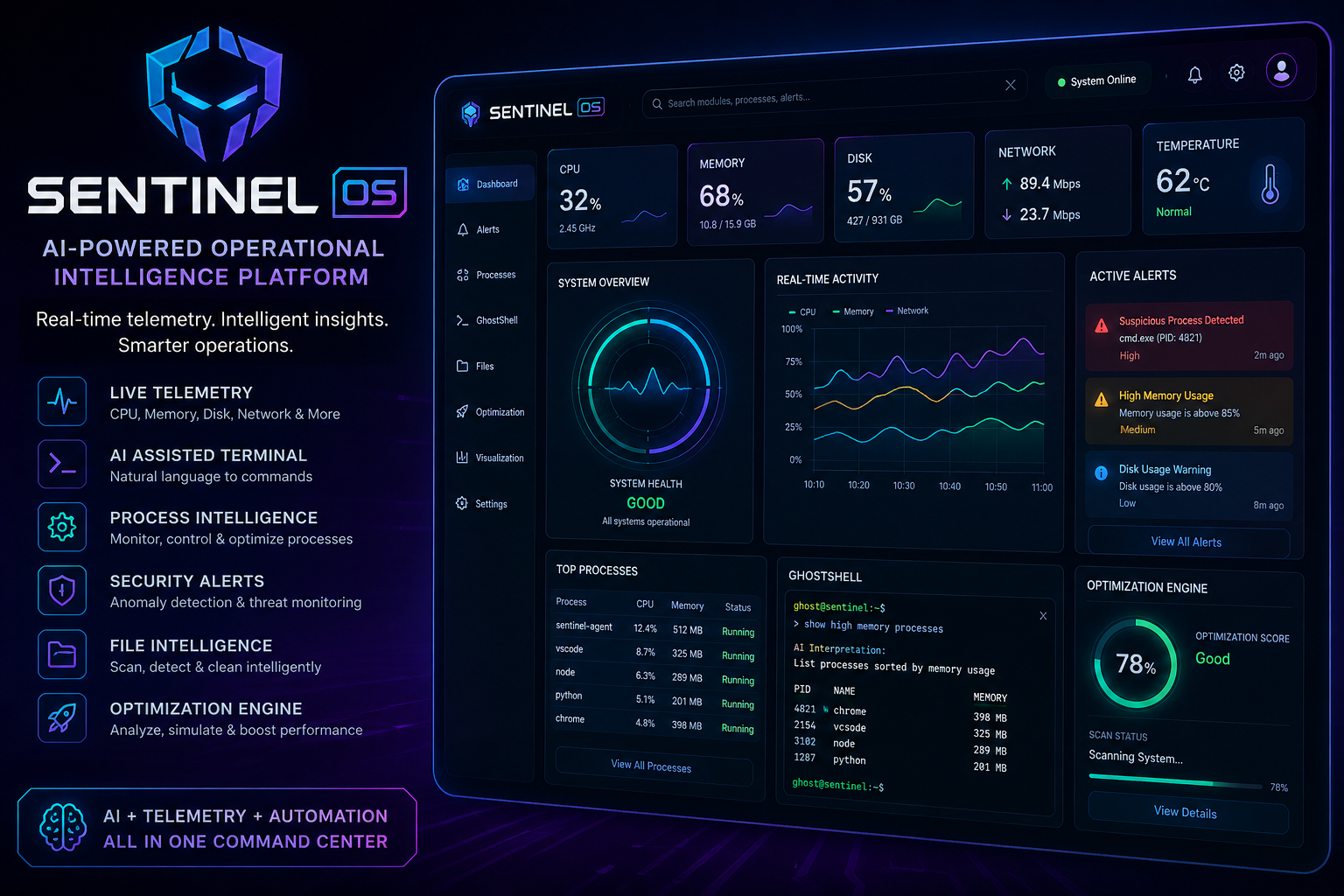
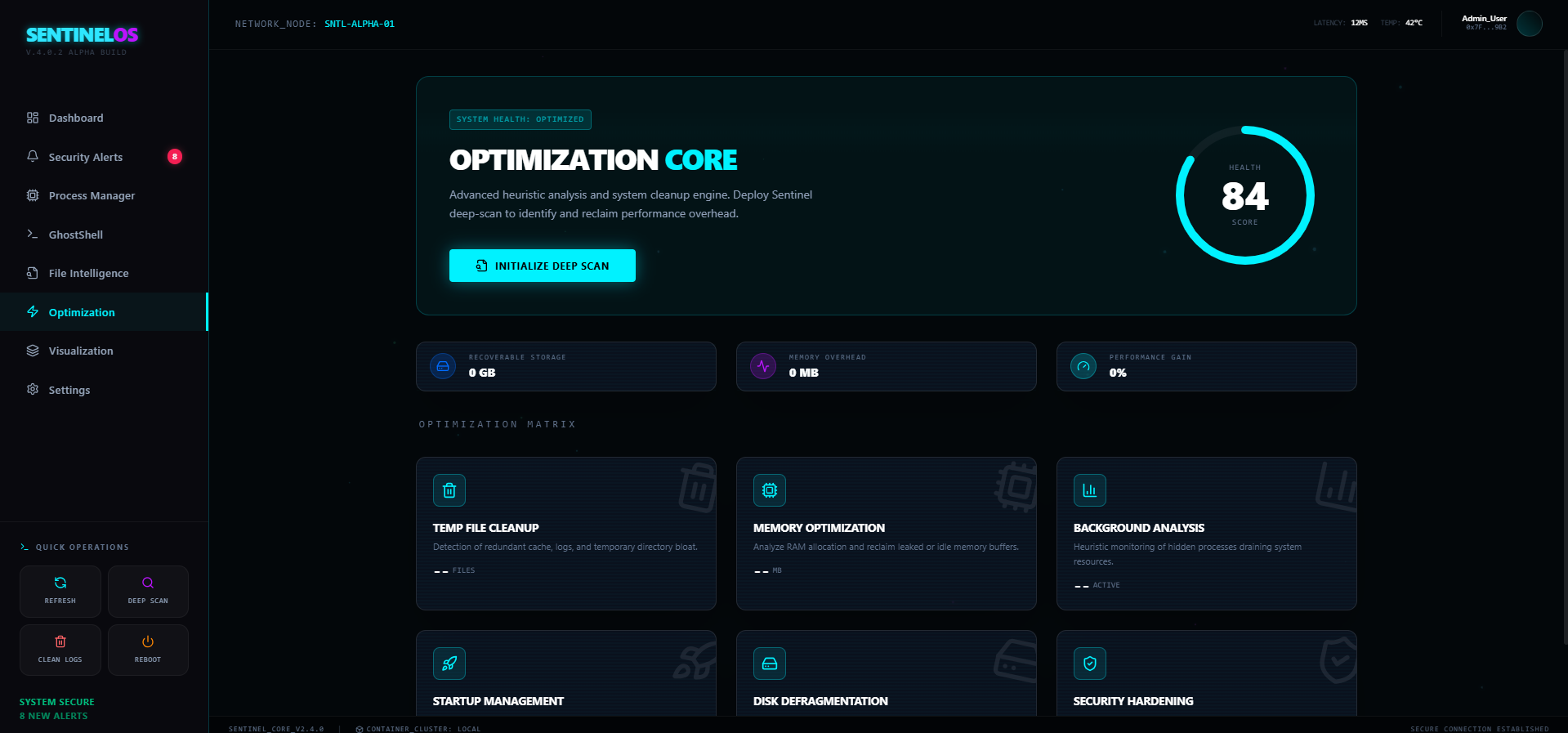
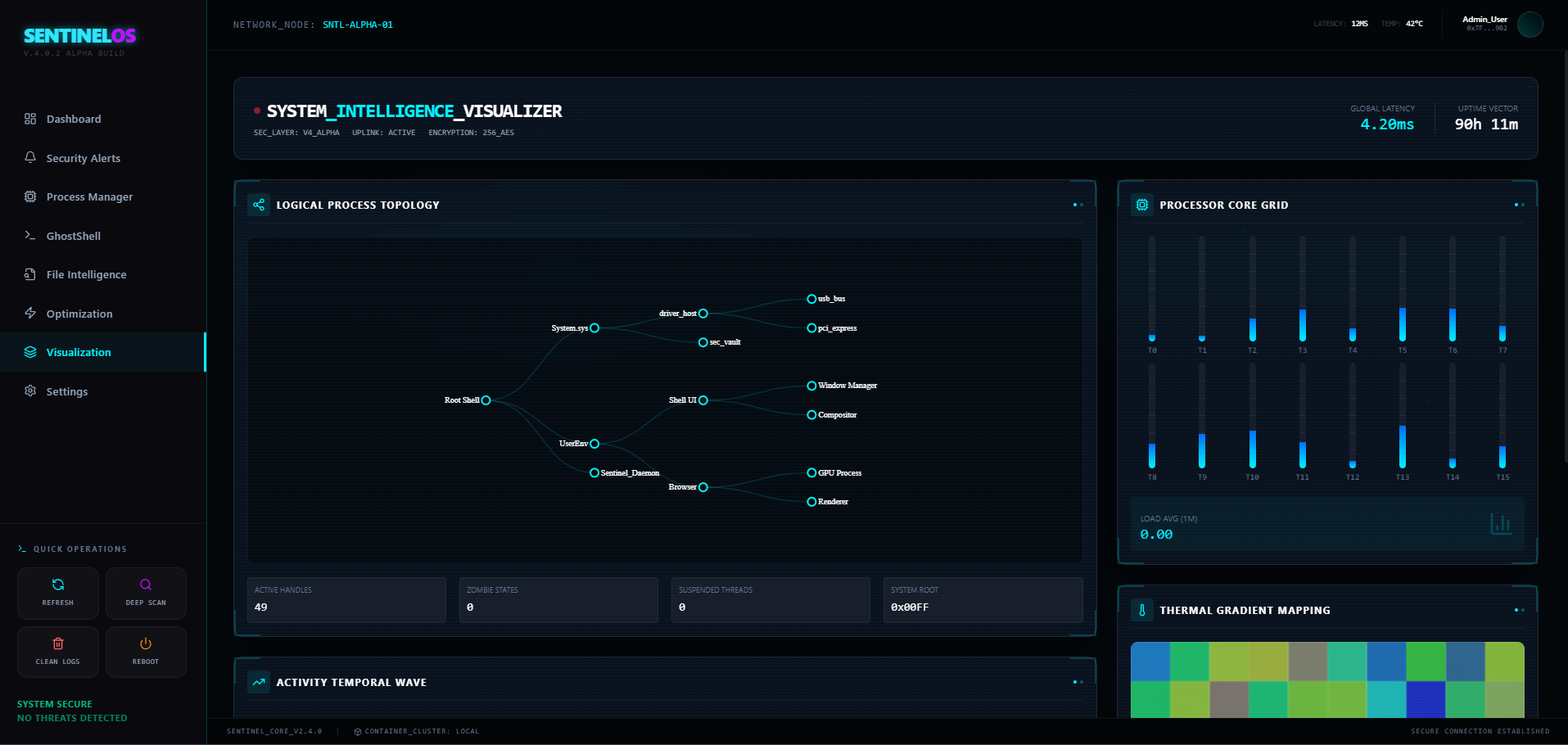
SentinelOS is an AI-powered operational intelligence platform that provides live system telemetry, process intelligence, security monitoring, optimization workflows, and AI-assisted terminal interactions through a unified real-time interface. The platform includes:
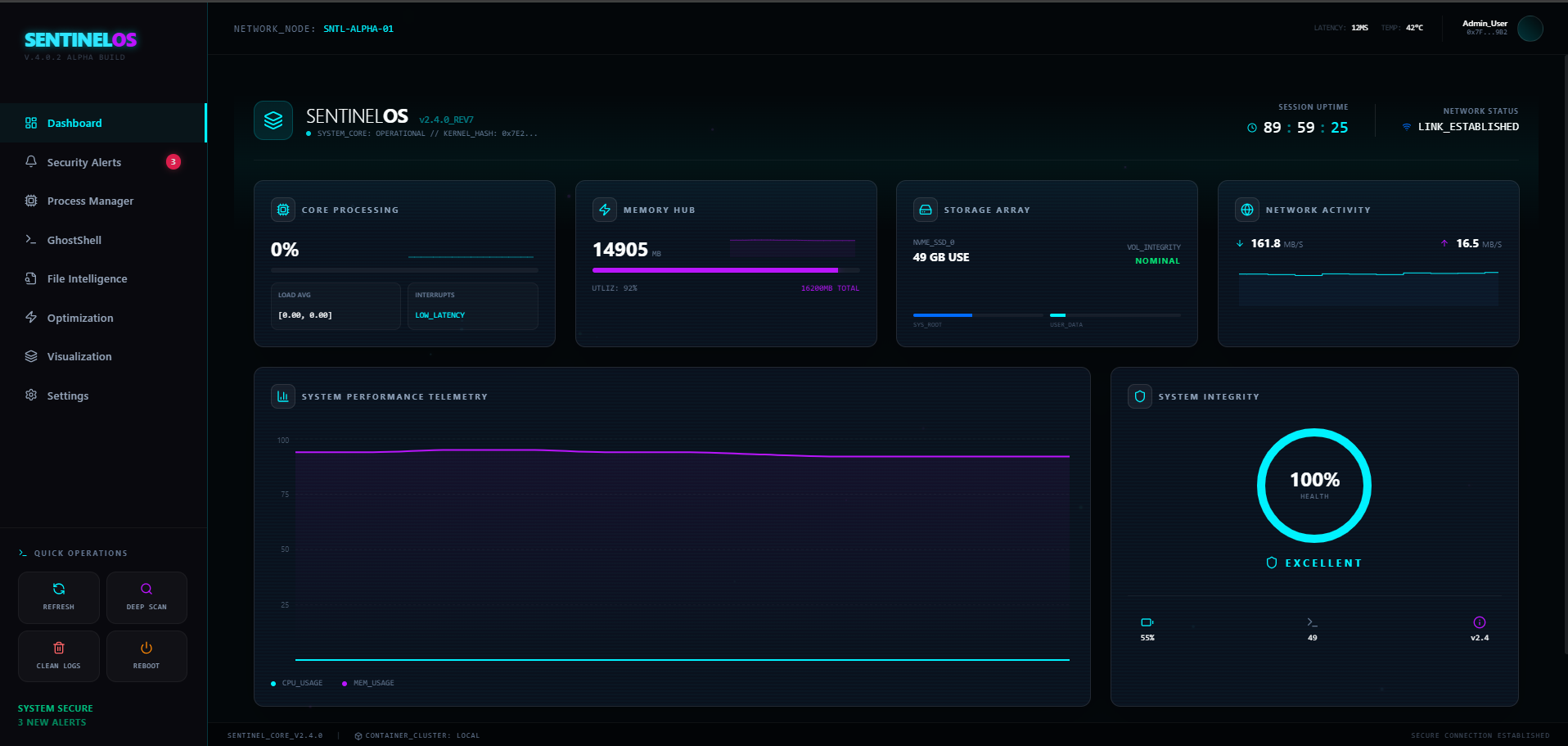
- Live CPU, memory, disk, network, thermal, and battery monitoring
- Real-time WebSocket-powered telemetry streaming
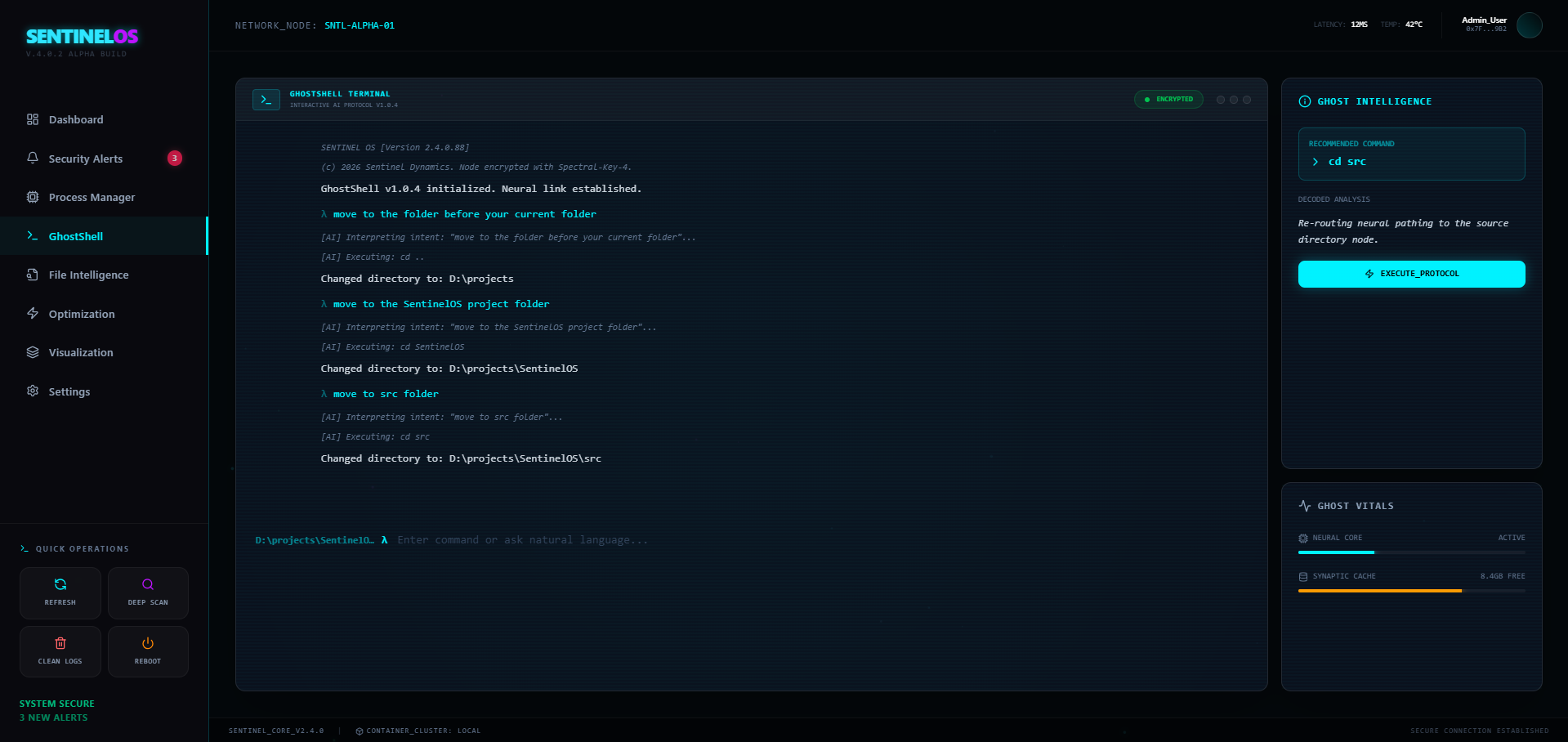
- AI-assisted GhostShell terminal with natural language interpretation
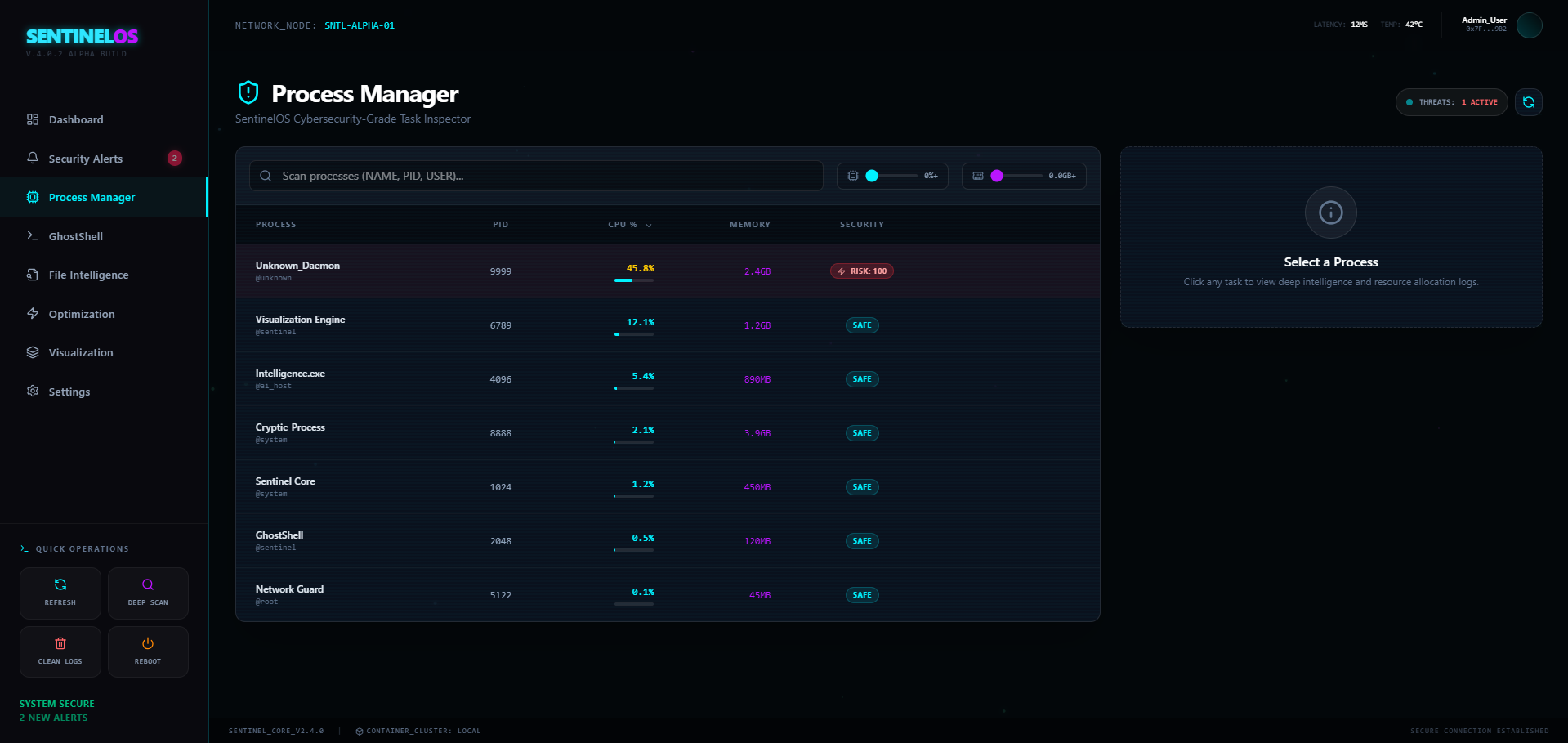
- Process lifecycle management (suspend, resume, terminate)
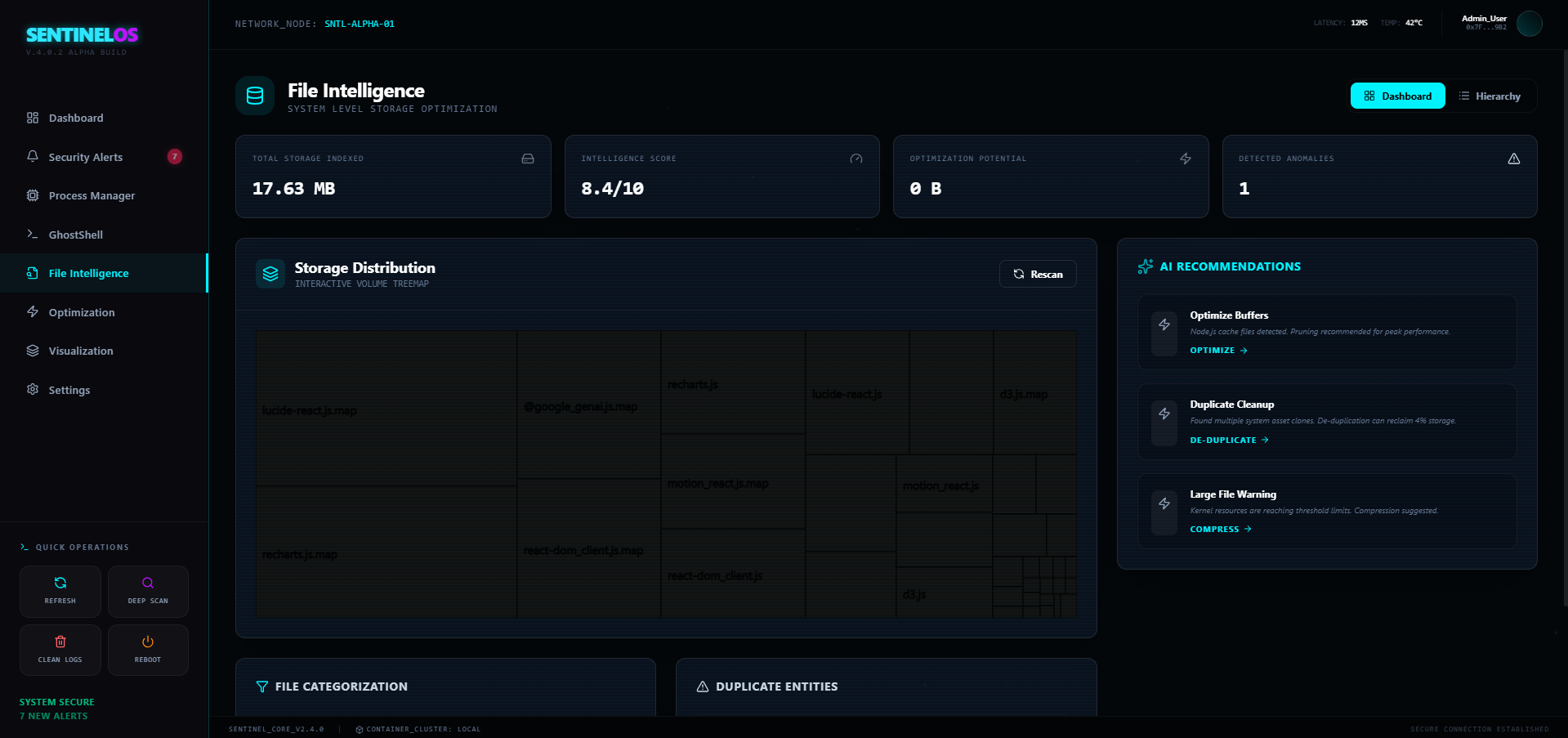
- File intelligence scans for duplicate, temporary, and oversized files
- Alerting and anomaly monitoring systems
- Optimization simulation workflows powered by web workers
- Operational dashboards and system visualization modules
- Resilient transport architecture with polling fallback systems SentinelOS is designed to demonstrate how AI and operational intelligence can work together to simplify infrastructure management and improve operational visibility.
How I built it
SentinelOS was built as a full-stack architecture combining modern frontend technologies, backend orchestration systems, and a Python-powered analysis engine.
Frontend:
- React 19
- TypeScript
- Vite
- Tailwind CSS
- Framer Motion
- Recharts and D3
Backend:
- Node.js
- Express
- WebSocket server using ws
AI Integration:
- Google GenAI SDK for GhostShell natural language interpretation and AI recommendations Telemetry & Analysis:
- Python runtime for system metric collection and health analysis
- JSON-based interprocess communication between Python and Node.js
The backend continuously ingests telemetry from the Python engine, normalizes the data into system snapshots, and broadcasts updates to the frontend over WebSockets. The frontend consumes these updates through a shared state store optimized for low-latency rendering and minimal UI thrashing. I also implemented:
- requestAnimationFrame-based rendering optimization
- snapshot deduplication
- resilient polling fallback
- modular service boundaries
- web-worker-powered optimization simulations
Challenges I ran into
One of the biggest challenges was handling real-time telemetry updates without causing excessive frontend re-renders or performance degradation. Streaming live system data at high frequency can quickly overwhelm the UI if updates are not carefully optimized. To solve this, I implemented:
- snapshot deduplication
- animation-frame batched updates
- debounced backend refresh logic Another major challenge was integrating the Python monitoring engine with the Node.js orchestration layer while keeping communication structured and reliable. I solved this using child-process orchestration and structured JSON IPC over stdout. Building a terminal-like experience safely was also difficult. I wanted GhostShell to feel powerful while avoiding unrestricted shell execution risks. I addressed this using command allowlists, restricted execution paths, and controlled helper utilities. Finally, balancing futuristic UI design with usability and responsiveness required significant iteration across layout systems, animations, and real-time rendering behavior.
Accomplishments that I am proud of
I am especially proud of building a project that feels both visually futuristic and technically substantial. Key accomplishments include:
- Building a fully integrated real-time telemetry architecture
- Successfully combining React, Node.js, WebSockets, Python, and AI workflows into one platform
- Designing a polished cyberpunk-inspired operational interface
- Creating a modular architecture with clear scalability pathways
- Implementing AI-assisted command interpretation through GhostShell
- Maintaining smooth frontend performance despite high-frequency telemetry updates
- Developing a platform that feels closer to a real operational intelligence product than a traditional hackathon demo I am also proud that SentinelOS demonstrates enterprise-grade thinking around scalability, transport resilience, security hardening, and operational workflows.
What I learned
This project taught me a great deal about real-time systems, frontend performance optimization, cross-language orchestration, and operational architecture design. I learned:
- How to optimize high-frequency UI updates in React applications
- How to structure scalable telemetry pipelines
- How to bridge Python analytics systems with Node.js infrastructure
- How WebSocket transport systems behave under unstable conditions
- How AI-assisted operational tooling can improve usability
- How important architecture planning is even during rapid hackathon development I also learned that strong product presentation and visual storytelling can significantly enhance the perceived quality and professionalism of technical systems
What's next for SentinelOS
The next phase of SentinelOS focuses on evolving the platform from a hackathon prototype into a more production-ready operational intelligence ecosystem. Planned improvements include:
- Persistent telemetry storage and historical replay analytics
- Multi-node telemetry aggregation
- RBAC and authentication systems
- Containerized sandbox execution for GhostShell
- Real anomaly detection models with adaptive thresholds
- Distributed orchestration and queue-backed task processing
- Cloud-native deployment support
- Infrastructure observability integrations
- Accessibility and localization improvements
- Mobile-responsive operational views Long-term, I envision SentinelOS becoming a next-generation AI-powered operational platform that bridges observability, optimization, automation, and intelligent infrastructure management into a single unified system.
Built With
- d3.js
- express.js
- framer-motion
- node.js
- python
- react
- recharts
- tailwindcss
- typescript
- vite
- websockets

Log in or sign up for Devpost to join the conversation.