-
-
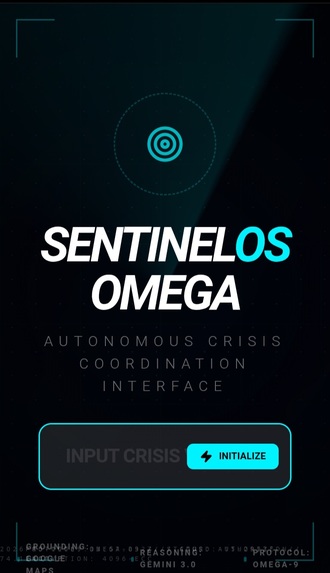
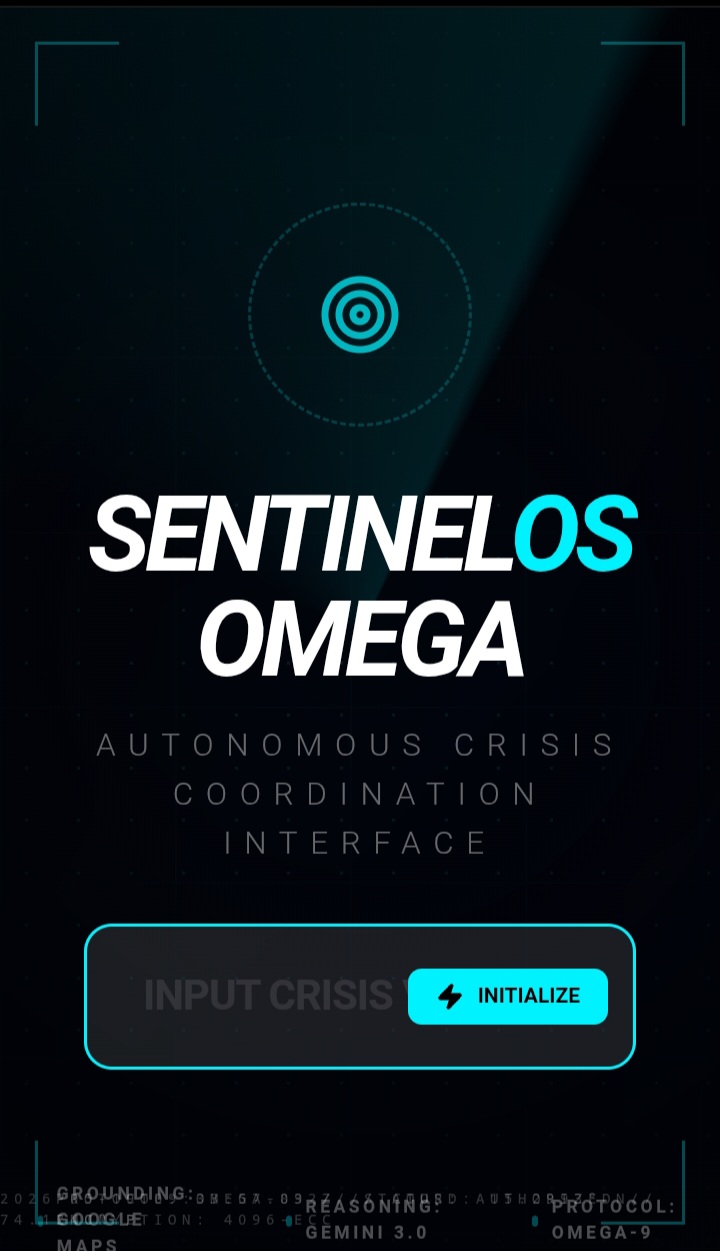
Home page
-
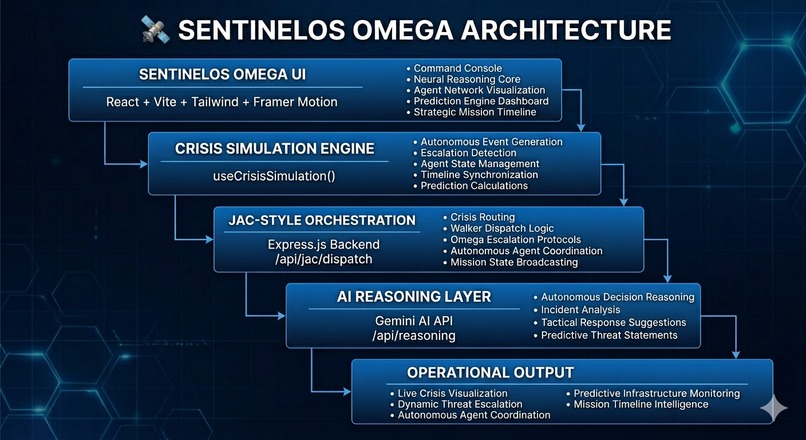
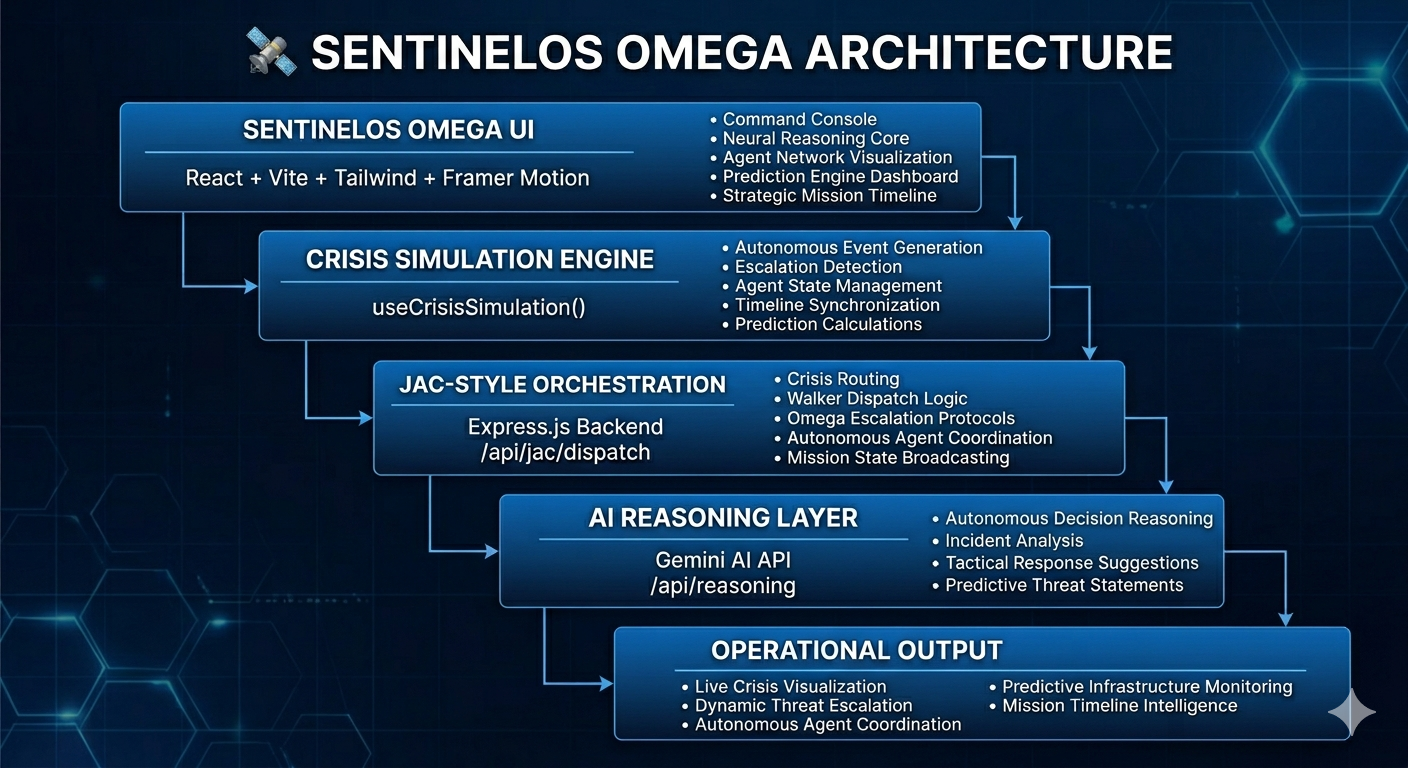
Architecture Diagram
Inspiration
Modern emergency response systems are fundamentally reactive, slow, and fragmented across multiple communication layers. In real-world disasters, critical minutes are lost due to human bottlenecks and disconnected infrastructure. We built SentinelOS Omega to answer a radical question: What if emergency response behaved like a living intelligent system instead of a static command chain? This project is inspired by: Large-scale disaster coordination failures Graph-based neural systems Multi-agent AI orchestration Real-time distributed decision networks Our goal was to simulate a civilization-scale autonomous crisis intelligence system capable of reasoning and responding in real time.
What it does
SentinelOS Omega is an autonomous AI crisis-command operating system that simulates large-scale emergency coordination using graph-driven intelligence. It enables: Multi-agent AI coordination across 11+ agents Real-time crisis detection and escalation Graph-based infrastructure modeling Autonomous routing of emergency resources Drone, medical, and evacuation path simulation Omega Escalation Mode for high-risk scenarios When a disaster is detected, the system transitions into Omega Mode, where all agents operate in parallel to simulate optimal response strategies in real time.
How we built it
We designed SentinelOS Omega as a graph-native multi-agent system. Core stack: React + Next.js → frontend dashboard Express.js → backend orchestration layer Jac Agentic Programming Language → graph-based agent modeling Gemini 3 Flash → AI reasoning engine Framer Motion → UI animations
Architecture:
System modeled as a dynamic graph of nodes Each node represents an AI agent or infrastructure component Edges represent communication + decision flow Central orchestrator manages system state transitions Real-time simulation engine updates crisis scenarios continuously This architecture allowed us to simulate parallel intelligence at scale. Challenges we ran into Designing true parallel multi-agent reasoning without conflicts Maintaining real-time graph performance under dynamic updates Synchronizing AI outputs across multiple autonomous agents Building a UI that feels like a live command OS instead of a dashboard Simulating realistic crisis propagation behavior The hardest challenge was ensuring: independent agent intelligence without breaking system coherence.
Accomplishments that we're proud of
Built a fully functional multi-agent crisis simulation system Designed a graph-native intelligence architecture Implemented Omega Escalation Mode (dynamic system transformation) Created a cinematic, defense-grade UI experience Successfully combined AI reasoning + real-time simulation + UX storytelling Achieved a hackathon-ready system with strong technical depth and narrative impact
What we learned
Graph-based systems are extremely powerful for modeling real-world complexity Multi-agent systems require careful orchestration and constraints UX is as important as backend intelligence in AI systems Real-time simulation dramatically increases perceived system intelligence The future of AI is not single models, but coordinated agent networks We learned how to balance: engineering depth + system design + storytelling clarity What's next for SentinelOS Omega We aim to evolve SentinelOS Omega into a real-world AI-powered emergency intelligence platform.
Future directions:
Integration with real-world disaster APIs (earthquakes, floods, weather systems) Satellite + GIS-based live mapping Scaling to 50+ specialized AI agents Mobile emergency coordination system Reinforcement learning for agent optimization City-scale digital twin simulations Long-term vision: SentinelOS Omega becomes the foundation for autonomous crisis response infrastructure used in smart cities worldwide.


Log in or sign up for Devpost to join the conversation.