Inspiration
I wanted to build something that felt closer to a real operational platform than a traditional hackathon project. Most monitoring tools are either too technical, fragmented across multiple dashboards, or difficult for smaller teams and students to understand quickly. I was inspired by enterprise SOC platforms, futuristic command centers, and AI-assisted developer workflows. My goal with SentinelOS was to create a unified operational intelligence system that combines live telemetry, process management, AI-assisted workflows, and optimization tooling inside a single immersive interface. I also wanted the project to demonstrate how modern full-stack systems can integrate real-time infrastructure monitoring with AI-powered usability.
What it does
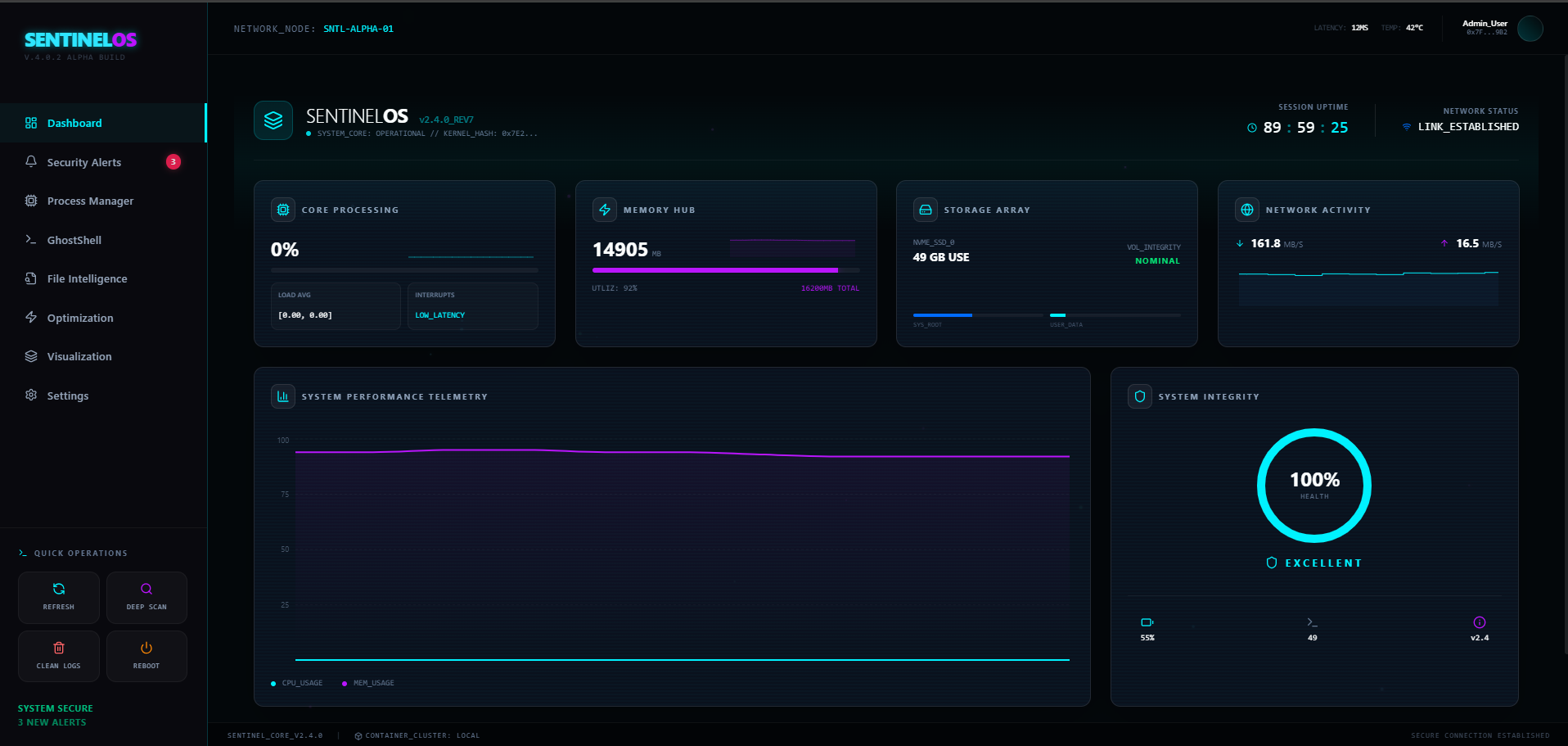
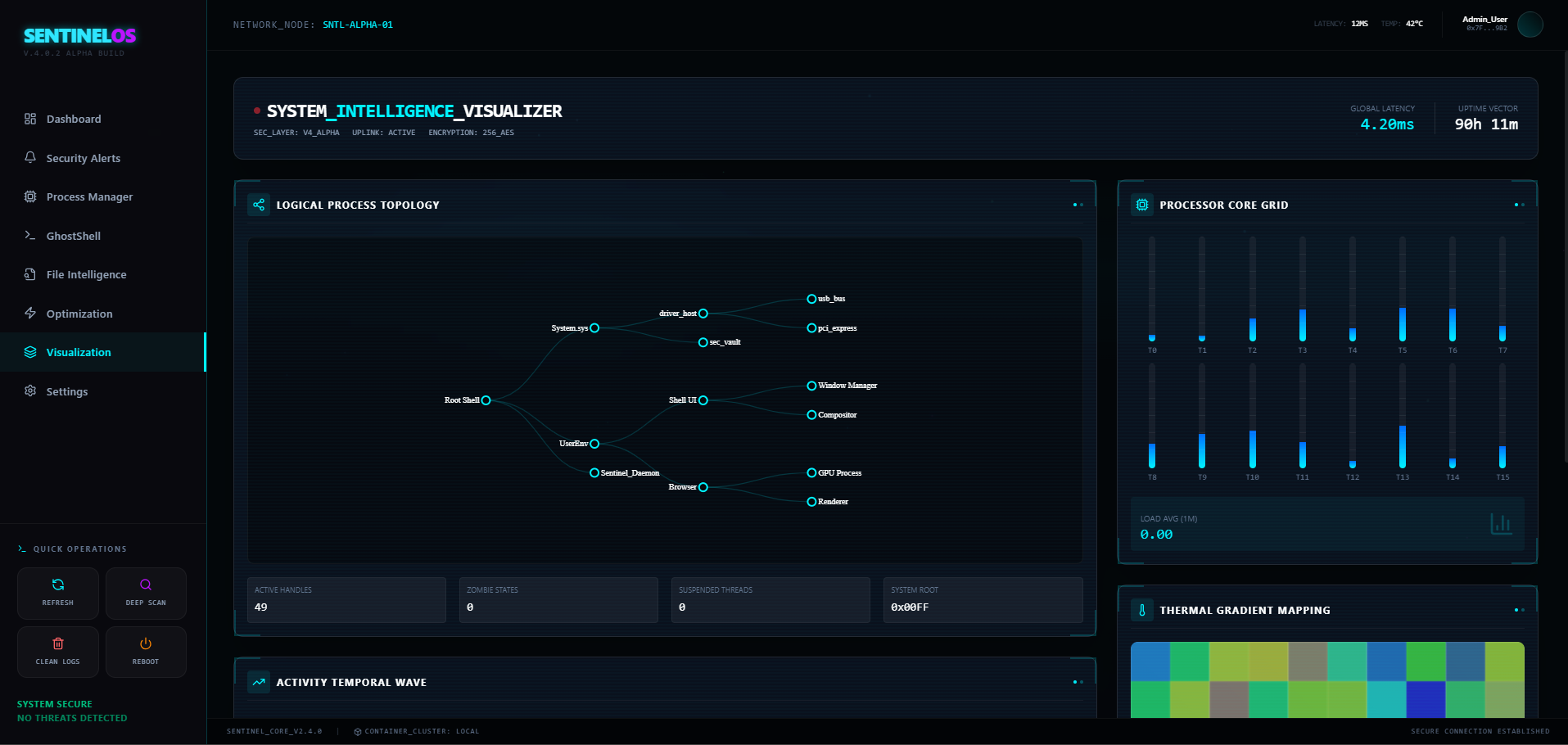
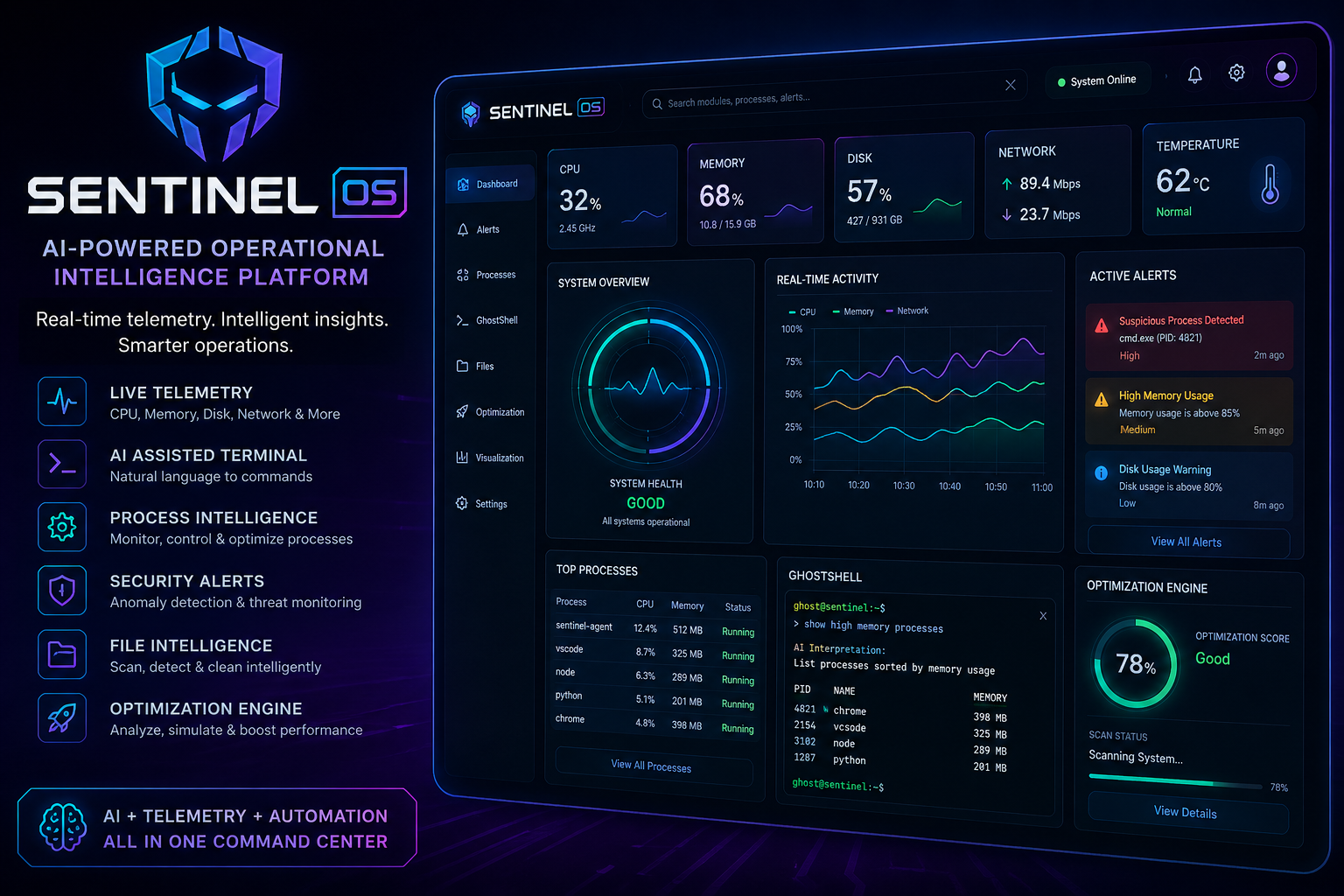
SentinelOS is a futuristic AI-powered operational intelligence platform that provides real-time system monitoring, anomaly visibility, process management, and intelligent workflow automation. The platform includes:
- Live telemetry monitoring for CPU, memory, disk, network, battery, and thermal activity
- Real-time WebSocket-based updates with responsive visualization
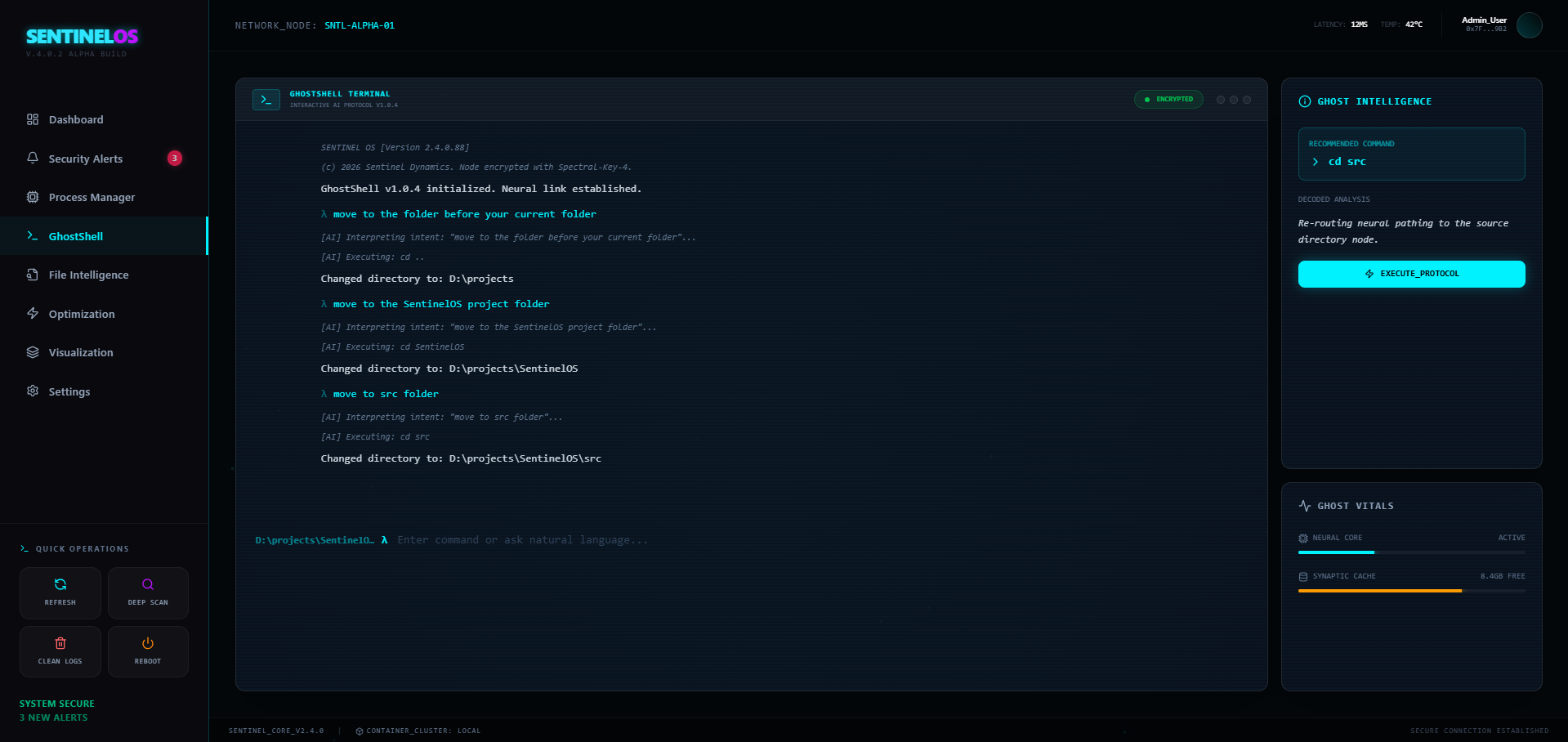
- AI-assisted GhostShell terminal workflows for command interpretation
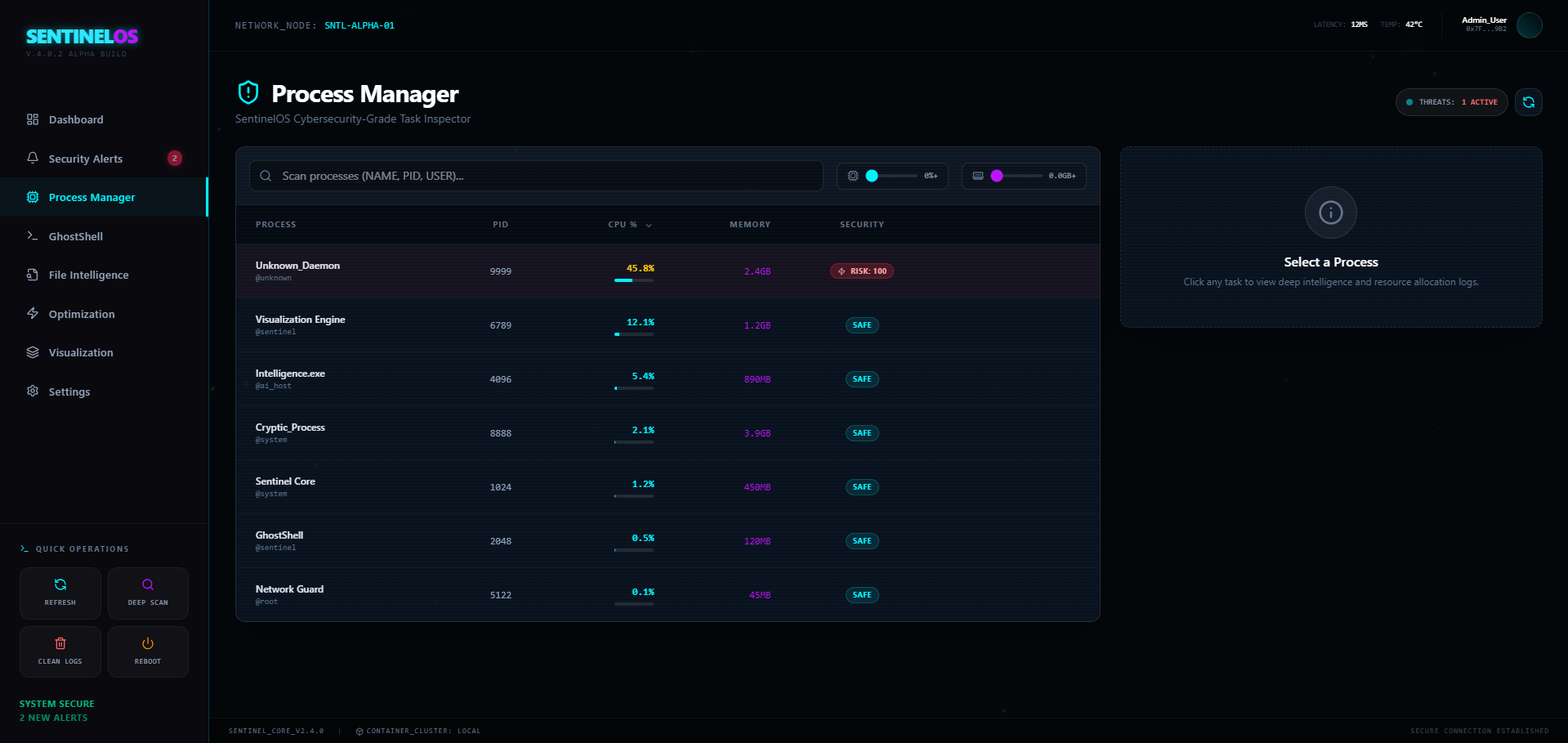
- Process lifecycle controls including suspend, resume, and terminate actions
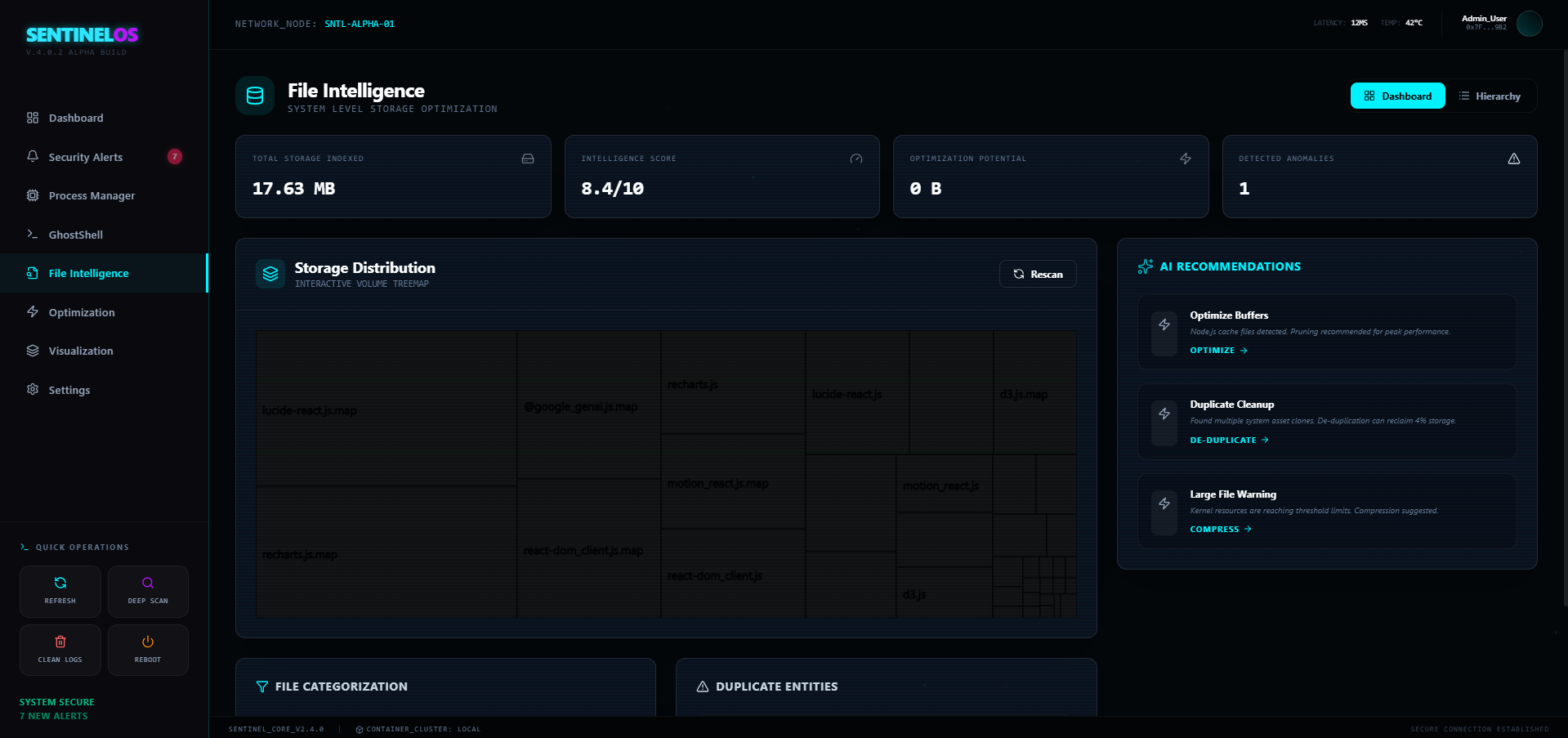
- File intelligence scanning with duplicate, temporary, and large file detection
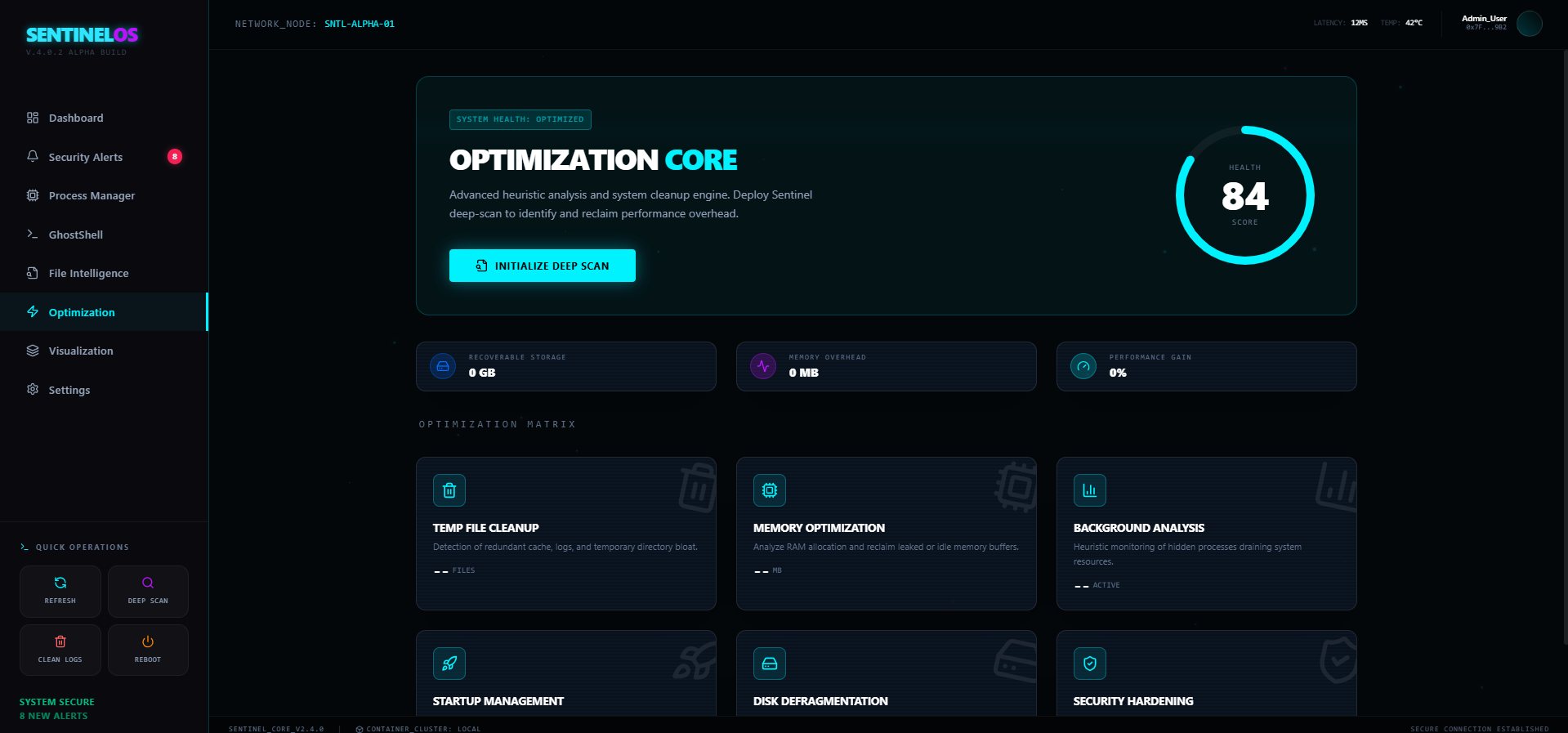
- Optimization workflows powered through a dedicated web worker
- Alert generation with threshold monitoring and cooldown protection
- Security-focused operational dashboards and analytics
- Modular architecture designed for scalability and future enterprise hardening The system combines a React frontend, an Express orchestration backend, and a Python analysis engine to create a full-stack operational command center experience.
How I built it
I built SentinelOS as a full-stack architecture focused on modularity, responsiveness, and real-time communication. For the frontend, I used React 19, TypeScript, Tailwind CSS, Framer Motion, Recharts, and D3 to create a high-density futuristic dashboard experience with smooth animations and responsive telemetry visualization. For backend orchestration, I built an Express-based API server responsible for:
- system operations
- telemetry distribution
- process actions
- shell execution
- alert coordination
- WebSocket communication I implemented WebSocket streaming to push live telemetry updates to the frontend while also creating a resilient polling fallback system in case socket transport becomes unstable.
For system analysis and monitoring, I created a Python engine that collects runtime metrics, performs health analysis, and emits structured JSON snapshots back to the Node.js layer through child-process communication. I also implemented:
- requestAnimationFrame-based UI batching
- snapshot deduplication
- optimization workers
- alert cooldown systems
- AI-assisted terminal interpretation workflows
- filesystem intelligence scanning
- modular service boundaries for scalability The entire platform was designed to simulate a production-style operational intelligence environment while remaining demo-friendly for hackathon evaluation.
Challenges I ran into
One of the biggest challenges was managing real-time telemetry updates without causing UI performance issues. High-frequency system updates can easily trigger excessive React re-renders, so I had to implement snapshot deduplication and animation-frame batching to maintain smooth performance. Another major challenge was integrating Python and Node.js together in a clean and reliable way. I needed the Python engine to continuously emit structured monitoring data while the Express server normalized and distributed it through WebSockets in near real time. Building GhostShell safely was also difficult. I wanted to create an AI-assisted terminal experience without exposing unrestricted shell execution risks, so I designed a restricted command model with controlled helpers and safer execution boundaries. I also spent significant time balancing visual complexity with usability. Since SentinelOS has a very dense futuristic UI, I had to ensure that the interface remained understandable, responsive, and organized rather than overwhelming.
Accomplishments that I am proud of
I am proud that I built a complete end-to-end operational intelligence platform as a solo developer. SentinelOS is not just a frontend dashboard — it includes a real-time architecture, backend orchestration, AI workflows, system analysis, process management, optimization simulation, and cross-language integration. I am especially proud of:
- the real-time WebSocket telemetry system
- the AI-assisted GhostShell workflow
- the modular architecture design
- the responsive optimization pipeline
- the polished futuristic interface
- the scalability and security planning built into the project I am also proud that the platform feels like a real product rather than a simple prototype. I focused heavily on execution quality, architecture clarity, and presentation because I wanted the project to demonstrate production-level thinking.
What I learned
Through building SentinelOS, I learned a great deal about real-time systems architecture, performance optimization, and cross-service communication. I gained deeper experience with:
- WebSocket-based live data transport
- frontend rendering optimization
- worker-thread architecture
- backend orchestration patterns
- Python-to-Node interoperability
- scalable UI state management
- telemetry normalization pipelines
- AI-assisted workflow design I also learned how important product positioning and user experience are in technical systems. A platform can have strong engineering underneath, but presentation, usability, and clarity are what make the technology feel impactful to users and judges.
What's next for SentinelOS
My next goal is to evolve SentinelOS from a prototype into a more production-ready operational intelligence platform. Future improvements include:
- persistent telemetry history and replay analytics
- AI-based anomaly detection models
- multi-node infrastructure monitoring
- authentication and RBAC security layers
- containerized sandbox execution for GhostShell
- cloud deployment support
- historical alert management
- infrastructure health forecasting
- collaborative operational workflows
- accessibility and localization improvements I also want to expand SentinelOS into a scalable infrastructure intelligence platform that could support startups, educational environments, and smaller operational teams that need accessible monitoring and workflow automation tools.
Built With
- d3.js
- express.js
- framer-motion
- node.js
- python
- recharts
- typescript
- vite

Log in or sign up for Devpost to join the conversation.