-
-
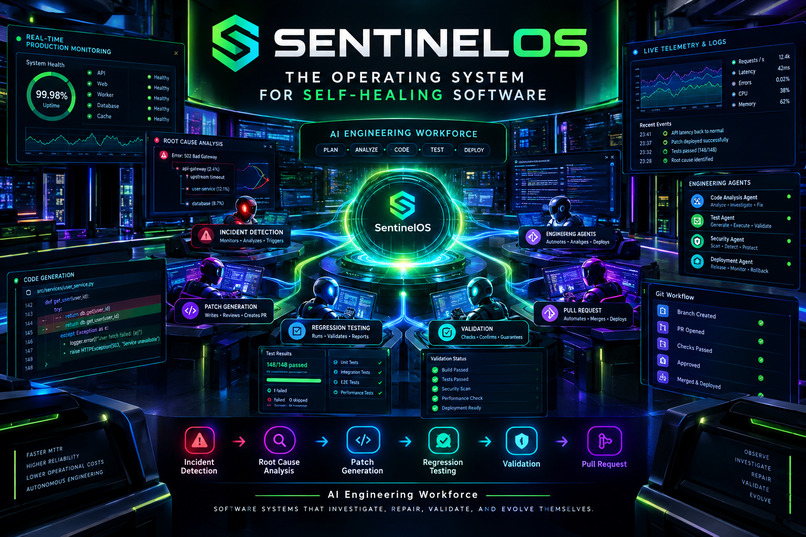
SentinelOS: The Operating System for Self-Healing Software
-
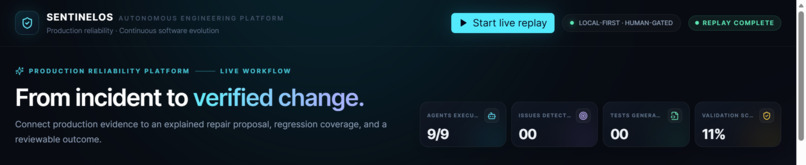
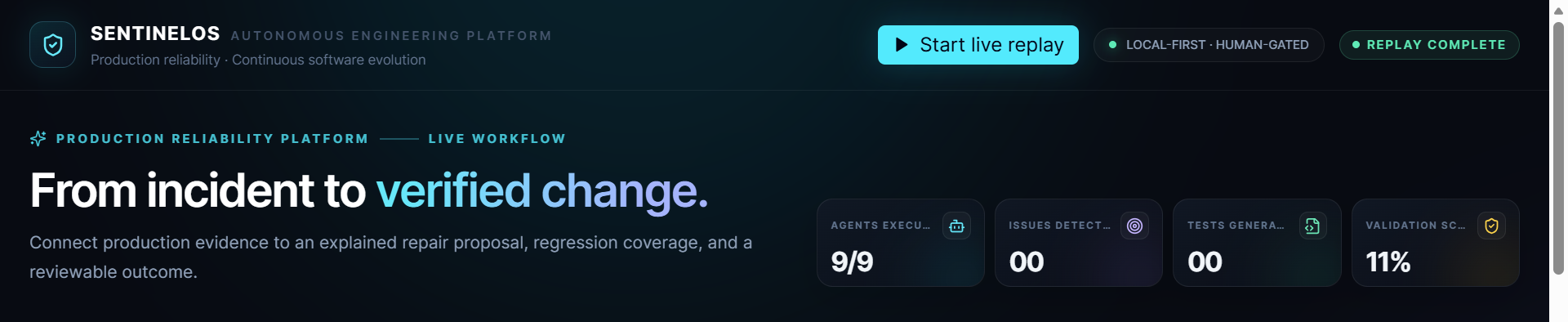
From Incident to Verified Change Transforming production evidence into validated engineering decisions.
-
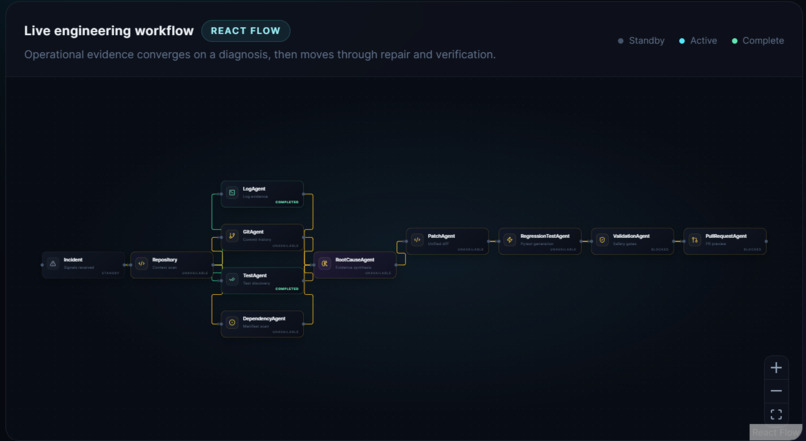
Autonomous Engineering Workforce Specialized AI agents collaborate to investigate incidents and coordinate engineering workflows.
-

Validation-First Engineering Uncertain recommendations are blocked by design and remain subject to human review.
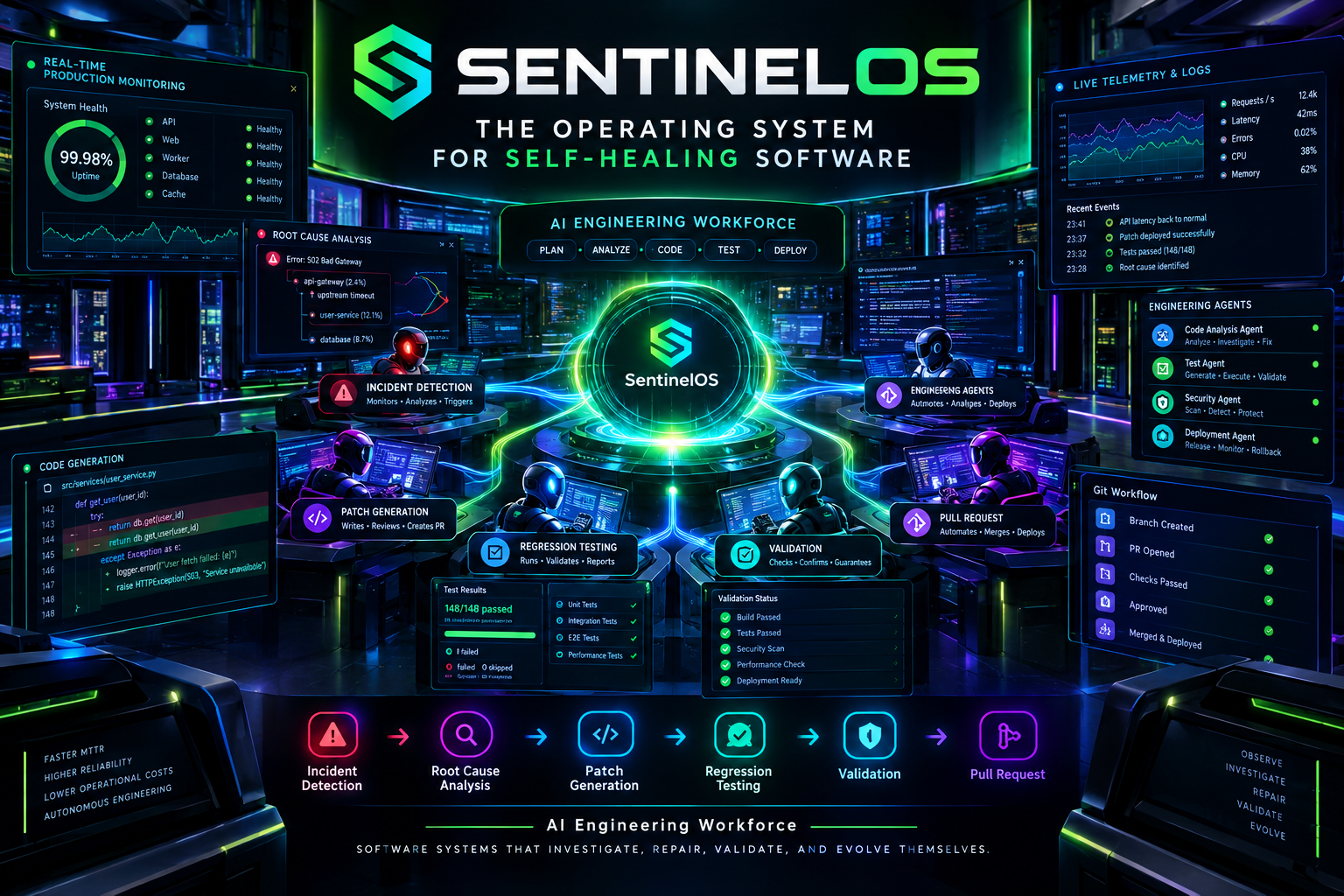

SentinelOS
The Operating System for Self-Healing Software
Every software team knows the story.
A production incident occurs. Engineers investigate logs, inspect commits, identify root causes, write fixes, create tests, validate changes, and finally prepare a pull request.
The process is repetitive, expensive, and often happens under pressure.
We asked a simple question:
What if software could investigate its own failures before engineers even joined the incident?
That idea became SentinelOS.
What It Does
SentinelOS is an autonomous engineering platform that coordinates a workforce of specialized AI engineering agents.
When an incident occurs, SentinelOS:
- Analyzes logs
- Investigates repository changes
- Reviews failing tests
- Identifies root causes
- Generates remediation recommendations
- Creates regression tests
- Validates outputs
- Prepares engineering workflows for human review
Rather than acting as a single assistant, SentinelOS behaves like an AI engineering workforce.
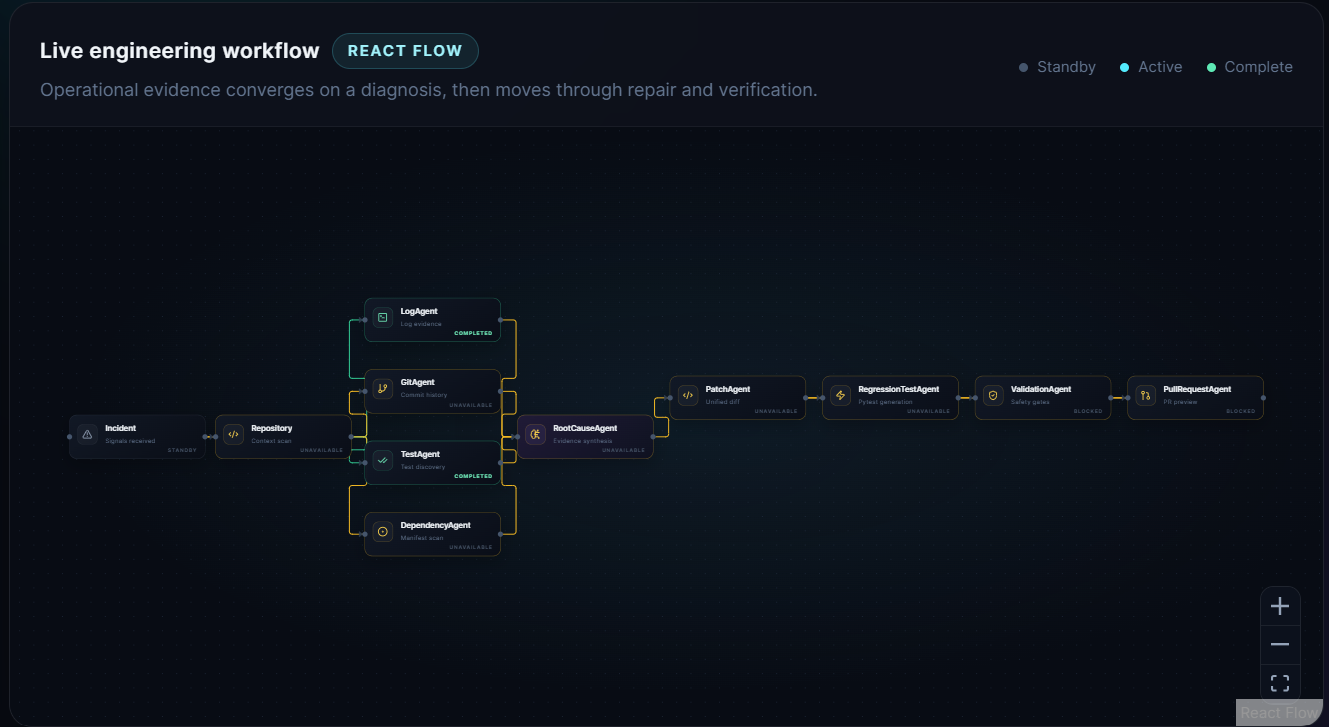
How It Works
Incident
    ↓
Log Analysis
    ↓
Repository Investigation
    ↓
Test Analysis
    ↓
Root Cause Analysis
    ↓
Validation
    ↓
Human Review
Each stage is executed by specialized agents that contribute evidence to an end-to-end investigation workflow.
Features
Autonomous Engineering Workforce
SentinelOS coordinates multiple specialized agents that collaborate during incident investigations.
Evidence-Based Root Cause Analysis
The platform combines:
- Logs
- Stack traces
- Test failures
- Repository history
to produce explainable diagnoses.
Validation-First Design
Uncertain outputs are blocked by design.
Every recommendation must pass validation requirements before progressing to review.
Human-Gated Decisions
SentinelOS never removes human oversight.
The platform recommends. Engineers decide.
Incident Replay Dashboard
A real-time dashboard visualizes investigations, timelines, agent activity, evidence graphs, and engineering decisions.
Built Architecture
Backend
- Python
- FastAPI
- Pydantic
- WebSockets
Frontend
- React
- TypeScript
- React Flow
- Vite
AI Layer
- Ollama
- Qwen 2.5 Coder
- Multi-Agent Orchestration
Infrastructure
- Docker
- Git Integration
- Validation Pipelines
Challenges We Faced
Building autonomous engineering workflows introduced challenges around:
- Agent orchestration
- Context sharing
- Validation
- Trust
- Human oversight
One of the most important lessons was that reliable engineering automation requires much more than code generation. Reasoning, validation, and explainability are equally important.
What We Learned
We learned that the future of software engineering is not just AI-assisted development.
It is autonomous systems capable of investigating failures, helping engineers understand problems, and supporting safer remediation workflows.
Vision
Today's software systems generate alerts.
Tomorrow's software systems will investigate themselves.
Our vision is a future where engineering teams spend less time firefighting and more time building, while autonomous systems handle reliability workflows responsibly.
Why SentinelOS Matters
GitHub Copilot helps developers write code.
SentinelOS helps software systems investigate, repair, validate, and evolve themselves.
Built With
- agenticai
- aiagents
- automation
- devops
- docker
- fastapi
- github
- incidentresponse
- llm
- nvidia
- ollama
- opensource
- pydantic
- python
- qwen
- react
- reactflow
- reliabilityengineering
- softwareengineering
- testing
- typescript
- validation
- vite
- websockets

Log in or sign up for Devpost to join the conversation.