Inspiration
I wanted to build a system that felt like the future of infrastructure management: something beyond traditional monitoring dashboards. Most existing tools feel fragmented, reactive, and overloaded with information that is difficult to act on quickly. I was inspired by the idea of combining AI-assisted workflows, live telemetry, operational intelligence, and futuristic UX into a single platform that makes system management more intuitive, intelligent, and efficient. I also wanted to challenge myself technically by building a project that combined frontend engineering, backend orchestration, real-time communication, AI integration, and Python-based analytics into one cohesive ecosystem.
What it does
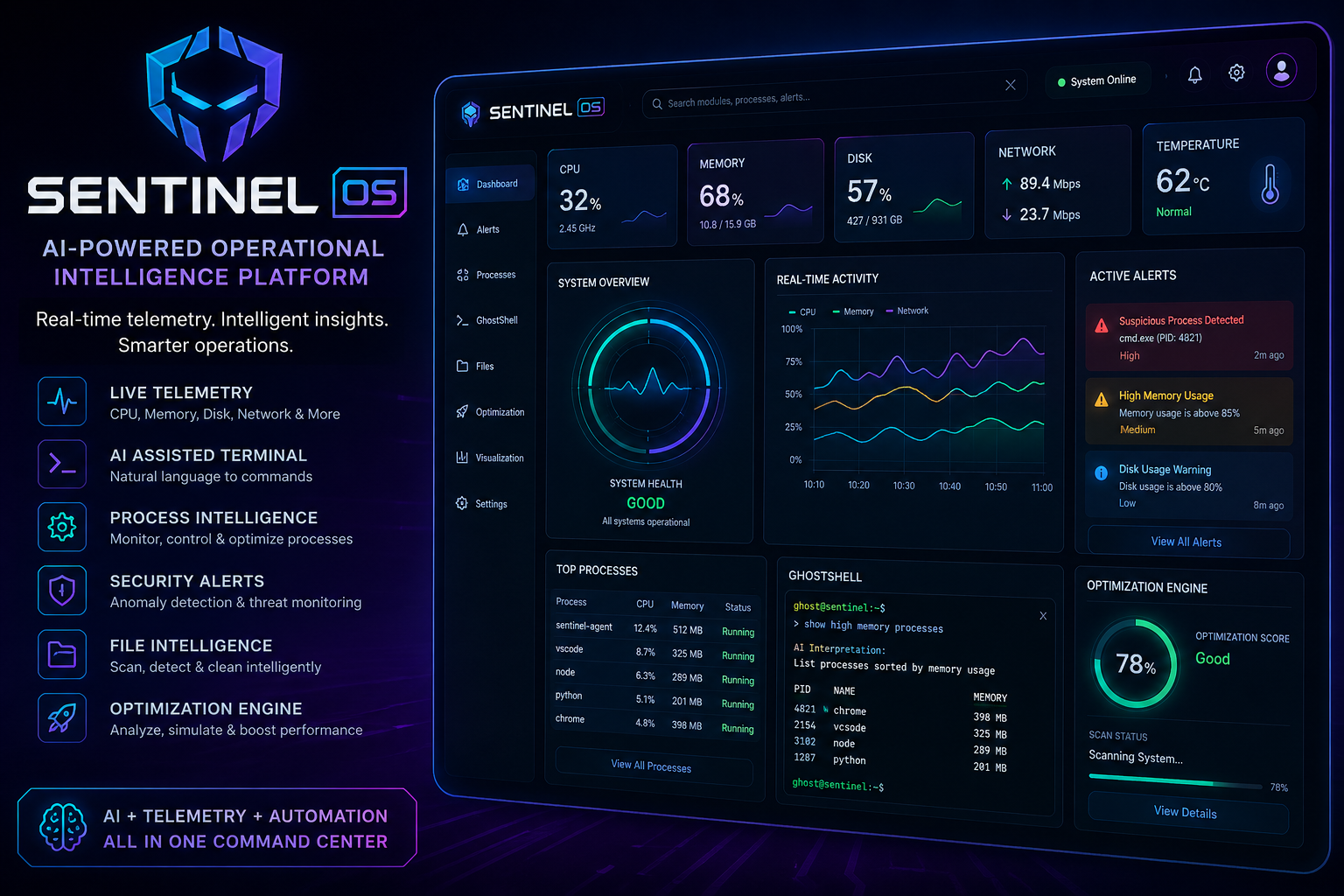
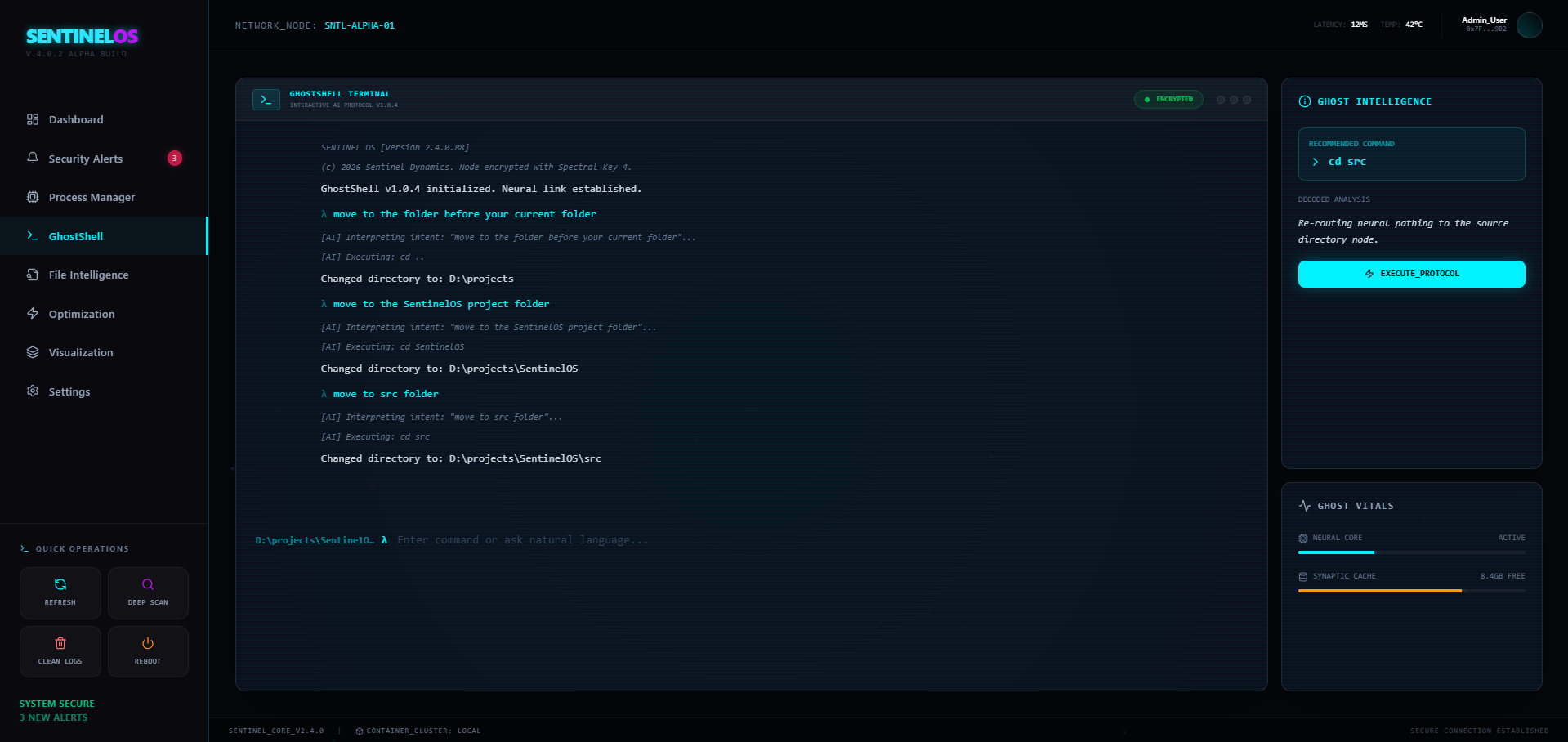
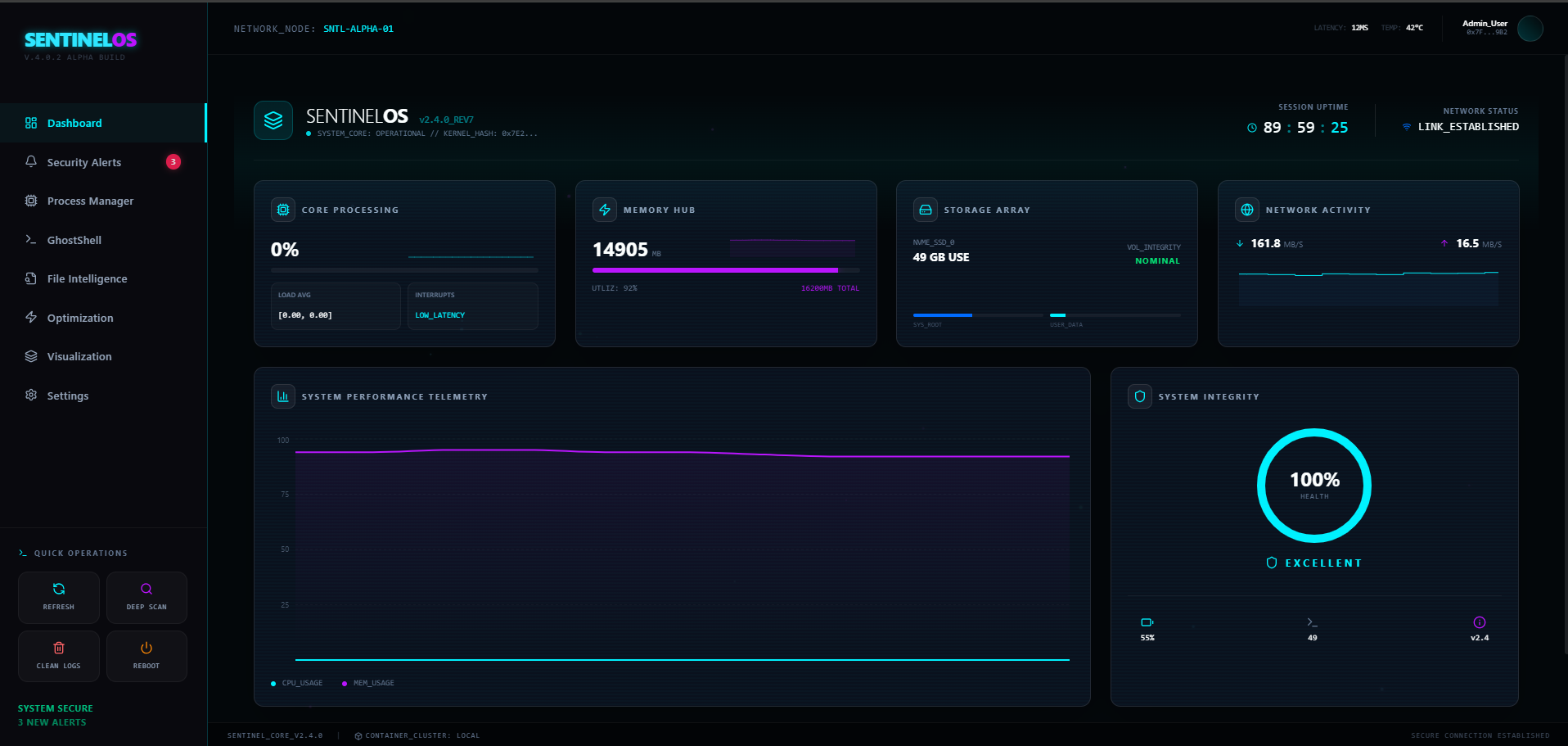
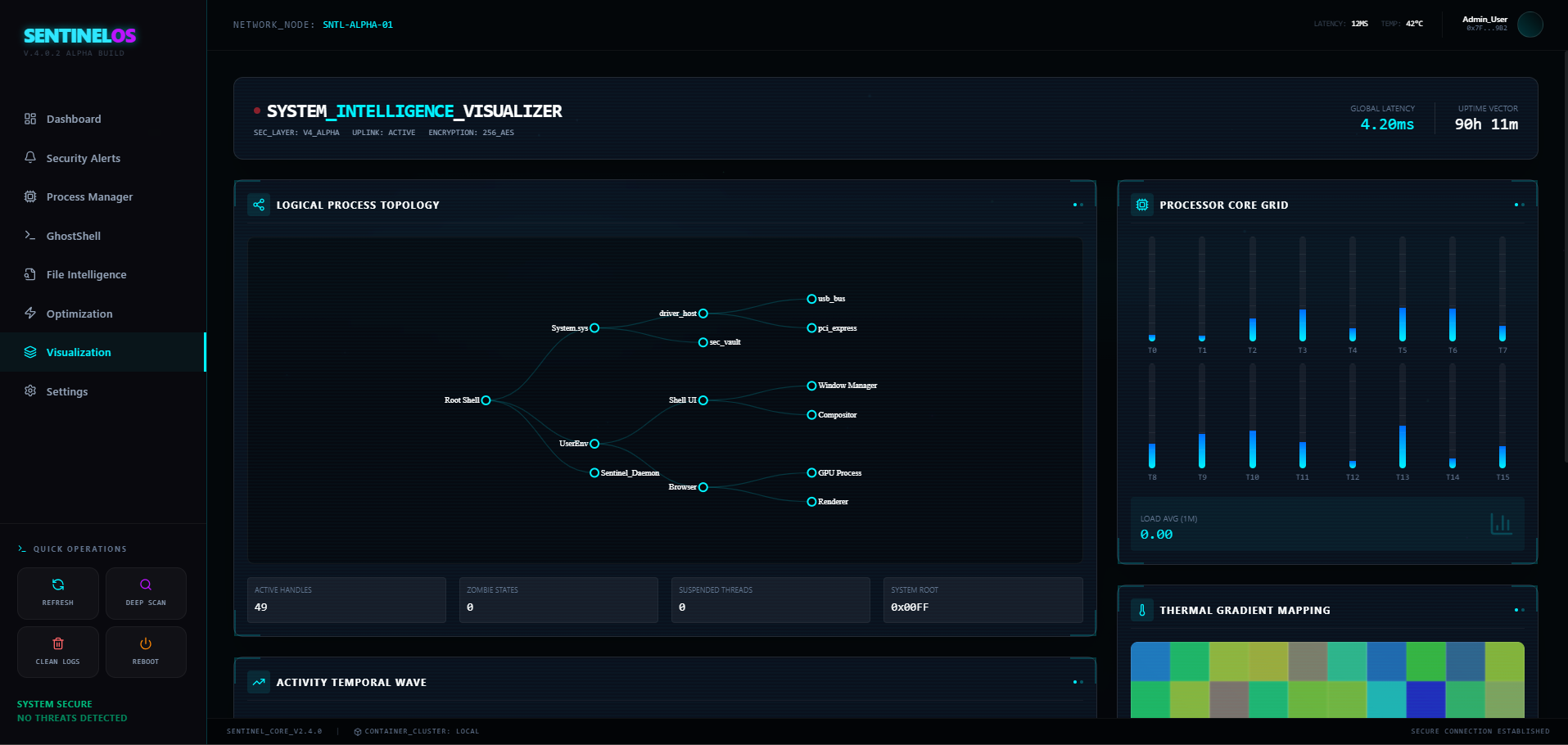
SentinelOS is an AI-powered operational command center designed for real-time system monitoring, process intelligence, and workflow optimization. It provides live telemetry for CPU, memory, disk, thermal, network, and process activity through a futuristic WebOS-style interface. The platform includes AI-assisted terminal workflows through GhostShell, allowing natural-language command interpretation and operational assistance. SentinelOS also includes:
- Real-time WebSocket-powered monitoring
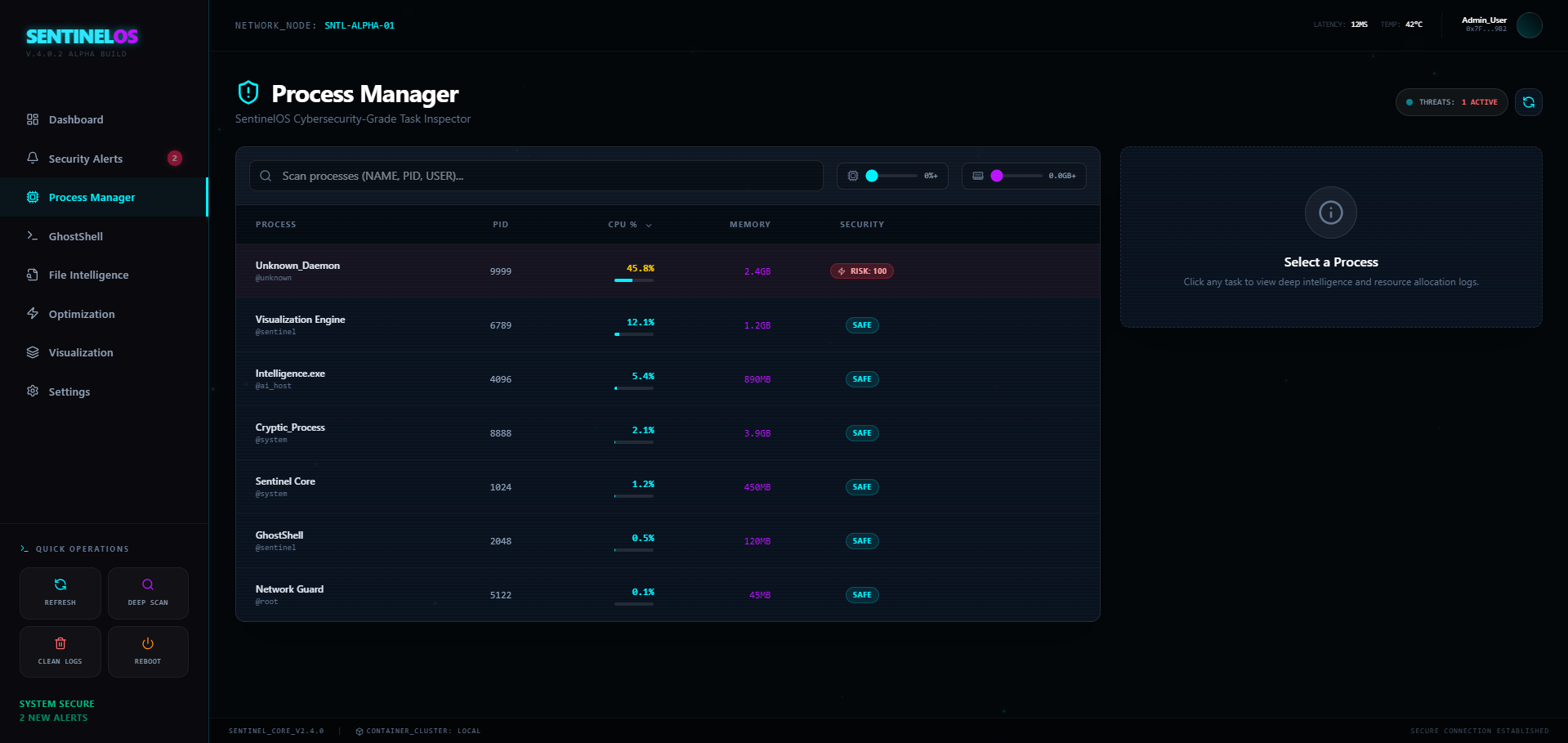
- Process lifecycle management
- Intelligent alerting and notification systems
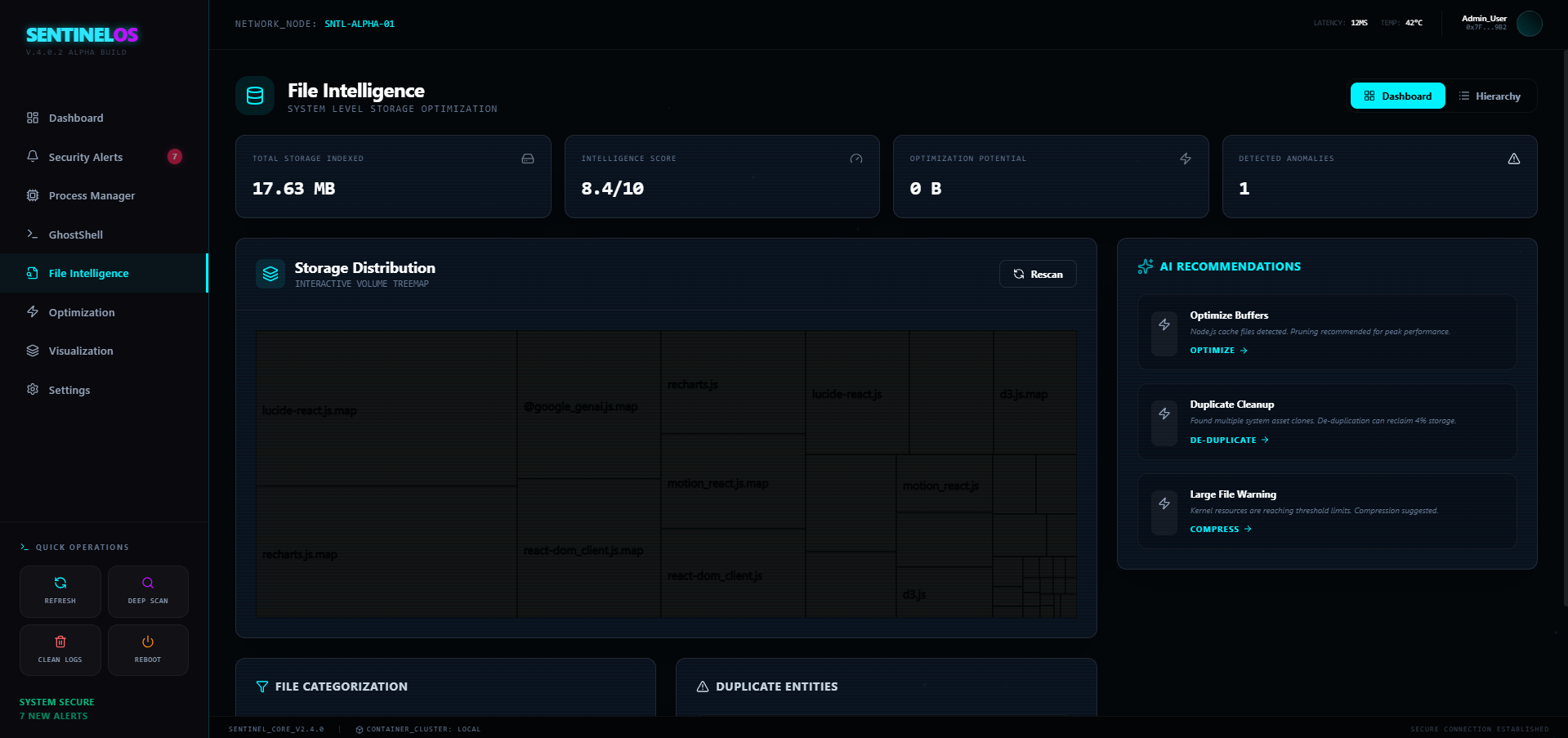
- File intelligence scanning and cleanup simulation
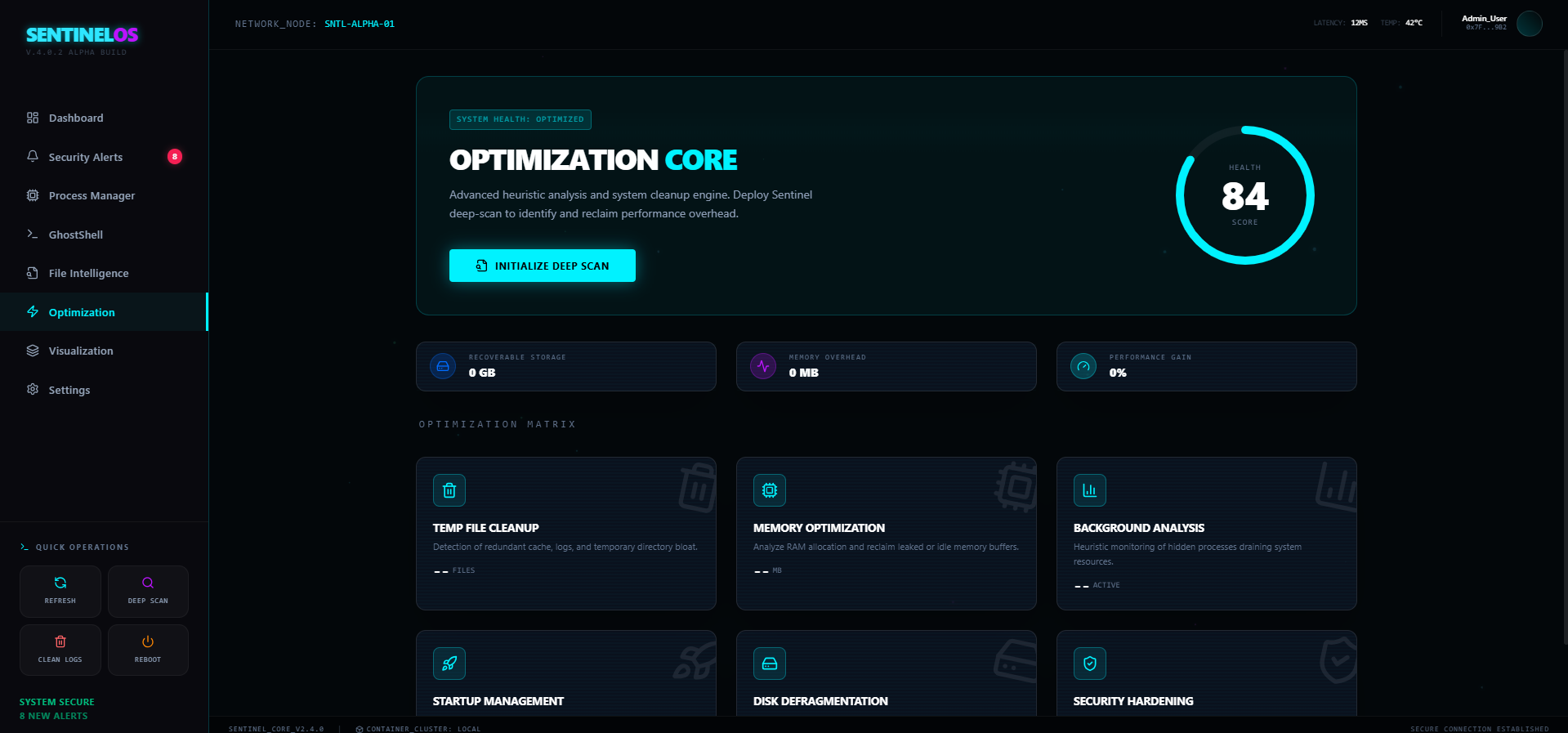
- Optimization workflows powered by dedicated web workers
- Security-focused operational controls
- AI-generated recommendations and command interpretation
The goal is to create a scalable platform that helps developers and operators manage systems more intelligently and efficiently.
How I built it
I built SentinelOS as a full-stack platform using a layered architecture.
For the frontend, I used React 19, TypeScript, Vite, Tailwind CSS, Framer Motion, Recharts, and D3 to create a responsive and visually immersive interface.
For the backend, I built an Express-based orchestration server that manages APIs, process operations, telemetry distribution, and WebSocket communication. I integrated a Python analysis engine that continuously collects and analyzes system metrics. The Node.js backend spawns the Python engine as a child process and consumes structured JSON telemetry data in near real time.
I implemented:
- WebSocket-based live telemetry streaming
- Snapshot deduplication to reduce unnecessary UI renders
- requestAnimationFrame batching for smoother frontend performance
- AI-assisted GhostShell workflows using the Google GenAI SDK
- Optimization simulations using dedicated web workers
- File intelligence scanning with heuristic analysis
- Alert systems with cooldown logic to avoid notification storms
I also designed the architecture to support future scalability through modular services and clear separation between monitoring, orchestration, transport, and analytics layers.
Challenges I ran into
One of the biggest challenges I faced was handling high-frequency telemetry updates without causing frontend performance issues. Continuous real-time updates can easily overwhelm React rendering pipelines, so I had to implement snapshot deduplication and batched rendering strategies to keep the UI responsive.
Another major challenge was integrating Python analytics with the Node.js backend in a reliable way. I solved this by building structured JSON communication between the Python engine and the Express server through child-process orchestration.
I also spent significant time designing a secure and usable shell experience. Allowing command execution while preventing unsafe operations required careful command restrictions, validation logic, and controlled execution flows.
Balancing visual complexity with usability was another challenge. Since SentinelOS contains many modules and live operational data streams, I had to carefully structure the interface to keep it immersive without becoming overwhelming.
Accomplishments that I am proud of
I am proud that I built an end-to-end operational intelligence platform entirely on my own, combining frontend engineering, backend systems, AI integration, real-time infrastructure, and Python analytics into one cohesive project.
I am especially proud of:
- Building a live WebSocket telemetry system
- Creating the AI-powered GhostShell workflow
- Designing a scalable multi-layer architecture
- Implementing smooth real-time performance optimization
- Building a futuristic and polished user experience
- Successfully integrating React, Node.js, WebSockets, Python, and AI into one platform
I am also proud that SentinelOS goes beyond being just a hackathon prototype. I designed it with long-term scalability and production hardening in mind.
What I learned
Through building SentinelOS, I learned a great deal about real-time systems, frontend performance optimization, backend orchestration, and cross-language integration between Node.js and Python.
I improved my understanding of:
- WebSocket architecture
- Real-time state synchronization
- Systems monitoring workflows
- Process management
- AI-assisted operational tooling
- Performance optimization strategies
- Modular scalable architecture design
I also learned how important product positioning and user experience are when building technically complex systems. Creating powerful functionality is important, but making it intuitive and visually understandable is equally critical.
What's next for SentinelOS
I plan to continue evolving SentinelOS into a more advanced operational intelligence platform with production-grade capabilities.
My future roadmap includes:
- Historical telemetry storage and analytics
- Persistent alert management and audit logs
- Multi-node infrastructure monitoring
- AI-driven anomaly detection and predictive insights
- Role-based authentication and secure access control
- Containerized and sandboxed shell execution
- Distributed telemetry aggregation
- Advanced system optimization engines
- Accessibility and localization improvements
- Full testing and CI/CD pipelines
I also want to explore transforming SentinelOS into a collaborative infrastructure management platform for startups, developers, and operations teams.
Built With
- d3.js
- express.js
- framer-motion
- git
- github
- json-based
- node.js
- npm
- python
- recharts
- requestanimationframe
- restapis
- tailwindcss
- typescript
- vite
- websockets

Log in or sign up for Devpost to join the conversation.